REVIEW · FLORENCE
Florence: Accademia Reserved Ticket & Michelangelo’s David
Book on GetYourGuide →Operated by Walks in town · Bookable on GetYourGuide
Skip the stress and get to the art.
This reserved Accademia Gallery ticket is built for people who want their Florence time to count. You enter at a set time through a dedicated reserved line, so you spend less time shuffling at the entrance and more time inside. I also love that in the same visit you can target two of the museum’s biggest draws: Michelangelo’s David and a room with famous musical instruments, including the first violin ever made by Stradivarius.
The biggest practical consideration is that you still have to pass through a security metal detector, and at busy moments it can take between 15 to 30 minutes. Also, the meeting point can require a careful check, since one past booking had last-minute confusion about where to meet and when.
Because there’s no tour guide and the experience is self-paced, you’ll want to decide what you want to prioritize before you go. Done right, that freedom is a win: you can stop at the plaster casts, the Renaissance paintings, and the instruments that grab you—without feeling rushed.
In This Review
- Key highlights to expect
- Reserved Entry Into Accademia: Why the Ticket Is the Point
- Price and value: $53 for one hour
- Getting Your Bearings Fast: Where You Meet and What You Can Bring
- Don’t show up with too much luggage
- Security matters more than you’d think
- ID requirement for kids
- Michelangelo’s David: The 17-Foot Work You’ll Feel Immediately
- How to handle David in a short visit
- Beyond David: Plasters, Paintings, and Renaissance Names You’ll Recognize
- Expect to run into famous names
- Plasters and why they matter
- A realistic expectation: you control the pace
- The Musical Instruments Room: The Stradivarius Detail People Remember
- How to fit the instruments into your hour
- Your 1-Hour Self-Guided Plan: A Simple Order That Works
- Meeting Point Reality Check: Orange Flag, Timed Entry, and Communication
- Who This Fits Best (and Who Might Want a Different Format)
- Should You Book This Accademia Reserved Ticket?
- FAQ
- Is this a guided tour?
- How long is the visit?
- Do I get skip-the-line entry?
- Where do I meet the supplier?
- What’s included with the ticket price?
- Are pets or luggage allowed?
- Will I need ID?
- Is there security screening?
Key highlights to expect
- Reserved time entry so you avoid the longest ticket lines
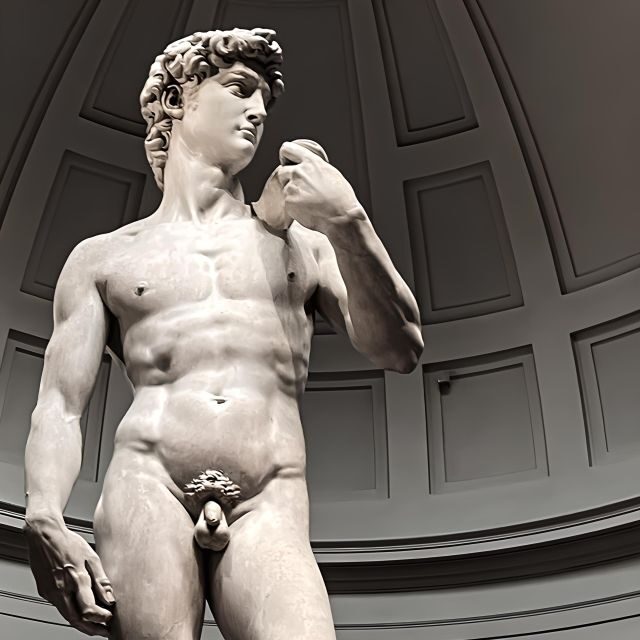
- Michelangelo’s David at a shocking 17 feet tall, made in the artist’s early twenties
- Renaissance and Florentine artwork you’ll recognize by name, including Botticelli and Perugino
- Musical instruments display, including the first Stradivarius violin ever made
- Self-guided pace: you control how long you linger at each stop
Reserved Entry Into Accademia: Why the Ticket Is the Point
Accademia Gallery is one of those places where time turns into money fast. When you buy a reserved entry ticket for a specific time, the main value is simple: you bypass the worst of the ticket queue and go straight toward a dedicated reserved entrance line. For a museum that can easily become a half-day distraction, saving that front-end waiting time is huge.
This experience is sold as a 1-hour visit, which is realistic if your goal is to hit the museum’s top sights without turning it into a marathon. The entrance is timed, and once you’re inside, you’re on your own. No guide means fewer constraints—but it also means you’ll be doing your own prioritizing.
The other time factor is security. You must pass through a security metal detector even with a reserved ticket. At busy times, the line can stretch 15 to 30 minutes, so I’d plan your arrival with that in mind. In other words, reserved entry helps with the museum ticket line, but it doesn’t remove security.
You can also read our reviews of more tours and experiences in Florence
Price and value: $53 for one hour
At about $53 per person, the ticket feels like a premium compared with buying general admission on the ground. The value is that you’re paying for less friction: fewer lines, more predictable timing, and a smoother entry. If you’re traveling during peak season—or you just don’t want to waste your morning staring at a queue—this is the kind of spend that can actually feel reasonable.
If you’re the type who enjoys wandering museums slowly and doesn’t mind standing in lines, you might choose cheaper entry. But if you’re limited on time and want the headline works with minimal hassle, reserved entry usually wins.
Getting Your Bearings Fast: Where You Meet and What You Can Bring
You meet the supplier at Carrefour Express. They’ll be holding an orange flag, and the activity provider is listed as Walks in town.
That said, here’s the practical lesson I’d take from real-world hiccups: confirm your details before you leave. One booking experience included a last-minute meeting point change and conflicting instructions, which caused stress and delay. You can reduce the odds of that happening by checking your confirmation messages carefully the day before and again on the morning of your timed entry.
Don’t show up with too much luggage
You can’t bring pets. Luggage or large bags are not allowed. If you’re traveling light, you’re fine. If you normally carry a full daypack, consider whether it counts as a large bag for museum rules. When a place says no large bags, it usually means they want you to travel lighter than you would for a café stop.
Security matters more than you’d think
All visitors must pass through a security metal detector. At peak times, plan for 15 to 30 minutes. If you arrive late, you’re not just late to the meeting point—you can end up losing part of your timed window inside.
- Tuscany Day Trip from Florence: Siena, San Gimignano, Pisa and Lunch at a Winery
★ 5.0 · 21,634 reviews - The Best tour in Florence: Renaissance & Medici Tales – guided by a STORYTELLER
★ 5.0 · 12,316 reviews



ID requirement for kids
The information provided notes passport or ID card for children. Bring it even if it feels obvious. It’s the kind of rule that can cause problems at the worst moment.
Michelangelo’s David: The 17-Foot Work You’ll Feel Immediately
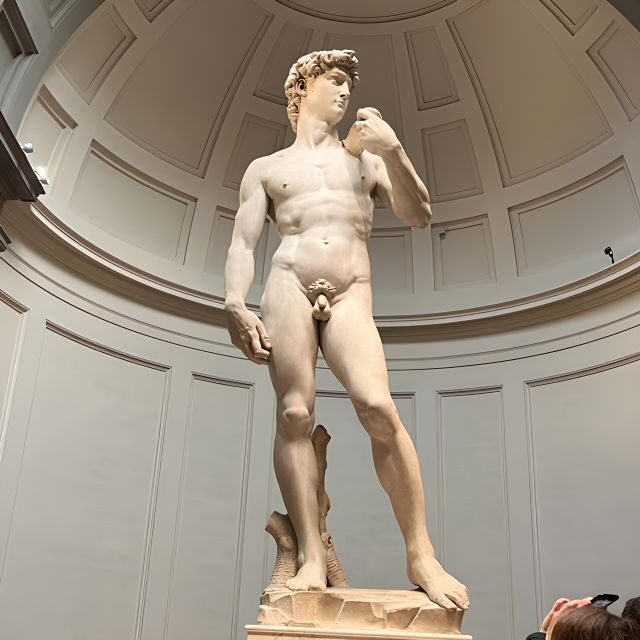
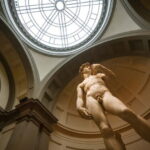
Michelangelo’s David is the reason most people come to Accademia, and it’s easy to understand why. This is the iconic statue created by Michelangelo when he was in his early twenties, and the scale is part of the shock: the work is about 17 feet tall.
What I like about seeing David in person (especially on a timed, focused visit) is that your brain adjusts fast. Up close, you notice how purposeful the surface details are—the tension in the pose, the refinement of forms, and how the sculpting makes the figure feel alive rather than just monumental. With a set 1-hour window, you’ll probably want to give David more than a quick glance.
How to handle David in a short visit
Since the visit is self-guided, you have to decide how long to spend. If you’re trying to do everything, David can end up getting squeezed. My suggestion is to make David your anchor.
- Treat David as your first stop after you enter.
- Give yourself a few minutes just to look, then a second pass if you’re still curious.
- Watch how your viewing angle changes what you notice—details pop differently when you move a little.
A reserved ticket helps here because you can get to the statue without losing half your time to lines.
Beyond David: Plasters, Paintings, and Renaissance Names You’ll Recognize
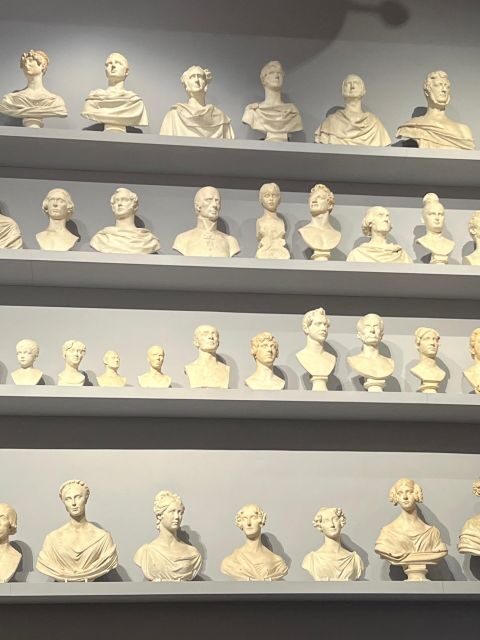
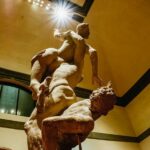
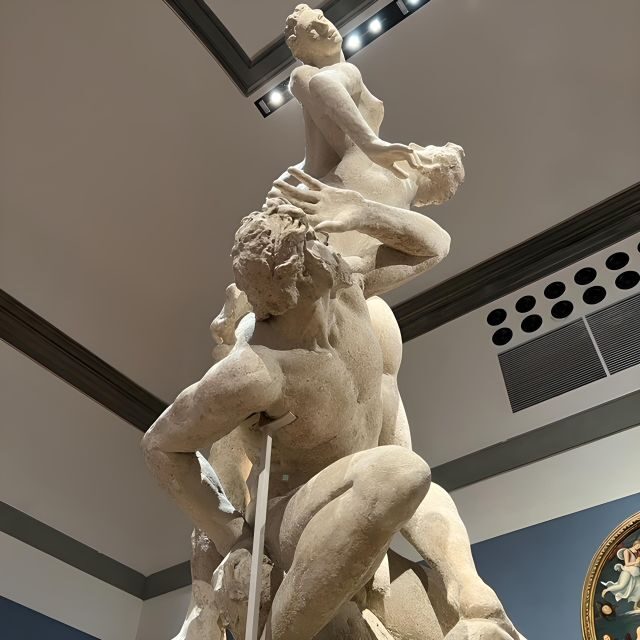
Accademia isn’t just one statue. It’s a collection that blends plaster casts, paintings, and works tied to Renaissance training and Florentine art.
One reason this matters for your experience is that the museum’s format can change how you understand Michelangelo and his world. Seeing David alongside other works helps you connect ideas about form, proportion, and style. Even if you only know a few artists’ names, you’ll start recognizing names as you go.
Expect to run into famous names
The experience description highlights works associated with masters such as Botticelli, Filippino Lippi, Pietro Perugino, and Paolo Uccello, among others. That list is useful because it gives you a mental map. When you recognize a name, you’re more likely to pause instead of walking past.
Plasters and why they matter
Plaster casts can look less impressive than marble at a glance. But in a collection like this, they often help explain how artists worked and how sculptural thinking connects to painting and design. For your 1-hour visit, plasters are worth slowing down for. They’re often the place where you notice technique more clearly than in a room where everything feels too big to process.
A realistic expectation: you control the pace
There’s no guide included. That’s not necessarily a drawback—it just means you set the pace. If you want context, you’ll rely on your own reading of labels. If you prefer freedom over narration, this is a good setup.
The Musical Instruments Room: The Stradivarius Detail People Remember
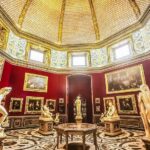
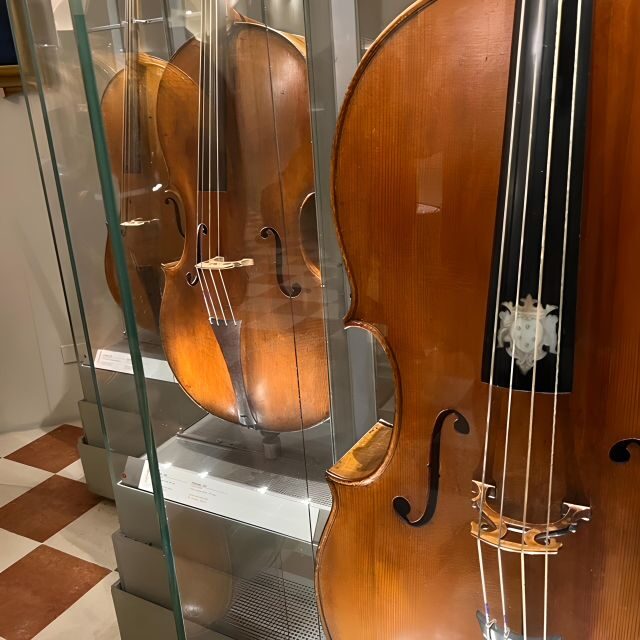
One of the most distinctive highlights is the museum’s display of musical instruments, including the first violin ever made by Stradivarius.
This is one of those details that can completely change a visit. If you’re the kind of person who loves art but also enjoys hearing music behind the scenes, this room gives you a different kind of connection. Even if you don’t play instruments, you can still appreciate the craftsmanship and the idea of an object tied to a musical legacy.
How to fit the instruments into your hour
Because you have limited time, I’d treat the instruments room like David: pick it intentionally instead of accidentally.
- If music is a priority for you, budget time for it before you wander.
- If you’re unsure, spend a few minutes and see if you’re interested before committing.
This kind of stop can also be a mental reset. After you’ve stared at anatomy and sculpture, switching to an instrument display can feel like a fresh page.
Your 1-Hour Self-Guided Plan: A Simple Order That Works
This experience is designed to be self-paced inside the museum. You’ll be free to move through the gallery at your own speed and stop wherever you want to take a closer look. That’s great, but it also means you can accidentally spend 45 minutes walking and only 5 minutes looking.
Here’s a practical way to use the hour without turning it into a checklist panic:
1) Enter and go straight to David
Give yourself enough time to see the statue fully, not just from one angle.
2) Then pick one more headline theme
Choose between the museum’s focus on Renaissance works (paintings and associated names) or the musical instruments, based on what excites you more.
3) Add one extra stop, not five
Pick one room (like a plaster-focused area) where you can actually slow down.
4) Finish with one quiet moment
Walk back through at a calmer pace and look again at whatever caught your attention earlier.
Since the description emphasizes that you’ll be able to stroll at your own pace, this isn’t a strict route. It’s just a way to make sure your time adds up to real looking.
Meeting Point Reality Check: Orange Flag, Timed Entry, and Communication
This activity is straightforward on paper: meet at Carrefour Express and look for the orange flag. But real-life timing can be messy in busy tourist areas, especially when a supplier needs to coordinate groups near an entrance.
One booking issue stood out for me as a warning sign: instructions about the meeting point and timed entry can change, and mismatched messages can create confusion. That doesn’t mean the experience is always chaotic. It does mean you should do two things:
- Double-check your confirmation details the night before and on the day of your visit.
- Give yourself buffer time so you can handle security lines without spiraling.
A reserved ticket reduces one big problem: the ticket line. It doesn’t remove the need to show up with the right plan.
Who This Fits Best (and Who Might Want a Different Format)
This ticket-style experience is a good match if you want quick access to Accademia’s top draws. It’s especially suitable for:
- First-time Florence visitors with limited time
- People who hate ticket lines and want predictable entry
- Anyone who wants to see David and the instrument display in one focused hour
It may be less ideal if:
- You want guided commentary. This experience does not include a tour guide.
- You need a lot of explanation to connect what you’re seeing to Renaissance context. Without a guide, you’ll mainly rely on labels.
For many visitors, though, self-guided can feel refreshing. You can stop when something grabs you, rather than syncing your pace to a group.
Should You Book This Accademia Reserved Ticket?
If your goal is to see Michelangelo’s David and you want to avoid the longest lines, I think booking this reserved ticket is a smart move. The time savings matter, and the museum’s biggest highlights fit well into a 1-hour visit.
My one caution is logistics: security can add time, and the meeting point details may need careful checking. If you’re the kind of traveler who double-checks messages and arrives with buffer, you’ll likely enjoy the smoothest version of this experience.
FAQ
Is this a guided tour?
No. This entry ticket experience does not include a tour guide. You explore at your own pace inside the Accademia Gallery.
How long is the visit?
The duration is listed as 1 hour.
Do I get skip-the-line entry?
Yes. The reserved ticket includes entry that helps you avoid the long ticket queue and use a dedicated reserved line.
Where do I meet the supplier?
Meet at Carrefour Express, and the supplier will be holding an orange flag.
What’s included with the ticket price?
You receive reserved tickets to the Accademia Gallery.
Are pets or luggage allowed?
Pets are not allowed. Luggage or large bags are also not allowed.
Will I need ID?
The information provided says children should bring a passport or ID card.
Is there security screening?
Yes. All visitors must pass through a security metal detector, and at busy times it can take between 15 to 30 minutes.


More Tickets in Florence


More Tour Reviews in Florence
- Tuscany Day Trip from Florence: Siena, San Gimignano, Pisa and Lunch at a Winery
★ 5.0 · 21,634 reviews - The Best tour in Florence: Renaissance & Medici Tales – guided by a STORYTELLER
★ 5.0 · 12,316 reviews