REVIEW · FLORENCE
Florence Archaeological Museum: 2-Hour Private Guided Visit
Book on Viator →Operated by ACCORD Italy Smart Tours & Experiences · Bookable on Viator
History in stone and bronze—fast. This private, 2-hour visit is a smart way to see Florence’s Archaeological Museum collection in a tight time window, with an expert guide steering you through major rooms and key objects. You’ll get the story of the museum too, including its growth since 1855 and its sweep from prehistory through the Coptic age. With Guido’s kind, personal pacing, it feels more like a conversation than a slideshow.
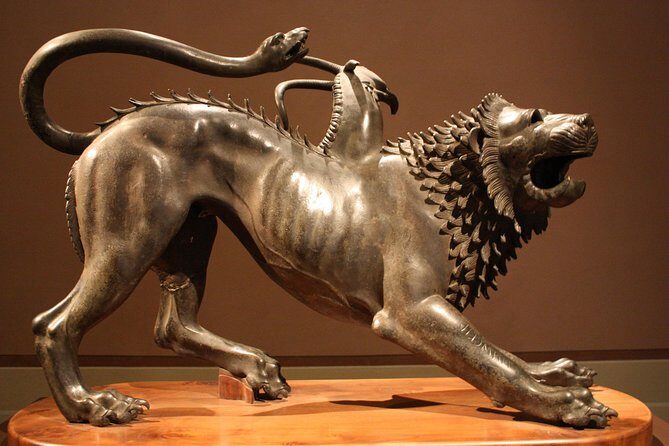
I especially like two things. First, the museum’s range: you’re not stuck in one culture. Egyptian, Roman, Greek, and Etruscan objects sit side by side across nine rooms and two warehouses, so the whole timeline clicks faster. Second, you get face-to-face time with the Etruscan star, the Chimera of Arezzo, a bronze lion discovered in 1553.
One possible drawback: parts of the museum are temporarily closed, including the second floor and the Corridor of Gems. That won’t ruin the visit, but it does mean your tour won’t cover everything the museum has to offer.
In This Review
- Key things to know before you go
- The museum is the shortcut to Florence’s ancient world
- What you’ll see in that 2-hour private route
- Egyptian Hall: the part that makes people smile
- Roman and Greek rooms: what to look for beyond the label
- Etruscan highlight: meeting the Chimera of Arezzo
- The museum’s layout: nine rooms, two warehouses
- Temporarily closed areas: what you should assume
- Meeting at Piazza San Marco: easy start, no fuss
- Tickets and pacing: what makes it feel private
- Masks and everyday practicalities
- Price and value: does $144.05 per person make sense?
- Who should book this visit?
- Should you book? My take
- FAQ
- How long is the Florence Archaeological Museum private guided visit?
- Is this tour private or shared?
- Where do we meet for the tour?
- Is hotel pickup included?
- What’s included with the tour price?
- What areas of the museum are temporarily closed?
- Do I need to wear a mask?
- Is lunch included?
Key things to know before you go
- Private guide, reserved entry: you avoid the hassle and get a more personal pace
- Egyptian Hall time: you’ll see Egyptian pieces like sarcophagi and amulets as part of the route
- Chimera of Arezzo focus: the Etruscan bronze lion discovered in 1553 is a must-see stop
- Many periods in one route: more than 10,000 objects from prehistory through the Coptic age
- Renovated spaces and warehouses: expect nine rooms plus two warehouses during the walkthrough
- Second floor and Corridor of Gems are closed: plan your expectations around that
The museum is the shortcut to Florence’s ancient world
Florence is famous for art you can’t miss. But if you want to understand the city’s deeper imagination—before Renaissance paint, before the Roman street grid—you need antiquity. The Florence Archaeological Museum does that job in a way that’s practical for real schedules.
In two hours, you can cover a surprising amount of ground. The museum has grown since it was founded in 1855, and today it holds more than 10,000 objects. That’s why a guided visit matters: without help, it’s easy to wander through rooms that feel similar and miss what the curator would point out first.
You can also read our reviews of more guided tours in Florence

What you’ll see in that 2-hour private route
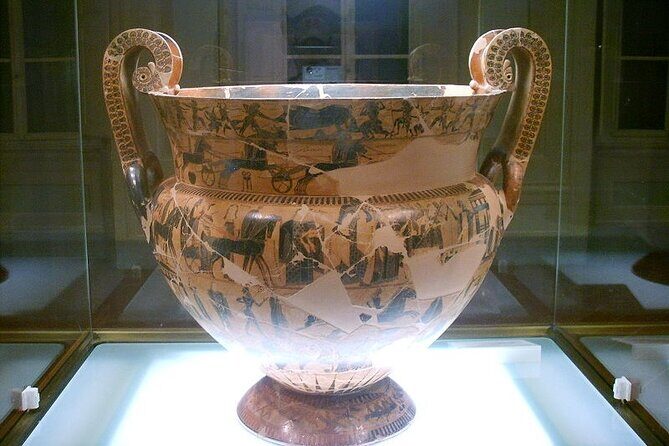
This is a focused private walkthrough that moves through the museum’s main display spaces. You’ll go through nine rooms and two warehouses, which is a key detail. Many museums show objects only in gallery rooms. Here, the building also uses warehouse-style space to present collections, so the overall feel is more hands-on and less like a single long hallway.
You can expect the major collection pillars to show up clearly in the route:
- Egyptian objects, including pieces connected to the Egyptian Hall
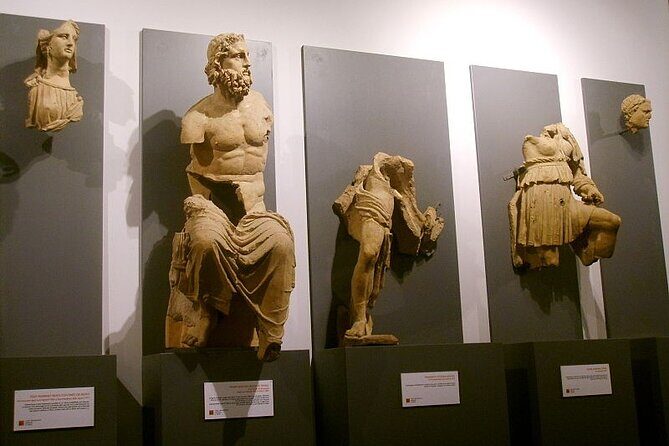
- Greek and Roman works such as vases, ceramics, bronzes, and sculptures
- The Etruscan collection, including bronzes that help explain a different kind of ancient Italy
The museum’s scope is broad: from prehistoric material all the way through the Coptic age. In a normal self-guided visit, that breadth can feel like noise. With a guide, it turns into a timeline you can actually follow.
Egyptian Hall: the part that makes people smile
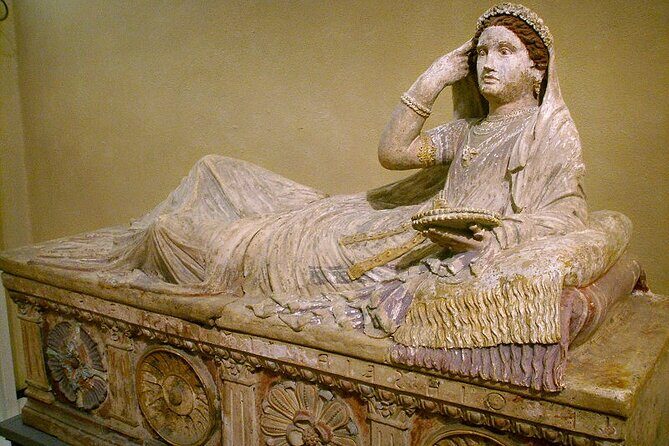
If you care about Egypt, this is one of the more enjoyable museum sections to schedule in Florence. Even in less-than-ideal weather, the Egyptian displays can feel like a calm pocket of the world—objects that hold your attention without demanding you sprint.
On this tour, Egyptian items aren’t treated as an afterthought. You’ll see Egyptian objects that include sarcophagi and amulets, plus other pieces drawn from the museum’s Egyptian holdings. The benefit of going with a guide is that you’re not just looking at shapes and materials. You’re looking with a “why it matters” lens—how these objects connect to belief, identity, and status in ancient Egypt.
And one practical tip: since the museum route includes many cultures, you’ll want to slow down where your curiosity is highest. The private format makes that easy. You can spend a few extra minutes here without derailing the entire group.
Roman and Greek rooms: what to look for beyond the label

Roman and Greek sections can be tricky. You’ll see lots of vases, bronzes, ceramics, and sculptures, which sounds simple—until you’re standing in front of ten display cases and wondering where to start.
A good guide fixes that. You’ll walk through Greek and Roman material as part of the larger story of ancient Mediterranean culture, so objects stop feeling random. Instead, they become evidence: craft traditions, everyday life, religious symbolism, and how different regions borrowed from one another.
Here’s what you’ll likely notice when someone helps you look:
- Materials: bronzes and ceramics aren’t just pretty; they show tech and trade
- Form: vases and sculptural works often reflect function and social use
- Style changes: even within Greek and Roman groupings, the look of objects shifts over time
Because this is only two hours, don’t expect every single artifact to become your favorite. Do expect the highlights to feel coherent. That’s the value of a guided route through multiple collections in one go.
Etruscan highlight: meeting the Chimera of Arezzo

Etruscan art is where many people’s interest suddenly spikes. And the museum makes that easy with a centerpiece everyone should plan for: the Chimera of Arezzo.
This Etruscan bronze lion was discovered in 1553 in the city of Arezzo, and it’s a major object in the museum’s Etruscan collection. In a private tour, you’re not just checking it off a list—you get time to actually look.
Bronze art rewards careful viewing. As you stand there, you can better appreciate:
- how the object’s form communicates power and symbolism
- why this kind of craftsmanship matters for understanding Etruscan identity
- how a single object can represent a whole cultural world
This is the kind of stop where your guide’s explanation can turn a “cool animal” into a real moment of understanding.
You can also read our reviews of more private tours in Florence






The museum’s layout: nine rooms, two warehouses

It helps to know what you’re walking through. The museum route is designed around nine rooms and two warehouses, and it’s presented in renovated spaces. Translation: the visit has variety, not just repeating galleries.
That matters for you because it changes your energy level during the tour. If you’re sensitive to museum fatigue, variety is a lifesaver. Instead of 120 minutes of near-identical cases, you get changes in room feel and display rhythm, which helps your brain stay engaged.
Also, you get a smoother understanding of how collections are organized. Even if you’re not trying to memorize dates, you can see how the museum builds connections across time.
Temporarily closed areas: what you should assume
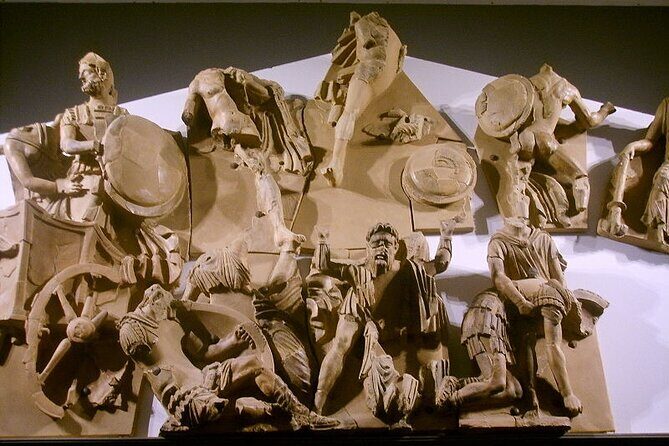
Two parts are temporarily closed to the public during your visit window: the second floor and the Corridor of Gems.
That means your tour won’t include everything the museum offers. It shouldn’t break the experience, because the core collections—Egyptian Hall, Greek and Roman works, and the Etruscan section—are still where the tour focus lands. But it’s worth adjusting expectations. If you were counting on seeing specific items located on the closed level, you’ll have to plan a future return.
If you’re the type who hates missing parts, this is the one detail you should treat as non-negotiable before booking.
Meeting at Piazza San Marco: easy start, no fuss
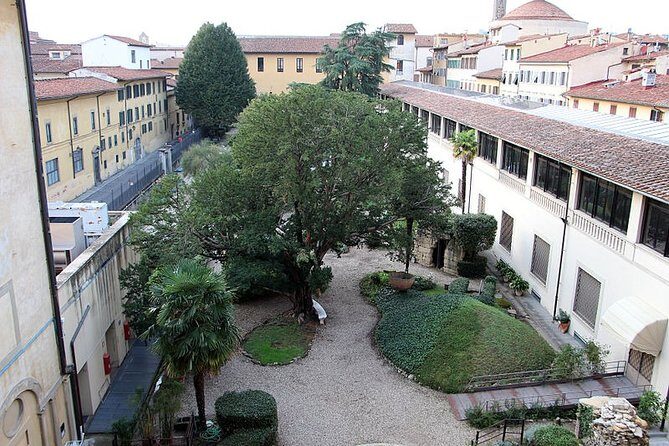
The meeting point is Piazza San Marco (P.za di San Marco, 50121 Firenze FI, Italy). The tour starts there and ends back at the same spot. Hotel drop-off isn’t included, so plan on your own way back to your base after the visit.
Pickup is offered if your hotel is centrally located. That’s a practical feature in Florence, where “a short walk” can become “a half-hour maze” depending on where you’re staying and how tight your schedule is.
One more small but important note: comfortable shoes are recommended. A museum tour sounds like sitting, but the walking and stopping add up when you’re moving through rooms and warehouses.
Tickets and pacing: what makes it feel private
This is a private tour, so only your group participates. That’s not just a comfort perk. It changes how the visit works:
- you can ask follow-up questions
- you can linger near objects that catch you
- you don’t have to keep up with a larger pack
Reserved tickets are included, and admission is included as well. That combo typically saves time at entry, which matters in a city where “just one line” can steal an hour.
You also get an expert private guide, and that’s the real engine of the tour. The guide helps you connect what you’re seeing—Egyptian objects, Greek and Roman works, and the Etruscan centerpiece—into a story you can walk away with.
Masks and everyday practicalities
The tour has a mandatory mask requirement. If you forget yours, you’ll be stuck sorting that out quickly near the start. Bring one from home so you don’t start your museum time stressed.
The museum is near public transportation, which helps if you’re not using pickup. In Florence, a good public transport plan plus a centrally located meeting point can be almost as convenient as hotel pickup.
Price and value: does $144.05 per person make sense?
At $144.05 per person for about two hours, this isn’t a “cheap and cheerful” museum visit. It’s a premium price point.
So what are you paying for, and is it worth it?
You’re paying for:
- a private expert guide
- reserved tickets and museum admission included
- a route that covers multiple major collections, so you don’t waste time trying to figure out where to go
If you’re traveling with someone you like to talk with, private time is often worth paying for. You’ll get more out of the museum because you’re not just moving through rooms—you’re interpreting them.
If you’re the kind of traveler who loves museums but doesn’t like spending extra money on guides, you might feel the price is high. In that case, you could self-guide. But if you want the museum’s biggest objects—especially the Chimera of Arezzo—to land with meaning, the guide is what makes the time feel efficient.
Also, this tour is often booked about 87 days in advance on average. That’s a hint that prime time slots fill up. If your schedule is tight, booking earlier is a practical move.
Who should book this visit?
This is a good match if:
- you want a guided museum experience without committing to a half-day
- you care about at least two of these: Egyptian, Greek, Roman, Etruscan
- you like structured stops where you know what to look at
- you prefer your group time to be flexible rather than paced by strangers
It’s especially satisfying if you’re curious about Etruscan art and want the Chimera of Arezzo to be more than a quick photo stop.
It might be less ideal if you love to browse museums slowly and don’t want a structured route. Two hours is focused. You’ll still see a lot, but it’s not designed for wandering.
Should you book? My take
Yes, you should book this if your goal is to understand the museum fast and see the main highlights with expert help. The museum holds more than 10,000 objects, and in a limited time window, a guide is what turns that amount into something you can actually remember.
The big reasons I’d book:
- the private format makes it feel personal, not rushed
- you get the Etruscan anchor object, the Chimera of Arezzo, in context
- you cover Egyptian plus Greek and Roman without losing the thread
- reserved tickets plus a smooth entry helps you spend time on art and artifacts, not logistics
If you’re okay with the second floor and Corridor of Gems being closed, this is a smart use of two hours in Florence.
FAQ
How long is the Florence Archaeological Museum private guided visit?
It’s about 2 hours.
Is this tour private or shared?
It’s a private tour/activity, so only your group participates.
Where do we meet for the tour?
You meet at Piazza San Marco (P.za di San Marco, 50121 Firenze FI, Italy).
Is hotel pickup included?
Hotel pick-up is included if your hotel is centrally located. Hotel drop-off is not included.
What’s included with the tour price?
The tour includes an expert private guide, hotel pick-up if centrally located, reserved tickets, and the museum admission ticket.
What areas of the museum are temporarily closed?
The second floor of the museum and the Corridor of Gems are temporarily closed to the public.
Do I need to wear a mask?
Yes. The tour requires a mandatory mask.
Is lunch included?
No. Lunch is not included.




More Private Tours in Florence
More Guided Tours in Florence


More Tour Reviews in Florence
- Tuscany Day Trip from Florence: Siena, San Gimignano, Pisa and Lunch at a Winery
★ 5.0 · 21,634 reviews - The Best tour in Florence: Renaissance & Medici Tales – guided by a STORYTELLER
★ 5.0 · 12,316 reviews