REVIEW · FLORENCE
Florence Guided Tour with Accademia, Uffizi and Optional Lunch
Book on Viator →Operated by CAF Tour and Travel · Bookable on Viator
Florence can feel like ten museums at once. This tour strings together the biggest hits with a smart walking route: Michelangelo’s David in the Accademia, then the Uffizi’s Renaissance heavyweights, plus key sights around the Duomo and Piazza della Signoria. I like how the guide uses the art you see to explain Florentine power, not just dates and names. I also like the small-group pace (max 20) with earphones, which helps you hear the commentary even when crowds squeeze in. One drawback to plan around: the day’s timing can feel tighter than the listed 6 hours 15 minutes, so I’d avoid booking a train with zero cushion.
You’ll start in central Florence and end at the Uffizi, so the route is efficient. Expect a mix of indoor museum time and outdoor “look-and-learn” stops: Baptistery gates, the bronze pig at the market, Medici-era politics, and the views from the river. If you hate walking, this won’t be your kind of day—comfortable shoes matter.
In This Review
- Key things to know before you go
- Florence in One Tight Route: Accademia, Uffizi, and the Duomo Area
- Meeting Via Ricasoli and How the Day Actually Moves
- Accademia Gallery: Seeing Michelangelo’s David and the Works Around It
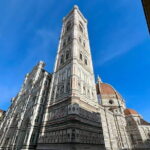
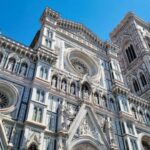
- Piazza del Duomo, Baptistery, and Giotto’s Bell Tower in One Visual Loop
- Orsanmichele and the Porcellino Pig: Florence at Street Level
- Piazza della Signoria and Ponte Vecchio: Sculpture, Politics, and River Views
- Inside the Uffizi: Botticelli, Renaissance Masters, and the Medici-Era Lens
- Optional Tuscan Lunch: What’s Included, What You’ll Pay Extra
- Price and Value: Is $174.01 a Smart Use of Your Time?
- Who This Tour Suits Best (and Who Should Skip It)
- Quick Decision: Should You Book This Florence Guided Tour?
- FAQ
- How long is the Florence guided tour?
- Where is the meeting point and what time does the tour start?
- What are the main included sights on the tour?
- What does the ticket price include?
- Is lunch included, or is it optional?
- How big is the group?
- Is the Uffizi ticket valid for anything else?
Key things to know before you go
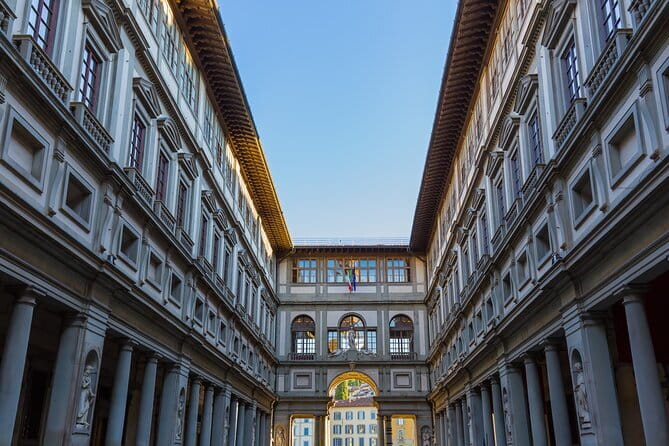
- Accademia first, David close-up: you’ll see Michelangelo’s David in the original setting, with related works like The Prisoners and Palestrina Pietà.
- Duomo complex in one sweep: Piazza del Duomo with Brunelleschi’s dome, the Baptistery, and Giotto’s bell tower.
- Street-level Florence stops: Orsanmichele’s Gothic art and the Porcellino fountain ritual in the market area.
- Piazza della Signoria as an outdoor museum: Neptune’s fountain and major sculpture groups under the Loggia dei Lanzi.
- Uffizi ticket with reservation included: you’re not just walking into a line; you get museum access set up for your visit.
- Optional Tuscan lunch, but drinks extra: if you add it, you’re buying the meal, not the wine.
Florence in One Tight Route: Accademia, Uffizi, and the Duomo Area
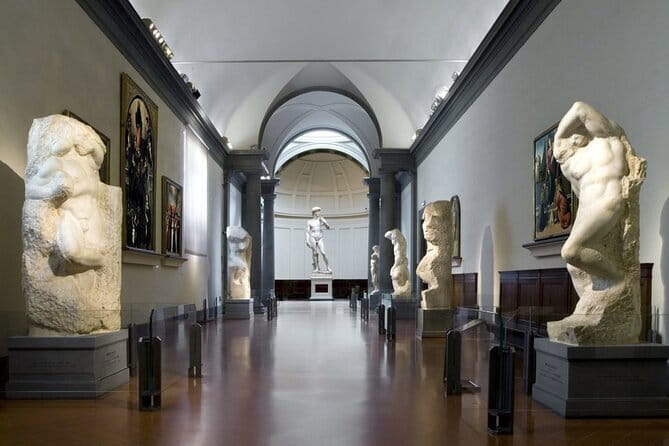
This is the kind of Florence day that makes sense if you’re short on time. You’re not bouncing randomly between neighborhoods—you’re moving through a clear visual storyline: Florentine sculpture and civic pride, then the Medici world of paintings, then back outside toward the city’s most iconic buildings.
I like that the tour doesn’t treat art as separate from politics. You’ll connect David to what the Florentine Republic wanted to project: courage, resolve, and identity. Then the walking stops keep that same theme going by showing you where power sat in daily life—especially around Piazza della Signoria.
One thing to know up front: you’ll do both heavy indoor viewing and steady outdoor walking. This is where the earphones help, and where planning your energy matters.
You can also read our reviews of more tours and experiences in Florence.
- Tuscany Day Trip from Florence: Siena, San Gimignano, Pisa and Lunch at a Winery
★ 5.0 · 21,634 reviews

Meeting Via Ricasoli and How the Day Actually Moves
You meet at Via Ricasoli, 68 in central Florence at 8:30 am. From there, you’ll walk and shuttle between the big art stops, with timed museum entry at both major galleries.
The group is capped at 20 people, which is a big deal in Florence. Smaller groups usually mean less time waiting in knots of people, and it’s easier for the guide to keep everyone moving without losing the explanation.
The tour includes earphones for the guided visit. That’s practical in museums, where your guide needs to speak over the room noise and people shifting around you.
A practical consideration: the itinerary lists a duration of about 6 hours 15 minutes, but museum days can run long if entry timing or crowd flow shifts. If you’re catching a train later the same day, give yourself extra buffer.
Also remember the basics: comfortable shoes for walking, and clothing suitable for places of worship during any church visits.
Accademia Gallery: Seeing Michelangelo’s David and the Works Around It
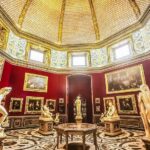
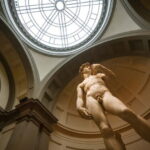
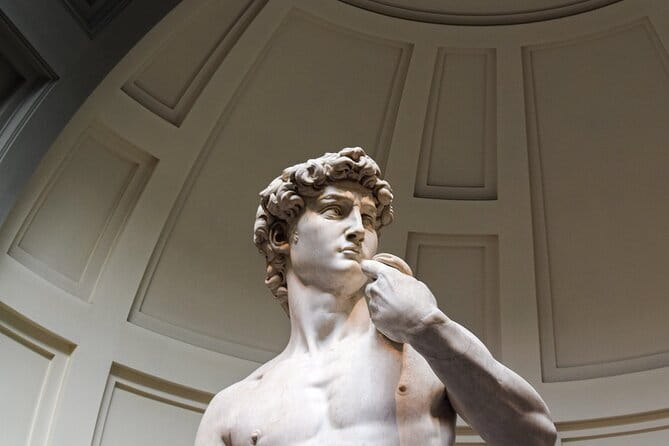
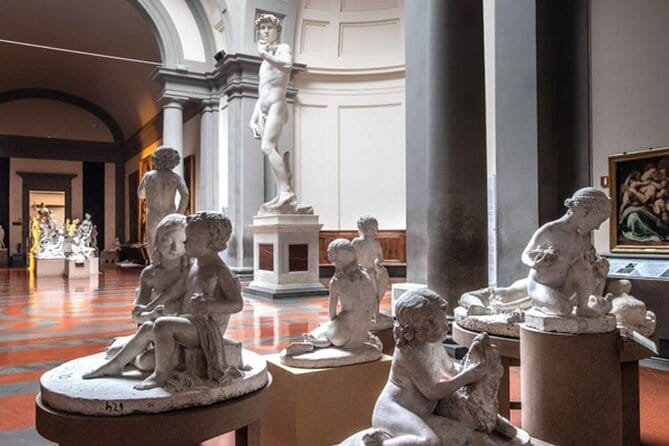
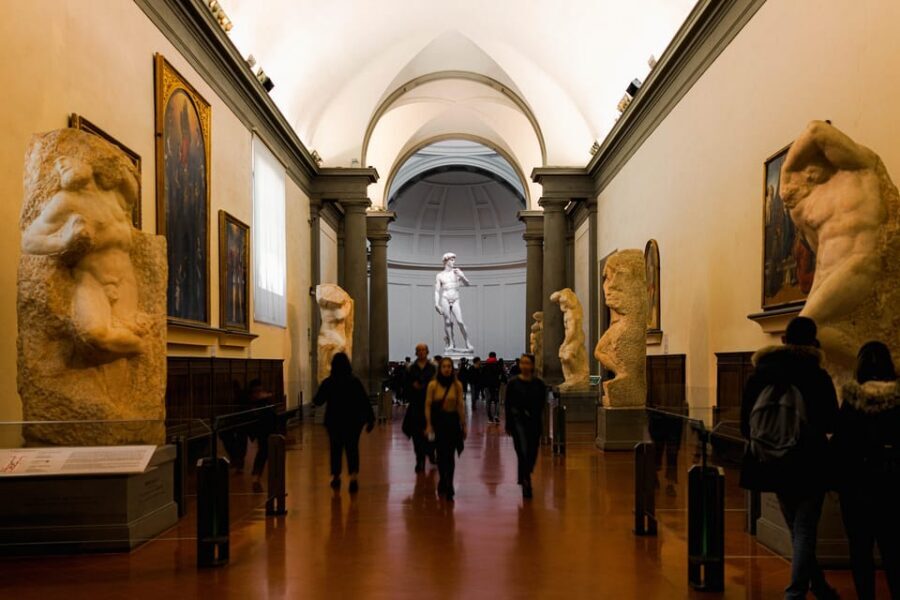
The Accademia is where the day earns its main headline. You’ll visit the Galleria dell’Accademia and see David, Michelangelo’s famous statue in its original form. It’s easy to think you know it from posters and copies across town—but the scale and presence in person are another matter.
What’s especially useful on a guided stop is the context. You’ll hear symbolism tied to David: the intense expression, and how the figure connected to Florentine values tied to the Republic. That changes the way you look at the statue. Instead of just admiring, you start reading it.
You’ll also see other Michelangelo works connected to the same creative period, including I Prigioni (often referred to as The Prisoners) and the Palestrina Pietà. These help you understand that Michelangelo wasn’t only producing finished icons—he was working ideas, forms, and unfinished thoughts into sculptural language.
The Accademia stop is listed as about 1 hour, with admission included and a reservation set for your visit. If you’re hoping for deep, slow looking time, you may find the pace brisk—but for a mixed-sights day, it’s a good compression.
Piazza del Duomo, Baptistery, and Giotto’s Bell Tower in One Visual Loop
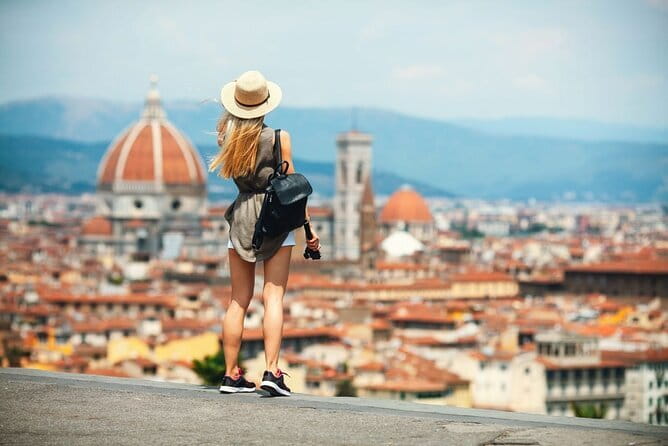
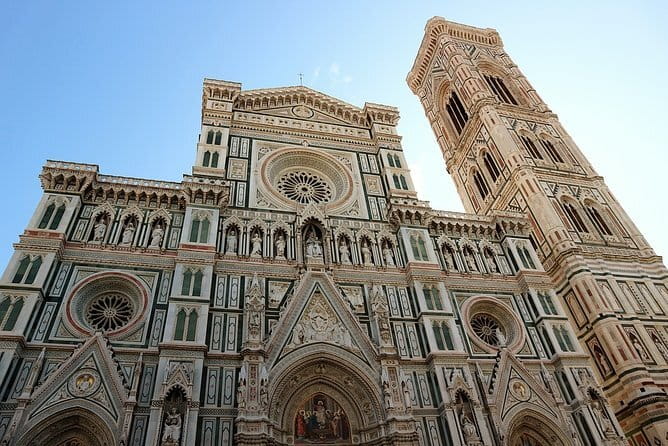
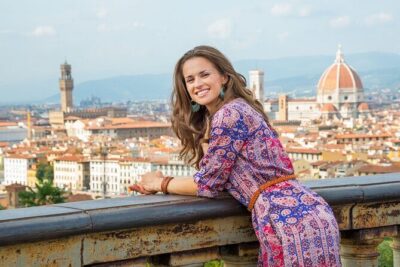
After Accademia, the tour builds in the “why Florence looks like Florence” section: Piazza del Duomo and the Duomo monumental complex. You’ll start with a viewpoint area at the Loggia del Bigallo, looking toward the cathedral zone.
From here, you’ll get the core landmarks that shape Florence’s skyline:
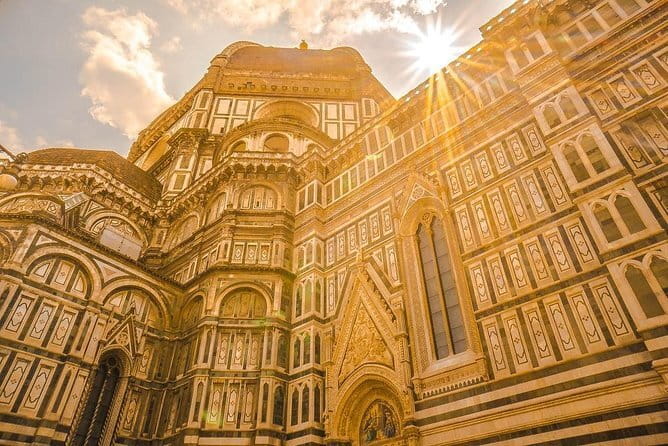
- Brunelleschi’s red-tiled dome
- The Baptistery and its Porta del Paradiso (Gates of Paradise)
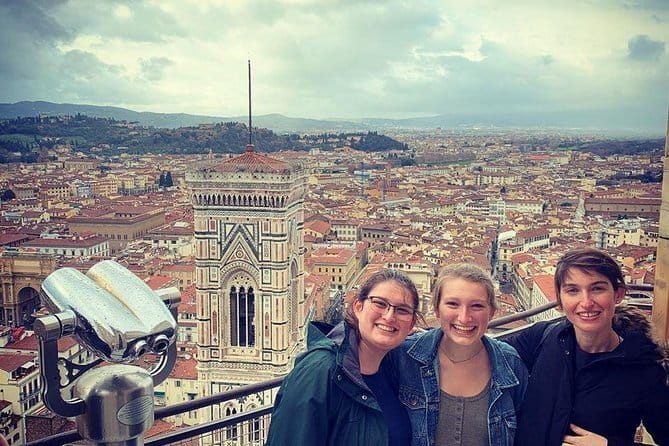
- Giotto’s bell tower
Even if you’ve seen photos, this is one of those places where your brain clicks. The buildings work together like a single design system. It’s not one monument—it’s a cluster, and the tour helps you spot the relationships.
Your stop times around this area are short (about 15 minutes for Piazza del Duomo and around 10 minutes at the cathedral and Baptistery viewpoints). That’s intentional. The guide keeps moving so you can keep momentum before the day becomes too crowded.
One consideration: the area is popular, so you’ll be sharing space with a lot of people. If you want quiet time for photos, plan to do it quickly during the stop windows or save your slow photo session for later.
Orsanmichele and the Porcellino Pig: Florence at Street Level
This walking segment is what makes the tour feel like Florence, not just museums.
You’ll visit Orsanmichele, described as a masterpiece of Florentine Gothic art. It’s decorated with shrines featuring statues connected to powerful medieval trade guilds. That detail matters. Florence’s art and architecture didn’t just belong to elites—it was tied to the groups that ran the city’s economy.
Then you’ll head toward the market area near Mercato della Paglia, and you’ll pause at the fountain for the Porcellino (the bronze pig). This stop is short, but it’s memorable. You’ll be guided on the ritual: rub the pig’s nose and toss a coin into the fountain for good luck.
I like this kind of stop because it breaks the museum-heavy rhythm. It also gives you a taste of older Florence daily life—markets, symbols, and small traditions living in plain sight.
Time-wise, the Orsanmichele and Porcellino portions are each about 10 minutes. That’s enough to orient you and move on with the guide’s story intact.
- Tuscany Day Trip from Florence: Siena, San Gimignano, Pisa and Lunch at a Winery
★ 5.0 · 21,634 reviews - The Best tour in Florence: Renaissance & Medici Tales – guided by a STORYTELLER
★ 5.0 · 12,316 reviews

Piazza della Signoria and Ponte Vecchio: Sculpture, Politics, and River Views
Next comes the “outdoor museum” stage: Piazza della Signoria. This square is more than a pretty stop—it’s a civic stage where art and power are on display.
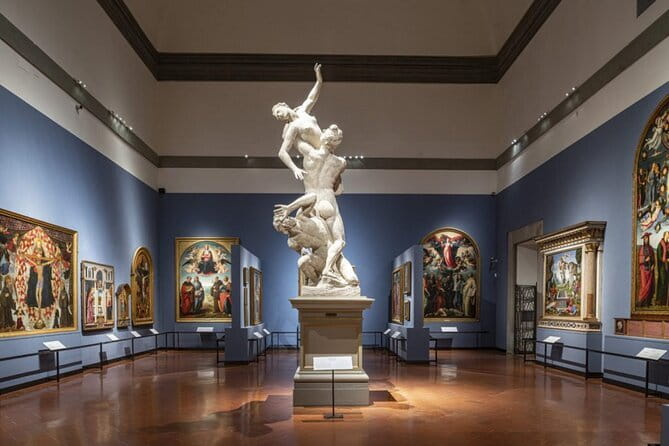
You’ll admire the Fountain of Neptune and look at the sculpture groupings under the Loggia dei Lanzi. The highlights named in the tour include Cellini’s Perseus and Gianbologna’s Rape of the Sabines. Seeing these outdoors changes the feel. The sculptures feel like they belong to the city’s everyday drama, not a controlled gallery room.
The tour also connects the Medici to this area. It points you toward how their influence connected to the political heart of Florence, including Palazzo Vecchio, where the Medici once lived. That context makes the square more than a photo stop.
After the square, you finish the walking portion at Ponte Vecchio, Florence’s oldest bridge lined with jewelry shops. The stop is listed as about 10 minutes—just enough to get the famous river view and understand why the bridge is a must.
If you’re a photographer, plan to be quick and strategic. This is where people stop suddenly, crowds thicken, and time disappears.
Inside the Uffizi: Botticelli, Renaissance Masters, and the Medici-Era Lens
The Uffizi is the second major indoor anchor: Gallerie degli Uffizi. This is one of the most visited museums in the world, and the tour includes your admission ticket and museum reservation fee, plus the guide-led flow.
You’ll spend about 1 hour 30 minutes inside. That’s not a “slow study for art nerds only” timeframe, but it’s workable if you want the big names with guidance on what you’re looking at.
The tour frames the Uffizi through its role in Medici-era power—once the government offices of the Medici, and now a museum home to Italian masterpieces. That lens helps you understand why certain themes and artists mattered.
The highlights mentioned include:
- Botticelli, including Birth of Venus, tied here to the symbol of ideal beauty and the sea goddess rising from her shell
- Leonardo da Vinci
- Raphael
- Caravaggio
- Cimabue
- Masaccio
- Michelangelo (along with related artists listed in the tour details)
A good guide makes the museum feel less overwhelming. Instead of wandering until you’re lost and tired, you learn what to notice: composition, symbolism, and why these works got celebrated.
One practical note from the tour info: your Uffizi ticket is also valid to access the Opificio delle Pietre Dure, though that site is currently closed for renewal. So if you’re planning other museum visits that day, don’t build your schedule around that add-on.
Optional Tuscan Lunch: What’s Included, What You’ll Pay Extra
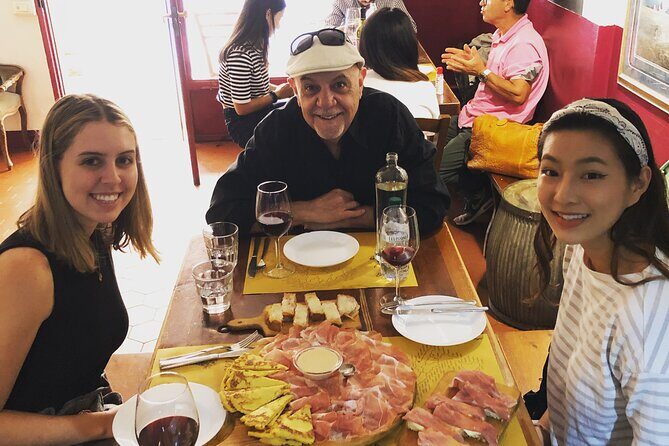
If you choose the lunch option, you get a 3-course typical Tuscan lunch in a characteristic restaurant. That’s a real value add for a long day, because it prevents you from spending your limited time between museums hunting for food.
Drinks aren’t included if you pick the lunch option—you pay for them on the spot. That’s normal, but it’s worth budgeting so you’re not surprised by the final bill.
This stop also gives your group a pause from walking and crowd movement. It can be the difference between enjoying the Uffizi and feeling like you’re running on empty.
Price and Value: Is $174.01 a Smart Use of Your Time?
At $174.01 per person, this isn’t a bargain-basement tour. But it’s priced like the kind of day that saves you time and stress in a city that can eat schedules alive.
Here’s what you’re paying for, based on what’s included:
- Accademia and Uffizi admission plus the reservation fee
- A local professional guide with a small group
- Earphones for better listening during museum and walking sections
- The guided sights around the Duomo area, Piazza della Signoria, and Ponte Vecchio
- Optional 3-course Tuscan lunch if selected
The value equation is simple: in Florence, the biggest friction points are museum entry and time management. You’re buying a plan that combines major sites without leaving you to figure out logistics mid-day.
Where it may not fit perfectly: if you’re the type who wants long unstructured time in one museum, this format can feel quick. If you’re okay with a guided “greatest hits plus context” approach, this tour is a strong way to get a lot done while still learning what you’re seeing.
Who This Tour Suits Best (and Who Should Skip It)
This works best for people who want a structured Florence day without missing the top art stops. I’d point you toward it if you:
- have limited time in Florence
- care about understanding what you’re looking at, not just taking pictures
- prefer small-group pacing and included museum reservations
- want the Duomo area and major squares in the same day
It may be less ideal if you:
- need lots of quiet time to slow down inside museums
- hate moderate walking and standing in crowds
- are trying to align with very strict departure times with no buffer
Quick Decision: Should You Book This Florence Guided Tour?
Book it if your goal is a focused “best of Florence art and landmarks” day with a guide and reserved entries. The combination of Accademia + Uffizi is the headline, and the added walking route through the Duomo complex, Piazza della Signoria, and Ponte Vecchio keeps the day from feeling like two disconnected museum stops.
Pass or look for an alternative if you want a slower, more flexible schedule, or if your travel day is so tight that any delay could ruin your plans. For many people, the included tickets, earphones, and guided context make the price feel fair.
If you do book, I’d plan your afternoon and evening like a realist: leave extra time for the day’s momentum, bring comfortable shoes, and be ready to trade a little freedom for better flow.
FAQ
How long is the Florence guided tour?
It runs for about 6 hours 15 minutes.
Where is the meeting point and what time does the tour start?
You meet at Via Ricasoli, 68, 50122 Firenze FI, Italy, and the start time is 8:30 am.
What are the main included sights on the tour?
You’ll visit the Galleria dell’Accademia to see Michelangelo’s works, then see the Duomo complex area (including the Baptistery and Giotto bell tower), pass key historic spots around Orsanmichele and the Porcellino, walk Piazza della Signoria and Ponte Vecchio, and go into the Uffizi Galleries.
What does the ticket price include?
It includes Accademia and Uffizi gallery admission tickets and reservation fees, a local professional guide with a small-group tour, earphones, and access to the guided visit. If you select lunch, a 3-course typical Tuscan lunch is included.
Is lunch included, or is it optional?
Lunch is optional. If you select it, you’ll get a 3-course typical Tuscan lunch. Drinks are not included and must be paid on site.
How big is the group?
The tour has a maximum of 20 people.
Is the Uffizi ticket valid for anything else?
The Uffizi ticket is also valid to access the Opificio delle Pietre Dure, but it is currently closed for renewal.

More Tour Reviews in Florence
- Tuscany Day Trip from Florence: Siena, San Gimignano, Pisa and Lunch at a Winery
★ 5.0 · 21,634 reviews - The Best tour in Florence: Renaissance & Medici Tales – guided by a STORYTELLER
★ 5.0 · 12,316 reviews