REVIEW · FLORENCE
Florence: Palazzo Vecchio Entrance Ticket & Audioguide
Book on GetYourGuide →Operated by Associazione MUS.E - Palazzo Vecchio · Bookable on GetYourGuide
Florence’s power center is surprisingly easy to enter. I like the skip-the-ticket-line setup and the chance to stand in the Salone dei Cinquecento. The one thing to watch is the flow: if you’re doing Arnolfo’s Tower, plan on moving through the museum in the right order so you don’t feel spun around.
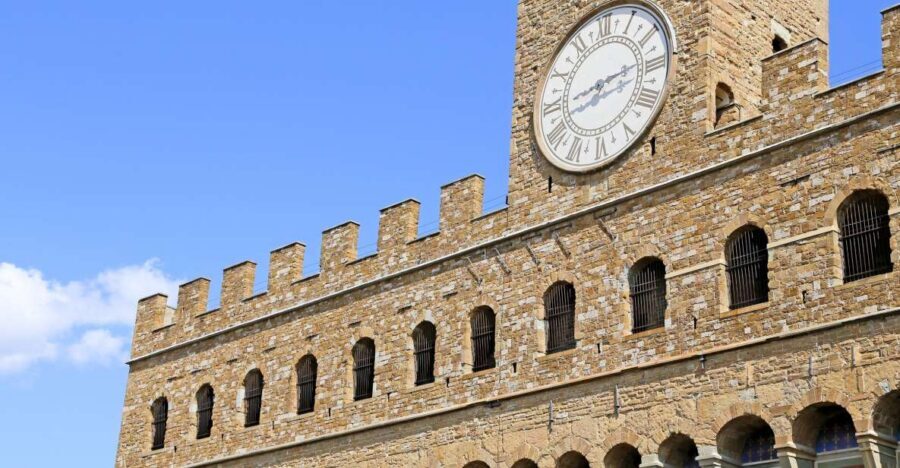
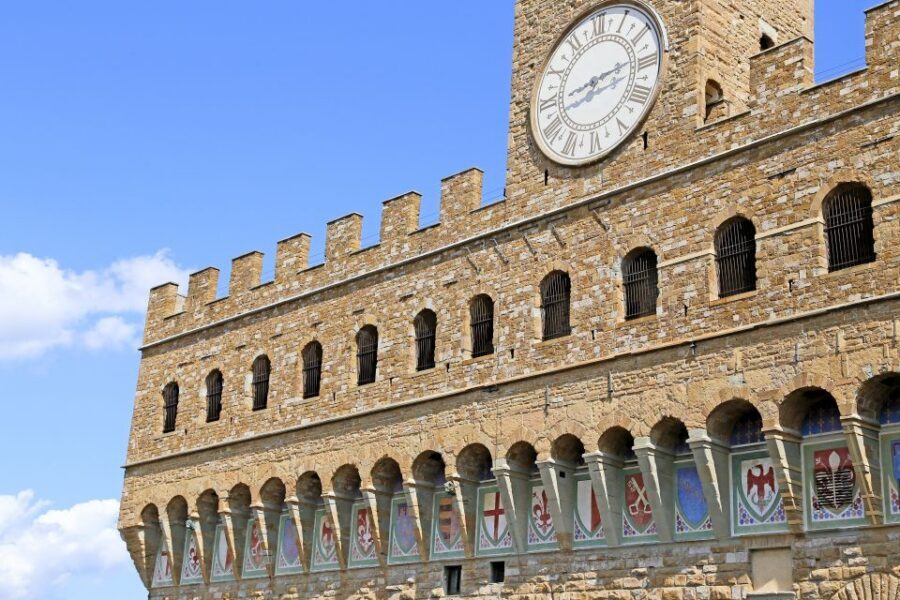
Palazzo Vecchio has been the heart of Florentine civic life for centuries. Built in 1299 as the home base for the city’s leaders, it later became the Medici family’s real palace. You’ll see the architecture, sculpture, and painting, and the audioguide helps you connect what you’re looking at to the people and power games behind it.
The experience is self-paced, which is a win, but the audio/tablet navigation can take a little patience. Some people find the room reference system confusing, especially when you’re hot, tired, and moving quickly between galleries and halls.
In This Review
- Key things to know before you go
- Why Palazzo Vecchio matters in Florence (and why it feels different)
- Getting in at Piazza della Signoria without wasting your morning
- Your self-guided route: how to actually use the audioguide
- From 1299 to the Medici: what to focus on inside the palace
- The Salone dei Cinquecento and Vasari’s influence
- Arnolfo’s Tower: the optional upgrade that changes the whole day
- How long you’ll need and how to pace yourself
- Price and value: is $37 worth it?
- Who should book this (and who might want a different plan)
- Should you book Palazzo Vecchio with the audioguide?
- FAQ
- Do I need to leave ID to get the tablet multimedia guide?
- Where do I go for the skip-the-line entry?
- What languages are available for the audio or multimedia guide?
- Is Arnolfo’s Tower included?
- Are there age limits for climbing Arnolfo’s Tower?
- What happens if it rains?
Key things to know before you go
- Skip the line at Piazza della Signoria by walking straight to the InfoPoint counter inside the courtyard.
- Choose your device: a 7-inch tablet multimedia guide or an audioguide (option-dependent).
- Make Arnolfo’s Tower part of the plan if you want the big-city view over Florence’s rooftops.
- The Salone dei Cinquecento is a must and you’ll see works connected to Giorgio Vasari.
- Bring ID: you’ll be asked to leave a valid ID at the ticket office to pick up the multimedia guide.
- Watch the calendar: on 16, 22, 23, 24, and 25 September, the Hall of 500 is closed to the public.
Why Palazzo Vecchio matters in Florence (and why it feels different)
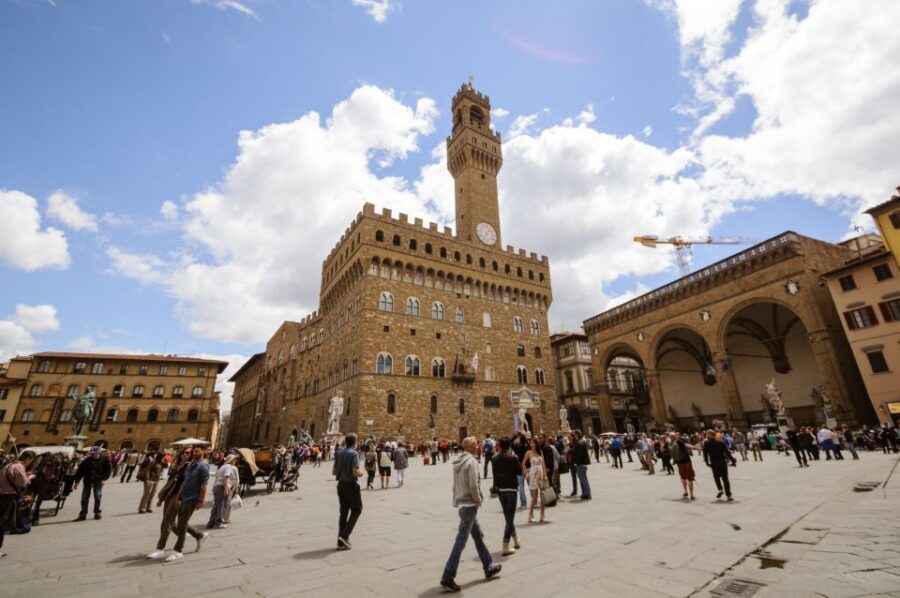
Palazzo Vecchio isn’t just another pretty building. It’s the symbol of Florence’s civic power—first medieval government, later Medici rule. When you start your visit at Piazza della Signoria, you’re already in the political “living room” of the city. That square is packed with art and drama, and Palazzo Vecchio is the heavyweight behind it.
What I like about this visit is that the audioguide (or tablet) helps you read the building like a document. You’re not only looking at walls and ceilings; you’re figuring out why those rooms mattered. The palace’s timeline is the story: built in 1299 for the leaders of the medieval city, then reworked for the Medici when they turned it into their residence.
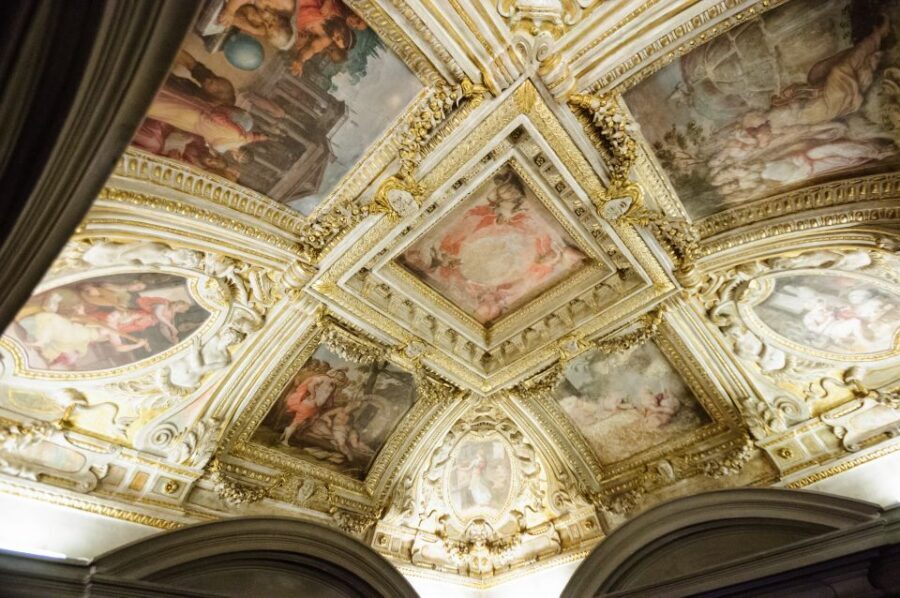
Also, the palace has a “high and low” quality to it. Some details are huge and theatrical. Others are small carvings in ceilings and ornament that reward slow looking. Even if you only pause for a few minutes at each stop, you start to see how the Medici used art and design to project authority.
You can also read our reviews of more tours and experiences in Florence
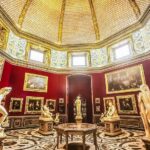
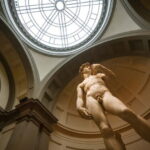
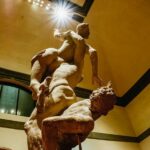
Getting in at Piazza della Signoria without wasting your morning
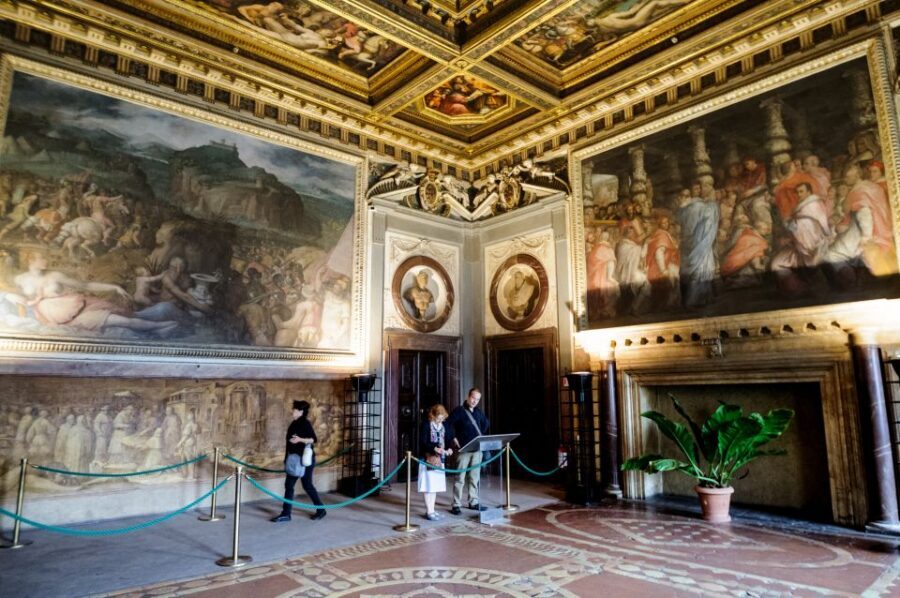
Logistics can either ruin or rescue a museum day. Here, the time-saving piece is real: you get skip-the-ticket-line admission, and you pick up your device inside.
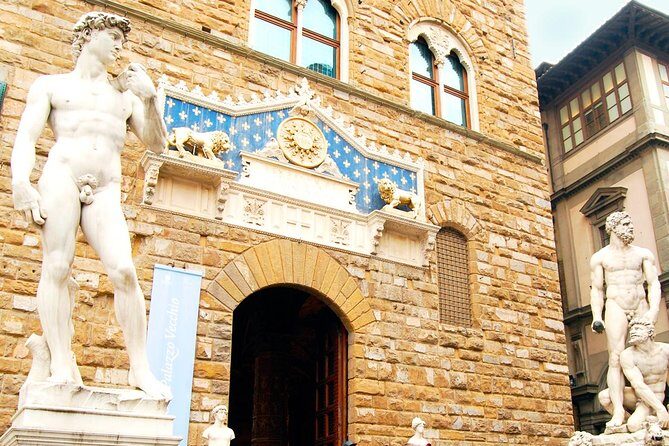
Your entrance is from Piazza della Signoria. Once you’re inside the courtyard, head directly to the InfoPoint counter. That’s the move. Don’t wander looking for the “right” line; follow the plan and save yourself time.
A key detail: if you’re using the 7-inch tablet multimedia guide, the ticket office asks you to leave a valid ID in order to pick it up. Bring your passport or ID card from the start so you’re not stuck mid-visit. And if you’re worried about earphones, one practical tip from past visitors is that disposable earphones can be provided if you forget yours.
The whole goal here is simple: get you into the palace and running on your own schedule as fast as possible.
Your self-guided route: how to actually use the audioguide
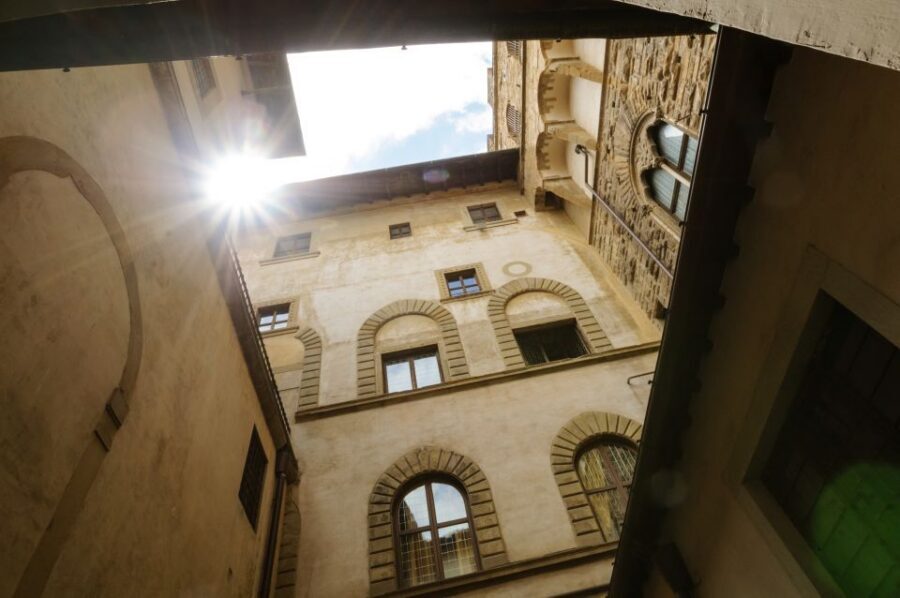
This is a self-paced visit enhanced by a choice of audioguide languages: Spanish, English, French, German, Russian, Italian, Chinese, and Portuguese (depending on the option and materials provided). If you’re traveling with someone, it’s also worth noting that the audio guides are the same for children and adults.
The big benefit of the audio/tablet approach is that you can slow down when something grabs you. Want to linger on ceilings or sculpture? Go ahead. Want to speed through transitional rooms? You can.
The main drawback is navigation. The multimedia/audioguide reference system uses markers (letters/numbers on the device), and the on-site cues don’t always feel perfectly matched. Some people run into the same problem: they can’t instantly tell which room they’re in compared with what the screen expects. If that happens to you, here’s the practical fix:
- Take 30 seconds to orient yourself in each chamber before you press play.
- Look for the room name or visual clues (big figures, famous paintings, or distinct hall layouts).
- If you lose your place, don’t panic. You’re not breaking anything by restarting the narration for that stop.
Also, Palazzo Vecchio is not one endless corridor. It’s a set of rooms and galleries with different “moods,” so switching attention between narration and sight can help you keep track.
From 1299 to the Medici: what to focus on inside the palace
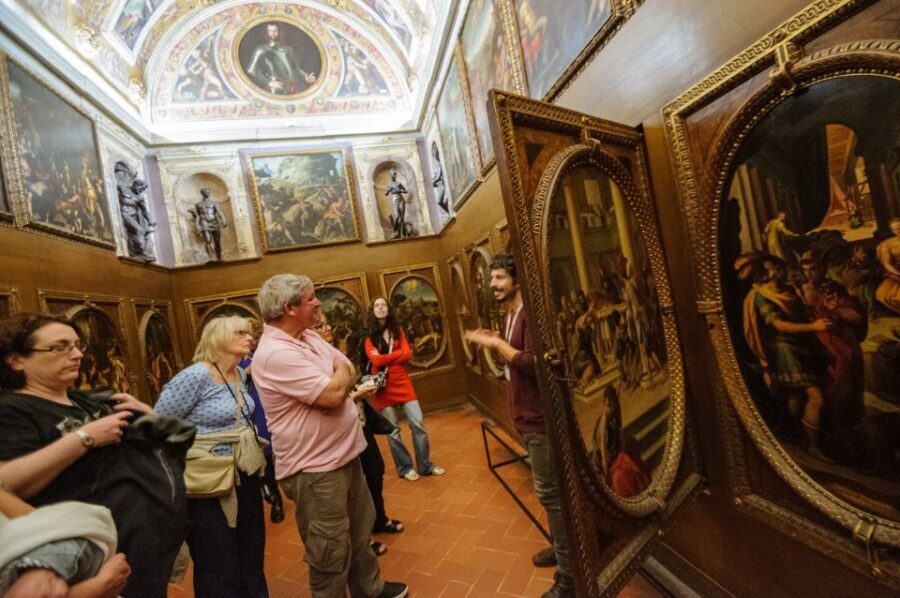
When the Medici took over Palazzo Vecchio, they didn’t just occupy it. They used it. They turned a seat of government into a staged identity for the family.
Inside, aim your attention at three layers:
- Architecture as power: thick walls, imposing spaces, and that “official” feel that makes a room read like leadership.
- Art as storytelling: you’ll encounter sculptures and paintings meant to signal status and legitimacy.
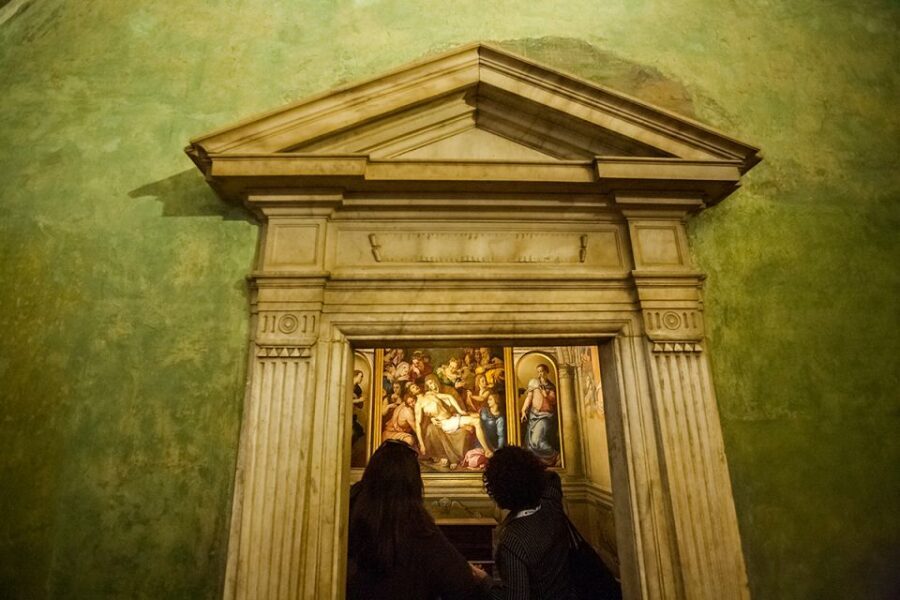
- Details that reward time: carvings and ceiling ornament can be intricate enough that you’ll want your head tilted up more than once.
If you’re sensitive to stairs or awkward angles, plan for some physical effort. One practical heads-up from visitors: many focal points are above eye level, so your neck and back might feel it after a while. It’s not a problem if you pace it, but don’t treat this like a 15-minute stroll.
A self-guided visit works best when you make micro-decisions. Pick a handful of rooms you don’t want to rush, and treat the rest as supporting scenes. This is especially true because, depending on how fast you move, the “museum portion” can feel shorter than you expected once you’re actually inside.
The Salone dei Cinquecento and Vasari’s influence
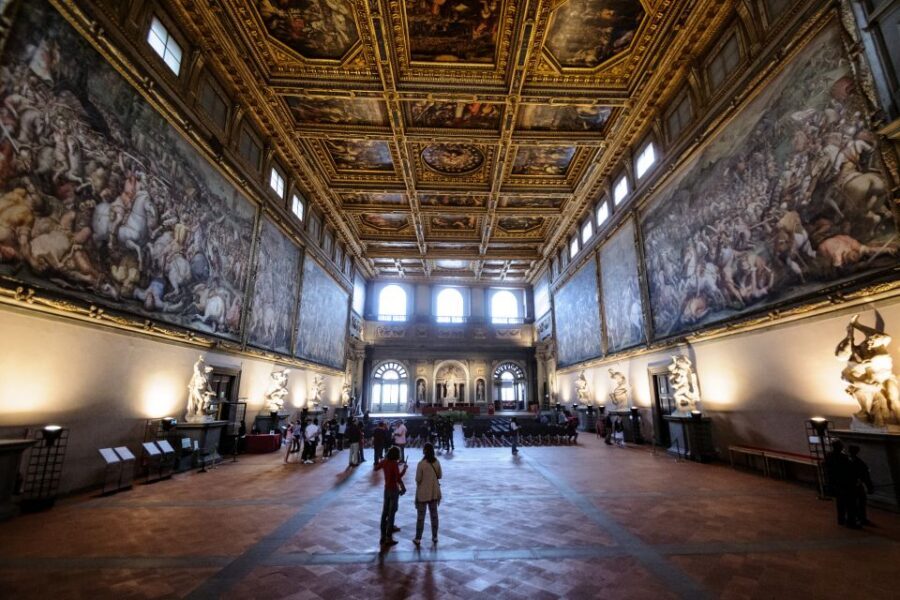
The Salone dei Cinquecento is one of those Florence rooms you understand instantly as important. This is the big formal hall—the kind of space where civic decisions were meant to look dramatic and permanent.
This ticket experience specifically highlights the hall and connects you to Giorgio Vasari’s works of art. Even if you’re not already fluent in Renaissance art references, the hall’s scale gives you the context. It’s not only about single masterpieces. It’s about how the room itself was designed to make authority visible.
My advice: don’t just look forward. Scan the whole space. Look up at how decoration frames the architecture. And take a minute to let the room “sit” in your brain. You’ll remember this more clearly than you think, especially if you match a few narration points to what you’re seeing in front of you.
- The Best tour in Florence: Renaissance & Medici Tales – guided by a STORYTELLER
★ 5.0 · 12,316 reviews





Arnolfo’s Tower: the optional upgrade that changes the whole day
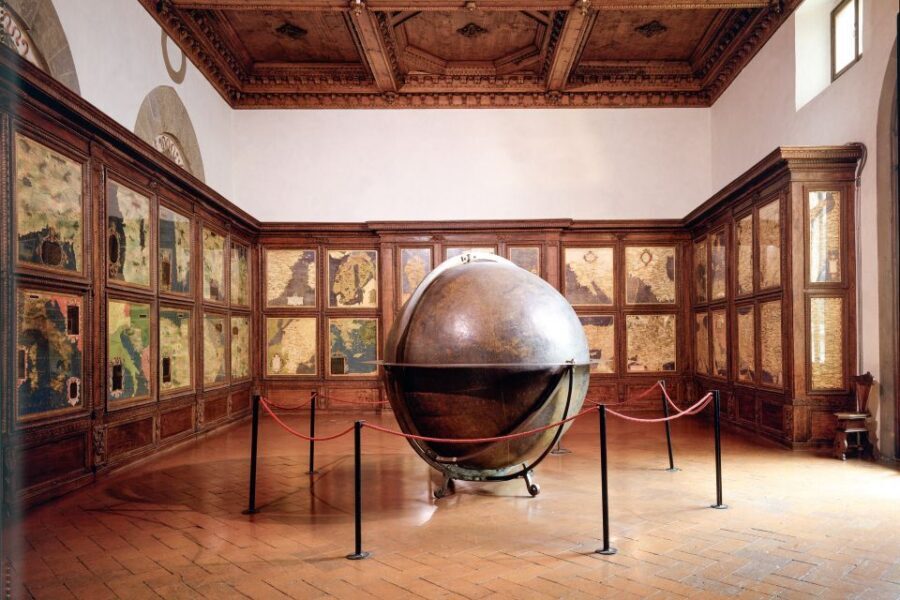
If you only do one optional thing, consider Arnolfo’s Tower. The upgrade includes access to the tower, and the view is the payoff: Florence stretches out beneath you, and you get a real sense of how the city is put together.
Timing matters here. The plan is tower first, then head to the museum about 1 hour later. That order is important because it changes how the rest of the building feels. If you start in the tower, you’ll likely have more energy at the top and less temptation to rush rooms below later.
What to expect physically: climbing stairs. One visitor called it about 418 steps to the top, and another said the climb took around 10 minutes for two people. Your pace depends on stamina and how often you pause for views.
And there’s weather logic too. Access to the tower may be suspended in case of rain, though you may still access the battlements. So if there’s bad weather in the forecast, I’d treat the tower as a “maybe” and keep expectations flexible.
One more practical note: if you do the tower first, you may need to re-enter the museum area afterward. A couple of visitors noted that moving back into the museum can feel a bit like being guided back through the flow, so mentally prepare for that handoff.
How long you’ll need and how to pace yourself
The ticket is built for a self-guided visit with narration. Still, the “right” time depends on how you like museums.
If you love art and detail, plan on taking your time in the halls and rooms—especially those where ceilings and ornament reward upward staring. If you’re more interested in the main highlights, you can cover a lot without turning it into a multi-hour ordeal.
In warmer months, the interior can feel very hot. That’s not a critique of Palazzo Vecchio—just reality. If you’re visiting in summer, I’d treat shade breaks as part of the strategy. Pause, hydrate, then restart your audio.
Also consider how your device style fits your day. A tablet can include images and narration, but it also adds screen time and handling. If you’d rather just listen and look, an audioguide can be more relaxing to use.
Price and value: is $37 worth it?
At around $37 per person, this ticket sits in the “yes, if you use the included features” category. The value comes from two things:
- Skip-the-line entry to a major Florence landmark. If you arrive when queues are forming, that saving can feel huge.
- The guide is included, either as an audioguide or a 7-inch tablet multimedia guide. That matters because Palazzo Vecchio is big, layered, and easy to under-read if you just wander.
The Arnolfo’s Tower option also changes the math. A view from a tower is often the kind of experience you remember longer than another roomful of art. When the tower is available, it can make the whole ticket feel more complete.
Where the value can feel less convincing is if you end up walking fast and treating the audio like an afterthought. The building rewards attention. If you’re the type who stops often and likes context, this ticket is more likely to feel like a smart spend than a pricey “access pass.”
Who should book this (and who might want a different plan)
This experience fits you if:
- You want a high-impact Florence classic with context provided for you.
- You like moving at your own pace instead of following a strict group schedule.
- You want either an audio or tablet multimedia companion to connect the art to the story of the Medici era.
It may be less ideal if:
- You hate stair climbs or you’re dealing with mobility limits (it’s wheelchair accessible, but you’ll still have a museum’s worth of walking).
- You’re very sensitive to heat inside historic spaces.
- You strongly dislike anything that requires navigation by device cues and room references.
If you’re visiting mainly for the tower view, do the tower upgrade—then commit to a short, focused museum loop afterward so you don’t feel like you missed too much.
Should you book Palazzo Vecchio with the audioguide?
Yes—book it if you want a fast, sensible way to see a cornerstone of Florence without losing time in queues. The included audio/tablet is what turns the palace from “lots of rooms” into an understandable story of civic power and Medici influence.
One last practical call: if you’re the kind of person who likes everything mapped out, give yourself extra patience with room cues and navigation. If you’re flexible and you enjoy discovering at your own speed, this is an efficient, very worth-it way to experience Palazzo Vecchio.
FAQ
Do I need to leave ID to get the tablet multimedia guide?
Yes. You will be asked to leave a valid ID at the ticket office to pick up the multimedia guide.
Where do I go for the skip-the-line entry?
Enter from Piazza della Signoria. Inside the courtyard, go straight to the InfoPoint counter and follow the skip-the-line process there.
What languages are available for the audio or multimedia guide?
The experience offers multiple languages, including Spanish, English, French, German, Russian, Italian, Chinese, and Portuguese.
Is Arnolfo’s Tower included?
Arnolfo’s Tower is included only if you choose the upgrade option for tower access.
Are there age limits for climbing Arnolfo’s Tower?
Children aged 0–6 cannot access the tower. Ages 7–17 must be accompanied by an adult.
What happens if it rains?
Access to Arnolfo’s Tower may be suspended in case of rain. Battlements access may still be available.

More Tickets in Florence


More Tour Reviews in Florence
- Tuscany Day Trip from Florence: Siena, San Gimignano, Pisa and Lunch at a Winery
★ 5.0 · 21,634 reviews - The Best tour in Florence: Renaissance & Medici Tales – guided by a STORYTELLER
★ 5.0 · 12,316 reviews