REVIEW · FLORENCE
Florence Time Travel Quest: Michelangelo’s Secret Trail
Book on Viator →Bookable on Viator
Florence turns into a puzzle game. This Michelangelo-themed time-travel quest uses your phone to guide you through real Renaissance streets, with 12 interactive challenges tied to a story about his work and the city’s symbols.
I particularly like that it takes you beyond the usual photo stops without requiring a live guide. You’ll pass famous landmarks like Ponte Vecchio and Piazza della Signoria while the clues keep you moving.
One thing to consider: it’s self-guided, so you’ll be juggling route-finding and phone screens at the same time. If you want a totally relaxed, no-thinking walk, the game format might feel a bit like homework.
In This Review
- Key things to know before you start
- A phone-led Michelangelo story that makes the streets feel alive
- Price and pacing: why $8.93 feels unusually fair
- Stop-by-stop walkthrough of Michelangelo’s secret trail
- Stop 1: Piazza Santo Spirito (Via Santo Spirito, 1)
- Stop 2: Fontana dello Sprone (Via dello Sprone, 20)
- Stop 3: Ponte Vecchio
- Stop 4: Piazzale degli Uffizi
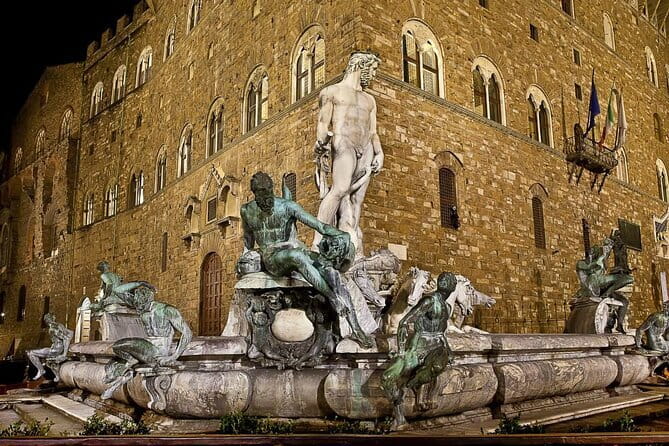
- Stop 5: Piazza della Signoria
- Stop 6: Piazza del Duomo
- Stop 7: Piazza di San Lorenzo
- Stop 8: Galleria dell’Accademia area
- Stop 9: Opera del Duomo Museum area
- Stop 10: Piazzale Michelangelo
- Stop 11: Casa Buonarroti
- Stop 12: Piazza di Santa Croce (finish)
- What the puzzles actually do for your sightseeing
- Logistics that matter: self-guided, mobile ticket, and group setup
- Practical tips so the quest stays fun (not fiddly)
- Should you book Michelangelo’s Secret Trail in Florence?
- FAQ
- How long does the Florence Time Travel Quest take?
- Is this tour guided by a person?
- What’s included in the price?
- Where do I start and where does it end?
- Do I need entry tickets to complete the experience?
- Can I pause and resume while doing the quest?
- Is it a private experience?
- Are service animals allowed?
- What is the cancellation policy?
Key things to know before you start
- Phone-led, self-guided adventure: use a mobile access code for the storyline and puzzle prompts
- 12 interactive puzzle challenges: each stop feeds you the next piece of the trail
- Flex time: you can start, pause, and resume anytime
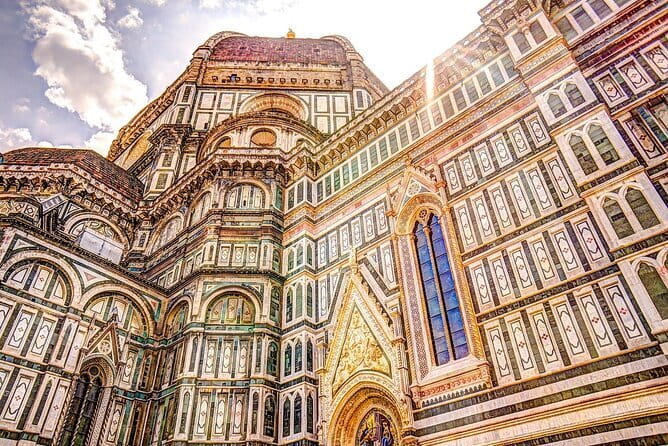
- Big Florence landmarks on foot: Ponte Vecchio, Piazza della Signoria, and the Duomo area are all on the path
- Finish in Piazza Santa Croce: the story and the walking route end together
- Good value: priced at $8.93 per person with mobile ticketing and no guide required
A phone-led Michelangelo story that makes the streets feel alive
This experience is built like a scavenger hunt, not a guided lecture. Your phone acts as your guide and your mission control, handing you clues as you walk from square to square. The storyline centers on Michelangelo and the mystery of how Florence became the home base for his most famous imagery.
What I like about this setup is that you’re not just looking at Florence. You’re making choices, solving small problems, and checking your own progress. That changes how the city feels, especially around the most crowded viewpoints where normal sightseeing can turn into shoulder-to-shoulder scanning.
You also get a helpful kind of structure: 12 short stops, each designed to be manageable on foot. The total time runs about 40 minutes to 1 hour 10 minutes, so it fits neatly into a day packed with museums.
You can also read our reviews of more tours and experiences in Florence.
- Tuscany Day Trip from Florence: Siena, San Gimignano, Pisa and Lunch at a Winery
★ 5.0 · 21,634 reviews


Price and pacing: why $8.93 feels unusually fair

At $8.93 per person, you’re paying for the narrative plus the puzzle framework. There’s no included tour guide, no vehicle, and you’re not required to buy attraction tickets to complete the route.
The pacing is designed for real walking time, not museum-line time. Each stop is roughly 5 minutes, but a couple of points explicitly let you linger before continuing when you’re ready. That’s a nice balance: enough structure to keep the story flowing, but enough freedom to pause for gelato, photos, or just watching people.
Also, average booking time is about 27 days in advance. That doesn’t guarantee sell-outs, but it does suggest this is popular. If you’re traveling in peak season or on a busy weekend, I’d book sooner rather than later.
Stop-by-stop walkthrough of Michelangelo’s secret trail
Here’s what the route feels like in order, and what to watch for at each location.
Stop 1: Piazza Santo Spirito (Via Santo Spirito, 1)
You start at Piazza Santo Spirito and get your first clue right away. This opening matters because it sets the style of the whole quest: look carefully, solve step by step, and then move on.
Why this stop works: you’re in a more local-feeling pocket of Florence before the big-picture landmarks kick in. It’s a good warm-up while you figure out how the phone prompts you.
Possible drawback: if you’re slow to connect to your mobile access code, you could lose momentum. Make sure your phone battery is topped up before you arrive.
Stop 2: Fontana dello Sprone (Via dello Sprone, 20)
Your next clue appears near the Fontana dello Sprone. Expect the puzzle to nudge your attention toward details you might otherwise ignore.
Why this stop works: fountains and street corners in Florence are full of small storytelling clues. Even without museum entry tickets, you can still spot the difference between “I’m sightseeing” and “I’m hunting for meaning.”
What to watch for: the clue-solving may pull you away from staring at the obvious skyline, so give yourself time to read instructions clearly.
- Tuscany Day Trip from Florence: Siena, San Gimignano, Pisa and Lunch at a Winery
★ 5.0 · 21,634 reviews - The Best tour in Florence: Renaissance & Medici Tales – guided by a STORYTELLER
★ 5.0 · 12,316 reviews



Stop 3: Ponte Vecchio
Now you step into Florence’s most famous river crossing. You’ll study your next clue on Ponte Vecchio, which is great because the bridge itself is already a story-heavy setting.
Why this stop works: it turns a crowded landmark into a purposeful waypoint. Instead of standing there and hoping you’ll get the perfect photo angle, you’re actively scanning and responding.
Possible drawback: Ponte Vecchio gets busy. Plan for short waits, and don’t get frustrated if you can’t see everything at once from where you’re standing.
Stop 4: Piazzale degli Uffizi
This is a transition stop that keeps you moving through the center. You’ll receive the next piece of the challenge and keep heading toward the next square.
Why this stop works: it helps you connect the dots between Florence’s cultural magnets. You’re not just bouncing between icons—you’re walking a narrative route.
What to watch for: this stretch is more “city navigation” than “art appreciation,” so keep your phone instructions visible.
Stop 5: Piazza della Signoria
This square is one of the easiest places to start learning Florence as a political and artistic stage. You’ll look up your next clue to continue the story.
Why this stop works: Piazza della Signoria is designed for looking up, and the puzzle format encourages exactly that. It also makes the area feel less like a stop-and-go crowd scene.
Possible drawback: because you’re outside and actively scanning, bright daylight can make the phone harder to read. A quick screen check before you start solving helps.
Stop 6: Piazza del Duomo
Next comes the Piazza del Duomo clue. You can stop for as long as you like here and continue at your own pace.
Why this stop works: you can slow down without breaking the quest. This is where you might want to absorb the buildings around you and not just keep walking.
Practical note: if you’re saving your energy for a big climb later in the day, this is still a good checkpoint to recharge with a snack.
Stop 7: Piazza di San Lorenzo
You’ll receive another clue in Piazza di San Lorenzo, another key Florence base where the street layout and sightlines matter.
Why this stop works: it keeps the route feeling purposeful. You’re working your way toward areas linked to artists and workshops in the Renaissance story.
What to watch for: this is another place where people cross from many directions, so pay attention to your next direction step before you move.
Stop 8: Galleria dell’Accademia area
Here you get a view moment and continue exploring at your own pace. The clue flow stays active, but you’re not stuck waiting in lines.
Why this stop works: it places you near one of the city’s most famous art institutions without forcing you into a timed ticket plan inside.
Possible drawback: you may still want to visit museums separately afterward. This stop won’t replace a dedicated art visit.
Stop 9: Opera del Duomo Museum area
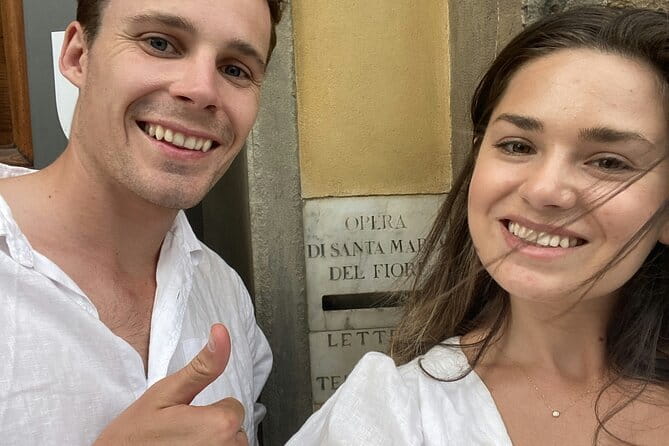
You explore at your own pace, admiring the buildings around you. This part keeps the quest grounded in real architecture, not just guessing games.
Why this stop works: it’s a good reset from pure puzzle focus. You can look around, take in the stonework and setting, and then re-center on the clue when you’re ready.
Possible drawback: if you’re expecting a full museum experience included in the quest, you’ll be disappointed. The route itself keeps moving without requiring you to buy admission.
Stop 10: Piazzale Michelangelo
You’ll solve the challenge at Michelangelo’s Street and continue from there. This is a very “Floresnce-at-eye-level” kind of stop because of the viewpoint energy around the area.
Why this stop works: it gives you a change of mood. The quest shifts from street-level details to a bigger sense of the city’s layout.
Possible drawback: if you’re sensitive to stairs or long uphill walks, this area may feel like the most tiring section.
Stop 11: Casa Buonarroti
You’ll see the Casa Buonarroti gallery and get your next clue. This stop is where the story connects more directly with Michelangelo’s legacy.
Why this stop works: after walking through squares and bridges, it’s satisfying to land near a place tied to the artist’s name. The quest structure helps it feel less random.
What to watch for: the gallery itself isn’t automatically included as paid entry. The quest flow is designed so you can still complete the experience without buying attraction tickets.
Stop 12: Piazza di Santa Croce (finish)
The quest ends in Piazza Santa Croce, where both the story and the city exploration games finish. It’s a strong finale because Santa Croce is one of those squares that feels like a real meeting place.
Why this finish works: you end where you can keep wandering easily—dinner planning becomes simple once you’re done with the puzzle route.
Possible drawback: don’t plan to sprint right after finishing if you’re stuck for restaurants. Build in a buffer so you can actually enjoy the ending square.
What the puzzles actually do for your sightseeing
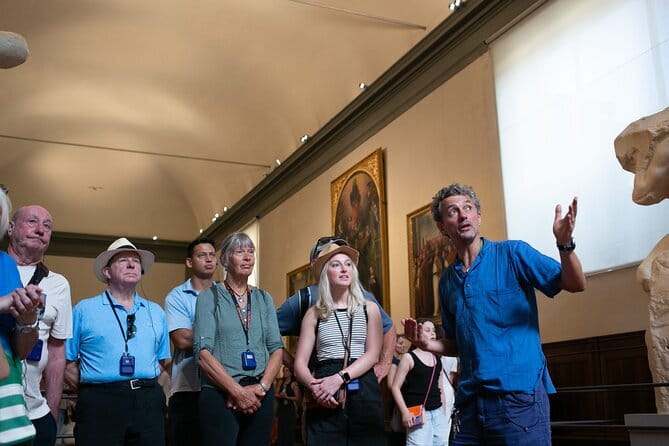
The best part of a walking puzzle is not the puzzle itself. It’s the way it makes you slow down in the right places.
Here, the story is designed to tie the clues to Florence’s major landmarks—Ponte Vecchio, the Duomo area, Piazza della Signoria, and the Michelangelo-linked viewpoints. So you’re not wandering randomly. You’re moving through a sequence that feels like a trail, not a checklist.
It also works well for people who want some connection while they travel. Since you’re solving together, it naturally creates conversation: who spotted that detail, what did the clue mean, and what direction should we try next.
And yes, it’s competitive in a friendly way. One parent described doing it with a young child who liked games and turning it into a bit of a race. That’s a strong sign the format can hold attention—especially when the family energy is more about play than lectures.
Logistics that matter: self-guided, mobile ticket, and group setup
This is a private tour/activity, meaning only your group participates. That’s a practical bonus in Florence, where you often feel trapped in crowds on group tours.
You’ll use a mobile access code and a mobile ticket. Since the whole thing runs on your phone, treat your battery like a travel essential. Bring a portable charger if you use navigation and the quest app at the same time.
The route is near public transportation, which can help if you decide to shorten the walk. Also, service animals are allowed, which is a meaningful detail for travelers who need that option.
Flexibility is built in. You can start, pause, and resume anytime, so if you hit a long line for food or want a longer look at the Duomo area, you can adjust without ruining your day.
Practical tips so the quest stays fun (not fiddly)

1) Test your phone setup before you begin. Make sure the access code works, and confirm the screens load correctly in daylight.
2) Give yourself short photo breaks. Florence crowds can make it hard to stop later, so take 30 seconds when a clue lets you.
3) Slow down at the squares. The puzzles work best when you stop, look up, and scan the architecture and street details instead of walking while reading.
4) Expect crowds at Ponte Vecchio and central squares. Aim for calm, not perfection. You’re here for the walk and story flow.
5) Plan one good meal after Santa Croce. Ending there means you’ll want time to unwind and eat without rushing.
Should you book Michelangelo’s Secret Trail in Florence?

I’d book it if you want Florence to feel interactive without extra museum planning. For the price, you get a structured walking route, a clear narrative, and 12 puzzle challenges that turn landmarks into problem-solving stops.
It’s also a great fit for couples and families who want to do something a little different from standard sightseeing. The format is easy to understand, and it naturally encourages teamwork—so it works even when your group travels with different interests.
I’d skip it if you strongly prefer guided commentary and long pauses for art viewing, because this is mostly a phone-led self-guided experience. You’ll be busy reading clues and making decisions, not just soaking in scenery.
If you’re doing Florence in a tight schedule and you want a way to see key sights while learning through play, this is a smart add-on.
FAQ
How long does the Florence Time Travel Quest take?
It takes about 40 minutes to 1 hour 10 minutes.
Is this tour guided by a person?
No. This is a self-guided experience using your phone as the guide. There is no tour guide included.
What’s included in the price?
You get a mobile access code, 12 interactive puzzle challenges, an immersive storyline inspired by Michelangelo, and the ability to start, pause, and resume.
Where do I start and where does it end?
You start at Piazza Santo Spirito, Via Santo Spirito 1 and finish at Basilica di Santa Croce, Piazza di Santa Croce 16 in Piazza Santa Croce.
Do I need entry tickets to complete the experience?
Entry tickets to attractions are not included, and they are stated as not needed to complete the tour.
Can I pause and resume while doing the quest?
Yes. The experience is flexible, and you can start, pause, and resume anytime.
Is it a private experience?
Yes. It’s listed as a private tour/activity, with only your group participating.
Are service animals allowed?
Yes. Service animals are allowed.
What is the cancellation policy?
Cancellation is free if you cancel up to 24 hours in advance for a full refund. If you cancel less than 24 hours before the start time, you don’t get a refund.


More Tour Reviews in Florence
- Tuscany Day Trip from Florence: Siena, San Gimignano, Pisa and Lunch at a Winery
★ 5.0 · 21,634 reviews - The Best tour in Florence: Renaissance & Medici Tales – guided by a STORYTELLER
★ 5.0 · 12,316 reviews