
REVIEW · FLORENCE
Florence: Uffizi Skip-the-Line Ticket & Digital Audio Guide
Book on GetYourGuide →Operated by Tours About · Bookable on GetYourGuide
Waiting for art is the worst part.
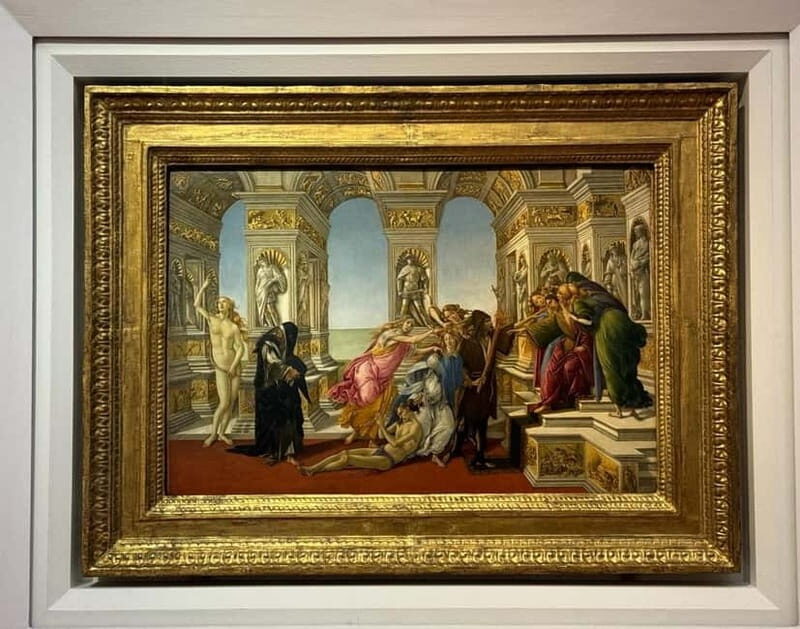
This timed-entry Uffizi Gallery experience helps you get inside faster with a pre-reserved slot and a separate entrance, then lets you roam at your own pace with a digital audio guide. You’re looking at big-ticket masterpieces—from Botticelli’s Primavera and The Birth of Venus to Michelangelo, Leonardo, Raphael, and even Rembrandt’s self-portraits—inside a 16th-century building designed by Giorgio Vasari.
Two things I really like about this setup: you get a smoother entry day (less time stuck in line), and you’re not chained to a group tour schedule once you’re in. One possible drawback: the visit depends on your phone and headphones working well, and there can be hiccups with the Pop Guide app, plus you still must pass a security check on site.
In This Review
- Key points to know before you go
- Timed-entry Uffizi: why it matters in Florence
- Meet in front of Leonardo da Vinci’s statue and exchange your voucher
- Security check and the line you can still face
- Pop Guide audio on your phone: how to make it work well
- The Uffizi building itself is part of the experience
- Your self-guided highlights: Botticelli, Michelangelo, Leonardo, Raphael, and more
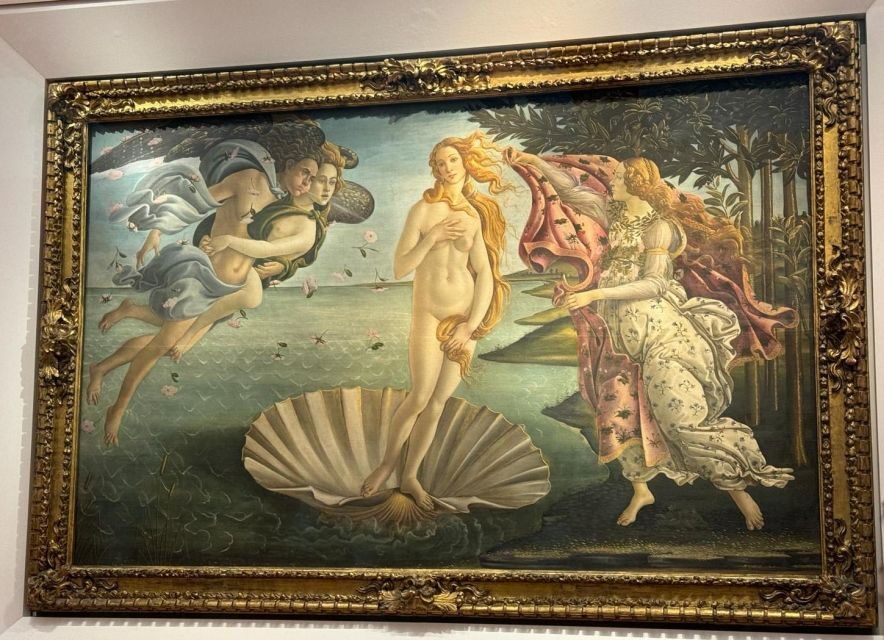
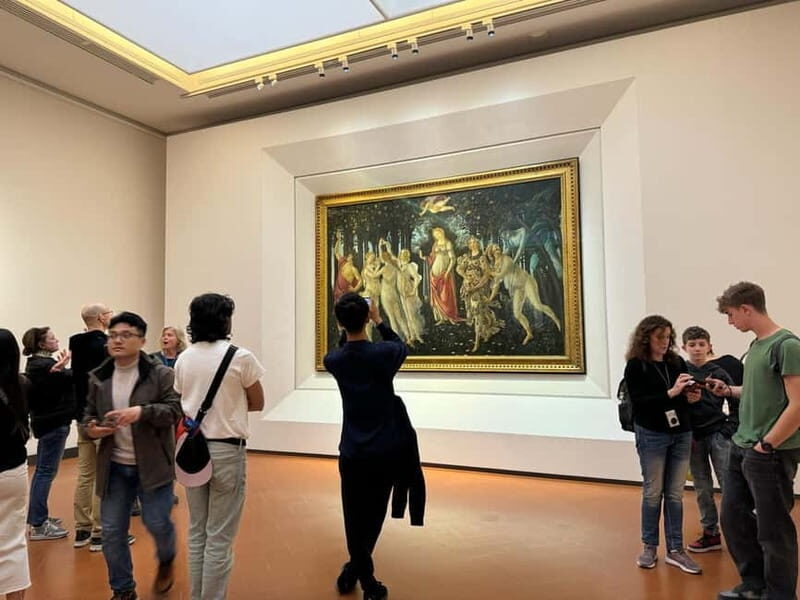
- Botticelli’s Primavera and The Birth of Venus
- Michelangelo, Leonardo, and Raphael
- Caravaggio’s Medusa
- Raphael’s Madonna del Cardellino
- Rembrandt’s Dutch Golden Age self-portraits
- Pacing a self-guided Uffizi day: what to do when it’s crowded
- When the phone map or audio glitches
- Price and value at about $47.71 per person
- Who should book this Uffizi skip-the-line ticket?
- Should you book this Uffizi skip-the-line ticket?
Key points to know before you go
- Timed-entry skip-the-line helps you avoid the worst of the main queue to enter.
- Self-paced visit means you control your own tempo in a museum with a lot of rooms.
- Pop Guide audio runs on your mobile device, not a handheld device.
- The art roster is top tier, including Botticelli, Michelangelo, Leonardo, Raphael, Caravaggio, and Rembrandt self-portraits.
- Security check still happens, and peak waits of about 15 to 20 minutes can occur.
- No museum Wi‑Fi is a real possibility, so plan to download and get set up before you arrive.
Timed-entry Uffizi: why it matters in Florence
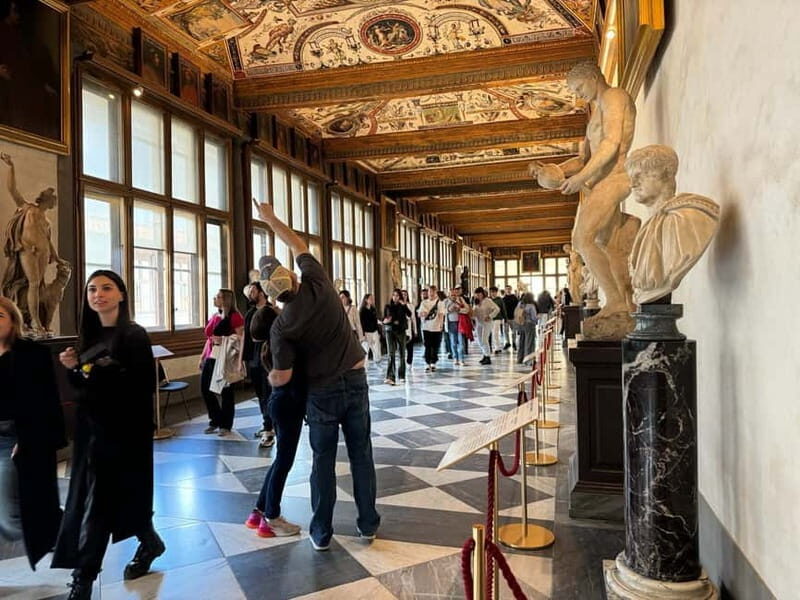
The Uffizi is one of those museums where the line can feel like part of the exhibit. This ticket is built around a timed entry plan, so you’re not starting your day fighting for access.
What you’re buying with the skip-the-line piece is simple: less wasted time, more time staring at art you actually came for. That matters because the Uffizi is huge, and a rushed visit can turn great paintings into a blur.
You can also read our reviews of more tours and experiences in Florence

Meet in front of Leonardo da Vinci’s statue and exchange your voucher
Your day starts outside the museum area by Leonardo Da Vinci’s statue. A staff member should be there holding a white flag that says ENJOY ROME, and you’ll exchange your voucher for a physical ticket.
This handoff is short, but it’s important. If you’re aiming for a specific entry time, you want that exchange to go smoothly—so I’d recommend arriving a bit early rather than sprinting over at the last second. In one case, the greeter is specifically mentioned as being Augusto, and it’s the kind of detail that hints how real and specific this meetup is.
Security check and the line you can still face

Even with skip-the-line entry, there’s a security check you must go through. The info provided here says that during peak hours, the wait for security is around 15 to 20 minutes.
So here’s the practical expectation: you’re skipping the main museum admission line, but you’re not skipping security. If you hate surprises, pick a time slot that feels realistic for you, and keep your schedule flexible enough to absorb that security window.
Pop Guide audio on your phone: how to make it work well
This experience uses the Pop Guide Audio Guide app on your mobile. At the meeting point, you should receive login credentials, and the instructions specifically say you’ll need to download the app beforehand.
Bring headphones and plan for limited connectivity inside. The key point: you’re relying on your own device and internet access at some stage, and one reviewer noted there wasn’t Wi‑Fi offered inside the museum. That means you could be paying with your phone plan if you’re not ready.
My advice to make this painless:
- Download the Pop Guide app before you go, ideally on Wi‑Fi.
- Arrive with your phone charged and headphones tested.
- If the app map/audio freezes, don’t panic—your ticket still works for entry, and you can keep moving by looking up the works listed in the highlights.
The Uffizi building itself is part of the experience
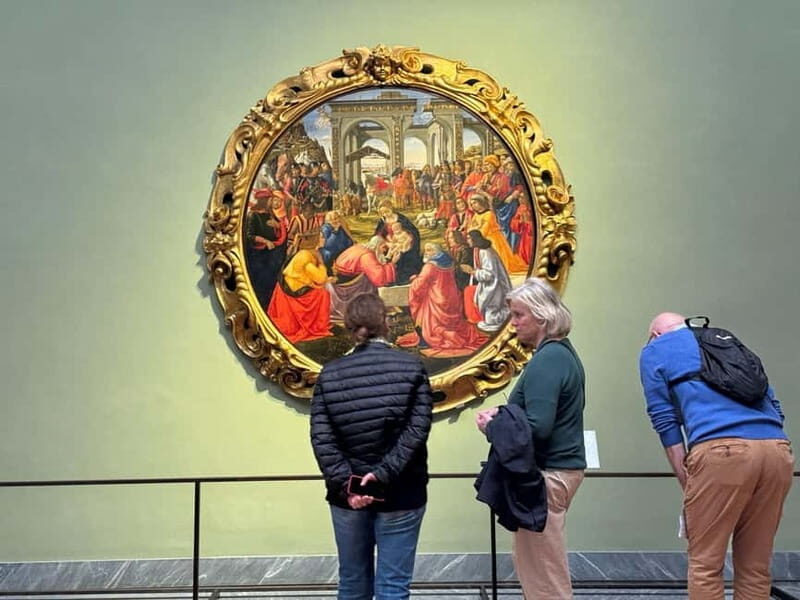
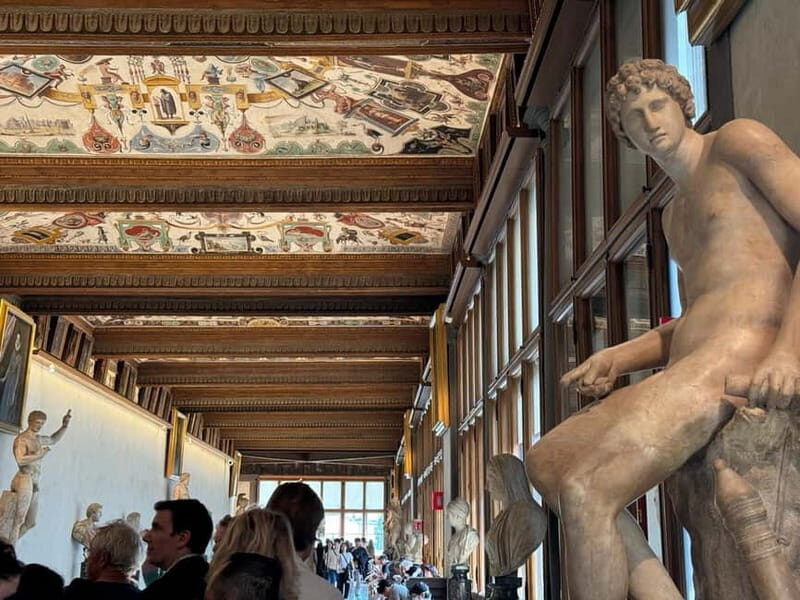
You’re not just walking into a room full of art. The museum sits in a 16th-century building that started life as offices for magistrates, designed by Giorgio Vasari.
That matters because the Uffizi can be visually “busy.” The architecture, the long corridors, and the arrangement of rooms all shape how you experience the paintings. When you’re tired of your phone screen and want something steadier, you can slow down and just look around—because the building has its own rhythm.
You can also read our reviews of more guided tours in Florence





Your self-guided highlights: Botticelli, Michelangelo, Leonardo, Raphael, and more

This is not a guided commentary tour. Instead, you get a curated audio layer, and you walk the museum at your own pace through the rooms where the big names live.
Here are the highlights you should plan around, because they’re your clearest payoff from this ticket:
Botticelli’s Primavera and The Birth of Venus
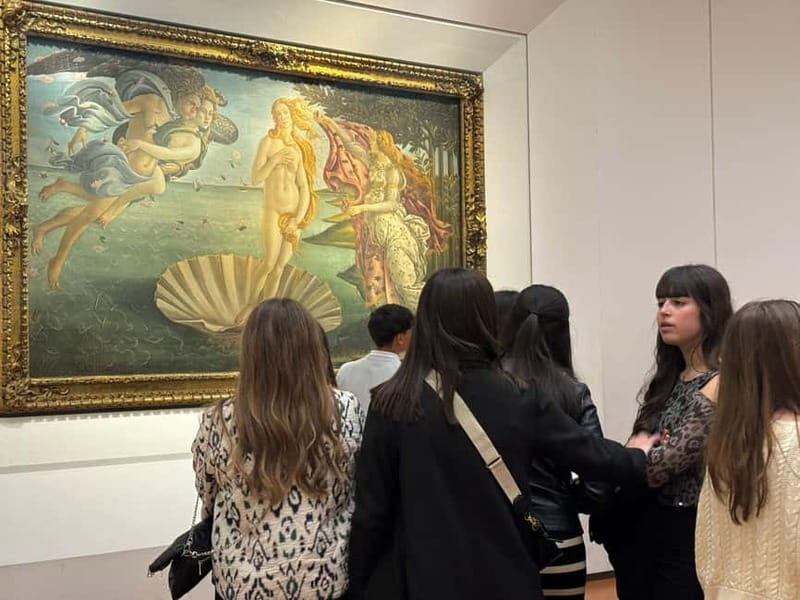
These are the two star attractions most people chase, and this ticket directly points you to them. The museum emblem is The Birth of Venus, showing the goddess emerging from the sea—so it’s not just famous; it’s central to how the Uffizi presents itself.
If you want your first big wow moment, aim to reach these early in your visit. When crowds rise, it’s harder to see details on the first pass.
Michelangelo, Leonardo, and Raphael
You’ll see major Renaissance works by Michelangelo, Leonardo da Vinci, and Raphael. The experience description frames these artists as core stops, which is a good clue that the audio guide will anchor you around their most famous pieces.
The practical takeaway: don’t try to “tick off” every work in one sweep. Pick the Renaissance masters you care about most, then let your eyes lead you from there. If you’re a detail person, you’ll be happier spending longer in fewer rooms.
Caravaggio’s Medusa
Caravaggio’s Medusa is listed as a notable work you can find during your self-paced wander. This kind of painting often changes the mood of a museum visit: it’s intense, and it can feel like a jolt after calmer scenes.
Even if you’re not an expert on Caravaggio, this is the sort of work that rewards you for looking longer than you planned.
Raphael’s Madonna del Cardellino
Raphael’s Madonna Del Cardellino is included in the highlights list. Works like this tend to pull you in with composition and expression, and they’re a good pause point if you’ve been moving quickly.
If your phone audio is acting up, you can still use the plain strategy of slowing down near the big known titles. This museum is famous for a reason.
Rembrandt’s Dutch Golden Age self-portraits
One of the more interesting add-ons here is the set of self-portraits by Rembrandt, representing the Dutch Golden Age. This is a smart contrast to the Renaissance focus, and it helps you break up the emotional tone of the visit.
If you like artists who show themselves—faces, aging, posture—this section is worth giving extra time to.
Pacing a self-guided Uffizi day: what to do when it’s crowded
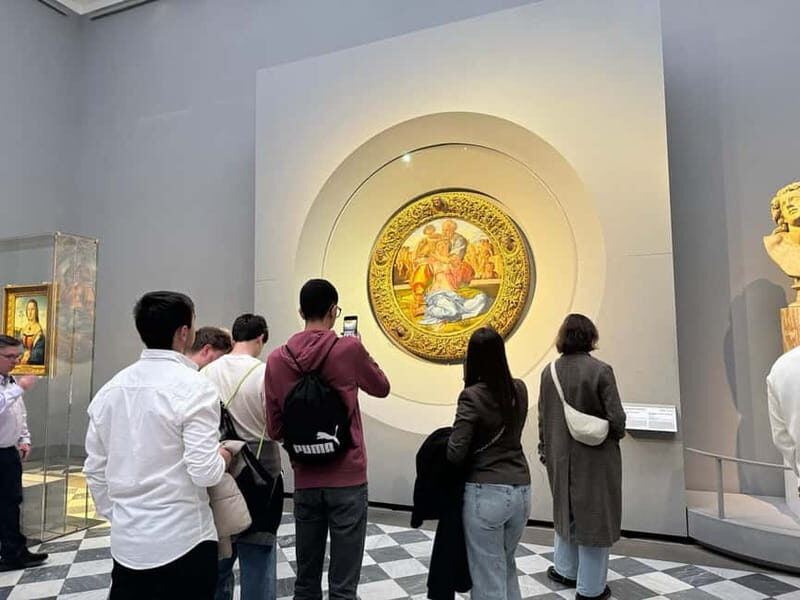
Uffizi fatigue is real. The museum is so packed with masterpieces that it’s easy to run out of attention before you run out of rooms.
You have two working modes:
- Fast mode: Use the audio guide to jump between major titles and keep moving.
- Slow mode: Stay longer near fewer works and let the museum’s flow unfold.
A practical tip from the experience info: if you’re trying to see a lot quickly, you might finish in a few hours, but if you want a relaxed visit, plan closer to six hours (or more if you truly read and look closely). That’s a safer bet than forcing a full museum marathon in one go.
When the phone map or audio glitches
Some people report the app map being hard to follow, and others mention the audio not playing properly. That doesn’t make the ticket useless, but it does mean you should have a backup plan.
Backup plan that works:
- Keep the highlight list in your mind (Primavera, Birth of Venus, Medusa, Madonna del Cardellino, Rembrandt self-portraits).
- If you lose the app’s directions, just keep wandering toward the next major name.
- Don’t assume the app’s suggested movement will feel like the easiest route. In a museum this big, getting back on track matters more than perfect routing.
If your phone audio truly fails mid-visit, the data you were given also includes at least one example of someone ending up renting/buying audio elsewhere inside the museum. It’s not the ideal outcome, but it’s good to know there’s a Plan B.
Price and value at about $47.71 per person
At $47.71 per person, this ticket is not the cheapest way to enter the Uffizi. But it’s also not only a “piece of paper.” The value is in the timed entry and the skip-the-line entrance plus the support at the meetup to exchange vouchers and set you up with the audio.
Here’s how to judge value for yourself:
- If you hate queues and you want a reliable entry time, the convenience fee can feel worth it fast.
- If you’re fine arriving early and waiting, you might question the markup.
- If you expect to use the Pop Guide effectively (and you’ll bring headphones and have your phone set up), this price can feel more justified because you’re getting a guided layer without paying for a separate tour guide.
Also remember: the activity description says no tour guide is included. So you’re paying for ticket handling and self-guided access, not for someone to interpret every room for you.
Who should book this Uffizi skip-the-line ticket?
This works best for people who want freedom more than commentary. You’ll like it if you’re the type who:
- Wants the biggest masterpieces without being stuck in a group pace.
- Likes using an audio guide while walking, pausing, and looking at your own speed.
- Plans ahead with headphones and phone readiness.
It’s less ideal if you depend on perfect audio reliability and you don’t want to troubleshoot apps. In that case, you might prefer a guided format where a human can keep you moving even if technology misbehaves.
Wheelchair access is marked as available, which is another reason this ticket is a practical choice for mixed groups.
Should you book this Uffizi skip-the-line ticket?
Book it if your priority is time-saving entry and you’re comfortable navigating a museum on your own with phone-based audio. It’s a smart choice when the Uffizi is on your short list and you don’t want your morning eaten by lines.
Skip it (or think twice) if you know your phone often struggles with apps, or you hate relying on a map/audio interface once you’re inside. The Uffizi can overwhelm you even with tech working perfectly, so you want your tools to help, not get in your way.
If you do book, do it with a simple plan: download and charge before you arrive, bring headphones, and give yourself enough hours to actually enjoy the masterpieces instead of sprinting past them.



More Guided Tours in Florence
More Tickets in Florence



More Tour Reviews in Florence
- Tuscany Day Trip from Florence: Siena, San Gimignano, Pisa and Lunch at a Winery
★ 5.0 · 21,634 reviews - The Best tour in Florence: Renaissance & Medici Tales – guided by a STORYTELLER
★ 5.0 · 12,316 reviews