REVIEW · SIENA
Private Vespa Tour in Chianti
Book on Viator →Operated by Tuscany Private Tour · Bookable on Viator
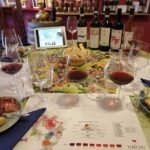
Chianti moves differently when you’re riding. This private Vespa tour blends countryside cruising with real stops in places like Radda in Chianti, Panzano in Chianti, and Castellina in Chianti. You’re not stuck in one long script—you can pause in villages and viewpoints that match what you feel like doing that day, and the tour ends with an Italian lunch and wine tasting.
I especially like how the day switches modes. First comes the fun part: scooter time between towns. Then your guide (people like Tommasso, Martina, and Stefani are part of this tour’s team) takes you on short, on-foot moments where the place actually makes sense—feudal castles, old borders between Florence and Siena, and the layered Etruscan-to-medieval story you’d miss driving past.
One consideration: you need scooter or motorbike experience, and the minimum driving age is 18 with a valid driving license. Staff do a Vespas briefing and will evaluate skills; they may decide not to rent Vespas and start you on a different vehicle up to availability—so come prepared to follow their lead.
In This Review
- Key things to know before you go
- Why this private Vespa day in Chianti feels special
- Getting rolling: timing, meeting point, and the scooter briefing
- Radda in Chianti: from prehistoric settlement to wine-villa era
- Panzano in Chianti: siege stories and an Etruscan footprint
- The Etruscan stop: Montecalvario and Necropoli del Poggino
- Castellina in Chianti: a border town built into the walls
- Lunch and wine tasting: why the timing matters on a scooter tour
- Price and value: what you’re really paying for
- Who this Vespa tour suits best (and who should think twice)
- Should you book this Private Vespa Tour in Chianti?
- FAQ
- FAQ
- How long is the Private Vespa Tour in Chianti?
- Where does the tour start?
- What time does the tour begin?
- Is the tour private?
- What language is the tour offered in?
- Do I need scooter or motorbike experience?
- What is the minimum age to drive?
- Is a driving license required?
- Will I definitely drive a Vespa the whole time?
- Are there admission fees for the stops?
- How flexible is cancellation?
Key things to know before you go
- Private, group-only experience: only your group participates, so the pace stays yours.
- A guided mix of driving plus walking: scooter stretches connect the dots; foot time adds the meaning.
- Free-entry town stops for key stops: Radda and Panzano are listed as admission ticket free.
- Staff-led Vespa skills check: you get a briefing, and the team decides whether you ride the Vespa.
- Lunch + wine tasting is part of the core plan: it’s built into the 5-hour flow, not an optional add-on.
Why this private Vespa day in Chianti feels special
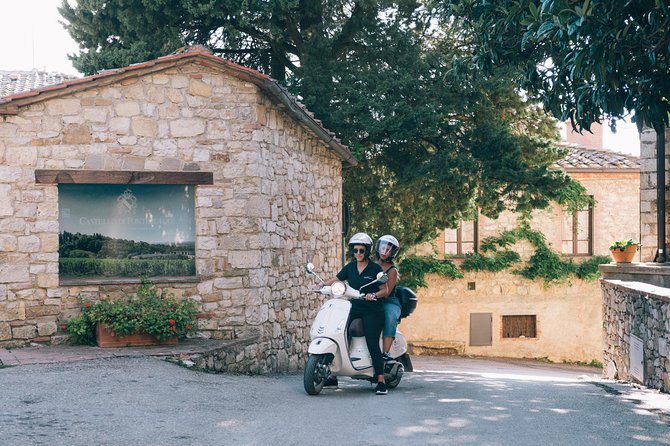
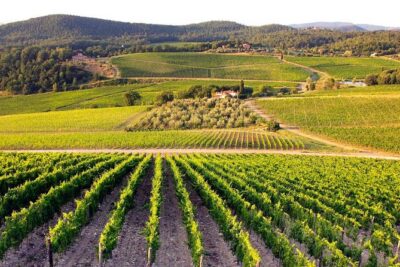
Chianti isn’t just pretty roads. It’s a patchwork of old power centers—Florentines, Sienese, Etruscans, and feudal families—all overlapping across centuries. Touring by Vespa makes that history feel close because you’re moving at a human speed. You can actually notice where villages sit, how roads connect, and why certain towns became strongholds.
The private format matters more than you might think. When it’s just your group, you’re not fighting crowds for the next photo angle or rushing to keep up with strangers. You can stop for viewpoints of your choosing, and your guide can adjust what they emphasize as you pass through.
And you get a real guide-led story, not just a drive-by. The guides connected with this tour bring the place to life with focused history pointers. Tommasso is singled out for passion and personal, on-foot explaining; Martina and Stefani are also highlighted for pairing countryside driving with small-town history and great views.
You can also read our reviews of more tours and experiences in Siena.
Getting rolling: timing, meeting point, and the scooter briefing
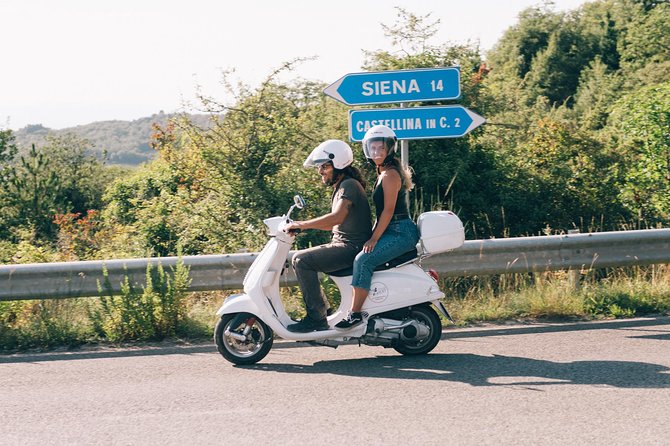
The tour starts at 10:00 am and begins at Tuscany Private Tour at Via Viale IV Novembre 35, 53011 Castellina in Chianti (SI). The timing is built for daytime driving and enough daylight for town stops and lunch/wine without feeling like a midnight sprint.
Before anything happens on two wheels, staff lead a briefing with Vespas. They evaluate your skills and decide if Vespas are the right fit for you. If not, the tour still runs using a different vehicle up to availability. So the key practical move for you: bring a valid driving license and be honest about your scooter/motorbike comfort level—this is not a “hop on and figure it out later” kind of plan.
The tour is also listed as offered in English, so you’ll get the explanation and history in a language you can follow without mentally translating every detail.
Radda in Chianti: from prehistoric settlement to wine-villa era
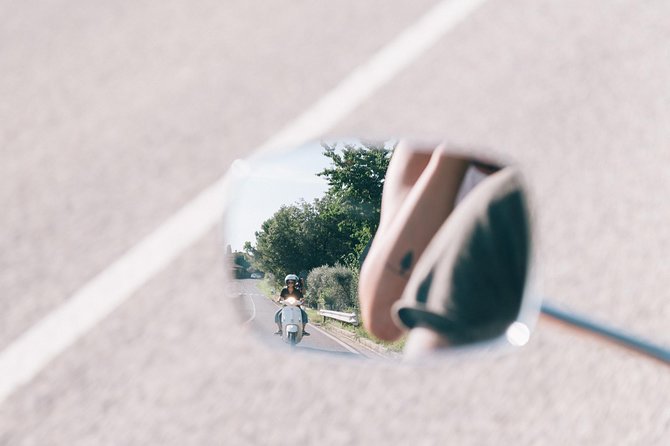
Your first stop is Radda in Chianti, a town area with traces reaching back thousands of years. Here’s the big idea I love about Radda: it’s not only a medieval hill town. The region was inhabited since around 2000 BC, with archaeological evidence tied to Poggio la Croce, where the remains of an ancient village were brought to light. Later, even when fewer traces survive, the presence of an Etruscan village is assumed.
Then the medieval layer kicks in. By the 5th century, small rural clusters were already forming. Between the 9th and 10th centuries, feudal society emerged and the villages took shape—connections you can understand quickly once your guide points out how these places functioned.
Radda’s documented history starts in a very specific way: a diploma from 1002 where Emperor Otto III confirmed a donation linked to Countess Willa and Badia Fiorentina. Later, Radda shows up repeatedly in Badia Fiorentina records through the 12th century. Then, in 1191, Emperor Henry VI granted the castle of Radda as a fief to the Counts Guidi—a decision later confirmed by Frederick II.
The town also got hit hard during conflicts. The Sienese sacked it in 1230. In 1268, French troops under Carlo I d’Angiò occupied it, and in 1478 a second heavy looting came during the second Aragonese invasion. If you’re the type who likes your photos with context, Radda is a strong place to slow down.
Finally, in the 17th century, the castles were transformed into stately villas, and owners leaned into wine production. That’s part of why the roads and viewpoints around Radda feel like they were designed for lingering—not just passing through. The stop is also listed as 45 minutes and admission ticket free, which makes it a smart use of time on a 5-hour outing.
Panzano in Chianti: siege stories and an Etruscan footprint
Next comes Panzano in Chianti, and the tone shifts from broad ancient settlement to sharper, place-specific evidence.
In the Etruscan period, the area is supported by a stele dating to the 6th to 5th century BC, found near the parish church of San Leolino (San Leolino stele, later dispersed). In Roman times, the region was densely inhabited, and even topographic names preserve that imprint—Panzano’s own name shows up in the tradition.
By the 10th century, the parish church of San Leolino in Flacciano was documented and later associated with Panzano. The name appears in the 12th century in a reference to plebe Sancti Leolini sitam in Panzano. By the 13th century, the church of Santa Maria within the castle is mentioned. The castle itself likely existed before the 12th century, and it was among the possessions of the Firidolfi family.
This is where Panzano becomes extra interesting for people who like conflict and consequence. After the Battle of Montaperti in 1260, the castle was sacked and two towers were destroyed by victorious Ghibelline troops. Then in 1397, during wars involving Florence and the Visconti of Milan, Panzano was occupied and sacked again by troops of Alberico da Barbiano.
In 1478, during the second Aragonese invasion of Chianti, Panzano’s castle became a key defensive bulwark for the Florentine Republic. It even served as the seat of the commissioner of the Republic.
And that’s not just dates on paper. It helps you see why these “small” towns had importance far beyond their size. Your stop is listed as 20 minutes and admission ticket free, which means you’ll want to listen closely and pick a couple of angles rather than trying to do everything.
The Etruscan stop: Montecalvario and Necropoli del Poggino
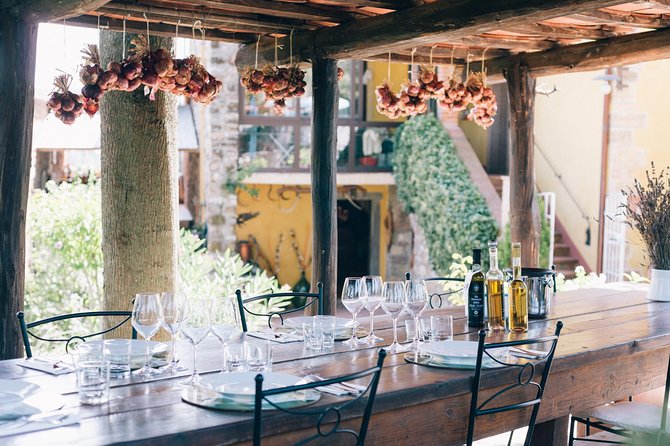
Between town stops, you also visit an Etruscan-focused area. The plan includes the mound of Montecalvario, an Etruscan tomb dated to the 7th–6th century BC near the town. Then there’s the Necropoli del Poggino near Fonterutoli.
What I like here is pacing. This part of the experience interrupts the usual rhythm of Tuscan village sightseeing with something more ancient and more still. You’re not meant to treat it like a museum visit with endless rooms. It’s more like a “point, look, understand” stop—one that gives you perspective on how long human settlement shaped this part of Chianti.
The surrounding context from the wider area matters too. Excavation campaigns in the Castellina region (from the 1980s) show evidence of a large town and identify an inhabited center located at Salinvolpe, a few hundred meters from today’s Castellina. If you’re the type who likes to connect visible places to what’s underneath them, this stop gives you that thread.


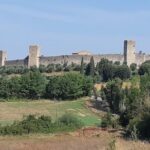
Castellina in Chianti: a border town built into the walls
The tour’s final major focus is Castellina in Chianti, and the history here is very “why this town exists” rather than just “what happened.”
You get both Etruscan evidence and medieval documents in the same story line. The Etruscan presence connects back to the Montecalvario mound and the Necropoli del Poggino area, reinforcing that this region held important settlements long before medieval fortifications.
Then the medieval period explains why Castellina mattered strategically. In the 11th century, the area was a fief of nobles from the Castello del Trebbio family, linked to the Counts Guidi. By the 12th century, Castellina fell under Florence’s influence. In 1193, an agreement between Trebbio’s lords and Florence allowed Florentines to militarily preside over castles of Trebbio and Castiglione (now Castellina).
After the Lodo di Poggibonsi in 1203, which sanctioned the border between Florence and Siena, Castellina became one of Florence’s key outposts. The reason is practical: it sat on the most direct road connecting the two rival cities. So when you look at where roads run today, you can often feel the old logic still guiding them.
In the 14th century, Castellina became a cornerstone of the Lega del Chianti. It even headed one of the third parties in which the league was divided—the Terziere di Castellina—administering the section sloping toward Valdelsa. In 1397, it was sacked and completely burnt by troops under Gian Galeazzo Visconti, commanded by Alberico da Barbiano.
From there, fortification becomes the star. In 1400, it was decided to fortify Castellina. Work was slow, but by 1430, workers from the Opera del Duomo were commissioned to fortify Castellina alongside Staggia Senese and Rèncine, with Filippo Brunelleschi sent to define the type of interventions and estimate costs.
The walls held in 1452 against Aragonese assault. But the story turns again during the second Aragonese invasion in 1478, when Castellina was conquered by Sienese and Neapolitan troops. Defense was personally directed by Giuliano da Sangallo, while the besiegers were commanded by Francesco di Giorgio Martini. Siena’s occupation lasted until 1483, when Florentines regained control.
Then comes the administrative shift: in 1774, the Grand Duke Pietro Leopoldo’s reform made Castellina the seat of the Community that led to today’s municipality. It’s a reminder that old fortifications eventually become civic identity.
Lunch and wine tasting: why the timing matters on a scooter tour
This is not a “drive for hours then see what happens” setup. The plan includes time to savor an Italian lunch and wine tasting as part of the day’s flow.
On a Vespa day, lunch is more than food. It breaks the muscle and attention load. You’re switching between focusing on traffic and enjoying the scenery; a seated meal gives your brain time to catch up. It also gives your guide a natural point to talk more deeply—why certain towns mattered, what the borders changed, and how wine production became part of the region’s later identity.
Since the tour is around 5 hours, you’ll want to treat lunch as the anchor. Don’t try to turn the whole day into a nonstop stop-and-scan. Eat, listen, and then let the last segment feel lighter.
Price and value: what you’re really paying for
No price is listed here, so I’ll talk value instead of numbers.
You’re paying for four things that add up fast in Chianti:
- A private setup: only your group, so you don’t lose time to crowd logistics.
- Transportation built into the itinerary: Vespa riding does what buses and walking can’t—connect villages at a fun pace.
- Guide-led context: the history isn’t generic. You get names and specific events tied to the places you’re seeing.
- Lunch and wine tasting included: this is often where group tours win, because you’re not hunting for the “right” meal plan afterward.
There’s also mention of group discounts, which can make the private format feel closer to the cost mindset of a small group sharing transportation.
If you’re thinking, I can do this on my own with a rental scooter, you’re right—you can. But the big difference is the planned stops and the explanation that helps you understand what you’re looking at instead of just driving through.
Who this Vespa tour suits best (and who should think twice)
This tour fits best if you want a hands-on Chianti day. If you like switching between moving and short guided walks, you’ll enjoy this format. If you care about history but don’t want a lecture hour, the short stops with on-foot guidance are a good match.
It’s also a fit if you prefer English-language guidance and want a more personal pace than a typical group bus.
Think twice if you don’t have scooter experience or you don’t have the minimum age of 18 to drive. Even if you still want the tour experience, staff evaluate skills and may change your vehicle plan based on comfort and ability. That’s not a problem—just be ready for the briefing to matter.
Finally, the time window is about 5 hours, so if you want to spend an entire afternoon inside one town, this is more of a “see several key places well” approach than a “slow one town for hours” approach.
Should you book this Private Vespa Tour in Chianti?
Yes, if you want a fun, guided way to connect the dots across Radda in Chianti, Panzano in Chianti, and Castellina in Chianti, with an Italian lunch and wine tasting built in. The best part of this kind of tour is the combination: movement that feels local plus history you can actually remember because you saw it from the road and on foot.
If you’re uncertain about your scooter skills, don’t assume you’ll be on a Vespa the whole time. The staff briefing and skills evaluation are part of how they run the tour, and the plan can shift to another vehicle if needed.
FAQ
FAQ
How long is the Private Vespa Tour in Chianti?
The tour lasts about 5 hours.
Where does the tour start?
It starts at Tuscany Private Tour, Via Viale IV Novembre 35, 53011 Castellina in Chianti SI, Italy.
What time does the tour begin?
The start time is 10:00 am.
Is the tour private?
Yes. It’s a private tour/activity, and only your group participates.
What language is the tour offered in?
The tour is offered in English.
Do I need scooter or motorbike experience?
Yes. Experience with scooters or motorbikes is required.
What is the minimum age to drive?
The minimum age for driving is 18.
Is a driving license required?
Yes. A driving license is requested.
Will I definitely drive a Vespa the whole time?
Staff lead a Vespas briefing and evaluate client skills. They decide whether Vespas are rented. If not, the tour will start with a different vehicle up to availability.
Are there admission fees for the stops?
Radda in Chianti and Panzano in Chianti are listed as admission ticket free stops.
How flexible is cancellation?
Free cancellation is offered up to 24 hours in advance for a full refund. Cancellation changes within 24 hours aren’t refundable.