REVIEW · SIENA
Siena Private Walking Tour
Book on GetYourGuide →Operated by Travmonde OÜ · Bookable on GetYourGuide
Siena has a way of teaching you history fast. This private walking tour is built for making sense of Siena’s medieval look, from old sculpted symbols to the bigger political shifts that shaped the city. It’s a UNESCO-listed destination where 13th-century art still speaks in the street.
I really like two things about this experience. First, you’re not just seeing pretty stone—you’re getting an organized explanation of what you’re looking at, including Etruscan traces and the influence of the Senones. Second, the tour follows a clear story line through Siena’s Republic era and the later transition toward Florence’s Duchy, so your photos come with context instead of confusion.
One thing to consider: it’s only 1.5 hours. If you want a long, slow wander with lots of stops to sit and linger, you may find the pace a bit tight.
In This Review
- Key highlights you’ll feel on the walk
- Entering Siena’s medieval maze without getting lost in it
- Starting at Gaia Fountain in Piazza del Campo: your built-in orientation tool
- Etruscan traces and the Senones: seeing older roots under medieval Siena
- Siena’s Republic era: how political power shows up in everyday space
- The Italian War’s impact: history as a pressure that changes the city’s story
- Transition to Florence’s Duchy: finishing the timeline without leaving you stuck
- Your guide and the private-group advantage
- How the 1.5-hour length affects what you’ll actually get
- Entrance fees aren’t included: plan your budget and your priorities
- Price and value: $283.21 for up to 15 people
- Who this Siena walk suits best
- Should you book Siena’s Private Walking Tour?
- FAQ
- How long is the Siena Private Walking Tour?
- Where does the tour start?
- Is this a private tour?
- What languages are available?
- What is the price?
- Are entrance fees included?
- Can I customize the tour?
- What is the cancellation policy?
- Is there a pay-later option?
- How does the tour end?
Key highlights you’ll feel on the walk
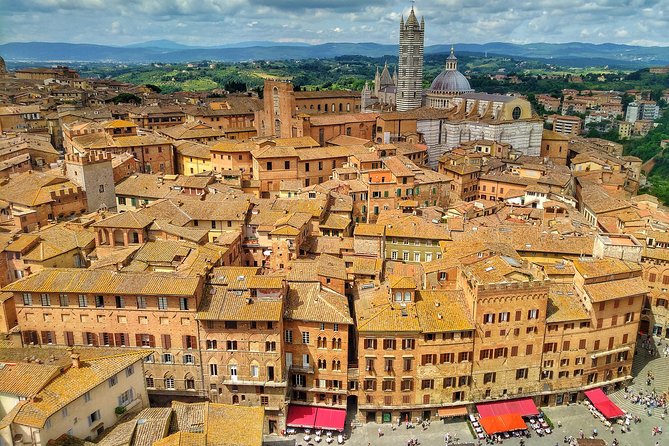
- Gaia Fountain and Piazza del Campo as your starting anchor for getting your bearings quickly
- Etruscan traces and Senones influence explained through what you can actually see
- Siena’s Republic era brought down to human scale, not just dates
- Italian War impact and what political pressure changed in the city’s story
- Transition to Florence’s Duchy, so Siena’s ending isn’t a mystery
- A private group with a local professional guide who can adjust on the spot
Entering Siena’s medieval maze without getting lost in it
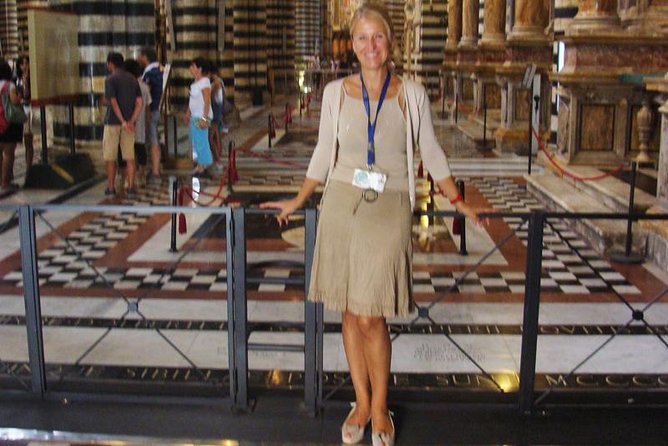
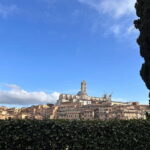
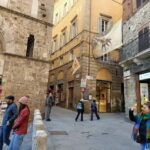
Siena can look like a postcard on every corner. The problem is that postcards don’t explain why certain symbols repeat, why certain monuments feel “spiritual” and “earthly” at the same time, or how power shows up in stone. That’s where this tour earns its keep: it’s designed to connect the city’s medieval look to the forces that shaped it.
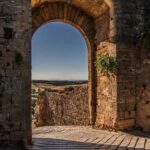
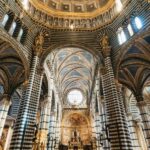
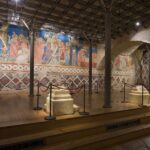
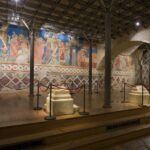
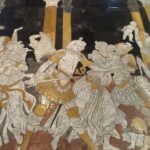
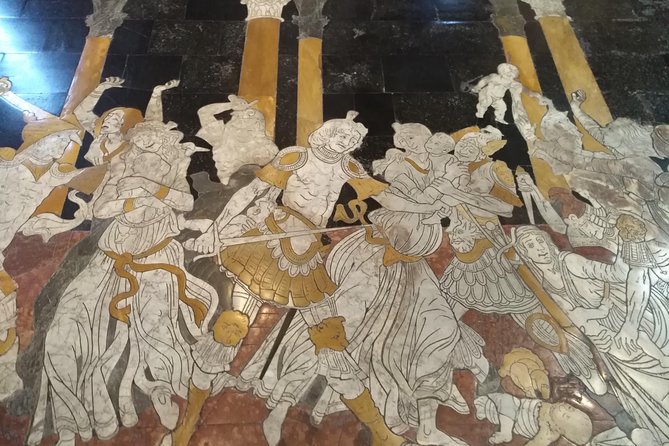
You get a guided stroll that focuses on Siena’s spiritual and earthly monuments while still keeping your feet moving. The city is known for medieval sculptures, including pieces dating back to the 13th century, and the tour is paced so you can actually take them in rather than just march past them. This is the kind of walk where you start noticing patterns—figures, symbols, and architectural cues—that you’d otherwise miss.
What I like most is that it’s not framed as a single “greatest hits” loop. The experience includes an emphasis on the city’s layers, from older traces to later political eras. If you enjoy history you can walk through, this one fits.
You can also read our reviews of more walking tours in Siena

Starting at Gaia Fountain in Piazza del Campo: your built-in orientation tool
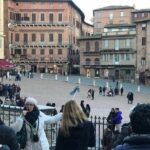
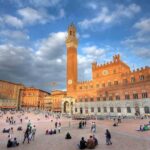
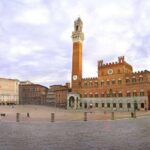
You meet at the Gaia Fountain, in Piazza del Campo, Siena. That’s not a random starting point—it’s one of the most useful places in town to anchor your sense of direction, because the Piazza gives you a public-space reference as soon as you arrive.
From a practical standpoint, starting in a central landmark matters. You’re not negotiating meeting points across winding streets. You’re starting from a recognizable square, and that makes it easier for a guide to steer the group’s movement across the city with less backtracking.
Think of this start as your “map without a map.” Once you have Piazza del Campo in your mental toolkit, the rest of the walk makes more sense: you can better understand where the city’s older identity shows up and how later chapters change the tone of the streets.
Etruscan traces and the Senones: seeing older roots under medieval Siena
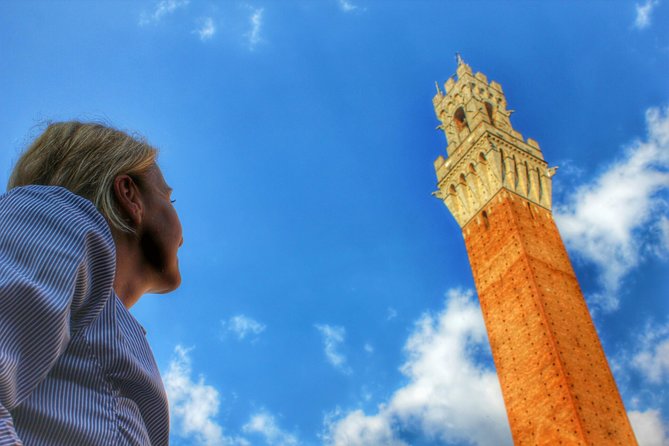
One of the tour’s core highlights is exploring Etruscan traces in Siena and learning about the Senones’ influence. Even if you don’t know the terms before you arrive, the value here is how the guide turns abstract labels into visual clues.
Etruscan connections can be tricky in Italy because you often have to connect dots across time. A good guide helps you do that by pointing out where older roots echo in later culture—through the way communities formed, how power was organized, and how symbolism carried forward.
The Senones angle matters because it adds an early layer to Siena’s identity. Instead of treating Siena as if it “appeared” fully formed in the Middle Ages, you get a sense of continuity and change. You’ll likely walk away with a stronger mental picture of how earlier peoples helped set the stage for what Siena became.
I also appreciate that this part is not presented as a lecture you have to endure. Since it’s a walking tour, the discussion stays attached to what you’re looking at in the street scene.
Siena’s Republic era: how political power shows up in everyday space
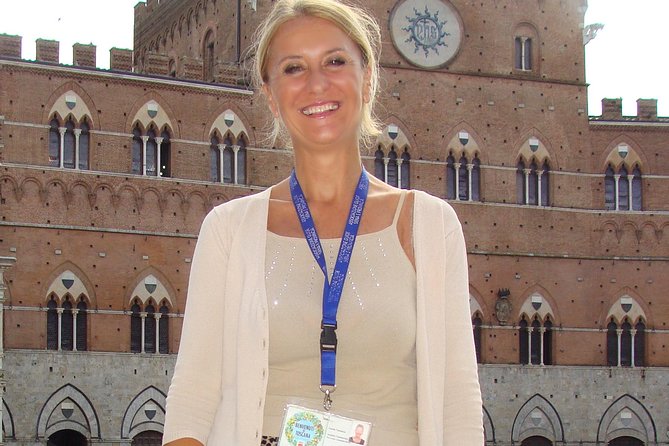
Another highlight is uncovering Siena’s Republic era. That could sound like classroom history, but on a walking tour it tends to land differently: you start connecting governance with the city’s physical rhythm.
Republics don’t just live in documents. They live in the way people gather, in the public symbols they choose, and in the emphasis placed on civic identity. In Siena, that civic identity is tied closely to the medieval aesthetic—so you’re reading politics through art and architecture.
This is also where the tour’s description of 13th-century sculptures becomes especially useful. When you see sculpture and monument forms tied to civic life, the art stops feeling decorative. It becomes a communication tool, built to last and built to persuade.
If you like history that answers the question why, this is a strong moment in the experience. You’ll be looking at the city and thinking less in facts-only terms, more in cause-and-effect terms.
The Italian War’s impact: history as a pressure that changes the city’s story
The tour also addresses the Italian War’s impact. Wars can feel distant when you read them as dates and treaties. On this walk, the point is more grounded: the Italian Wars are part of the chain of events that reshaped how Siena positioned itself and how its later story unfolded.
This is one of the benefits of having a local professional guide with your group only. You can get the kind of explanations that connect big events to the city’s evolving character. It’s not about getting every political detail correct; it’s about understanding why the city’s trajectory changed.
And because the tour ties these eras to what you see—medieval forms, long-lasting art sets, and monuments that retained medieval identities—you end up with a more “three-dimensional” understanding. The city feels like it lived through conflict rather than simply remembering it.
You can also read our reviews of more private tours in Siena

Transition to Florence’s Duchy: finishing the timeline without leaving you stuck
Siena’s story doesn’t end cleanly in the medieval period. Another key highlight is the transition to Florence’s Duchy. This is a big deal in terms of value because many walking tours stop at the romantic medieval portion and leave the next chapters as an afterthought.
Here, the guide keeps the narrative moving. That means you’re not just collecting scenes—you’re learning the arc. Siena becomes more than a well-preserved backdrop; it becomes a city with an ending to the story you can place.
This final theme also helps with something travelers often struggle with in Italy: interpreting why one city feels strongly itself while neighboring powers pull at it. When you understand the shift toward Florence’s influence, later cultural contrasts make more sense when you keep exploring Tuscany.
Your guide and the private-group advantage
This is a private group tour with a local professional guide who stays with your group only. That setup matters more than you might think, especially in a place where streets and stories overlap.
In a private format, you can ask follow-up questions without waiting for the whole group to catch up. You also get a bit more flexibility, because the tour notes that there can be possible customizing on the spot. That means if you’re most curious about one of the era themes—Etruscan traces, the Republic, the Italian War, or the Florence transition—you can steer the focus.
It also helps that the tour is offered in English and Italian. If you’re comfortable with either language, you’re getting a guided explanation rather than relying on your own interpretation of symbols and eras.
One more subtle benefit: private groups tend to move at a pace that supports learning. With only your group, the walk stays coherent instead of turning into a sprint between stops.
How the 1.5-hour length affects what you’ll actually get
Duration is 1.5 hours. That’s short enough to keep the tour feeling doable even if you have other plans in Siena, but long enough for a real guided storyline.
Here’s how to think about it:
- In 90 minutes, the guide can cover multiple eras without rushing each concept into nothing.
- You’ll get time for looking, listening, and mentally organizing what you see.
- You won’t get a full deep-study experience where you sit for long periods or visit multiple paid museums.
So it’s a best-fit tour if you want a high-clarity orientation and a history-and-art connection. It’s not the best choice if your goal is slow, open-ended wandering where every alley becomes an optional detour.
Entrance fees aren’t included: plan your budget and your priorities
Entrance fees are not included. The practical effect is simple: if you want to go inside any paid sites along the way, you’ll need to budget separately. The tour description says you’ll explore top attractions, but it doesn’t promise that every stop is free.
My advice: decide ahead of time whether you want this to be a streets-and-monuments walk only, or whether you plan to add any interior visits on your own afterward. With a fixed 1.5-hour window, it’s easy to end up spending time on tickets if you weren’t expecting it.
Also, because the guide can possibly customize on the spot, it can be helpful to ask whether any optional paid stops are worth adding given your timing and interests—then you can make that choice without the tour turning into a scramble.
Price and value: $283.21 for up to 15 people
The price is listed as $283.21 per group up to 15. That’s a group-rate model, which changes the value depending on how many people you bring.
To put it into real-world terms:
- If you’re traveling as 1–2 people, you’re basically paying a high-per-person rate for a true private experience.
- If you have a bigger group, the cost per person drops sharply, and suddenly this is a very smart way to get a guided history walk without splitting into multiple public tours.
This tour’s value also depends on what you care about. If you enjoy understanding the meaning behind medieval sculptures and the political shifts that shaped Siena, a guided session like this can save you hours of guesswork. In that sense, the price buys clarity. If you’re happy reading guidebooks independently and you mostly want photos, you might not see the same payoff.
Who this Siena walk suits best
This tour is a great match if:
- You like walking tours that connect art and politics instead of treating them as separate topics.
- You’re curious about the big timeline pieces: Etruscan traces, the Senones, the Republic era, the Italian War, and the shift to Florence’s Duchy.
- You want a private guide and the option to steer the conversation with a real person, not just follow a script.
It may be less ideal if you want a long museum-style itinerary or if you dislike walking in dense historic street areas for an hour and a half.
Should you book Siena’s Private Walking Tour?
If you want to leave Siena feeling like you truly understand what you saw—why certain medieval art matters, how older roots feed into later identity, and how Siena’s story shifts over time—then I’d book this. The private guide setup and the clear focus on eras make it easy to turn a short walk into a strong mental framework.
Skip it if you’re mainly after unstructured wandering, or if you want lots of inside stops that require entrance planning during a short window. Otherwise, this is exactly the kind of city-walk that helps Siena stop being just pretty and start being understandable.
FAQ
How long is the Siena Private Walking Tour?
The tour lasts 1.5 hours. Starting times can vary, so you’ll want to check availability.
Where does the tour start?
You start at the Gaia Fountain, in Piazza del Campo, Il Campo, 53100 Siena SI, Italy.
Is this a private tour?
Yes. It’s a private group tour, and the guide will be with your group only.
What languages are available?
The live guide offers English and Italian.
What is the price?
It’s $283.21 per group, up to 15 people. This is a group-based rate.
Are entrance fees included?
No. Entrance fees are not included.
Can I customize the tour?
There is possible customizing on the spot with your local guide.
What is the cancellation policy?
You can cancel up to 24 hours in advance for a full refund.
Is there a pay-later option?
Yes. You can reserve now & pay later, so you pay nothing today.
How does the tour end?
The activity ends back at the meeting point (Gaia Fountain, Piazza del Campo).