REVIEW · FLORENCE
Art, Medicis and Renaissance. Explore Florence with Vincenzo
Book on Viator →Operated by Vincenzo Manole · Bookable on Viator
Florence tells its story fast.
This 1 hour 30 minute, English-language walk with Vincenzo Manole connects Medici power to the art you see in the streets, starting at Palazzo Vecchio and ending right at Ponte Vecchio. The best part is how the tour isn’t just scenic stops—it explains why these places look the way they do and what they were used to project to the public.
I like that the pacing is jam-packed but focused, so you leave with names and themes you can actually remember. I also really appreciate that Vincenzo keeps the group engaged with clear, lively explanations that work for both adults and kids, not just serious art history people.
One thing to consider: the Duomo visit is the only stop where the ticket isn’t included, so you’ll want to plan for that cost before you go. Also, the tour depends on good weather, since it’s outdoors for most of the route.
In This Review
- Key highlights you’ll care about
- Meet Vincenzo Manole’s Florence: art plus Medici politics
- Palazzo Vecchio: Cosimo I de’ Medici in stone and paint
- Santa Maria del Fiore: why Brunelleschi’s dome still stops people
- Ponte Vecchio: the medieval bridge with a jeweler’s secret
- Santa Maria Novella: where Florence borrowed Roman spectacle
- How this 90-minute route helps you plan the rest of your trip
- Price and value: $29.79 for four big Florence “anchors”
- Who should book this Florence Art, Medicis and Renaissance walk?
- Weather, tickets, and small practical tips
- Should you book this tour?
- FAQ
- How long is the Art, Medicis and Renaissance tour with Vincenzo?
- Where do I meet the tour, and where does it end?
- Is the tour offered in English?
- Is the Duomo ticket included in the tour price?
- Is there a maximum group size?
- What happens if the weather is bad?
Key highlights you’ll care about
- Cosimo I de’ Medici at Palazzo Vecchio: you focus on his legacy through statues and frescoes tied to his son’s wedding
- Brunelleschi’s dome at the Duomo: you get the core story of how it was made, not just a quick look
- Ponte Vecchio explained: you’ll learn why jewelers took over a bridge that’s over 800 years old
- Santa Maria Novella’s chariot-race setting: you connect Florence to ancient Roman spectacle
- Small group feel (max 20): you’re close enough to ask questions without losing the tour thread
- Family-friendly energy: kids stay interested because the facts are told like a story
Meet Vincenzo Manole’s Florence: art plus Medici politics
This tour is built around one smart idea: in Florence, art and power are tangled together. In 90 minutes, you move through four major landmarks, but the guide keeps pulling you back to a single theme—how leaders used art, architecture, and public spaces to shape reputation.
Vincenzo Manole leads in English and works from the same central corridor most first-time visitors use: you start near Santa Maria Novella and finish at Ponte Vecchio. That means you’re not spending your limited time in Florence lost between neighborhoods. It also helps if you’re planning a first day, when you want your bearings fast and you want to understand what you’re looking at.
The group is capped at 20, which matters more than it sounds. With a smaller size, you can actually follow the guide’s comments at each stop—especially when you’re looking up at domes, scanning sculptures, or trying to read the visual “message” behind the design.
You can also read our reviews of more tours and experiences in Florence.
- Tuscany Day Trip from Florence: Siena, San Gimignano, Pisa and Lunch at a Winery
★ 5.0 · 21,634 reviews

Palazzo Vecchio: Cosimo I de’ Medici in stone and paint
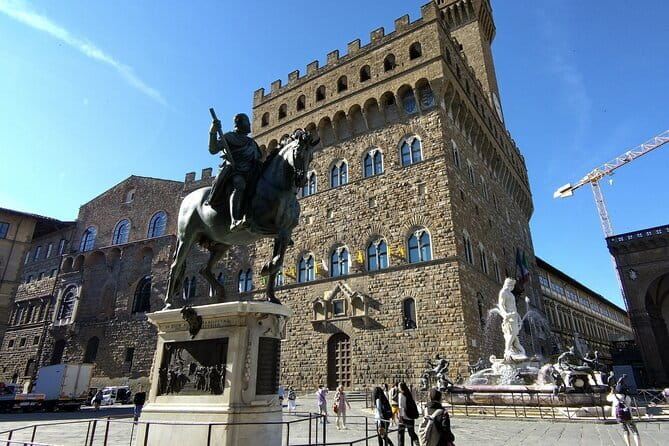
Your first stop is Palazzo Vecchio, one of the most important civic buildings in Florence. It’s the kind of place where you could spend days, but this tour narrows in on one person: Cosimo I de’ Medici, the first Grand Duke of Tuscany.
Here’s what you’ll focus on, and why it’s a good starting point:
You’ll connect Cosimo to the square by looking at the statues associated with him. This matters because Palazzo Vecchio wasn’t just a backdrop—it’s tied to government identity. Florence’s ruling families didn’t only govern. They also staged legitimacy in public.
You’ll also look for frescoes linked to a major political moment: the frescoes made in honor of Cosimo’s son’s wedding. That’s a useful lens. It shows you how celebrations worked like PR campaigns. When power was new or contested, art and ceremony helped lock in authority.
A practical plus: your admission at Palazzo Vecchio is listed as free for this stop, so you can spend your attention on interpretation instead of budgeting last-minute.
What to watch for: at the square, keep an eye out for the details the guide points out. This isn’t a “walk-by and admire” stop. It’s where you learn how Florence uses visible symbols to tell you who’s in charge.
Santa Maria del Fiore: why Brunelleschi’s dome still stops people
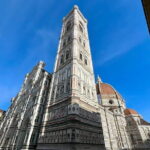
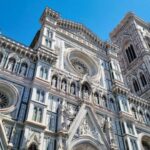
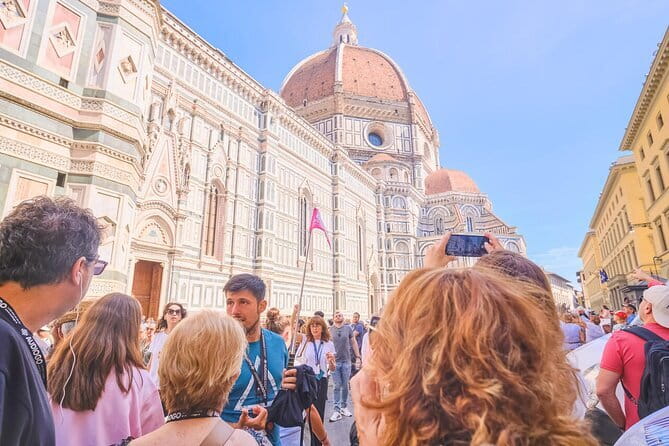
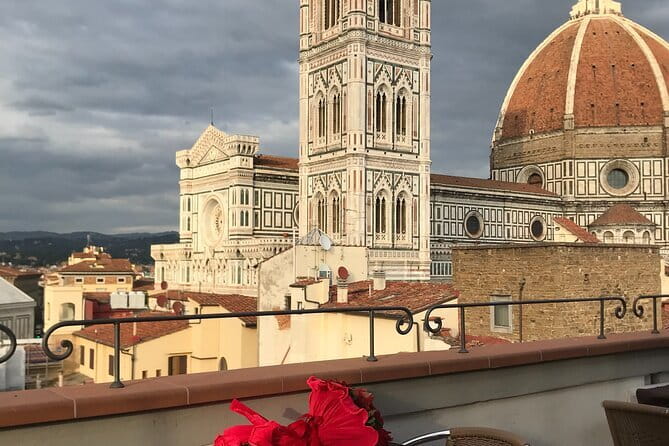
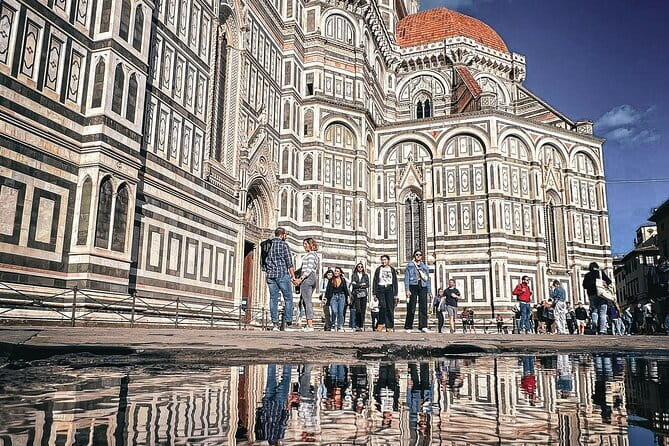
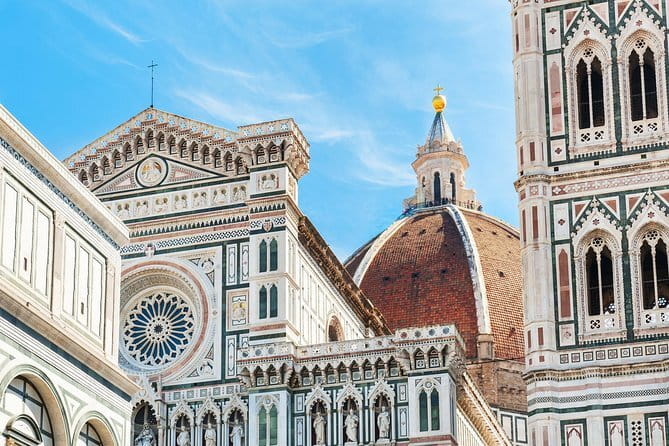
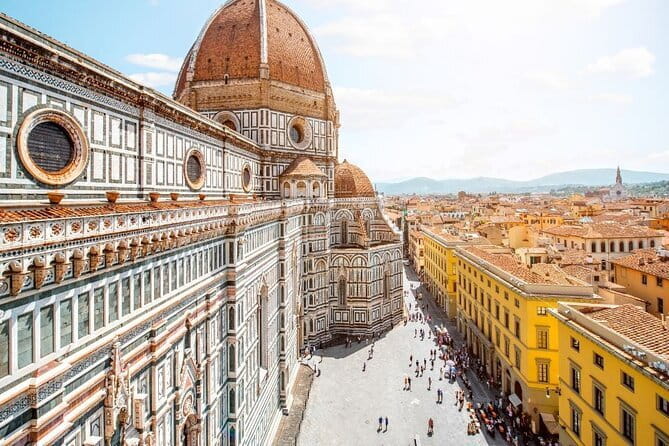
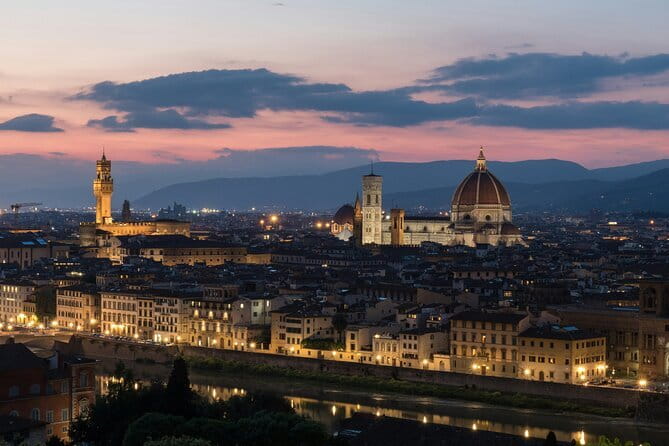
Next you head to Duomo – Cattedrale di Santa Maria del Fiore, Florence’s most important religious landmark. You’ll spend about 20 minutes here, with the emphasis on how the cathedral was made and, specifically, the dome by Filippo Brunelleschi.
Two things make this stop worth your time on a first visit:
The dome is famous, but fame doesn’t explain why it’s a breakthrough. The tour is set up so you don’t just stare at a shape—you learn the story of the dome as an engineering and artistic achievement.
You’ll get context for why this building mattered to Florence. It wasn’t only about worship. It was about identity: a city showing the world it could build something technically bold and visually dominant.
Admission for this stop is not included, so this is the one place where you may need to plan extra money and time. If you’re coming early in your trip, this is still a great stop—just make sure you’re ready for the ticket requirement so the moment doesn’t turn into a scramble.
One consideration: 20 minutes sounds short, but it’s structured for orientation. If you’re the kind of person who wants hours inside, you’ll likely come back. This tour is more like a strong explanation before you go deeper on your own.
Ponte Vecchio: the medieval bridge with a jeweler’s secret
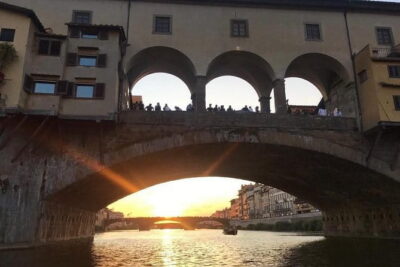
From the Duomo area you move to Ponte Vecchio, one of the most beautiful bridges in the world and still standing after 800 years. The tour’s take here is simple: it looks medieval, it feels atmospheric, and it has a job to do.
The “job” is where the story gets interesting. The bridge is famous for jewelers, and the tour explains why those shops ended up there. Instead of treating the storefronts like decoration, you learn to see them as part of the bridge’s long working life.
This stop is also a nice reset. After deep history in buildings (Palazzo Vecchio and the Duomo), Ponte Vecchio feels more like street theater. You’re outside, people watch comes naturally, and the architecture frames the river as you walk.
Admission for Ponte Vecchio on this experience is listed as free, which keeps the cost side of the tour predictable after you already handled the main ticket question at the Duomo.
What I’d do if you have time afterward: use what you learned here to look at the bridge like a system—structure first, then trade, then the way history keeps influencing what’s still happening now.
Santa Maria Novella: where Florence borrowed Roman spectacle
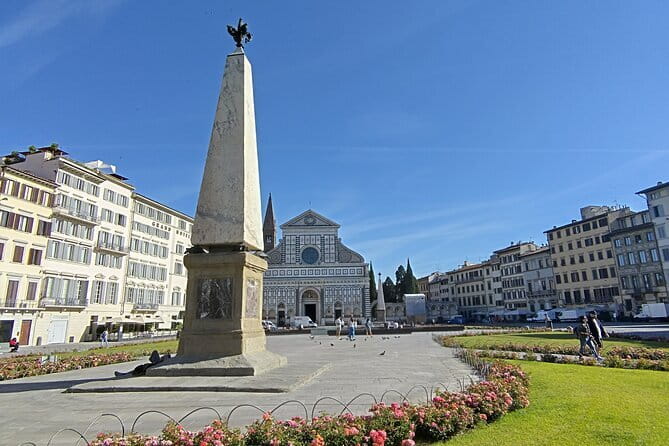
Your fourth stop is Santa Maria Novella. The square is described as having once been used for a race with chariots, similar to Rome.
That detail is a great example of why this tour’s theme works. Florence isn’t only about Renaissance paintings and famous sculptors. It’s also about how cities copy prestige. If Rome was the model for spectacle and political theater, Florence wanted a taste of that energy too.
This is one of those stops where the value isn’t in tickets or long lines—it’s in the interpretation. With the race context in your mind, you start noticing the way a space can be used for drama, crowds, and public performance.
Admission for Santa Maria Novella is listed as free for this tour stop, which helps keep the overall package feeling like a “guided orientation” rather than a shopping list of attractions.
- The Best tour in Florence: Renaissance & Medici Tales – guided by a STORYTELLER
★ 5.0 · 12,316 reviews
How this 90-minute route helps you plan the rest of your trip
For me, the biggest value in this experience is the way it organizes Florence into clear ideas.
You start with Medici authority at Palazzo Vecchio: who ruled, how they showed it, and how art helped.
Then you move to the Duomo dome: what Florence could build, and what ambition looked like in stone and design.
Then you end with Ponte Vecchio and Santa Maria Novella: how daily life and public spaces carried history forward.
That structure is especially helpful if you’re visiting Florence for the first time and you only have a day or two. It gives you a framework so that later, when you wander on your own, you’re not just looking—you’re connecting.
It’s also helpful if you’re traveling with kids. The reviews highlight that Vincenzo keeps children engaged, and the itinerary itself supports that. You’re not stuck in one indoor site. You get variety—statues, fresco themes, a giant dome story, then a bridge with a practical explanation, then a square with an unexpected chariot-race reference.
Price and value: $29.79 for four big Florence “anchors”
At $29.79 per person for about 1 hour 30 minutes, the price makes sense if you think about what you’re buying.
You’re not paying for private time in one single landmark. You’re paying for guided interpretation across multiple top-tier sites in a single run: Palazzo Vecchio (admission free for the stop), Duomo (ticket not included), Ponte Vecchio (free), and Santa Maria Novella (free).
That “most places are free admission” setup is part of what makes the value feel fair. The Duomo is the one place where you’ll likely spend extra because the admission isn’t included. But even with that consideration, a guided session that helps you understand the dome, Medici symbolism, and why Ponte Vecchio’s shops look the way they do is typically where money becomes value.
This tour also gives you a compact way to decide what you want to revisit later. After Brunelleschi and the Medici-focused start, you’ll know where your curiosity wants to go next.
Who should book this Florence Art, Medicis and Renaissance walk?
This is a strong match if:
- You’re in Florence for the first time and want a quick, smart overview of the art and politics behind the city
- You want a route that covers major sights without turning the day into a logistics headache
- You’re traveling with a mix of ages, since the energy and storytelling style work well for families
- You like your history explained in plain terms, with names and reasons you can remember
It may be less ideal if:
- You’re only interested in one site in extreme depth (this is four stops, not a day-long museum plan)
- You’re trying to avoid any ticket planning at all, because the Duomo admission is not included
Weather, tickets, and small practical tips
This experience requires good weather. If conditions are poor, you’ll be offered a different date or a full refund. That matters in spring and fall when Florence can swing from sunny to breezy quickly.
You’ll receive a mobile ticket, which is convenient for a quick check-in routine.
For the budget, plan one extra cost at the Duomo since admission there is not included. Palazzo Vecchio, Ponte Vecchio, and Santa Maria Novella are listed as free for the tour stop.
If you’re looking for a family-friendly group format, the max group size of 20 helps. And with service animals allowed, it’s also a more flexible option than some rigid schedules.
Should you book this tour?
Yes—if you want a fast, guided way to understand why Florence looks the way it does. The tour’s best advantage is how it stitches together Medici leadership, Renaissance ambition, and the lived-in character of places like Ponte Vecchio.
Book it early in your trip if you can. You’ll get the names, the themes, and the “why” behind the sights, which makes everything you do after feel more intentional.
Skip it only if you’re hunting for long, unstructured time in one site, or if you’d rather handle the Duomo ticket without any extra planning. For most visitors, though, this is a high-value orientation walk—especially with Vincenzo’s energetic, detail-rich style that keeps the whole group interested.
FAQ
How long is the Art, Medicis and Renaissance tour with Vincenzo?
It lasts about 1 hour 30 minutes.
Where do I meet the tour, and where does it end?
You meet at Grand Hotel Minerva, Piazza di Santa Maria Novella 16, 50123 Firenze FI, Italy, and the tour ends at Ponte Vecchio.
Is the tour offered in English?
Yes, it is offered in English.
Is the Duomo ticket included in the tour price?
No. Admission for Duomo – Cattedrale di Santa Maria del Fiore is not included.
Is there a maximum group size?
Yes, the tour has a maximum of 20 travelers.
What happens if the weather is bad?
The experience requires good weather. If it’s canceled due to poor weather, you’ll be offered a different date or a full refund.

More Tour Reviews in Florence
- Tuscany Day Trip from Florence: Siena, San Gimignano, Pisa and Lunch at a Winery
★ 5.0 · 21,634 reviews - The Best tour in Florence: Renaissance & Medici Tales – guided by a STORYTELLER
★ 5.0 · 12,316 reviews