REVIEW · FLORENCE
Sculpt like Michelangelo
Book on Viator →Operated by Octavio Palomino Sculptor · Bookable on Viator
Hands-on art changes everything fast.
This 2-hour Florence workshop focuses on Michelangelo’s David as a practical lesson in Renaissance sculpture. In Octavio Palomino’s studio, you’ll work through the lost-form technique in plaster to create a copy of an anatomical detail from David. It’s not museum viewing. It’s tool-in-hand making.
Two things I really like: the lesson is built around a specific anatomical detail, so you can understand proportion and carving decisions without getting lost in a full statue. And I love that you’re taught with patience, so even a small result teaches you how hard the real work was—like how difficult it is to translate tiny forms into finished stone.
There is one catch to plan for: you’ll be using a mallet and chisel and working with plaster, so you should be ready for some physical effort and mess control. Wear clothes you won’t mind getting a little dusted.
In This Review
- Key highlights at a glance
- Why Michelangelo’s David detail is the smartest target
- Arriving at the studio: check-in, tools, and the studio vibe
- The lost-form plaster method: turning anatomy into touchable form
- Your hands-on sculpting session: mallet, chisel, and guided control
- What you get to take home (and what it means for your trip)
- Price and timing: is $240.05 worth it for 2 hours?
- Who this workshop is best for (and who should reconsider)
- Should you book this Michelangelo’s David sculpting workshop?
- FAQ
- How long does the Sculpt like Michelangelo workshop take?
- Where does the workshop start?
- Is this a private experience?
- What language is the tour offered in?
- What am I making, and can I take it home?
- What’s included in the price?
- Is shipping included?
- FAQ
- Can I cancel for a full refund?
Key highlights at a glance
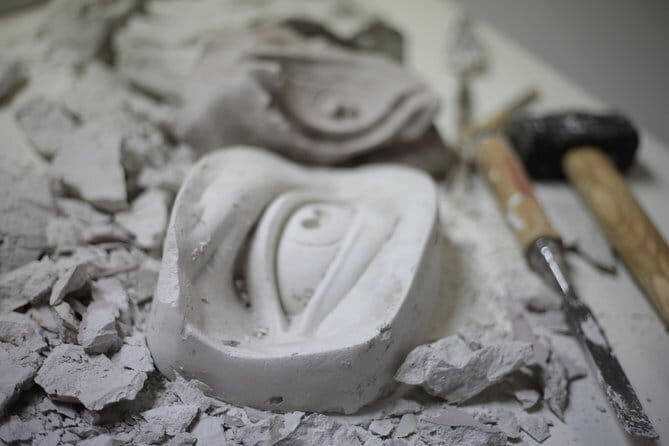
- Lost-form plaster technique focused on a David anatomical detail
- Octavio Palomino’s studio experience, taught in English
- Mallet-and-chisel hands-on time with tools provided
- Take-home packaging so your sculpture can stay with you
- Private group setup with only your party participating
- Soda/pop and snacks included to keep the energy steady
Why Michelangelo’s David detail is the smartest target
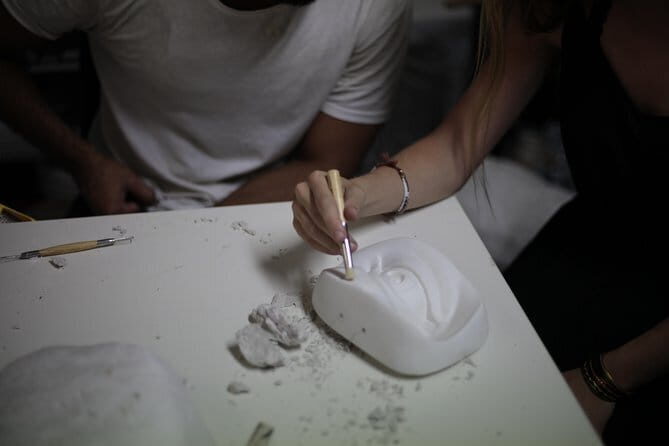
A full David is overwhelming. You see it once, and it’s gone. This workshop uses a smarter approach: work on a slice of the sculpture, not the whole icon. You sculpt an anatomical detail from David, then you learn why that one section matters. That means you can concentrate on form, curvature, and the kind of careful judgment stone needs.
I also like the way this turns art history into something you can feel. In the session, the instruction emphasizes how challenging it is to make David in the first place. Even when you’re only doing an eye-sized area in plaster, you get a real sense of how much work and control the old masters needed. One lesson that comes through clearly is the difference between what looks effortless in marble and what actually takes skill, time, and repetition.
This also makes the session work for people who are not hardcore sculpture fans. You don’t need background knowledge. You just need to show up ready to try. The workshop is built so your brain connects directly to your hands.
You can also read our reviews of more tours and experiences in Florence.
- Tuscany Day Trip from Florence: Siena, San Gimignano, Pisa and Lunch at a Winery
★ 5.0 · 21,634 reviews



Arriving at the studio: check-in, tools, and the studio vibe
The tour starts at Via Coluccio Salutati, 3r, 50126 Firenze FI, Italy. It ends back at the meeting point, so you don’t have to figure out a second destination. It’s also listed as being near public transportation, which helps when you’re mixing it with other Florence plans.
Once you’re there, you’re not shuffled into a random crowd. This is a private tour/activity, so only your group takes part. That matters because sculpting is slow-by-nature. You want questions answered right away, and you want the instructor’s attention when your piece doesn’t look like the guide’s on the first attempt.
You’ll also get practical comfort built into the session. Soda/pop and snacks are included, and your tools are provided. In other words, you’re not starting the workshop worrying about supplies or where your drink is coming from. And since the tour offers a mobile ticket, you can keep it simple on your phone.
English is the instruction language. That’s a big deal in hands-on art, because you want clear explanations for technique and timing, not vague directions.
The lost-form plaster method: turning anatomy into touchable form
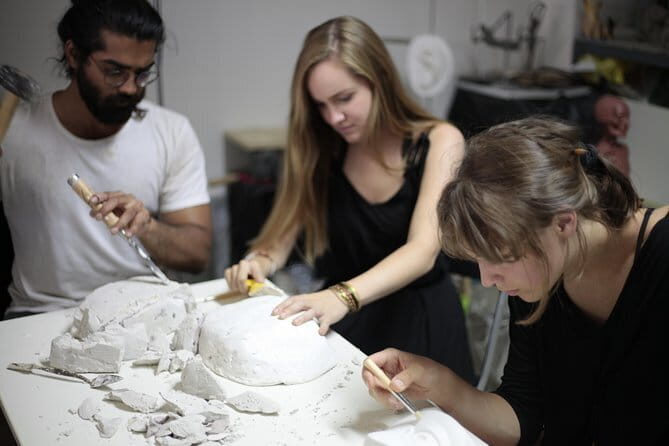
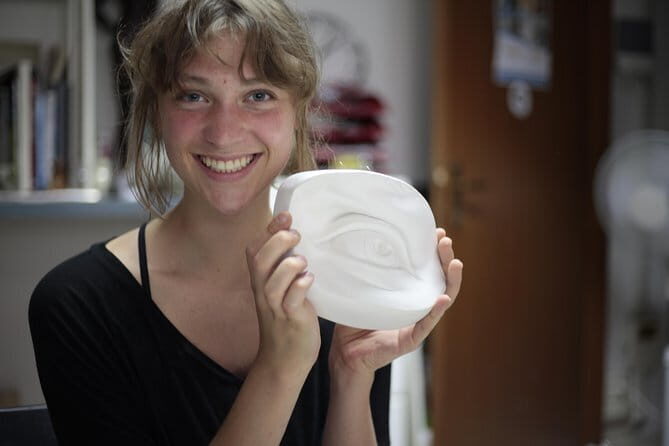
The workshop is centered on the lost-form technique in plaster. The idea is simple to say but fun to learn: you work with plaster in a way that lets you produce a copy of a David anatomical detail. Instead of sketching, you’re translating shape into a physical object.
What’s important for you is what this technique teaches. It forces you to pay attention to the edges and transitions that make a face or body part look believable. In a sculpture, the illusion is often in the details: where a curve catches light, how a boundary reads at a distance, and how small shifts change the emotion of the form.
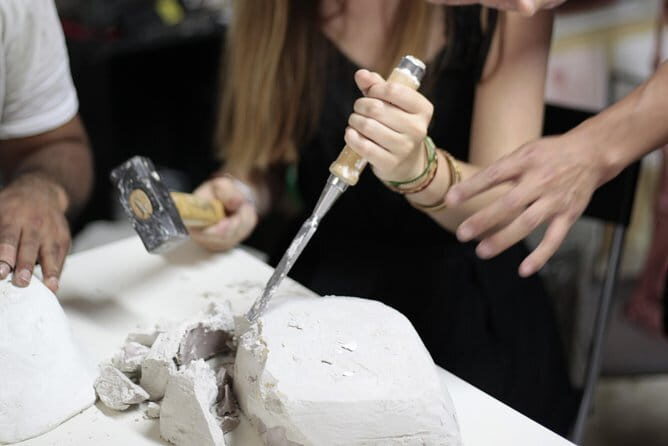
You’ll sculpt your own plaster sculpture using a mallet and chisel. That’s a very different learning experience from, say, painting or pottery. The tools demand commitment. Each hit has meaning. When the instruction is going well, you feel the difference between guesswork and measured carving.
And because it’s David, you’re working with a subject that already has strong proportions in the public imagination. That can help you compare what you’re making with what you expect to see. It also makes the lesson more satisfying, because you know what outcome you’re aiming at.
Your hands-on sculpting session: mallet, chisel, and guided control
This is the part most people remember: you’re seated and working, not watching. Your tools are included, and the instructor(s) guide you through the sculpting of your chosen detail in plaster.
From the strong feedback, the biggest praise is about teaching style. The hosts are described as friendly, welcoming, and patient, and the instruction is geared toward helping you understand what you’re doing, not just get a souvenir. That patience matters, because plaster work can feel intimidating at first. The first time you lift the mallet, you realize fast that sculpture is not fragile “craft.” It’s controlled force.
One of the most useful moments is the explanation of difficulty. People come away understanding that Michelangelo’s David wasn’t just a big project. It was precision at a painful level. Even when your final object is only a detail—like an eye—you start to grasp how he pulled it off when working with marble.
I also like that the workshop teaches you to think like a sculptor of the old school. Even though you’re using plaster, the teaching connects the dots to traditional carving logic. One highlight from the experience is learning about how marble is sculpted by the old masters, and how that craftsmanship guides the choices you make while shaping stone-like material.
What you get to take home (and what it means for your trip)

Here’s a major practical win: you can package and take away your sculpture directly after the workshop. The piece is designed to be a tangible memory of your Florence stay, not something that ends up lost in an itinerary shuffle.
That’s not a small detail. In a city full of art, it’s easy to buy something and forget it when you get home. A take-home object changes the experience. It becomes proof you did something with your own hands in the same environment where artists once worked.
You should also know what’s not included: shipping cost. That means if you’re thinking of mailing your sculpture to avoid travel hassles, you’ll need to budget separately. But if you plan to carry it, the workshop’s packaging is the key. Take it seriously. Plaster can take a hit, and you’ll want to transport your piece carefully.
If you’re heading straight to sightseeing after, plan a little buffer time. Bring it with you properly packed, and don’t treat it like an afterthought in your bag.
- Tuscany Day Trip from Florence: Siena, San Gimignano, Pisa and Lunch at a Winery
★ 5.0 · 21,634 reviews - The Best tour in Florence: Renaissance & Medici Tales – guided by a STORYTELLER
★ 5.0 · 12,316 reviews

Price and timing: is $240.05 worth it for 2 hours?
At $240.05 per person for about 2 hours, you’re paying for a few concrete things: real instruction, provided tools, refreshments, and a finished take-home product. It’s not a quick demo. It’s guided hands-on making.
So the value depends on what you want from Florence. If you want only passive experiences—photos, short stops, mostly walking—you might find this pricey for 2 hours. But if you want an activity that changes your understanding of art and gives you something physical to remember it, the price makes more sense.
Also, this activity is commonly booked in advance—about 16 days ahead on average. That’s a clue to treat it like a real plan, not a last-minute add-on. Better schedule choice means better time alignment with your day.
The workshop lists moderate physical fitness as a requirement. That doesn’t mean you need to be an athlete. It means you’ll likely be holding tools, working your arms, and concentrating through a hands-on task. If you have limitations with grip, wrist strain, or anything related to using tools, it’s worth considering before booking.
Who this workshop is best for (and who should reconsider)
I think this is ideal for:
- People who like hands-on learning, not just lectures
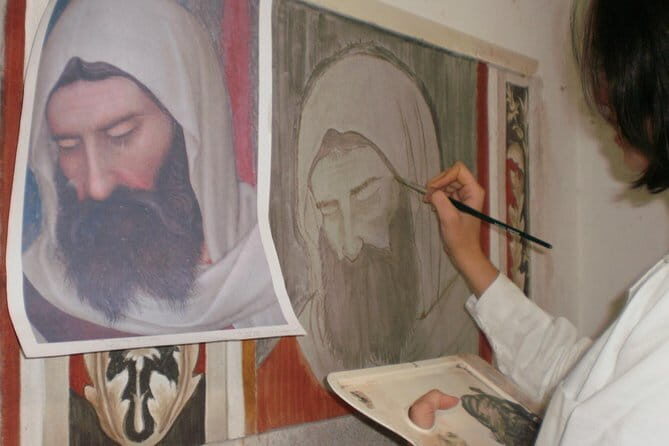
- Anyone curious about how sculpture works in real life, especially Renaissance craft
- Visitors who want a take-home art object that feels personal, not generic
- Small groups that prefer a private setting where questions are easy to ask
I’d reconsider if:
- You want a low-effort, sit-and-watch experience
- You’re extremely sensitive to mess or dust
- You don’t want to use a mallet and chisel, even briefly
- You’re not able to handle moderate physical activity for about 2 hours
Should you book this Michelangelo’s David sculpting workshop?

If you’re torn, pick the option that matches your travel style. This workshop is for people who want to do more than look.
Book it if you want a direct lesson in sculpture technique using lost-form plaster, guided by Octavio Palomino and a team known for being welcoming and patient. You’ll also end the session with a piece you can package and take home, which makes the experience feel real long after you leave Florence.
Skip it if you’re only seeking sightseeing. This isn’t a fast photo moment. It’s a focused making session where your hands learn, your brain follows, and your finished plaster detail becomes the souvenir.
If you can handle tool use and a little mess, it’s one of the more memorable ways to connect with Michelangelo’s legacy—by understanding the work, not just admiring the result.
FAQ
How long does the Sculpt like Michelangelo workshop take?
It lasts about 2 hours.
Where does the workshop start?
The start point is Via Coluccio Salutati, 3r, 50126 Firenze FI, Italy, and the activity ends back at the meeting point.
Is this a private experience?
Yes. Only your group participates.
What language is the tour offered in?
The experience is offered in English.
What am I making, and can I take it home?
You’ll sculpt your own plaster sculpture using the lost form technique to create a copy of an anatomical detail of Michelangelo’s David, and you can package it and take it away directly.
What’s included in the price?
Tools for sculpting, soda/pop, and snacks are included.
Is shipping included?
No. Shipping cost is not included.
FAQ
Can I cancel for a full refund?
Free cancellation is available. You can cancel up to 24 hours in advance for a full refund.

More Tour Reviews in Florence
- Tuscany Day Trip from Florence: Siena, San Gimignano, Pisa and Lunch at a Winery
★ 5.0 · 21,634 reviews - The Best tour in Florence: Renaissance & Medici Tales – guided by a STORYTELLER
★ 5.0 · 12,316 reviews