REVIEW · SIENA
Siena: City Tour in German
Book on GetYourGuide →Operated by Janine guide in Siena · Bookable on GetYourGuide
Siena can feel complicated until you walk it. This 2-hour German city tour gives you clear bearings fast, starting with the view from San Domenico and then threading through medieval streets toward the places that shape Siena’s identity. I especially like how the guide connects the city’s layout to what people actually care about: the contrade and the Palio. One thing to keep in mind is the pace is made for sightseeing on foot, so comfortable shoes matter.
Two highlights for me are the way the tour explains the city’s street logic and the way it makes the Palio feel real instead of distant. You’ll also get an inside feel for Siena through a local guide, Janine, who clearly loves talking about the city and how Sienese life grew around these landmarks. If you’re not comfortable with German commentary, this may not be the best fit since the tour is live guide in German only.
Also, don’t plan this as a slow stroll. It’s a focused walk through multiple key points, and it ends back at the start near the San Domenico area, so you’ll want to pair it with extra time afterward if you want to linger in the squares.
In This Review
- Key things that make this Siena tour worth your time
- Start at San Domenico, then let the streets teach you Siena
- Why this first stop works
- What to watch for
- Via della Sapienza: the university street where ideas got started
- What you learn here
- A practical note
- Via Banchi di Sopra and the Via Francigena connection
- Why this section is a standout
- Possible drawback
- Piazza Salimbeni: banking power in a medieval city
- What to notice while you’re there
- Who will like this
- Piazza Tolomei and the church-palazzo pairing
- Why this matters for your visit
- Croce del Travaglio: the crossroads that explain the city’s flow
- A helpful way to use this
- Small consideration
- Contrade walk-up: the Palio is the story thread
- Why I think this is the most emotional part
- What to expect
- Piazza del Duomo to Piazza del Campo: from the high point to the Palio stage
- What makes the ending feel complete
- One practical consideration
- Price and what you’re really paying for at $74
- When it’s a great deal
- When you might question it
- German guide with local energy: what Janine brings to the walk
- Who should choose it
- Practical tips so you enjoy the full 2 hours
- Should you book this Siena City Tour in German?
- FAQ
- FAQ
- What is the duration of the Siena city tour in German?
- How much does the Siena tour cost?
- Where do I meet the guide?
- Where does the tour end?
- What language is the tour guide?
- Is the tour wheelchair accessible?
- Are entrance fees included?
- Is free cancellation available?
Key things that make this Siena tour worth your time
- San Domenico start: you begin with the basilica area tied to St. Catherine’s relics, which helps Siena’s story click immediately.
- University of Siena context (1240): the walk passes Via della Sapienza right where Siena’s academic roots began.
- Via Francigena alignment: you trace a medieval European road section through Via Banchi di Sopra, so the route makes historical sense.
- Piazza Salimbeni and Monte dei Paschi: you learn why this banking legacy still matters in the city’s present.
- Croce del Travaglio crossroads: you get the “why these streets intersect” explanation, which helps you navigate Siena later.
- Palio-focused ending at Piazza del Campo: you finish at the heart of the Palio, with pride and tradition in mind.
Start at San Domenico, then let the streets teach you Siena
The tour begins at the big tree in front of the San Domenico church. That simple meeting point is helpful: it’s easy to find, and it sets you up for a good first impression of the area before you move into the older parts of town.
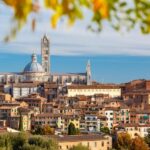
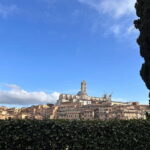
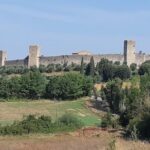
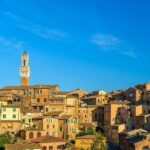
From there, the big value is the opening moment with a wide view of Siena. The tour starts with the geography in mind because Siena’s shape explains a lot. You’re not just collecting photos; you’re building an understanding of why certain spots feel higher, closer, or more “central” than others once you’re standing there.
San Domenico also grounds the experience in something deeply tied to Siena. The basilica is where the relics of St. Catherine, patron saint of Italy and Europe, are kept. Even if you’re not a history buff, this matters because it anchors the city’s religious identity to a specific place you can point to.
You can also read our reviews of more city tours in Siena
Why this first stop works
If you’ve ever visited Siena and felt you were walking in circles, this helps you avoid that. Getting the view early lets the rest of the route feel like a planned walk rather than a random meander.
What to watch for
If you arrive with limited energy for uphill streets, consider bringing water and planning for a moderate walking effort. The tour is designed as a 2-hour circuit, not a rest stop marathon.
Via della Sapienza: the university street where ideas got started

After San Domenico, you head toward the central street area, crossing Via della Sapienza. This is one of those details that changes how you read a city. Streets in medieval towns weren’t just routes; they often reflected function.
Via della Sapienza is tied to the University of Siena, founded in 1240. As you walk, it’s a reminder that Siena wasn’t only about religion and horses and pageantry. It was also about learning and institutions that shaped daily life.
What you learn here
You start noticing how Siena’s medieval layers stack up. You’ll pass things that look old and beautiful, but the tour adds a “what this was for” layer that makes it easier to remember later.
A practical note
This part of the walk is still “in motion,” so if you like taking photos, be ready to pause quickly without derailing the group.
Via Banchi di Sopra and the Via Francigena connection

Next comes Via Banchi di Sopra, described as a section of the Via Francigena—a major European road axis in medieval times. This is where the tour gets especially practical for anyone who cares about how cities connected across borders.
Instead of treating Siena as a self-contained bubble, the guide frames it as part of a bigger network. The Via Francigena concept helps you understand why Siena mattered to merchants, travelers, and pilgrims long before modern tourism turned it into a destination people plan.
And just like that, the street stops being scenery. It becomes a corridor with a past role: movement, exchange, and arrival.
Why this section is a standout
People often get impressed by Siena’s look, but they miss its “why.” Linking a local street to a wider European route gives you a real sense of scale.
Possible drawback
If you were hoping for lots of inside-building time, note this is mainly a walking tour focused on key sightlines and street context, not long indoor visits.
Piazza Salimbeni: banking power in a medieval city
From Via Banchi di Sopra, you reach Piazza Salimbeni. This square is home to the headquarters of Banca Monte dei Paschi, described as the oldest bank in the world still in existence.
That’s a huge claim, and it’s also a useful one for understanding Siena’s identity. When a city has enduring institutions like this, the medieval era isn’t sealed in stone. It continues in how local systems function.
What to notice while you’re there
Spend a few seconds looking around with the idea that “power can live in ordinary-looking places.” This is the kind of context that makes the tour feel like more than sightseeing.
Who will like this
If you enjoy the intersection of culture and institutions—how cities work economically and socially—you’ll get a lot out of this stop.
Piazza Tolomei and the church-palazzo pairing
Then the tour goes to Piazza Tolomei, which includes the Church of S. Cristoforo and the Palazzo Tolomei. This is one of those classic Siena patterns: civic and religious buildings share space, and the arrangement helps you read the city like a map of priorities.
You’ll likely find the way these elements sit together more meaningful after hearing the tour’s earlier street explanations. The route doesn’t just drop you in front of landmarks; it sets up how you should look at them.
Why this matters for your visit
When you understand how spaces are grouped, you can plan your own wandering later. You’re more likely to pick the right street next instead of guessing.
Croce del Travaglio: the crossroads that explain the city’s flow
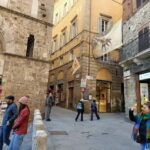
Next is Croce del Travaglio, described as the crossroads of Siena’s three main streets: via Banchi di Sopra, via Banchi di Sotto, and via di Città.
This part is pure navigation value. Crossroads are where you learn how a city directs movement. Standing there with the explanation in your head makes it far easier to retrace your steps later—and to understand why Siena feels “organized” even when the alleys look twisty.
A helpful way to use this
After the tour, you’ll be able to orient yourself quicker. That alone can save you time and energy if you plan to do more on your own.
Small consideration
Crossroads can get busy visually and with pedestrian traffic. If you want quiet photos, you might have to angle your shot and keep moving with the group.
Contrade walk-up: the Palio is the story thread
As you pass through many contrade, the tour shifts tone from general city history to the living pride behind Siena’s famous tradition. The contrade aren’t just neighborhoods; they’re identities. Each one matters, and they shape community energy.
You don’t just hear names—you get the idea of why Siena is different during Palio season. The guide frames the tradition with enough clarity that it doesn’t feel like a legend you can’t touch. Reviews also point to this strength: the tour has a lively, personal feel and ties the annual horse race to real spots around town.
Why I think this is the most emotional part
Piazza del Campo is the physical stage, but the contrade walk tells you why the stage means something. You end up with a stronger sense of what locals take seriously.
What to expect
You’ll keep moving, so don’t expect long stops for big photo setups. The goal is momentum and meaning in a short time window.
Piazza del Duomo to Piazza del Campo: from the high point to the Palio stage
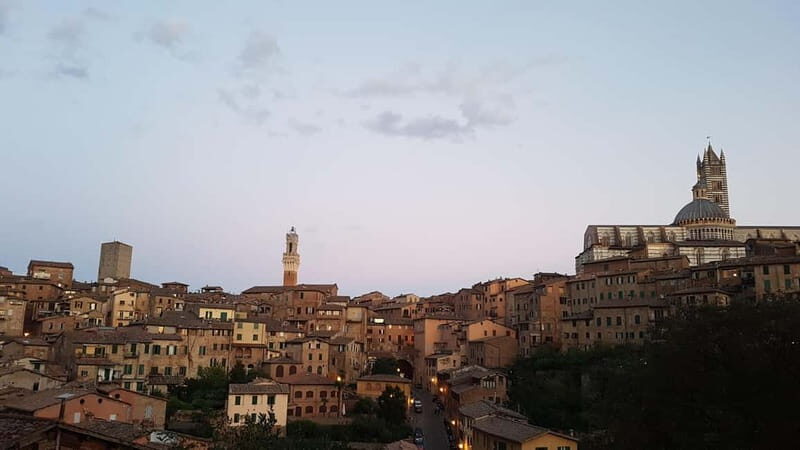
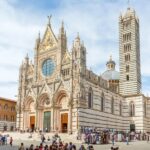
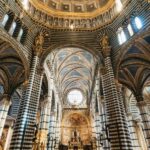
The route continues to the highest and most ancient point of the city, Piazza del Duomo. Even without going inside for an extended visit, this stop helps you feel Siena’s vertical character. It’s the kind of place where the city’s old power centers make sense visually.
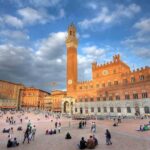
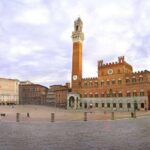
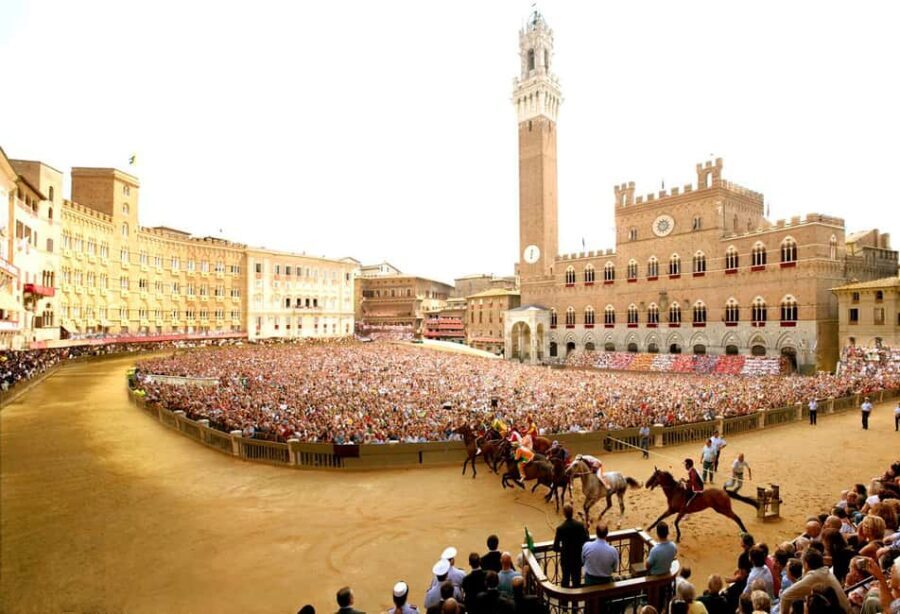
Then the tour ends at Piazza del Campo, the famous setting of the Palio of Siena. This is a smart ending. The square is open, iconic, and instantly recognizable. By the time you reach it, the Palio context isn’t random trivia; it’s the culmination of everything you heard about streets, contrade, and civic identity.
What makes the ending feel complete
Finishing with the Palio setting gives you a “story payoff.” If you’ve ever read about Siena but felt disconnected from it, this is the part that closes the gap.
One practical consideration
Piazza del Campo can feel busy. You’ll likely get your best moment by positioning yourself carefully at the start of the square and then letting the guide’s explanation do the work.
Price and what you’re really paying for at $74
At $74 per person for 2 hours, this tour is priced for value in a very specific way: it’s about guided orientation plus context, not entrance tickets.
The tour includes a guided city tour and notes without entrance fees—so you’re paying mainly for a live local guide and the time to walk a planned route. For many visitors, that’s the sweet spot. You’re not stuck deciding whether to buy tickets on the fly; you get a structured walk that helps you later.
When it’s a great deal
- If you want to understand Siena fast rather than just photograph it.
- If German is your comfort language and you prefer live guidance over apps.
- If you don’t want to spend your day juggling museum queues.
When you might question it
If you only want a “see everything quickly” photo loop and don’t care about Palio/contrade context, you may find you’d rather go at your own pace for less money. But if you want meaning with your walking time, this price lines up well with that goal.
German guide with local energy: what Janine brings to the walk
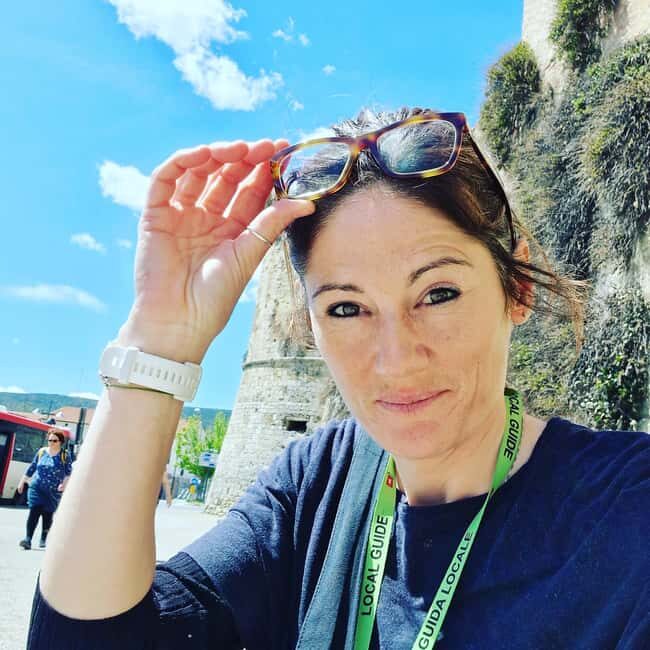
This tour is led by a live tour guide in German, and the listed guide is Janine guide in Siena. Local guiding isn’t just about knowing facts; it’s about choosing what to say and what to connect.
The strongest praised aspect of the experience is how personal and lively the guidance feels. You’re not treated like a passive audience. The guide’s style helps Siena’s “life feeling” come through—especially tied to the Palio and the way Sienese identity shows up street after street.
Who should choose it
- German-speaking visitors who like guided context.
- First-timers who want a clear sense of orientation.
- Anyone curious about how tradition shapes a city’s layout.
Practical tips so you enjoy the full 2 hours
- Bring comfortable shoes. This is a walking route with multiple key points.
- Wear layers if your day is changeable; Siena weather can shift.
- If you’re serious about photos, aim for quick stops rather than long standing still. The route is timed.
- At the end, you’ll return to the meeting point area near San Domenico, so plan the next part of your day with that in mind.
Should you book this Siena City Tour in German?
I’d book it if you want the best use of a short day: a guided route that gives you street logic, key landmarks, and a Palio-focused ending without entrance fees. The local-guided energy stands out, and the itinerary is built to help you understand where Siena’s identity lives—religiously, historically, and socially.
I’d skip it if you don’t want to hear the Palio/contrade angle at all, or if you’re not comfortable with a German-language tour. In that case, you’ll likely enjoy exploring on your own more.
FAQ
FAQ
What is the duration of the Siena city tour in German?
The tour lasts 2 hours.
How much does the Siena tour cost?
It costs $74 per person.
Where do I meet the guide?
Meet at the big tree in front of the San Domenico church.
Where does the tour end?
The tour ends back at the meeting point.
What language is the tour guide?
The live tour guide speaks German.
Is the tour wheelchair accessible?
Yes, the activity is wheelchair accessible.
Are entrance fees included?
The tour is listed as without entrance fees (you don’t need to pay entrance fees as part of this activity).
Is free cancellation available?
Yes. You can cancel up to 24 hours in advance for a full refund.