REVIEW · SIENA
Siena Sightseeing Walking Tour with Food Tastings for Small Groups or Private
Book on Viator →Operated by Tuscany like a Local · Bookable on Viator
Siena makes more sense when you walk it. This 2.5-hour tour threads together the city’s most important landmarks and its food culture, with tastings built right into the route. You’ll follow the logic of Siena’s old streets, learn why the Palio matters to daily life, and then taste what the locals reach for at the table.
Two things I especially like: the mix of big sights plus small details (you get real context, not just photos), and the food stops that break up the walk with sweet bites and a satisfying panino plus wine. One possible drawback: the route includes some uphill walking toward the Cathedral area, so bring comfortable shoes and expect stairs and cobblestones.
Guides seem to make the difference here. You’ll see praise for tour leaders like Sarah, Elena, Claudia, Ania, Anna, and Anja for clear English, personable storytelling, and tailoring the pace for different groups (including families). If you’re the type who wants to move fast with no stops, this won’t feel like a blitz tour—it’s designed for savoring.
In This Review
- Key Highlights You’ll Actually Feel on the Walk
- A 2.5-Hour Walk That Orients You to Siena’s Palio-and-Food World
- San Domenico: Where Saint Catherine’s Relics Fuel the City
- Piazza Salimbeni and the Contrade You’ll Hear About All Week
- Piazza del Campo: The Shell-Shaped Square Plus Sweets and Wine
- Siena Cathedral and the Pilgrims’ Hospital: A Serious Hilltop Moment
- Via di Citta Finish: What You’ll Do With the Map in Your Head
- Price and Value: What $144.18 Buys You in Real Terms
- Who This Tour Best Fits (And Who Might Want Something Different)
- Practical Stuff That Keeps the Day Smooth
- Should You Book This Siena Food-and-History Tour?
- FAQ
- How long is the Siena sightseeing walking tour?
- Is the tour in English?
- What’s the group size limit?
- Can I book a private tour?
- What food tastings are included?
- Are entrance tickets required for the stops?
- Is the tour suitable for families with children?
- Does the tour run in rainy weather?
- What should I bring for check-in?
- Is free cancellation available?
Key Highlights You’ll Actually Feel on the Walk
- Small group size up to 12 means you can hear the guide and keep the pace friendly.
- Palio-focused stops at key squares help you understand the city’s rivalries, not just memorize names.
- Food tastings are built into the route, starting with classic sweets and continuing with a panino and wine.
- Saint Catherine and the Palio connection comes through at Basilica San Domenico, a powerful Siena anchor.
- Gothic Siena Cathedral + the pilgrims’ hospital gives you a serious “why Siena mattered” moment.
- Private tour option can happen when the group size is low, so you may get more one-on-one time.
A 2.5-Hour Walk That Orients You to Siena’s Palio-and-Food World
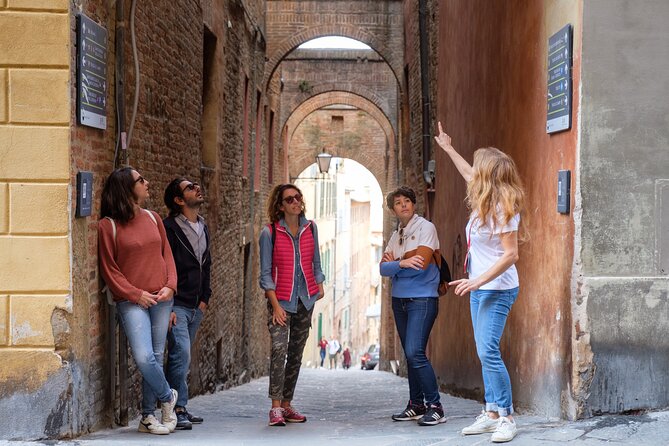
This tour is designed to get you oriented fast. Siena can feel like a maze—stone streets, sudden views, and signboards for districts you didn’t know existed. By the end of the walk, you’ll have a mental map of where everything sits and why the city’s culture revolves around the Palio.
The pacing is realistic: about 2 hours 30 minutes on foot with a handful of timed stops. The sights are spaced so you get breaks to listen, look closely, and then eat. That matters in Siena, because the best parts are often the small clues: a symbol on a banner, a reference to a rivalry, or a church that’s central to the town’s identity.
And yes, there’s a lot of walking. Most of it is normal city-footing—cobblestones, narrow passages, and some steps. But the Cathedral segment climbs a bit, so plan for that and don’t wear brand-new shoes unless you like foot-splitting surprises.
You can also read our reviews of more tours and experiences in Siena.
San Domenico: Where Saint Catherine’s Relics Fuel the City
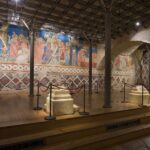
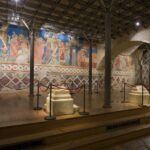
You start at Basilica Cateriniana Di San Domenico, at Piazza San Domenico 1. The tour begins at the main entrance of this church, which is important for both religious and civic Siena. The key detail is what the basilica houses: the relics of Saint Catherine, Siena’s patron saint.
Why this matters for your visit: Saint Catherine isn’t just a “historical figure” here. The tour connects her to Siena’s identity and to the Palio, the famous medieval horse race that still shapes how people talk about their neighborhoods. It’s a rare combo—church history plus living local tradition—and it sets the tone for everything else you’ll see.
This stop includes about 30 minutes, and the admission ticket here is free. Even if you’re not a religious-history person, it’s still a meaningful start because it explains why Siena takes tradition seriously.
Practical tip: arrive a few minutes early and take in the area around Piazza San Domenico before the group moves on. Siena’s beauty can be a distraction; you’ll get more out of the walk when you’re already grounded in place.
Piazza Salimbeni and the Contrade You’ll Hear About All Week
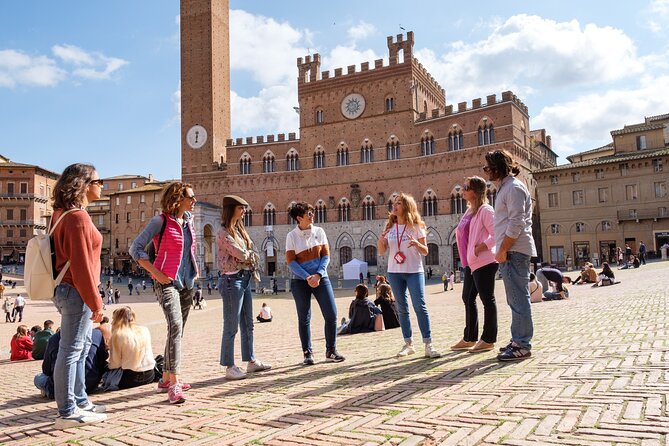
Next up is Piazza Salimbeni, where the tour shifts from faith to community rivalries. This is where you’ll learn about the contrade—Siena’s districts and teams of the Palio—complete with their own symbols, flags, and mottos.
The tour doesn’t treat contrade as trivia. It frames them as a source of pride, almost like a local identity badge. You’ll get the story of the rivalries and why these neighborhood loyalties run deep. Then you’ll visit one contrada, so you don’t just hear about the system—you see how it looks when it’s practiced.
This stop runs about 30 minutes, and again, admission tickets are free. That’s a nice value add because you’re not paying extra at every turn.
A small watch-out: Siena’s Palio culture is emotional and intense. If you go in expecting only a casual “horse race story,” you’ll miss the heart of it. This tour is best if you’re okay with history that feels personal.
Piazza del Campo: The Shell-Shaped Square Plus Sweets and Wine
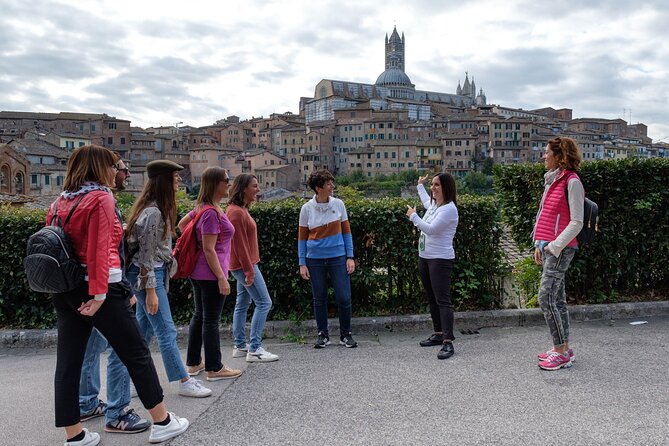
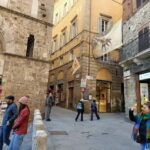
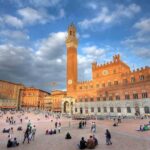
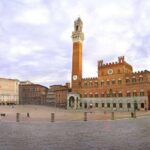
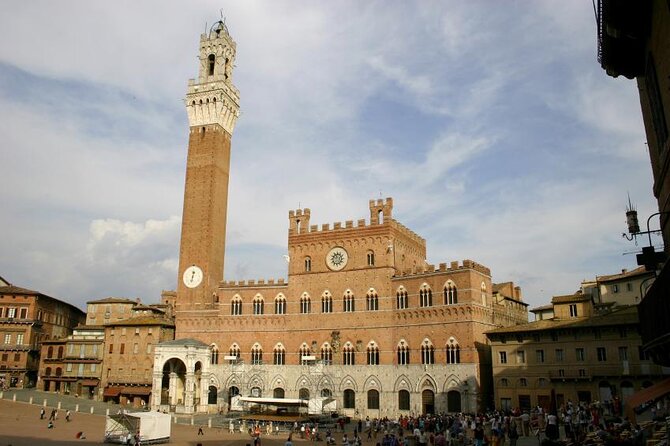
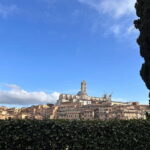
Eventually, you climb your way through Siena’s alleys and arrive at the star of the show: Piazza del Campo. This square is famous for its shell shape, and it’s also the place where the action happens twice a year for the Palio. Around it you’ll see major landmarks like the Palazzo Pubblico and the high tower—both tied to Siena’s big medieval era.
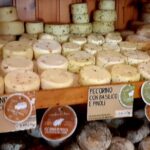
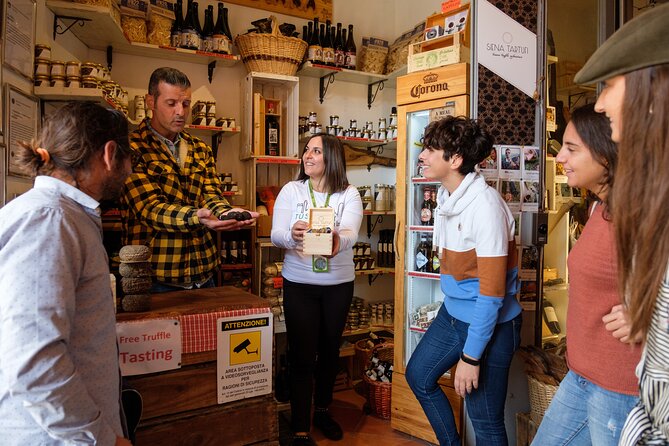
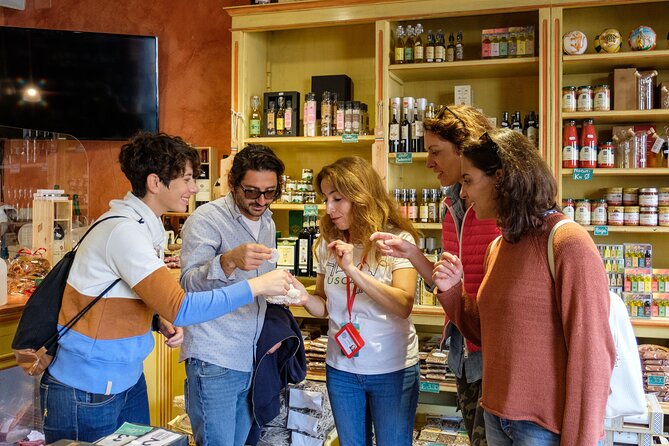
The guide time here is about 45 minutes, and this is where the tour slows down for the first of your food tastings. You’ll taste classic Sienese sweets, including ricciarelli biscuits and other local treats. It’s a chance to understand the city through ingredients people actually eat, not just what’s displayed in tourist shops.
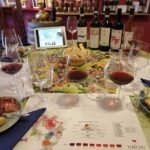
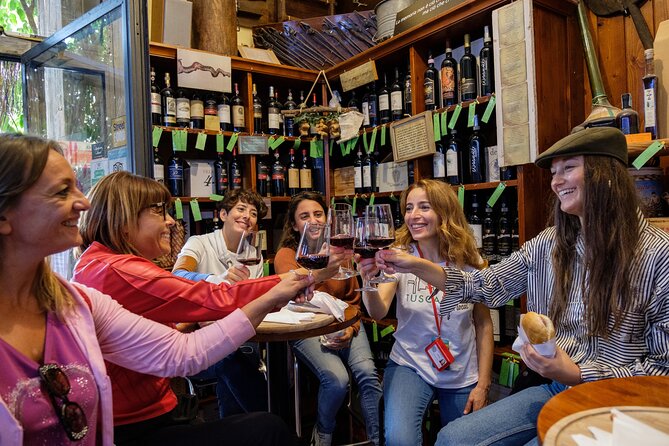
Then you continue through another medieval corner and stop at a vineria for the second food moment: a panino stuffed with your chosen ingredients, plus a glass of wine. One review also mentions a wrap-up with a glass of Chianti along with local cheese and meats, so if you’re seeing that version, it’s a solid way to end your tasting chapter.
Why this part is such good value: the tasting isn’t random. It’s placed where you naturally pause to take in the square. Eating here feels like part of the experience, not an interruption.
If you’re food-focused, this is the section you’ll remember. If you’re not, it still works because it gives your feet a break while the guide explains how the square connects to the Palio’s calendar and symbolism.
Siena Cathedral and the Pilgrims’ Hospital: A Serious Hilltop Moment
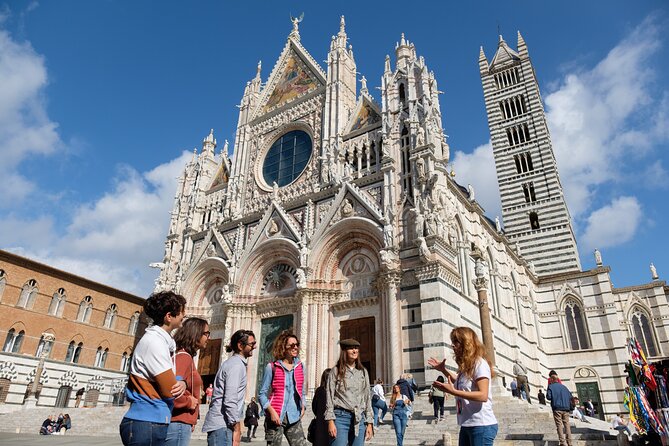
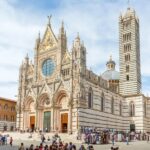
After the Campo area, you head uphill for Siena Cathedral. The tour describes this as an “exquisite Gothic” stop, and it is the kind of place where the details make you slow down—stonework, scale, and the feeling that you’re standing at the center of a long story.
The tour also includes the ancient pilgrims’ hospital, which once hosted travelers in earlier centuries and helped make Siena important during the Middle Ages. This is one of those stops that gives context. It’s not only about the architecture; it’s about how Siena functioned as a stop on the larger pilgrimage and travel map of the past.
This segment is about 30 minutes, with admission tickets listed as free. The physical challenge is mainly the climb. If you’re doing this with kids, older relatives, or anyone who tires easily, I’d plan extra time and keep the group together during the ascent.
A practical move: start hydrating before you get to this section. You’ll do a lot of listening and looking, and Siena walking can sneak up on you.
Via di Citta Finish: What You’ll Do With the Map in Your Head
The final stop is Via di Citta, a nearby medieval street where the tour ends. Total time here is short—about 15 minutes—but the value is big because you’re leaving the tour with a clearer sense of where you are and what you’d like to see next.
The end point is around Piazza del Campo (Il Campo). That’s helpful. Many major sights, restaurants, and evening stroll opportunities start from the Campo area, so you’re not stranded far from where you’ll want to wander after.
If you’re trying to plan your evening: consider doing one more slow loop near the Campo while it’s calmer, and use the contrade knowledge the guide gave you to spot symbols on buildings. It’s a fun trick—suddenly the signs stop looking like decoration and start looking like local identity.
Price and Value: What $144.18 Buys You in Real Terms
The price is listed at $144.18 per person, and the tour runs about 2 hours 30 minutes. For Siena, that’s not cheap—but it’s not random money either.
Here’s where the value comes from:
- You’re paying for a curated route that ties landmarks to the Palio story, so you’re not piecing it together on your own.
- You get included tastings: ricciarelli-style sweets and other local treats, then a panino plus a glass of wine.
- The group is capped at 12 travelers, which helps keep the experience personal enough to actually hear the guide.
Also, there’s a “choose your format” element: small group discounts are mentioned, and a private option exists. In practice, if the group size stays tiny, you might effectively get more individual attention—especially if you’re traveling as a couple or family.
If you’re the type who likes to learn fast and eat well without spending extra time shopping for food, this price can make sense. If you already know a lot about contrade and Palio history, you may still enjoy the tastings, but the history portion might feel less new.
Who This Tour Best Fits (And Who Might Want Something Different)
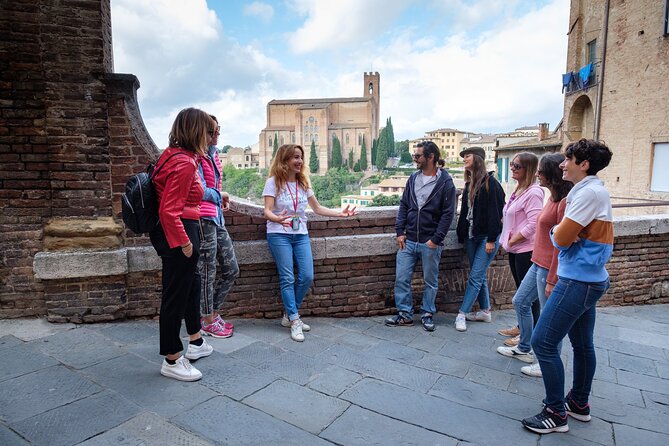
This is a good match for you if:
- You want a high-impact orientation to Siena in one afternoon.
- You care about local food and want tastings placed in context.
- You enjoy history told through real places and real customs.
- You want a small-group feel, with the option for private time.
It also sounds like it works for families. One guide is specifically praised for being patient with toddlers, and another review highlights how the guide made the pace fit the group. If you have kids under 12, the tour notes that they are considered and that children menus apply.
You might want a different style of tour if you hate walking, dislike tasting stops, or want a strictly art-focused itinerary with no attention to Palio culture. This one is built around Siena’s civic identity through contrade and competition.
Practical Stuff That Keeps the Day Smooth
A few details that matter once you’re actually standing in Siena:
- Language: the tour is offered in English.
- Tickets and access: the tour indicates admission tickets are free for the listed sights.
- Weather: it runs in every weather condition and still operates even with rain (the confirmation happens even if it rains).
- Start point location: Piazza S. Domenico 1 near San Domenico.
- End point location: near Piazza del Campo (Il Campo).
Bring your passport or ID to check in. Also, the tour allows service animals and is near public transportation, which is useful if you’re coming from outside Siena’s center.
Finally: check in mentally for cobblestones. Siena is beautiful, but it’s not the place for slippery soles.
Should You Book This Siena Food-and-History Tour?
If you want one solid way to understand Siena beyond “pretty streets,” I’d book it. The route makes sense: start with a cornerstone identity story, connect it to the contrade system, hit the Palio heart of the Campo, then climb to Siena Cathedral to explain why the city mattered.
I’d skip it only if you’re very sensitive to walking uphill, you’re not interested in the Palio and contrade culture, or you’re looking for a purely museum/art itinerary. Otherwise, this is a strong value for the time, the food tastings, and the small-group size.
If you can, pick a time when you’ll still have energy after the tour. Siena rewards the “slow after” moment—and this tour sets you up to appreciate it.
FAQ
How long is the Siena sightseeing walking tour?
The tour runs for about 2 hours 30 minutes.
Is the tour in English?
Yes, the tour is offered in English.
What’s the group size limit?
The tour has a maximum of 12 travelers.
Can I book a private tour?
A private tour option is available, and a small group tour is also offered.
What food tastings are included?
You’ll taste local sweets (including ricciarelli biscuits) and also have a panini tasting with a glass of wine.
Are entrance tickets required for the stops?
Admission tickets are listed as free for the church and the other sight stops on the itinerary.
Is the tour suitable for families with children?
Children are considered if they are under 12, and child menus are mentioned.
Does the tour run in rainy weather?
Yes. It takes place in every weather condition, and rain is included as a confirmed possibility.
What should I bring for check-in?
You should bring your passport or ID for check-in.
Is free cancellation available?
Yes, you can cancel up to 24 hours in advance for a full refund.