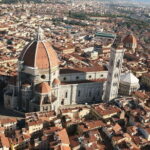
REVIEW · FLORENCE
Spedale degli Innocenti: the first Orphanage ever built
Book on Viator →Operated by Florence Tours by Made of Tuscany · Bookable on Viator
A Renaissance orphanage with real emotional weight.
The Spedale degli Innocenti is one of the most important buildings to understand early Renaissance Florence, and a guided visit helps you see the logic behind the design, not just the pretty facade. I love that you’re guided through a place built for children, then you also get the payoff of major art inside the museum. Brunelleschi’s architectural proportions are the kind of detail you’ll actually spot when someone points them out.
My other favorite part is the art side of the story: you’ll see works tied to Ghirlandaio and Botticelli, plus commentary that connects the orphanage’s mission to what was happening in Florence’s workshops and commissions. One drawback to consider: the private-guide experience can vary, and there’s at least one report of a guide with tough-to-follow English and a volume level that can feel off in a quiet viewing space.
In This Review
- Key things to know before you go
- Florence’s Spedale degli Innocenti: a Renaissance building with a human mission
- Finding Piazza della SS. Annunziata and getting oriented fast
- Museo degli Innocenti: your 90-minute private tour, step by step
- What the guide focuses on (and why it matters)
- A modern touch: the museum after renovation
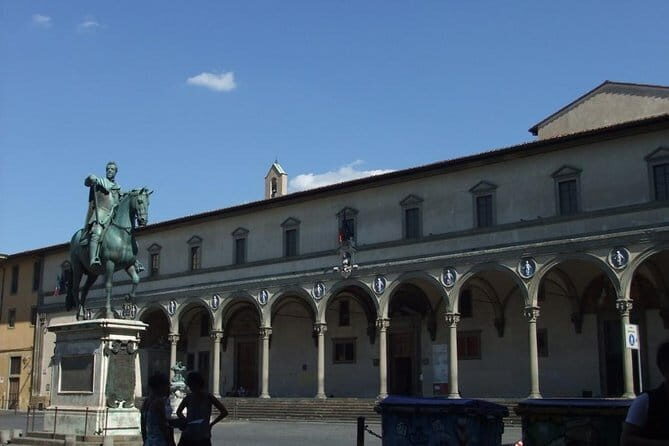
- Spotting Brunelleschi’s Renaissance logic in the building’s design
- Columns: more than decoration
- Proportions: the quiet magic
- Function in the background
- The art experience: Ghirlandaio and Botticelli in context
- Why these names matter here
- How to get more out of the museum time
- Agata Esmeralda and the orphanage’s first chapter (1445)
- Price and value: is $169.98 per person worth it?
- Logistics that affect your experience (even on a private tour)
- Who this tour is best for
- Should you book this private Spedale degli Innocenti tour?
- FAQ
- How long is the Spedale degli Innocenti private tour?
- Where does the tour start?
- Is the museum entrance included?
- What’s included in the tour besides the guide?
- Is hotel pickup or drop-off included?
- Is this a private tour?
- Are service animals allowed?
- What is the cancellation policy?
- How far in advance is this tour usually booked?
Key things to know before you go
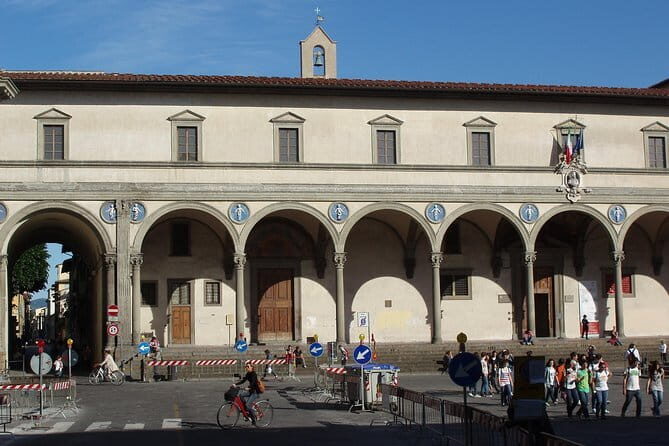
- Early Renaissance design: the orphanage is often described as the first fully Renaissance-style building you can visit in Florence.
- Spot columns and proportions: your guide will help you read the building’s layout like a design blueprint.
- Museum visit included: you get entrance and time inside the Museo degli Innocenti during the tour.
- Major names in the collection: expect art connected to Ghirlandaio and Botticelli.
- A real date with real people: you’ll hear about Agata Esmeralda, the first child hosted on 5 February 1445.
- Private format: only your group goes on this tour, so you can ask questions without competing for attention.
Florence’s Spedale degli Innocenti: a Renaissance building with a human mission
Some places in Florence feel like they’re frozen in time. The Spedale degli Innocenti feels different. It’s still tied to children’s services today, and that living thread makes the 15th-century story land harder than a typical museum stop.
What makes this visit worth your time is the combination of three things that rarely line up so neatly: architecture, art, and a social purpose. You’ll be in a building designed in the 1400s by Filippo Brunelleschi, and you’ll see why people consider it the start of the Renaissance style as a fully intentional idea—not just a few classical ornaments.
And if you like “small details with big meaning,” this is a strong choice. The key is that a good guide doesn’t just point out what’s there. They show you what to notice: columns, spacing, and how the proportions work together to shape movement through the space.
You can also read our reviews of more tours and experiences in Florence.
- Tuscany Day Trip from Florence: Siena, San Gimignano, Pisa and Lunch at a Winery
★ 5.0 · 21,634 reviews

Finding Piazza della SS. Annunziata and getting oriented fast
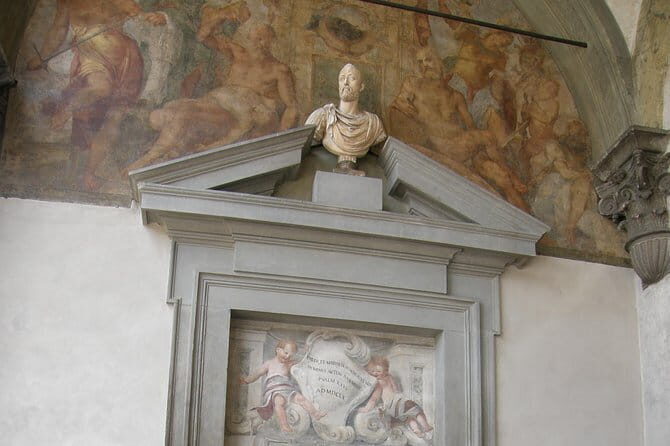
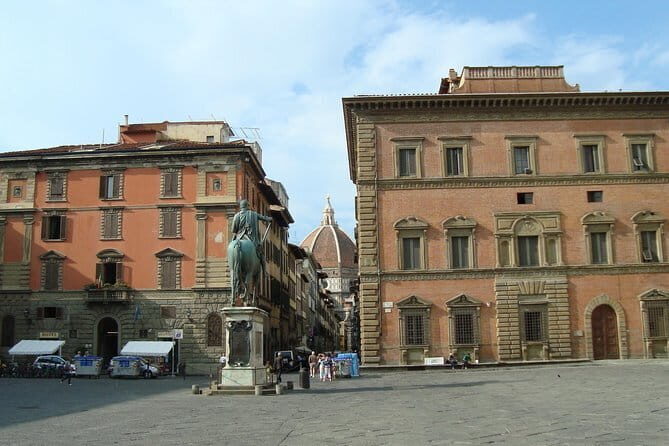
Your tour begins at Piazza della SS. Annunziata (P.za della SS. Annunziata, Firenze FI, Italy). This isn’t some tucked-away alley. The square is part of the experience, and it helps you get bearings quickly in a city that can feel like a maze when you first arrive.
You’ll spend about five minutes at the piazza itself before heading to the museum. There’s a practical side to that short intro: you get context for where you are and what surrounds the orphanage, so the building doesn’t feel like an isolated object. It’s easier to appreciate the design when you understand how it sits in the neighborhood.
Quick tip: since you’re making your own way there, plan to arrive a few minutes early so you’re not rushing while street traffic and crowds do their thing. A calm start makes the rest of the 90 minutes feel smoother.
Museo degli Innocenti: your 90-minute private tour, step by step
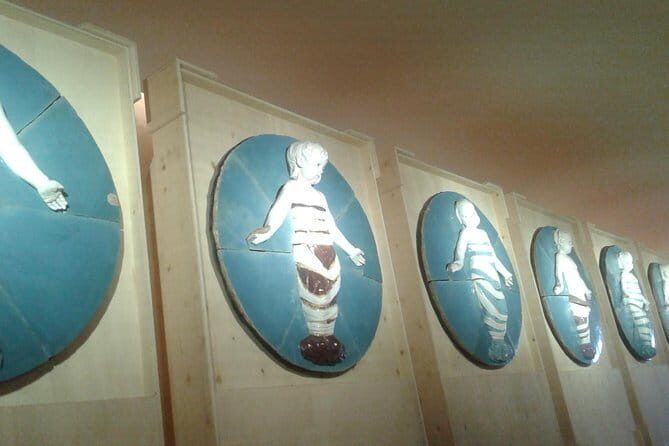
The core of your experience happens inside and around the Museo degli Innocenti, with the tour duration listed at about 1 hour 30 minutes. This is a private tour, so your guide will pace the visit around your group, not around a big crowd.
What the guide focuses on (and why it matters)
Your guide is there to point out the design choices that make the building a “first” for Renaissance architecture. That matters because Renaissance architecture can look like decoration until you learn how it’s constructed. Once you know what to look for, the whole place snaps into focus.
Based on what you’ll cover during the visit, you can expect commentary on:
- columns and how they organize space
- proportions that create balance and rhythm
- the building’s intended function as an orphanage
This isn’t just sightseeing. It’s learning to read the building as a working system designed for care and daily life.
A modern touch: the museum after renovation
The museum was renovated in 2016, and that affects your experience in a practical way. Renovation usually means the museum layout and visitor flow are easier to manage than you might expect from a centuries-old institution. You’re not just stepping into a historical shell—you’re visiting an active museum space that was updated for visitors.
- Tuscany Day Trip from Florence: Siena, San Gimignano, Pisa and Lunch at a Winery
★ 5.0 · 21,634 reviews - The Best tour in Florence: Renaissance & Medici Tales – guided by a STORYTELLER
★ 5.0 · 12,316 reviews

Spotting Brunelleschi’s Renaissance logic in the building’s design

One reason this tour is so satisfying is that it gives you concrete things to look at, instead of vague “it’s beautiful” commentary. The orphanage building is often described as the first fully Renaissance-style building, and your guide will help you see why that claim gets repeated.
Here’s how it helps you as a visitor:
Columns: more than decoration
You’ll be guided to notice the columns and how they structure the visual experience. When columns are used with careful proportions, they create a sense of order that feels calm rather than rigid. In a space tied to children, that calm order is part of the story.
Proportions: the quiet magic
Renaissance design is full of systems. Proportions are one of the biggest systems. Your guide will point out the way the building holds together visually, so you can understand the architecture as intentional planning, not just style.
If you’ve ever seen classical buildings and thought, I like the look but I don’t know what makes it work, this is where you’ll get the explanation you wished you had earlier.
Function in the background
Because this was designed as an orphanage in the 1400s, the architecture isn’t only about aesthetics. It’s also about use—how people move, how spaces feel, and how the institution operates. Your guide connects those dots so the building’s design choices feel understandable, not mysterious.
The art experience: Ghirlandaio and Botticelli in context
The museum portion is where you get a second “layer” of appreciation. You’re not only looking at early Renaissance structure; you’re also seeing artwork connected to two heavyweights of Florentine art: Ghirlandaio and Botticelli.
Why these names matter here
Florence’s art isn’t a separate world from Florence’s social institutions. During your visit, you’ll hear about the art collection and how it fits the orphanage setting.
A specific detail you’ll get along the way: you’ll learn that Ghirlandaio employed Michelangelo as an apprentice. Even if you already know that fact, hearing it in this setting puts it into a wider Florence context—artists were learning, producing, and building reputations in the same city where institutions served children and families.
How to get more out of the museum time
Don’t treat the artworks like a checklist. Use your guide’s comments to slow down. The value of a private visit is that you can ask for clarity—what you’re looking at, why it’s important, and how it connects to the larger story of the building.
If your guide’s English is strong, this is one of the highlights because it links people, art, and architecture into one coherent picture. If it isn’t, the architecture points become even more important as your anchors.
Agata Esmeralda and the orphanage’s first chapter (1445)

One of the most human details you’ll hear is about Agata Esmeralda, identified as the first child hosted on 5 February 1445. That date turns the place from an abstract “historical orphanage” into a timeline with a starting point.
This kind of detail is powerful because it gives you something to hold onto while you look around. When you walk through historical buildings, you can feel like you’re floating above the past. A specific name and date pull you down into lived reality.
And since the building still hosts children’s service organizations today, the story isn’t only about pity or tragedy. It’s about continuity—how Florence’s institutions have evolved, while the site’s purpose remains linked to care.
Price and value: is $169.98 per person worth it?
The listed price is $169.98 per person, with tours that are commonly booked about 25 days in advance. That’s not a bargain-basement museum ticket, so you need to be honest about what you’re buying.
Here’s the value equation that makes sense for this experience:
- You’re paying for a private guide, not a general audio tour.
- You’re getting entrance tickets and reservation, so you’re not juggling extra steps once you arrive.
- You get a focused 90-minute explanation of architecture plus the museum’s art and story.
Where it might not feel like the best value: if you’re the kind of visitor who enjoys museums mostly by wandering and reading labels with no need for live context. In that case, a self-guided visit might cost you less. But if you want the “why” behind Renaissance design and want the building’s purpose explained, the guide is the product, not the optional extra.
One more thing: since there’s a report of a guide with limited English and loud speaking in a viewing-heavy space, I’d treat this as a tour where communication style matters. If language clarity is a big deal for you, consider confirming expectations when booking.
Logistics that affect your experience (even on a private tour)
This tour is private, and your group is the only group on it. That’s great for questions and pacing. It also means you won’t have the usual pressure of matching a strict group schedule for dozens of strangers.
Meeting point is straightforward: Piazza della SS. Annunziata, and the tour ends back at the meeting point. Hotel pickup and drop-off aren’t included, so plan to arrive on your own.
The tour is also described as near public transportation, which helps if you’re staying a little farther out. And service animals are allowed, which is good to know for anyone who relies on them.
Duration is about 90 minutes, so think of it as enough time to learn the main story and see the key art, without dragging on.
Who this tour is best for
I’d book this if you:
- care about Renaissance architecture and want real pointers on how it works
- like tours that connect art to real-world purpose, not just style
- want a private guide experience in a museum setting
You might skip it if:
- you prefer self-guided museum time and don’t want to pay for interpretation
- your group gets frustrated with unclear explanations, since at least one report points to English comprehension issues
If you’re visiting Florence for the first time and you want one stop that shows Renaissance thinking as more than a look, this is a strong candidate.
Should you book this private Spedale degli Innocenti tour?
If you want a guided, story-driven visit to one of Florence’s most important early Renaissance sites, I think you’ll likely enjoy the format. The combination of Brunelleschi’s building, museum art tied to Ghirlandaio and Botticelli, and the specific human detail about Agata Esmeralda gives you multiple ways to connect to the place.
Still, take the guide experience seriously. If clear communication is your top priority, I’d plan around that and make sure your booking expectations are aligned with your language comfort. On a good day, this tour gives you exactly what a great Florence visit should: context you can actually use while you’re standing in the room.
FAQ
How long is the Spedale degli Innocenti private tour?
It’s about 1 hour 30 minutes.
Where does the tour start?
The meeting point is Piazza della SS. Annunziata (P.za della SS. Annunziata, Firenze FI, Italy).
Is the museum entrance included?
Yes. Entrance tickets and reservation are included.
What’s included in the tour besides the guide?
A professional guide for a private tour, plus the entrance tickets and reservation.
Is hotel pickup or drop-off included?
No, hotel pickup and drop-off are not included.
Is this a private tour?
Yes. It’s private, and only your group participates.
Are service animals allowed?
Yes, service animals are allowed.
What is the cancellation policy?
You can cancel for a full refund up to 24 hours in advance of the experience’s start time.
How far in advance is this tour usually booked?
On average, it’s booked about 25 days in advance.
More Tour Reviews in Florence
- Tuscany Day Trip from Florence: Siena, San Gimignano, Pisa and Lunch at a Winery
★ 5.0 · 21,634 reviews - The Best tour in Florence: Renaissance & Medici Tales – guided by a STORYTELLER
★ 5.0 · 12,316 reviews