REVIEW · SIENA
The Countess’s Lunch: Wine Tasting Paired with Signature Cuisine
Book on Viator →Operated by Agricola Poggio ai Laghi · Bookable on Viator
Your lunch in Siena comes with wine lessons.
This experience is built around a full pairing program: you’ll taste Chianti and other Tuscan styles alongside an olive oil and balsamic flight that shows you what makes this area’s food so hard to stop eating. I especially like how the tastings are tied to the menu instead of feeling like random sips. One thing to consider: this is also a place where purchases can be pushed at checkout, so go in with a calm plan for how much you want to spend.
It’s held at Agricola Poggio ai Laghi, near Monteriggioni, with a small group limit of 15. The whole thing runs about 1 hour 45 minutes, it’s offered in English, and you get a mobile ticket. I also like that it’s structured enough to fit into a busy day in Siena without dragging on.
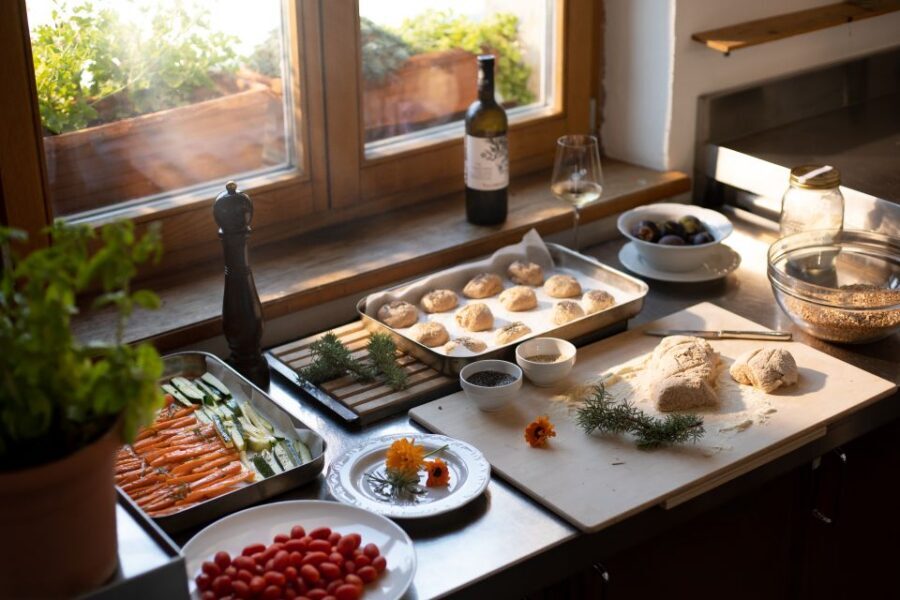
You’ll eat classic Tuscan dishes that match the wines, including lasagna with meat ragù, roast pork loin (arista) with oven-baked potatoes, and cantuccini with Vin Santo. The timing is part of the fun: tasting, eating, tasting again, and then finishing sweet.
Key highlights at a glance
- A wine program that covers multiple Tuscan styles (from spumante to Chianti Classico and a Supertuscan)
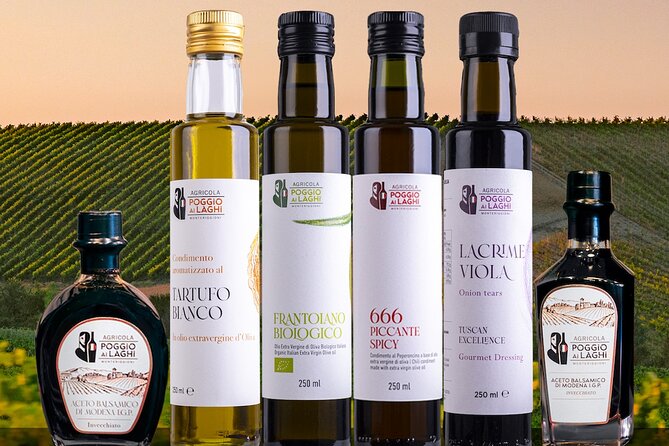
- Balsamic vinegar tastings that go beyond the basics (including a red onion balsamic)
- Three olive oils with three different moods: classic, white truffle, and chili pepper
- A lunch menu designed for pairings, not just a meal thrown in
- Small-group pacing led in English, so you’re not lost in the shuffle
- Product ordering is part of the experience, so be ready to think about shipping if you buy
In This Review
- What You’re Actually Doing: A Pairing-First Lunch in the Countryside
- The Wine Flight: Spumante Through Chianti, Plus One Supertuscan Twist
- Olive Oil and Balsamic: The Part That Often Wins People Over
- Balsamic vinegar lineup
- Olive oil lineup
- The Lunch Menu: Tuscan Comfort Food With Wine-Smart Timing
- Appetizers
- First course
- Main course
- Dessert
- Hosts, Group Size, and How the Afternoon Feels
- Price and Value: Is $84.29 Worth It?
- Buying Bottles and Shipping Home: How to Avoid the Regret Spiral
- Who This Works Best For
- Quick Booking Wisdom Before You Go
- Should You Book The Countess’s Lunch?
- FAQ
- How long is The Countess’s Lunch?
- Where does the experience start?
- Is the experience offered in English?
- How big is the group?
- What wines are included?
- What is included in the lunch?
- Are olive oil and balsamic vinegar included?
- Do I get a mobile ticket?
- What happens if the weather is bad?
- Is there free cancellation?
What You’re Actually Doing: A Pairing-First Lunch in the Countryside
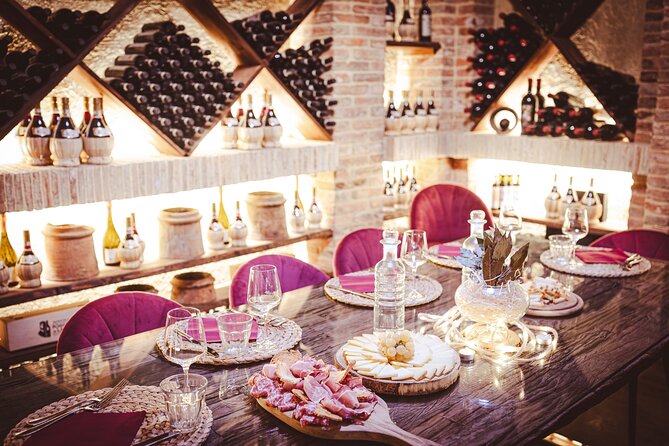
The Countess’s Lunch isn’t just a quick winery stop. It’s a food-and-wine session where the pairing is the main event, and the lunch is treated like another course in the lesson. That matters, because it helps you make sense of what you’re tasting: why one wine works with pork, why balsamic feels different with cheese and bread, and why chili oil can turn something simple into a snack you remember later.
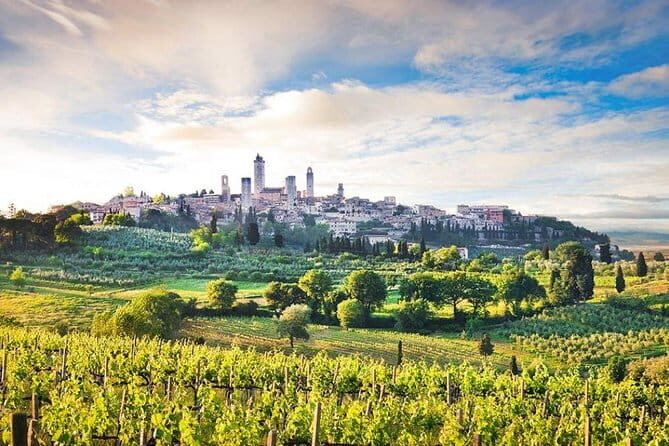
You’ll start at Agricola Poggio ai Laghi (Strada di Sant’Antonio, 56, 53035 Monteriggioni). Then the afternoon unfolds at one base location: taste, eat, taste, eat. With a maximum of 15 people, it feels more like a guided afternoon at a working winery than a factory-style tasting.
Most people should find it doable too—nothing in the info suggests it’s an all-day commitment, and it’s timed to land within a typical sightseeing window in Siena. If you’re the type who likes learning a few practical cues (not a lecture), this format usually clicks.
Practical tip: bring a short list in your head for what you want to buy, if anything. If you’re unsure, decide before you reach the payment moment—once bottles are on the table, it can get harder to think clearly.
The Wine Flight: Spumante Through Chianti, Plus One Supertuscan Twist
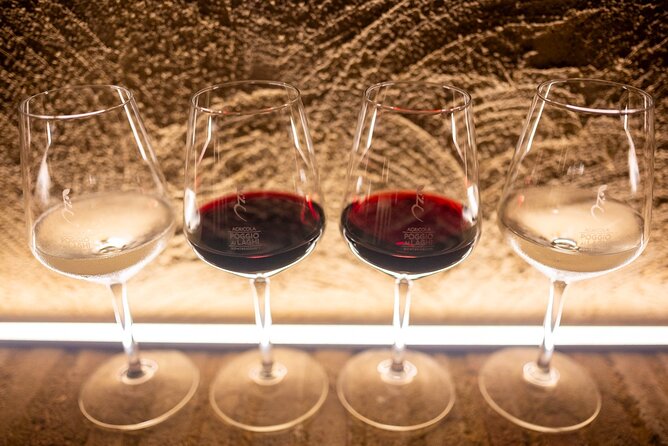
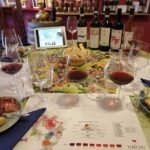
The wine line-up is a mix of sparkling, red, and one white, so you’re not stuck tasting just one style for 90 minutes. You’ll be shown how the wines connect to what comes next on your plate.
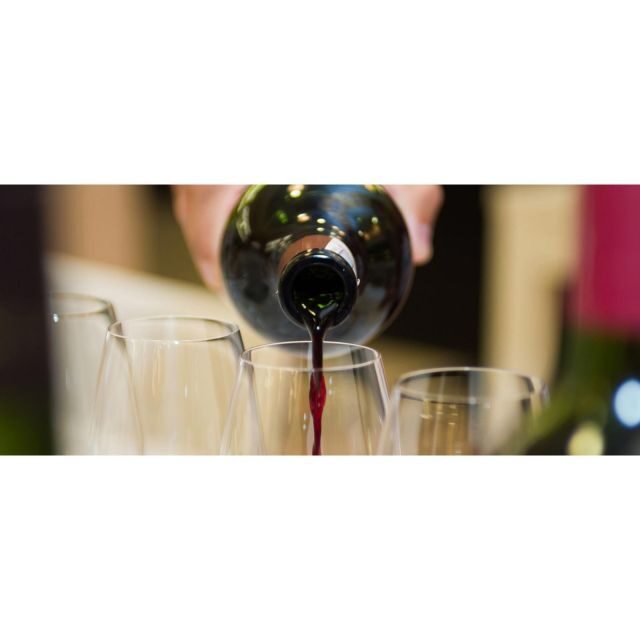
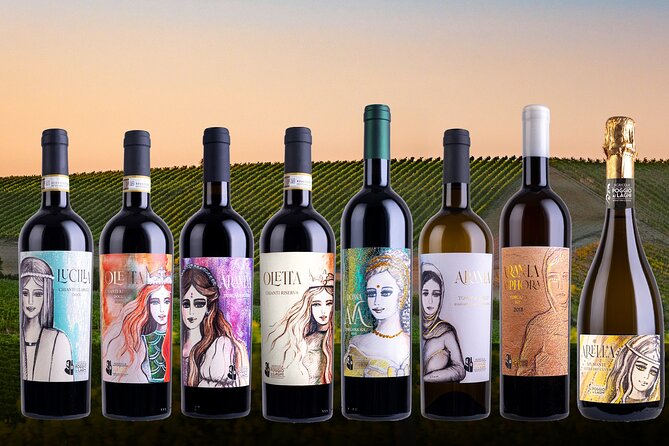
Here are the wines included in the tasting set:
- Arella – Spumante Cuvée Extra Dry Oletta
- Firmina – Spumante Rosé Extra Dry
- Oletta – Chianti Riserva DOCG
- Lucilla – Chianti Classico DOCG
- Aranda – Supertuscan IGT
- Donna Ava – Toscana Rosso IGT
- Nina – Chianti Classico Riserva DOCG
- Arania – IGT Bianco Toscana
What I like about this mix is that it gives you multiple ways to understand Tuscan flavor. The spumantes (extra dry) are usually your “reset button,” clearing the palate before you move into richer reds. Then Chianti versions—Chianti Riserva, Chianti Classico, and even a Chianti Classico Riserva—tend to show how the same region can shift with aging and vineyard focus.
The Supertuscan slot (Aranda, IGT) is a helpful reality check too. Tuscany has its classics, but it also has wine-making creativity that doesn’t always fit the traditional labels. That’s the kind of contrast that makes a tasting feel educational without needing fancy terminology.
Practical tip: if you’re planning to buy later, pay attention early to what feels easiest to drink. People often choose their favorites at the end, after the food has kicked in. Here, you’ll have a chance to notice preferences as you go.
You can also read our reviews of more tours and experiences in Siena.

Olive Oil and Balsamic: The Part That Often Wins People Over
If you think you already know olive oil and balsamic vinegar, this is where the program can surprise you. The set includes not only “standard” products, but also variations that show how flavor changes with ingredients and craft.
Balsamic vinegar lineup
- Balsamic Vinegar of Modena PGI – Gold Selection
- Lacrime Viola – Red Onion Balsamic Vinegar (Tuscan Excellence)
Red onion balsamic is a wild card in a good way. It turns vinegar from a condiment you drizzle into something you can taste like a distinct sauce. Expect it to feel sweeter, more aromatic, and less sharp than what you might use straight from a supermarket bottle.
Olive oil lineup
- Classic Extra Virgin Olive Oil (balanced and harmonious)
- White Truffle Olive Oil (elegant and enveloping)
- Chili Pepper Olive Oil (bold and vibrant)
Here’s the practical value: you’ll see how olive oil can play different roles. A classic oil works as a baseline with bread. A truffle oil acts more like a fragrance—great when paired with simple flavors so the aroma has room to speak. Chili pepper oil is for contrast; it can add heat to cheese or bring life to something savory.
Practical tip: when toasted bread appears with olive oil, treat it like a tasting tool, not just “carbs.” Taste the bread first, then the oil on its own, then with any vinegar offered. That’s the quickest way to understand what you’re paying attention to.
The Lunch Menu: Tuscan Comfort Food With Wine-Smart Timing
The lunch is designed to match what’s in your glass. You’re not eating in between tastings; you’re eating alongside the pairing logic.




Appetizers
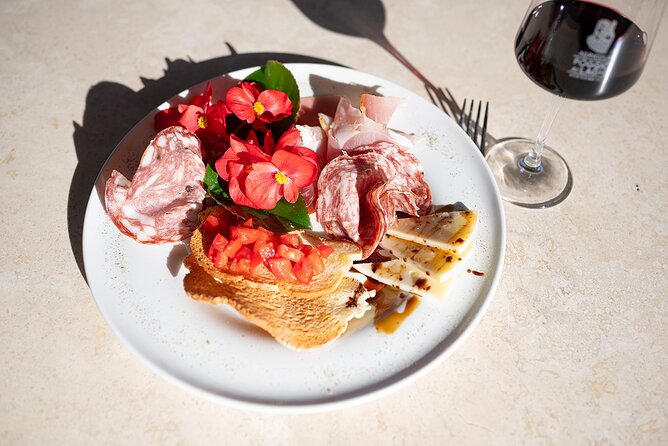
You’ll get a Tuscan-style starter spread, including:
- Tuscan salami, finocchiona (fennel salami), and cured ham
- pecorino cheese
- bruschetta with fresh tomato and basil
- toasted bread crisp with extra virgin olive oil
This lineup does two things well. Salumi and cheese set up a savory stage for red wines and help your palate handle fat. Bruschetta brings acidity and freshness, which is usually the kind of balance that makes Chianti feel natural instead of heavy.
First course
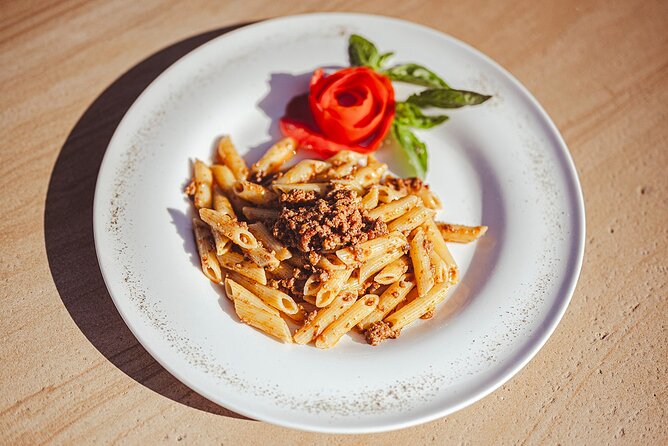
- Lasagna with traditional Tuscan meat ragù
Lasagna is a strong anchor. It has richness, sweetness from cooked tomato, and deep meat flavor. That’s exactly where many Chianti styles make sense, because the acidity and structure can keep the meal from feeling monotonous.
Main course
- Roast pork loin (arista) with oven-baked potatoes
Pork and wine pairings are a classic Tuscany move. Arista is especially good at showing how reds can shift from light to fuller-bodied depending on the wine you’re tasting with it.
Dessert
- Cantuccini with Vin Santo
This is the sweet finish that makes the whole session feel complete. Cantuccini’s dry crunch and almond flavor can handle Vin Santo’s richness without turning everything into syrup.
Practical tip: if you’re the type who gets full fast, slow down early. Once you’re into the lasagna and pork, the later tastings can feel more intense, and that’s when people sometimes stop making clear decisions.
Hosts, Group Size, and How the Afternoon Feels
The experience is capped at 15, and that tends to change the vibe. You’re more likely to get real back-and-forth instead of just watching someone pour for the next person. The info also says the tour is in English, which is a big help if you want to ask simple questions like what pairs with what.
From the names that have shown up with this experience, you might meet hosts such as Leda, Valeska, or Somalia. The common thread is energy plus practical guidance—people seem to leave with the sense that they understand what they tasted and why it matters.
Time-wise, expect a smooth flow across the 1 hour 45 minutes. The structure is tight, so you won’t wander off or kill time waiting between courses. That’s ideal in Siena when you’re trying to fit everything into one day.
Small consideration: because it moves quickly, you’ll want to stay mentally present. If you check out, you’ll miss the pairing cues that make this feel worth the money.
Price and Value: Is $84.29 Worth It?
Let’s talk value like a grown-up. At $84.29 per person for about 1 hour 45 minutes, you’re paying for:
- a guided wine tasting with multiple bottles
- a balsamic vinegar tasting
- an olive oil flight
- a plated Tuscan lunch with multiple courses
- a setting at a working winery, not just a tasting room
That can add up fast if you tried to piece it together separately in Siena. A standard tasting alone might cost a similar amount, and you’d still need to cover lunch. Here, the meal is part of the “program,” meaning your food choices are baked into the experience rather than an add-on you’re stuck paying for while the tasting is still happening.
Is it perfect value for everyone? Not always. If you’re mainly a casual sipper who doesn’t want to think about pairings, the cost may feel high. And if you end up buying bottles, the real total can rise quickly.
My practical take: this is best for people who like food as much as wine. If you’re the type who likes learning small, usable cues—what to taste for, what to pair—it tends to feel like a fair deal.
Buying Bottles and Shipping Home: How to Avoid the Regret Spiral
This is where you need to be smart. The tasting is followed by a shopping moment, and some past visitors have reported strong sales pressure and surprise requirements around shipping.
One person said they were told there was a six-bottle minimum to ship and felt pushed when deciding at the counter. Another described a shipping issue where an order wasn’t delivered correctly and didn’t get resolved quickly.
That doesn’t mean it will happen to you. It does mean you should go in informed:
- Ask the shipping minimum up front if shipping is important to you
- Double-check quantities and what you’re charged for before final payment
- Keep screenshots or receipts so you’re not starting from scratch later
- Decide your budget before you arrive, not at checkout
Practical tip: if you’re short on time, skip shipping and plan to buy only what fits in your luggage. The most stress-free souvenir is the one you can actually carry.
Who This Works Best For
This experience is a strong fit if you:
- want a Siena wine tasting that includes real food, not tiny bites
- enjoy tasting multiple Tuscan styles, especially Chianti Classico variations
- are curious about olive oil and balsamic beyond standard supermarket versions
- like small-group guidance in English
It’s also a decent choice for a couple, since the format is paced and social without turning into a large bus group.
You might want to rethink it if:
- you dislike shopping pressure in the middle or end of an activity
- you only want a quick tasting and don’t care about pairing
- you’re sensitive to spending more once bottles hit the table
Quick Booking Wisdom Before You Go
A few practical notes from the provided info:
- confirmation happens at booking time
- free cancellation is available up to 24 hours before the start (local time)
- it needs good weather; if weather is poor, you’ll be offered another date or a full refund
- it runs near public transportation, and service animals are allowed
Also, it’s often booked ahead (on average 26 days), so if your dates are fixed, don’t wait until the last minute.
Should You Book The Countess’s Lunch?
I’d book it if you want one clear, high-value activity in Siena that ties together wine, olive oil, balsamic, and a proper Tuscan meal in under two hours. The food menu is classic—lasagna, arista pork, and cantuccini with Vin Santo—and the tastings go beyond just wine by treating oils and balsamic as central players.
I’d be cautious if you know you hate sales pressure, or if you plan to ship bottles home and don’t want to deal with any surprises around minimums or paperwork. If that’s you, set a firm budget and ask shipping questions before you commit.
If you fall in the first group—food-first people who like learning while they eat—this afternoon at Agricola Poggio ai Laghi is the kind of Siena stop that’s easy to remember for the right reasons.
FAQ
How long is The Countess’s Lunch?
It runs about 1 hour 45 minutes.
Where does the experience start?
The meeting point is Agricola Poggio ai Laghi, Strada di Sant’Antonio, 56, 53035 Monteriggioni (Siena), Italy.
Is the experience offered in English?
Yes, it’s offered in English.
How big is the group?
The maximum group size is 15 travelers.
What wines are included?
The tasting selection includes spumante (including rosé), multiple Chianti and Chianti Classico options, a Supertuscan IGT, a Toscana Rosso IGT, and an IGT Bianco Toscana.
What is included in the lunch?
You’ll have Tuscan salumi/cheese and bruschetta in the starter, lasagna with Tuscan meat ragù in the first course, roast pork loin (arista) with oven-baked potatoes as the main, and cantuccini with Vin Santo for dessert.
Are olive oil and balsamic vinegar included?
Yes. You’ll taste balsamic vinegar of Modena PGI and a red onion balsamic, plus three extra virgin olive oils: classic, white truffle, and chili pepper.
Do I get a mobile ticket?
Yes, the experience includes a mobile ticket.
What happens if the weather is bad?
This experience requires good weather. If it’s canceled due to poor weather, you’ll be offered a different date or a full refund.
Is there free cancellation?
Yes. You can cancel up to 24 hours in advance for a full refund.