REVIEW · ASSISI
The Life of Saint Francis Tour by Tuk Tuk: English & Spanish
Book on GetYourGuide →Operated by ASISIUM TRAVEL · Bookable on GetYourGuide
Assisi can feel like a maze. This tour turns that maze into a clear, story-led route to the key places in Saint Francis’s life. You roll through the narrow streets on a tuk-tuk, so you spend more time looking at churches and less time fighting hills and turns.
I also love the way the commentary connects the places into one timeline, not a set of disconnected stops. You’ll hear it in the hands of local experts such as Daniel, Daniele, Marco, and other area guides who know Assisi from the inside. The only watch-out: the 3.5 hours packs in several sacred sites, so you should expect some time standing and moving between viewpoints and church interiors.
In This Review
- Key things that make this Assisi Saint Francis tour worth your time
- Why a tuk-tuk works so well for Assisi’s Franciscan circuit
- Private tour feel with a small group capped at 4
- Starting at Porta Nuova or your hotel in Assisi: how the day begins
- Chiesa Nuova, St. Francis’s home, and Piazza del Comune with Minerva’s temple
- Piazza Matteotti and the Cathedral of San Rufino: baptism and the Roman layer under Assisi
- Piazza del Vescovado to the Sanctuary of the Stripping and St. Damian’s crucifix
- Rivotorto Sacro Tugurio and the Porziuncola: where Francis’s story turns toward legacy
- Ending at the Basilica of St. Francis: birthplace, final stops, and the thornless rose moment
- Practical tips to make the most of your 3.5 hours
- Who should book this Assisi tuk-tuk Francis tour
- Should you book the Life of Saint Francis tour by tuk-tuk?
Key things that make this Assisi Saint Francis tour worth your time
- Tuk-tuk comfort on narrow streets: It’s a practical way to navigate Assisi’s tight historic center without feeling rushed on foot.
- A small group (up to 4): You get a private-tour feel instead of a crowded bus tour.
- Francis’s story from home to death: The route moves in a logical arc across multiple Franciscan landmarks.
- Stop-and-look spiritual moments: Places tied to key events like the stripping and San Damiano are built into the day.
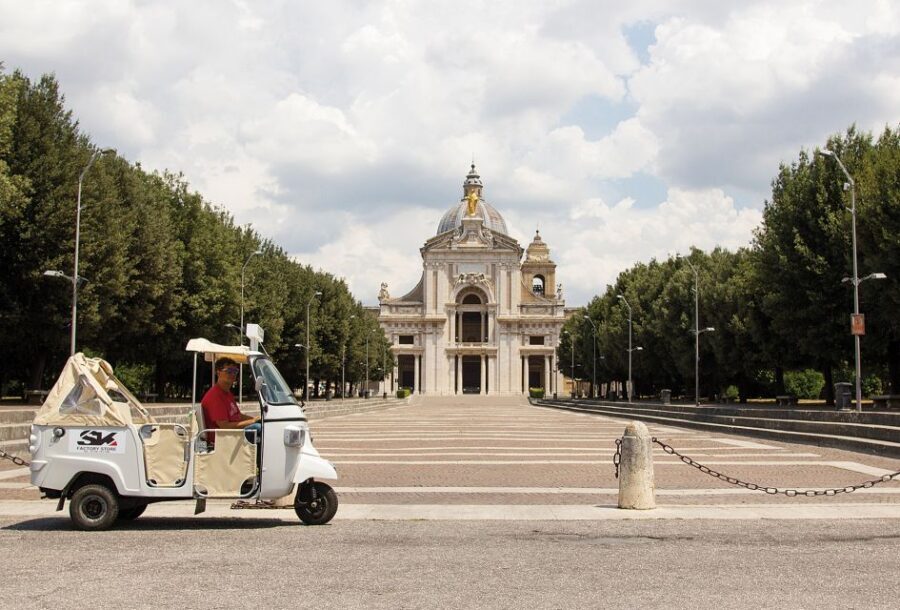
- Lower Assisi inclusion: You reach the Basilica of Saint Mary of the Angels and the Porziuncola, not just hilltop viewpoints.
- Local guide storytelling: Guides named Daniel and Daniele in particular get praised for clarity and engaging delivery.
Why a tuk-tuk works so well for Assisi’s Franciscan circuit
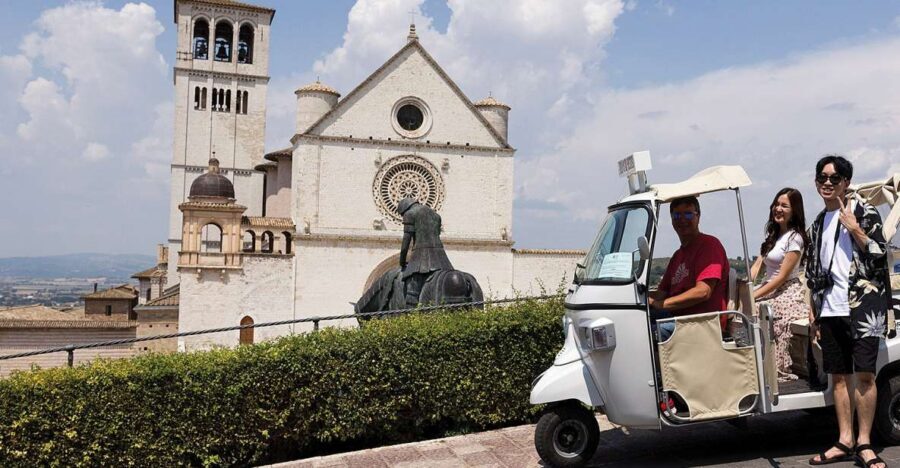
Assisi is beautiful, but it’s not laid out for modern sightseeing. Hills, switchbacks, and those classic old-stone lanes can drain your energy fast. The tuk-tuk is the smart trade: it helps you cover ground and focus on what you came for.
This matters because Saint Francis sites are spread across different parts of town. You’re not doing one neat square. You’re moving through the layers of Assisi: Roman-era traces, medieval civic spaces, and the Franciscan landmarks that many people make a pilgrimage to see.
Also, the tuk-tuk takes the pressure off your day. You can keep your eyes on entrances, façades, and plazas instead of constantly checking where the next turn is.
You can also read our reviews of more tours and experiences in Assisi.

Private tour feel with a small group capped at 4
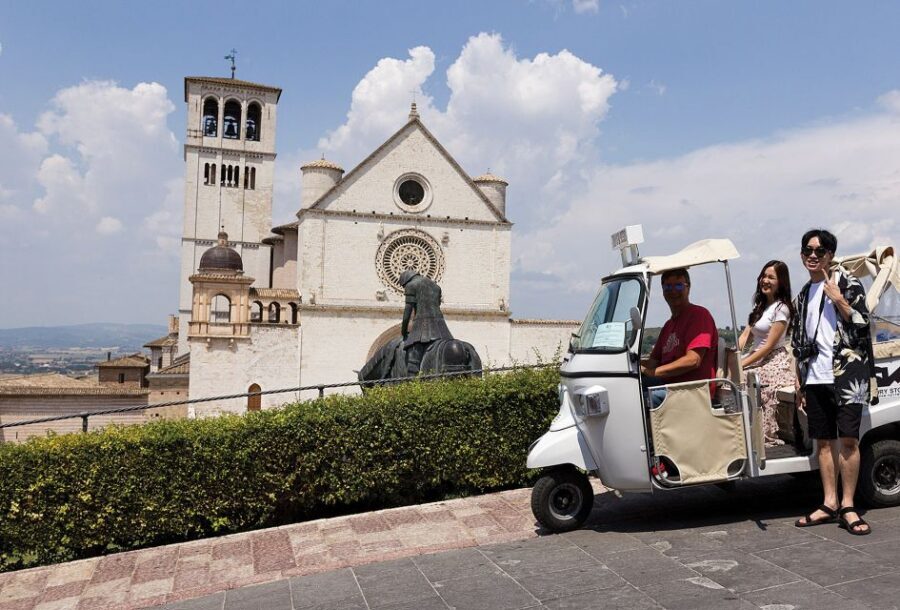
This isn’t an every-person-for-themselves experience. The format is described as a luxury private tour, and the group size is limited to 4 participants. That size is big enough for a lively conversation, but small enough for the guide to keep the pacing human.
Language support is part of the value here: the driver/guides handle English, Italian, Spanish, and French. If you choose this tour for English or Spanish, you’re not stuck with a watered-down explanation. You should expect full, structured commentary tied to each stop.
From the guide names that come up most often (Daniel, Daniele, Marco), you can also tell what kind of day this is. It’s not just facts. It’s a guided walk through how Assisi shaped Francis—and how those places still shape the way you feel when you stand in them.
Starting at Porta Nuova or your hotel in Assisi: how the day begins
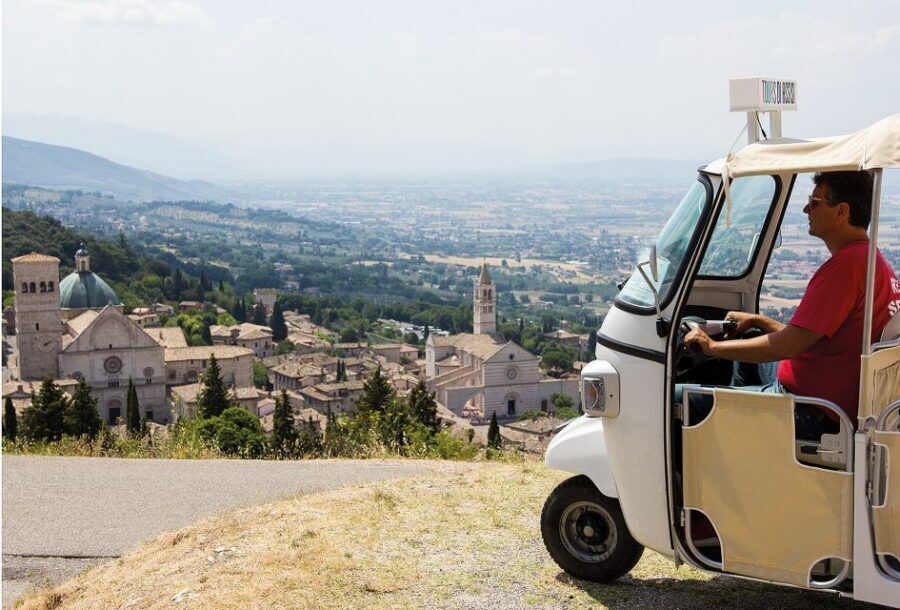
Your tour meets near the Porta Nuova Medieval Gate next to the Asisium Travel Agency. Coordinates are listed as 43.067230224609375, 12.619208335876465, which can help if you’re using a map app.
You can also depart from your hotel in Assisi. That’s useful when you’re staying up in the older zones where finding a parking spot can be annoying. Either way, the start point keeps the day efficient: you’re set up to move through central Assisi quickly.
The opening moments matter because they frame what you’ll see next. You’re not just getting dropped at random churches—you’re being oriented to the geography of Assisi, and then the story follows.
Chiesa Nuova, St. Francis’s home, and Piazza del Comune with Minerva’s temple
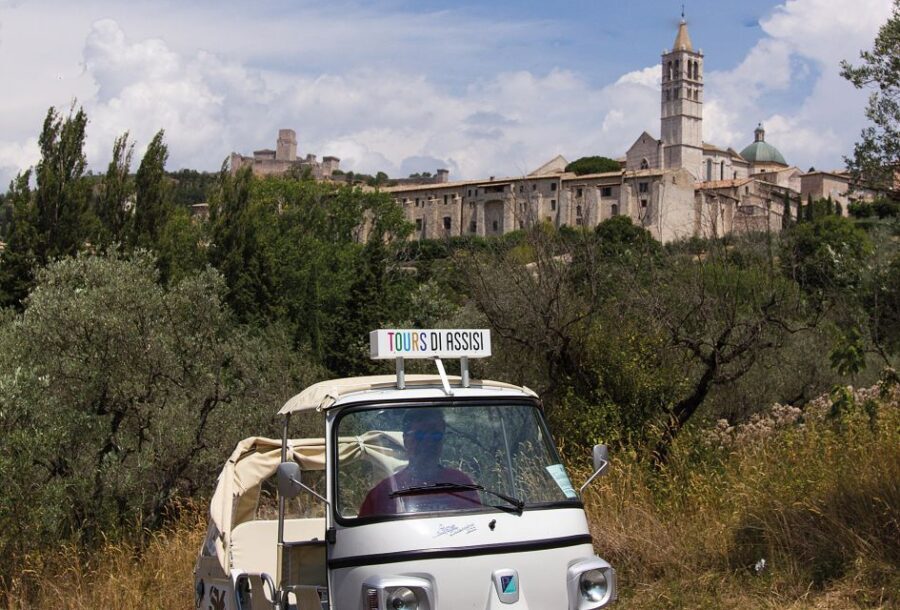
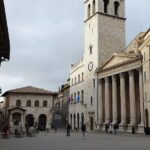
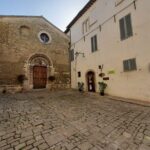
The first stop is Chiesa Nuova (St. Francis’s Home). The tour also includes the Parents Statue there, plus the nearby civic hub: Piazza del Comune with Minerva’s temple.
This combo is a smart start. It anchors the Francis story in the human scale of family and home, not only the later famous moments. Then it widens the view to the civic center of Assisi. Minerva’s temple is a reminder that Assisi wasn’t built from scratch around Francis. The city already had its own Roman identity and public life.
Practical tip: if you like to take photos, this first stretch gives you plenty of angles—church fronts, square lines, and that mix of stone textures that make Umbria so photogenic. Just don’t over-plan camera time; the guide’s narration is part of the attraction.
Piazza Matteotti and the Cathedral of San Rufino: baptism and the Roman layer under Assisi
Next comes Piazza Matteotti, where you can see the Roman Amphitheater. After that, you head to the Cathedral of San Rufino, the place where Saint Francis was baptized.
This is one of the most satisfying transitions on the tour. You move from Roman structures to medieval faith settings without the day feeling like a history lecture. You’re watching the city evolve in front of you.
Why it clicks: baptism ties Francis’s spiritual journey to a concrete location you can stand in. And the Roman amphitheater gives context for how long Assisi has mattered as a settlement, not just as a medieval religious center.
If your goal is to understand what you’re looking at, this stop-and-explain approach is valuable. You’ll know why the cathedral matters and what to notice when you look up at the architecture.


Piazza del Vescovado to the Sanctuary of the Stripping and St. Damian’s crucifix
You then visit Piazza del Vescovado (Bishop’s Palace) and the Sanctuary of the Stripping. After that, the tour includes St. Damian and the crucifix.
This portion is where the Francis story becomes dramatic—and personal. The Sanctuary of the Stripping is tied to the moment when Francis rejected a life of wealth. Even if you’re not making a religious pilgrimage, the site helps you understand the kind of choices Francis was known for.
Then you move to St. Damian, linked with the crucifix—another event-based place that people come to see because it connects a specific spiritual turning point to a physical setting.
One consideration: churches and sanctuaries ask for a different kind of attention. You’ll want comfortable, respectful pacing. If you prefer fast outdoor sightseeing only, this part may feel more reflective and less street-scene.
Rivotorto Sacro Tugurio and the Porziuncola: where Francis’s story turns toward legacy
From there, you go to Rivotorto Sacro Tugurio (Sacred Shrine of Rivotorto). Then the tour reaches Basilica of Saint Mary of the Angels – the Porziuncola, the place where St. Francis died.
Rivotorto is important because it represents an earlier stage of Francis’s life and community. It’s less about a single dramatic moment and more about the atmosphere of beginnings—where a movement gets tested in real daily living.
Then you shift to the Porziuncola, and the tone changes. The basilica area at Saint Mary of the Angels is famous for why people travel here: it’s the end of Francis’s story, anchored to a space you can feel as a destination rather than a passing stop.
If your favorite travel experiences are the ones where the guide connects emotion to place, this is the part that often sticks. It’s also where the tour’s “arts and spiritual” angle becomes most tangible—because the settings are so visually and spiritually specific.
Ending at the Basilica of St. Francis: birthplace, final stops, and the thornless rose moment
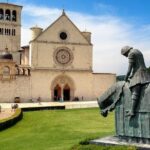
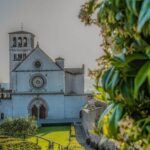
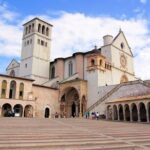
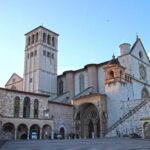
The tour ends at the Basilica of St. Francis, described as his birth place.
This closing move is thoughtful. It brings the story full circle: you started with early life context, and now you finish at the site tied to where it all began.
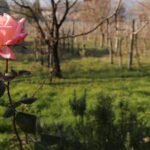
One extra detail that comes up from guide-led experiences is the chance to see the thornless Rose bush. That kind of small but memorable stop is why a good guide matters. You don’t just look at a big church. You notice the symbolic features that make Franciscan Assisi feel lived-in.
If you have time afterward, you’ll often want a few minutes to look around on your own before leaving. The day ends in the right emotional place for that.
Practical tips to make the most of your 3.5 hours
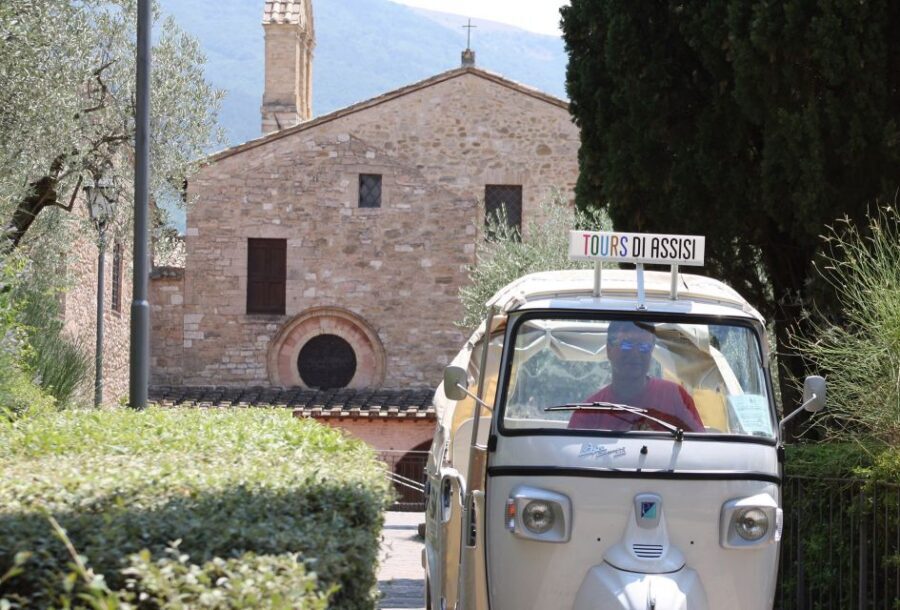
This tour runs for 3.5 hours, and it includes multiple plazas and church stops. That timing is great for a day in Assisi, but it also means you should keep your day plan clean—don’t schedule a museum run right after, because you’ll likely want to linger.
Here’s how to get the best results with what the tour asks for:
- Wear comfortable clothes. You’ll be moving between different spaces, and you may spend time standing while listening.
- Bring a credit card. The tour info specifically notes it, so don’t leave it in the hotel safe if you’re carrying only one payment method.
- If you’re choosing between departure from Porta Nuova or your hotel, pick what minimizes early scrambling. The tour’s energy is best when you’re not stressed at the start.
Also, the tour is offered by Asisium Travel. If you’re traveling as a party of three, there’s a note about needing to contact them directly due to technical issues. That’s not the fun part of planning, but it can save you headaches.
Who should book this Assisi tuk-tuk Francis tour
You’ll enjoy this tour most if you want:
- A spirited walk through Francis’s life with clear place-to-place storytelling
- The convenience of a tuk-tuk in tight, hilly streets
- A small-group day that feels more personal than a mass-market sightseeing loop
- English or Spanish narration with a guide who ties the spiritual themes to what you’re looking at
If you’re the kind of traveler who likes to learn while still feeling the vibe of the place, this fits well. The guide style is described again and again as engaging and not stuck in dry lecture mode—so even the history-minded parts don’t feel like a school class.
If you hate any religious sites at all, you might not love it. This tour is fundamentally about Assisi’s Franciscan geography and spiritual landmarks.
Should you book the Life of Saint Francis tour by tuk-tuk?
Yes, if you want a smart, guided way to see the most meaningful Francis-connected sites across both upper and lower Assisi—without burning your energy on hills and narrow lanes. The small group up to 4 plus the tuk-tuk ride is a strong value combination for the time you’re spending.
I’d skip it only if you’re chasing a purely casual city wander with lots of free time and minimal church stops. Otherwise, this is the kind of half-day that helps you understand what you’re seeing, not just where you’re going.