REVIEW · ASSISI
Assisi Private Walking Tour including St. Francis Basilica
Book on Viator →Operated by Umbria con Me · Bookable on Viator
Saints come alive fast here.
This private walking tour in Assisi turns the famous pilgrimage sites into a story you can actually follow. I like the fact that you get your guide’s full attention (not a group shuffle), and I like how the route sets context with quieter stops before you reach the big basilicas.
You’ll spend about 2 hours 30 minutes on mostly pedestrian streets, guided in English with a flexible itinerary that can fit your interests. Expect a mix of church art, Roman-era remnants, and Franciscan tradition, plus a mobile ticket. One catch to plan for: the walk is hilly, and there’s a strict dress code (knees and shoulders covered), plus special rules can affect whether you go inside the Basilica of St. Francis.
In This Review
- Key Points at a Glance
- Assisi’s Saints Are Best Under a Local’s Slow Pace
- Who This Tour Fits Best (And Who Might Skip It)
- Meeting in the Right Place: Piazza Santa Chiara to San Francesco
- Stop-by-Stop: What You’ll See and Why It Matters
- 1) Basilica of Saint Clare: The Start of the Franciscan Family Story
- 2) Chiesa Nuova (1615): A Renaissance Facade Built on a Francis-Era Belief
- 3) Piazza del Comune: Where Roman Power Met Assisi’s Everyday Center
- 4) Santa Maria sopra Minerva: When Ancient Rome Becomes a Church
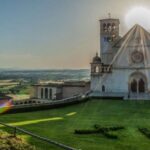
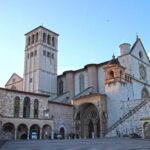
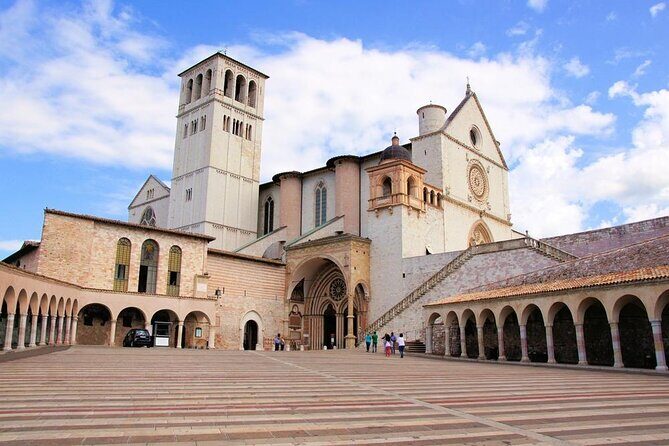
- 5) Basilica Papale e Sacro Convento di San Francesco d’Assisi: The Main Event
- The Real Secret Sauce: The Guide Makes It Click
- What About Extra Stops Like Carlo Acutis?
- Timing Tips: When to Go and How to Make It Feel Smooth
- Price and Value: What $278.16 Really Means
- Small Practicalities to Know Before You Go
- Should You Book This Assisi Private Walk?
- FAQ
- How long is the Assisi private walking tour?
- Is this tour private?
- What language is the tour offered in?
- Where do we meet, and where does the tour end?
- What’s included in the price?
- What’s not included?
- Do I need to pay admission for the other stops?
- What dress code do I need for the churches?
- Can I go inside the Basilica of St. Francis on Sundays or holidays?
- Will basilica access be affected in early 2026?
- Is there free cancellation?
Key Points at a Glance
Private, not crowded: Only your group; guides can slow down for questions and set a humane pace.
Story-first route: You start with St. Clare and Francis-era connections, then move through major Assisi landmarks.
Multiple layers of place: From a Roman temple conversion to Renaissance facades to Franciscan architecture.
St. Francis access rules matter: On Sundays/holidays and during the 2026 relic-display suspension period, access can change.
Small extra cost to plan: Headsets for inside the Basilica of St. Francis are typically €3 per person and aren’t included.
Guides earn the praise: People repeatedly highlight guides like Michele, Francesca, Simone, Werner, and Daniella for clarity and tailoring.
Assisi’s Saints Are Best Under a Local’s Slow Pace
Assisi is the kind of town where you can walk for hours and still feel like you missed half the meaning. That’s exactly why this private walking tour works so well: it helps you connect the artwork, the architecture, and the religious history without fighting your phone or guessing what you’re looking at.
I also appreciate that the tour is designed around human scale. You’re given time to stand, look, and ask, instead of getting pushed along like a check-in line. And because it’s private, your guide can adjust pacing—especially helpful in a town that’s famous for steep streets and sudden stairs.
Finally, there’s a practical upside. A guide handles the interpretation so you don’t have to translate every façade and fresco on your own. That matters in Assisi, where the differences between churches can feel subtle until someone points them out.
You can also read our reviews of more walking tours in Assisi
Who This Tour Fits Best (And Who Might Skip It)
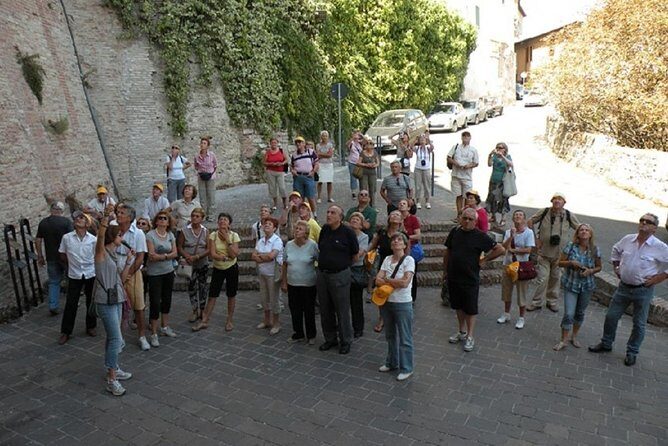
This tour is a great fit if you:
- Want a first-time-or-return approach where the big sites make emotional sense, not just list-of-places sense.
- Enjoy art and architecture, but don’t want to spend your vacation reading wall labels.
- Care about the Franciscan story in a structured way—St. Francis, St. Clare, and how their legacy shows up in stone and ritual.
You might reconsider if:
- You hate walking uphill and downhill. Assisi is quite hilly, so you’ll be doing plenty of up-and-down even with breaks.
- You’re comfortable navigating on your own and just want to pick a few must-sees without added context.
Meeting in the Right Place: Piazza Santa Chiara to San Francesco
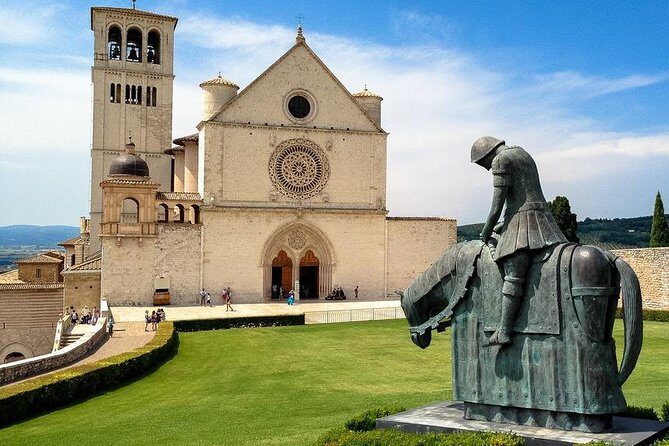
The tour begins at Piazza Santa Chiara (06081 Assisi) and ends at Papal Basilica and Sacred Convent of Saint Francis near the lower entrance area (Piazza Inferiore di S. Francesco, 2).
This matters because Assisi can feel like a maze if you’re trying to self-navigate while also managing stairs, crowds, and changing elevation. Starting near a major church square helps you orient quickly. Ending down by the Francis complex is also practical since that’s where many visitors naturally want to go next—food nearby, more sightseeing, and bus/taxi options.
You’ll get a mobile ticket, so you’re not juggling paper confirmations while you’re trying to keep your bearings.
Stop-by-Stop: What You’ll See and Why It Matters
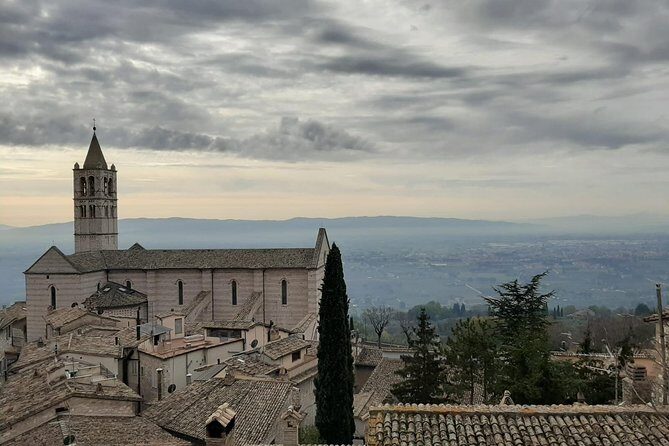
1) Basilica of Saint Clare: The Start of the Franciscan Family Story
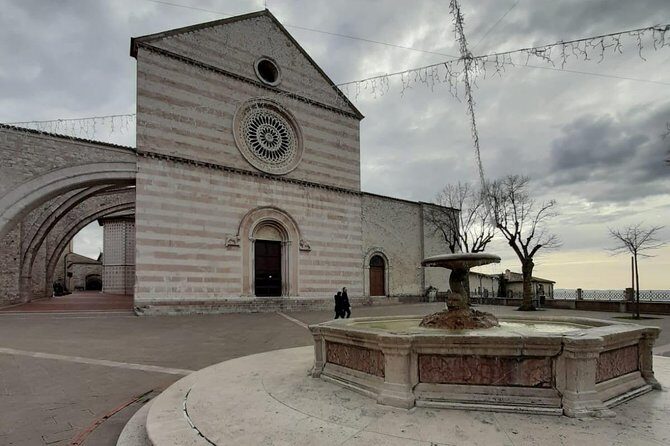
You begin with the Basilica of Saint Clare, a church dedicated to and containing the remains of Saint Clare of Assisi. Clare was a follower of Saint Francis and the founder of the Order of Poor Ladies, known today as the Order of Saint Clare.
This is a strong first stop because it reframes everything you’ll see later. Instead of treating Assisi as only Francis, you get the broader Franciscan world—how the movement spread, how devotion became identity, and how Clare’s presence shaped the town’s spiritual gravity.
Even if you’ve seen other churches in Italy, this one tends to land differently because it’s tied directly to a real person’s physical legacy, not just an artistic style.
Practical note: Dress rules apply here and at other worship spaces. Plan for knees and shoulders covered from the start so you’re not scrambling mid-tour.
You can also read our reviews of more private tours in Assisi


2) Chiesa Nuova (1615): A Renaissance Facade Built on a Francis-Era Belief
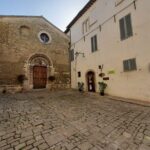
Next is Chiesa Nuova, erected in 1615 on the remains of a building believed to be connected to Saint Francis—often described as the home of St. Francis.
What makes this stop worth your time is the architecture. The façade, built of brick, is divided by four pillars supporting a Doric entablature, topped with an attic gable and a hemispherical dome. In other words: you’re not just stopping at a church; you’re reading a design.
It’s also the kind of place where a guide’s explanation pays off. The meaning is partly spiritual and partly historical—how Assisi kept rebuilding the story in stone as centuries passed.
3) Piazza del Comune: Where Roman Power Met Assisi’s Everyday Center
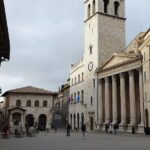
From there you head to Piazza del Comune, on the spot where an ancient Roman Forum once stood. You’ll notice the civic presence in the square, especially with Rocca Maggiore dominating the area.
Then there’s a detail that makes the town feel real: on the right, you can admire the sixteenth-century fountain of the three lions, revisited in 1762 by Giovanni Martinucci. It’s the kind of feature that’s easy to miss if you’re not told what to look for.
This stop helps you understand Assisi as more than a church-town postcard. It was also a political and civic place, and that matters when you’re trying to understand why religious life was so deeply woven into daily space.
4) Santa Maria sopra Minerva: When Ancient Rome Becomes a Church
Next up is Santa Maria sopra Minerva. The earlier structure is the Temple of Minerva, an ancient Roman building that now houses the church.
This church was built in 1539 and renovated in a Baroque style in the 17th century. The deeper punch here is the origin story: the temple was built in the 1st century by the will of Gnaeus Caesius and Titus Caesius Priscus, who were among the city’s quattuorviri and financed construction.
This stop gives you a satisfying “you are standing on layers” moment. You’re basically watching how civilizations reuse sacred space. If you like history that’s visible with your own eyes, this is one of the more rewarding stops.
5) Basilica Papale e Sacro Convento di San Francesco d’Assisi: The Main Event
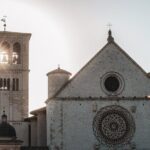
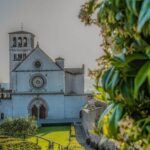
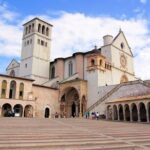
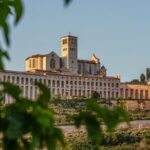
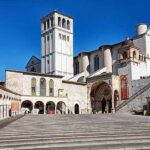
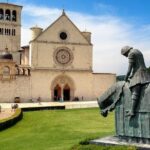
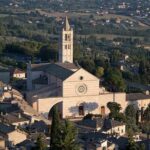
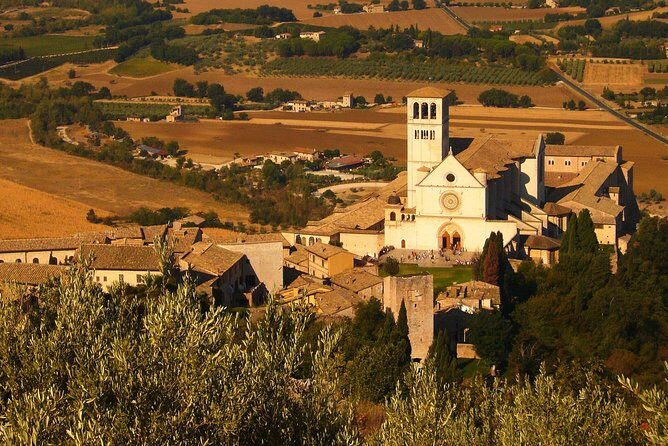
Finally, you reach the Basilica of Saint Francis of Assisi—the mother church connected to the Roman Catholic Order of Friars Minor Conventual in Assisi, where Saint Francis was born and died.
You get two focused blocks for this complex (about 45 minutes for each segment), which makes sense. It’s a huge emotional site, and it’s also packed with meaning in the design.
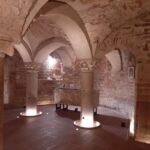
Inside, you’ll see a bright, spacious basilica with:
- A single four-bay nave
- A cross-vaulted ceiling with patterns of crosses and leaves
- A transept and polygonal apse
- Four ribbed vaults decorated alternately with golden stars on a blue background and paintings
That alternating star-and-painting rhythm is the kind of detail people remember because it’s visually clear. But the real value is that your guide connects those architectural choices to how the basilica functions as a pilgrimage space, not just an interior you walk through.
Headsets and entrance rules (important)
Admission for the Basilica of Saint Francis is not included, and headsets for the visit are typically €3 per person and not included. If you want your understanding to land cleanly, plan on the headsets.
Also pay attention to special restrictions:
- On Sundays, big Catholic holidays, and National holidays, guided tours inside the Basilica of St. Francis are forbidden. The guide will explain from outside, and you enter alone in silence.
- Due to the public display of the relics of Saint Francis, access to the basilica can be suspended from February 15 to April 6, 2026. During that period, the guide provides the explanation from outside.
That means your tour experience may feel slightly different depending on dates. The good news: the guide still gives you the story, just from a different viewing mode.
The Real Secret Sauce: The Guide Makes It Click
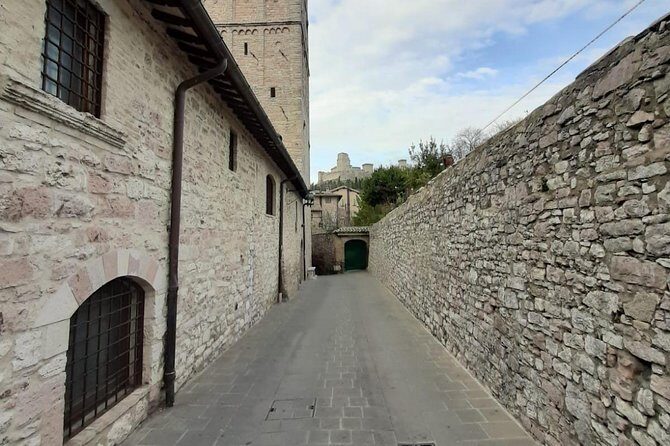
Here’s what shows up again and again in feedback: people don’t just like the sites. They like how the guide turns them into a narrative.
I’ve seen guides named like Michele praised for customizing the tour for a family of four, and Francesca praised for being friendly and easy to tour with. Simone gets credit for patience and keeping the explanation strong even when a group arrived late (45 minutes). Werner is specifically mentioned for adding context about Francis and Clare and helping with practical needs during thunderstorms.
Other names that stand out in the same theme: Daniella, Margherite, Antonella, Begonia, Mari, and Andrea. The common thread is pacing that doesn’t feel rushed and explanations that stay grounded in what you’re actually seeing.
So, if you care about clarity—why things look the way they do, and what they were built to do—this is the part you’re really paying for.
What About Extra Stops Like Carlo Acutis?
Some versions of a guided day in Assisi can include nearby meaning beyond the core Francis-and-Clare focus. For example, one guide named Werner was mentioned for providing an opportunity to visit the tomb of Carlo Acutis (at Santa Maria Maggiore) along with other added extras like lunch suggestions.
That’s a reminder: a private guide can sometimes adjust the day if time and access allow. Don’t assume it’s guaranteed, but it’s worth asking your guide what’s possible around your priorities.
Timing Tips: When to Go and How to Make It Feel Smooth
A 2.5-hour walking tour is a sweet spot if you want real context without burning the whole day. Still, Assisi has stairs and slopes, so a smart approach helps.
A few practical ideas:
- Start with comfortable walking shoes. Your feet will do most of the work here.
- Wear clothing that already meets the church dress code, so you don’t have to think about it while you’re tired.
- If you’re visiting around major holidays, remember the Basilica of St. Francis access rules can change what happens inside.
If you hate being on a tight schedule, the private format is your friend. You can ask your guide to slow down for photos or for personal reflection at the tomb/relic areas (when access is open).
Price and Value: What $278.16 Really Means
The price is $278.16 per group (up to 15) for about 2 hours 30 minutes. Because it’s per group, your per-person cost can drop a lot if you’re traveling with more people.
A quick math check:
- With a full group of 15: about $18.54 per person
- With 2 people: about $139.08 per person
Either way, the value isn’t only the buildings. It’s the guide’s control over pacing, interpretation, and date-specific access issues. Since admission for the Basilica of St. Francis and the headsets (if you choose to use them) add extra cost, you should treat that as part of the plan—not a surprise.
If you’re a solo traveler or a couple, this is best viewed as paying for translation, context, and time saved from figuring things out yourself.
Small Practicalities to Know Before You Go
- Dress code is strict: No shorts or sleeveless tops. Knees and shoulders must be covered for both men and women. You can be refused entry if you don’t comply.
- Headsets cost extra: If you want the narration clearly inside the Basilica of St. Francis, budget €3 per person.
- Expect hills: Assisi is quite hilly, so plan for uneven effort.
- Mobile ticket: You’ll use your phone rather than a paper voucher.
These aren’t deal-breakers. They’re just the kind of details that make your day smoother if you handle them early.
Should You Book This Assisi Private Walk?
Yes, if your goal is to understand Assisi as a living story—Francis, Clare, and the places where belief and art overlap. This tour is especially worth it when you:
- Want a guided narrative that matches what you’re seeing on the street.
- Prefer a calm pace over crowd-control energy.
- Value the guide’s ability to handle access rules and date changes.
I’d skip or downscale it if:
- You only want a quick photo loop.
- You have no interest in the historical/religious context.
- You’re not up for hills and church dress requirements.
If you do book, I’d focus your pre-tour message to your guide on what you care about most: Francis vs Clare, architecture vs stories, or specific details you want explained. That’s where private tours earn their keep.
FAQ
How long is the Assisi private walking tour?
It runs about 2 hours 30 minutes.
Is this tour private?
Yes. It’s a private activity and only your group participates.
What language is the tour offered in?
It’s offered in English.
Where do we meet, and where does the tour end?
You meet at Piazza Santa Chiara, 06081 Assisi PG, Italy. The tour ends at Papal Basilica and Sacred Convent of Saint Francis in Assisi, near Piazza Inferiore di S. Francesco, 2, 06081 Assisi PG, Italy.
What’s included in the price?
A professional guide and the private tour are included.
What’s not included?
Headsets for visiting the Basilica of Saint Francis are not included (3 euro per person). Admission for the Basilica of Saint Francis is also not included.
Do I need to pay admission for the other stops?
The stops like Chiesa Nuova, Piazza del Comune, and Santa Maria sopra Minerva are listed as free entry.
What dress code do I need for the churches?
You must cover knees and shoulders. No shorts or sleeveless tops. If you don’t follow this, you may be refused entry.
Can I go inside the Basilica of St. Francis on Sundays or holidays?
On Sundays, big Catholic holidays, and National holidays, guided tours inside the basilica are forbidden. The guide explains from outside and you enter alone in silence.
Will basilica access be affected in early 2026?
Yes. Due to the public display of the relics of Saint Francis, access to the basilica can be suspended from February 15 to April 6, 2026, and the explanation will be provided from outside.
Is there free cancellation?
Yes. You can cancel up to 24 hours in advance for a full refund.