REVIEW · ASSISI
Small Group Tour of Assisi and St. Francis Basilica
Book on Viator →Operated by Umbria con Me · Bookable on Viator
Assisi fits in your day. In roughly 2 hours 30 minutes, this small-group stroll threads Roman leftovers, medieval lanes, and the Basilica di San Francesco—so you leave seeing more than just a list of churches. I like that it’s small (max 15), which keeps the pace human and your guide’s explanations easy to follow.
I love how the tour links art to belief. You get St. Clare’s pink-stone basilica (Subasio quarry stone) and its long run of frescoes, then you shift to San Francesco and the fresco tradition tied to the best painters of the 13th and 14th centuries, including Giotto.
One important consideration: you’ll climb hills and handle stairs, and dress code matters. Covered knees and shoulders are required, and access rules can change on Sundays/holidays and on specific dates like October 4th or Feb 15–Apr 6, 2026.
In This Review
- Key highlights worth planning around
- What This 2.5-Hour Assisi Tour Really Gives You
- Meeting Point, Timing, and the Dress-Code Reality
- Roman Amphitheater Ruins and the Rocca Maggiore View
- From Steep Lanes to San Rufino’s Cathedral and Saint Clare
- Santa Chiara’s basilica: pink stone and fresco dates you can picture
- Piazza del Comune and Minerva’s Temple: Roman Precision in Medieval Clothing
- Chiesa Nuova: A Church Built in 1615 on Francis’s Presumed Birthplace
- Basilica of Saint Francis: UNESCO, Frescoes, and Two Different Feelings
- Lower basilica vs upper church: penance below, sky above
- The fresco legacy, including Giotto
- When access inside changes: Sundays, holidays, and special closures
- Listening While You Walk: Audio, Silence Rules, and Physical Pace
- Price and Value: Is $72.59 a Good Deal?
- Who This Assisi Tour Fits Best
- Should You Book This Assisi and St. Francis Small Group Tour?
- FAQ
- What time does the tour start?
- How long is the tour?
- Where do I meet the guide?
- Is the tour in English?
- What’s included in the price?
- Do I need a dress code?
- What happens on Sundays or big Catholic holidays?
- Are there dates when access to the Basilica of St. Francis changes?
Key highlights worth planning around
- Roman amphitheater turned medieval neighborhood: reused stone and a killer view toward Rocca Maggiore
- San Francesco and its UNESCO setting: built starting in 1228 under Brother Elias
- St. Clare’s basilica in pink Subasio stone: frescoes from the 1100s to 1300s
- Piazza del Comune + Temple of Minerva: Roman temple surrounded by medieval civic buildings
- Small group access to a full route: see major sights without burning half a day
- Real-world entrance rules: Sundays/holidays and Feb–Apr 2026 can change what you go inside
What This 2.5-Hour Assisi Tour Really Gives You
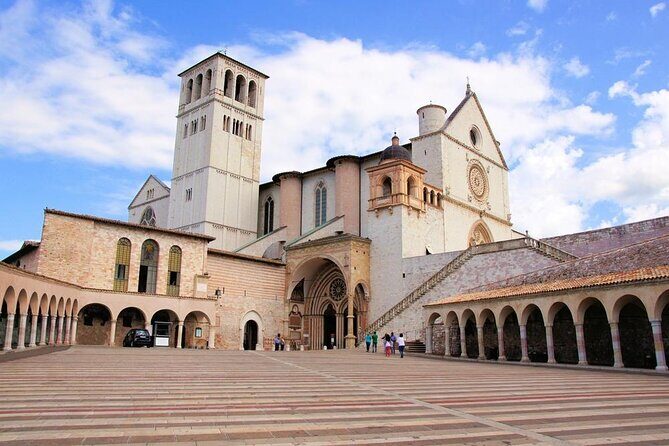
Assisi can feel like a maze—uphill lanes, church after church, and not always enough time to connect it all. This tour is built for the kind of day when you want the highlights without turning it into a marathon.
You start with a look at Assisi before it was Franciscan. Then you move through the medieval center, pause at civic and religious landmarks, and end at the big one: the Basilica of Saint Francis. If you’re trying to understand why this town is famous, this route makes the story feel logical instead of random.
The pacing is the secret sauce. With a guide, you’re not just staring at stone. You’re learning what you’re looking at: why the Roman material got reused, what makes St. Clare’s basilica visually distinctive, and what the basilica complex is designed to make you feel—penance and silence below, brightness and height above.
You’ll likely get a guide who cares about the details. People have had guides such as Alessandra, Francesca, Werner, Michele, Emmanuela, and Barbara, and the common thread is clear explanations and patient answers.
You can also read our reviews of more tours and experiences in Assisi.

Meeting Point, Timing, and the Dress-Code Reality
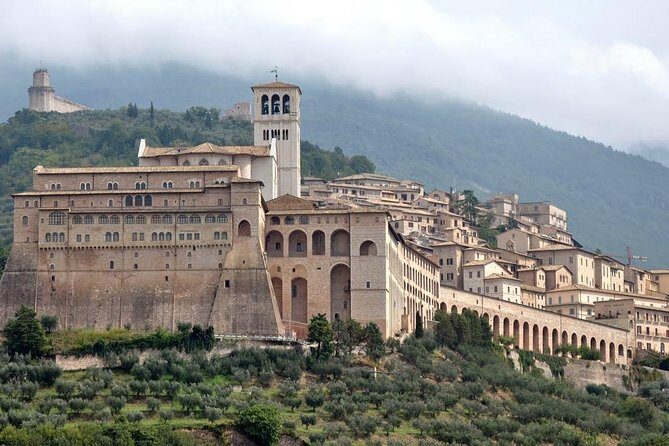
You meet at 10:30am at Parcheggio Saba Matteotti, Piazza Giacomo Matteotti (Assisi). The tour ends at Piazza Inferiore di S. Francesco, 2, right at the Papal Basilica and Sacred Convent of Saint Francis.
Two practical notes you should not ignore:
- Parking near the meeting spot is a headache. The Matteotti parking lot is closed for renovation, so plan on limited/no parking there even if Google maps shows it.
- Dress code is strict for churches. No shorts or sleeveless tops. Knees and shoulders must be covered for both men and women. If you show up not dressed right, you can get refused entry.
This matters because the route includes multiple places of worship. If you’re traveling with kids or you tend to pack light, bring a light layer that covers shoulders and knees.
Roman Amphitheater Ruins and the Rocca Maggiore View
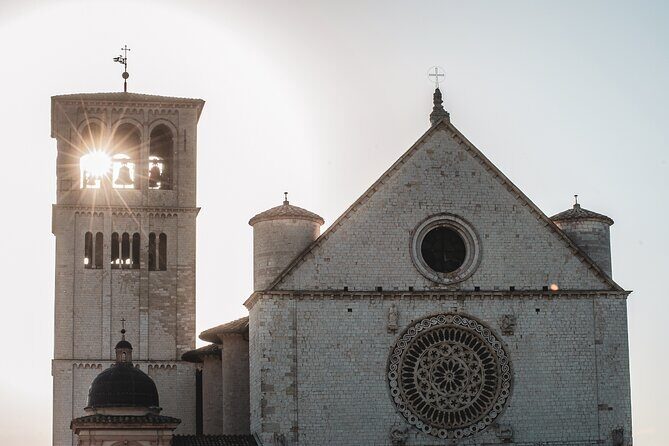
The tour begins with old Roman bones—then shows how Assisi lived with them.
You’ll meet your guide and first visit the site of a local amphitheater. Here’s the cool part: in the Middle Ages, the structure was reused as a quarry for stones that helped build houses. That means you’re not just seeing ruins; you’re seeing how the town recycled its own past to keep going.
As you move through the area, you’ll also spot one of the city’s best sight lines: the view toward Rocca Maggiore, a medieval castle. This is the kind of view that makes the rest of the walking make sense. Assisi isn’t flat, and the walls and layers were shaped by geography.
From Steep Lanes to San Rufino’s Cathedral and Saint Clare
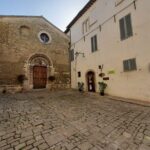
Next comes the medieval network: narrow alleys, tight squares, and the feeling that everything is close—but nothing is level.
You’ll pass through areas tied to:
- Assisi Cathedral (San Rufino): a major church dedicated to Rufinus of Assisi
- Saint Clare’s Basilica (Santa Chiara): one of the tour’s core stops
Santa Chiara’s basilica: pink stone and fresco dates you can picture
St. Clare’s Basilica is known for its pink stone taken from the quarry on Mount Subasio. That color isn’t a small detail—it’s a visual anchor for the whole church, and it helps you understand why this place looks the way it does.
Inside, the basilica contains precious frescoes dating from the 12th to the 14th century. That range is wide enough that you can get a sense of how styles changed over time without leaving Assisi.
There’s also a traditional story attached to a Crucifix. In the right chapel, along the unique nave ending in a transept and polygonal apse, you can admire the Crucifix that tradition says would have been the one to invite St. Francesco to go back and reset up the church connected to St. Damiano. It’s not just art history—it’s a story about how people used images and places to guide spiritual choices.
Practical note: this stop is around 15 minutes, so you’ll get the key highlights without feeling rushed.


Piazza del Comune and Minerva’s Temple: Roman Precision in Medieval Clothing
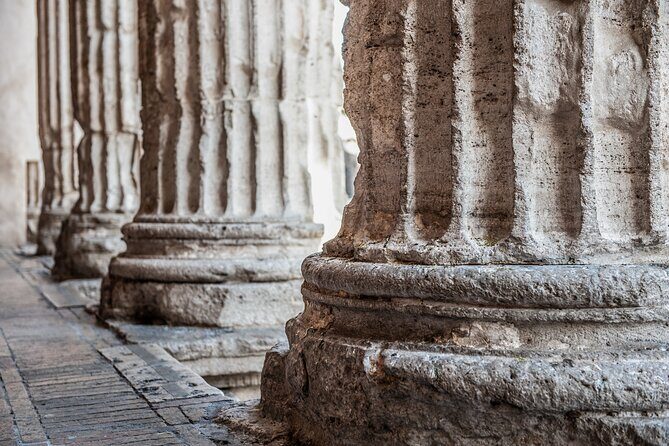
After you’ve worked your way through churches, the tour opens into a civic moment at Piazza del Comune.
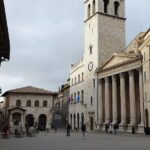
This square is where Assisi’s Roman and medieval lives overlap. One of the star sights here is Temple of Minerva, described as one of the best-preserved Roman temples in Italy. Even if you’ve seen other Roman temples, Minerva’s setting feels special because it’s surrounded by imposing medieval government buildings.
This is the kind of scene where a guide adds value. Otherwise, you might walk past the temple thinking it’s just another stop. With the context, you start to see the square as a stage—Roman architecture as a durable backdrop for later civic power.
Chiesa Nuova: A Church Built in 1615 on Francis’s Presumed Birthplace
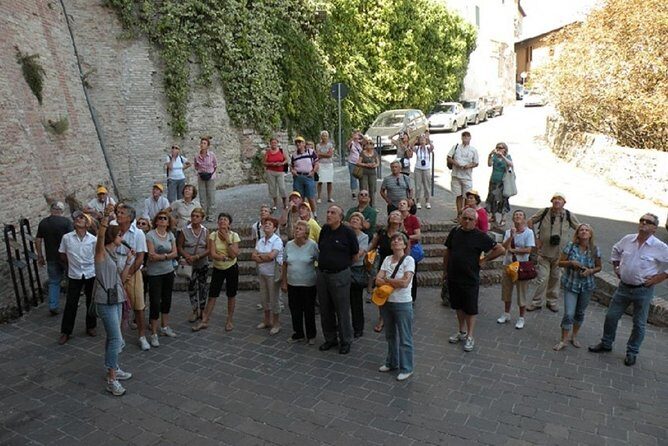
Another quick but meaningful stop is Chiesa Nuova.
This church was built in 1615 on the site of what’s presumed to be St. Francis’s birthplace—the house of Pietro di Bernardone. It was called Chiesa Nuova because, at the time, it was the last church built in Assisi.
You won’t spend long here (about 15 minutes), but the stop helps you connect the Francis stories to a physical location. In a town like Assisi, that physical link is how the legend stays grounded.
One thing to watch: some people have run into a small extra entry fee at a sanctuary not covered by their included ticket. Since the tour explicitly includes admission to the Basilica of St. Francis, treat any additional church-specific payments as something you should be ready for, just in case.
Basilica of Saint Francis: UNESCO, Frescoes, and Two Different Feelings
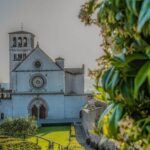
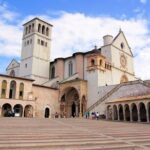
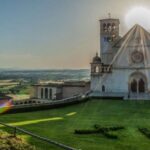
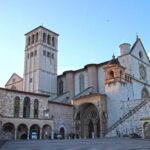
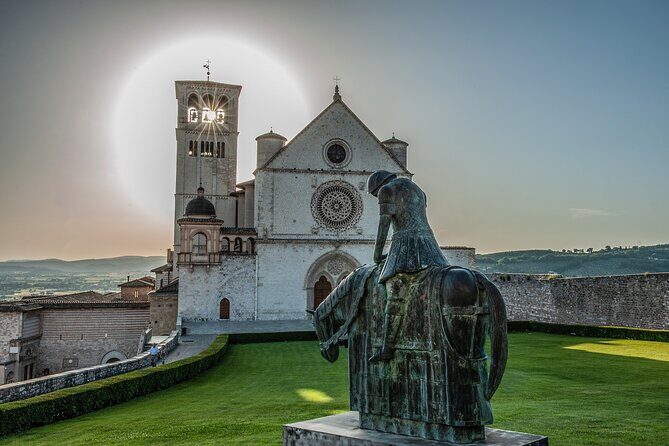
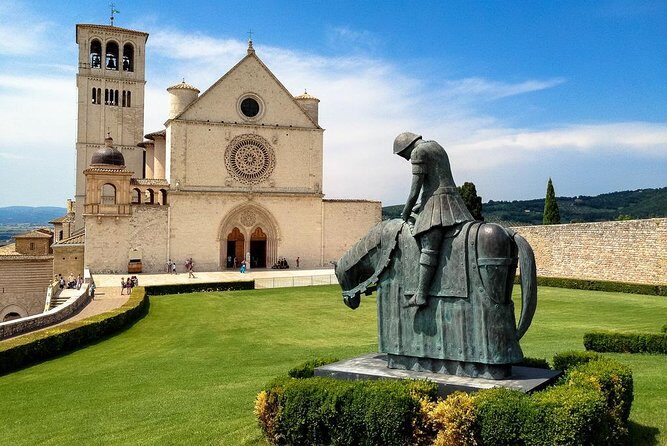
Now for the main event: Basilica Papale e Sacro Convento di San Francesco d’Assisi.
This basilica complex is recognized as a UNESCO World Heritage site. Work began in 1228, just after St. Francis’s death, under the direction of Brother Elias, vicar general and architect of the order, as a place to receive his remains.
You’ll get admission included, and the tour gives you enough time to experience the basilica complex as more than a single room.
Lower basilica vs upper church: penance below, sky above
The basilica has a built-in emotional rhythm.
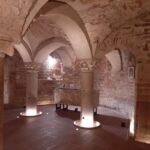
- Lower basilica: described as solemn and dark, a space that invites penance and silence.
- Upper church: airy and bright. It’s Gothic with French influences, and the nave has four bays, cross vaulting, and a polygonal transept and apse.
It’s easy to understand why people remember the upper church even if they forget every label. When you move from the darker lower space to the brighter upper space, the architecture feels like part of the message.
The fresco legacy, including Giotto
The basilica is world-famous for its frescoes from the 13th–14th centuries, created by major painters of the era. The most famous name tied to those fresco traditions is Giotto.
Your guide’s job here is to put the artwork in context so you know what you’re looking at. With the time you get (about 30 minutes per basilica level), you’re not going to see every single painting in full detail. But you’ll get the key works explained so the place doesn’t feel like a blur.
When access inside changes: Sundays, holidays, and special closures
This is one of the most important planning sections.
- On Sundays, big Catholic holidays, and National holidays, guided tours inside the Basilica of St. Francis are forbidden. Your guide will explain from outside, and you’ll enter alone in silence.
- On October 4th, the Basilica of St. Francis is closed.
- For Feb 15 to Apr 6, 2026, access to the basilica of St. Francis is suspended due to the public display of relics. During this period, your guide explains from outside.
If your dates fall into those windows, you can still enjoy the visit—but adjust expectations. The tour stays strong, yet the “inside” experience changes.
Listening While You Walk: Audio, Silence Rules, and Physical Pace
Assisi walking means steps. And this route includes both hills and stairs. One review flagged that the tour wasn’t a fit for someone with mobility issues, especially toward the end. If you have back problems, knee problems, or you tire fast on stairs, take that warning seriously.
Also, sound can be a real issue inside church spaces. A few people have had questions about the audio system. One report said the tour should have included headset audio support for the whole route, while another said headsets are required to purchase at the Basilica of St. Francis. Either way, the safest approach is to arrive mentally ready for possible headset needs once you reach San Francesco—and to understand you may hear the guide differently depending on the space.
Finally, note the rhythm of worship spaces. The basilica rules include silence expectations. Even if you’re used to fast sightseeing, this is a place to slow down.
Price and Value: Is $72.59 a Good Deal?
At $72.59 per person, you’re paying for three things that matter in Assisi:
- A guide who strings the story together
Churches here are not “just churches.” Roman reuse, medieval government centers, and the Franciscan art program all connect. Having a person explain the connections saves you from guessing.
- Admission to the Basilica of St. Francis
Since this ticket is included, your money isn’t just going to walking and pointing. You’re covering the pricey anchor experience.
- A short, efficient route
In about 2.5 hours, you cover major stops instead of trying to arrange them yourself across steep streets.
Where you might question value is if your day is already packed or if you know Assisi very well. But for first-timers, or for anyone who wants the core without planning headaches, the price is fair.
You also get a mobile ticket and English-language guiding, plus a small-group format that keeps things more flexible than big bus tours.
Who This Assisi Tour Fits Best
This is a great fit if you want:
- a fast way to understand Assisi’s layers (Roman, medieval, Franciscan)
- a guided art-and-story focus on St. Clare and St. Francis
- time-efficient sightseeing that still feels personal
It can also work for families, especially teens, since the tour is more about stories and visuals than only long sits. Just know you’re walking uphill and climbing stairs.
If you’re someone who needs step-free paths or minimal stair climbing, you should think twice. The physical pace is the main limiter here, not the length.
Should You Book This Assisi and St. Francis Small Group Tour?
If it fits your dates and your walking tolerance, I’d book it. The tour’s value is in how it connects sights: Roman stone reused, medieval civic power, pink-stone St. Clare, and then the UNESCO basilica experience where architecture and art work together.
Book it if:
- you want a strong introduction in one morning
- you care about why the frescoes matter, not only that they exist
- you like small groups and clear guidance
Skip or plan carefully if:
- you need step-free access
- your visit falls on Oct 4th or during the Feb 15–Apr 6, 2026 suspension window
- you’re arriving without time to dress for churches (covered knees/shoulders is not optional)
FAQ
What time does the tour start?
It starts at 10:30am.
How long is the tour?
The duration is about 2 hours 30 minutes.
Where do I meet the guide?
You meet at Parcheggio Saba Matteotti, Piazza Giacomo Matteotti, Assisi.
Is the tour in English?
Yes, the tour is offered in English.
What’s included in the price?
The price includes an official English-speaking guide and admission tickets to the Basilica of St. Francis.
Do I need a dress code?
Yes. You must cover knees and shoulders. No shorts or sleeveless tops are allowed.
What happens on Sundays or big Catholic holidays?
Guided tours inside the Basilica of St. Francis are forbidden on Sundays, big Catholic holidays, and National holidays. You will get explanations from outside, then enter alone in silence.
Are there dates when access to the Basilica of St. Francis changes?
Yes. The basilica is closed on October 4th, and access is suspended from February 15 to April 6, 2026 due to the public display of relics. During that period, the guide explains from outside.