REVIEW · FLORENCE
Uffizi Gallery Audio-Guided Visit with optional Accademia Gallery
Book on Viator →Operated by CAF Tour and Travel · Bookable on Viator
Florence art without line headaches. This is a self-guided Uffizi visit with skip-the-line access and an audio guide you can follow in your language, so you control the pace. You’ll get a timed museum entry, then wander through major works by Botticelli, Michelangelo, Leonardo da Vinci, Caravaggio, and more.
I also like that the museum itself feels part of the deal: you’re inside a historic Medici-era building that once served government offices. The main thing to watch is timing rules. You must arrive at the meeting point at the check-in time, and if you’re late you may lose the timed entry access and you won’t be able to swap it later.
In This Review
- Key highlights you’ll care about
- Skip-the-line at Uffizi: what this ticket really means
- Uffizi Gallery rooms: where your attention goes first
- Audio guide in your language: how to collect it and get good use
- Getting through security and crowds without losing your day
- Optional Accademia Gallery: add David, keep the same pace
- The added bonus: National Archaeological Museum access
- Price and value: is $72.60 a good deal?
- Who this works best for
- Should you book this Uffizi visit?
- FAQ
- How long is the visit?
- Is it really skip-the-line?
- What does the audio guide include?
- What do I need to pick up the audio guide inside the museum?
- Is the Accademia Gallery visit included?
- Do children get free admission?
Key highlights you’ll care about

- Guaranteed entry time to reduce the worst ticket-office chaos
- Audio guide in your language, with commentary while you move at your speed
- Uffizi masterpieces on your route, including Botticelli’s iconic images and more
- Optional Accademia add-on, famous for Michelangelo’s David
- Small group size (max 6), which usually means smoother on-the-ground help
- A free bonus museum: National Archaeological Museum of Florence admission included
Skip-the-line at Uffizi: what this ticket really means
The best way to think about this experience is simple: it’s built for a calmer museum day. You’re not joining a long guided parade through rooms. Instead, you show up for your scheduled slot, collect what you need on site, and then explore the Uffizi Gallery on your own.
That guaranteed entry time is the big value. The Uffizi is famous for crowds, and even with timed access, you may still run into slowdowns at security (metal detectors) and at crowd-capacity limits inside the galleries. This isn’t the same as skipping all waiting forever. But it usually means you avoid the worst, oldest-school ticket lines and can spend more of your time actually looking at art.
Also, this is a max-6 setup. That size matters because it keeps the meeting-point process less chaotic. You also get multilingual assistance at the meeting point, which helps if you’re juggling directions in Florence.
Practical tip: build in buffer time. If you’re the type who likes to arrive exactly on the dot, do yourself a favor and arrive a bit earlier. The rules are clear that late arrivals can be a problem.
You can also read our reviews of more guided tours in Florence


Uffizi Gallery rooms: where your attention goes first

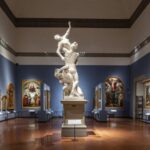
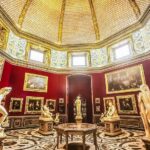
You’re looking at one of the most important art collections in the world, packed into a building with a deep historical spine. The Uffizi started life as a Medici government complex, and walking those corridors gives you a sense that this is more than a warehouse of paintings. It’s a whole setting—architecture included.
Your self-guided flow is where the experience shines. You can spend more minutes with the works that catch your eye, and skip what doesn’t. The Uffizi is huge, and trying to “do it all” in a strict order can turn art appreciation into museum sprinting.
Here are the kinds of works you’ll be able to home in on during your visit:
- Botticelli’s major Renaissance masterpieces (including works people travel specifically for)
- Michelangelo’s works that connect sculpture and painting ideas across periods
- Leonardo da Vinci, Raffaello, Giotto, Cimabue, Masaccio—plus other famous names that anchor the story of Italian art
How I’d plan it: choose a first target and a second target, then fill the rest with curiosity. For example, start with something you already know (like Botticelli), then let the rest of the rooms guide you. The Uffizi rewards that approach because the museum is like a conversation across time.
And since you’re on an audio guide, you don’t need to be an art historian. You just need patience and good walking shoes.
Audio guide in your language: how to collect it and get good use

This experience includes an audio guide, and it’s one of the most praised parts of the day. The commentary is in your own language, and the whole point is to help you understand what you’re seeing without turning your visit into a lecture.
But there’s a key practical detail: to collect the audio guide inside the museum, you must show the original copy of your Identity Card. Some people run into issues when they’re not prepared. The museum keeps your ID document until you return the audio guide at the end of the visit.
What that means for you:
- Bring your original ID document (not a photocopy, not a phone image)
- Plan your day knowing you’ll have to carry it while you’re using the guide
- Keep the audio guide safely until you’re ready to turn it back in
Also note the age rule: free admission for children under 6, but the audioguide is not included for that age group. If you’re traveling with kids, it helps to know this ahead of time so nobody gets surprised at the counter.
Audio guide tip: don’t try to listen to everything. Use it as a tool. When you stop at a work, press play, get the key context, then look again with fresh eyes. If a section feels bland, skip forward and move. The museum is too big to force one listening style for the whole day.
Getting through security and crowds without losing your day
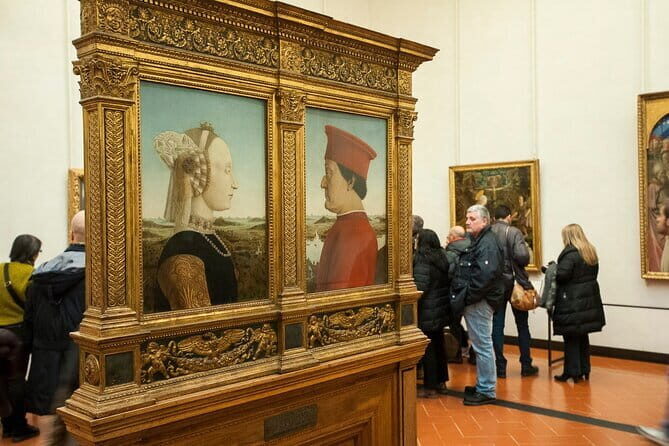
Even though the ticket is built to avoid the long ticket-office queues, the Uffizi still has real bottlenecks: security checks and capacity limits. Metal detector screening is part of the reality, and sometimes you’ll need to wait a bit before you can enter the galleries.
This is where your schedule matters. If you book an early morning slot, you generally set yourself up for a more pleasant experience. Late morning and afternoon can feel like the museum’s most active feeding time.
What I recommend:
- Arrive early enough to not panic if you’re slowed at security
- Give yourself a realistic time block of about 3 to 4 hours, and accept that you might stretch longer if you’re absorbed
- Wear comfortable shoes because you’ll do a lot of walking and standing
One more thing: this setup includes skip-the-line access, but it does not promise zero waiting. It reduces the worst lines; it can’t defy security processes or the museum’s crowd caps. Still, the difference between waiting in ticket chaos and waiting in a more organized flow can be huge for your energy.
Optional Accademia Gallery: add David, keep the same pace
If you choose the optional Accademia Gallery, you add another major stop to your day. The Accademia is where Michelangelo’s David lives, and it’s the kind of artwork that changes how you look at the whole Renaissance when you finally see it in person.
This add-on is also designed to keep your pace flexible. You visit at your own speed. The value here is straightforward: David is the headline, but the museum also offers you a strong “statues and scale” experience that complements the Uffizi’s paintings.
Time-wise, the Accademia option adds about 2 hours. That means if you do both, you’re planning more like a half-day or longer depending on how often you stop to look and re-look.
I like this combination because it balances your day: the Uffizi gives you famous painting narratives, while Accademia gives you three-dimensional presence. If you’re the sort of traveler who likes to compare how artists handle the human form, the pairing makes sense.
One practical consideration: if you’re the kind of person who hates switching places and waiting for entrances, consider whether you want one museum day or a two-museum marathon. With these timed, on-your-own visits, you’ll still do plenty of movement.
You can also read our reviews of more museum experiences in Florence





The added bonus: National Archaeological Museum access

There’s a free admission perk included for the National Archaeological Museum of Florence. That’s a nice way to extend your art and antiquities day without paying extra.
If you have the energy after Uffizi (or after Accademia), this is a smart bonus. It also helps you add a different angle to the Renaissance story—ancient roots in an art form that later generations would keep borrowing from.
If you don’t have the energy, don’t force it. A museum day works best when you leave room for a slow walk, a coffee, and letting what you saw settle in.
Price and value: is $72.60 a good deal?

At $72.60 per person, this can feel like a splurge—until you compare what’s included in practice.
You’re paying for three big things:
- A timed entry that helps you avoid long ticket-office lines
- An audio guide in your language, which turns the visit into a guided-understanding experience without requiring you to follow a person
- Optional Accademia access when selected, with reservation and entry time included in that option
Is it worth it? For many visitors, yes—especially if:
- You’re short on time in Florence
- You want to see major works but don’t want to be stuck in a rigid group schedule
- You like learning as you walk, but you also want freedom to pause or skip
Where it might not be worth it:
- If you hate strict timing rules and you tend to run late
- If you prefer going totally unstructured with no audio help at all
- If you’re primarily interested in only one or two works and you don’t care about context
One more value lens: the experience includes skip-the-line benefits, but security and capacity limits can still create delays. So you should still plan for a realistic museum arrival window and don’t treat this as a magic wand.
Who this works best for

This visit is a good match if you:
- Like self-guided museums with smart background info
- Want to focus on specific artists or themes rather than rushing room to room
- Appreciate small, simple group support at the meeting point
- Plan an early start to dodge the worst crowd crush
It’s less ideal if you:
- Are traveling with a tight schedule where you can’t absorb slow entry at security
- Don’t want to carry your original ID document for audio guide pickup
- Need a fully flexible reschedule plan if something goes wrong (the rules are time-sensitive once you’re late)
Should you book this Uffizi visit?
Book it if you want the Uffizi but with less stress, and you’ll actually use the audio guide. The combination of timed entry and audio commentary is what turns the day from a crowded photo stop into a more meaningful museum visit.
Skip it (or simplify) if you’re very price-sensitive and you don’t value audio context, or if you know you struggle with meeting time rules. In that case, you might be happier with a do-it-yourself approach and accepting the lines.
If you do book, your best bet is to arrive early, bring your original ID for the audio guide, and wear shoes you can stand in for hours. Then pick a couple of must-sees, let the rest happen naturally, and enjoy Florence at a slower tempo than the crowd.
FAQ
How long is the visit?
The experience runs about 3 to 4 hours, with the Uffizi portion listed as around 2 hours.
Is it really skip-the-line?
It includes a skip-the-line benefit through a reservation and guaranteed entry time, helping you avoid long queues at the ticket office. You can still face waiting for security checks and crowd-capacity entry.
What does the audio guide include?
You receive an audio guide commentary in your own language so you can explore at your own pace.
What do I need to pick up the audio guide inside the museum?
You need to show the original copy of your Identity Card (or Passport, per the museum rule wording). The museum keeps your ID document until you return the audio guide.
Is the Accademia Gallery visit included?
The Accademia Gallery is optional. If you select it, your entry ticket and reservation with guaranteed entry time are included, and admission is listed as free for the Accademia option.
Do children get free admission?
Children under 6 have free admission, but the audioguide is not included. Children must be accompanied by an adult.



More Museum Experiences in Florence
More Guided Tours in Florence



More Tour Reviews in Florence
- Tuscany Day Trip from Florence: Siena, San Gimignano, Pisa and Lunch at a Winery
★ 5.0 · 21,634 reviews - The Best tour in Florence: Renaissance & Medici Tales – guided by a STORYTELLER
★ 5.0 · 12,316 reviews