REVIEW · FLORENCE
Duomo Museum & Baptistry: Cathedral Complex & Bell Tower
Book on Viator →Operated by Florence and Global Small group tours · Bookable on Viator
Florence’s Duomo complex rewards good timing. You’ll spend the start with a guided visit through the Opera del Duomo Museum and the Baptistery, with headsets so you can actually hear the guide over the crowd. I also like how the tour focuses on major works you’ll struggle to sort out on your own.
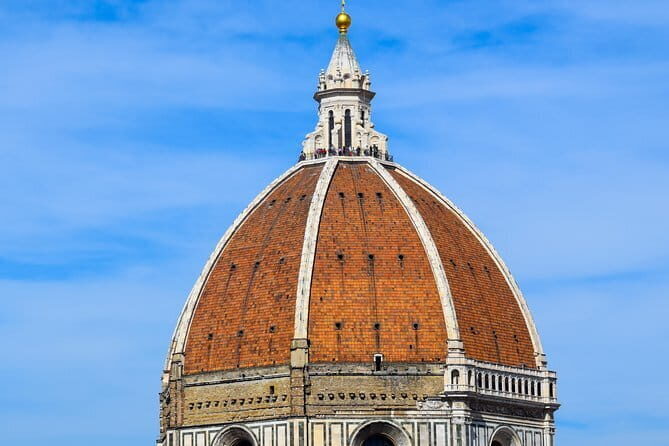
The payoff is the guided dome climb, where you learn why Brunelleschi’s dome looks the way it does while you’re working your way upward. I love that you finish with the best close-up angles and photo spots, not just a quick look and run.
One thing to watch: this tour does not include the Cathedral interior. You can still access it for free, but it means a separate line—so plan your time if you really want that space.
In This Review
- Key things I’d circle before you go
- Where this tour shines: the Opera del Duomo Museum basics that make it click
- Sala del Paradiso: the façade you can finally understand
- The Gates of Paradise and why museum placement matters
- Michelangelo and Donatello: the human scale of famous pieces
- Brunelleschi’s Dome tools: engineering you can almost touch
- A practical note about time inside the museum
- Piazza del Duomo: the outside view you’ll actually know how to read
- Giotto’s Bell Tower: a vertical lesson in perspective
- Baptistery in front: why everyone stops here
- Battistero di San Giovanni: mosaics, bronze doors, and the Last Judgment ceiling
- The ceiling mosaics: where gold does its job
- The bronze Gates of Paradise: why Michelangelo couldn’t resist
- Why this place matters beyond art
- The dome climb with a guide: the view isn’t the only reason
- What makes the dome climb worth your time
- How hard is it, really?
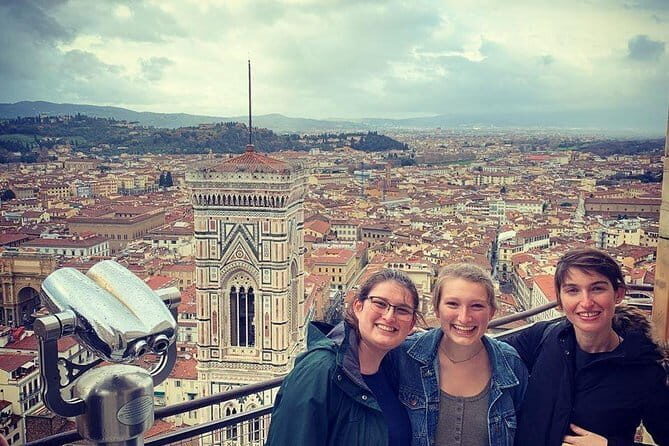
- The payoff: close-up views and best-photo angles
- What you get, what you skip, and how to avoid disappointment
- The big skip: Cathedral interior
- Guided vs. self-guided can change how satisfying it feels
- Group size, meeting points, and pacing: how to make it smooth
- Meeting in the Duomo area is tricky
- Ticket date errors do happen
- Who should book this Duomo museum and Baptistery climb tour?
- Value check: is $76.88 a fair price?
- Should you book it?
- FAQ
- How long is the tour?
- Is this tour offered in English?
- What does the tour price include?
- Does the tour include the interior of the Cathedral?
- Do I get a dome climb on this tour?
- Are there self-guided parts?
- Where does the tour start and end?
- What should I know about weather?
- Can I cancel and get a full refund?
Key things I’d circle before you go
- Small group flow with a max of 19 (and about 12 per group), so you’re not lost in a human wave
- Sala del Paradiso with a life-size reconstruction of the Cathedral’s original façade plus 40 statues
- Major originals in one stop: Michelangelo’s Pietà Bandini, Donatello’s Penitent Magdalene, and Ghiberti’s Gates of Paradise
- Golden-mosaic Baptistery interior that turns light into drama, especially in the ceiling artwork
- Brunelleschi dome climb with guidance, not just a ticket and stairs
- Self-guided add-ons within 72 hours for the Crypt of Santa Reparata and (if selected) the Giotto Bell Tower
Where this tour shines: the Opera del Duomo Museum basics that make it click
Most Florence tours hit the “wow” parts first. This one starts with the stuff that explains the wow. The Opera del Duomo Museum sits just behind the Cathedral complex, so you’re already in the right frame of mind: these buildings are not random. They’re a whole system of art, engineering, and civic pride.
You’ll begin in the museum with a guide and headsets. That sounds like a small detail, but in this area it matters. The piazza noise and other tour groups can swallow a guide’s voice fast, and headsets keep you from nodding politely while missing key facts.
You can also read our reviews of more museum experiences in Florence

Sala del Paradiso: the façade you can finally understand
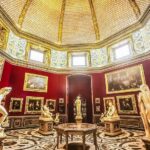
The museum’s star is the Sala del Paradiso. This huge hall holds a life-size reconstruction of what the Cathedral’s original façade looked like, when it was still part sculpture dream and part building ambition. You’ll see 40 statues placed as they were meant to be seen on the façade.
This is a smart stop for first-timers because it turns the outside patterns and shapes into something you can picture in your mind. Up close, the scale feels more believable, and it’s easier to see how the complex communicates power through art.
The Gates of Paradise and why museum placement matters
Across from that façade reconstruction, you’ll find Ghiberti’s original golden Gates of Paradise. They’re moved indoors here to protect them from the elements, which is a practical choice and a reminder that Florence protects its treasures with more than wishful thinking.
If you’ve seen photos of the bronze panels, it’s easy to assume they’re flat. In person, the detail reads differently. It’s also just satisfying to stand somewhere where you’re looking at an original work instead of a copy.
Michelangelo and Donatello: the human scale of famous pieces
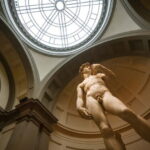
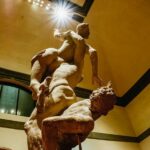
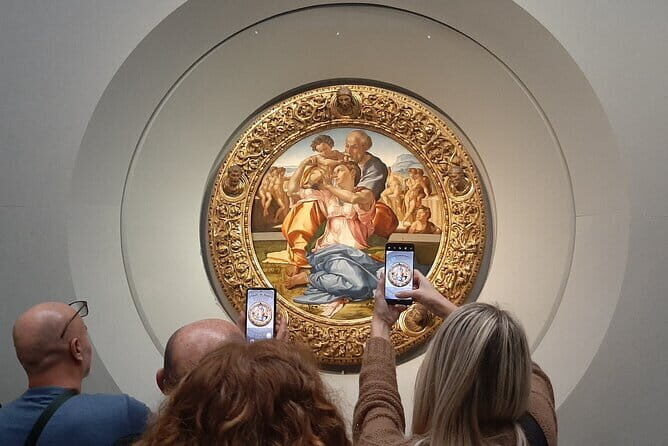
The museum tour also points you toward works tied to big names. You’ll see Michelangelo’s Pietà Bandini, a sculpture he created for his own tomb. It’s the kind of work that makes you slow down without anyone having to force it.
Donatello’s Penitent Magdalene is another highlight. The museum describes it as hauntingly realistic, and the vibe matches the subject: it feels alive in a way that makes the religious theme personal, not distant.
Brunelleschi’s Dome tools: engineering you can almost touch
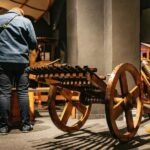
A gallery focused on Brunelleschi’s dome rounds out the museum. You’ll be shown original 15th-century tools and wooden models. Even if engineering is not your thing, this stop helps you understand what people actually did to make the dome happen. It turns the dome from a symbol into a project.
When you finish here, you head to the terrace area for close-up dome views. One of the best “Florence photo moments” in the complex comes right after you’ve learned what you’re looking at.
- Tuscany Day Trip from Florence: Siena, San Gimignano, Pisa and Lunch at a Winery
★ 5.0 · 21,634 reviews - The Best tour in Florence: Renaissance & Medici Tales – guided by a STORYTELLER
★ 5.0 · 12,316 reviews


A practical note about time inside the museum
The museum portion is guided and time-boxed. In past visits, some people loved the pace and others wished they could linger longer. If you’re the type who wants to stop and stare at every statue for 10 minutes each, consider going earlier or adding independent time after the tour.
Piazza del Duomo: the outside view you’ll actually know how to read
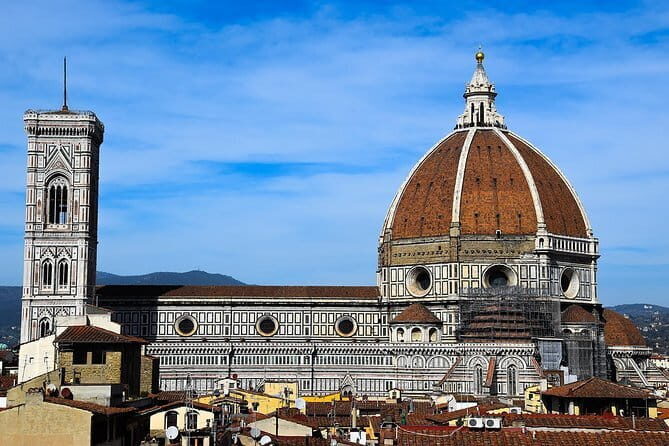
After the museum, you step into the Piazza del Duomo. This square is the historic heart of Florence in the truest sense: it’s where the Middle Ages feel like the starting point, and the Renaissance feels like the direction the city chose.
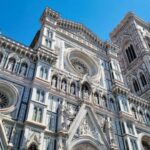
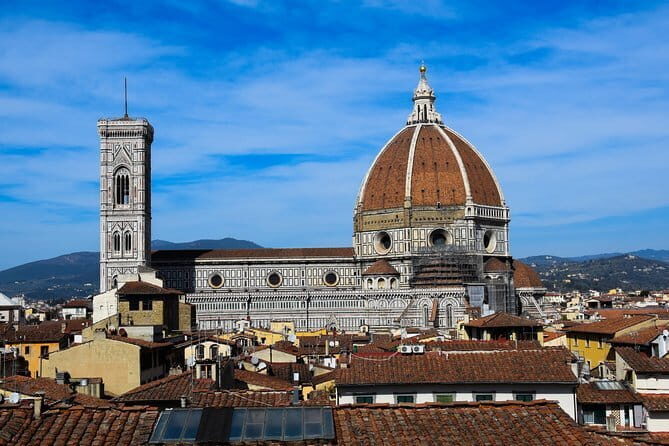
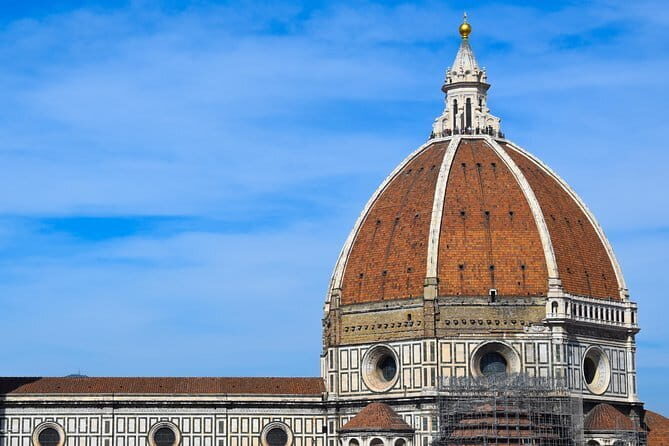
This is your quick orientation stop. You’ll see the Cathedral of Santa Maria del Fiore with Brunelleschi’s red-tiled dome dominating the space. The exterior marble pattern work you’ll spot on your own is not random decoration. It’s part of how the complex ties together visually.
Giotto’s Bell Tower: a vertical lesson in perspective
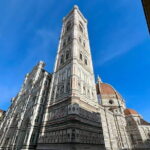
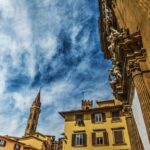
Giotto’s Bell Tower is on the side of the square, giving you a vertical perspective of Florence. Even if you don’t climb it during the guided portion, looking at it while you’re grounded in the complex’s story helps you connect the pieces.
Baptistery in front: why everyone stops here
Directly in front of the Cathedral sits the Baptistery of San Giovanni. It’s octagonal and covered in white and green marble. That octagon design influenced later Renaissance architecture, so it’s worth seeing even if you’ve already walked through Florence’s best squares.
You’ll probably want to pause here and take photos. One of the fun things in this area is that you can treat the piazza like a small outdoor museum: look up, look sideways, then step forward and see how the marble shifts.
If you want a practical break, grabbing gelato nearby is easy once you’re done learning the “why” behind the architecture. The best part is you can eat it without needing to force the pace.
Battistero di San Giovanni: mosaics, bronze doors, and the Last Judgment ceiling
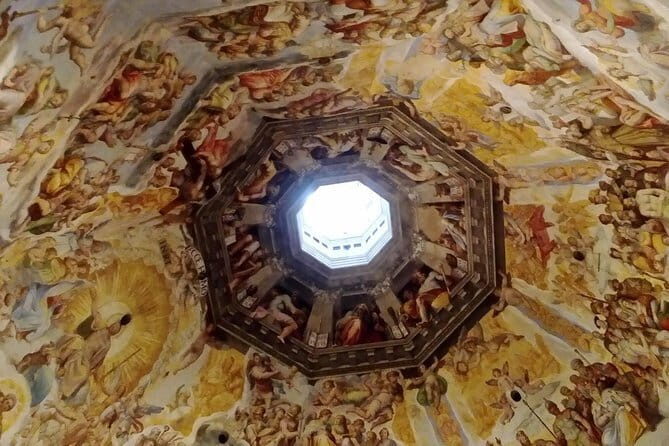
Next comes the Baptistery, and it’s the kind of interior that makes you look up without trying. The building is Romanesque in feel and older than many parts of the complex, which adds weight to the experience. It’s not just pretty. It’s historically central.
The ceiling mosaics: where gold does its job
Inside, the Baptistery is famous for a ceiling covered in more than 1,000 square meters of 13th-century golden mosaics. The key detail is how the light hits the gold leaf, turning the ceiling into something that feels almost alive.
The scenes depict the Last Judgment and biblical stories. This is one of those interiors where the artwork is detailed enough to reward curiosity, but the scale is enough to impress even when you’re tired from sightseeing.
The bronze Gates of Paradise: why Michelangelo couldn’t resist
The Baptistery is also known for its bronze doors, especially the eastern set known as the Gates of Paradise by Lorenzo Ghiberti. The story goes that Michelangelo said they were fit to be the entrance to heaven.
Whether you know that line before you go or not, you’ll spot why people react strongly to them. The panels carry narrative detail in a way that makes the doors feel like sculpture made for a viewer’s attention, not just a boundary.
Why this place matters beyond art
This is also where many Florentines were baptized, and the tour highlights Florence’s religious and civic identity through that tradition. There’s even a notable connection to Dante Alighieri being baptized here.
If you like context as much as visuals, this stop lands well. If you’re here purely for art, the mosaics and doors still do the work.
The dome climb with a guide: the view isn’t the only reason
The climb is the reason many people book this experience, and it makes sense. Up high, Florence feels like a model you could hold in your hands. But the real value is that you’re not just buying stairs. You’re getting Brunelleschi’s story while you’re moving upward.
What makes the dome climb worth your time
The dome climb is guided, so you learn what you’re seeing and why it mattered in its own era. That changes the climb from physical effort into a guided lesson you can feel in your legs.
How hard is it, really?
You should plan for a moderate fitness level. The tour is not framed as easy, and this area can get windy and cool depending on the day.
Still, reviews show a range of reactions: some people found the climb manageable and mentioned spots to rest. The safest move is to wear comfortable shoes and expect to take it slow. If you rush, you’ll pay for it later.
The payoff: close-up views and best-photo angles
The dome area gives you close-up views that you just don’t get from the street. And since you’ve already seen museum pieces tied to the Cathedral’s artistic program, the exterior patterns and stories start making more sense. It’s the rare kind of view that also teaches.
What you get, what you skip, and how to avoid disappointment
This tour includes a guided visit of the Opera del Duomo Museum and the Baptistery. You also get entry fees and taxes for the included sites, plus high-quality headsets.
It also includes self-guided access elements in the complex:
- A self-guided entrance ticket for the Crypt of Santa Reparata
- And, if you select that option, a self-guided ticket for the Giotto Bell Tower climb
- Your self-guided tickets are valid for 72 hours across locations in the complex
The big skip: Cathedral interior
The Cathedral interior is not part of this guided experience. You can visit it for free, but it requires a line, and it will likely take more time than you expect.
So here’s how I’d plan around this: if seeing the Cathedral interior is a top priority for you, don’t assume this tour will cover it. Build in separate time.
Guided vs. self-guided can change how satisfying it feels
The crypt and any optional bell tower access are self-guided. That’s not wrong, but it is different. If you love walking into an interior and getting a guided explanation while you’re looking at the details, you’ll probably get most of that in the museum and Baptistery portions.
Also, some people reported feeling rushed in parts of their experience. That’s the risk with timed guided tours in a crowded site. If you’re the type who likes to linger, come prepared to be flexible.
Group size, meeting points, and pacing: how to make it smooth
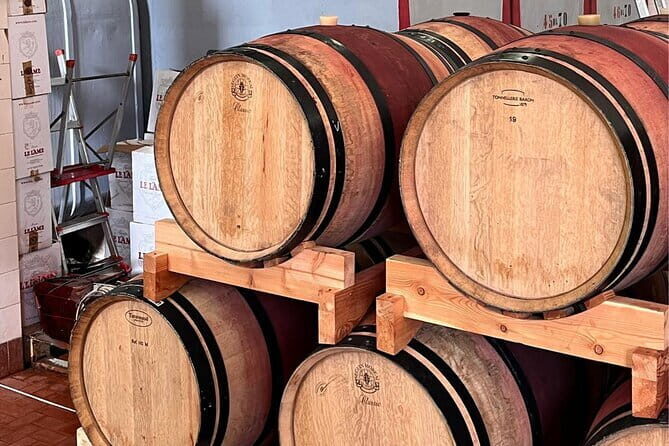
Small groups can be a real advantage here. This tour is capped at 19, and it aims for about 12 people per group. With that size, a guide can answer questions and keep people together without turning it into a sprint.
Headsets help too. They keep you from constantly checking where you are in the crowd.
Meeting in the Duomo area is tricky
This is a dense place with multiple entrances and several monuments right next to each other. That’s part of the charm and part of the problem.
Some past experiences described confusion about meeting location details and signs in the crowd. My practical advice: arrive early, and don’t rely on memory once you’re in the piazza. If your confirmation or instructions include a specific meeting detail, read it twice before you walk outside.
Ticket date errors do happen
One review mentioned ticket date problems that caused missed access. I can’t promise that will never happen, but you should treat your own booking confirmation like it matters, because it does. When you get your ticket info, verify the date before you head out.
Who should book this Duomo museum and Baptistery climb tour?
Book it if you want:
- A guided way to understand the Cathedral complex instead of just chasing photos
- Strong art stops in the Opera del Duomo Museum, including major originals and façade context
- A dome climb that comes with explanations, not just a view from above
Consider skipping or pairing with extra time if:
- You mainly want the Cathedral interior and care less about the museum and Baptistery
- You hate tight schedules and need lots of unscheduled time for wandering
This tour is a good fit for first-time Florence visitors and for repeat visitors who want a clearer story connecting the museum treasures to the buildings outside. It’s also a fit if you like Renaissance art and engineering history side by side.
Value check: is $76.88 a fair price?
At $76.88 per person, you’re paying for more than the sites themselves. You’re getting:
- A guided museum and Baptistery visit
- Headsets
- Entry fees and taxes for included monuments
- A guided dome climb experience
- Self-guided add-ons within 72 hours (crypt, and possibly the bell tower depending on your option)
That’s the core value equation: the guide time plus the included entry costs reduce the stress of figuring out what’s where and what’s worth your limited time.
That said, if your priority is cathedral interior access or you strongly dislike timed pacing, you may feel the money isn’t buying what you expected. The tour’s structure is built around the museum, the Baptistery, and the dome experience.
Should you book it?
If you want a smart, story-driven visit to the Duomo complex with a guided dome climb, I think this is an excellent choice. The Opera del Duomo Museum stops with Ghiberti’s Gates of Paradise indoors and the Sala del Paradiso context are exactly the kind of experience that makes the exterior complex mean something.
Just go in with your eyes open: you’re not getting the Cathedral interior in this tour. Plan for separate time if that’s essential for you.
If you’d like, tell me your travel month and whether you plan to climb the Giotto Bell Tower too, and I’ll suggest a simple half-day schedule around this so you don’t feel rushed.
FAQ
How long is the tour?
It lasts about 2 hours 15 minutes.
Is this tour offered in English?
Yes, it’s offered in English.
What does the tour price include?
The tour includes a 1.5-hour guided tour of the Opera del Duomo Museum and the Baptistery, headsets, entry fees and taxes for the included monuments, and self-guided tickets for the Crypt of Santa Reparata. It also includes the Giotto Bell Tower climb ticket if that option is selected.
Does the tour include the interior of the Cathedral?
No. Entrance to the interior of the Cathedral is not included in this tour. You can visit it separately, but it requires a line.
Do I get a dome climb on this tour?
The highlights indicate you’ll do a guided dome climb, and the tour includes a self-guided ticket for the Giotto Bell Tower climb only if you choose that option.
Are there self-guided parts?
Yes. You’ll receive a self-guided ticket for the Crypt of Santa Reparata, and your ticket validity for self-guided locations in the complex is 72 hours. The Giotto Bell Tower climb ticket is also self-guided if selected.
Where does the tour start and end?
It starts at Opera del Duomo Museum, Piazza del Duomo, 9, 50122 Firenze FI, Italy. It ends at Giotto’s Bell Tower, Piazza del Duomo, 43-46? (as listed), 50122 Firenze FI, Italy.
What should I know about weather?
This experience requires good weather. If it’s canceled due to poor weather, you’ll be offered a different date or a full refund.
Can I cancel and get a full refund?
Yes. You can cancel for a full refund up to 24 hours in advance of the experience start time.

More Museum Experiences in Florence
More Tour Reviews in Florence
- Tuscany Day Trip from Florence: Siena, San Gimignano, Pisa and Lunch at a Winery
★ 5.0 · 21,634 reviews - The Best tour in Florence: Renaissance & Medici Tales – guided by a STORYTELLER
★ 5.0 · 12,316 reviews