REVIEW · FLORENCE
2-Hour Private Walking Tour with Local Guides in Florence
Book on Viator →Operated by Local Guides Tour - Vanessa Tonarelli · Bookable on Viator
Florence can feel like a maze. This tour makes it make sense.
A well-paced two-hour private walking route turns “main sights” into an easy, human story. I like that you’ll hit the big names and still get breathing room, and I especially like the small, specific stop at the Church of Santa Felicita, one of the oldest churches in this part of town. One thing to consider: it’s a flat walk of about 2 miles, so if mobility is an issue and you need extra support, this may not be the best fit.
You also get something that matters in Florence: headsets. They help a guide’s explanations land clearly as you move through busy lanes and open squares, so you’re not stuck guessing what you’re looking at. The tour is private, offered in English, and guided by Vanessa Tonarelli, which keeps the pace comfortable for your group.
If you want to get oriented fast and see Florence’s center in one go, this is a strong start. You’ll be walking mostly outside, with external views at key religious landmarks and quick “look, learn, and move on” stops rather than long museum time.
In This Review
- Key reasons this works so well in Florence
- A Two-Hour Florence Starter Walk With Local Guide Vanessa Tonarelli
- Piazza della Signoria: Florence’s political open-air museum
- The Uffizi area: seeing the museum without getting stuck inside
- Ponte Vecchio: gold-shop Florence and a WWII-survivor story
- Church of Santa Felicita: Florence’s oldest church beyond the Arno (in this zone)
- Palazzo Pitti: Medici to royals, with museum entry not included
- Piazza Santo Spirito and the local rhythm of Florence
- Ponte Santa Trinita: Michelangelo’s bridge and a favored photo angle
- Renaissance palace views and Piazza della Repubblica’s ancient center
- Duomo area: external views of Santa Maria del Fiore
- The practical value of $130.37 for a private 2-hour walk
- Should You Book This 2-Hour Private Walking Tour in Florence?
- FAQ
- How long is the 2-hour private walking tour in Florence?
- Where does the tour start and end?
- What is included in the tour price?
- Is food or drinks included?
- Is the tour private, and how many people will join?
- Is the tour offered in English?
- Is the tour suitable for people with mobility problems?
- FAQ
- Is the tour likely to include museum tickets?
- Are service animals allowed?
- What’s the walking style and distance?
- Where can I find the meeting point?
- How far in advance is it typically booked?
Key reasons this works so well in Florence
- Local guide Vanessa Tonarelli keeps the walk focused and easy to follow.
- Headsets are included, so you can hear explanations even in crowded streets.
- You see both icons and quiet corners, including Santa Felicita.
- The route includes Ponte Vecchio and Ponte Santa Trinita, with classic photo angles.
- You get context for major areas like Piazza della Signoria and Piazza della Repubblica.
- Palazzo Pitti is pass-by/museum-time optional, with admission not included.
A Two-Hour Florence Starter Walk With Local Guide Vanessa Tonarelli
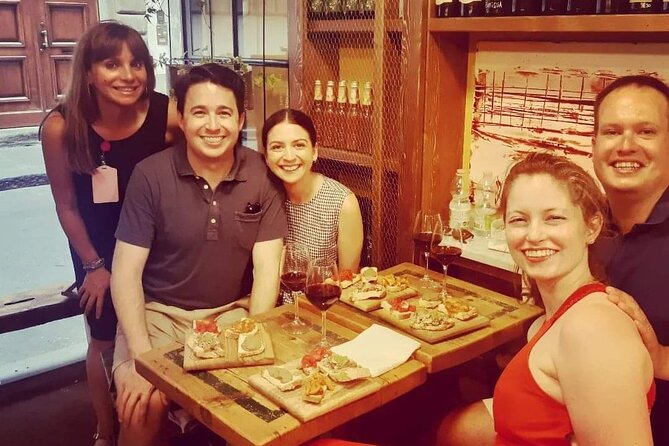
This is the kind of tour I recommend when you land in Florence and want your first day to feel like you picked the right lane. You’re not stuck in a long, slow sightseeing slog. Instead, you get a 2-hour private walk that threads together Florence’s “public life,” its riverside identity, and its architectural highlights.
Vanessa Tonarelli’s value is how she connects places. Florence can look like a pile of masterpieces. The best guides help you see the pattern: what was civic power, what was Medici influence, what became the city’s everyday social space.
And the headsets matter more than you’d think. Florence streets often get loud, especially near big attractions. With headsets included, you can keep your eyes up on the buildings instead of craning toward the person talking.
You can also read our reviews of more tours and experiences in Florence.
- Tuscany Day Trip from Florence: Siena, San Gimignano, Pisa and Lunch at a Winery
★ 5.0 · 21,634 reviews


Piazza della Signoria: Florence’s political open-air museum
Your walk begins at Piazza della Signoria, the political heart of Florence. This square is one of those places where buildings feel like they’re still making arguments. You get the open-air museum feeling because the whole area acts like a stage: civic power, art, and public identity all stacked close together.
From here, you’re in the perfect position to understand Florence’s gravity. It’s not just that there are gorgeous structures; it’s that the city built its authority in public view. When you know that, everything you see next reads differently—especially the later stops that connect palace life and religious life.
Practical tip: arrive with shoes that can handle uneven stone. You’ll be walking through real pedestrian territory, not smooth sidewalks.
The Uffizi area: seeing the museum without getting stuck inside
Even though this isn’t presented as a full museum visit, you’ll get to the court area linked to the Uffizi and move through the surrounding atmosphere. The Uffizi is Italy’s most visited museum, and being in its orbit instantly gives you the right mindset: you’re in the part of town where Florence’s art reputation became a global magnet.
I like that this stop keeps the pace moving. If you’ve got limited time, you still get the visual and geographic context that helps you decide later whether to book a museum day.
What to watch for: as you pass key nearby points (like the Vasari Corridor area and Strozzi Palace, mentioned as part of the experience), you start to notice how power and art networks overlap in Florence. Those connections are hard to spot on your own in a first walk.
Ponte Vecchio: gold-shop Florence and a WWII-survivor story
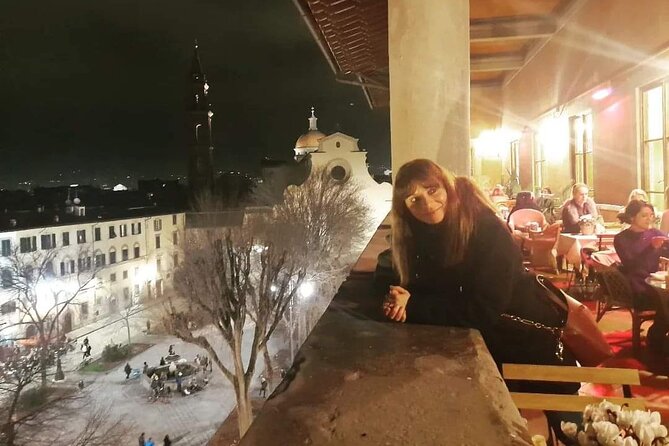
Next comes Ponte Vecchio, Florence’s icon bridge and one of the best places to “feel” the city fast. It’s known for its long history, and there’s a very specific claim attached to it: it’s described as the only bridge in Florence to have withstood World War II.
Today, the bridge is home to Florence’s prestigious goldsmith stores. So you’re not just looking at stone and arches—you’re looking at a living commercial tradition that tourists and locals still interact with.
This is also where the tour pays off for first-timers. Ponte Vecchio is a photo magnet, sure, but the real win is timing and orientation. After this stop, Florence starts to click spatially: you understand where the river divides the city, and you understand how visitors and activity flow along both sides.
Heads-up: this area can get busy. If shopping tempts you, build in a little patience. You’ll have a short time here, so you may want to decide early whether you’re there for photos, for looking, or for browsing.
Church of Santa Felicita: Florence’s oldest church beyond the Arno (in this zone)
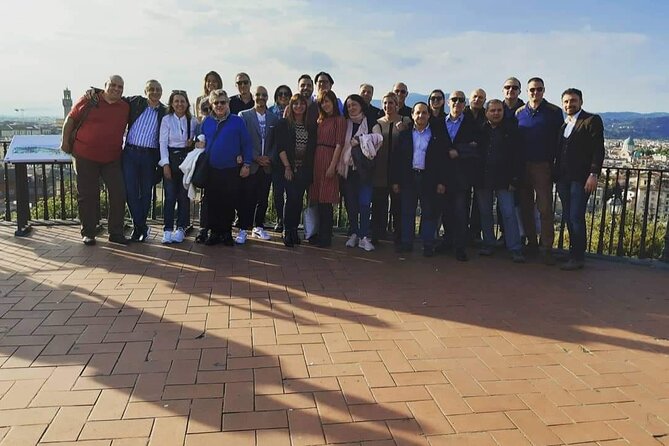
One of the most memorable stops is Church of Santa Felicita. It’s described as Florence’s oldest church in the area beyond the Arno River that connects up with the route associated with the Vasari Corridor.
This is a great contrast stop. After the spectacle of Ponte Vecchio, Santa Felicita gives you a quieter kind of beauty—less “commercial postcard” and more “this is what people built and prayed in.”
I like this stop because it balances the classic landmarks. If your Florence experience is only big squares and huge names, the city starts to feel like a checklist. Santa Felicita helps you feel Florence as a lived-in place with depth older than the souvenir story.
- Tuscany Day Trip from Florence: Siena, San Gimignano, Pisa and Lunch at a Winery
★ 5.0 · 21,634 reviews - The Best tour in Florence: Renaissance & Medici Tales – guided by a STORYTELLER
★ 5.0 · 12,316 reviews

Palazzo Pitti: Medici to royals, with museum entry not included
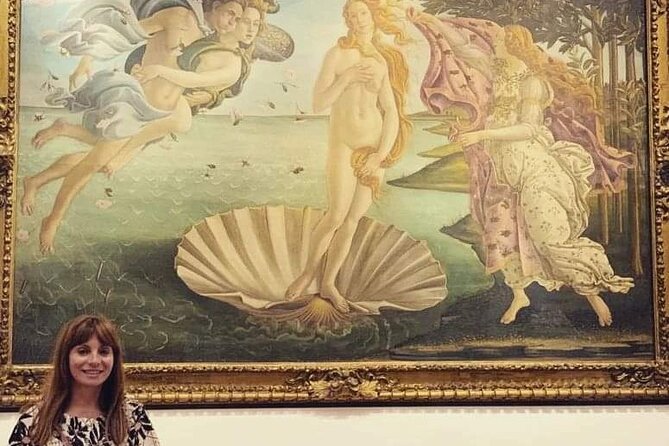
Then you’ll reach Palazzo Pitti, introduced as the majestic square-and-palace complex linked with the Medici family, later their successors, and then the Italian royal family. Today it’s described as one of the most interesting museums in the city.
Here’s the key detail for your planning: Palazzo Pitti admission is not included. That doesn’t make the stop less valuable; it just means the tour is designed to give you the context, not to spend hours inside.
If you’re the type who wants museums to feel optional, this setup is ideal. You can decide on the spot whether to come back later when you can afford full time and ticket prep for the museum itself.
Piazza Santo Spirito and the local rhythm of Florence
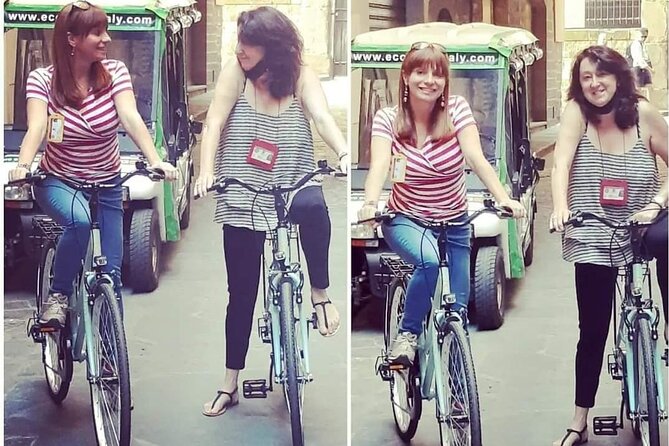
Next is Piazza Santo Spirito, described as the heart of Florentine city life. This is one of those stops that changes the tone of the walk. Instead of chasing monumental architecture, you’re stepping into a place built for daily social rhythms.
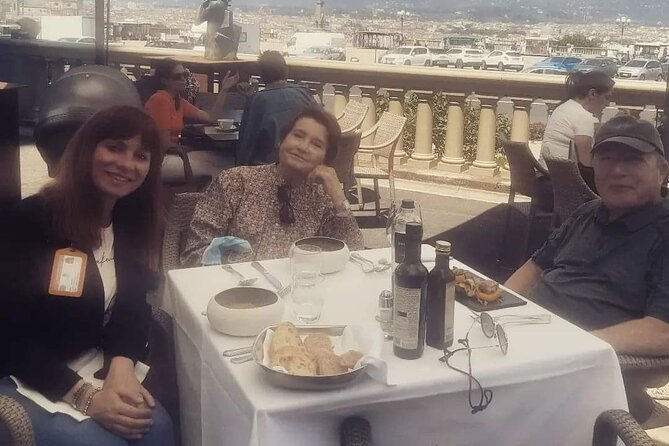
The tour even gives you a small personal-choice moment: you might have time for a drink or ice cream here if you want it. That’s a practical way to turn sightseeing into an actual break, rather than just moving from one photo to the next.
If you’re trying to understand Florence beyond the tourist corridor, this is the kind of stop that helps. You see how people gather, how the piazza functions, and where the city’s energy naturally concentrates.
Ponte Santa Trinita: Michelangelo’s bridge and a favored photo angle
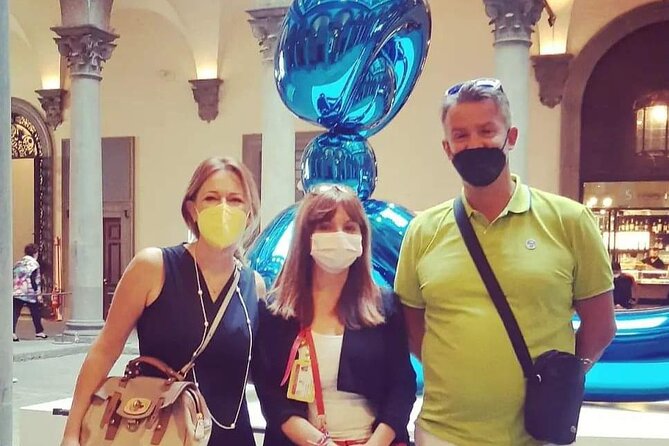
After that, you’ll cross to Ponte Santa Trinita, described as a bridge designed by Michelangelo. The route also notes it’s favored by Florentines, which is helpful context for how you might experience the bridge: less like a staged attraction, more like a daily connection point.
It’s also mentioned as a good “charming photo at Ponte Vecchio, before entering the fashion street” moment. Even if you’re not shopping, that note matters because it signals how the route transitions from river icons into more everyday, stylish city streets.
Photo tip: if you want to capture the bridge and the streetscape without fighting every crowd, aim to stand a little off the busiest viewpoint and let people pass. The bridge environment gives you options.
Renaissance palace views and Piazza della Repubblica’s ancient center
The walk includes a stop for “one of the city’s most beautiful Renaissance palaces,” noted as being home to temporary exhibitions. Since no specific palace name is provided in the details you have, the best way to use this stop is to treat it as a visual pause: you’re meant to see the Renaissance styling and understand that Florence keeps its palaces active through changing exhibits.
Then you move into Piazza della Repubblica, described as the city center since 59 B.C. That date makes the square feel like more than a modern hub. You’re standing in a place with a long civic continuity—one reason Florence doesn’t feel like a museum city. It’s a working one.
If you like getting a timeline in your head, this is a smart checkpoint. It ties the “ancient center” concept back to what you saw in the earlier civic square, and it prepares you for the religious landmark at the end.
Duomo area: external views of Santa Maria del Fiore
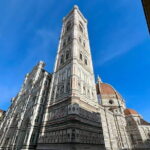
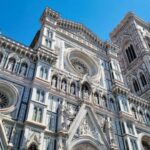
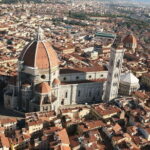
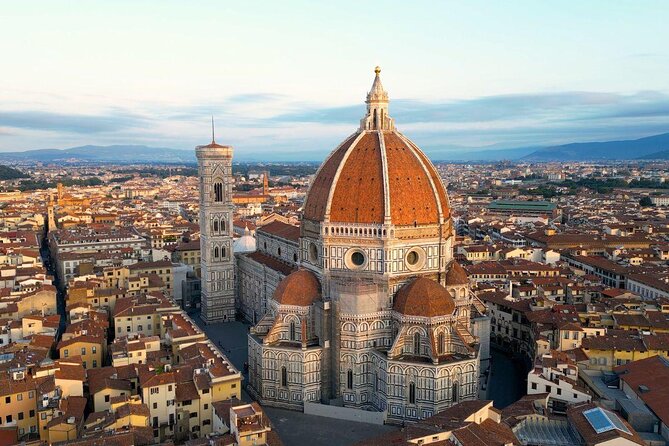
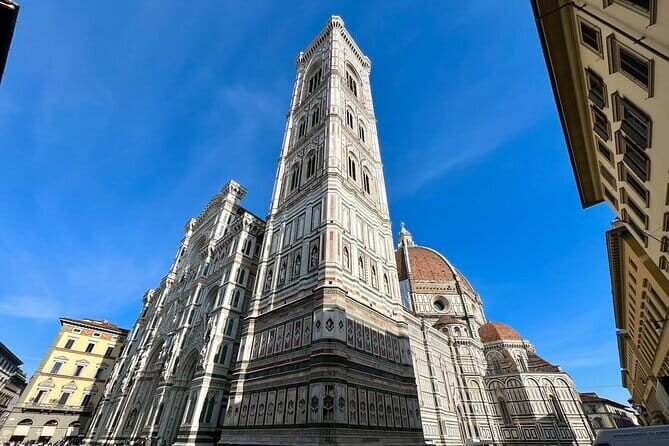
The tour ends with Duomo – Cattedrale di Santa Maria del Fiore, where you get an external visit to the religious heart of Florence. This is framed as a masterpiece of humanity, but the practical reality is that you’re not spending the time inside. You’re there to look, orient, and understand the building’s role in the city’s identity.
I like ending here because it feels like a strong, visual “final sentence.” You’ve moved through civic power, river identity, palace influence, and local life—and then you close at the spiritual centerpiece.
Practical tip: if you’re planning to visit the Duomo complex later, this walk helps you pick your bearings first, which makes future time much smoother.
The practical value of $130.37 for a private 2-hour walk
At $130.37 per person for a private tour, the value is really about what you’re buying: attention, pacing, and context. A lot of self-guided Florence walks can look productive on paper, but you often miss the logic of how the city organized power and daily life.
Here you get:
- Private group time (only your group participates)
- A local guide in English
- Headsets included, which reduces the frustration of noisy streets
- A route that covers major landmarks plus a standout older church stop
Also note the tour is described as being booked about 44 days in advance on average. That’s a sign of popularity, and it’s usually smart to plan ahead in Florence if you want a specific time window.
If you’re traveling as a couple or small group, private format often feels like a real upgrade over crowded group tours. You can ask quick questions, adjust your walking rhythm, and take photos when your guide points out the best angles.
Should You Book This 2-Hour Private Walking Tour in Florence?
Book it if you want a fast, guided Florence orientation that blends major sights with at least one quieter, older stop like Santa Felicita. It’s also a good call if you like walking but hate the idea of spending a huge part of your day inside museums, since this tour emphasizes outside views and short, meaningful stops.
Skip it or think twice if you need long museum time at major attractions, because Palazzo Pitti admission isn’t included and the Duomo is an external visit. Also reconsider if mobility support is limited; the walk is described as flat but still about 2 miles.
Overall, this is a very solid way to start Florence: you leave with your bearings, a clearer sense of the city’s themes, and a short list of what you might want to explore deeper later.
FAQ
How long is the 2-hour private walking tour in Florence?
It’s about 2 hours.
Where does the tour start and end?
It starts at P.za della Signoria, 1, 50122 Firenze FI, Italy and ends at Piazza di San Giovanni, 30, 50123 Firenze FI, Italy.
What is included in the tour price?
Headsets are included.
Is food or drinks included?
No. Food and drinks are not included.
Is the tour private, and how many people will join?
It’s a private tour/activity, so only your group will participate.
Is the tour offered in English?
Yes, it’s offered in English.
Is the tour suitable for people with mobility problems?
It’s described as a flat walk of about 2 miles, but it’s not recommended for people with motor problems without support.
FAQ
Is the tour likely to include museum tickets?
Most stops are listed as free, but Palazzo Pitti admission is not included. The Duomo visit is described as external.
Are service animals allowed?
Yes, service animals are allowed.
What’s the walking style and distance?
It’s a flat walk of about 2 miles.
Where can I find the meeting point?
The meeting point is P.za della Signoria, 1, and the end point is at Piazza di San Giovanni, 30.
How far in advance is it typically booked?
On average, it’s booked 44 days in advance.

More Tour Reviews in Florence
- Tuscany Day Trip from Florence: Siena, San Gimignano, Pisa and Lunch at a Winery
★ 5.0 · 21,634 reviews - The Best tour in Florence: Renaissance & Medici Tales – guided by a STORYTELLER
★ 5.0 · 12,316 reviews