REVIEW · FLORENCE
Florence: Santa Croce Church Tour with Entry Ticket
Book on GetYourGuide →Operated by StarFlorence · Bookable on GetYourGuide
Florence’s Santa Croce moves fast. This guided visit bundles reserved basilica entry with a clear, story-driven walk through the church, the tombs, and the lesser-seen corners like the crypt and bell tower. You’ll start in the main square by the Dante monument area, then step inside to connect art you’ve seen in books to the people actually buried here. I love how the tour links big names like Michelangelo, Machiavelli, and Galileo to specific monuments you can stand in front of. I also like the way the guide points out standouts without making you feel rushed. One thing to consider: Santa Croce has strict dress rules, and if shoulders or knees aren’t covered, entry can be denied.
The experience is designed for people who want more than ticket-stuffing. With a live guide and a radio system (so you hear details even in busy areas), you can follow the thread from frescoes to famous memorials to chapel architecture. The only drawback I’d flag is pacing: the tour is roughly an hour in the basilica, plus more time around the bell tower/crypt/chapels, so comfortable shoes matter and you’ll likely want to return on your own if you’re a slow, lingering museum person.
In This Review
- Key moments that make this tour worth your time
- Santa Croce’s star power: tombs plus masterpieces, all in one place
- Where the tour starts: Dante’s monument area and a June costume clue
- Inside Santa Croce: Giotto frescoes and the chapel stories that stick
- Donatello, Brunelleschi, and the Chapel of Fools angle
- Memorials and monuments: seeing Dante, plus the masters’ resting places
- The cemetery, the 1966 flood damage, and restoration you can notice
- Bell tower, crypt, and 16 chapels: what you get by going beyond the main nave
- Optional wine tasting: a calm finish to the art-and-stone rush
- Price and value: what $54.66 really buys you
- Best fit: who should book and who should consider another option
- What guides get praised for here (and how that helps you)
- Should you book this Santa Croce tour?
Key moments that make this tour worth your time
- A start in the Dante meeting area that sets the tone before you ever enter the basilica
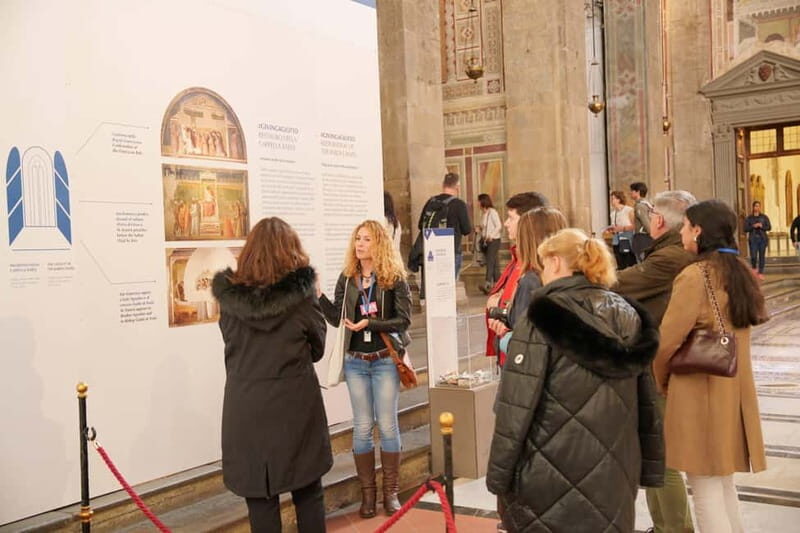
- Giotto fresco storytelling in the Bardi and Peruzzi Chapels (scenes tied to Francis and John the Evangelist)
- Major highlights in major places like Donatello’s crucifix and Brunelleschi’s Chapel of Fools
- Tombs that turn famous names into real geography, including Machiavelli, Galileo Galilei, and Michelangelo
- A 1966 flood-restoration angle you can actually see reflected in what’s damaged and repaired
- Optional Tuscan wine tasting that adds a relaxed second act after the art and architecture
Santa Croce’s star power: tombs plus masterpieces, all in one place
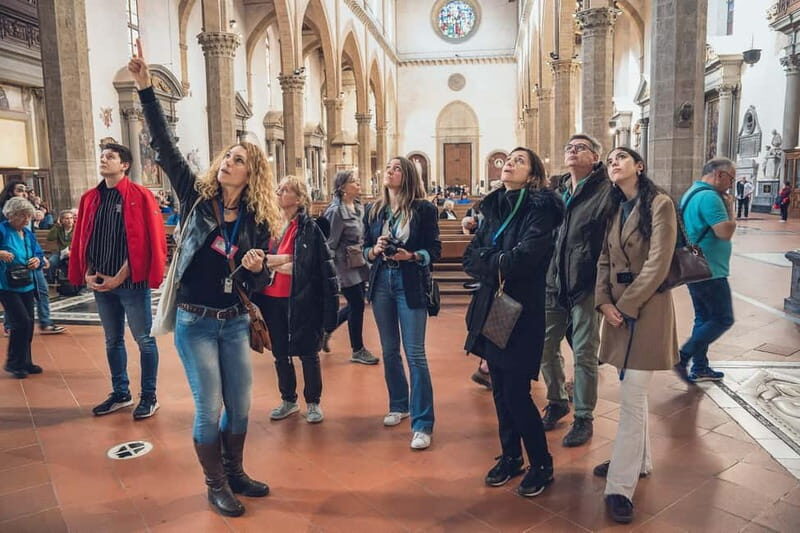
Santa Croce isn’t just a pretty church. It’s a Florence stage where art, politics, faith, and big ideas overlap. The tour is built around that mix, and it helps you understand why people care so much about this building. You’re not only looking at famous works; you’re also seeing where history is literally stored—in monuments, burial spaces, chapels, and the cemetery area.
What makes this work for your time is the focus. The guide doesn’t dump a list of names. Instead, you’re guided from one “why it matters” moment to the next: Michelangelo’s burial place, Galileo’s presence, Machiavelli’s tomb, and more. When you connect the art to the people, the site feels less like a stop on a checklist and more like a living map of Florence.
If you’re the type who wants context fast—especially on a first visit to Florence—this format is a good match. The basilica visit is guided, and when it ends, you get the chance to return to anything you want to see again at your own speed.
You can also read our reviews of more tours and experiences in Florence

Where the tour starts: Dante’s monument area and a June costume clue
You begin at Largo Piero Bargellini, 1, near the Monument to Dante Alighieri meeting point. That matters because it puts you in the right mental zone before you enter the church: Florence’s public life and big cultural stories are already in motion here.
One of the fun details your guide can explain at the start is the Calcio Storico Florentino—the famous soccer game played in medieval costumes—held every year in June. Even if you’re not there in June, it gives you a practical lens for understanding the city’s tradition of turning history into spectacle.
This opening works especially well if you like tours that help you get your bearings fast. You’ll get a short cultural framework, then shift into the art and architecture without feeling like you’re starting from zero.
Inside Santa Croce: Giotto frescoes and the chapel stories that stick
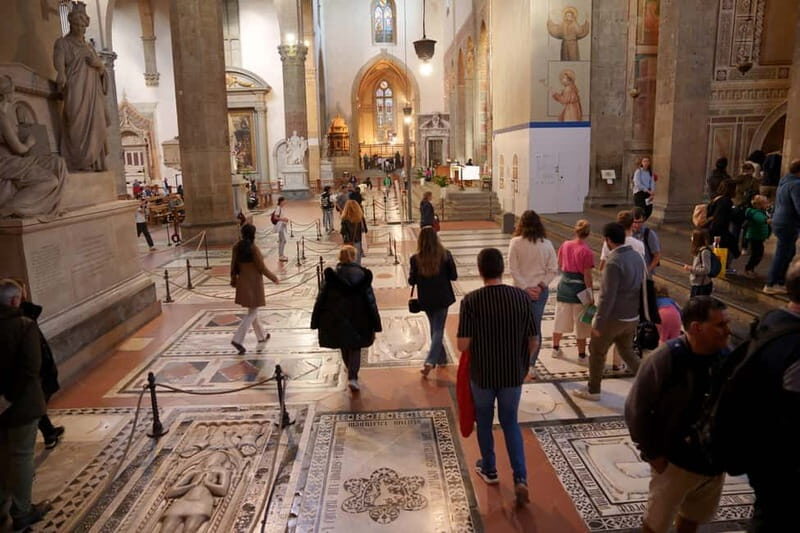
Once you enter Santa Croce, the tour turns into a guided tour of ideas. You’ll hear about the basilica as the principal Franciscan church in Florence and then watch how that identity shows up in the artworks.
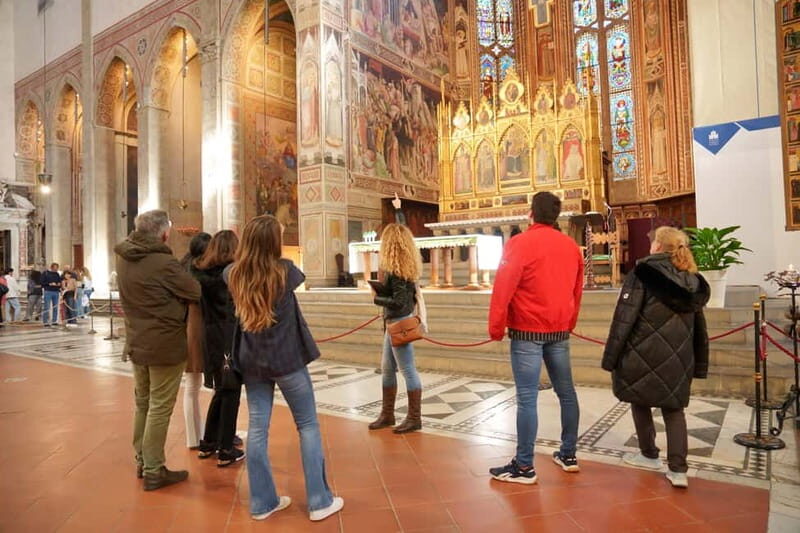
One standout is the emphasis on frescoes and what they’re meant to teach. In the Cappella Maggiore, you’ll hear about frescoes (including those by Gaddi, dated around 1380) that connect to the story of Santa Croce. Then, in the Bardi and Peruzzi Chapels, you’ll focus on beautiful Giotto frescoes—featuring scenes from the life of St. Francis and St. John the Evangelist.
Here’s why I think this approach is valuable for you: frescoes can look like “wall art” if you don’t know what to look for. With a guide pointing out the subject matter and the meaning, you’re more likely to notice composition, symbolism, and the way the church uses art to tell a spiritual story.
Also, you’ll get time to physically re-orient yourself in each chapel area. The best tours don’t just speak at you—they help you look.
Donatello, Brunelleschi, and the Chapel of Fools angle
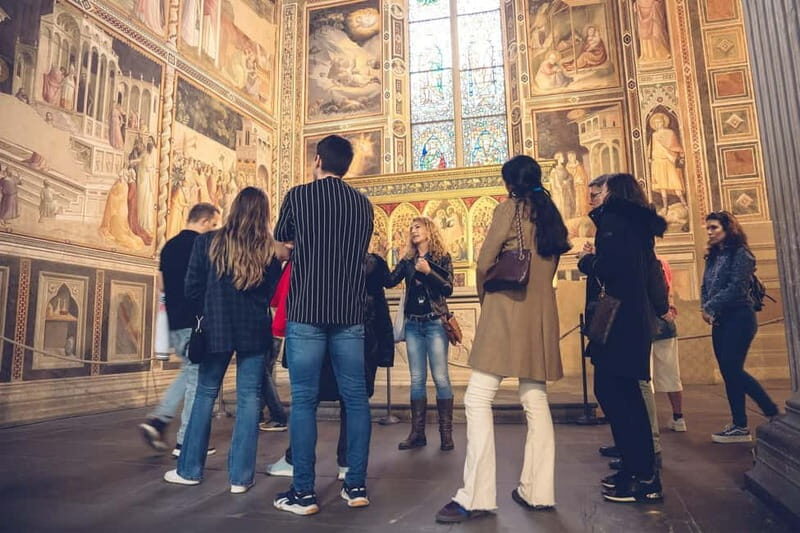
The tour balances painting with sculpture and architecture. That’s a big deal at Santa Croce, because Florence’s Renaissance reputation is built on more than one art form.
As you move through the interior, your guide will point out Donatello and his crucifix, often described as one of the Renaissance jewels you shouldn’t miss. You’ll also learn about Brunelleschi and the Chapel of Fools, including what makes its architectural harmony special.
This is the section where many people feel their visit “click” into place. If you’ve seen Donatello’s name but never got oriented to why his work matters in a church setting, this tour gives you the connection quickly—what you’re seeing and why it belongs here.
And if you like architecture, the Chapel of Fools framing is a smart change of pace. Instead of only chasing paintings, you start reading the space itself.
Memorials and monuments: seeing Dante, plus the masters’ resting places
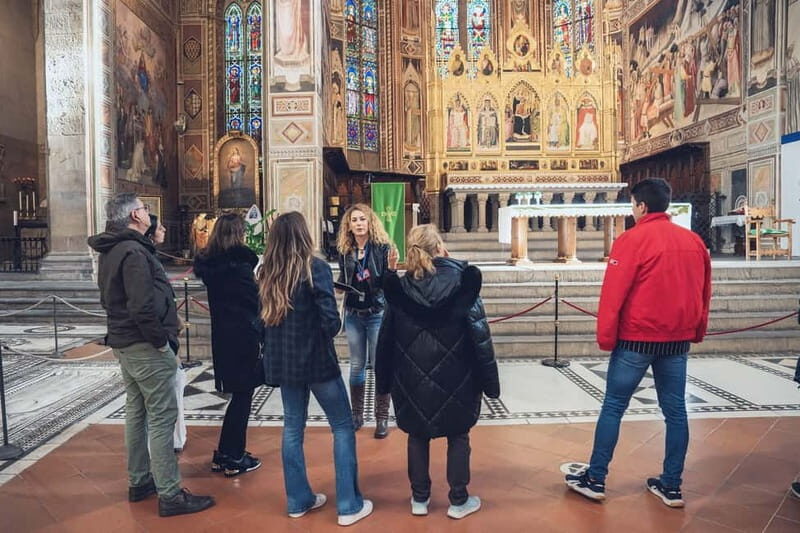
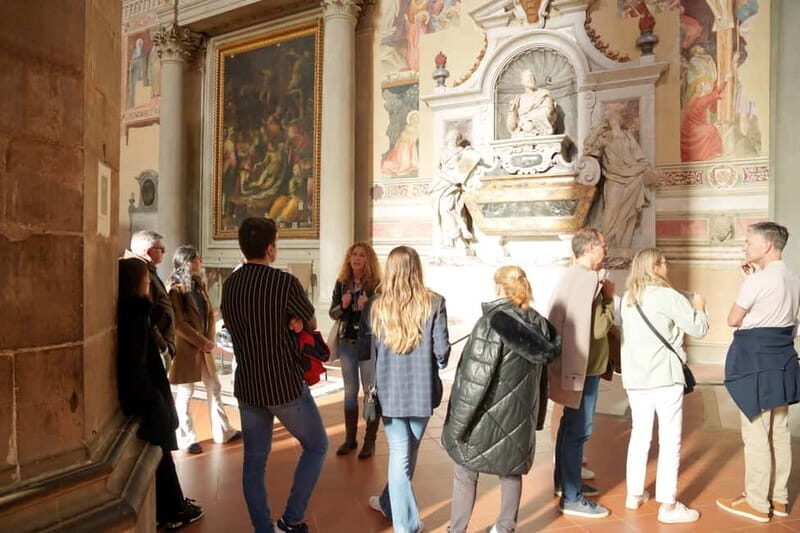
Santa Croce is famous for tombs, and the tour leans into that. You’ll see the burial places of several major figures, including Michelangelo, Machiavelli, and Galileo Galilei, along with additional Florentine and Italian masters.
These visits can be emotional, but you don’t have to guess at why. The guided explanations help you understand how these monuments fit into the church’s identity and into Florence’s idea of who deserves remembrance.
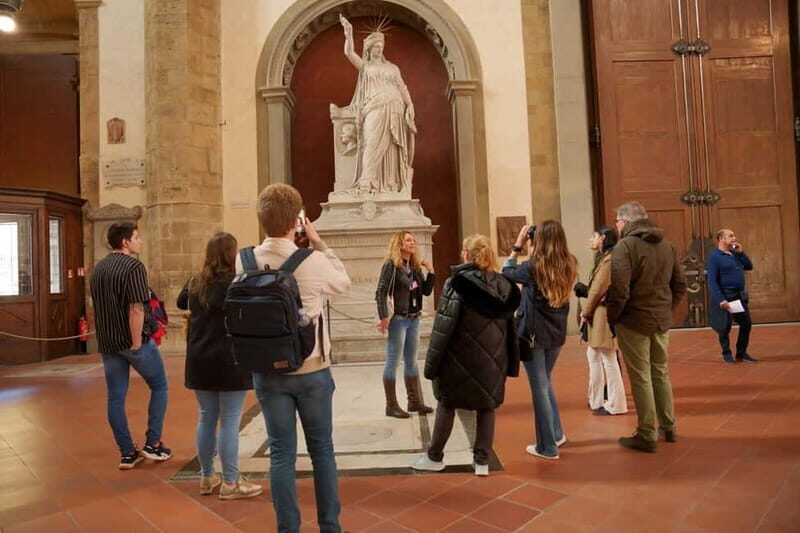
Your route also includes a moment near the left of the entrance for the memorial of Giovanni Battista Niccolini, a 19th-century playwright. The tour frames it as inspiration for the Statue of Liberty, which gives you a satisfying cross-connection between Florence and a later symbol in the world.
You’ll also encounter a monument dedicated to Dante, which fits neatly with the starting point area. It creates a tidy loop: you meet Dante outside, then you keep seeing how Florentines honored culture and language inside.
- Tuscany Day Trip from Florence: Siena, San Gimignano, Pisa and Lunch at a Winery
★ 5.0 · 21,634 reviews - The Best tour in Florence: Renaissance & Medici Tales – guided by a STORYTELLER
★ 5.0 · 12,316 reviews


The cemetery, the 1966 flood damage, and restoration you can notice
One part of Santa Croce that adds weight to the visit is the monumental cemetery and the story behind the art that was damaged. You’ll learn about paintings that were destroyed in the tragic 1966 flood, and you’ll also hear how the works were subsequently restored.
Even if restoration isn’t the topic you came for, it’s one of the most grounding angles of the tour. It turns Santa Croce from a flawless postcard into something more honest: a place that survived disaster and had to be rebuilt, repaired, and kept alive.
This section can change how you look at the church. You start paying attention to what’s present now, and you realize that “heritage” is also a story of damage, recovery, and care.
Bell tower, crypt, and 16 chapels: what you get by going beyond the main nave
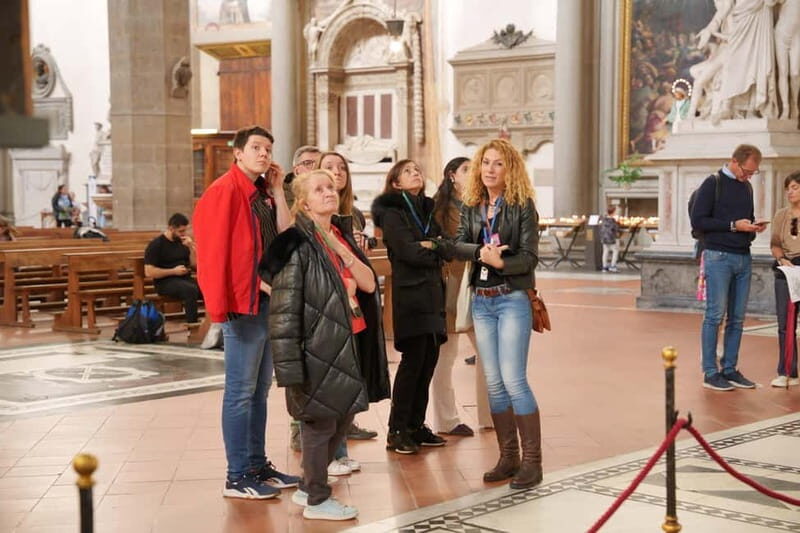
After the main interior highlights, the guide continues you around the Bell Tower, the Crypt, and 16 chapels. Not every church tour includes this kind of deeper circuit, and it’s one reason the visit feels complete.
The best part is that you’re not just standing in one dramatic room. You’re seeing multiple layers of the complex—enough variety that the hour-plus inside doesn’t blur into one long “church impression.”
This is also where the radio system helps a lot. Santa Croce is active and busy. Having clear audio means you can keep up with the details without constantly turning your head to find the guide.
By the time you finish, you’ll have enough context to choose what to revisit on your own. That “return to anything you might want to see again” element is practical. It lets you go back with sharper eyes, not just more time.
Optional wine tasting: a calm finish to the art-and-stone rush
If you choose the wine upgrade, you’ll join a wine expert for a tasting of different Tuscan wines, paired with a platter of Tuscan appetizers.
This option is most worth it if you want a slower, social landing after the church. The basilica portion is intense in its content, and wine tasting gives you a moment to breathe and talk, while still staying close to the cultural setting.
If you’re the type who prefers every minute to be sightseeing, you might skip this. But if you like a structured “end note,” it’s a friendly add-on.
Price and value: what $54.66 really buys you
At $54.66 per person, this tour sits in the middle of what you’ll typically pay for guided museum-style access in Florence. What makes it feel like value is that the price bundles the things that cost time and effort on your own.
You’re getting:
- a certified guide
- entrance tickets with reservations
- a radio system so you hear clearly
- the structured visit to the basilica and key areas (bell tower, crypt, chapels)
- and wine tasting plus appetizers if you choose that upgrade
If you’ve ever tried to stitch together a church visit with self-guided interpretation, you know how quickly it becomes stressful: you’re either scanning signs, or you’re missing the connections. This tour solves that by giving you a guided route with context built in.
That said, it’s not the cheapest way to see Santa Croce. If you’re a confident DIY traveler who likes reading guidebooks at your own pace, you may decide it’s more than you need. But if you want the story and the “what to look for” fast, the price starts to make sense.
Best fit: who should book and who should consider another option
This tour is a strong fit for you if:
- you want a guided walkthrough of tombs, frescoes, sculpture, and architecture in one visit
- you appreciate clear explanations and like asking questions
- you prefer hearing context through a guide rather than piecing it together from signs
It might be less ideal if:
- you want a totally flexible, stop-when-you-feel-like-it visit (this is structured)
- you struggle with strict dress codes (Santa Croce is firm about coverage)
One more practical note: you’re asked to bring passport or ID and wear comfortable shoes. Also, no sleeveless shirts and no shorts (knees and shoulders must be covered). The tour can run in all weather, so plan for indoor/outdoor transitions with whatever you’ll be comfortable in.
What guides get praised for here (and how that helps you)
The reviews you’ll see for this experience strongly point to one thing: guide quality. Names that come up include Lara, Marcello, Viviana, Guido, Ilaria, Elena, Marie, and Leonardo. Across them, the same pattern appears—guides who keep the tour detailed, answer questions well, and manage to pack a lot into the time without making it feel chaotic.
You’ll also notice a consistent theme: people like that the guide connects specific works to their historical setting, not just the basic facts. That’s exactly what you want at Santa Croce, where it’s easy to get overwhelmed by names and dates. A good guide helps you pick out what matters and remember it.
If you like tours where you can say, “Wait, why is that person buried here?” and get a real answer, this one is built for you.
Should you book this Santa Croce tour?
Book it if you want a guided, high-impact Santa Croce visit with reserved entry and a route that covers the main artistic hits plus deeper areas like the crypt and bell tower. With Giotto, Donatello, and the tombs of major figures all tied to explanations, you’ll come away feeling like you actually understood what you saw.
Skip it only if you know you want a slow self-paced visit and you don’t want to follow a structured route. Also double-check your clothing choices early—covered knees and shoulders are non-negotiable.
If you’re visiting Florence and want one church experience that turns into real context fast, this is a very solid pick.

More Tickets in Florence

More Tours in Florence


More Tour Reviews in Florence
- Tuscany Day Trip from Florence: Siena, San Gimignano, Pisa and Lunch at a Winery
★ 5.0 · 21,634 reviews - The Best tour in Florence: Renaissance & Medici Tales – guided by a STORYTELLER
★ 5.0 · 12,316 reviews