REVIEW · FLORENCE
Accademia Gallery: Elite Tour with Expert Guide
Book on Viator →Bookable on Viator
Michelangelo in a hurry, but better. This Accademia tour is built for people who want the big masterpieces without losing half your day to ticket lines. I love the skip-the-line priority setup that keeps things moving, and I also like that you get earphones and radios, so the guide’s explanations come through clearly. One drawback to plan for: the guided visit is only about 1 hour 15 minutes, so the pacing is tight and you’ll rely on your free time afterward for anything you want to see longer.
This is a compact experience with an upper limit of small groups, so it feels controlled instead of chaotic. You’ll start near the gallery at Piazza delle Belle Arti, then meet your guide, collect admission, and head in for a focused route. The tour is offered in English, with several departure times (morning or afternoon), which makes it easier to fit into a Florence itinerary.
Inside, the Accademia doesn’t just mean David. You’ll also get Michelangelo’s other works, plus a major collection of medieval panel paintings with gold backgrounds, and even stops that cover musical instruments. The result is a tight, story-led route that gives context before you wander on your own.
In This Review
- Quick hits before you go
- Accademia Gallery in 75 minutes: what you actually get
- Finding the meeting point at Piazza delle Belle Arti
- Skip the line, then follow a smart museum route
- Michelangelo’s David and the other related works you might miss
- The medieval panel paintings with gold backgrounds
- Musical instruments: why they’re included
- How earphones and radios improve the experience
- Guides you might see: Denisa and Marie
- Using your free time after the guided portion
- Price and value: is $78.60 worth it
- Who this tour suits best (and who might skip it)
- Quick practical expectations before you book
- Should you book this Accademia David skip-the-line tour?
- FAQ
- How long is the Accademia Gallery tour?
- Where does the tour start and end?
- Is the tour in English?
- Does it include skip-the-line admission?
- What’s included in the price?
- Is hotel pickup included?
- Is there time to explore on your own?
- How large are the groups?
- Can I cancel for a full refund?
- What should I know about how early to book?
- My booking call
Quick hits before you go
- Skip-the-line priority tickets to save time right when lines can get ugly
- Earphones and radios so you hear every key detail in a group
- Michelangelo’s David plus other works from a single guided route
- Medieval gold-panel paintings as part of the same museum loop
- Musical instruments included in the tour highlights
- Free time after the guided portion to linger where you want
Accademia Gallery in 75 minutes: what you actually get
The whole tour runs about 1 hour 15 minutes, including the guided time in the gallery. That sounds short—because it is—but it’s also the point. The Accademia can be overwhelming if you arrive with only a vague idea of what to look for. This format gives you a route, then gets you inside the museum at a practical pace.
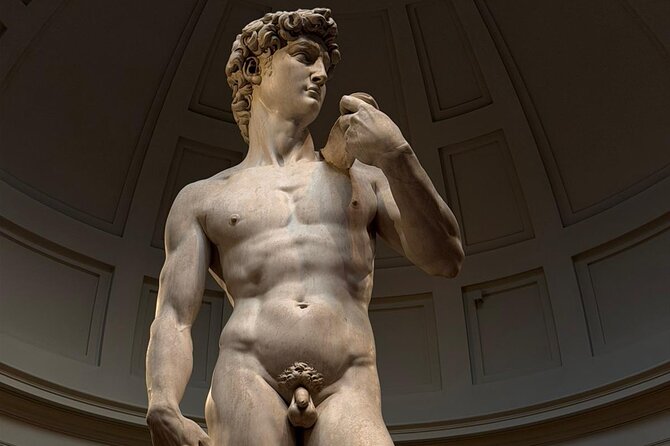
I think the best part of this setup is that you’re not just collecting photos. You’re getting a guided sequence that connects sculpture, painting, and context. You’ll see Michelangelo’s David plus multiple related works by Michelangelo (seven total), and you’ll also cover medieval panel paintings with gold backgrounds—described as one of the most extensive collections in the world. In other words, you don’t leave with only one superstar image. You leave with a clearer sense of how the museum thinks.
The time pressure does mean you’ll need to decide what you care about most: the David area, the other Michelangelo pieces, the medieval panels, or the musical-instrument displays. The tour is designed to hit all of them briefly, then let you self-direct after.
You can also read our reviews of more tours and experiences in Florence.
- Tuscany Day Trip from Florence: Siena, San Gimignano, Pisa and Lunch at a Winery
★ 5.0 · 21,634 reviews

Finding the meeting point at Piazza delle Belle Arti
You meet at Piazza delle Belle Arti, 50122 Firenze FI, and the activity ends back at that same point. That matters more than people think. Florence is full of start points that scatter you across town. Here, you get one clear location and a return to the same spot, which makes your next stop easier.
The tour starts around the corner from the Accademia Gallery. Practically, that means you’re not stuck trying to find the exact entrance while the group is already assembling. You’ll pick up your admission tickets and meet your guide right there, then move into the museum together.
It’s also described as near public transportation. If you’re using buses or tram-style connections, that reduces stress. You’ll still want to be early enough to orient yourself and check your directions, especially if you’re arriving for a morning slot.
One more practical note: there’s no hotel pickup. So you’ll want to be ready to get yourself to the meeting point on your own.
Skip the line, then follow a smart museum route
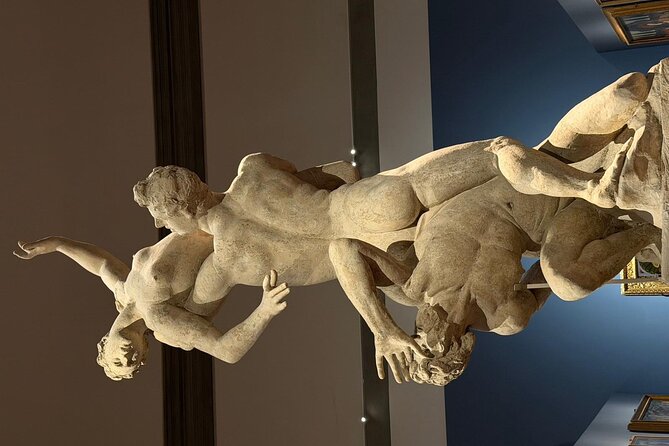
The tour includes priority tickets, which is the heart of why this works. At the Accademia, lines can stretch and slow your whole day, even if you don’t plan to visit at peak chaos. Priority admission turns that waiting time into museum time.
Once inside, the guide leads you through several halls—covering paintings, the museum’s other featured works, and even musical instruments. This is useful because it prevents the common problem of wandering randomly and missing the pieces that need a quick explanation to make sense.
The guided route is focused on story and meaning. You’ll hear anecdotes behind the works on display—exactly the kind of context that helps when you’re standing in front of something famous and your brain wants a quick reason why it matters.
And because your group stays small (with a maximum of 19 travelers, and at times capped even lower), the flow is smoother. You’re not fighting for space at every stop, and the guide can keep the pace tight without losing everyone.
Michelangelo’s David and the other related works you might miss
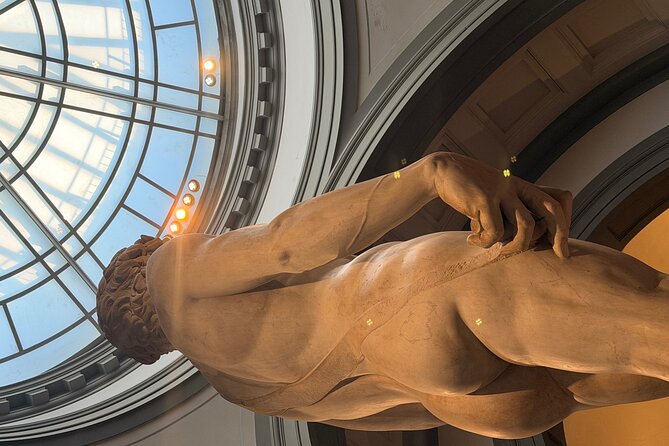
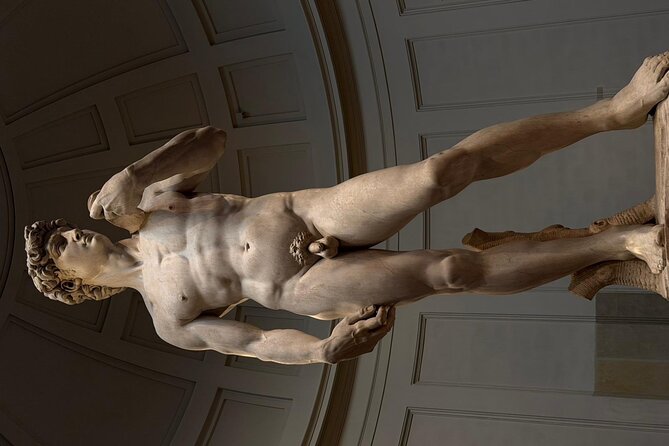
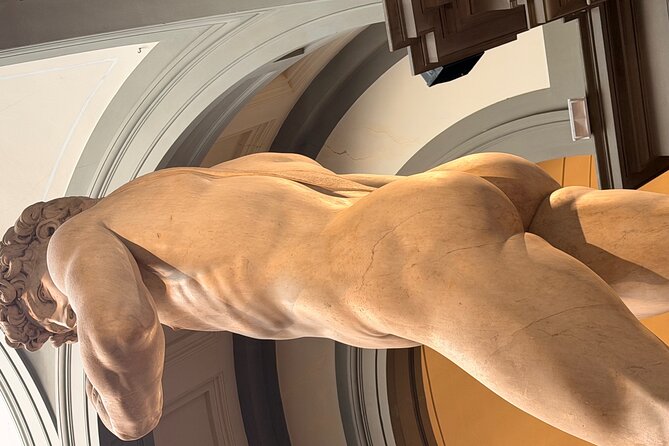
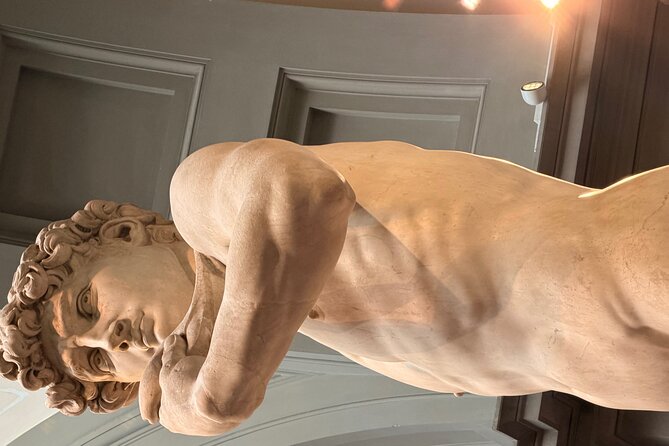
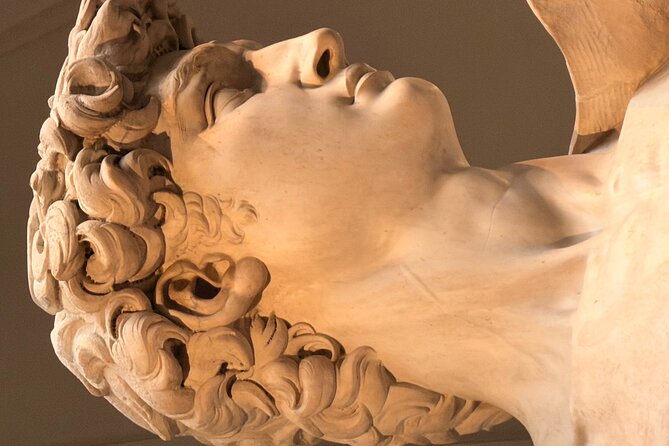
Let’s talk about the main reason people come: Michelangelo’s David. The tour places it at the center of the experience, and it’s not just a quick look. You’ll see the iconic sculpture, plus additional Michelangelo works on the same visit.
There’s also the mention of Prisoners, which is a big deal because those figures connect to the same sculptural language. If you only see David, you may not realize how Michelangelo built meaning through related motifs and themes. This tour format gives you a chance to see those connections rather than treating each room as a separate photo stop.
I like that the tour doesn’t try to make David the whole museum experience. It places David in a broader context by pairing sculpture highlights with other collections in the gallery. That’s a big quality-of-life win for anyone who wants their Florence “art time” to feel coherent, not like a checklist.
Because the guided time is limited, you’ll get the essentials—then you can return afterward if you want to study specific angles. If David is your top priority, I’d still recommend using the free time after the tour to revisit the sculpture on your own terms, not right away during the guided portion. You’ll get more out of it the second time.
The medieval panel paintings with gold backgrounds
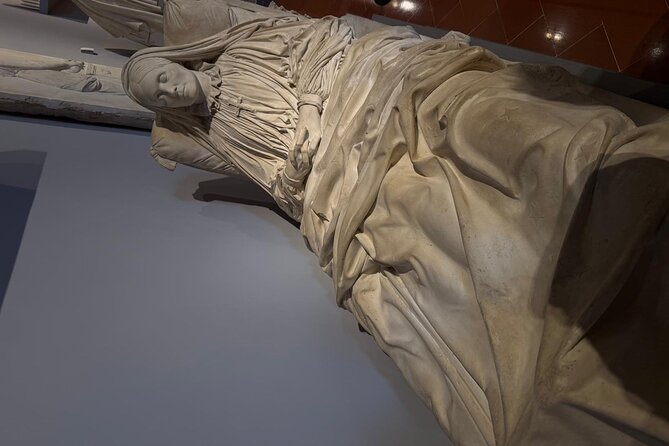
A lot of people assume the Accademia is only about one artist, one masterpiece, one crowd. This tour changes that. You’ll also see a major collection of medieval panel paintings with gold backgrounds, described as the most extensive collection of its kind worldwide.
Why does that matter? Gold backgrounds aren’t just decoration. They’re part of the visual language of the medieval period, and they create a different kind of presence than the later Renaissance style most visitors expect. When you see those panels right after the sculptural intensity of Michelangelo, you get a more interesting comparison—different eras, different visual goals, and different ways artists handled sacred subjects.
The guide’s explanations help you notice details you might otherwise skip. Even if you’re not the type to read every label, you’ll likely leave with a few mental hooks: what to look for, why the gold matters, and how these paintings connect to Florence’s artistic world.
- Tuscany Day Trip from Florence: Siena, San Gimignano, Pisa and Lunch at a Winery
★ 5.0 · 21,634 reviews - The Best tour in Florence: Renaissance & Medici Tales – guided by a STORYTELLER
★ 5.0 · 12,316 reviews

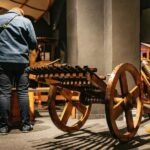
Musical instruments: why they’re included
One of the more surprising parts of the tour is that it includes musical instruments among the museum highlights. This is a reminder that the Accademia isn’t just a gallery of static art objects. It’s also a place that shows how art, craft, and culture were intertwined.
If you’re the kind of person who likes a museum to have variety, this is a plus. It breaks up the emotional intensity of David and the visual intensity of gold panels with something that feels more human and everyday. You might not know what to expect until you’re there, but the inclusion makes the overall route feel less one-note.
How earphones and radios improve the experience
Tour audio is one of those small factors that can make or break your day, especially in museums where you’re walking and looking at the same time. This experience includes earphones and radios, which means you can actually hear the guide without craning your neck or losing the explanation each time the group shifts position.
This matters because the tour is designed to be efficient. In a fast-paced route, you don’t want to miss the context that the guide shares right at the moment you’re standing in front of the work. With the audio support, you’re more likely to absorb details instead of just moving along for the next stop.
If you prefer learning while you walk, not only while you stand still, the audio setup helps you keep up.
Guides you might see: Denisa and Marie
The guidance quality seems to be a major reason people feel satisfied. In the feedback provided, names like Denisa and Marie show up as examples of guides who deliver clear explanations and keep a professional, friendly tone.
That doesn’t guarantee your guide will be the same person, of course. But it’s a helpful signal: this is not a handoff tour where you wander with a generic map. It’s built around a guide who talks in a way that turns famous art into something you can actually understand and remember.
If you’re booking for a language-learning trip in English or you want someone to connect the dots for you quickly, that’s where this tour’s format shines.
Using your free time after the guided portion
One of the smartest parts of this experience is that you don’t end the day right after the highlights. You get free time after the tour to explore at your own pace.
This is exactly what you want after a short guided loop. Your guide gets you the framework. Then you can choose what to revisit—maybe the David area from a different angle, maybe the medieval panels that stuck with you, or maybe the musical-instrument displays if you found those more interesting than you expected.
My advice: don’t try to do everything in that free time. Pick one main theme and give it attention. The Accademia can feel busy, and your memory will be better if you spend your energy where you’re genuinely curious.
Also, if you’re taking photos, the free time is when you’ll likely get the best rhythm. During the guided portion, your timing will follow the group. After, you can stop when something catches your eye.
Price and value: is $78.60 worth it
At $78.60 per person, this isn’t a bargain-bucket activity. It is, however, a value-driven choice if your priorities are time and guidance.
Here’s what you’re paying for, specifically:
- Priority tickets to reduce waiting
- An expert guide to provide explanations and anecdotes
- Earphones and radios, so you actually hear the talk
- A short, organized route that covers David, related works, medieval panels, and even instruments
If you were to visit the Accademia on your own, you’d save money but you’d also lose the structured route and the “why this matters” context. And if you arrive without a plan, the museum can cost you time through aimless wandering and missed highlights.
So I see this as a good fit for people who:
- Want David and more, in a single outing
- Prefer guided context over self-reading
- Hate wasting time in lines
- Don’t want to spend hours inside the museum
If you already know exactly what rooms you want and you’re comfortable exploring without audio support, you might prefer a lower-cost self-guided visit. But if your schedule is tight, this tour’s time efficiency is the real value.
Who this tour suits best (and who might skip it)
This experience fits best if you’re short on time but not short on interest. It’s also a good choice if you want a clear plan with a small group and a guide who keeps things moving.
It’s also described as something most travelers can participate in, and it’s near public transportation, so it’s logistically friendly.
You might consider skipping it if:
- You want a very slow, unstructured museum experience
- You’re the type who spends a long time studying every label and needs many hours
- You’re comfortable navigating the museum yourself and prefer paying only for entry
But if you fall in the first group, the format works. You’ll get the main hits, the context, and a chance to personalize after.
Quick practical expectations before you book
- Plan on about 1 hour 15 minutes total for the guided part
- Know that you’re on your feet and walking through multiple halls
- Bring patience for the museum environment, even with priority access
- Expect English narration and audio support (earphones and radios)
- Skip-the-line priority helps most when lines are heavy
- You return to the meeting point when you’re done
Should you book this Accademia David skip-the-line tour?
Yes, if your goal is to see Michelangelo’s David with context and also leave having experienced more than one room. This tour is a smart time-saver: priority admission plus audio plus a guided route that includes sculpture, medieval gold panels, and even musical instruments.
Skip it only if you’re looking for a long, quiet, do-it-all-at-your-own-speed visit. In that case, you might do better with self-guided time. But if you want efficiency without feeling rushed on understanding, this is a strong choice.
FAQ
How long is the Accademia Gallery tour?
It runs about 1 hour 15 minutes.
Where does the tour start and end?
It starts at Piazza delle Belle Arti, 50122 Firenze FI, Italy, and ends back at the same meeting point.
Is the tour in English?
Yes, it is offered in English.
Does it include skip-the-line admission?
Yes. Priority tickets are included, with skip-the-line admission.
What’s included in the price?
The price includes an expert guide, priority tickets, earphones, and radios.
Is hotel pickup included?
No. Hotel pickup and transportation are not included.
Is there time to explore on your own?
Yes. After the guided portion, you’ll have free time to explore the gallery at your own pace.
How large are the groups?
The group size is capped at a maximum of 19 travelers, and at times at a maximum of 15 travelers.
Can I cancel for a full refund?
Yes. Free cancellation is available up to 24 hours in advance of the experience start time for a full refund.
What should I know about how early to book?
The experience is commonly booked far in advance (on average 104 days), so reserving early is a good idea.
My booking call
If you want David and the wider Accademia story without wasting time in lines, book it. The audio support, priority tickets, and tight guided route are what make this feel worth the price for a short Florence window. If you prefer slow museum wandering for hours, then consider a self-guided visit instead.

More Tour Reviews in Florence
- Tuscany Day Trip from Florence: Siena, San Gimignano, Pisa and Lunch at a Winery
★ 5.0 · 21,634 reviews - The Best tour in Florence: Renaissance & Medici Tales – guided by a STORYTELLER
★ 5.0 · 12,316 reviews