REVIEW · ASSISI
Assisi – in the footsteps of St. Francis
Book on Viator →Operated by Umbria guida turistica ed escursionistica · Bookable on Viator
One story, many sacred stops. This private Assisi tour follows the Franciscan route in a tight 2–3 hours, with moments that feel simple, human, and strangely moving.
I especially like how it pairs St. Clare’s world (and the Crucifix of San Damiano) with the big-art power of St. Francis in the Basilica. You also get real “how to look” guidance at each church—so the details on facades and tombs don’t just blur together. One thing to plan for: entry costs aren’t uniform, and you may need headphones (€3) and pay extra for parts of the San Francesco complex.
In This Review
- Key highlights to know before you go
- A walk in Assisi that feels like a guided story
- Basilica di Santa Chiara: where the San Damiano story lands
- Cattedrale di San Rufino: Romanesque carved details that make sense
- Chiesa Nuova and the Pietro Bernardone thread
- Piazza del Comune: the civic heart beneath the sacred layers
- Basilica di San Francesco: art, sound, and what costs extra
- Important costs and practical setup
- The 2026 inside-Basilica change you should know
- Price and value: paying for time, focus, and a private pace
- How to get the most from the tour (without overpacking your schedule)
- Who this tour is best for
- Should you book this Assisi Franciscan tour?
- FAQ
- How long is the Assisi tour?
- Is this a private tour or shared group?
- What language is the tour offered in?
- What’s included vs not included for tickets?
- Do I need headphones for the Basilica of St. Francis?
- Will the tour include a guided visit inside the Basilica of St. Francis in 2026?
- Where do we meet and where does the tour end?
- Can I cancel for a full refund?
Key highlights to know before you go
- St. Clare + San Damiano: you’ll see the Crucifix linked to St. Francis’s turning point.
- Romanesque storytelling at San Rufino: the facade is packed with carved figures worth slowing down for.
- Chiesa Nuova’s origin clue: a preserved link to St. Francis’s early story and his father, Pietro Bernardone.
- Piazza del Comune: the civic “living room” of Assisi, with the old Temple of Minerva beneath later layers.
- San Francesco art leads the lesson: Giotto and other major painters help explain the relationship between St. Francis and Christ.
- Seasonal Basilica rule (2026): from Feb 15 to Apr 6, there’s no guided inside visit, though free access is allowed with reservation.
A walk in Assisi that feels like a guided story
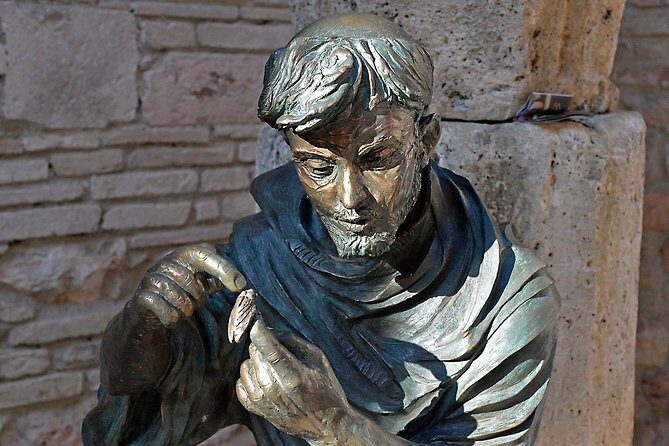
Assisi is famous for “pilgrim routes,” but this experience keeps it practical. You won’t be wandering for hours guessing what matters. The pacing is light: short visits at several key spots, then two dedicated passes focused on the Basilica of San Francesco.
You’ll start at Parcheggio B and end at the Papal Basilica and Sacred Convent area in the lower square (Piazza Inferiore di S. Francesco). It’s ideal for a morning plan, especially if you want the Franciscan heart of Assisi without sacrificing the rest of the day to logistics.
This is also a private tour, so it’s just your group. That matters more than you’d think in church spaces—people can move at a comfortable rhythm, and your guide can adjust when someone needs a slower moment.
And yes, the guide can be a big deal here. In particular, Monia stands out for many reasons: she’s described as warm, patient, and able to tailor the tour to what you care about (even with a young child in the group). She’s also praised for sending instructions ahead of time—helpful if you’re arriving by train.
You can also read our reviews of more tours and experiences in Assisi.

Basilica di Santa Chiara: where the San Damiano story lands
Your first stop is Basilica di Santa Chiara, and it sets the tone. This is the place tied to St. Clare, with her burial here. It also preserves the Crucifix of San Damiano, the one associated with the moment that spoke to St. Francis.
Even if you’ve read a little about Francis, I like seeing this in person because the site itself teaches the lesson. It’s not just a relic you glance at. Your guide can help you notice why something so physically simple can carry a big spiritual charge—how mystery can feel quiet instead of theatrical.
Plan on about 15 minutes. That sounds short, but the point is focus, not fatigue. If you’re the type who gets overwhelmed in big churches, this is a good warm-up: short, meaningful, and not a marathon.
One practical note: this stop includes admission, so you can relax about ticket timing here compared to later parts of the route.
Cattedrale di San Rufino: Romanesque carved details that make sense
Next comes Cattedrale di San Rufino, another 15-minute stop with admission included. This is the place linked to the baptism of San Francesco. It’s also considered one of Umbria’s more fascinating Romanesque churches, and the facade is where you’ll feel it first.
The facade is like a carved book—full of figures. If you just walk past it, you miss the plot. A good guide helps you look at the quality and quantity of the characters, and how they work together instead of being random decoration.
This is a great stop for people who enjoy art and symbolism, but don’t want a lecture. It’s also friendly for mixed groups—history fans get details, and casual visitors get something visible to anchor their attention.
Chiesa Nuova and the Pietro Bernardone thread
Then you’ll head to Chiesa Nuova, built in the 1600s—so “new” compared to the others, but still deeply connected to St. Francis’s early life. This church preserves what’s considered the remains of the presumed birthplace of San Francesco, tied to his father, Pietro Bernardone.
This stop is about early origin, not just famous monuments. It helps balance the day: yes, later you’ll see major Renaissance-era and medieval masterpieces, but here you start with the human beginning. It can make the more famous art feel less like a museum and more like a life told over time.
You get about 15 minutes. Admission is included, so you’re not juggling payments mid-route.
If you’re traveling with kids, this kind of “where did the story start” stop tends to land well. Monia has been specifically praised for patience and kindness toward a six-year-old, and I can see why this portion of the itinerary works—short, clear connections, not just walls full of names.
Piazza del Comune: the civic heart beneath the sacred layers
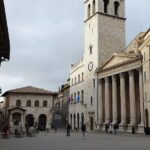
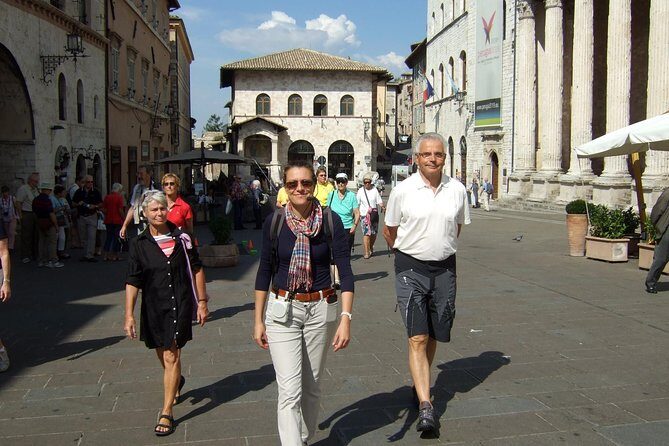
A short walk brings you to Piazza del Comune, Assisi’s “living room.” You’ll spend about 10 minutes here, and it’s mostly a viewing stop.
What makes it meaningful is the overlap of the sacred and the civic:
- You’ll see remains of the ancient Temple of Minerva, now the church of Santa Maria sopra Minerva.
- You’ll also notice the palaces that once belonged to the free medieval municipality, including Palazzo dei Priori and Palazzo del Capitano del Popolo.
This is the kind of stop that helps you understand Assisi as a functioning city, not just a religious set. It answers the silent question: where did these ideas live day to day?
Admission here is free, which is a nice breather after a couple of paid church entries. It’s also a good point to pause your photos, catch your breath, and reset your legs before the big finale.


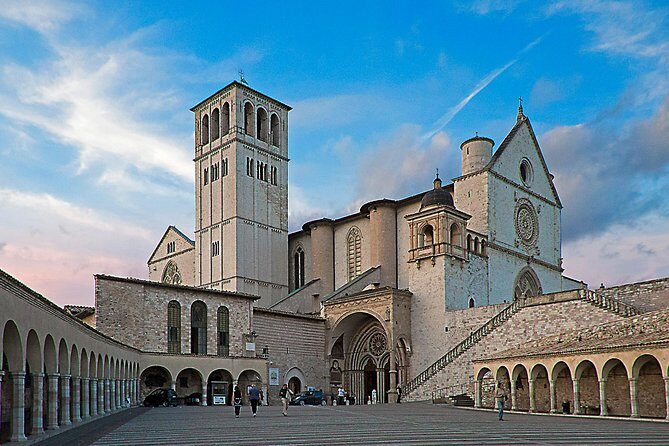
Basilica di San Francesco: art, sound, and what costs extra
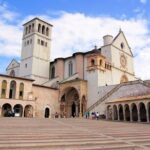
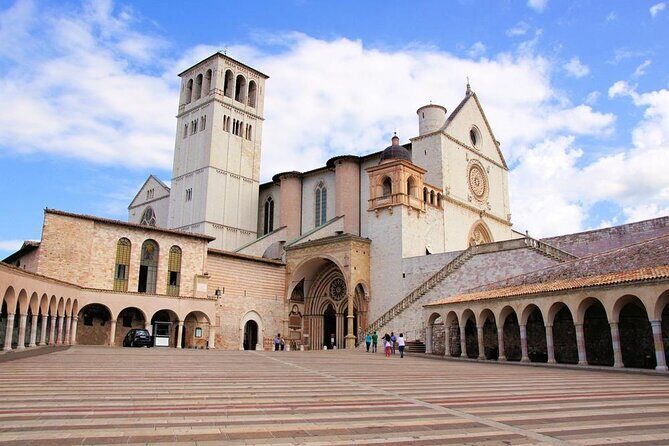
Now for the heart of the day: Basilica Papale e Sacro Convento di San Francesco d’Assisi.
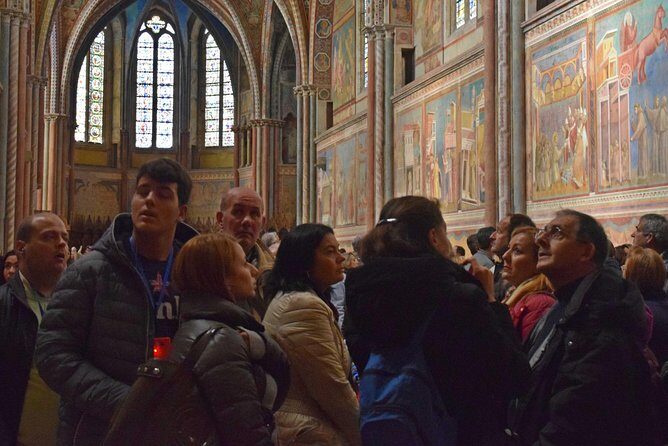
This is where the route shifts from “sites connected to the story” to “the story explained through art.” Your visit is split into two focused segments of about 30 minutes each, both at the same overall complex.
In one segment, you’ll look at how the life of St. Francis is told through major works, including a famous biography connected to Giotto. Think of it as the story painted with enough clarity to guide your imagination even if you don’t know all the religious terms.
In the other segment, the focus turns to relationships shown in the art—how St. Francis is tied to Christ through works associated with masters including Cimabue, Simone Martini, Lorenzetti, and Giotto. This isn’t just visual wow. It’s the why behind the Franciscan message, translated into images you can actually see.
Important costs and practical setup
Here’s the part to plan carefully:
- Headphones are mandatory for the Basilica of San Francesco: €3.00 per person.
- Entrance to the Sacred Convent of San Francesco is not included.
- For these Basilica-focused segments, admission isn’t included in the tour price (so you’ll be paying onsite or handling required access through the site rules).
If you hate surprise add-ons, this is the one place to be ready. Budget those extra euros so you don’t end up doing the math with your heart sinking in front of the ticket desk.
The 2026 inside-Basilica change you should know
From February 15 to April 6, 2026, the tour does not include a guided tour inside the Basilica of St. Francis because the remains of St. Francis are on display. Access is allowed only with reservation required and free of charge, and during this period the schedule gives more space to other Franciscan places in Assisi while keeping the same overall spirit.
So if you’re traveling during those weeks, treat the experience as still worthwhile, but slightly different in how the “inside” portion happens. Your guide can help you navigate the changed flow.
Price and value: paying for time, focus, and a private pace
The tour price is listed as $252.31 per group (up to 10), for roughly 2 to 3 hours. That’s a key detail: you’re not paying per person for the guiding itself.
For value, this works best when:
- you’re a small group where one guide can steer the whole day,
- you want someone to explain the “why” behind what you’re seeing, not just point at objects,
- you’re traveling with people who benefit from a slower, tailored pace.
Booking is often done about 67 days in advance on average. That’s not a must for every trip, but it’s a good sign that slots can fill, especially for popular mornings.
Also, this is mobile-ticket friendly and runs in English. Mobile tickets can reduce the “where do we stand and where’s my paper ticket” stress.
Is it the cheapest way to visit Assisi’s Franciscan sites? Usually no. But if you compare it to doing everything independently while also paying for the same paid entries and time lost to finding the right spots, a private guide often starts to look like a bargain—especially when the guide adjusts to your interests.
How to get the most from the tour (without overpacking your schedule)
Assisi rewards calm. Don’t jam your day so tight that you feel rushed inside churches.
If you’re arriving by train, take advantage of the kind of pre-tour instructions many guides provide. Monia has been praised for reaching out beforehand with directions on how to get from the train station and where to go. That saves you time and helps you start the tour already oriented.
After the tour, I recommend spending a little extra time around the Basilica area at a natural walking pace. One piece of advice you’ll hear from people who loved this tour: if you’re still curious, go back on your own to places like Saint Damiano and the Porciuncula. The guide’s interpretation gives you a better lens, and then solo time lets you linger where your attention lands.
One more practical tip: wear shoes you can trust on slopes and cobblestones. Assisi is dramatic, but it can also be slippery under casual conditions, and you’ll be moving between viewpoints.
Who this tour is best for
This works for a wide range of travelers because the stops are short and focused. You’ll likely enjoy it if you want:
- a Franciscan storyline across multiple sites,
- an English-speaking local guide who explains details clearly,
- a private morning plan that doesn’t eat your whole day.
It’s also a strong option for families. The experience has been praised for the guide’s patience and kindness toward a six-year-old, and the pacing supports short attention spans better than a long museum-style tour.
For accessibility: the experience is described as accessible to disabled people if accompanied or provided with motor vehicles, but slopes can make independent movement difficult at each site. If that’s relevant for your group, you’ll want to think about how you’ll move between stops and what level of assistance you’ll need.
Should you book this Assisi Franciscan tour?
Book it if you want the Franciscan sites of Assisi connected into a single, understandable route—without spending your precious morning trying to decode churches on your own. The private format, the English guidance, and the way the day moves from Santa Chiara through San Rufino and Chiesa Nuova to the Basilica of San Francesco makes it a smart use of time.
Skip or reconsider if you’re ultra-budget focused and don’t want extra onsite costs like €3 mandatory headphones and parts of the complex entrance not included. Also reconsider if you’re traveling during Feb 15–Apr 6, 2026 and you specifically need a guided inside-Basilica experience—because during that window, the guided inside visit changes due to display access rules.
If you’re the kind of traveler who likes your sacred places to come with practical interpretation, this is the kind of tour that helps Assisi click.
FAQ
How long is the Assisi tour?
It lasts about 2 to 3 hours.
Is this a private tour or shared group?
It’s a private tour/activity. Only your group participates.
What language is the tour offered in?
The tour is offered in English.
What’s included vs not included for tickets?
A local guide is included. Admissions are included for Basilica di Santa Chiara, Cattedrale di San Rufino, Chiesa Nuova, and the tour includes free time at Piazza del Comune. Admission for the Basilica Papale e Sacro Convento di San Francesco d’Assisi is not included, and the entrance to the Sacred Convent is not included.
Do I need headphones for the Basilica of St. Francis?
Yes. Headphones in the Basilica San Francesco are mandatory and cost €3.00 per person.
Will the tour include a guided visit inside the Basilica of St. Francis in 2026?
From February 15 to April 6, 2026, the tour does not include a guided tour inside the Basilica due to the display of the remains of St. Francis. Access is allowed only with reservation required and free of charge.
Where do we meet and where does the tour end?
You start at Parcheggio B, Assisi and end at the Papal Basilica and Sacred Convent of Saint Francis in Assisi, at Piazza Inferiore di S. Francesco, 2.
Can I cancel for a full refund?
Yes. You can cancel up to 24 hours in advance for a full refund. If you cancel less than 24 hours before the start time, the amount paid is not refunded.