Florence changes every few steps, and this walk helps you read the city fast. You’ll trace the story of the Medici and the power of Renaissance Florence, then sweep through the Duomo area, Signoria, the river, and Santa Croce. Guides such as Armando and Elizabeth are often praised for breaking the sights into clear, human stories instead of just reciting dates.
What I like most is (1) the way the route gives you an instant sense of geography—where things sit and how they connect—and (2) the practical, on-the-ground suggestions you can use right away, from what to see next to where to grab a good meal. One thing to keep in mind: this is an active 2.5-hour stroll, so if you hate walking or struggle in crowds and narrow streets, you may want a slower plan on your first day.
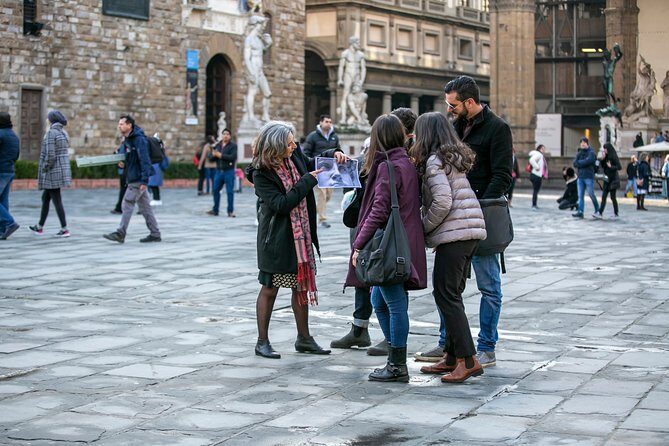
The group is kept small (up to 4 people), and the tour is in English with a mobile ticket. It’s also listed as admission-free as part of the experience, which makes it a smart way to orient before you spend money on any inside tickets later.
In This Review
- Key highlights worth your attention
- A 2.5-Hour Orientation Walk That Makes Florence Make Sense
- Meeting at Piazza dell’Unità Italiana and Getting Your Bearings
- Medici Power in San Lorenzo: Chapel, Market, and Church Area
- Medici Chapel: where ambition becomes architecture
- San Lorenzo Market: the useful, everyday Florence layer
- Medici Riccardi Palace + San Lorenzo Church: power on parade
- A possible drawback here: crowds and quick transitions
- Duomo Cathedral and Baptistery: See the Big Icons Without Getting Lost
- Repubblica Square to Orsanmichele Church: City Squares With Meaning
- Porcellino and Signoria Square: When Florence Turns Dramatic
- Uffizi (external): a taste before the ticket
- Ponte Vecchio: The River Spine That Anchors the City
- A practical listening tip
- Santa Croce Square Finish: A Natural Start Point for Your Next Move
- Price and Value: Why $3.63 for a Guided Walk Works
- Weather, Pace, and Communication: How to Make It Smooth
- Should You Book This Florence Walking Tour?
- FAQ
- How long is the Florence walking tour?
- Where does the tour start?
- Is the tour in English?
- Is there an admission ticket cost included?
- How many people are in the group?
- Do I need a mobile ticket?
- Is the tour suitable for most people?
- What happens if the weather is bad?
- Can I cancel for free?
- When should I book?
Key highlights worth your attention
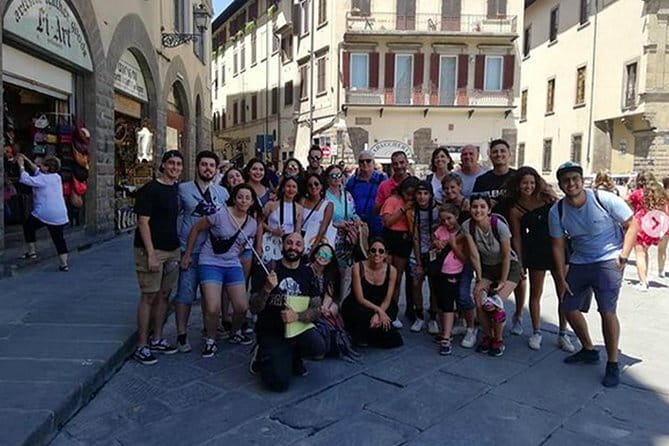
- Small group, up to 4 people: easier questions, less waiting, and a more relaxed pace.
- Covers the big anchors quickly: Medici sites, Duomo area, Signoria, Uffizi exterior, Ponte Vecchio.
- Local context, not just landmarks: guides like Manuel and Simone are known for story-driven stops.
- Low-cost format with a voluntary tip: pay the price, then tip if you feel it earned it.
- Good for an arrival day: a great “what’s where” walk before you pick museums or neighborhoods.
- Microphone quality can vary: if you’re far back, you might miss some details.
A 2.5-Hour Orientation Walk That Makes Florence Make Sense
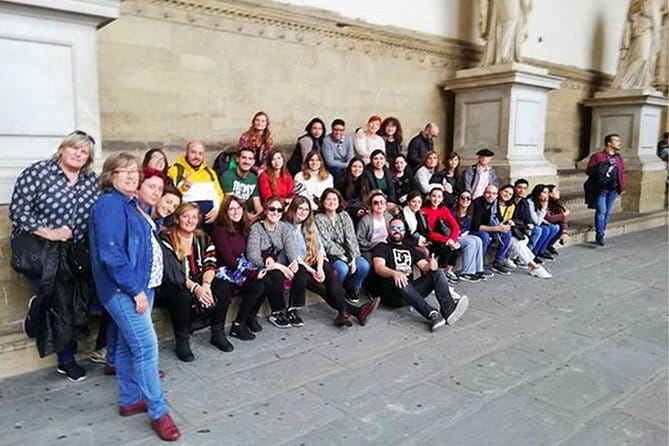
This tour is built for the first-time Florence problem: you see the photos, but the city itself feels like a puzzle. In a little over two hours, you get the key pieces—Medici power, church and civic squares, the river spine, and the viewpoints—so your next self-guided steps feel confident, not random.
The small-group size matters more than you might think. With only a handful of people, you can ask follow-ups instead of waiting your turn, and you can keep pace without getting separated in a busy crowd. Guides you might encounter—like Deb or Gino—are often praised for mixing history with practical tips, which is exactly what you want when your brain is overloaded on day one.
Also, the format is refreshingly simple. You pay $3.63 per person, then the tour is positioned as a low-cost option with a voluntary tip at the end. That’s an unusual price point for a guided walk through central Florence, and it’s why this is such a useful value stop if your schedule is tight.
You can also read our reviews of more tours and experiences in Florence.
- Tuscany Day Trip from Florence: Siena, San Gimignano, Pisa and Lunch at a Winery
★ 5.0 · 21,634 reviews


Meeting at Piazza dell’Unità Italiana and Getting Your Bearings
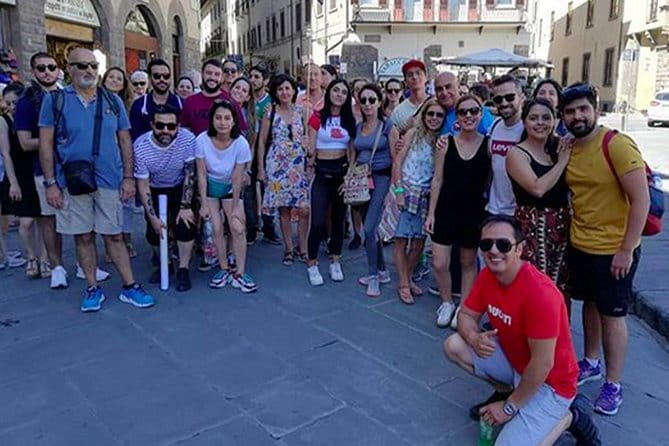
The tour starts at Piazza dell’Unità Italiana, 50123 Firenze FI, Italy. This is a handy launch point because it’s easy to reach via public transportation, so you’re not stuck planning a complicated “how do I get there” mission before the walking even begins.
One small practical note: the walk ends in a different location, so plan to stay nearby when it’s over. The best move is to keep your next activity flexible—grab a coffee, do a short wander, then decide what you want to ticket later.
If you’re the type who likes to know the plan down to the minute, here’s the real trick. Confirm your start time close to departure and watch for any last-minute change. One guest shared an issue where a time shift led to confusion at the meeting point, so you’ll protect your day just by double-checking your message right before you head out.
Medici Power in San Lorenzo: Chapel, Market, and Church Area
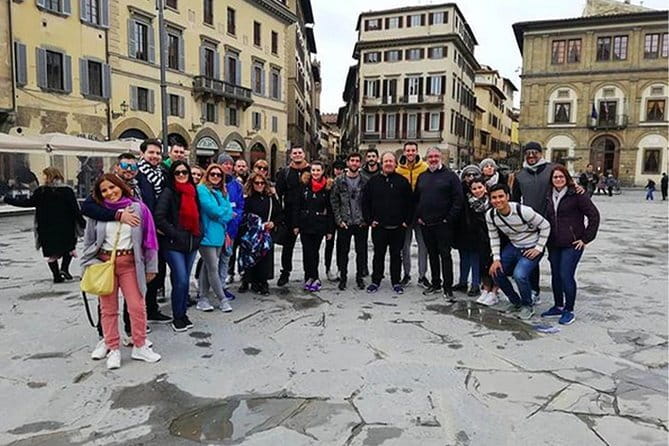
The walk’s opening phase puts you in the Medici orbit—Florence’s most influential family—then anchors that power in the street-level reality of the city. Expect stops and viewpoints around the Medici Chapel, San Lorenzo Church, and the Medici Riccardi Palace, plus the lively San Lorenzo Market area.
Medici Chapel: where ambition becomes architecture
The Medici Chapel gives you the “why” behind a lot of Florence’s monumental art. You’re not just looking at pretty stone—you’re learning how power was displayed through religious and civic spaces. Even if you don’t plan to go inside on this trip, the guide helps you connect the chapel’s role to the larger Medici story.
San Lorenzo Market: the useful, everyday Florence layer
San Lorenzo Market is a big contrast from the grand facades. It’s the place where the city’s tourist side meets the day-to-day texture of Florence. The guide’s commentary here usually helps you separate what’s truly Florentine from what’s just sold to visitors, which makes your later shopping decisions easier.
A good way to use this part of the walk: pay attention to the street flow. Markets change the way neighborhoods feel, and knowing where the market sits helps you avoid walking in circles later.
- Tuscany Day Trip from Florence: Siena, San Gimignano, Pisa and Lunch at a Winery
★ 5.0 · 21,634 reviews - The Best tour in Florence: Renaissance & Medici Tales – guided by a STORYTELLER
★ 5.0 · 12,316 reviews



Medici Riccardi Palace + San Lorenzo Church: power on parade
Seeing the Medici Riccardi Palace and the San Lorenzo Church zone back-to-back is smart. The guide can explain how patronage, religion, and politics braided together in a way that shapes the city’s look today. It’s also one of the best stretches to ask a quick question—guides like Manuel have been praised for pausing often to share historical context without rushing.
A possible drawback here: crowds and quick transitions
This section is central and often busy. If you prefer slow museum-style pacing, you may find the transitions quick. The best fix is simple: stand near where your guide is speaking so you don’t end up blocked by passersby.
Duomo Cathedral and Baptistery: See the Big Icons Without Getting Lost
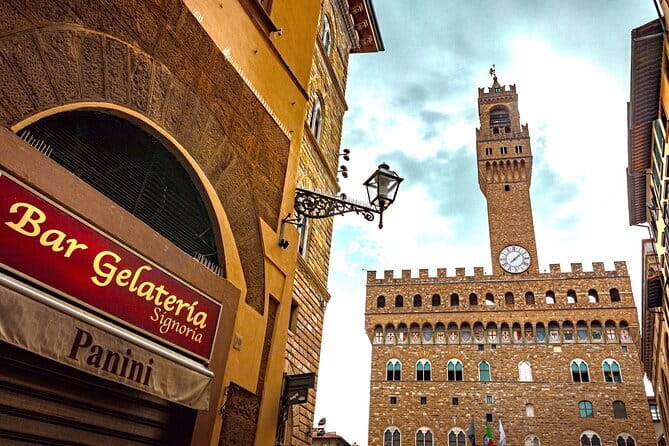
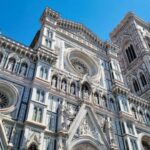
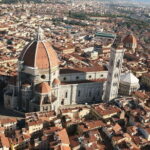
Next you’ll move into the Duomo Cathedral area and the Baptistery zone. This is the heart of Florence’s visual identity, and getting your orientation here pays off for the rest of the trip.
The payoff isn’t just that you see famous buildings—it’s that you learn the layout. You’ll start to understand why people talk about angles, sightlines, and how the buildings “frame” each other from different streets. That kind of mental map helps later when you want to photograph or decide which side of the river is better for sunset.
A tip that comes up with guides known for helpful planning: ask what you should do first if you have limited time. Many guides (including Armando, who’s often mentioned for giving useful next-step advice) are good at suggesting what to prioritize before lines and tickets decide the schedule for you.
Repubblica Square to Orsanmichele Church: City Squares With Meaning
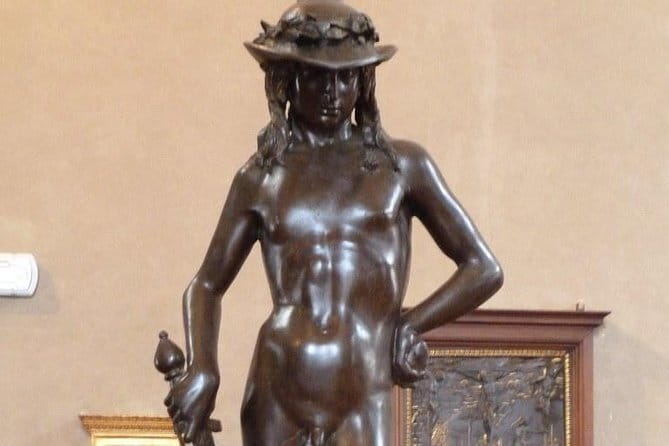
Then you’ll pass through Repubblica Square and reach Orsanmichele Church. Squares in Florence are never just open space. They’re stages—where civic life, religion, and commerce overlap.
Repubblica Square is often your “breathing space” stop. It’s where the guide can explain how different parts of the city relate to each other: where major routes pull people, where you’ll likely want to return for a meal, and how to read the street geometry.
Orsanmichele adds another layer. It helps you see that Florence isn’t only domes and galleries; it’s also full of smaller religious and civic landmarks that reward attention. If you enjoy noticing details in stone and sculpture, this stop is a strong mid-walk reset.
Porcellino and Signoria Square: When Florence Turns Dramatic
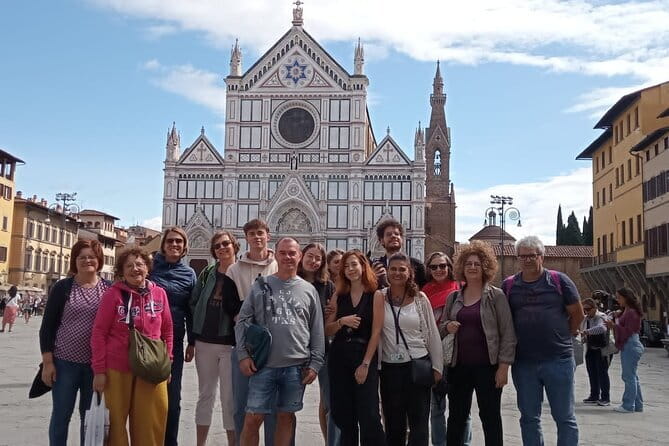
One of the walk’s best stretches is Signoria Square, tied to the Porcellino statue area and the broader plaza energy. This is where Florence feels most theatrical—big space, iconic sculpture, and a “everyone gathers here” vibe.
Your guide’s job here is to connect what you’re seeing to why it mattered. Once you know which pieces belong to which story, Signoria becomes more than a photo stop. You start to recognize the cultural and political message embedded in the public art.
Uffizi (external): a taste before the ticket
You’ll also see the Uffizi area from the outside. Even if you aren’t going into the museum on this walk, this exterior look is valuable. It sets you up to plan your museum visit with better context—what you should look for, and what kind of art you’re likely to care about once inside.
Ponte Vecchio: The River Spine That Anchors the City

Next comes Ponte Vecchio, the famous bridge that acts like Florence’s spine. Even if you’ve already seen it in a hundred pictures, walking up to it with local context changes the experience.
This stop works because it’s both postcard and practical. From the bridge you get a sense of the city’s sides, what’s “across,” and how your future routes can fan out. If you’re planning to spend more time wandering later, this is where your decisions become easier: you’ll know what neighborhood direction you’re effectively heading.
A practical listening tip
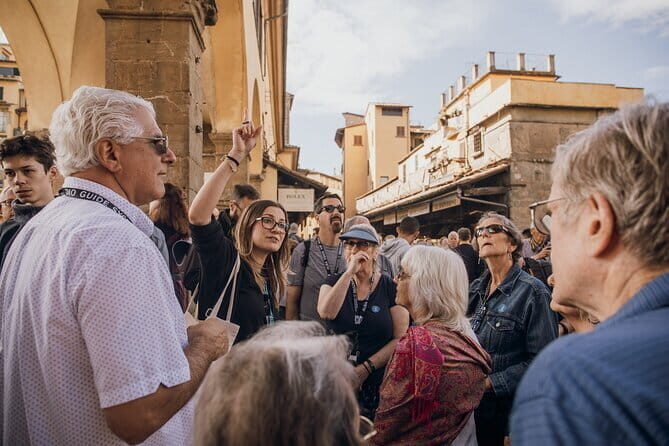
Some people have noted that audio quality or microphone clarity can be inconsistent during walking tours. If you want the full benefit, stay close to the guide and don’t hang back. Especially near crowded stops like the bridge approach, you’ll get more out of the story if you’re positioned well.
Santa Croce Square Finish: A Natural Start Point for Your Next Move

The walk ends around Santa Croce Square, which is a great finishing note because it feels like a turning point. You get to the end not feeling stranded, but instead feeling like you’ve arrived near a place you can continue exploring.
Santa Croce is also a helpful mental bookmark. After seeing the Medici zone and the riverfront, this final area signals a new direction for the rest of your day. If you’re the type who likes to keep moving, you can use this as your springboard to sights that match your interests—churches, artisan streets, or just scenic wandering.
Price and Value: Why $3.63 for a Guided Walk Works
Let’s talk value, because the price is unusually low for what you get. At $3.63 per person (with listed admission as free as part of the experience), you’re basically paying for a guided route plus the thinking behind it: what to see, what it meant, and how the city fits together.
This works best if you use the tour the way it’s meant to be used. Go in with the goal of orientation, not a checklist of inside tickets. Then, after the walk, you can spend money where it counts—on museum tickets, special exhibits, or specific guided follow-ups that match your interests.
Weather, Pace, and Communication: How to Make It Smooth
This experience requires good weather. Florence walking in poor conditions is no fun, so if your day looks rainy or stormy, expect a change or a refund option depending on how the organizers handle it.
Pace is another practical factor. Two and a half hours is enough to feel like you did something real, but not so long that you’re stuck forever. Still, it’s an active city walk through central streets, so wear comfortable shoes.
Finally, a listening consideration matters. Some guides are praised for being funny and enthusiastic, but a few comments flagged issues like microphone clarity or fast delivery. Your best strategy: ask your main questions early, and be close enough to hear without craning your neck.
Should You Book This Florence Walking Tour?
Book it if you want a fast, guided first pass through Florence. This is a strong choice when you’re short on time, arriving for the first time, or you’d rather let a local map the streets for you than fight directions and guesswork.
I’d skip it or pair it with something slower if you strongly prefer long stops, quiet environments, or you plan to spend the whole day only on inside museum time. This walk is designed to show you where everything is and why it matters, not to replace deeper ticket-based visits.
If you do book, set yourself up for success: come early enough to enjoy the finish in Santa Croce Square, stand close to the guide for the best audio, and ask for practical next steps. Guides like Armando and Gino are known for pointing people toward great food and what to see next, and that can save you hours later.
FAQ
How long is the Florence walking tour?
It’s listed as about 2 hours 30 minutes.
Where does the tour start?
The start point is Piazza dell’Unità Italiana, 50123 Firenze FI, Italy.
Is the tour in English?
Yes, it’s offered in English.
Is there an admission ticket cost included?
The tour information lists admission ticket as free.
How many people are in the group?
The maximum group size is 4 travelers.
Do I need a mobile ticket?
Yes, it uses a mobile ticket.
Is the tour suitable for most people?
It’s listed as Most travelers can participate, and service animals are allowed.
What happens if the weather is bad?
This experience requires good weather, and if it’s canceled due to poor weather, you’ll be offered a different date or a full refund.
Can I cancel for free?
Yes. Free cancellation is available up to 24 hours in advance for a full refund.
When should I book?
On average, it’s booked about 26 days in advance, so booking earlier can help lock in your preferred slot.
More Tour Reviews in Florence
- Tuscany Day Trip from Florence: Siena, San Gimignano, Pisa and Lunch at a Winery
★ 5.0 · 21,634 reviews - The Best tour in Florence: Renaissance & Medici Tales – guided by a STORYTELLER
★ 5.0 · 12,316 reviews