REVIEW · FLORENCE
Florence: Walking Tour of Dante’s Florence with a Guide
Book on GetYourGuide →Operated by My Tour in Italy · Bookable on GetYourGuide
Dante’s footsteps still feel close. This guided walk turns Florence’s medieval streets into a living guide to The Divine Comedy, with a strong focus on Dante Alighieri’s life. You’ll start in the city’s historic center and move through key spaces that helped shape his world, from the Duomo area to the bridges and squares people still use today.
I especially like how the tour connects medieval Florence to what Dante wrote, not just to what he might have seen. Two big wins for me are the stop at the Dante Studies Center and the chance to see the city’s landmarks through the lens of Dante’s exile years.
One drawback to plan for: it’s a 2-hour walking tour, and you’ll spend most of that time on foot through busy historic streets. If you’re sensitive to crowds or long standing-and-walking stretches, pace yourself and wear good shoes.
In This Review
- Key things to know before you go
- Walking Dante’s Florence: why this route works
- Starting at Loggia Bigallo and getting your bearings fast
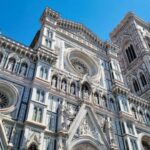
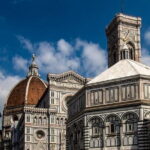
- Duomo Square and the baptistery of San Giovanni: where the story opens
- Walking the medieval streets: towers, studios, and stone-and-wood Florence
- Dante Studies Center and Ponte Vecchio: politics meets legend
- Piazza della Signoria and Palazzo Vecchio: the Dante funerary mask connection
- Piazza Santa Croce statue: ending with a visual of Dante’s words
- What you get for the price (and why $34 can make sense)
- Languages, audio, and practical comfort tips
- Should you book? My take
- FAQ
- How long is the Florence walking tour of Dante?
- What is the price per person?
- Where does the tour start and where does it end?
- Is the tour offered in English?
- What languages are included for the audio guide?
- Are earphones included?
- Is the tour wheelchair accessible?
- Which locations will the tour include?
- What’s included in the tour price?
- What’s the cancellation policy?
Key things to know before you go
- Duomo Square as a starting point: you’ll begin at a spot that served as a gateway to the city in medieval times.
- You’ll walk through the steps of the Divine Comedy: the guide ties route points to Dante’s major ideas and life moments.
- Dante Studies Center + Ponte Vecchio: these stops give context for how Florence’s politics and legends map onto the geography.
- Piazza della Signoria + Palazzo Vecchio: you’ll hear about Dante’s funerary mask being kept there.
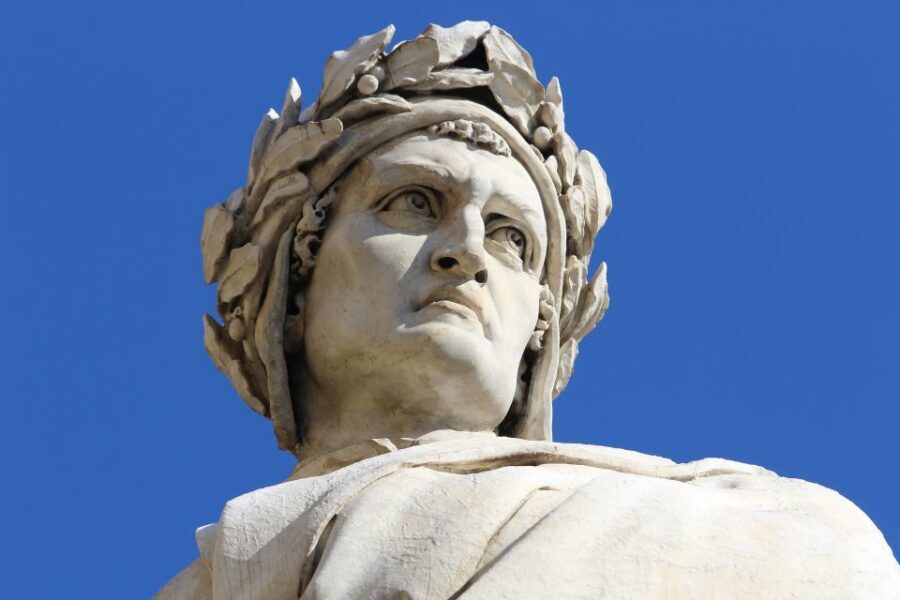
- A Dante statue in Piazza Santa Croce: the final stop ends with a bold visual of Dante holding the Divine Comedy.
Walking Dante’s Florence: why this route works
Florence is easy to love at first sight. But this tour makes it easy to understand, too. Instead of treating the city like a museum you quickly speed through, you’re guided along a story-line: Dante’s life, the medieval city around him, and how his writing grew out of that world.
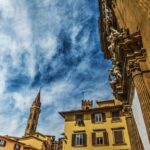
What makes it feel worthwhile is the way the guide uses the landscape as a teaching tool. The city points are not random photos. They’re anchors for how Florence functioned when it was still a medieval network of narrow streets, stone-built houses, and wooden structures. You also get the sense of a skyline filled with towers, small churches, and studios—plus the reminder that some famous landmarks you see today, like Giotto’s Bell Tower and the dome by Brunelleschi, weren’t part of the picture during Dante’s lifetime.
And if you’ve ever wondered why The Divine Comedy feels so packed with characters, places, and moral logic, this kind of guided route helps you make sense of it. You’ll walk through the steps of the story while connecting them to the world Dante lived in.
You can also read our reviews of more walking tours in Florence

Starting at Loggia Bigallo and getting your bearings fast
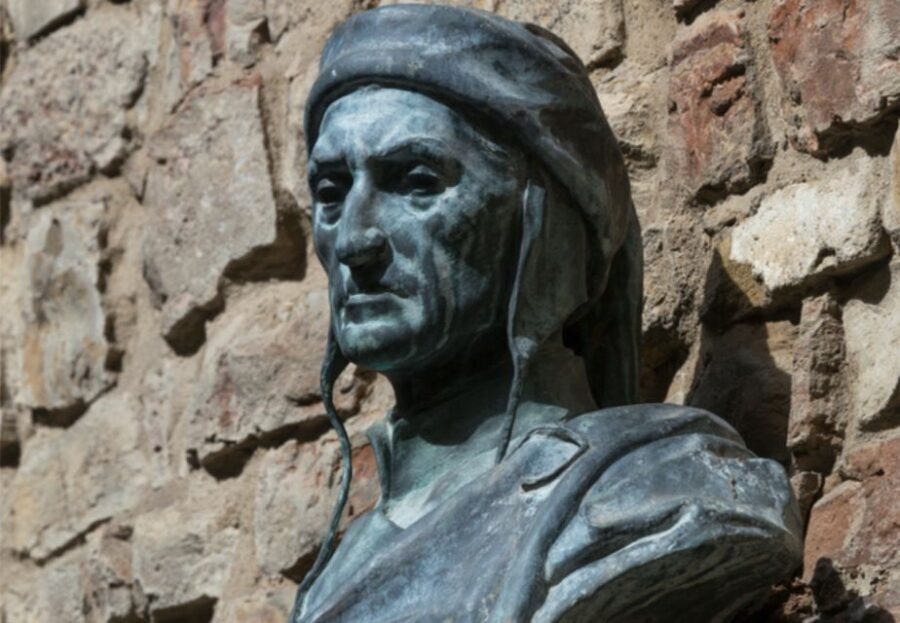
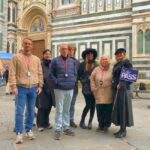
The tour starts in front of the Loggia Bigallo Museum. That matters because it sets you up in the general flow of Florence’s historic core, so the walk feels like a continuous journey instead of hopping between far-apart neighborhoods.
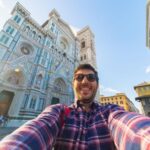
From the meeting spot, your guide leads you toward Duomo Square, which is the formal start of the “Dante district” story. Your guide frames this square as it was used in medieval times—as an entrance point for the city. That quick shift in perspective helps you look upward, not just forward.
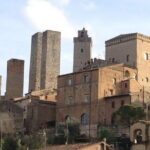
This is also where you learn one of the tour’s clever tricks. You’ll be encouraged to notice carved words of Dante on the walls of ancient Florentine towers. Even if you can’t read every letter at a glance, the idea is powerful: Dante’s name and presence are literally built into the architecture.
Tip: if you want to catch these details, slow down for 10 seconds at each stop and tilt your head back. Florence rewards that kind of attention.
Duomo Square and the baptistery of San Giovanni: where the story opens
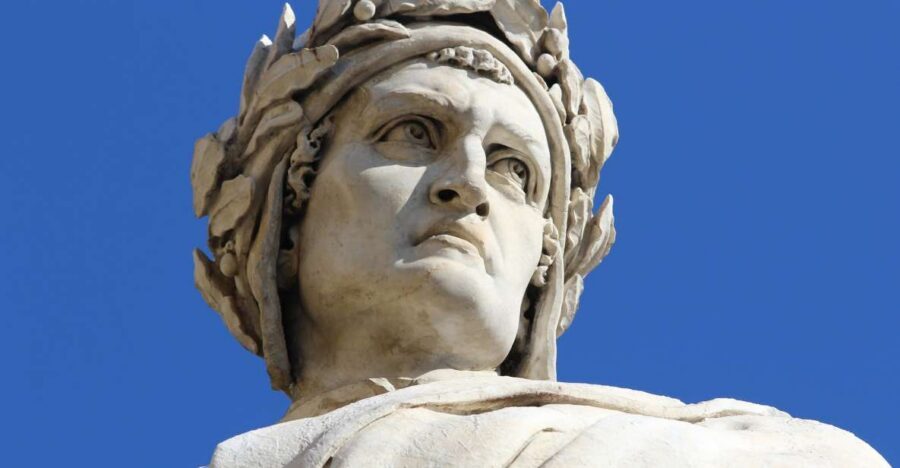
Duomo Square is not just a pretty start. The guide treats it like a threshold. In medieval Florence, this area helped define how someone entered the city, and your walk begins right there.
You’ll also see the baptistery of San Giovanni, described as the oldest building in the city’s key area. The tour uses this to set tone: Dante’s Florence wasn’t just about grand monuments. It was about the lived experience of a city where public spaces shaped daily movement.
From there, your guide focuses you on the idea of “Dante’s district.” The city’s medieval streets were a maze by modern standards. You’ll hear how the route connects to Dante’s life between his birth (1265) and his exile (1302).
Then the tour turns personal. You visit the place thought to be where Dante was born and where he first saw Beatrice. Even when history can’t be perfectly confirmed for every location, the tour handles it in a way that still helps you picture Dante’s emotional world. It’s one thing to read about Beatrice in a book. It’s another to hear how Florence’s streets may have framed that first moment.
Possible consideration: if you’re expecting highly technical biography facts like a university lecture, this may feel more narrative than academic. The value is in the connection between story, city, and reading of the Divine Comedy.
Walking the medieval streets: towers, studios, and stone-and-wood Florence
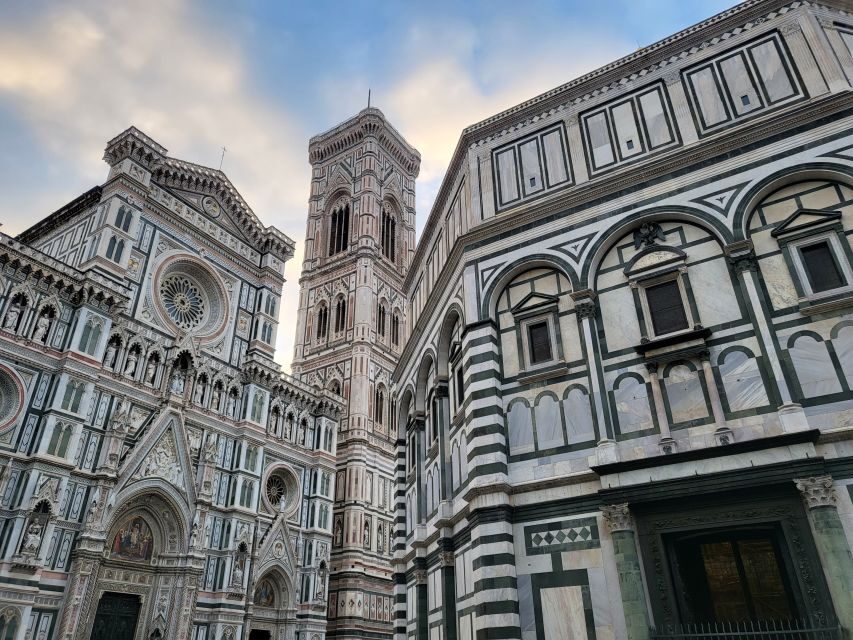
One of the strongest parts of the tour is the way you learn what Florence looked like before many of its “icon” structures rose. The guide emphasizes how, during Dante’s lifetime, Florence was a tight network of narrow lanes and layered construction.
You’ll hear descriptions of:
- stone-built houses paired with wooden houses
- towers and small churches scattered through the city
- studios as part of the urban texture
This matters because it changes how you move. Instead of seeing streets as just routes from sight to sight, you start imagining how people lived, worked, and traveled. In a city like Florence, that mental picture helps the rest click: the squares feel more political, bridges feel more strategic, and buildings feel more connected to power and survival than pure aesthetics.
I like this approach because it makes your modern photos less random. You’re not just capturing what looks famous. You’re building a mental map of what Dante’s Florence had to offer—especially to someone writing about human choices.
Dante Studies Center and Ponte Vecchio: politics meets legend
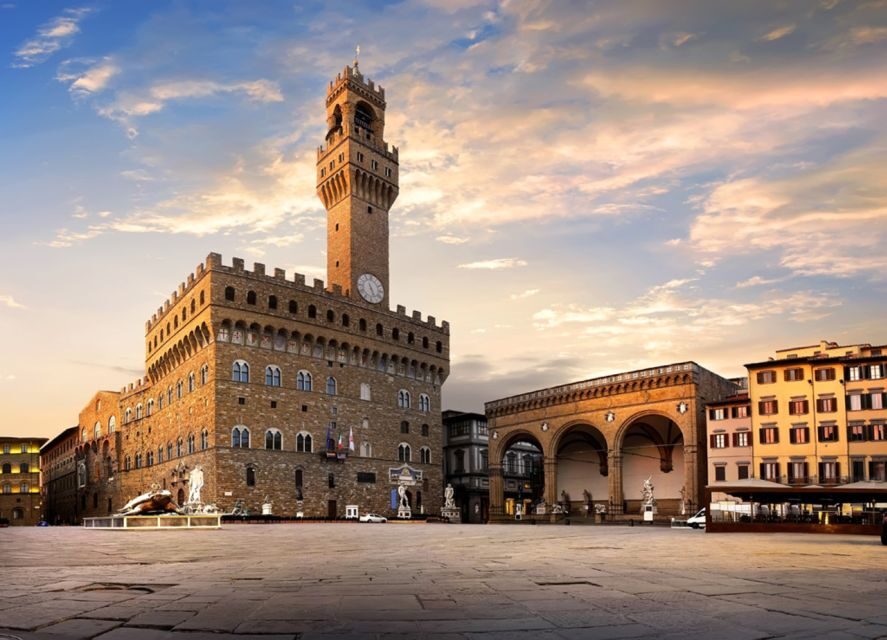
Next comes the Dante Studies Center and then Ponte Vecchio. This sequence is smart because it moves from learning to seeing. You start gaining context, then you step into one of the city’s most instantly recognizable viewpoints.
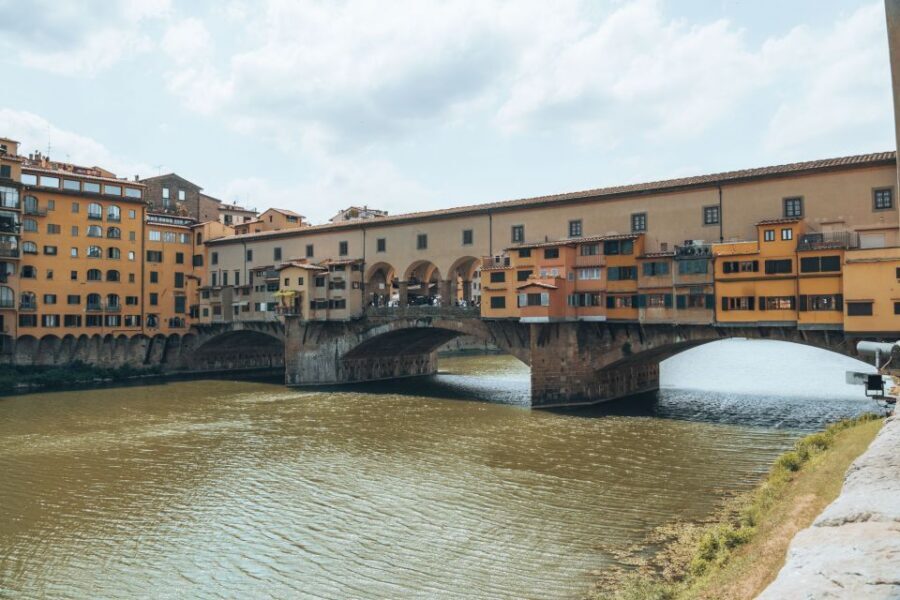
The tour ties Ponte Vecchio to legend and civic division. Your guide explains the idea that the struggle among Guelphs and Ghibellines began in this area, splitting Florence into parts. Whether every detail is taken as legend rather than hard fact, the usefulness here is how the story explains the city’s tension.
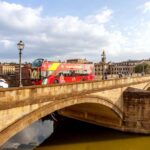
Ponte Vecchio also anchors the walk physically. Bridges are where Florence forces people to slow down, gather, and cross. If Dante’s Florence was full of power struggles and shifting alliances, a bridge makes that feel real. It’s not abstract. It’s a place you can stand on.
If you love history that feels grounded, this section is one of the best values on the tour. It takes a famous bridge and gives you a reason to care beyond aesthetics.
You can also read our reviews of more guided tours in Florence

Piazza della Signoria and Palazzo Vecchio: the Dante funerary mask connection
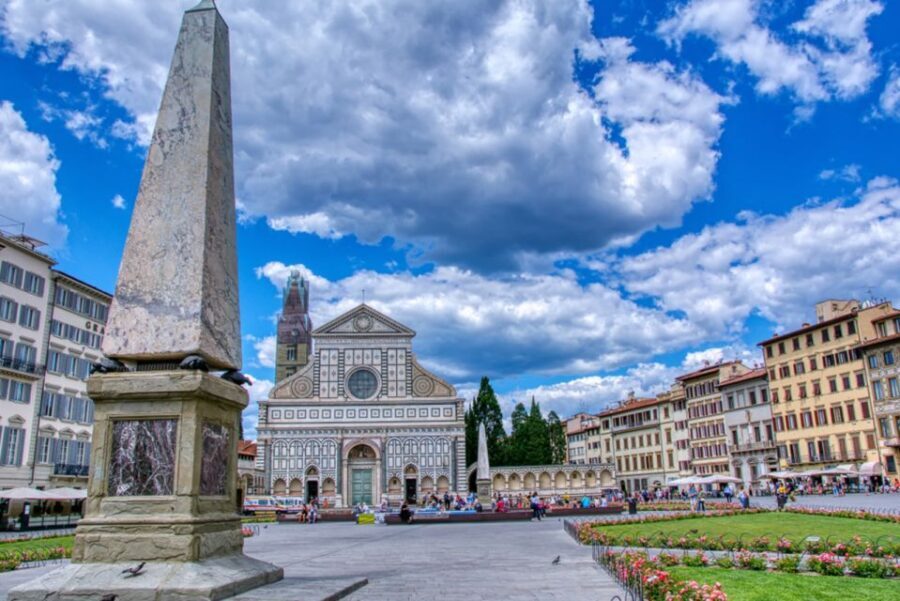
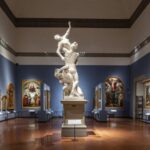
The walk then reaches the heart of the medieval city: Piazza della Signoria and the Palazzo Vecchio. This is where the route shifts from “Dante the writer” toward “Dante the figure of Florence’s civic life.”
Your guide tells you about Dante’s funerary mask being kept inside Palazzo Vecchio. That’s a striking detail because it’s not just a story about reading. It’s a connection to how power, memory, and civic identity worked in Florence.
Think about it: Palazzo Vecchio is a landmark of government and public authority. Pair that with an item linked to Dante, and suddenly you get a more complicated picture of how the city positioned him over time—especially as his life included exile.
This is also one of those moments where a guide helps you look beyond the building’s surface. You don’t just see a big square. You understand why big squares mattered in Dante’s world: they were places where Florence’s identity got performed.
Piazza Santa Croce statue: ending with a visual of Dante’s words
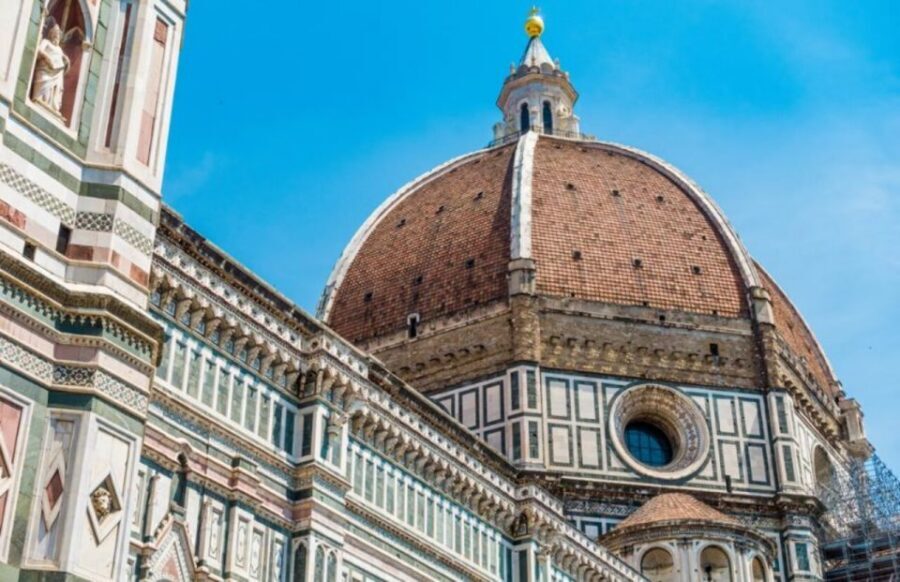
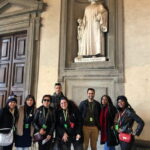
The tour finishes at Piazza Santa Croce, where you’ll see one of the most beautiful statues of Dante. The guide points out a key visual detail: Dante is shown holding the Divine Comedy in his right hand.
This ending works for two reasons. First, it gives your brain something concrete to take away after the walking and storytelling. Second, it closes the loop: you started with Dante tied to Florence’s gateways and streets, and you end with him as a recognizable icon of his own writing.
Santa Croce is also the kind of place where you can keep exploring after the tour if you want. You’re still in the right part of town to follow up on other churches, museums, or bookstores, without needing a whole new plan.
What you get for the price (and why $34 can make sense)
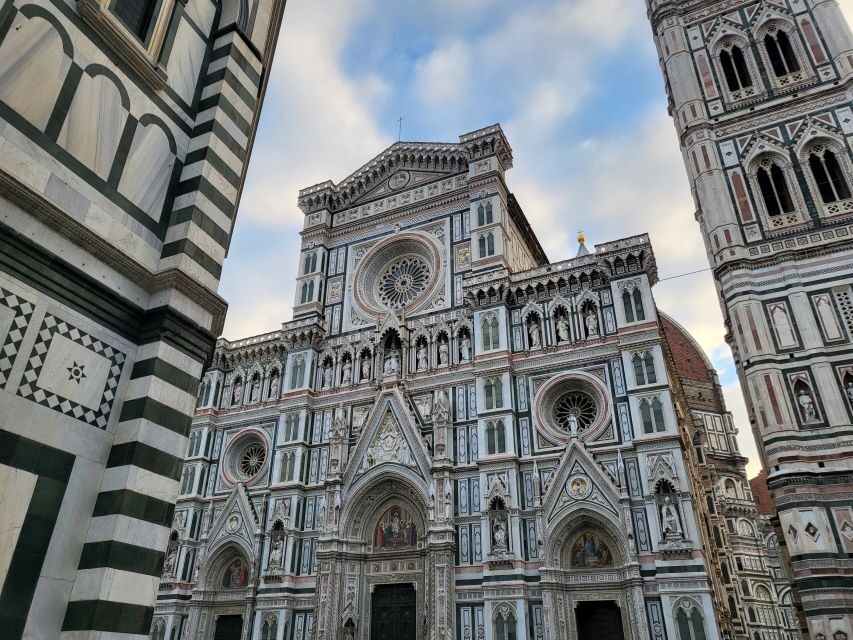
At $34 per person for a 2-hour guided walking tour, you’re paying for two things: a structured route and interpretation. You’re not just paying entry fees to sights. You’re paying for someone to stitch together Dante’s life, medieval Florence, and the reading of the Divine Comedy in a way you could struggle to assemble on your own.
Here’s the value equation that makes sense to me:
- A 2-hour guide can cut through confusion fast in Florence’s historic core.
- You get context for specific stops you’d otherwise treat as photo ops.
- You also get audio support, which can keep the experience smooth if you don’t catch every spoken detail.
Included perks also help the math. The tour includes a live tour guide and audio guide in English, Italian, and Spanish. Earphones are provided only for groups over 15 participants, which suggests you’ll hear the guide more clearly if your group is larger.
One more plus: the tour is wheelchair accessible, which is not something you can assume for every Florence walking program.
In short, if your goal is to understand Dante’s Florence instead of just collecting landmarks, the price-to-time ratio holds up.
Languages, audio, and practical comfort tips
The live guide is available in Italian and English. Audio guide is included in English, Italian, and Spanish, so you can often match your preferred language even if the live narration is in another tongue.
If you’re sensitive to hearing in outdoor spaces, this matters. The tour may use earphones only for groups over 15, so consider arriving early enough to settle into a spot where you can hear the guide’s voice.
Also, wear comfortable shoes. This is a walking tour through dense historic streets and around major squares. Even if the distances aren’t stated, the time is 2 hours, and Florence makes footwork necessary.
If you’re traveling solo, this style of tour can be a good way to get structure without feeling rushed. If you’re with family, it can work too, but you’ll want to consider kids’ attention spans since the theme is Dante and medieval civic life.
Should you book? My take
I’d recommend this tour if you want a guided connection between Dante Alighieri and the physical city. It’s especially a good fit if you’re reading (or planning to read) the Divine Comedy and you’d like help seeing how medieval Florence feeds the poem’s world.
Book it if you like:
- stories tied to real places
- walking routes that teach you how cities function
- Dante-focused interpretation beyond a single monument
Skip it if:
- you only want quick photo stops
- you prefer tours that focus on one building in depth
- you’d rather do Florence self-guided without a schedule
If you’re still deciding, here’s an easy tiebreaker: ask yourself whether you want to understand why these specific points matter. If yes, this Dante route is a strong way to spend two hours in Florence.
FAQ
How long is the Florence walking tour of Dante?
It lasts about 2 hours.
What is the price per person?
The price is $34 per person.
Where does the tour start and where does it end?
It starts in front of the Loggia Bigallo Museum and ends back at the meeting point.
Is the tour offered in English?
Yes. The live tour guide is available in Italian and English, and the audio guide includes English.
What languages are included for the audio guide?
The audio guide is available in English, Italian, and Spanish.
Are earphones included?
Earphones are provided only for groups with over 15 participants.
Is the tour wheelchair accessible?
Yes, it’s listed as wheelchair accessible.
Which locations will the tour include?
You’ll visit Duomo Square, the baptistery of San Giovanni area, the Dante Studies Center, Ponte Vecchio, Piazza della Signoria, Palazzo Vecchio, and you’ll end at Piazza Santa Croce for the Dante statue.
What’s included in the tour price?
A tour guide is included, plus the audio guide. Earphones may be provided depending on group size.
What’s the cancellation policy?
You can cancel up to 24 hours in advance for a full refund.

More Walking Tours in Florence

More Tours in Florence



More Tour Reviews in Florence
- Tuscany Day Trip from Florence: Siena, San Gimignano, Pisa and Lunch at a Winery
★ 5.0 · 21,634 reviews - The Best tour in Florence: Renaissance & Medici Tales – guided by a STORYTELLER
★ 5.0 · 12,316 reviews