REVIEW · FLORENCE
Florence City Tour & David
Book on Viator →Operated by Tuscan Tour Guide - Tours · Bookable on Viator
Florence explains itself in three hours. This is a tight walk through the Renaissance power game, from Michelangelo’s David to the Medici’s showplaces, with a final stop that even survives wartime heartbreak. You’ll also see how Florentines talked about art and faith in their own words, not just in museum labels, with small-group size keeping things human.
What I love most is the skip-the-line start at the Galleria dell’Accademia, so you spend your time looking, not waiting. I also like how guides on this route, especially Paul Costa (often praised for being animated and teacher-minded), turn “famous art” into real stories you can follow while you walk.
One thing to consider: the pacing is efficient. If you want long, slow time inside each site, this 3-hour format can feel like you’re “tasting” instead of “camping.”
In This Review
- Key highlights to expect
- What You Get in 3 Hours: David, Medici Control, and a Real Walking Pace
- Skip-the-Line Start at Galleria dell’Accademia: Seeing David with Context
- Palazzo Medici Riccardi Courtyard: Classical Shapes for a Very Personal Agenda
- Florence’s Cathedral Dome and the Baptism Building: Faith, Design, and the Doors of Paradise
- Piazza della Signoria: The Original David Location and Medici Statues in a Political Square
- Ponte Vecchio’s Long Life: 1333 to Today, Plus WWII Survival
- The Guide Makes the Difference: Why Paul Costa’s Style Gets People Hooked
- Practical Notes: Starting at 9:10am and Making Each Stop Count
- Is This Tour Worth the Price for You?
- Should You Book Florence City Tour & David?
- FAQ
- How long is the Florence City Tour & David?
- Where does the tour start and end?
- What time does the tour start?
- How large is the group?
- Is there skip-the-line entry?
- What is included with admission?
- Is a mobile ticket used?
- What are the main places you visit?
- Are there any accessibility notes?
- What is the cancellation policy?
Key highlights to expect
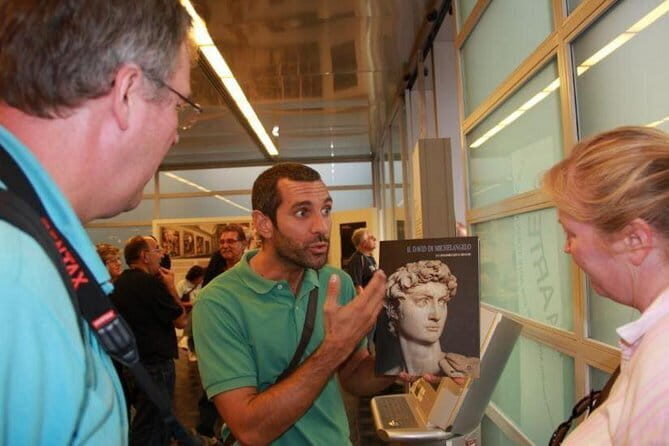
- Skip-the-line David at Galleria dell’Accademia, with context for how people reacted when it was new
- Medici Riccardi courtyard and the collision of classical styles for maximum Medici ego
- Cathedral dome + baptism building explained as a Florence-scale faith and engineering story from the 1300s and 1400s
- Piazza della Signoria for the original David placement and the Medici statue additions
- Vasari’s private hallway built so Cosimo de’ Medici could move without going outside
- Ponte Vecchio’s survival from 1333 through WWII, including the role of Renaissance art and the Axis/Allies
What You Get in 3 Hours: David, Medici Control, and a Real Walking Pace
This tour is built for focus. Instead of listing Florence like a postcard stack, it connects themes: the Renaissance idea of beauty, Medici wealth and politics, and the way key buildings shaped daily life. The result feels like a guided map of why Florence looks the way it does, and why people cared so much.
You’re not doing a marathon. It’s about 3 hours, with several short stops that keep momentum. That means you’ll cover the big hitters—David, Medici power spots, Piazza della Signoria, and Ponte Vecchio—without losing half your day to crowds.
Value-wise, the price is high compared with generic city walks, but there’s a reason: you get skip-the-line admission to the Galleria dell’Accademia and structured context for sites that are easy to misunderstand on your own. If you’re the kind of traveler who likes “why it matters” as much as “what it looks like,” the cost tends to make sense.
You can also read our reviews of more city tours in Florence
Skip-the-Line Start at Galleria dell’Accademia: Seeing David with Context
You begin at Via Ricasoli, 58 (near public transportation), with the day’s anchor: the Galleria dell’Accademia. The big win is the skip-the-line admission, so you can get to the main event faster and spend more time looking.
Of course, the star is Michelangelo’s David. But what makes this stop more useful than a quick photo stop is the extra layer on how the statue and related works were interpreted by the public over 500 years ago. That’s the sort of thing that changes how you see the sculpture. You start noticing details and symbolism less like trivia and more like communication.
You also get a practical lesson in museum thinking. When you’re told what people argued about back then—what they admired, what they feared, what they couldn’t ignore—you understand why the David story became so loud and long-lasting. It’s not just art history; it’s human reactions with a Renaissance accent.
A drawback of this approach: because the tour keeps moving, you’ll get focused time rather than unlimited wandering. Still, for most visitors, it’s the sweet spot between “too rushed” and “too shallow.”
Palazzo Medici Riccardi Courtyard: Classical Shapes for a Very Personal Agenda
Next comes the Palazzo Medici Riccardi and its inner courtyard, tied directly to Florence’s richest ruling family: the Medici. This is where the tour shifts from one famous object to a whole system of influence.
In the courtyard, you’ll see how Roman, Greek, and Renaissance architecture and art collide for one selfish reason: Medici ego. That line may sound blunt, but it’s a helpful way to frame what you’re looking at. The Medici weren’t just funding beauty. They were using beauty as branding—proof that they were the right people to lead.
The time here is short, around 15 minutes. That’s enough to get the “what am I looking at?” answer, especially with a guide connecting style choices to politics. If you want to fully read every visual detail like a textbook, you’d need more time. But as a tour stop, it works: you learn the message, then move on before the story loses momentum.
Florence’s Cathedral Dome and the Baptism Building: Faith, Design, and the Doors of Paradise
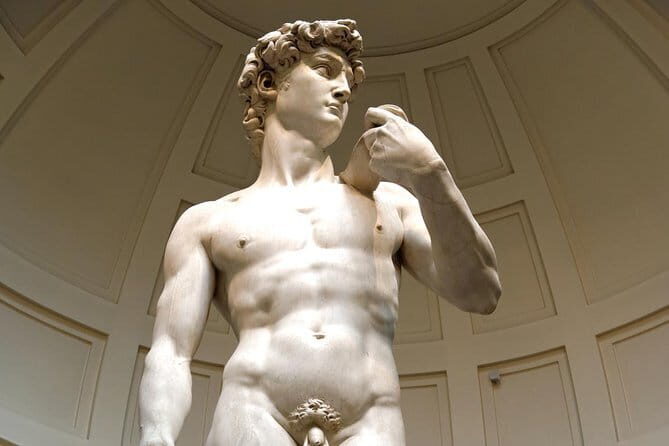
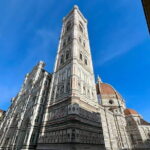
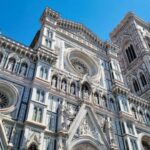
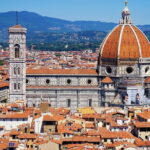
Between Medici territory and the main square, the tour explains why Florence became famous for giant-scale building projects in the 1300s and 1400s. You’ll hear how the area’s largest church and dome (as described by the tour) were built there, and why it mattered enough that people talked about it for generations.
This part is valuable because it explains Florence as a city of big ideas, not just big names. The tour doesn’t treat architecture as decoration. It treats it like a public statement: engineering as civic pride, and religion as a daily structure that shaped schedules, identity, and social status.
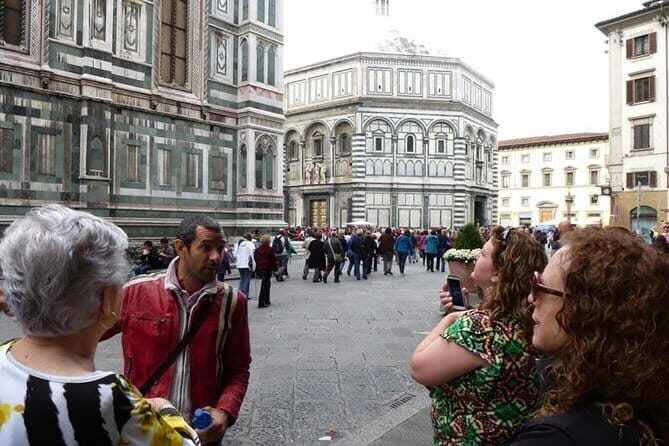
You also focus on the baptism building—described as the most important building in Florence for Florentine Christians. The tour covers who was baptized there, why baptism was changed in the 1300s, the important shape of the building, and the Doors of Paradise.
That last detail is where your eyes sharpen fast. The Doors of Paradise aren’t just “pretty doors.” They’re a message in art form, meant to teach and persuade. When you’re told what Christians considered important, the symbolism becomes less abstract. You start seeing the building as a kind of public lesson that people moved through, not a distant monument they only admired from the outside.
If you’re the type who enjoys religion as culture (not as a debate), this stop is a strong fit.
Piazza della Signoria: The Original David Location and Medici Statues in a Political Square
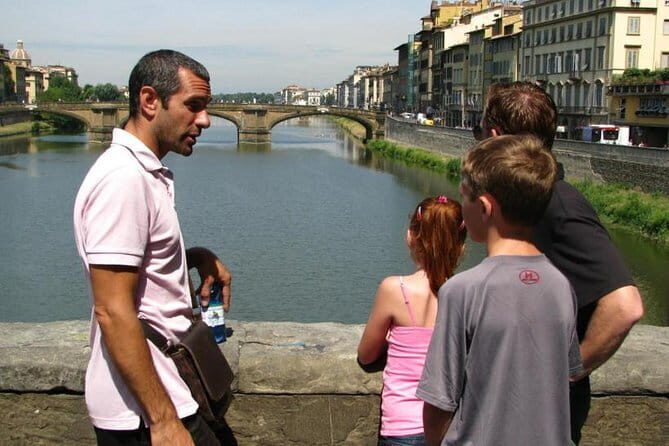
Piazza della Signoria is the next major scene because it’s where art and government share the same air. Here you see where the original David was placed by Michelangelo and you also get pointed at many other statues added by the Medici family.
This stop works best if you understand one thing: Florence treated art like politics. Statues weren’t neutral. They were messages about power, virtue, and legitimacy. When you’re shown the original placement idea, David stops being a lone masterpiece and becomes a public tool.
You’ll also hear about the Palazzo Vecchio, which has been part of the city since 1299 and still functions as a political building (city hall today). It’s also an awesome museum, but even from the outside, the vibe is clear. This isn’t a theme-park square. It’s a living civic space with history baked into the stone.
This is also where the tour brings in Cosimo de’ Medici and Vasari’s private hallway, built so Cosimo could walk across Florence without going outside. That’s such a specific detail that it instantly makes the Medici feel real. It’s not just wealth in theory; it’s comfort, control, and safe movement in a city that could be loud and unpredictable.
- Tuscany Day Trip from Florence: Siena, San Gimignano, Pisa and Lunch at a Winery
★ 5.0 · 21,634 reviews - The Best tour in Florence: Renaissance & Medici Tales – guided by a STORYTELLER
★ 5.0 · 12,316 reviews

Ponte Vecchio’s Long Life: 1333 to Today, Plus WWII Survival
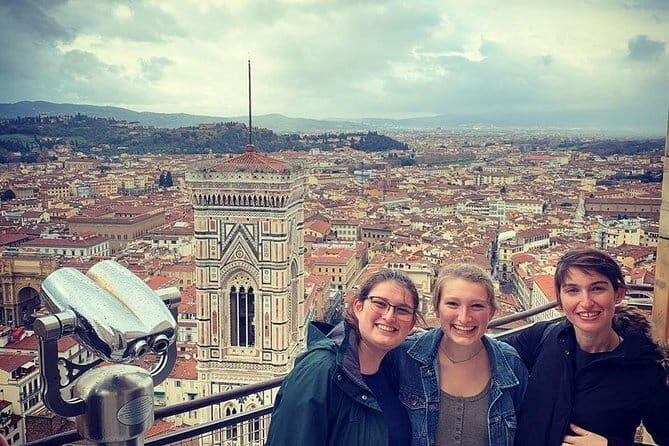
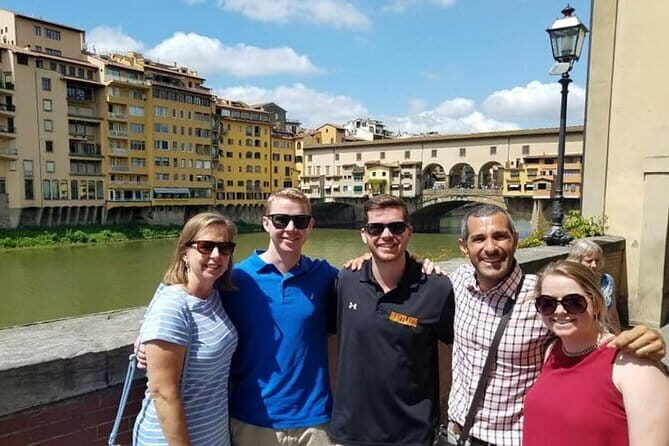
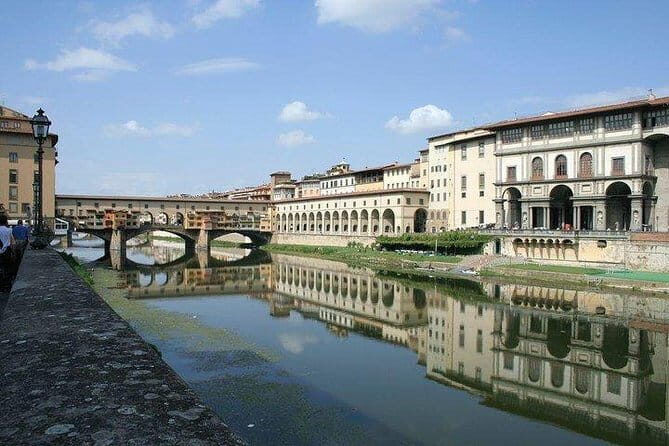
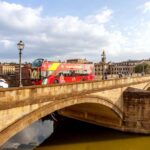
The tour ends at Ponte Vecchio, and it’s a great choice for a finish. You get to see the bridge as a timeline, not just a pretty postcard.
The tour explains why this bridge has stood the test of time from 1333 to today, and then shifts to WWII. This is where you get the story of how Renaissance art, the Axis, and the Allies powers all played a role in saving the bridge.
That combination sounds like an odd mix until you hear it framed as wartime decisions colliding with cultural value. The bridge became too recognizable, too “worth protecting,” and too bound up with Florence’s identity to get erased. You walk away with a feeling that places like this don’t survive because they’re lucky. They survive because people decide they’re important.
The stop is short—around 10 minutes—but it lands well. You end in the right location, near one of Florence’s most photographed viewpoints, and you’ll likely want to keep walking afterward to see what you missed from a different angle.
The Guide Makes the Difference: Why Paul Costa’s Style Gets People Hooked
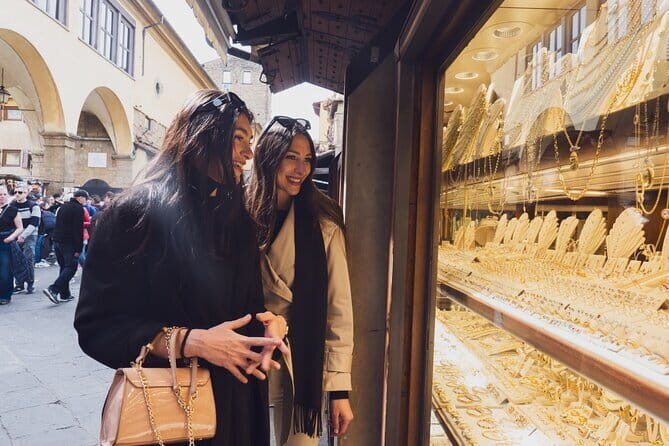
A huge theme in the feedback you can feel even from the way this tour is described: the guide isn’t there to recite facts. On this route, guides like Paul Costa are often praised for keeping things engaging, fun, and easy to follow.
You’ll likely notice a teaching style: he’s described as animated and thoughtful, with stories that make the art feel connected to actual humans. Multiple reviews mention his humor and the way he keeps attention even when the group includes teenagers or mixed ages.
There’s also a practical edge. Reviews often say he answers questions, tests your listening and understanding, and supports learning with simple explanations. That matters in Florence, where you can see a lot and still miss the point. A good guide turns the city into a story you can retell.
So if you care about interpretation—how David was received, what the Medici were signaling, why faith and design got tied together—this format shines.
Practical Notes: Starting at 9:10am and Making Each Stop Count
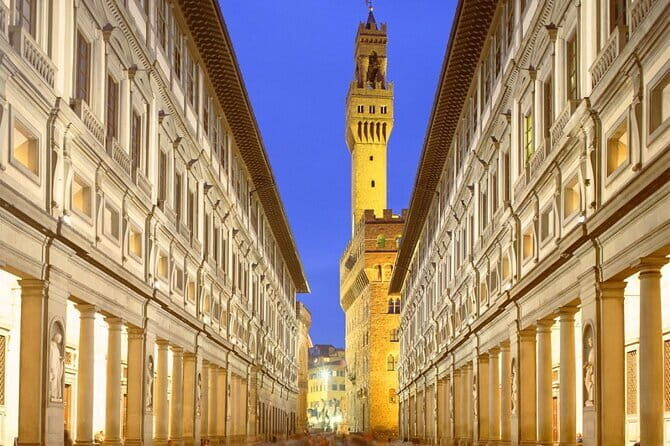
The tour starts at 9:10am at Via Ricasoli, 58. That timing is smart because Florence’s main attractions get crowded fast. It also helps that you’re walking between sites that are close enough to do on foot without turning the day into a transit puzzle.
The tour runs about 3 hours and keeps groups small, with a maximum of 12 travelers (and maximum 11 guests called out). That size is ideal for questions and for hearing what the guide says without craning your neck through ten layers of strangers.
You also get a mobile ticket, which is one less thing to manage. And because there are free-admission stops later in the loop, you’ll feel the structure: paid entry where it counts, time spent where it’s most meaningful.
One more practical point: wear comfortable shoes. Even though each stop is brief, the total walking adds up, and you’ll want your feet to keep up with your curiosity.
Is This Tour Worth the Price for You?
At $464.43 per person, you’re paying for a guided, themed route with skip-the-line entry and a small-group approach. If you’re traveling with people who want the “top sites” but also need a story thread, this tour is a good match.
This tour is also a strong fit for:
- First-timers who want orientation without doing a full-day museum marathon
- People who love Michelangelo and want context beyond one masterpiece
- Visitors interested in how art, religion, and politics overlap in Florence
- Families and mixed-age groups who benefit from an energetic guide
If your goal is long, quiet museum time at a relaxed pace, you might find the format too structured. But if your goal is understanding, this route tends to deliver.
Should You Book Florence City Tour & David?
I’d book it if you want Florence to make sense fast. The combination of David, Medici influence, major religious building context (including the Doors of Paradise), and a WWII-aware finish at Ponte Vecchio is a smart way to use limited time.
I’d skip it only if you’re the kind of traveler who needs hours inside a single building to feel satisfied, or if you strongly prefer self-guided wandering with no storyline. In that case, you may get more value building your own day around fewer stops.
For most visitors, especially those who want art history with clear takeaways, this tour is a solid use of money and time.
FAQ
How long is the Florence City Tour & David?
It lasts about 3 hours.
Where does the tour start and end?
It starts at Via Ricasoli, 58, 50122 Firenze FI, Italy, and ends at Ponte Vecchio, 50125 Firenze FI, Italy.
What time does the tour start?
The start time listed is 9:10am.
How large is the group?
The tour is described as small-group, with a maximum of 12 travelers (maximum 11 guests noted).
Is there skip-the-line entry?
Yes. There are skip-the-line tickets for the Galleria dell’Accademia.
What is included with admission?
Admission is included for the Galleria dell’Accademia stop. Other stops are listed as admission ticket free.
Is a mobile ticket used?
Yes, the tour includes a mobile ticket.
What are the main places you visit?
You visit the Galleria dell’Accademia, Palazzo Medici Riccardi, Piazza della Signoria, and Ponte Vecchio, plus stops focused on Florence’s major church/dome and baptism building during the route.
Are there any accessibility notes?
The information provided says most travelers can participate.
What is the cancellation policy?
This experience is non-refundable and cannot be changed for any reason. If the minimum number of travelers isn’t met, you’ll be offered a different date/experience or a full refund.
More City Tours in Florence
More Tours in Florence


More Tour Reviews in Florence
- Tuscany Day Trip from Florence: Siena, San Gimignano, Pisa and Lunch at a Winery
★ 5.0 · 21,634 reviews - The Best tour in Florence: Renaissance & Medici Tales – guided by a STORYTELLER
★ 5.0 · 12,316 reviews