REVIEW · FLORENCE
Basilica Santa Croce: Walking Among the Masters of Florence
Book on Viator →Operated by Star Florence · Bookable on Viator
Santa Croce feels like a history quiz.
This 1-hour walk turns Florence’s most famous church into a guided story you can actually follow, from Santa Croce Square (site of Calcio Storico each June) right into the basilica’s chapels, crypt, and cemetery. I especially like that you get a clear path through the art, not a random walk where you miss the key details.
I also really like the way the tour points out specific masterworks you might not connect on your own—think Giotto fresco scenes in the Bardi and Peruzzi Chapels, plus Donatello’s famous crucifix and the architectural harmony linked to Brunelleschi’s Chapel of Fools. It’s not just what’s there; it’s why it mattered to Florence.
One big consideration: the dress code is strict. If your knees or shoulders are showing (no shorts, no sleeveless tops), you can be refused entry, and that can mean no reschedule and no refund.
In This Review
- Key highlights worth your time
- Santa Croce Square: the start you’ll remember
- Inside the Basilica: chapels, frescoes, and famous Florentines
- The art you’ll notice only with a guide: Donatello and Brunelleschi
- The crypt and cemetery: where Santa Croce changes tone
- Outside details: the polychrome façade and the bell tower view
- The 1966 flood story: restoration you can still sense
- Practicalities that affect your experience immediately
- Price and value: what $58.05 buys you in real terms
- Who should book this Santa Croce walk?
- Should you book this Santa Croce tour?
- FAQ
- How long is the Santa Croce tour?
- What is the meeting point?
- Is entrance included?
- Does the tour include the crypt and cemetery?
- What areas of the basilica will we see?
- What language is the tour offered in?
- What is the dress code?
- Is there anything that helps you hear the guide?
Key highlights worth your time
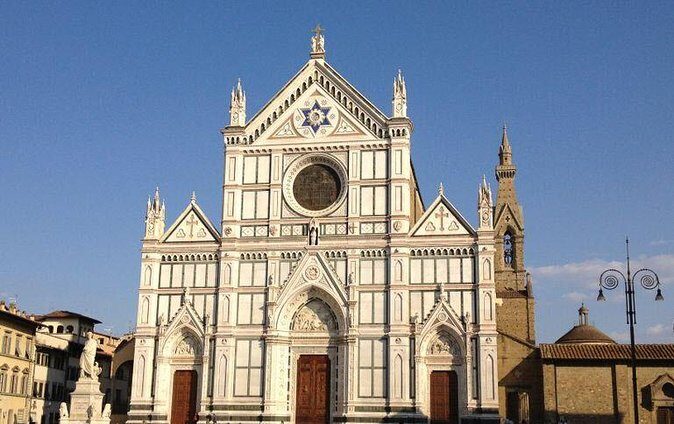
- Santa Croce Square context: Calcio Storico Florentino happens here every June in medieval-style costumes
- Giotto and Gaddi fresco focus: St. Francis and St. John scenes, plus Cappella Maggiore frescoes by Gaddi
- Donatello’s crucifix: a Renaissance jewel you’ll know how to look at afterward
- Brunelleschi’s Chapel of Fools: the architecture is part of the lesson
- Crypt, bell tower, and 16 chapels: you cover more than a typical quick church visit
- 1966 flood restoration: see what was damaged and how the recovery still shows
Santa Croce Square: the start you’ll remember
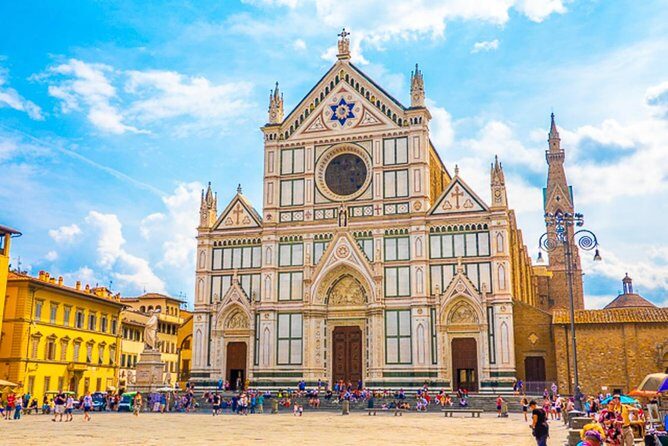
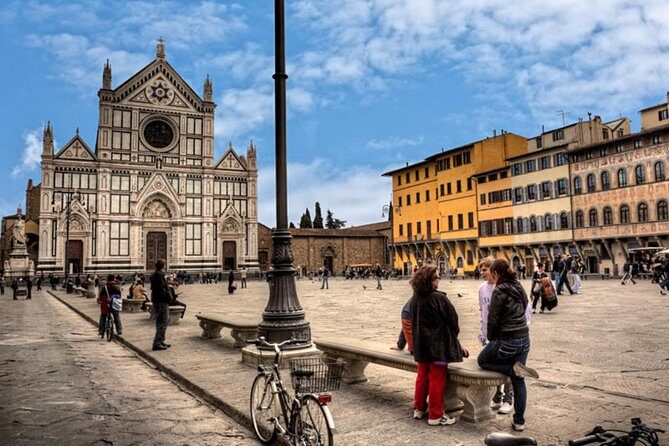
You meet at the Monument to Dante Alighieri in Piazza di Santa Croce. Even before you step inside, the square gives you something to anchor on. This is the place where Florence stages Calcio Storico Florentino every year in June—soccer played in medieval costumes. It’s a fun, local bridge between the city’s past sports culture and the deeper religious and artistic culture you’re walking into next.
From here, you get oriented fast. The guide frames what you’re about to see so it feels less like browsing and more like following a plot. That matters at Santa Croce, because the basilica is big and visually busy. If you don’t know what to hunt for, you can spend your hour looking at the wrong things.
You can also read our reviews of more walking tours in Florence

Inside the Basilica: chapels, frescoes, and famous Florentines
Once you enter the Basilica of Santa Croce, the tour keeps moving through highlights you’ll want to find again later. You’re covering the main interior, but with a focus on the artwork and the people buried here—so the church reads like both an art museum and a memorial space.
One of the first major takeaways is how the frescos and chapels tell stories. In the Cappella Maggiore, the guide points you to the frescoes by Gaddi from 1380, which tell the story of Santa Croce. That date is a useful mental landmark: you’re not only looking at beautiful Renaissance work; you’re seeing how far back the visual tradition reaches.
Then the tour shifts to two chapels tied to Giotto. In the Bardi and Peruzzi Chapels, you’ll focus on fresco scenes from the life of St. Francis and St. John the Evangelist. The value here isn’t that you learn names on a list. It’s that you learn what kind of narrative you’re looking at—religious episodes painted so you can follow them with your eyes, even if you’re not an art historian.
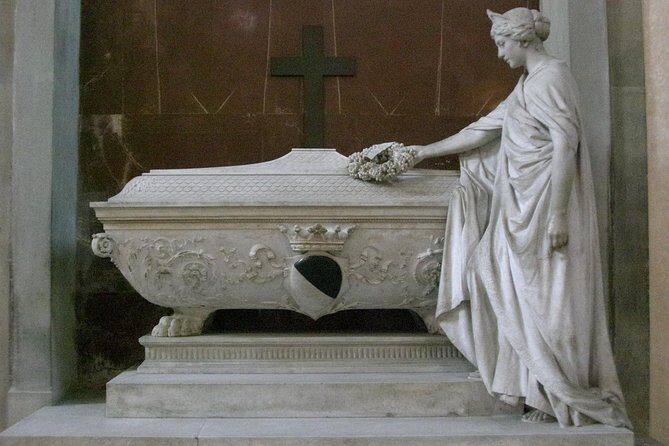
And yes, Santa Croce is famous for tombs. During the experience, you connect the art to the big names resting here. Michelangelo, Galileo, Machiavelli, and Rossini are among the most iconic burials people look for, and the guide’s context helps you understand why Santa Croce became such an intellectual and cultural meeting point for Florence.
The art you’ll notice only with a guide: Donatello and Brunelleschi
There are plenty of churches in Italy where you can wander, glance at a painting, and still have a good time. Santa Croce is different because the masterworks stack together, and details matter.
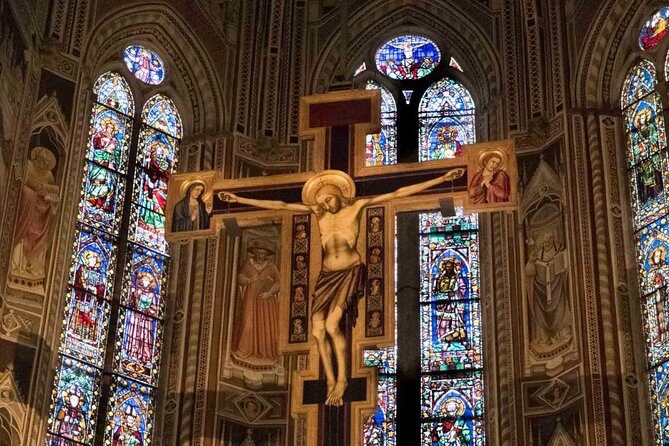
This is where Donatello enters the story. Near the entrance area, you’ll learn about Donatello’s crucifix, often described as a Renaissance jewel. The practical benefit of a guide here is simple: they tell you where to look, what to focus on, and what makes it feel like more than an impressive sculpture. You come away with a better sense of the artwork’s intention and place in the era.
Then you’ll hear about Brunelleschi and the Chapel of Fools. Even if you already know Brunelleschi as an important Renaissance figure, the tour helps you connect his influence to what you’re actually seeing in the chapel. It’s the kind of context that turns architecture from background scenery into part of the message.
One more detail I like from the route: to the left of the entrance, you’ll see the memorial of Giovanni Battista Niccolini, a 19th-century playwright whose work is linked as an inspiration for the Statue of Liberty. It’s not a Florence-only story, and it’s a neat reminder that art and symbols travel far beyond Italy.
The crypt and cemetery: where Santa Croce changes tone
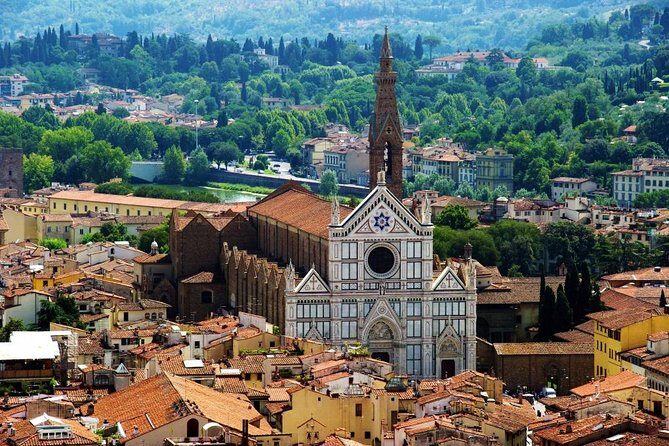
After the main interior, the tour takes you through the crypt and cemetery. This is where Santa Croce stops feeling like a sightseeing stop and starts feeling like a place with weight.
The cemetery area is described as monumental, and that matches what you’ll feel under the surface of the visit. Even when the tour stays calm and factual, the setting makes you slow down. You’re not just collecting photos of doors and plaques. You’re moving through a space where Florence chose to remember some of its most important minds.
This is also where the guide’s pacing matters. In a short tour of about an hour, you need your attention to land. A good guide helps you notice how tombs and chapel spaces create a sense of continuity: the art isn’t separate from the memorial function.
There’s also mention of the bell tower and the 16 chapels, so you get a wider sweep than you might on your own. You leave with more of Santa Croce “mapped” in your head, which helps if you decide to go back for a second look afterward.
Outside details: the polychrome façade and the bell tower view
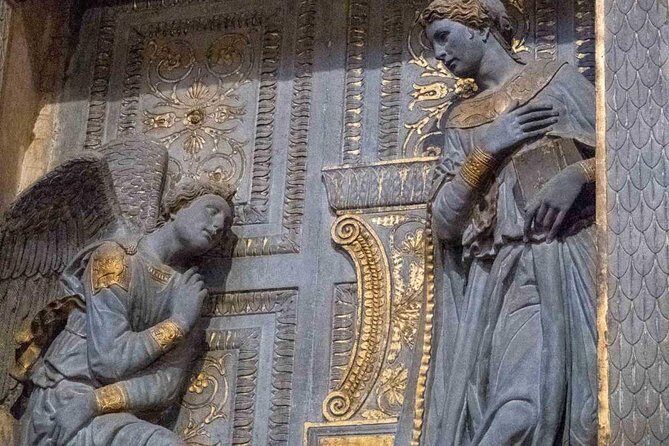
Santa Croce isn’t only what’s inside. The guide also walks you around the exterior, including the polychrome marble façade. That matters because it changes how you picture the building. If you only see the interior from the inside out, the church can feel like a box full of art. But the façade and exterior surfaces give you a sense of how seriously Florence treated the building as a statement piece.
You’ll also tour around the bell tower area. Even if you don’t spend long staring at the heights, you gain a sense of scale. Santa Croce can look compact from a quick glance in the square, and then you realize how much space it contains once you start moving through chapels and underground areas.
- The Best tour in Florence: Renaissance & Medici Tales – guided by a STORYTELLER
★ 5.0 · 12,316 reviews






The 1966 flood story: restoration you can still sense
A standout part of the experience is the way the tour addresses the 1966 Florence flood and what happened to the church’s artworks afterward. You’ll learn about damaged paintings destroyed in the flood and how they were subsequently restored.
That theme is valuable because it gives you a reason to look beyond beauty. Restoration isn’t just a museum buzzword. It’s part of the life of the building. You end up paying more attention to what looks preserved and what looks repaired, and you start seeing the church as something that endured, not just something that was created.
This also helps connect Santa Croce to Florence as a whole. Florence has a habit of losing and rebuilding—politically, artistically, physically—and the flood story is a direct example you can stand next to.
Practicalities that affect your experience immediately
This is a 1-hour tour and it runs in all weather. So bring what you need for rain or sun, because you’ll still be outside in the square and around parts of the exterior.
Dress code is the fastest way to ruin a visit here. Knees and shoulders must be covered for both men and women. That means no shorts and no sleeveless tops. If you show up dressed for summer sightseeing, you risk being refused entry, with no rescheduling or refund.
Also, plan your pace. The tour doesn’t wait. If you arrive after the start time, you won’t be able to join. Since you meet at the Dante monument in the square, I’d rather you give yourself extra time to find your group than gamble on getting there exactly on the dot.
The group is capped at 20 people, and you get a radio system to hear the guide clearly. That’s a big deal in a church environment, where voices get swallowed by stone and echo.
Price and value: what $58.05 buys you in real terms
At $58.05 per person for about 1 hour, you might ask if it’s worth paying when Santa Croce is on a map and you can theoretically walk in yourself.
Here’s how I see the value:
- You’re paying for an official certified guide who can connect chapel art, tombs, and architectural details into one coherent route. That connection is what makes a short tour feel longer in the best way.
- You’re paying for reserved entrance tickets. That removes a lot of friction from planning.
- You get a radio system, which improves listening in a loud, crowded, echoing environment.
- You’re covering a lot of specific areas—interior, crypt, cemetery, bell tower, and 16 chapels—instead of sampling only what your eyes stumble into.
If you’re the kind of person who wants to walk into Santa Croce and follow your curiosity without structure, you might prefer a self-guided visit. But if you want the art and tombs to start making sense quickly, the guide-led format is the main value.
One more timing tip: the experience is often booked about 42 days in advance on average. If your dates are firm, you’ll feel calmer booking early instead of hoping.
Who should book this Santa Croce walk?
This tour is a great fit if you want:
- a guided route through Santa Croce Square and the basilica’s most important pieces
- help understanding frescoes, sculptures, and tombs in a single hour
- a practical way to see the crypt, bell tower, cemetery, and multiple chapels without turning it into a full-day project
It may be less ideal if:
- you plan to show up in shorts or sleeveless tops (the dress code is strict)
- you hate structured time and prefer long, silent wandering
One thing I appreciate from the overall tone of the experience is that the guides tend to handle questions well and keep the pace friendly for small groups. Some people mention language issues with certain guides, so if English matters a lot to you, it’s worth double-checking that your comfort level with the guide’s English is a priority when you book.
Should you book this Santa Croce tour?
Yes, if you want Santa Croce to feel like a guided story instead of a stop where you only catch the biggest names. The hour format is efficient, and the focus on specific masterworks—Giotto frescoes, Gaddi’s Cappella Maggiore fresco work, Donatello’s crucifix, and Brunelleschi’s Chapel of Fools—helps you see more with less guesswork.
If your style is mainly independent and you already feel comfortable reading churches on your own, you can still do Santa Croce without a guide. But if you’d rather walk away understanding why these chapels and tombs mattered to Florence, this is one of the more practical ways to do it.
FAQ
How long is the Santa Croce tour?
It lasts about 1 hour.
What is the meeting point?
You meet at the Monument to Dante Alighieri in Piazza di Santa Croce, 50122 Firenze FI, Italy.
Is entrance included?
Yes. Your ticket reservations and entrance are included.
Does the tour include the crypt and cemetery?
Yes. The experience includes the church interior, crypt, and the cemetery area.
What areas of the basilica will we see?
The tour covers Santa Croce Square, the basilica interior, the crypt, the cemetery, the bell tower, and 16 chapels.
What language is the tour offered in?
It is offered in English.
What is the dress code?
You must cover your knees and shoulders. No shorts or sleeveless tops. Entry can be refused if you don’t meet the dress requirements.
Is there anything that helps you hear the guide?
Yes. A radio system is included so you can hear the guide clearly.

More Walking Tours in Florence


More Tour Reviews in Florence
- Tuscany Day Trip from Florence: Siena, San Gimignano, Pisa and Lunch at a Winery
★ 5.0 · 21,634 reviews - The Best tour in Florence: Renaissance & Medici Tales – guided by a STORYTELLER
★ 5.0 · 12,316 reviews