Bologna art is everywhere.
This walking tour strings together major Bologna landmarks and the quieter details that explain why the city looks the way it does. You’ll move through church interiors, university rooms, palace halls, and market streets, all tied to art, architecture, and food heritage.
What I like most: Riccardo Bacchi’s explanations make the buildings feel connected, not random. I also like that you get more than big-name stops—you’ll see how Bologna worked day to day, and you’ll finish with tastings that fit the medieval story.
One thing to consider: it’s a lot of ground in a 3 to 4 hour window, so you’ll want comfortable shoes and a willingness to stand and look up often.
In This Review
- Key highlights at a glance
- How this Bologna art walk feels in real life
- Piazza Maggiore: the city’s stage, its clues, and its clock
- Palazzo d’Accursio: civic art, strange stairs, and a famous Virgin
- Basilica di San Petronio: the biggest sundial and major painters
- Archiginnasio di Bologna: the old university with anatomical theater energy
- Quadrilatero: the medieval market maze plus a food story that fits
- Santo Stefano: one complex, many eras, and a Roman-to-Dante thread
- Santa Maria della Vita: Niccolò Dell’Arca and terracotta movement
- The towers view: Asinelli and Garisenda from street level
- Finestrella and the canal story UNESCO ties to silk and hemp
- The 13th-century wooden-pillared house: why old timber matters
- Palazzo Comunale: ceilings, frescoes, and Bramante’s horsemen stairs
- Price and value: what $175.36 buys you (and what it doesn’t)
- Should you book? My take for the right kind of traveler
- FAQ
- Is the tour offered in English?
- How long is the Bologna historical art walking tour?
- What sites include admission tickets?
- Where does the tour start and end?
- What are the tastings during the tour?
- What’s the cancellation policy?
Key highlights at a glance
- Riccardo Bacchi’s storytelling: lots of context tied to what you’re actually seeing
- Art-and-power mix: palaces, churches, and the old university in one walk
- San Petronio + Archiginnasio included: key interiors with admission covered
- Tastings included: rice cake made from a medieval recipe and local wine samples
- Bologna’s working history: markets, guild clues, and a canal used for silk and hemp
- Small group size (max 25): easier pace control and question time
How this Bologna art walk feels in real life
This tour is built for a first-time Bologna visitor who wants meaning, not just photos. You’ll cover a tight central route that links medieval commerce, Renaissance power, and the city’s academic side—without stopping for long classroom lectures.
Expect a busy but manageable pace. The route is dense: palaces, big church interiors, and university rooms, plus outdoor landmarks and street-level views. If you love looking closely (ceilings, fresco fragments, inscriptions, sculptures), you’ll be in your element.
The price sits in the mid-to-higher range for a half-day walk, but it’s not only “a guide.” Several interior sites come with admission tickets included, and you also get structured time in the places that matter for Bologna’s art history.
You meet at Bar Vittorio Emanuele in Piazza Maggiore (Piazza Maggiore, 1), and the tour ends back at the same spot. That simple loop helps you build a mental map fast—Bologna is compact, but it has a lot of twisty history in a small area.
You can also read our reviews of more walking tours in Bologna

Piazza Maggiore: the city’s stage, its clues, and its clock
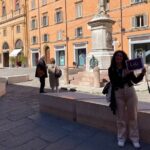
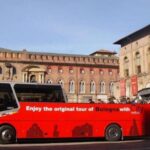
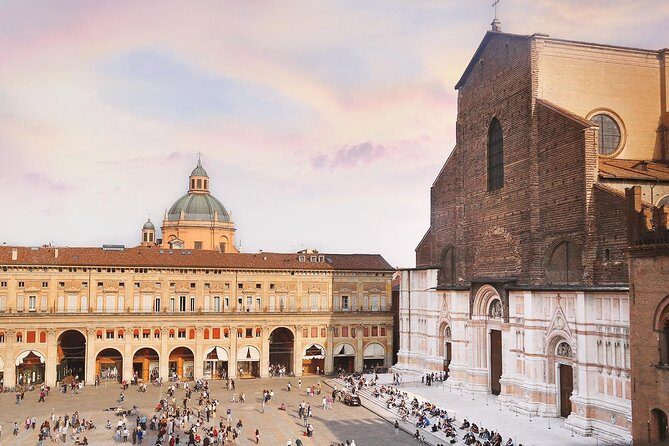
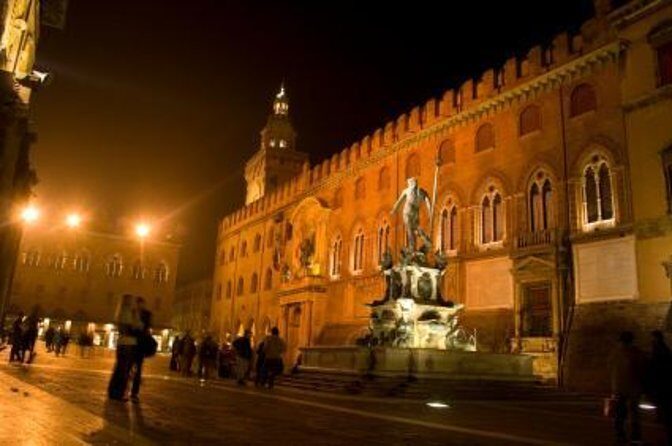
You start at Piazza Maggiore, the main square surrounded by old medieval buildings that still set the tone for the city. The square is famous for its sculpted corners—the four “speaking” corners—and for the way the Council Palace facade and historic details tell you who held power here.
You’ll also get the story behind Neptune’s Renaissance fountain and the textile market secrets tucked into the square’s background. This matters because Bologna’s art isn’t just fine decoration—it’s tied to commerce, civic identity, and local bragging rights.
If you’re the type who likes to understand “why that’s there,” this first stop is a strong setup. It gives you themes that echo later, especially when you see coats of arms, guild symbols, and how civic buildings were treated like statements.
Palazzo d’Accursio: civic art, strange stairs, and a famous Virgin
Next comes Palazzo d’Accursio, a palace where Bologna’s civic world shows up in rooms, frescoes, and architecture. You’ll look at noble rooms on the first and second floors, including frescos and a private chapel tied to the bishop.
One detail that gives the palace personality is the big stairs designed for horses by Bramante. It’s the kind of thing you might miss if you’re just walking past, but it instantly explains how a “government building” also functioned like a stage for important arrivals and events.
Inside, you’ll also hear about the room of the seniors and an artwork referred to as the earthquake’s virgin by Francesco Francia. That mix—civic function plus specific artistic commissions—helps you see why Bologna invested in art across different kinds of rooms.
Basilica di San Petronio: the biggest sundial and major painters
San Petronio is where the tour shifts from palaces to one of Bologna’s most impressive church spaces. You’ll spot the biggest sundial in the world—one of those “only Bologna” details that makes a church feel like a scientific statement, not just a religious one.
The visit also focuses on medieval frescoes in the Cappella Bolognini chapel and on symbolic elements like the four ancient crosses. Then you get to major art names connected to the basilica’s decoration, including paintings by Parmigianino and Lorenzo Costa.
This stop is the kind of place where Riccardo’s approach shines. Instead of treating the building like a checklist, he ties the images to what they were doing in their time—teaching, signaling status, and shaping civic identity.
Practical thought: church interiors can mean cooler temperatures and dimmer light than the street. Bring patience for slower looking, and don’t rush—most of the value is in noticing what the guide points out.
Archiginnasio di Bologna: the old university with anatomical theater energy
Then you step into Archiginnasio di Bologna, headquarters of the oldest university in Europe. If you think universities are all modern study halls, this is the correction. The Renaissance palace side-by-side with academic collections feels like history doing its day job.
You’ll look at the huge collection of coats of arms, which helps you understand how students, families, and institutions were represented. You’ll also hear about the witnesses of secret powerful medicine—an idea that makes the university’s scientific side feel human and even a little mysterious.
The wooden anatomical theatre is a standout. It’s the kind of detail you remember because it’s so physical—built for real demonstrations, not symbolic academic talk.
In the Stabat Mater room, you’ll see precious books mentioned in connection with Leonardo da Vinci’s Flights of the birds, plus the long hall for books and ancient codes. Even if you don’t read Italian, the room design and the curatorial focus tell you how seriously Bologna treated learning.
This stop is admission-included, so you don’t have to scramble for separate entry. It also tends to be one of the most satisfying for people who like science, art, and institutions in the same frame.
You can also read our reviews of more historical tours in Bologna
Quadrilatero: the medieval market maze plus a food story that fits
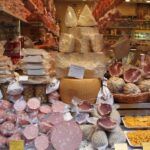
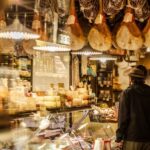
After major monuments, you’ll move into the Quadrilatero, Bologna’s market labyrinth. Here the focus becomes commerce: stalls, old food shops, ancient coats of arms, and clues pointing to guilds.
This is where the tour’s “food heritage” promise becomes real. Bologna’s reputation isn’t only about meals; it’s about systems—trade routes, craft specialties, and how merchants displayed identity on buildings and signs.
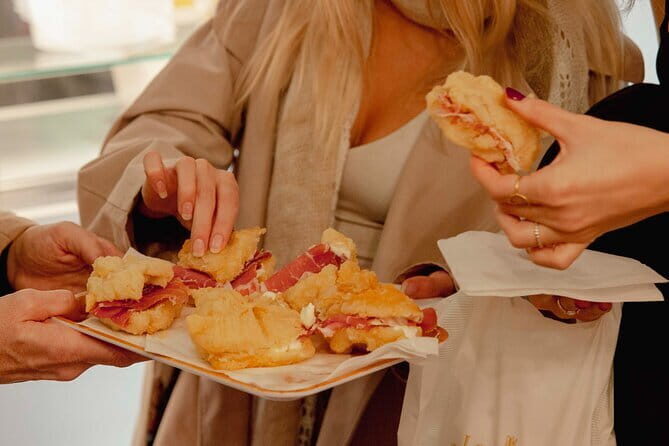
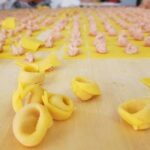
And yes, there are tastings. During the walk, you’ll sample rice cake made from a medieval recipe and local wine. The best part is that it doesn’t feel like a random snack break. It connects back to how Bologna’s markets and culinary habits evolved.
If you have dietary restrictions, check with the provider when booking. The tour data confirms tastings, but it doesn’t spell out alternatives, so it’s on you to clarify specifics ahead of time.
Santo Stefano: one complex, many eras, and a Roman-to-Dante thread
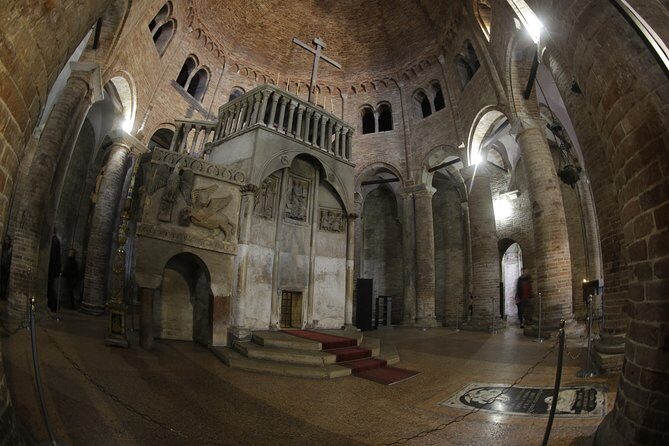
Bologna likes layering. Santo Stefano shows it by packing centuries into one complex of churches. You’ll hear the story that stretches from a Roman temple on a natural spring up through later religious life.
You’ll also get the connection to Dante Alighieri’s cloister, plus the cloistered setup of monks’ cells. Even when you’re looking at architecture, the guide’s framing helps you “see” how people lived, studied, prayed, and moved through shared spaces.
A detail you’ll be pointed toward is the capitals headed by animals—another example of Bologna’s habit of mixing symbolism and craft. These are the small visual cues that make the larger historical story feel concrete.
This is a free-admission stop, so it’s a good place for a breather in the schedule without losing meaning. Still, plan to take your time; this complex rewards slower looking.
Santa Maria della Vita: Niccolò Dell’Arca and terracotta movement
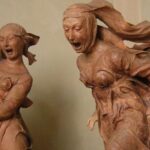
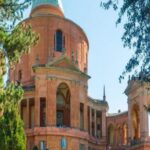
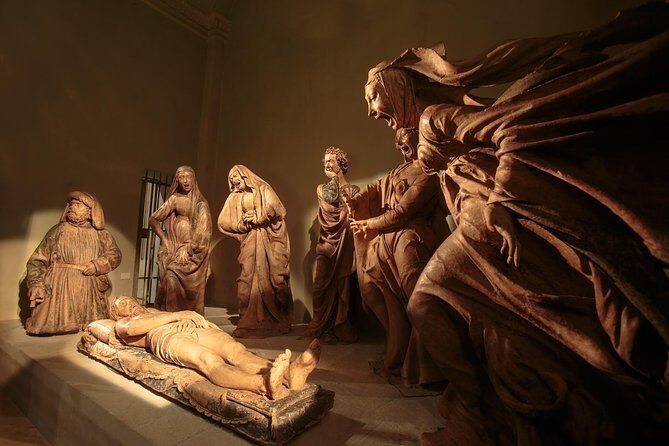
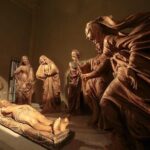
The tour then heads to Chiesa di Santa Maria della Vita, where you’ll see a terracotta masterpiece sculptured in 1470 by Niccolò Dell’Arca. The emphasis here is on emotion and motion—an interpretation of movement that’s described as advanced for its time.
This is the kind of art that resets your expectations. You might come in thinking “church sculpture,” but the guide’s description makes it feel like theater: faces, posture, and expression all working together.
Because this is admission-included, you’re not paying extra at the door. It’s also one of the more memorable stops for people who love art that tells a story through physical expression.
The towers view: Asinelli and Garisenda from street level
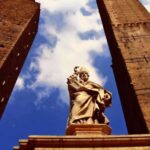
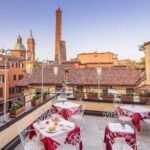
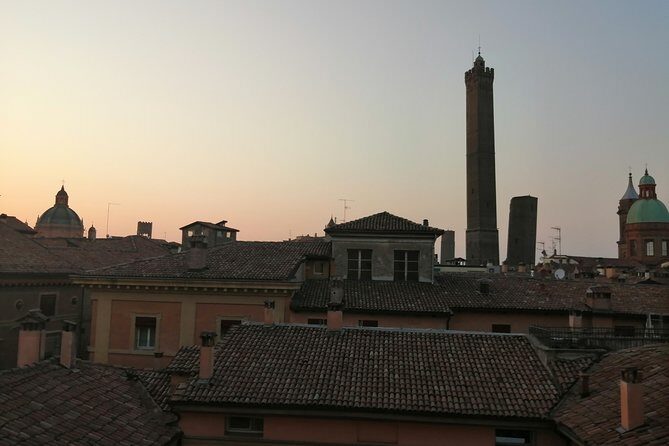
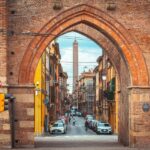
Between church interiors, you get an outdoor moment that’s short but meaningful: a view from street level of the symbol towers, Asinelli (98 meters) and the leaning Garisenda. You don’t need a ticket to understand why these towers became Bologna’s visual shorthand.
This stop works like a palate cleanser. After rooms full of frescoes and books, you see the city’s silhouette and understand how the medieval skyline was meant to be seen from inside the street life.
Finestrella and the canal story UNESCO ties to silk and hemp
Next up is Finestrella, a rare medieval canal designed to supply silk and hemp textile manufacturing. The tour flags it as UNESCO heritage, and once you understand the purpose of the canal system, the canal stops being scenery and becomes industrial history.
This is a great reminder that Bologna’s art world didn’t grow in a vacuum. Material wealth from textiles helped pay for buildings, artists, and civic projects, which you later see reflected in palace decoration and university prestige.
If you’re the kind of traveler who loves “how things were made,” this stop will land well. It’s also a nice contrast to the heavy stone of churches and university halls.
The 13th-century wooden-pillared house: why old timber matters
You’ll also spot an example of a 13th-century house still maintaining its original wooden pillars. It’s an easy thing to miss on your own because it’s not as famous as a palace facade, but it’s exactly the sort of detail that makes a city feel lived-in across centuries.
This stop helps you connect the dots: Bologna’s wealth didn’t just show up in monuments. It also shaped the everyday building fabric.
Palazzo Comunale: ceilings, frescoes, and Bramante’s horsemen stairs
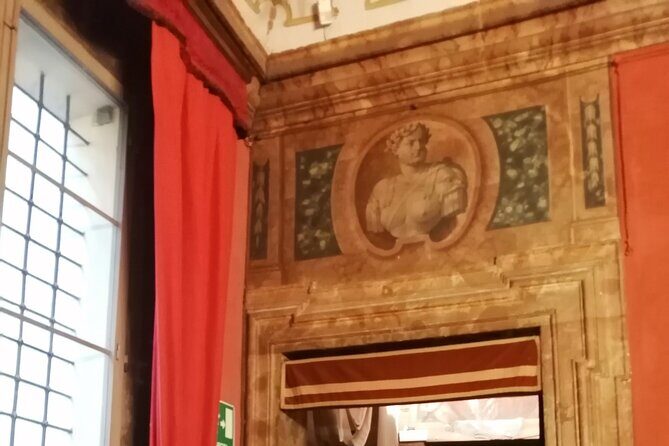
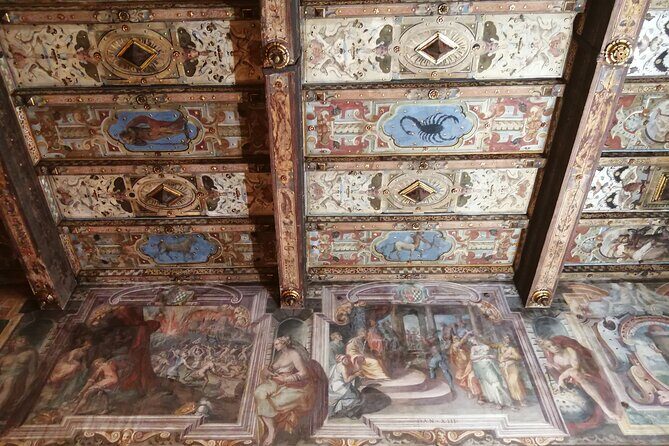
The tour wraps with Palazzo Comunale, another major civic building where you’ll see Renaissance and Baroque ceilings, frescoes, and sculptures. You’ll also look at Bramante staircases for horsemen again, which is a strong theme by now: civic power built for grand movement and dramatic arrivals.
If you’re paying attention, you’ll start noticing how often architecture signals authority here. It’s not only about what Bologna built—it’s about how it wanted people to feel walking into the spaces.
This is a good closing note because it ties back to your start at Piazza Maggiore. The story becomes coherent: square to palace to university to market to church to city skyline.
Price and value: what $175.36 buys you (and what it doesn’t)
$175.36 for a 3 to 4 hour walk may feel like a splurge compared to a generic city tour. But here’s why the math can still work for you.
First, admission is included at key interiors like San Petronio, Archiginnasio, and Santa Maria della Vita. Second, the tour includes tastings: medieval rice cake and local wine. Third, the group cap (max 25) keeps it more conversational than a big rush.
You’re also paying for structure. This isn’t just “walk around and look.” The payoff is that the art and architecture have a narrative thread: civic power, university life, textile and market commerce, and religious symbolism.
What it doesn’t do: it won’t replace slower self-guided wandering later. Think of it as a high-impact way to set your orientation so your independent time in Bologna feels smarter.
Should you book? My take for the right kind of traveler
Book this tour if you want Bologna explained through art, architecture, and how people lived and worked. It’s especially a strong choice for first-timers because it covers the main emotional beats—civic square, major basilica, historic university, market streets, and iconic towers—plus quieter details that make the city feel personal.
Skip it (or swap it for something different) if you hate walking, don’t want to stand inside churches, or prefer a very casual pace with long breaks. The schedule is packed, and the value is in the guidance and timing.
If you’re deciding between “seeing sights” and “understanding what you’re seeing,” this is the better option. With Riccardo Bacchi leading and the mix of monuments plus tastings, you’ll leave with more than memories—you’ll have a map for your next day in Bologna.
FAQ
Is the tour offered in English?
Yes. The experience is offered in English.
How long is the Bologna historical art walking tour?
It runs about 3 to 4 hours.
What sites include admission tickets?
Admission is included for Basilica Di San Petronio, Archiginnasio Di Bologna, and Chiesa di Santa Maria della Vita.
Where does the tour start and end?
It starts at Bar Vittorio Emanuele, Piazza Maggiore 1, Bologna, and ends back at the same meeting point.
What are the tastings during the tour?
The tour includes tasting rice cake made from a medieval recipe and a sample of local wine.
What’s the cancellation policy?
You can cancel up to 24 hours in advance for a full refund. If you cancel less than 24 hours before the start time, the amount you paid is not refunded.