REVIEW · FLORENCE
Florence: Accademia Gallery Guided Tour with Priority Access
Book on GetYourGuide →Operated by SLOW TOUR TUSCANY · Bookable on GetYourGuide
Michelangelo’s David hits harder with context. This Accademia Gallery guided tour pairs skip-the-line entry with a focused, one-hour walkthrough of the museum’s biggest masterpieces, then leaves you free to wander afterward with your all-day ticket.
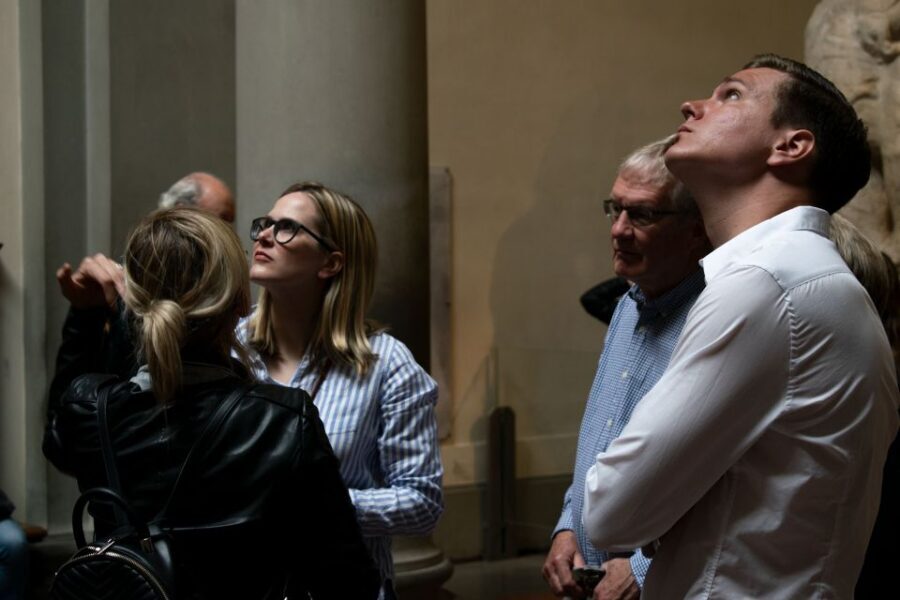
I especially like two things. First, the priority access and express security check help you get inside with less waiting fuss. Second, the tour is run in English with a certified guide and a set of earphones so you can actually follow the story, even when the room is busy.
One possible drawback: it’s a fast, high-impact highlight tour. If you’re the type who wants to linger for an hour at David alone, you’ll need the extra all-day time to slow down.
In This Review
- Key moments you’ll remember
- Priority access at the Accademia: why it matters
- Where the tour starts near Via degli Alfani 113
- First stop: Medici musical instruments and the surprising “warm-up”
- Tribuna di De Fabris: how the route leads you to David
- Michelangelo’s six sculptures: what your guide helps you notice
- After the 1-hour tour: make your ticket last all day
- Price and logistics: is $58 good value for this format?
- How to get the most from a one-hour highlight tour
- Who this tour fits best (and who might prefer something else)
- Should you book? My call
- FAQ
- How long is the Accademia Gallery guided tour?
- Is there skip-the-line entry?
- What language is the tour guide speaking?
- Are tickets valid for more than just the tour time?
- What’s included in the tour price?
- Is the meeting point clearly identified?
- Is the tour wheelchair accessible?
- Are pets allowed?
- What’s the cancellation window?
Key moments you’ll remember
- Priority entry + express security to cut the hassle at the gate
- English guide with certified tourist guide setup for clear, accurate explanations
- Earphones included so you can hear details without craning your neck
- Medici musical instruments first (yes, including a famous Stradivari)
- Tribuna di De Fabris focus on the route from the Prisoners and San Matteo to David
- All-day ticket to keep exploring after the 1-hour tour ends
Priority access at the Accademia: why it matters
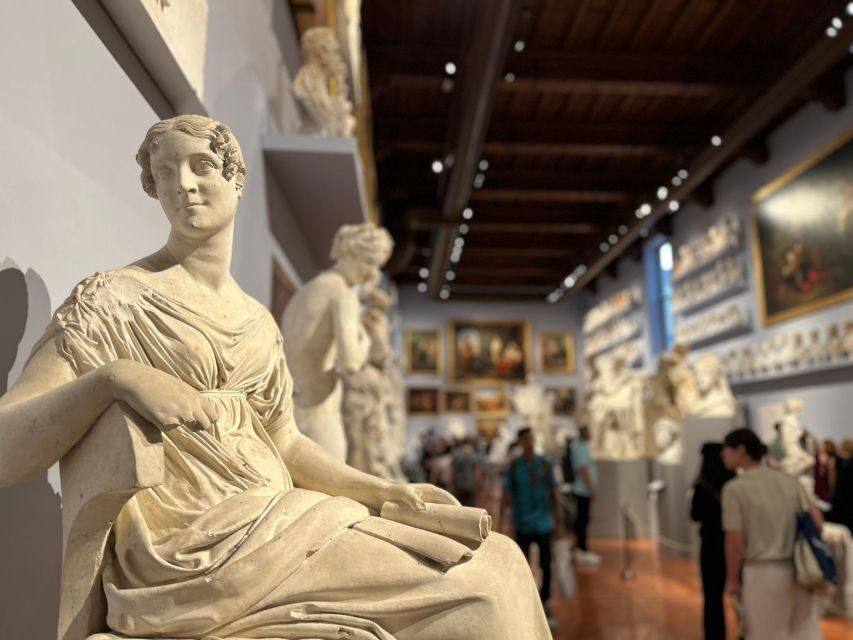
The Accademia Gallery is one of those Florence stops where the building experience can either feel smooth or kind of annoying. The difference here is priority entry and an express security check, built into your booking. That means less time stuck in the pre-museum bottleneck and more time inside seeing why everyone talks about Michelangelo in the first place.
You’re also buying more than a guided talk. Your museum ticket stays valid for the full day after the tour. That’s important because the tour is one hour. David is the headline, but the museum has enough other works to justify a longer visit once you know what to look for.
At $58 per person for a 1-hour guided visit with priority handling and earphones, the value is strongest if you care about getting the right context fast. If your plan is simply to walk in and play it by ear without much structure, you could do it on your own. But if you want the stories tied to the sculptures—marble block details, how the works relate to each other, and what you’re actually seeing—this format pays off.
You can also read our reviews of more guided tours in Florence
Where the tour starts near Via degli Alfani 113
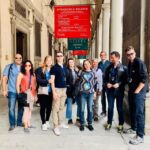
You’ll meet at Via degli Alfani, 113. The key detail is the office sign: look for Slow Tour Tuscany at number 113 red, next to the art shop SALVINI.
Show up 15 minutes early. That timing isn’t about being early for fun—it’s about giving yourself enough buffer to find the right door and get checked in calmly, especially if you’re arriving from the historic center’s narrow streets.
If you like to plan like a local, do this: arrive, locate the meeting point, then give yourself a few minutes to settle before the group moves toward the museum entry flow.
First stop: Medici musical instruments and the surprising “warm-up”
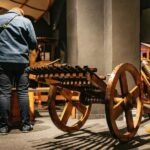
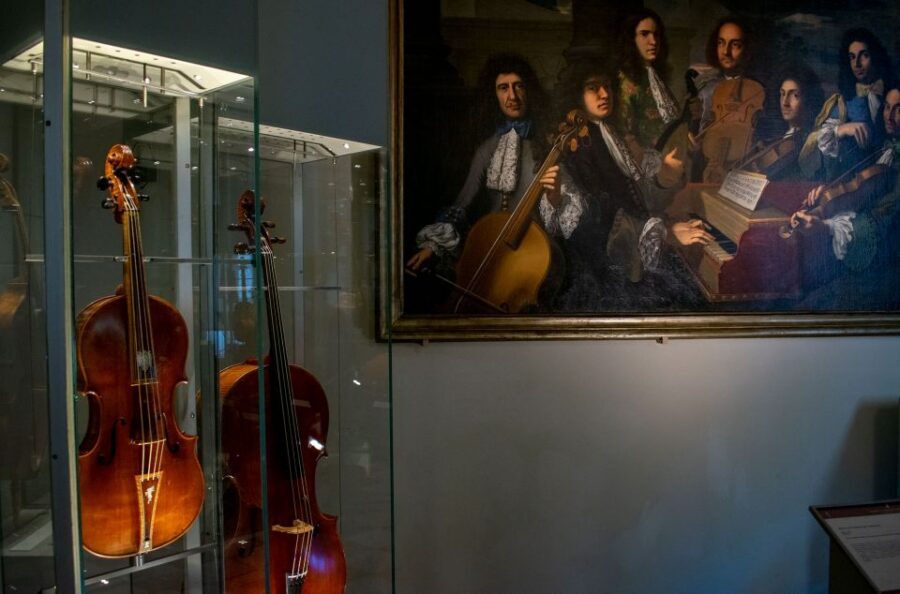
Before you race to David, you start in the part of the Accademia connected to the Medici family’s impressive musical instrument collection. This is a smart opener because it changes the mood. You’re not staring at stone right away. You’re getting introduced to craftsmanship, rarity, and taste—the same kind of patronage mindset that helps explain why Michelangelo’s work ended up here.
Expect to see standout instruments, including the most expensive Stradivari in the world and the oldest piano, along with other unique pieces in the collection. You’ll also hear how this section fits into the Medici legacy, which makes the gallery feel less like a single-artist shrine and more like a broader cultural museum.
Even if you’re not a music person, this stop helps you understand one thing quickly: the Accademia isn’t just about admiring art. It’s about recognizing how power and money turned exceptional objects into lasting heritage.
This part of the tour also gives you a breather. By the time you reach Michelangelo’s sculptures, you’ll be warmed up for close-looking, not just rushing straight from the entrance to the biggest crowd scene.
Tribuna di De Fabris: how the route leads you to David
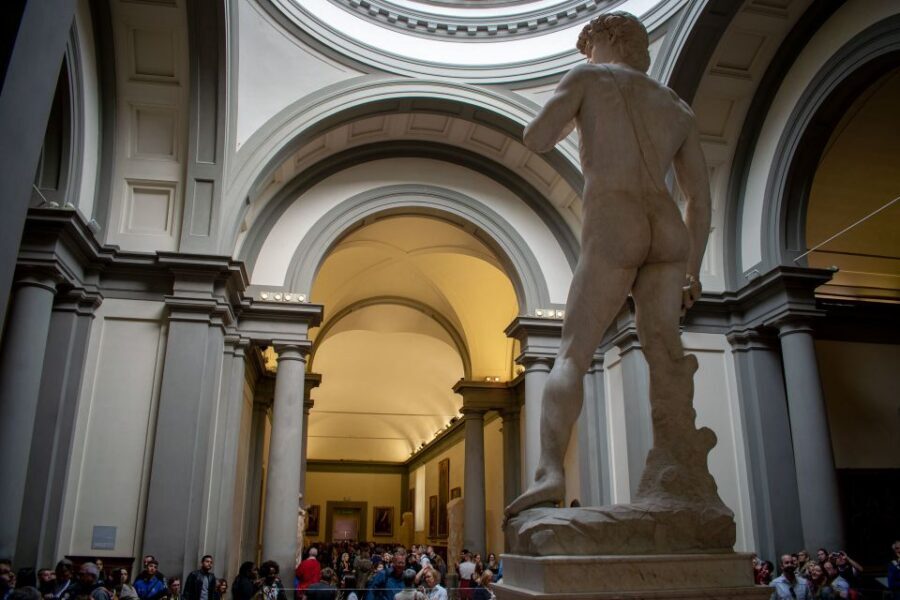
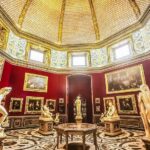
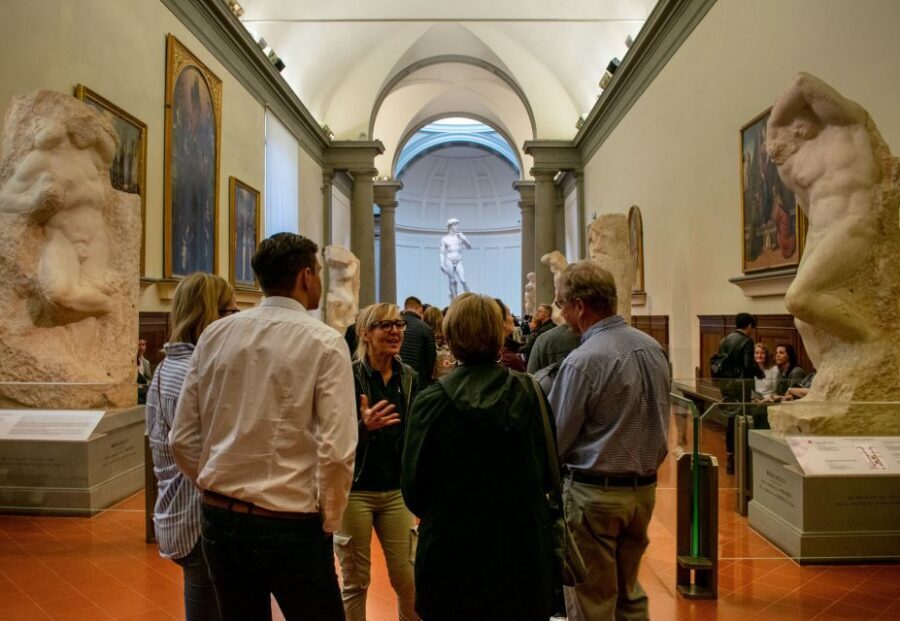
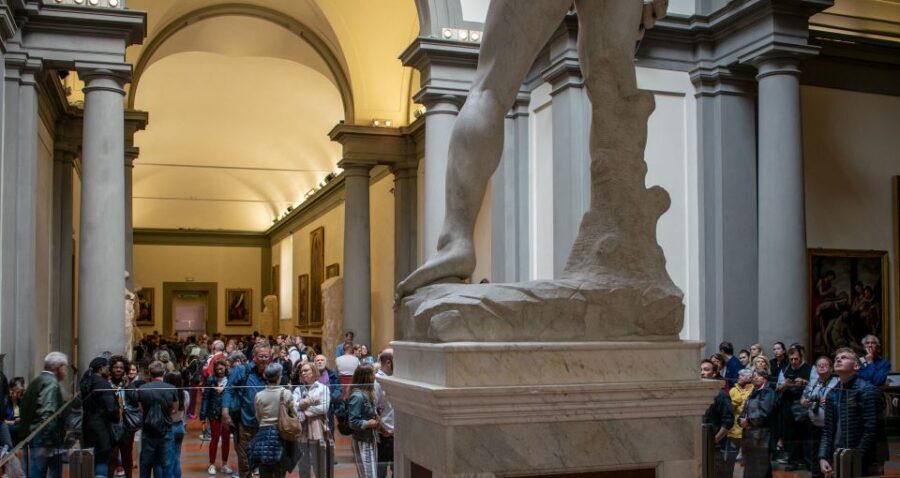
The tour’s main arc takes you into the Tribuna di De Fabris, where Michelangelo’s works sit in a way that rewards attention to sequence. This is where the guide’s job really matters, because the placement and relationship between the pieces can be easy to miss if you just wander.
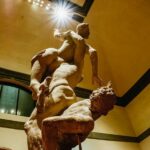
You’ll move past the four Prisoners and Michelangelo’s San Matteo—described as the figures that lead us to the imposing David. The idea is not just seeing seven words on a label. It’s understanding how the sculpture group is staged to guide your eye and your imagination.
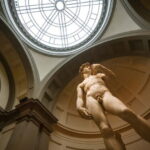
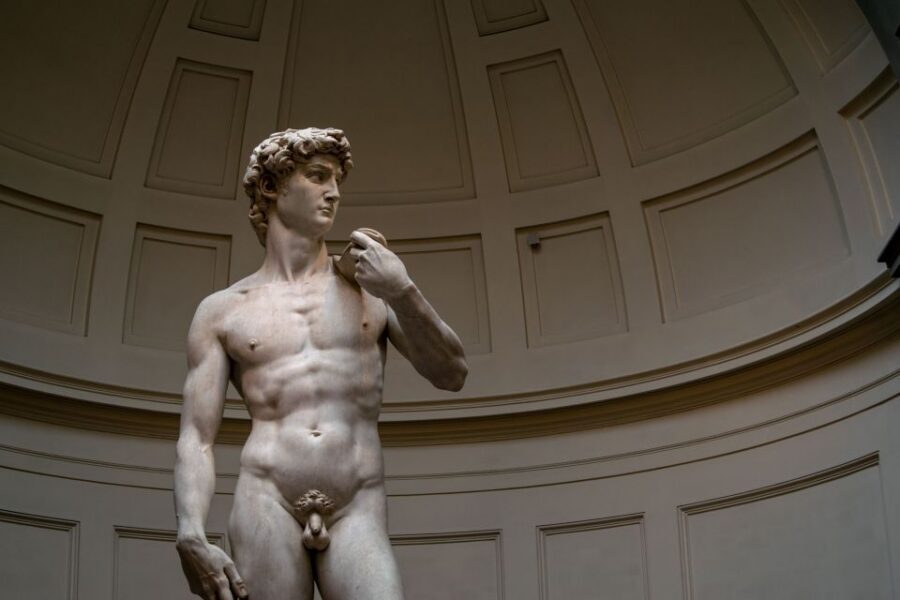
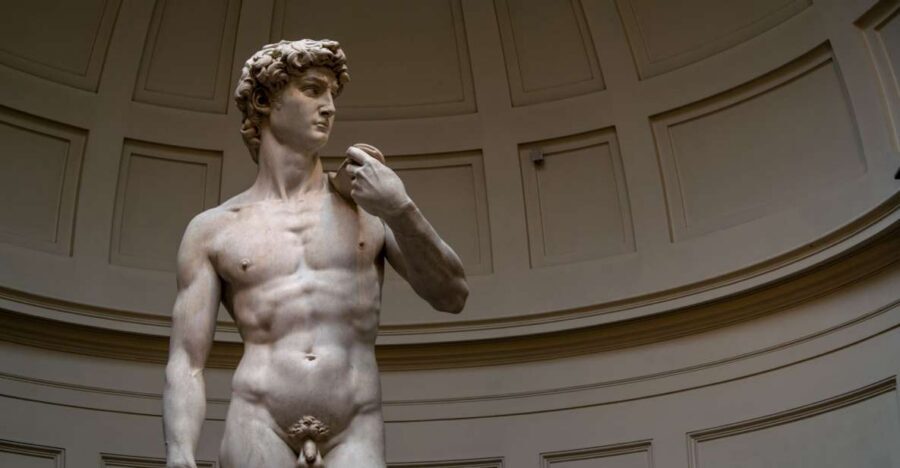
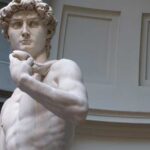
Then comes David: the famous biblical hero carved from Carrara marble. Your guide connects what you’re seeing to Michelangelo’s choices, including details that make the marble seem more alive than stone should.
If you want practical advice: take your time looking at David’s posture and expression from a few angles. The tour is only one hour, so don’t spend all your time staring at one tiny spot. Let your eyes move the way your guide encourages, because the story you hear is tied to how you view the full figure.
Michelangelo’s six sculptures: what your guide helps you notice
Michelangelo’s works here aren’t isolated “masterpieces in a row.” They’re connected by theme, material, and carving decisions. During the tour, you’ll learn about the history and secrets behind each of Michelangelo’s six sculptures in the museum. The six you’ll cover are:
- David
- The four Prisoners
- San Matteo
That matters because marble looks simple until you start noticing how much thought goes into anatomy, drapery cues, tension in limbs, and facial expression. A trained guide turns those observations into something you can actually hold onto after you leave.
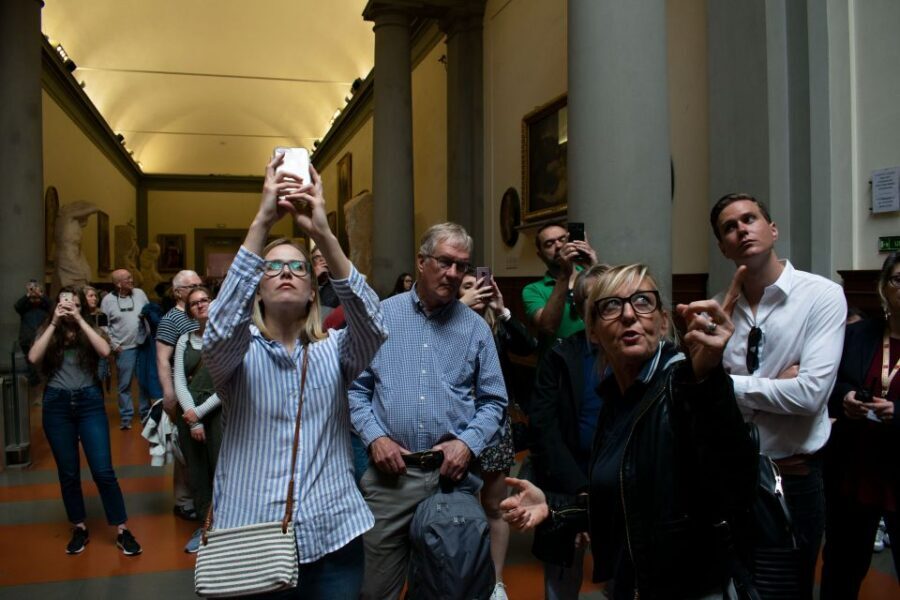
Your earphones help for this part. In the Tribuna area, the soundscape can get noisy, and you don’t want to keep guessing what someone said about a specific detail in a sculpture. With the earphone set, you can listen closely while still staying oriented in the room.
I also like that the tour leans into anecdotes about the Carrara marble block Michelangelo sculpted. That kind of information gives you a physical sense of the work: you’re not just looking at a finished figure, you’re thinking about carving decisions made before the stone ever became “famous.”
One more practical point: after your tour ends, you’ll have the momentum to re-check what mattered. If you pay attention during the guided hour, your self-guided hour later becomes more fun and less random.
You can also read our reviews of more museum experiences in Florence

After the 1-hour tour: make your ticket last all day
The biggest hidden benefit is that your entrance ticket is valid all day. That’s your chance to shift from guided “greatest hits” mode to slower, personal looking.
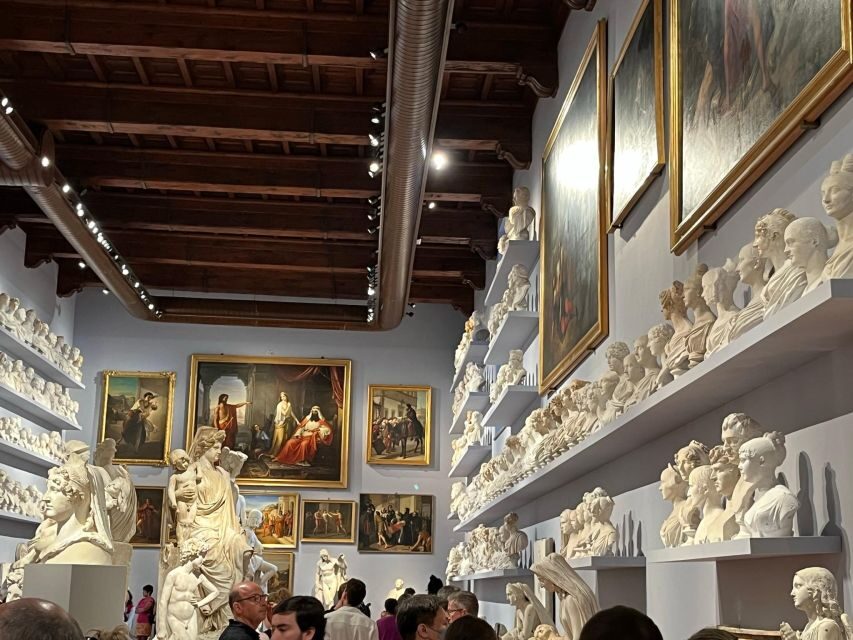
When your guided portion ends, don’t just sprint to the exit. Keep exploring the rest of the Accademia’s highlights, especially areas you might not prioritize on your first glance. The museum includes:
- Gipsoteca (Plaster casts) featuring works by Lorenzo Bartolini
These plaster casts are a great follow-up to the marble. They help you see how Renaissance artists studied form and process, not only final surfaces.
- Upper floor collection of gold-plated altarpieces
If you’ve been focused on sculpture, this shift in medium and style is a useful contrast. It changes the museum rhythm and gives you something more religious and decorative after the Renaissance “muscle” of Michelangelo.
- Renaissance paintings from the 15th and 16th centuries
You’ll leave the tour with a sharper eye for Renaissance craft, so the paintings won’t feel like background decoration. You’ll be better at spotting the visual logic artists used.
My advice: plan a light second pass. Spend the first part of your free time reconnecting with the Michelangelo area you just heard about. Then branch out to Gipsoteca and the upper-level galleries. That order keeps you from feeling like you’re chasing everything at once.
Price and logistics: is $58 good value for this format?
At $58 per person for a 1-hour guided visit plus all-day museum entry, you’re paying for three things: priority access, guided interpretation, and equipment to hear it clearly.
Priority handling is real value in Florence, where museum lines can chew up time. This tour specifically includes skip-the-line entry through an express security check and priority entry, which is the difference between “we’ll see” and actually getting inside smoothly.
Then you get the “why it matters” layer: single-language live guidance in English with a certified tourist guide setup, plus earphones so details land instead of evaporate in the noise. For most people, that’s the part that turns “I saw David” into “I understood what I saw.”
The only reason this might not feel worth it is if your expectations are huge and purely emotional. One review-rated experience was described as good but not outstanding. That’s a fair warning sign: if you want an all-day guide or a deep, slow scholarship session, this is a highlight tour. You’ll need to use your all-day access to go deeper on your own after the hour ends.
How to get the most from a one-hour highlight tour
A one-hour museum tour can either feel rushed or perfectly targeted. Here, you’ll get the best result if you treat the guide like your “map,” not your entire plan.
Here’s how I’d do it:
- Listen for the story beats tied to each sculpture, not just names and dates.
- Use the earphones to keep your attention steady while you move through the rooms.
- When you reach David and the Tribuna area, pause longer than you think you need for each major figure, then move on. Don’t get stuck at one spot.
Also, keep your expectations aligned with the time. The tour is built to hit the biggest pieces and explain the key connections: Medici instruments, the route through Tribuna di De Fabris, and Michelangelo’s six sculptures. Once that arc is done, your all-day ticket is your invitation to personalize the rest.
And yes, if you’re traveling with kids or a group with mixed interests, this structure helps. You get a clear anchor (David) and enough variety early on (the Medici instrument section) to keep attention from collapsing before the main event.
Who this tour fits best (and who might prefer something else)
This tour is a strong match if you:
- want priority access and an efficient start
- care about understanding the sculptures instead of just photographing them
- like guided direction but still want freedom afterward
- want a clear English-led experience with earphones
It can also work well if mobility matters, since the activity includes assistance with museum entry and is stated as wheelchair accessible.
Where it may not be ideal: if you’re someone who hates guided groups and prefers quiet wandering with zero structure. This is a guided hour, not a self-led audio tour. And if you want a prolonged meditation at every masterpiece, you’ll have to rely on your all-day entry to slow down.
Should you book? My call
Yes, you should book this tour if your #1 goal is to see David and come away with real understanding, not just a photo. The priority access, the earphones, and the tight one-hour focus on Michelangelo’s six sculptures make it a practical way to get top value from a limited time in Florence.
I’d say skip it only if you’re planning a very relaxed museum day where you don’t want a scheduled guide hour, or if you expect the guide to carry you through an entire all-day museum experience. This one does the important part well, then hands you the museum.
FAQ
How long is the Accademia Gallery guided tour?
The guided portion lasts 1 hour.
Is there skip-the-line entry?
Yes. The experience includes skip-the-line entry through an express security check plus priority entry.
What language is the tour guide speaking?
The live tour guide speaks English.
Are tickets valid for more than just the tour time?
Yes. Your entrance ticket is valid all day, so you can continue exploring after the 1-hour guided visit.
What’s included in the tour price?
Included items are the Accademia Gallery ticket, priority entry, assistance with museum entry, a single-language live tour, and earphones.
Is the meeting point clearly identified?
Yes. Meet at the Slow Tour Tuscany office at Via degli Alfani, 113 red, next to the art shop SALVINI. Arrive 15 minutes early.
Is the tour wheelchair accessible?
Yes. Wheelchair accessibility is stated, and assistance with museum entry is included.
Are pets allowed?
No, pets are not allowed.
What’s the cancellation window?
Free cancellation is available up to 24 hours in advance for a full refund.

More Guided Tours in Florence
More Tours in Florence

More Tour Reviews in Florence
- Tuscany Day Trip from Florence: Siena, San Gimignano, Pisa and Lunch at a Winery
★ 5.0 · 21,634 reviews - The Best tour in Florence: Renaissance & Medici Tales – guided by a STORYTELLER
★ 5.0 · 12,316 reviews