REVIEW · FLORENCE
Florence: City Sightseeing Guided Bike Tour
Book on GetYourGuide →Operated by My Tour in Italy · Bookable on GetYourGuide
Florence looks different from the saddle. This guided bike tour moves you efficiently past the Duomo, Ponte Vecchio, and the Uffizi area, with story stops that help the city make sense. You’re on a comfortable bike for 2.5 hours of sight-seeing without the constant stop-and-go of walking.
What I love most is the chance to ride through the Oltrarno quarter, including narrow streets and artisan areas that tour buses can’t reach. I also like the way the tour mixes big monuments with small breaks, including ice cream at the right moments.
One consideration: you need solid comfort riding a bicycle (and the tour isn’t set up for wheelchair users), so it’s not the best fit if you want everything to be low-effort. If you’re with kids, you’ll be relying on the provided seats/helmets, and you’ll still want everyone to match the cycling pace.
In This Review
- Key highlights at a glance
- Why a guided Florence bike route beats walking
- Your ride setup: bikes, helmets, and kid-friendly gear
- The starting point and finding the flow fast
- Oltrarno: narrow streets, artisan areas, and bus-proof shortcuts
- Palazzo Pitti and the shift from square views to palace drama
- Duomo time: seeing Brunelleschi’s dome without the museum overwhelm
- Piazza della Signoria: where civic power and art collide
- Ponte Vecchio and the Uffizi area: classic views, timed to keep it fun
- Santa Croce exterior: an elegant finale with famous names
- Gelato pauses and strategic stops that prevent history burnout
- Rain reality: ponchos plus small-group momentum
- Safety and the pace: where this tour feels at ease
- Value check: is $65 worth it for 2.5 hours?
- Who this Florence bike tour suits (and who should skip it)
- Should you book this Florence guided bike tour?
Key highlights at a glance
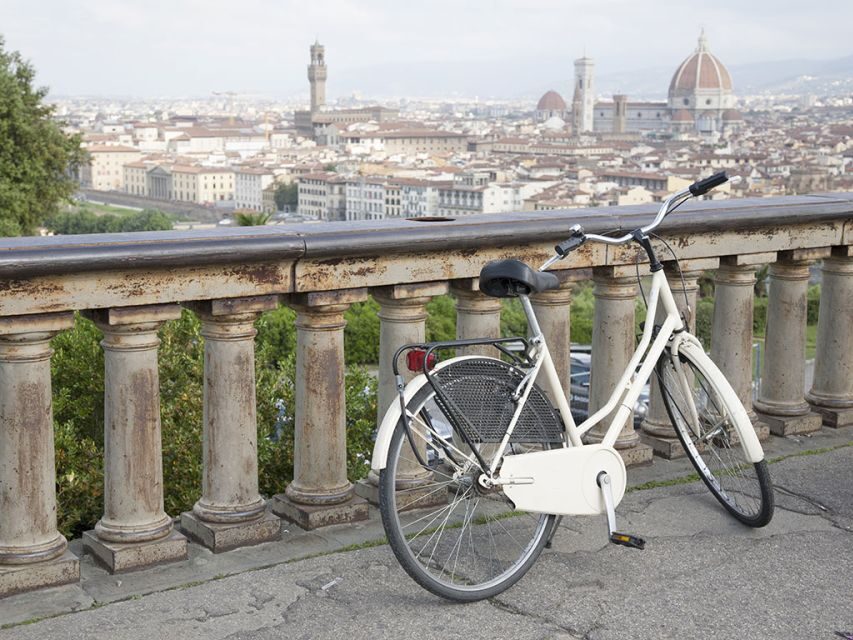
- Oltrarno streets you usually don’t see: narrow lanes and artisan zones that buses can’t access
- Duomo dome spotting: Brunelleschi’s iconic cupola shows up in the route
- Ponte Vecchio and Uffizi area views: covered bridge energy plus the Uffizi façade from the right angle
- Piazza della Signoria to Santa Croce: Republic-era squares to the exterior of Michelangelo/Galileo/Machiavelli’s resting place
- Convenient group audio: an earphone is included for groups over 5 participants
- Rain-ready: ponchos are used so the tour can keep moving
Why a guided Florence bike route beats walking
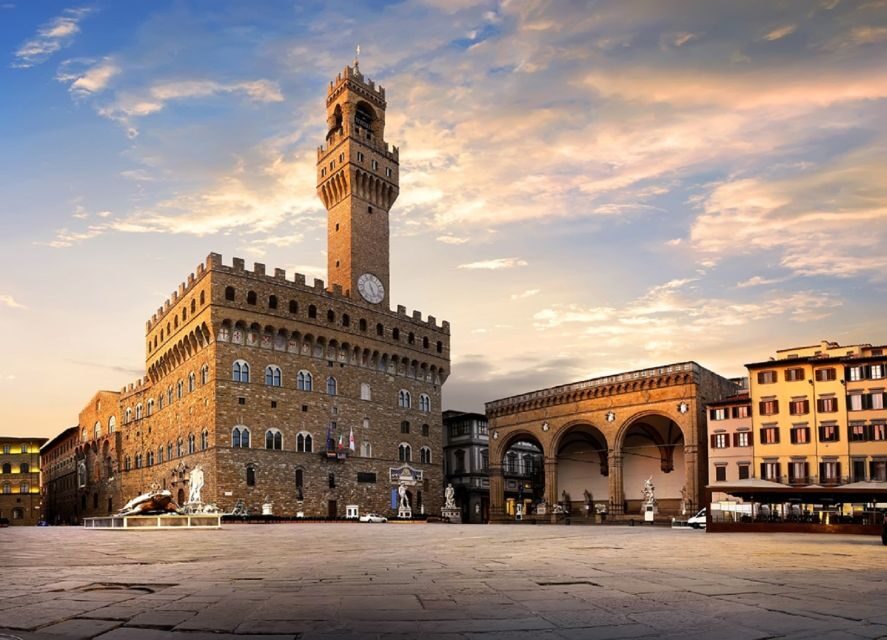
Florence’s center is packed. On foot, you fight crowds, detours, and stairs. On a bike tour, you get something better: momentum. You’re still seeing Florence’s icons, but you’re doing it with less fatigue and more time to actually look.
This tour is built around a classic set of Renaissance anchors—Duomo, Piazza della Signoria, Ponte Vecchio, and the Uffizi area—then adds a quieter layer by pushing into Oltrarno. That combination is the whole point. You get the postcard Florence, plus the Florence that feels lived-in.
And the guide role matters. In the small details, you’ll feel it: patient pacing, clear explanations at stops, and a guide who actually checks that everyone can keep up. Folks in the feedback talk about guides like Sophie, Franko, Maria, Lorenzo, and Raffael as standouts for making the architecture and stories click.
You can also read our reviews of more cycling tours in Florence
Your ride setup: bikes, helmets, and kid-friendly gear
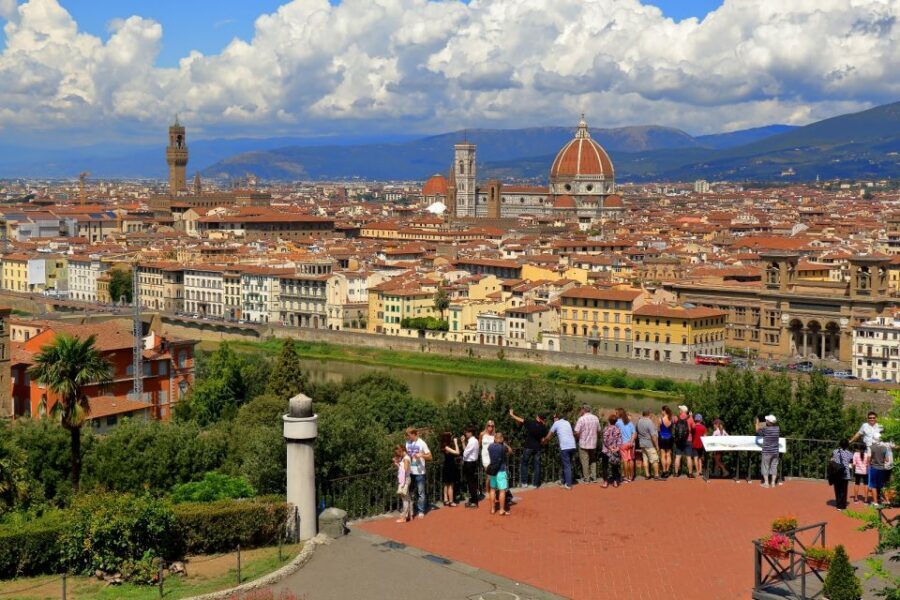
You start with the basics covered: a comfortable bike and helmets. That’s not glamorous, but it’s smart. On busy streets, good gear equals less worry and more enjoyment.
If you’re traveling with kids, the tour can work better than many city tours because it provides child seats and helmets for children under age 10. Just remember: you’ll still need to match the group’s cycling rhythm for the full 2.5 hours.
For bigger groups, there’s also an earphone option when there are more than 5 participants. That matters because Florence is loud. You don’t want to strain to hear your guide over traffic and the crowd swirl.
You’ll also be asked for participant heights, and you must be able to ride your bicycle. It’s not a “walk beside the bike” style tour.
The starting point and finding the flow fast
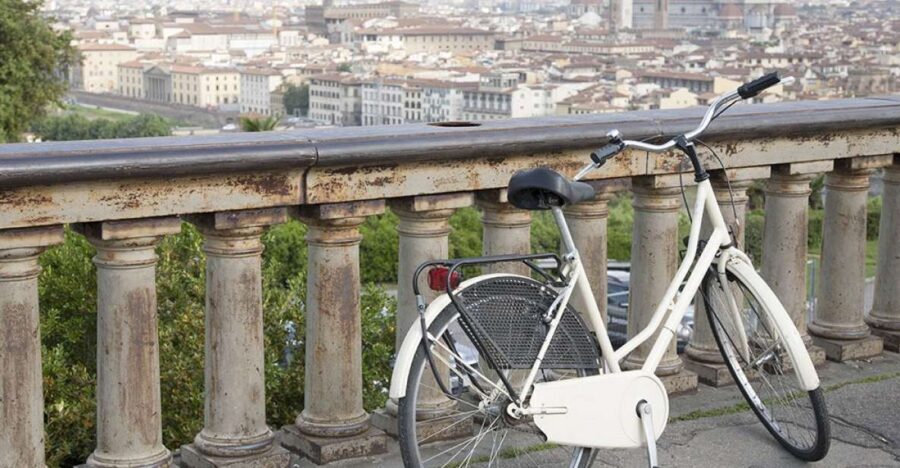
The tour meets at the booking office, then gets moving in a way that helps you settle quickly. The timing is tight enough that you don’t waste your day waiting around, but not so tight that you feel like you’re being herded.
A helpful thing to know: cycling etiquette in Italy can feel a little different than home. One note from feedback is to get comfortable using your bell and keeping your expectations flexible. That’s not chaos—it’s communication. If you ride confidently and politely, the experience tends to feel smooth.
The guide’s role here is underrated. Good guides set expectations early: where you’re stopping, when to look up, and when to simply breathe and enjoy. That reduces the “what do we do now?” stress.
Oltrarno: narrow streets, artisan areas, and bus-proof shortcuts
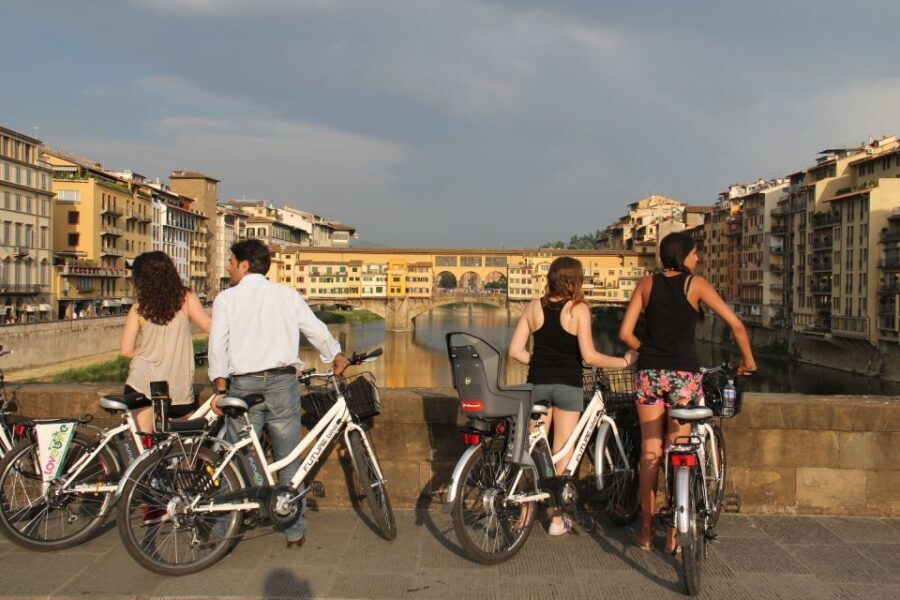
If you only cared about the famous landmarks, you could just do a walking route. But Florence by bike earns its keep in Oltrarno.
This is where the tour leaves the usual tourist corridors. You’ll cycle down narrow streets and reach parts of the artisan quarter that are off-limits to tour buses. That small detail changes the whole vibe. Instead of a bottleneck of parked pedestrians, you get lanes that feel more like local life.
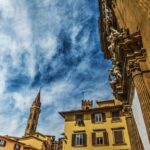
You’ll also notice the architecture playing a bigger role here than the monuments do. Shopfronts, courtyards, church cupolas in the distance—it feels like you’re watching Florence’s Renaissance layers stack up in real time. The route even includes a look toward the cupolas of San Frediano in Cestello, which is the kind of visual you can miss if you only sprint from major sights to major sights.
The practical payoff: you get variety without needing to add extra tours.
Palazzo Pitti and the shift from square views to palace drama
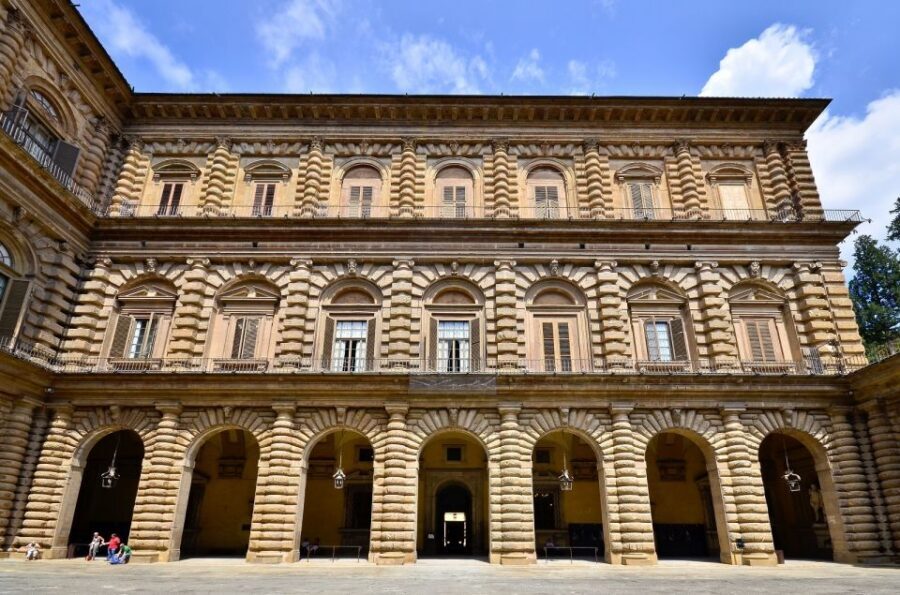
As the tour moves toward Palazzo Pitti, you’re traveling through a stretch that helps you understand Florence beyond the main museum cluster. Pitti isn’t just a building on a map—it’s the feeling of Renaissance power and prestige, stretched across an entire neighborhood.
From the bike, you’re not just staring at the palace. You’re experiencing how it sits within the city: the streets that funnel toward it, the way the area changes as you approach, and the sense that you’re crossing into a different “chapter” of Florence.
This is also where the bike angle helps. On foot, you’re fighting your view through crowds. On a bike, you often get a clearer line of sight and a better sense of scale.
You can also read our reviews of more guided tours in Florence
Duomo time: seeing Brunelleschi’s dome without the museum overwhelm
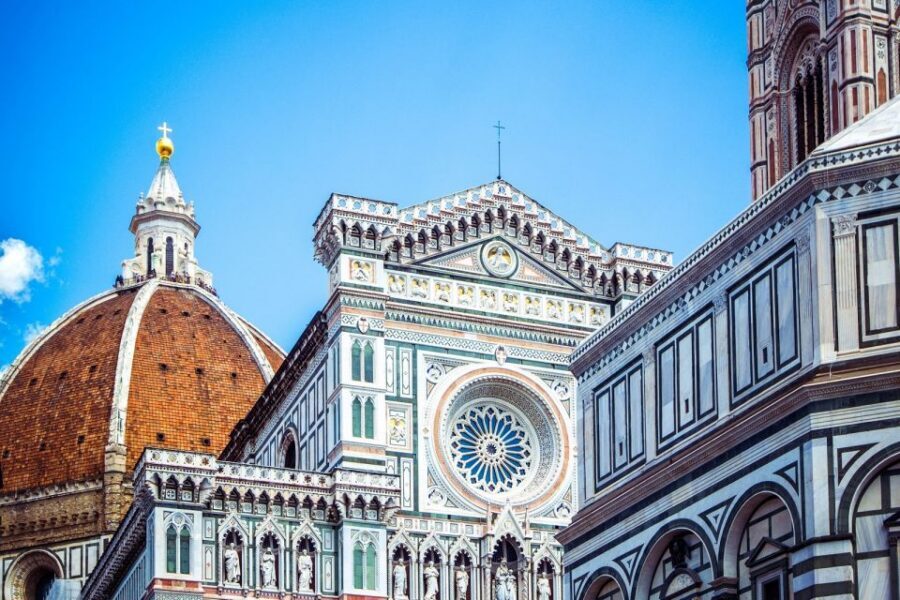
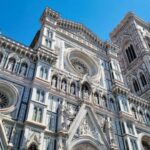
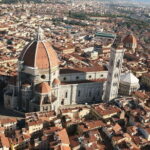
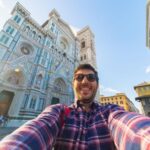
The Duomo is the obvious headline, and the tour does it the smart way: by centering the moment around Brunelleschi’s iconic dome. Seeing that cupola is a must, even if you don’t go inside on this specific tour format.
The benefit here is pacing. The tour stops you at points where you can actually look up and register details, rather than rushing past the architecture while you search for the next ticket line. You’re also hearing the story in the setting that made the story matter in the first place.
If you’re the type who loves architecture, you’ll probably enjoy how the guide connects details to the city’s larger Renaissance identity, the way Florence used art and building like a public language.
Piazza della Signoria: where civic power and art collide
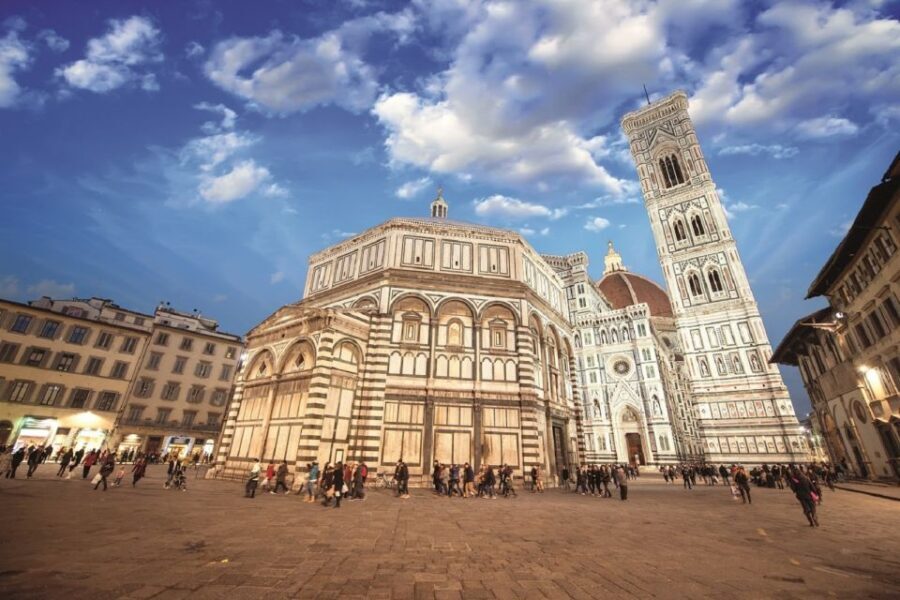
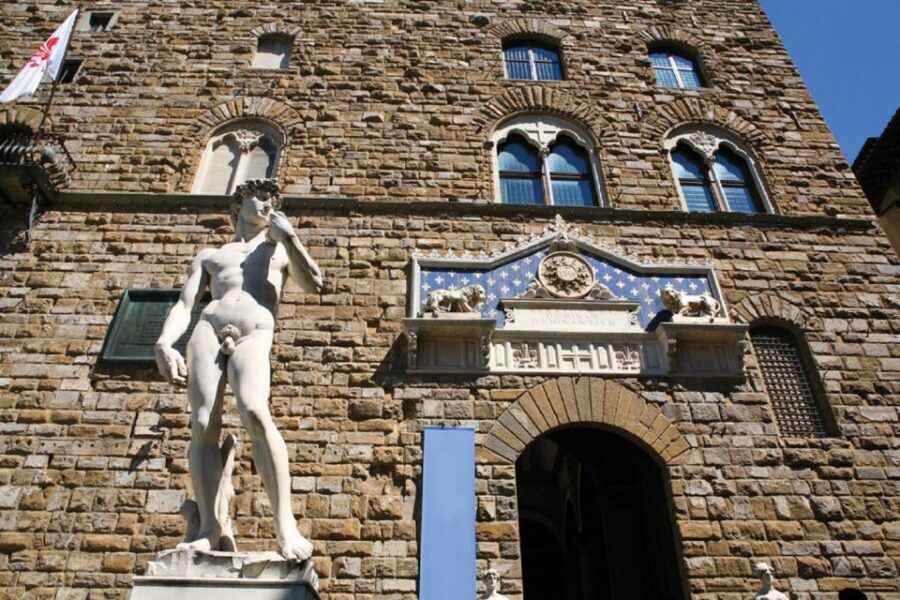
Next comes Piazza della Signoria, the heart of the medieval Florentine Republic. From the bike route, you get a strong sense of the square as a stage—this is where decisions got made, and where power showed itself in stone.
You’ll see the palaces that frame the square, and that framing is key. Florence’s political identity isn’t tucked away in a museum label. It’s in the way the urban design makes authority visible.
This stop also typically works as a reset point. The guide uses it to connect what you’re seeing to why it mattered. If you’ve ever felt overwhelmed by Florence’s history, this kind of structured stop helps you sort impressions into something usable.
Ponte Vecchio and the Uffizi area: classic views, timed to keep it fun
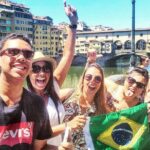
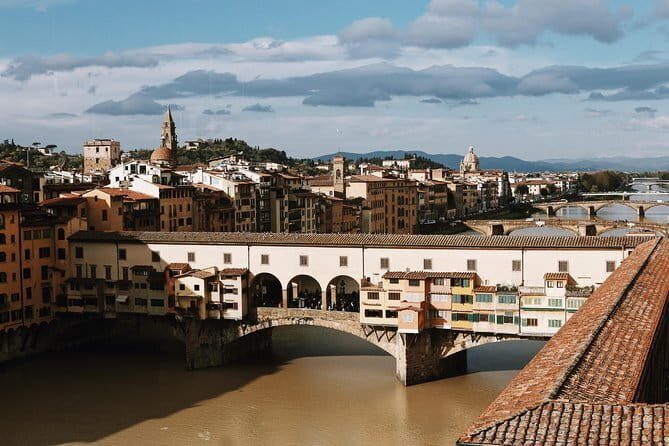
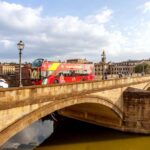
Then you roll toward the Ponte Vecchio, the famous covered bridge that defines Florence’s postcard image. The bridge is busy on foot, but from the bike route you can experience the shift—how the city compresses and then opens again as you get closer to the crossing.
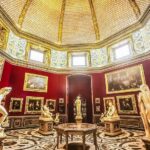
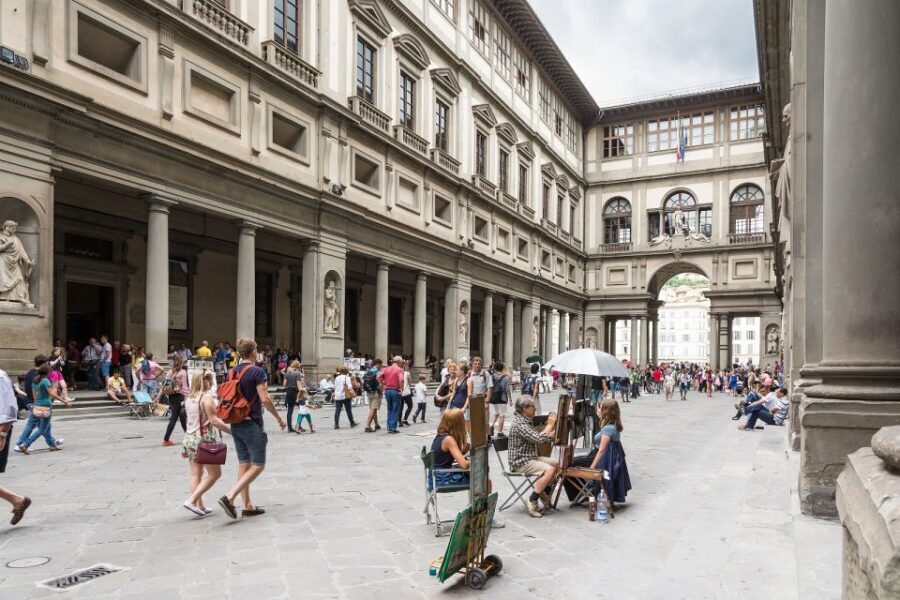
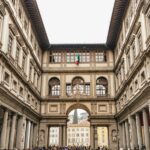
After that, the tour continues toward the Piazzale degli Uffizi area so you can see the façade of the Uffizi Gallery. The key practical point: this tour is about views and the exterior-facing experience, not a full museum visit. That means you won’t burn your entire day inside galleries if your schedule is tight.
The value is that you see the Uffizi area as part of a larger walk-and-roll story instead of treating it like an isolated stop. You understand where it sits in the city’s flow.
Santa Croce exterior: an elegant finale with famous names
The last big monuments stretch takes you to Santa Croce, one of Florence’s most recognizable church exteriors. The tour’s end here is meaningful because it’s tied to the idea of what Florence created and who it influenced.
You’ll see Santa Croce as the final resting place of notable Italians, including Michelangelo, Galileo, and Machiavelli. Even if you don’t have time for a deeper church visit, getting the exterior context helps you connect these names to a physical place, not just a textbook.
This is also a nice emotional rhythm shift. After the busier river and palace areas, Santa Croce gives you a more ceremonial feeling as the tour winds down.
Gelato pauses and strategic stops that prevent history burnout
The tour doesn’t just “tell facts while you ride.” It builds in strategic stops with time to pause and actually take things in. One of the most-liked elements is that you get stories at the right moments, not as a constant lecture.
And yes, there’s a sweet break. You’re given ice cream, and the guide uses pauses so you can reset with something very Florentine.
That matters if you’re the type who gets history-fatigued. Short, well-timed explanations plus small breaks keep you learning without feeling trapped.
Rain reality: ponchos plus small-group momentum
Florence weather can flip fast. The tour plan uses ponchos, which is a big deal for comfort. One of the standout bits in feedback is that the tour kept its fun even in pouring rain, suggesting the route and organization are set up to keep moving.
The other rain advantage: bike travel cuts the amount of time you’re standing in the cold. Even when you’re wet, you’re typically not stuck motionless for long.
If you’re trying to plan around forecast uncertainty, this approach is reassuring.
Safety and the pace: where this tour feels at ease
Safety shows up in the details you’d hope for: well-maintained bikes, helmet use, and a guide who manages stops and movement. Many reviews give credit for guides taking care of the group and riding safely.
The pace is typically described as relaxed, with stops that don’t feel rushed. Still, there’s one practical reality: you’re cycling. If you go in expecting a leisurely stroll, you might feel the rhythm more than you expect. You’ll want to be ready to ride consistently for the full 2.5 hours.
If you’re sensitive to speed changes, pay attention to the early instructions and how the guide forms the group.
Value check: is $65 worth it for 2.5 hours?
At $65 per person for 2.5 hours, the value depends on what you’re trying to buy: time, comfort, or guided context.
Here’s why it can be a strong deal:
- You cover a lot of major sights without spending half the day transit-wrangling.
- You get a guide who explains what you’re seeing at multiple stops, not just one big talk.
- You get extras that walking tours often miss, like access to artisan areas off-limits to tour buses and a route that uses bike-friendly streets.
- You’re provided the basics—bike, helmet, bottle of water, and ice cream—so you’re not scrambling for small logistics mid-ride.
Could it feel pricey if you only want the bare minimum sightseeing? Sure. If you’re the kind of person who doesn’t care about explanations, you might prefer a self-guided rental and map. But if you want the city to click while you move through it, this price often makes sense.
Who this Florence bike tour suits (and who should skip it)
I think this tour fits best if you:
- Want maximum Florence per hour without grinding your legs on stairs and cobbles
- Like your sightseeing with story context at multiple stops
- Enjoy neighborhoods more than just museum-ticket highlights, especially Oltrarno
It’s not a great fit if you:
- Can’t confidently ride a bicycle (the requirement is explicit)
- Use a wheelchair (the tour is not suitable for wheelchair users)
- Want a totally car-free experience with no bike etiquette awareness needed
If you’re bringing kids, it can be workable because of provided child seats and helmets, but you’ll still need everyone to handle the group pace.
Should you book this Florence guided bike tour?
If you want Florence in one organized hit—Duomo dome views, Ponte Vecchio, the Uffizi façade area, Santa Croce, and the Oltrarno streets you’d otherwise struggle to reach—this is a smart way to spend part of your day. The guide-driven storytelling plus the bike comfort makes it feel efficient without feeling robotic.
Book it if you’re comfortable riding and you like getting explanations as you go. Skip it if you need a walking-only plan or you’re not ready to handle bike rhythm and local road etiquette.
If your schedule is tight and you want to stop thinking about logistics, this tour does that job well.

More Cycling Tours in Florence
More Tours in Florence


More Tour Reviews in Florence
- Tuscany Day Trip from Florence: Siena, San Gimignano, Pisa and Lunch at a Winery
★ 5.0 · 21,634 reviews - The Best tour in Florence: Renaissance & Medici Tales – guided by a STORYTELLER
★ 5.0 · 12,316 reviews