REVIEW · FLORENCE
Florence: Italian Opera
Book on GetYourGuide →Operated by Agenzia Musica Internazionale · Bookable on GetYourGuide
Opera in Florence feels personal.
This Italian-opera concert is a smart way to taste the best of Puccini, Verdi, Mozart, and Rossini without getting lost in a full-length production. I especially love the superb acoustics in the Auditorium of Santo Stefano and the way the live pianist keeps everything grounded and clear. One consideration: the program can feel like a lot of intermezzi, and you may want the printed program to do a bit more work telling you exactly who’s singing which numbers.
You’ll hear the drama and beauty in two historic settings, not just one. The Auditorium of Santo Stefano sits near Ponte Vecchio, with visible layers of Romanesque roots and later Gothic and Baroque changes after major damage and restoration. I also like having the garden and tea room option nearby for a calmer moment before the next half of the show.
With tickets starting around $41 and three seating categories, this can fit a range of budgets and comfort preferences. It also runs as a one-day event with a start time based on availability, so you’ll plan your evening around the confirmation you get.
In This Review
- Key highlights you’ll feel the moment you sit down
- A $41 opera night that won’t intimidate first-timers
- Where the music happens: Santo Stefano next to Ponte Vecchio
- Zeffirelli Concert Hall and the two-venue flow of the evening
- Program walkthrough: Rossini, Puccini, Verdi, and Mozart arias
- The voices and pianist: Alessia Battini, David Ciarrocchi, Gianni Cigna
- Seats and intermissions: choosing your category without stress
- Garden, tea room drinks, and planning your food
- Value check: what $41 buys you in real terms
- Who this is for (and who might not love the format)
- Should you book this Florence Italian opera experience?
- FAQ
- How long is the Florence Italian Opera concert?
- What is included with the ticket price?
- Are food and drinks included?
- Where does the concert take place?
- Is there a set meeting point?
- Is the event wheelchair accessible?
Key highlights you’ll feel the moment you sit down
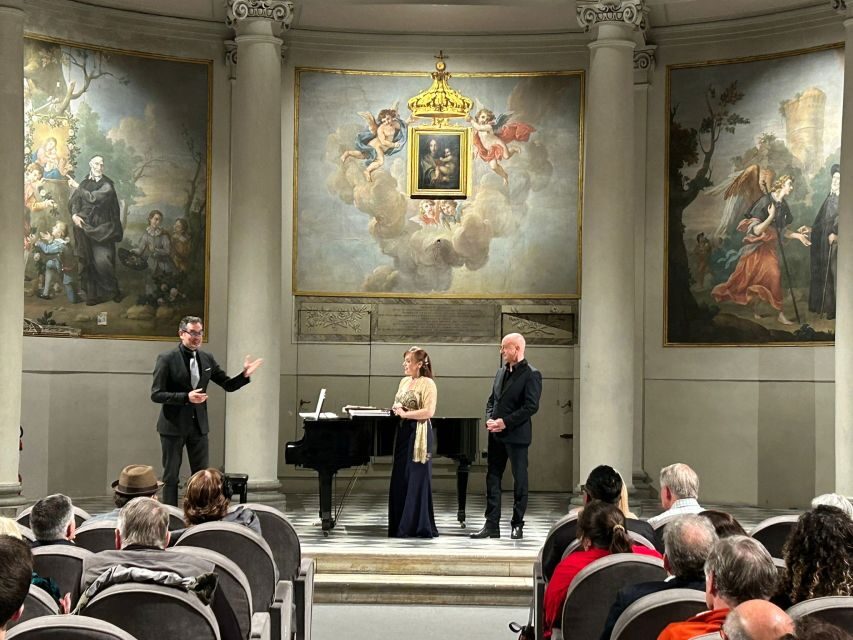
- Acoustics that make voices sound powerful, even in a smaller, intimate-feeling setting
- Two parts, nonstop momentum, mixing familiar hits and classic aria moments
- Santo Stefano near Ponte Vecchio, with architecture that has been rebuilt and refined over time
- Live vocalists plus an opera-trained pianist, which is the secret sauce for musical clarity
- A comfortable add-on space with a garden to reset and a tea room for drinks during downtime
A $41 opera night that won’t intimidate first-timers
If you’ve ever worried opera will be too serious, too slow, or too hard to follow, this kind of concert-format show is a relief. You get celebrated arias and duets, presented in a way that moves quickly from one emotional high point to the next. It’s also a low-risk way to decide if opera is for you, because you’re not committing to hours and hours of staging.
I like that it’s built around recognizable names and styles. You’ll hear the Italian drama people associate with Verdi and Puccini, plus the lighter wit and precision you expect from Mozart and Rossini. And because the pianist is a real specialist in opera accompaniment, the musical backbone stays solid from start to finish.
You can also read our reviews of more tours and experiences in Florence.
- Tuscany Day Trip from Florence: Siena, San Gimignano, Pisa and Lunch at a Winery
★ 5.0 · 21,634 reviews

Where the music happens: Santo Stefano next to Ponte Vecchio
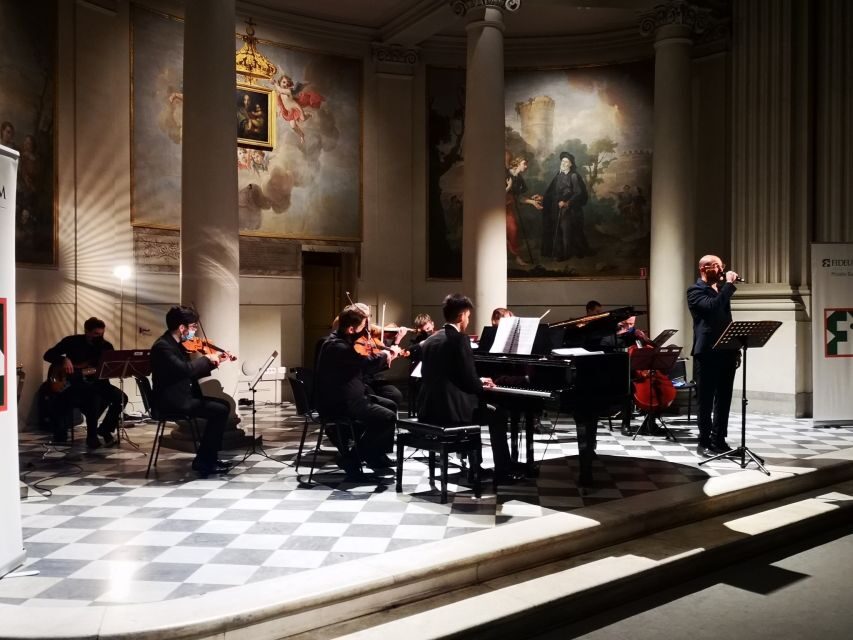
Your evening leans heavily on the Auditorium of Santo Stefano, right in Florence’s historic center by Ponte Vecchio. The building traces back to a Romanesque style and later picked up Gothic and Baroque changes. That matters because the shape and materials tend to shape sound, not just scenery.
This hall has also had a rough couple of centuries. It was damaged during World War II, hit again by the 1966 flood, and suffered in the 1993 Georgofili bombing before being restored in the late 1990s. The end result is an interior that feels both old-school and carefully repaired, with acoustics that help voices carry clearly.
A big practical win: if you time your arrival well, you can treat the location as part of the experience. You can take a short stroll near the bridge area before the show and then settle in without rushing across town.
Zeffirelli Concert Hall and the two-venue flow of the evening
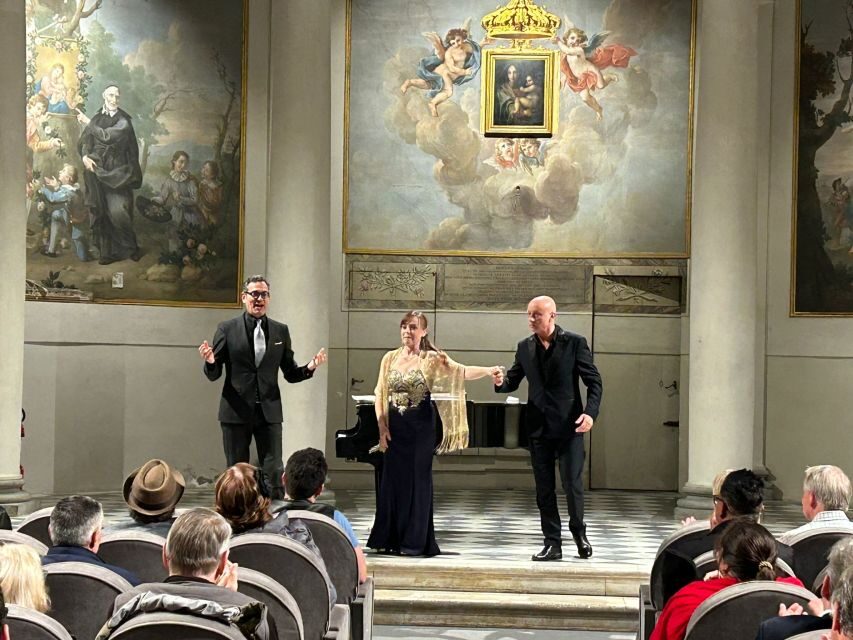
This concert experience is staged across two historic venues: the Zeffirelli Concert Hall and the Auditorium of Santo Stefano. You’re not just changing addresses—you’re getting a different “feel” to the room as the program moves through its two halves.
The show runs in two parts with an intermission between them. That structure keeps the night from blending together, and it gives you a natural reset point for listening fatigue. If you’re new to opera, that break is gold: it lets your brain catch up on what you just heard.
Timing depends on the specific start time available on your day. So plan to arrive a little early, especially if you want to settle in and read the printed program before the first notes.
Program walkthrough: Rossini, Puccini, Verdi, and Mozart arias
The program is a greatest-hits style selection, split into two blocks. In other words, you get the emotional targets opera fans love, without needing a full plot summary. Here’s how the music flows:
First part includes:
- Rossini: Largo al factotum from The Barber of Seville
- Puccini: Tre sbirri una carrozza from Tosca
- Piano solo intermezzo
- Puccini: Quando me’n vo from La Bohème
- Verdi: È strano… Sempre libera from La Traviata
- Mozart: Cinque, dieci, venti from The Marriage of Figaro
Intermission.
Second part includes:
- Puccini: O mio babbino caro from Gianni Schicchi
- Verdi: È sogno o realtà from Falstaff
- Mozart: La ci darem la mano from Don Giovanni
- Rossini: Dunque io son from The Barber of Seville
What this means for you: the setlist bounces between big Romantic emotion and lighter classical wit. Sempre libera and O mio babbino caro tend to hit hard emotionally, while the Rossini and Mozart pieces showcase timing, clarity, and vocal agility. If you love variety, this set gives it to you in one evening.
One thing to note: because the night includes a piano solo intermezzo and two blocks of music, it can feel like there are “in-between” moments. If you prefer a straight-through concert with fewer breaks, that’s the one format trade-off to consider.
The voices and pianist: Alessia Battini, David Ciarrocchi, Gianni Cigna
The performance lineup is one of the biggest reasons this show works. You’re not just hearing famous composers—you’re hearing a cast built for the style.
- Soprano: Alessia Battini
She’s presented as an emerging star with a voice that blends lyrical power and emotional depth. Her role is key for the Puccini and Mozart moments that often carry the audience.
- Baritone: David Ciarrocchi
He brings a rich, expressive baritone sound, with experience tied to Mozart and Verdi repertoire. That’s exactly what you want for the Verdi baritone moments and for the male lines that balance the soprano.
- Pianist: Gianni Cigna
He’s not described as a casual accompanist. He’s an opera coach and performer, and that shows in how smoothly the piano shapes transitions between vocal numbers and keeps the rhythm precise.
Why this matters: when the piano is truly part of the performance, you don’t feel like the singers are floating above the music. You feel structure. And in an opera program that jumps between composers and characters, that structure keeps everything coherent.
- The Best tour in Florence: Renaissance & Medici Tales – guided by a STORYTELLER
★ 5.0 · 12,316 reviews



Seats and intermissions: choosing your category without stress
You’ll choose from three seating categories. The venue size and setup can influence how intimate the sound feels, and your comfort matters more than people expect for a listening-heavy night.
Here’s the practical approach I’d use:
- If you want the best comfort and a bit more assurance about the view/sound balance, consider the higher category.
- If budget is the priority, the middle category usually makes sense, because it often lands you close enough to feel the voices clearly.
- If you pick the lowest category, just go in with the mindset that this is still about the music first, not stage drama.
Intermission is built into the format, and the additional space around the venues helps. You can stretch, grab a drink if you want, and reset before the second half.
Garden, tea room drinks, and planning your food
This experience isn’t about a full meal. Food and drinks aren’t included, even though there’s the option to relax in a beautiful garden and enjoy a drink in the tea room. Think of it as a calm bonus space, not a dining experience.
So I’d plan dinner either before you go or after the show. That keeps you from arriving hungry and then discovering the tea room is more of a pause-and-sip option than a restaurant meal.
The good news is the venue setup gives you something to do with that downtime besides rushing around the streets. If you like having a short decompression moment after the first part, this is a helpful way to manage the evening pace.
One more practical point: there’s no hotel pickup or drop-off. Make sure you know how you’ll get there and back on your own, then arrive early enough to settle.
Value check: what $41 buys you in real terms
At about $41 per person, you’re paying for a real live concert ticket plus a printed program. For many visitors, the value comes from the combination: multiple major composers in one night, two historic venues, and a performance lineup that’s built for opera-style singing rather than generic classical music.
This isn’t a full opera with sets and full casting. It’s a concert that spotlights the most famous aria moments. If that’s what you’re after—big vocal highlights, clear listening, and a Florence setting—this price is easy to justify.
If you’re on the fence, use this rule of thumb: book it if your goal is a memorable musical evening and you want the Florence atmosphere to be part of it. Skip it if you specifically want a full dramatic plot experience with minimal breaks.
A final booking note: you can cancel up to 24 hours in advance for a full refund, and some guests like the flexibility of reserving first and paying later.
Who this is for (and who might not love the format)
This fits best if you want:
- a first-time-friendly introduction to opera through famous arias
- a night that stays moving with a two-part structure
- a performance where the piano accompaniment is taken seriously
- Florence’s historic setting paired with excellent acoustics
It may be less ideal if you dislike intermezzos or you strongly prefer a program where every selection is crystal clear at a glance. The printed program is included, but if you like extra detail about who sings each specific number, you’ll want to pay attention to what’s on that paper when you sit down.
Also, if you’re the type who needs a full evening of food included, you’ll want to plan separately. This is all about the music, in a beautiful space.
Should you book this Florence Italian opera experience?
Yes, if your goal is a high-impact opera-style night without the commitment of a full production. The combination of Santo Stefano near Ponte Vecchio, live vocal performances, and a pianist trained for opera accompaniment makes it feel like more than a typical “classical concert” stop.
I’d especially recommend it to couples and solo travelers who want a romantic, cultured evening that still feels approachable. And if you’re nervous about opera, this format does a good job earning your attention quickly—because the show is built around moments people recognize.
If you’re sensitive to too many “in-between” moments, review the program structure in your mind first. Otherwise, grab a seat category that matches your comfort level and enjoy a Florence night designed for your ears.
FAQ
How long is the Florence Italian Opera concert?
The experience is 1 day and the specific starting time depends on availability.
What is included with the ticket price?
Your ticket includes the concert ticket and a printed program.
Are food and drinks included?
No. Food and drinks are not included, though there is a tea room where you can enjoy a drink.
Where does the concert take place?
The performance is held at the Zeffirelli Concert Hall and the Auditorium of Santo Stefano in Florence.
Is there a set meeting point?
The meeting point may vary depending on the option booked.
Is the event wheelchair accessible?
Yes, it is wheelchair accessible.
More Tour Reviews in Florence
- Tuscany Day Trip from Florence: Siena, San Gimignano, Pisa and Lunch at a Winery
★ 5.0 · 21,634 reviews - The Best tour in Florence: Renaissance & Medici Tales – guided by a STORYTELLER
★ 5.0 · 12,316 reviews