REVIEW · FLORENCE
Florence: Lasagna and Spaghetti-Making Class
Book on GetYourGuide →Operated by Experience in Florence · Bookable on GetYourGuide
Your rolling pin gets a workout.
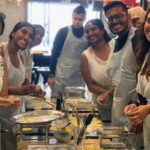
This Florence cooking class teaches you to make two Italian classics—traditional lasagna and fresh spaghetti—right in the historic center, in a beautiful palazzo setting. I like that it’s a small-group format (up to 10), and the instructors you’ll find in the program—like Alessandra and Milena—tend to keep the mood friendly and hands-on while you cook.
I also like the practical flow: you start with béchamel, then build the lasagna with hand-rolled sheets, and later move into fresh spaghetti with a tomato pummarola sauce. By the time you sit down to eat, you’re not just tasting Florence—you’re repeating techniques you can use at home.
One drawback to consider: this class isn’t suitable for vegans, gluten-sensitivity/gluten intolerance, or lactose intolerance, since you’ll be working with wheat pasta and dairy-based sauces.
In This Review
- Key highlights to know before you go
- Why this Florence pasta class feels different than a demo
- What you actually cook in 3 hours: lasagna sheets, béchamel, and spaghetti
- The sauces matter: béchamel with nutmeg and ragù, plus pummarola
- The meal setup: wine with your pasta, plus chocolate and limoncello
- Instructor energy and small-group help that actually changes what you learn
- Price and value check: $48 for pasta, sauces, wine, dessert, and limoncello
- Who this Florence class suits best (and who should skip it)
- Meeting point on Lungarno Guicciardini: ring the right doorbell
- Quick practical tips so your pasta night goes smoothly
- Should you book this lasagna and spaghetti class?
- FAQ
- What dishes will I make in the class?
- How long does the experience take?
- Is wine, dessert, and limoncello included?
- Can the class accommodate vegan, gluten-free, or lactose-free diets?
- Where do I meet the group?
- What is the minimum age to join?
- Can I cancel for a full refund?
Key highlights to know before you go
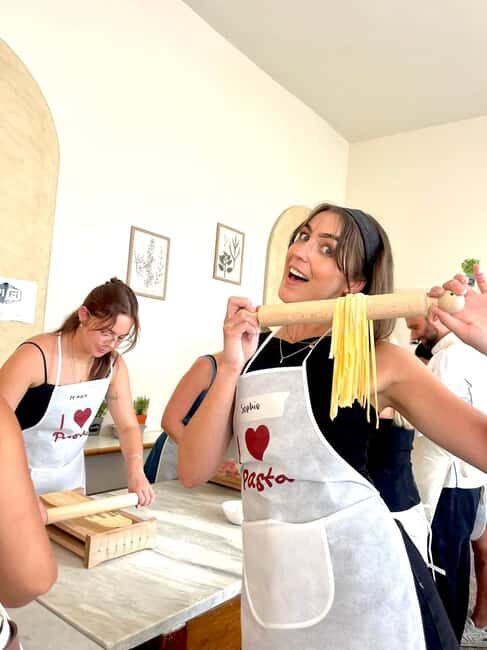
- Hands-on lasagna + spaghetti: you’ll make dough, form pasta, and put together what you’ll eat.
- Béchamel technique: butter, flour, milk, salt, and nutmeg—built the classic way.
- Pummarola sauce: a slow-simmered tomato sauce that pairs with your fresh spaghetti.
- Your meal comes from your work: you set the table together and then enjoy the results.
- Dessert + limoncello: finish with chocolate dessert and a traditional limoncello shot.
Why this Florence pasta class feels different than a demo
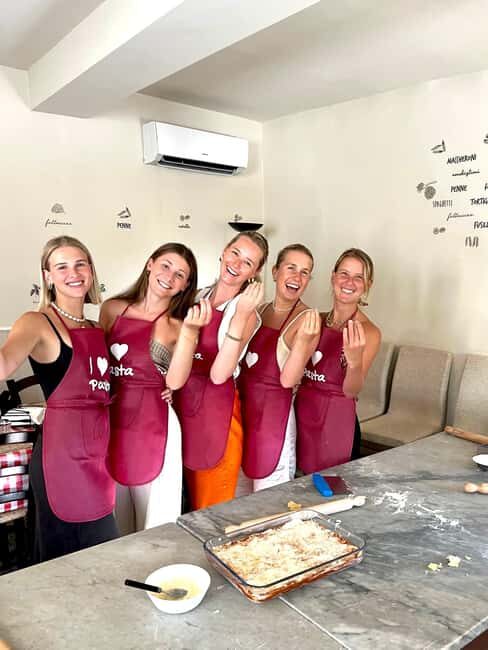
If you’re tired of watching someone else cook while you snack, this style of class is much more your lane. The format is built around doing the steps yourself—kneading, rolling, and shaping—so you leave with technique, not just a photo.
What makes it work well is the pacing. You get guided practice on key points like dough handling and sauce building, then you sit down to eat what you made. And because the group is capped at 10, you’re more likely to get direct help instead of getting lost in the shuffle.
You’ll also feel the Florence setting. The class happens in the historic center, and the “palazzo dinner” moment matters more than it sounds. Eating in that kind of setting turns your meal into an event, not a food stop.
You can also read our reviews of more tours and experiences in Florence

What you actually cook in 3 hours: lasagna sheets, béchamel, and spaghetti
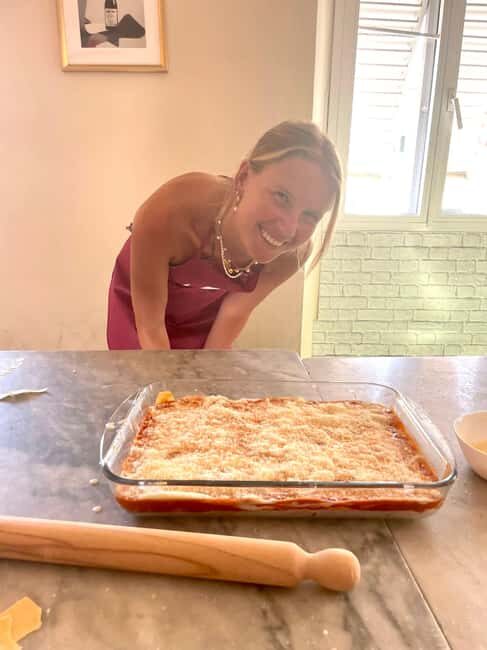
The experience is scheduled for 3 hours, and it’s structured around two pasta icons: lasagna and spaghetti. In plain terms, you’ll spend part of the time building components (like sauce), part of the time making the pasta, and part of the time assembling and eating.
You’ll start with béchamel. That usually means learning how to combine butter and flour, then cook in the milk until it turns smooth and silky. Nutmeg is part of the flavor profile, and it’s one of those ingredients that makes the sauce taste unmistakably classic.
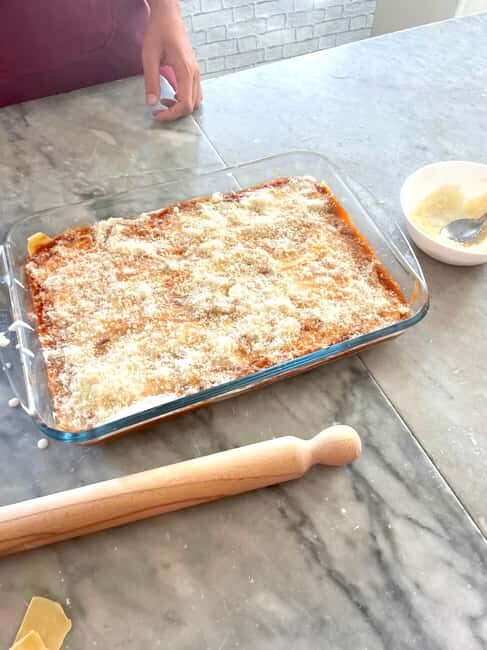
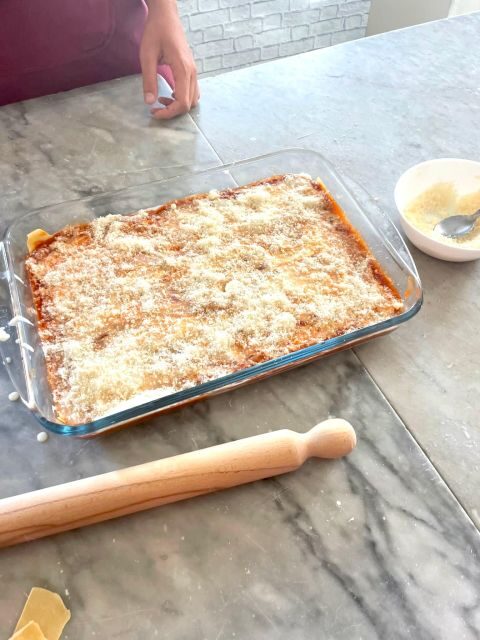
Next, you move into the lasagna side. You’ll roll out your own pasta sheets, then put them together with the other elements—béchamel plus ragù. The goal isn’t to “make something edible.” It’s to understand how the layers behave when you combine fresh sheets with sauce.
After that, the class shifts to fresh spaghetti. You’ll form the dough into spaghetti and learn the technique that gives fresh pasta its texture. At the same time, you’ll also prepare pummarola, the slow-simmered tomato sauce that’s meant to cling to the pasta.
Finally, you’ll gather to eat. There’s a shared table moment, and the food you made becomes the centerpiece of the meal—plus wine, dessert, and limoncello to close it out.
The sauces matter: béchamel with nutmeg and ragù, plus pummarola
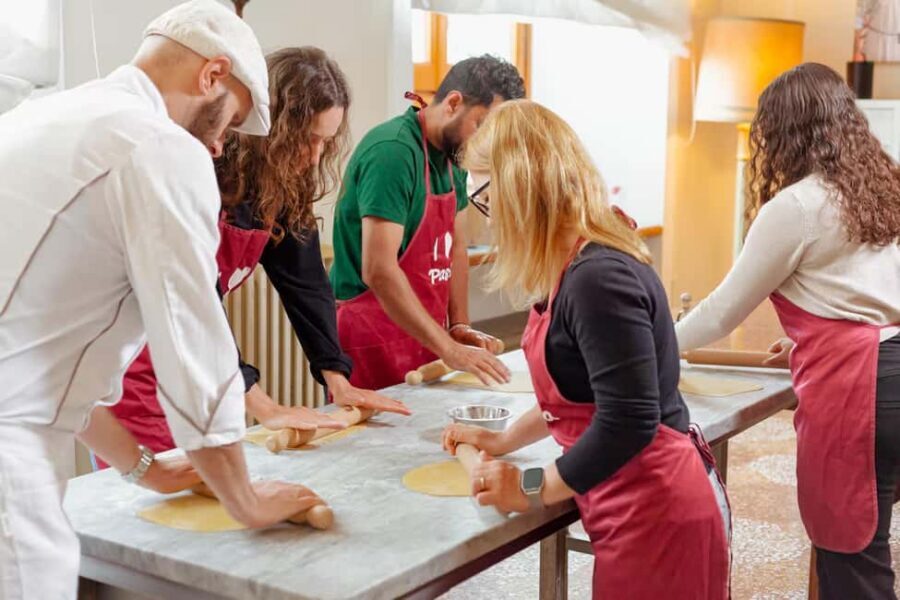
If you only remember one thing from this class, make it this: sauces are where Italian home cooking gets its personality. The béchamel here is built with butter, fine flour, milk, salt, and nutmeg, and it’s designed to become creamy enough to hold everything together.
For the lasagna, the béchamel doesn’t sit alone. It’s meant to harmonize with ragù (the class includes a bolognese ragù component) and with your hand-rolled pasta sheets. That combination is why lasagna tastes richer than the sum of its parts.
Then you’ve got pummarola for the spaghetti. The class describes it as vibrant and slow-simmered, focused on a tomato base that tastes like it took its time. This matters because fresh spaghetti cooks fast, so you need sauce flavor that’s already developed before it hits the pasta.
Why this is valuable for you: when you can make béchamel and pummarola from scratch, you stop relying on jars and “good enough” shortcuts. You can rebuild the same flavor logic at home, even if you don’t copy the exact recipe.
The meal setup: wine with your pasta, plus chocolate and limoncello
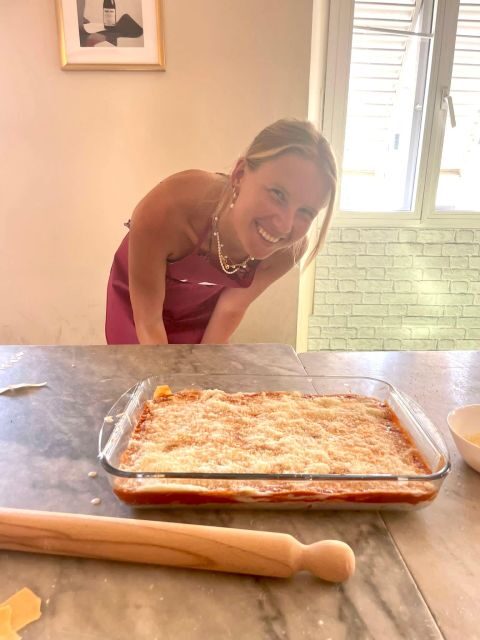
Once you’ve finished cooking, you sit down together to enjoy your creations. The experience includes locally selected organic red wine, served with the meal. Alcohol is only served to participants of legal drinking age.
This is one of those classes where the end feels like a reward rather than a formality. The meal isn’t just a tasting plate. It’s a full sit-down with wine, and you also get chocolate dessert and a traditional shot of limoncello at the end.
A few instructor names pop up repeatedly in past class experiences tied to this format, including Alessandra and Milena. The consistent theme is teaching that’s upbeat and patient—so even if you’ve never made pasta before, you’re not stuck doing it wrong in silence.
If you’re hoping for a very quiet, formal culinary seminar, this won’t be that. If you want a friendly kitchen night where you learn and then eat what you made, it fits the bill.
Instructor energy and small-group help that actually changes what you learn
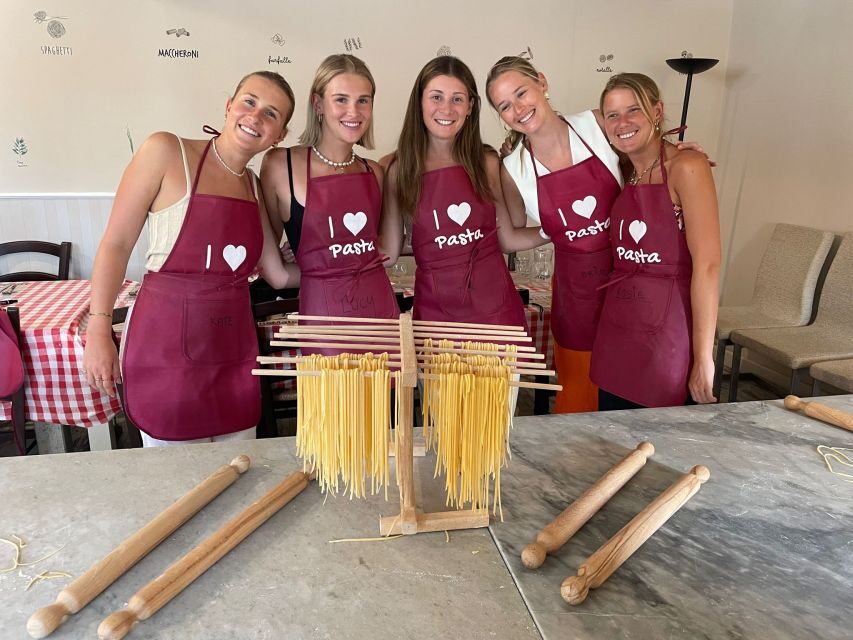
This is where the value shows up. The class is limited to 10 participants, which matters because pasta is hands-on. Rolling dough, forming shapes, and timing sauce texture all need quick feedback.
In past sessions tied to this experience, instructors with names like Lena and Robin are described as enthusiastic and encouraging, and several people mention humor and lots of involvement. That kind of teaching style isn’t just nice—it helps you correct technique faster.
You should also expect that the class is designed for people who want to participate, not just watch. Even if you’re a bit clumsy at the beginning, the process is structured so you can keep up and still end with a plate you’ll be proud of.
- The Best tour in Florence: Renaissance & Medici Tales – guided by a STORYTELLER
★ 5.0 · 12,316 reviews


Price and value check: $48 for pasta, sauces, wine, dessert, and limoncello
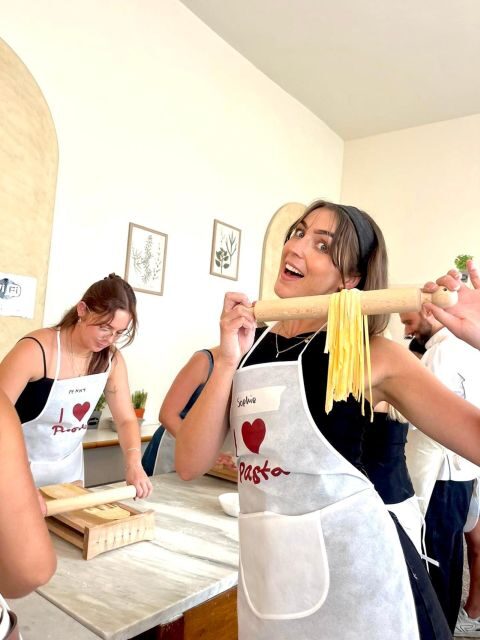
At $48 per person, this isn’t priced like a long restaurant meal, and it’s not priced like a full-day cooking retreat either. What you’re paying for is the complete package: ingredients, cooking equipment, instructor time, plus wine and desserts.
Included highlights:
- Ingredients and cooking equipment
- Instructor-led teaching
- Wine with the meal
- Chocolate dessert
- Limoncello shot
That combination is the real value. Many food experiences in Florence let you sample things. This one aims to teach you to reproduce two key dishes—lasagna and spaghetti—while feeding you the results.
Also, the small group cap helps justify the cost. More personal attention typically means you spend your time learning instead of waiting.
Who this Florence class suits best (and who should skip it)
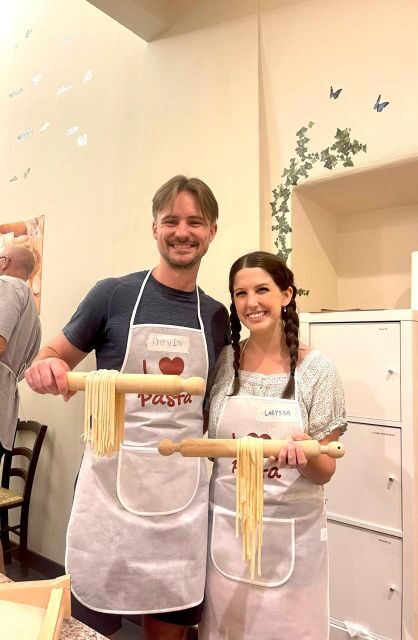
This fits best for people who want a hands-on evening activity in Florence that ends with a proper meal. It’s a good option for couples, families (the minimum age is 8), and anyone who likes Italian food enough to want the technique behind it.
You’ll like it most if you:
- Want to make fresh pasta rather than just taste it
- Enjoy learning sauce fundamentals
- Prefer a social meal in a nice setting, not a quick snack tour
Skip it if you need strict gluten-free or dairy-free options. The class specifically says it cannot accommodate vegan, gluten-sensitivity, or lactose intolerance. Also, it’s not suitable for people with mobility impairments, since you’ll be working on your feet as you cook.
Meeting point on Lungarno Guicciardini: ring the right doorbell
Do not wing this part. The meeting point is very specific.
You’ll meet at the building where you should ring the door bell labeled PASTAMANIA EXPERIENCE. The building number is listed as red, not blue, and the best way to find it on Maps is to search: Lungarno Guicciardini 17 R (the R stands for red).
No hotel pickup or drop-off is included, so plan to walk or take local transport to the area on your own.
Quick practical tips so your pasta night goes smoothly
Wear comfortable clothing. You’ll be doing hands-on work with dough, so tight or delicate outfits are a bad idea.
If you have allergies or dietary restrictions, you’ll need to inform the operator in advance. The class also notes it can’t accommodate certain dietary needs, so this is important before you arrive.
Finally, give yourself a little buffer before and after. A class that ends with wine and limoncello is not the moment to rush to your next reservation.
Should you book this lasagna and spaghetti class?
Yes—if you want a hands-on Florence experience with a real meal at the end, this is a strong pick. The structure is practical: béchamel, lasagna sheets, spaghetti shaping, then pummarola sauce, and then you eat what you made. With small-group size, you’re more likely to get the kind of help that turns “attempt” into “I can do this at home.”
I’d skip booking only if your diet can’t match what the class uses (no vegan, no gluten-sensitivity/gluten intolerance, no lactose intolerance) or if mobility limitations make standing and cooking hard. If you’re in the clear on food needs, it’s one of the better ways to spend a focused 3 hours in Florence—learn, cook, eat, and leave with something you can recreate.
FAQ
What dishes will I make in the class?
You’ll make traditional lasagna and handmade spaghetti. The class includes learning how to prepare béchamel and pummarola sauce, and you’ll shape the pasta as part of the experience.
How long does the experience take?
The class is 3 hours. You can check availability for the specific starting times.
Is wine, dessert, and limoncello included?
Yes. The experience includes organic local red wine, a chocolate dessert, and a traditional shot of limoncello. Wine is served only to participants of legal drinking age.
Can the class accommodate vegan, gluten-free, or lactose-free diets?
No. The class says it cannot accommodate vegan, gluten-sensitivity/gluten intolerance, or lactose intolerant participants.
Where do I meet the group?
Meet at the door bell labeled PASTAMANIA EXPERIENCE. The building number should be red, and on Maps you should search Lungarno Guicciardini 17 R.
What is the minimum age to join?
Participants must be at least 8 years old.
Can I cancel for a full refund?
Yes. You can cancel up to 24 hours in advance for a full refund.
More Workshops & Classes in Florence
More Tour Reviews in Florence
- Tuscany Day Trip from Florence: Siena, San Gimignano, Pisa and Lunch at a Winery
★ 5.0 · 21,634 reviews - The Best tour in Florence: Renaissance & Medici Tales – guided by a STORYTELLER
★ 5.0 · 12,316 reviews