REVIEW · FLORENCE
Florence: Tour of Michelangelo’s David with Priority Access
Book on GetYourGuide →Operated by Floven Tours · Bookable on GetYourGuide
The David hits differently when you skip the line. I love priority entry and a licensed guide who helps you spot what matters in Florence’s Accademia Gallery without getting lost in the crowd. My main caution is that the museum is fairly small, so this is not a slow wander-and-stare tour; you’ll be moving at a tour pace for a tight 1 hour.
What makes this experience especially useful is how focused it is: you’re not just there to say you saw Michelangelo’s David. You get a guided route through the Accademia’s most important works, plus context on Renaissance artists like Giambologna and Botticelli, and even a special look at the Medici musical-instrument collection. One practical note from timing: in one praised experience, the group arrived later than the museum appointment time, but they were still admitted—so if you’re early, don’t assume you’ll start immediately on your watch. Follow the guide’s lead.
In This Review
- Quick Take: What You’ll Actually Get in 60 Minutes
- Key Points to Know Before You Go
- Priority Access at the Accademia: How It Helps You
- Where You Meet on Via Ricasoli (And How Not to Miss the Guide)
- Inside Accademia Gallery: The Route That Makes David Make Sense
- Michelangelo’s David: What to Look For Beyond the Postcard
- The Prigioni and Other Renaissance Voices You Might Miss
- Medici Musical Instruments: The 1690 Stradivarius Moment
- Headsets and Licensed Guidance: Why You’ll Hear the Right Stuff
- Timing and Duration: Why One Hour Works Here
- Value Check: Is $65 Worth It in Florence?
- Who Should Book This Tour (And Who Might Skip It)
- Should You Book This Priority David Tour?
- FAQ
- How long is the Florence Accademia Tour of Michelangelo’s David?
- Do I get priority entry to the Accademia Gallery?
- Where is the meeting point?
- What time does the guide wait for you?
- What’s included in the tour?
- What languages are available for the live tour?
- Can I cancel or reserve later?
Quick Take: What You’ll Actually Get in 60 Minutes
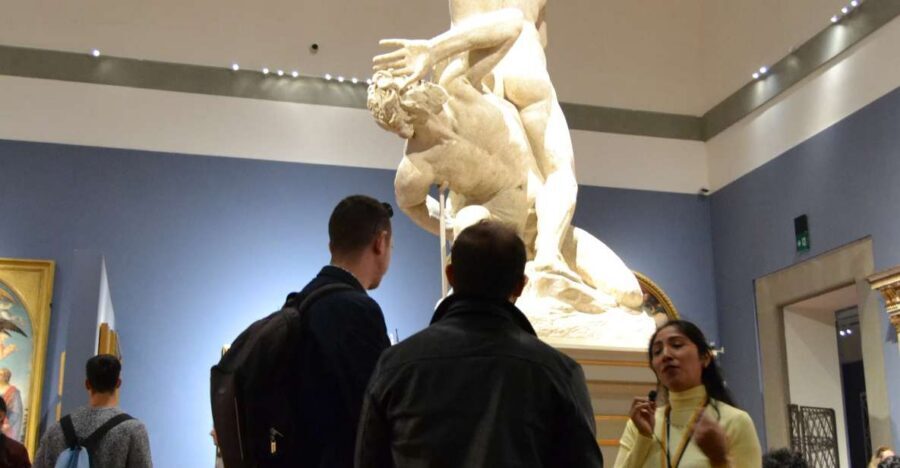
This tour is built for people who want the highlights, fast. In about an hour, you’ll go inside with reserved access, use headsets so the guide is clear, and focus on Michelangelo’s big presence in the Accademia. The centerpiece is the marble statue of David, measuring 5.17 meters, plus nearby works that show how Michelangelo thought about form and struggle.
If you’re pairing Florence highlights (Duomo area, bridges, a museum or two), this one-hour format makes planning easier. You’ll still have time to enjoy Florence before or after, without feeling like you surrendered your whole day to a single building.
And yes, you’ll learn the stories you usually only catch from a good local guide: why certain pieces were made, how they were viewed in their time, and what to look for when you’re standing in front of the art.
Key Points to Know Before You Go
- Priority entry means less time stuck at the museum doors.
- Licensed, authorized guides keep the focus on the Accademia’s strongest pieces.
- Headsets help you hear clearly, even when the room gets busy.
- You’ll see more than David, including Michelangelo’s Prigioni and related works.
- The tour includes the Medici musical instruments, with an original 1690 Stradivarius mentioned as part of the collection.
- Small or private group options can make it easier to ask questions without feeling rushed.
You can also read our reviews of more tours and experiences in Florence.
- Tuscany Day Trip from Florence: Siena, San Gimignano, Pisa and Lunch at a Winery
★ 5.0 · 21,634 reviews

Priority Access at the Accademia: How It Helps You
Florence’s museums can feel like a game of patience, especially when lines form close to opening times. This tour uses a separate entrance and reserved tickets, so you’re not fighting the main flow just to get inside.
That matters for two reasons. First, you’re on a clock. With a one-hour tour, every minute you save at the entrance buys you actual viewing time in the galleries. Second, priority access often changes your whole experience: you can start with confidence instead of scanning for where you’re supposed to be.
I also like that the tour doesn’t treat priority entry as the whole product. The guide isn’t just there to escort you in. You’re guided through the museum’s main ideas—why Michelangelo’s works are placed where they are, what connects the pieces, and how the Accademia fits into the Renaissance story.
Even if you’ve read about Michelangelo before, a good guide makes the statue stop being a famous image and start being a sculpted object you can understand with your eyes.
Where You Meet on Via Ricasoli (And How Not to Miss the Guide)
You’ll start at Via Ricasoli, 113, at the entrance area near a supermarket called CARREFOUR Express. The meeting point is outside the museum entrance area near that store, and the guide waits 10 minutes before the start time.
Here’s the key detail to get right: there are two Carrefour stores on Via Ricasoli, and the meeting point is the second one coming from Duomo Square, or the one closer to San Marco square. If you’re coming from the Duomo side, it’s easy to land at the wrong branch and lose a few minutes.
To keep it simple, look for a tour guide holding a sign with the FLOVEN TOURS logo. If you’re unsure, step into the sidewalk in front of the right store and check for the sign—don’t wander down the street guessing.
This is one of those small logistics points that makes the tour feel smooth instead of stressful. In a city like Florence, where streets can twist and signage can be hit-or-miss, a clearly defined meeting point is real value.
Inside Accademia Gallery: The Route That Makes David Make Sense
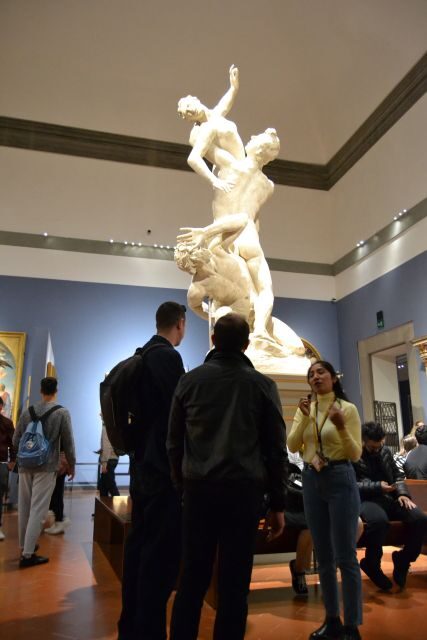
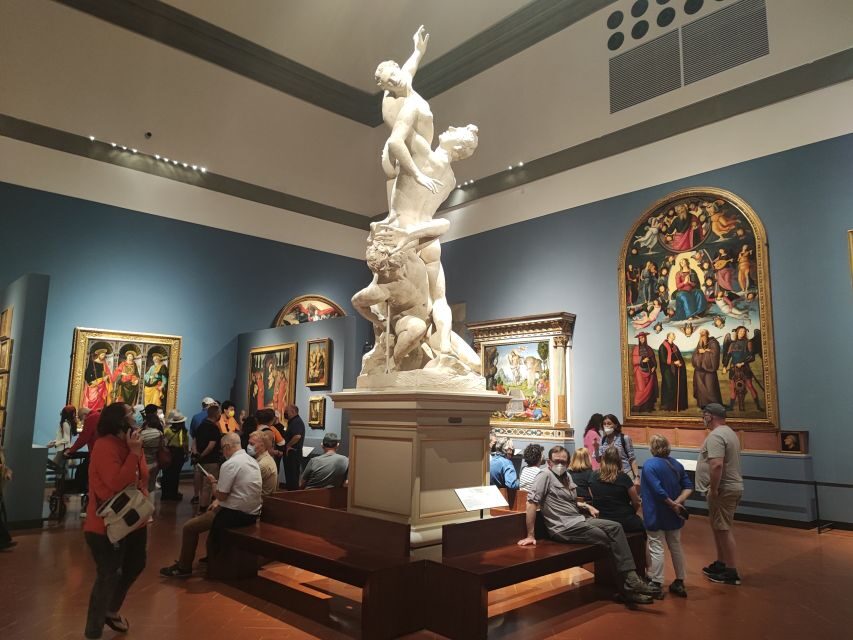
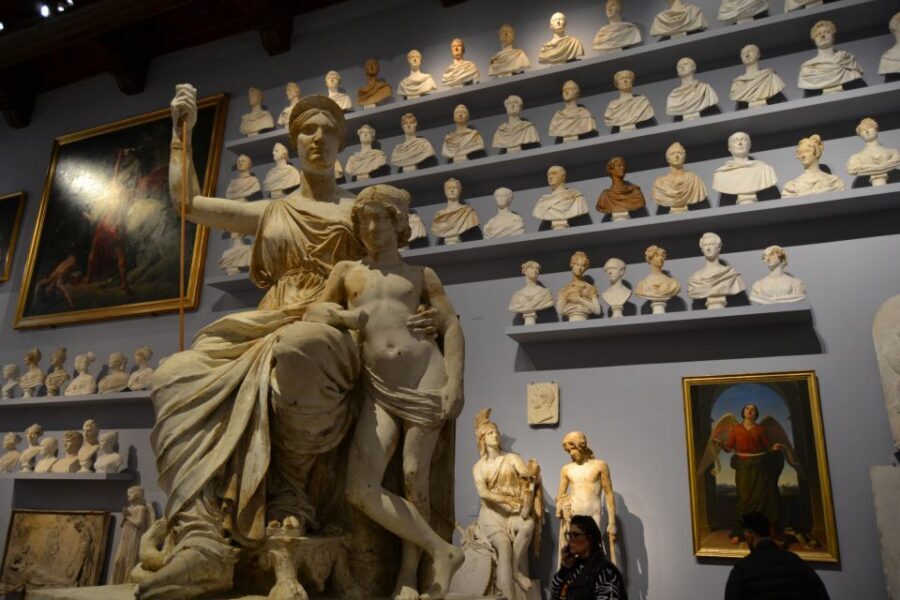
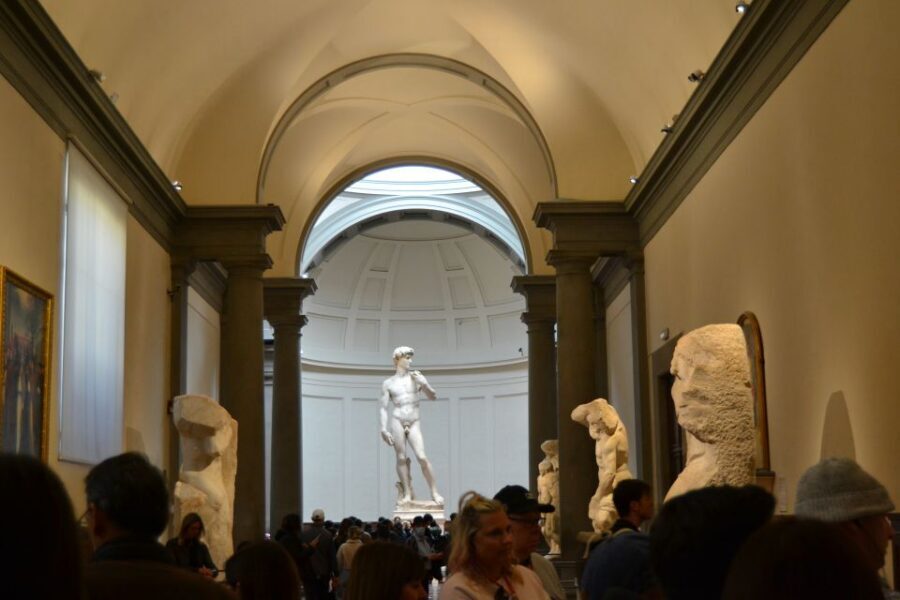
Once you’re in, the tour moves you through the Accademia Gallery in a way that’s designed for comprehension, not just photo stops. The museum is known for having the largest collection of Michelangelo’s works, and that’s where the guide’s job becomes important. Without a narrative, it’s easy to see sculptures as separate masterpieces. With a guide, you start noticing how the pieces echo each other—especially in the way Michelangelo handles tension, anatomy, and unfinished or trapped forms.
You’ll also hear about other major Renaissance names represented there, including Giambologna and Botticelli. That matters because it positions Michelangelo inside his broader artistic world instead of making him sound like a one-person universe. You’ll get context for why the museum’s collection feels coherent, even when the artists differ.
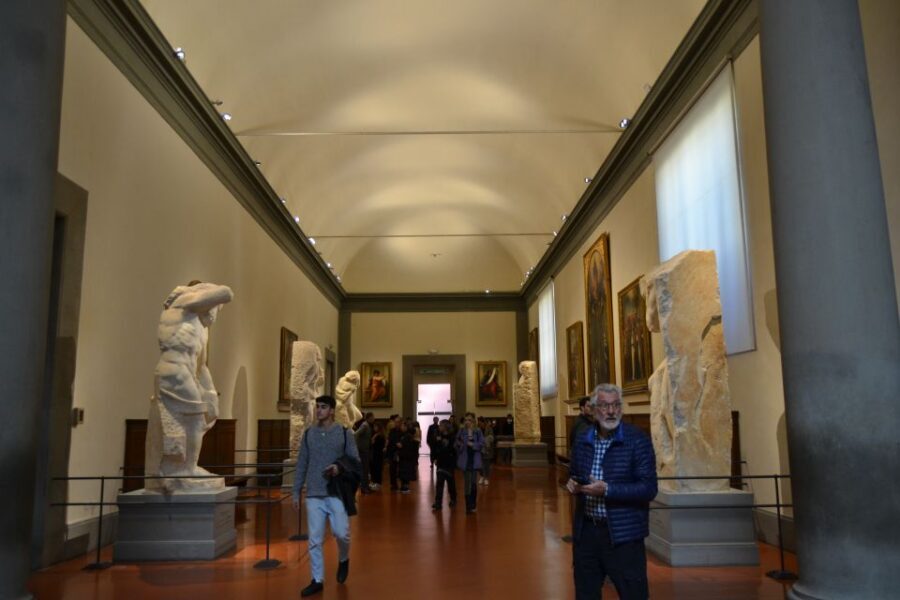
The museum also includes the Prigioni (often referred to in connection with the idea of prisoners or figures caught in stone). These works are a great contrast to David. Where David is iconic and complete, the Prigioni can feel like motion and struggle trapped in marble—exactly the kind of visual tension a guide can help you read quickly.
And since this is a headset-supported tour, you won’t have to lean in close for every sentence. You can look at the art, not at the back of the guide’s shoulders.
Michelangelo’s David: What to Look For Beyond the Postcard
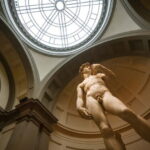
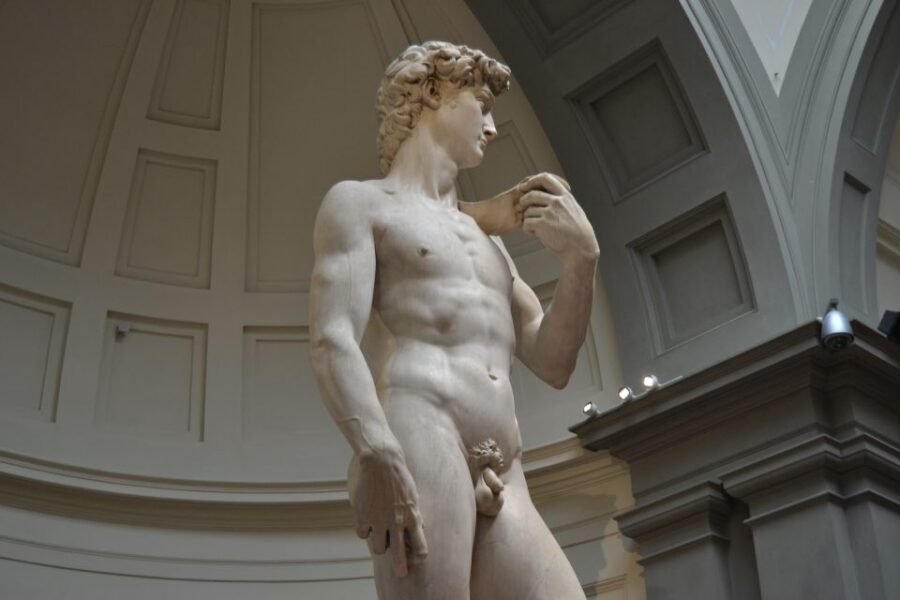
David is the reason most people book this tour, and with good reason. The Accademia’s David stands 5.17 meters tall in marble, so you’re not dealing with a small statue you can mentally shrink. It’s big enough that it changes how you stand in the room.
What you’ll learn matters. A good guide won’t just tell you the basics. They’ll connect the statue to Michelangelo’s genius as a sculptor—how the work shows intelligence in the face and physical force in the posture. You’ll also get guidance on how to see the details that are hard to notice at a distance.
Here’s what I think is the real benefit: the guide helps you move from admiration to understanding. Instead of walking away with only a famous image, you leave with a checklist in your head for what you’re looking at—proportions, expression, the sense of tension, and how Michelangelo turned a biblical hero into something intensely human.
The tour format also means you’re not standing there for an hour. You’re given an efficient moment with the statue, with explanations timed to what you’re seeing right then. That keeps the experience from feeling like a rushed photo line.
- Tuscany Day Trip from Florence: Siena, San Gimignano, Pisa and Lunch at a Winery
★ 5.0 · 21,634 reviews - The Best tour in Florence: Renaissance & Medici Tales – guided by a STORYTELLER
★ 5.0 · 12,316 reviews


The Prigioni and Other Renaissance Voices You Might Miss
If you only focus on David, you’ll still be happy. But you’ll miss half the payoff. One of the strengths of this tour is that it treats Michelangelo as more than a single icon.
The Accademia holds Prigioni—works often associated with figures emerging from stone. These pieces tend to reward close looking: the more you stare, the more you notice how Michelangelo shaped the idea of a body, not just the body itself. A guide helps you see where the stone ends and where the figure feels like it’s about to begin.
You’ll also hear about other artists in the museum, including Giambologna and Botticelli. Even if you don’t know their work well, this part of the tour gives you a sense of the Renaissance conversation happening around Michelangelo’s world.
Balanced tours like this can be rare. Many museum tours either get too technical too fast or skim everything in favor of one big stop. Here, you get a clear arc: Michelangelo’s core presence first, then a broader Renaissance context so the collection feels less like a grab bag.
Medici Musical Instruments: The 1690 Stradivarius Moment
There’s a fascinating side to this experience that I genuinely love: the Accademia’s collection of musical instruments connected to the Medici family. Yes, instruments in an art museum. It sounds like a detour until you realize it fits Florence’s idea of culture and patronage.
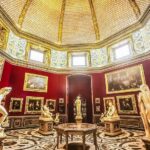
This tour specifically mentions the Medici collection including an original Stradivarius made by Antonio Stradivari in 1690. Even if you’re not a musician, knowing the instrument has a real historical anchor changes how you experience the room. It turns the museum into more than marble and paint. It becomes a snapshot of how elite families supported the arts across disciplines.
If you’ve ever felt that Renaissance culture was all politics and paintings, this part reminds you that sound mattered too. It’s also a good breather inside a one-hour tour—something different enough to refresh your attention before you leave.
Headsets and Licensed Guidance: Why You’ll Hear the Right Stuff
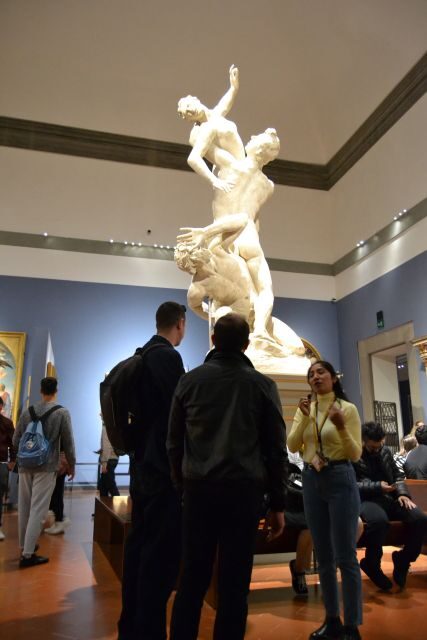
Headsets may sound like a small feature, but for a tour like this they matter. In museums, normal voices often get swallowed by crowds, room echoes, or the simple fact that you’re walking. With headsets included, you can stay oriented and listen without turning your whole body toward the guide every few seconds.
The tour also uses professional licensed guides, and that shows in how the explanations are paced. You’re not handed a list of facts. You’re given stories about artists and works that you won’t easily find on a standard label.
One guide name you might encounter in these experiences is Sara, who was praised for enthusiasm and for staying engaging from start to finish. That kind of energy matters when you’re trying to understand art quickly. It keeps the museum from turning into a silent endurance test.
Also, because it’s a small or private group option, you tend to get a better shot at asking questions when you’re curious about something. Even with a fixed tour length, that kind of interaction can make the David stop more personal.
Timing and Duration: Why One Hour Works Here
A one-hour tour can be a bad idea in some museums. Here, it’s often the right call.
The Accademia is not huge compared to the big classics, and the David is the magnet. With a guided hour, you can hit the core masterpieces without spending your whole day in queues or between rooms that don’t really connect.
There is one consideration: because it’s short, the tour can feel like it moves at a deliberate pace. A small museum also means you’ll likely be sharing space with other people. That’s why the headset and guide route are helpful. You’ll keep your footing and follow the plan instead of drifting off on your own.
One detail to remember from experience: if the group timing feels off at the start, stay calm. In one case, a guide and group arrived after the scheduled museum appointment time, but entry still worked out. The lesson is simple: keep an eye out for your guide at the meeting point, and don’t panic if the exact minute feels slightly different than you expected.
Value Check: Is $65 Worth It in Florence?
At $65 per person for a one-hour priority-entry guided tour, the value depends on what you hate most in travel. If you hate lines, this is a clean purchase. Priority entry isn’t only about comfort; it’s about time. In Florence, time is what buys you better use of the rest of your day.
If you hate confusion—standing in a museum wondering where to look first—this also makes sense. You’re paying for a guide who connects pieces: Michelangelo’s major works, key Renaissance artists like Giambologna and Botticelli, and the Medici instrument connection. That’s a lot of mental sorting handled for you.
If you’re the type who loves to wander slowly and read everything, you might feel constrained by the one-hour structure. In that case, you could prefer a self-guided visit. But if you want the highlights with meaning, the price is competitive for Florence’s museum economy, especially with headsets included.
The best way to judge: count what it costs you when you lose time. If priority access helps you see David and the key supporting works in one focused hour, you’ll likely feel like the money did its job.
Who Should Book This Tour (And Who Might Skip It)
Book this if:
- You want David and the main Michelangelo context without guessing around the museum.
- You like short tours with a clear payoff.
- You appreciate a licensed guide and headsets to hear explanations clearly.
- You’re traveling with limited time and want to protect your schedule.
Consider skipping or switching plans if:
- You want lots of free time to linger on your own.
- You prefer long museum sessions with no group pacing.
This tour also fits well for first-time Florence visitors. It’s a concentrated dose of Renaissance sculpture, with a surprising extra angle from the Medici musical instruments.
Should You Book This Priority David Tour?
I’d book it if you care about efficiency and you want the statue of David explained in a way that makes the art feel alive, not just famous. Priority entry plus a licensed guide plus headsets is a strong combo for a one-hour experience. It’s also a smart choice if you’re balancing multiple Florence stops and don’t want museum planning to eat your day.
One final practical tip: arrive at the meeting point near Via Ricasoli 113 with time to spare, and confirm you’re at the right Carrefour Express store by looking for the FLOVEN TOURS sign. That small step helps the rest of the hour run smoothly.
FAQ
How long is the Florence Accademia Tour of Michelangelo’s David?
The tour lasts 1 hour.
Do I get priority entry to the Accademia Gallery?
Yes. You skip the line through a separate entrance with reserved access.
Where is the meeting point?
Meet at Via Ricasoli, 113, just outside the Accademia Gallery area near a Carrefour Express supermarket. The guide waits near the entrance holding a sign with the FLOVEN TOURS logo.
What time does the guide wait for you?
The guide waits for you 10 minutes before the starting time.
What’s included in the tour?
Included features are priority entry, a live guided tour, and headsets to hear the guide clearly.
What languages are available for the live tour?
The live tour guide is available in English and Spanish.
Can I cancel or reserve later?
Free cancellation is available up to 24 hours in advance for a full refund. You can also reserve now & pay later to keep your plans flexible.



More Tours in Florence



More Tour Reviews in Florence
- Tuscany Day Trip from Florence: Siena, San Gimignano, Pisa and Lunch at a Winery
★ 5.0 · 21,634 reviews - The Best tour in Florence: Renaissance & Medici Tales – guided by a STORYTELLER
★ 5.0 · 12,316 reviews