REVIEW · FLORENCE
Florence: Uffizi Gallery Priority Access & Small Group Tour
Book on GetYourGuide →Operated by Tours About · Bookable on GetYourGuide
Great art, no line stress. This Florence Uffizi priority access tour is built to get you inside with fast entrance and a small group so you can spend your limited museum time looking at the paintings, not staring at queues. I also like that you get a real guide in the room, not just a screen telling you where to stand.
What I love most is the way the tour pulls together the big names and the weirder details you might miss on your own. In a short 1.5 hours, you’ll meet Botticelli’s Birth of Venus and Michelangelo’s wooden masterpiece, plus Leonardo da Vinci’s Adoration of the Magi. The main drawback is simple: with only 90 minutes, you won’t see even close to everything the Uffizi holds.
In This Review
- Key things I’d plan around
- Priority Access at the Uffizi: Why It Changes Your Day
- Meeting Your Guide at Leonardo’s Statue (And What to Look For)
- The 90-Minute Game Plan: Botticelli, Michelangelo, Raphael, and More
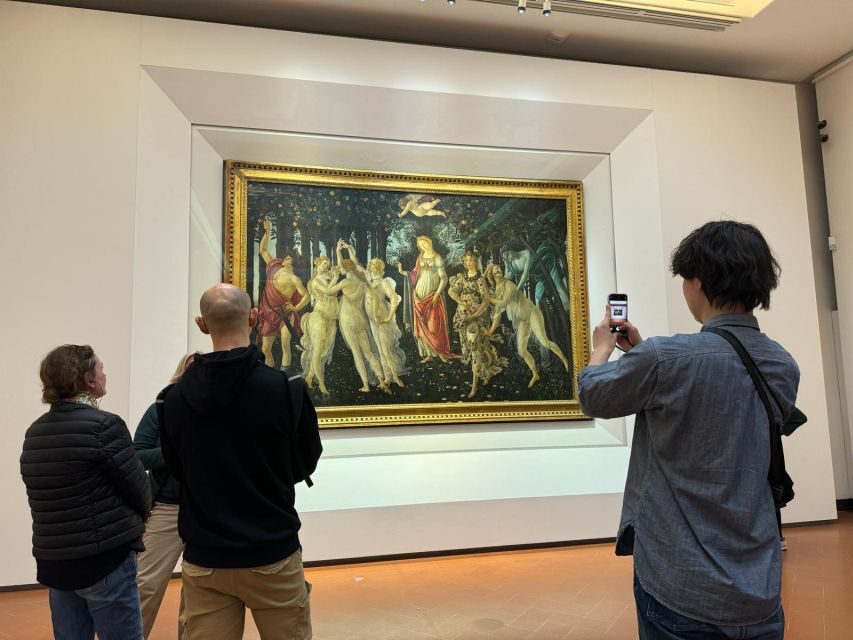
- Birth of Venus by Sandro Botticelli
- Michelangelo’s wooden masterpiece
- Leonardo da Vinci’s Adoration of the Magi
- Raphael and the Renaissance connection
- Hidden secrets inside the masterpieces
- Cosimo I de Medici’s Uffizi: How the Museum’s Origin Shapes What You See
- Pace, Headsets, and a Small Group That Actually Works
- Tip for making this work
- Language Coverage: Great When It Hits, Annoying When It Doesn’t
- Rules Inside the Museum: What You Can Bring and What You Should Leave
- Wheelchair Notes: There’s Conflicting Info—Check Before You Go
- Price and Value: Is $82 for 1.5 Hours Fair?
- Who tends to love this value
- Who might question the price
- After the Tour: Stay Longer and Explore at Your Own Speed
- Should You Book This Uffizi Priority Access Tour?
- FAQ
- Where do I meet the guide?
- How long is the tour?
- What’s included in the tour price?
- What languages are the guides available in?
- Do I need to bring an ID?
- What are the museum rules for bags?
Key things I’d plan around
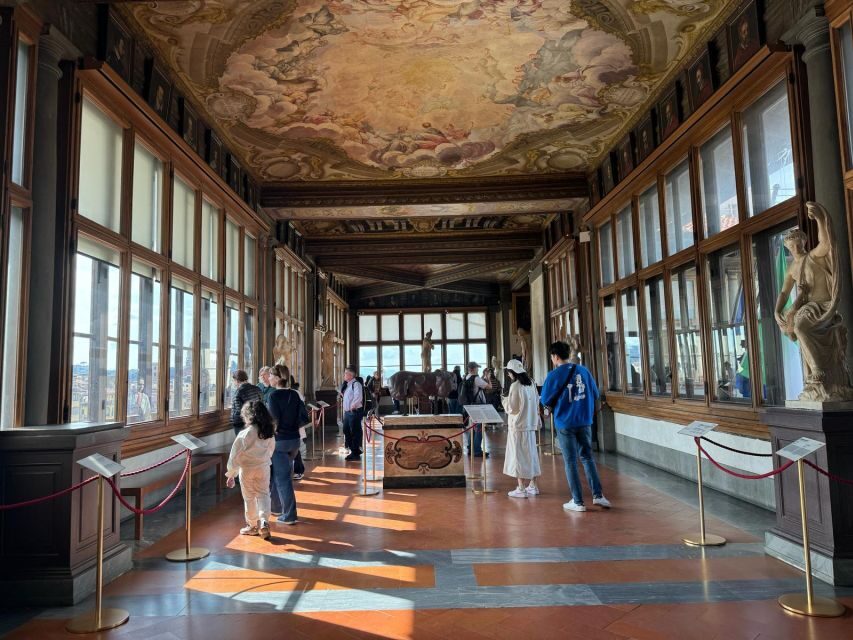
- Priority access saves real time when lines and security checks are long
- A live guide connects the masterpieces so you don’t just walk past them
- Headsets and earpieces help with pace in crowded rooms
- You’ll hit major highlights quickly (Botticelli, Michelangelo, Raphael)
- You can stay after the tour to keep exploring at your own speed
Priority Access at the Uffizi: Why It Changes Your Day
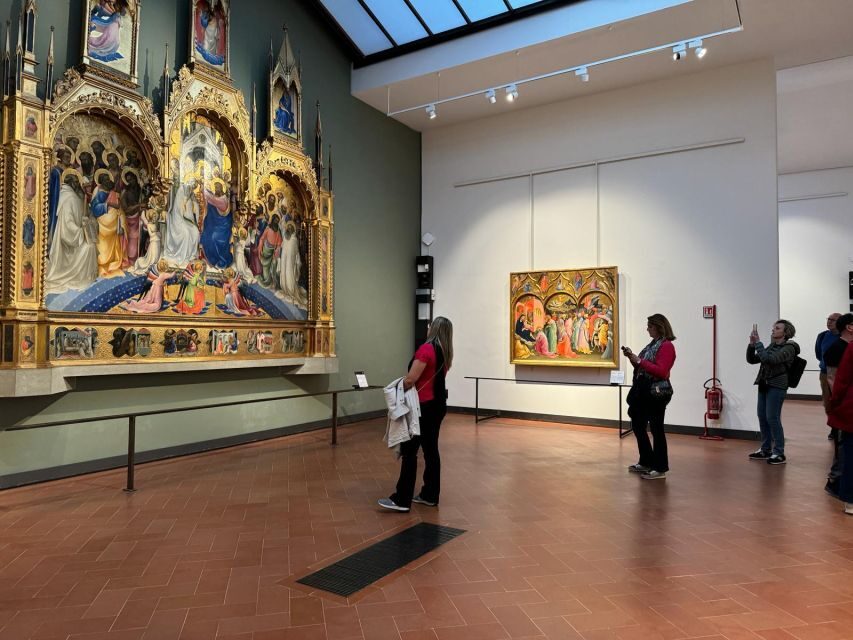
The Uffizi works best when you treat it like a sprint with smart stops, not a vague stroll. This tour is designed for exactly that. You’ll use a separate entrance for faster entry, and you’ll start the visit already in “museum mode,” with a guide steering the route.
One practical thing to know: even with priority entry, the museum still requires a security check. During peak periods, plan for about 15 to 20 minutes for the security line. That doesn’t kill the value of skipping the main art-gallery line—it just means you’re still trading “waiting” for “waiting smarter.”
The other big win is time. A 1.5-hour tour sounds short because it is short, but that’s the point. You’ll see a focused set of artworks and leave knowing what matters most in the Uffizi’s collection, rather than wandering until your energy runs out.
You can also read our reviews of more museum experiences in Florence
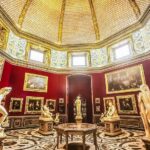


Meeting Your Guide at Leonardo’s Statue (And What to Look For)
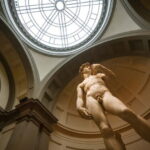
I like tours that don’t play hide-and-seek, and this one gives you a clear meeting spot. You’ll meet your guide in front of Leonardo Da Vinci’s statue. Look for someone holding a white flag with Enjoy Rome written on it.
This matters because the Uffizi area gets busy, and your first 10 minutes set the tone. If you’re late, you risk missing the start of the guided portion—which defeats the whole purpose of priority access and a tight 90-minute window.
Also, keep your identity documents ready. The tour requires a passport or ID, and you’ll want to have it on you for entry.
The 90-Minute Game Plan: Botticelli, Michelangelo, Raphael, and More
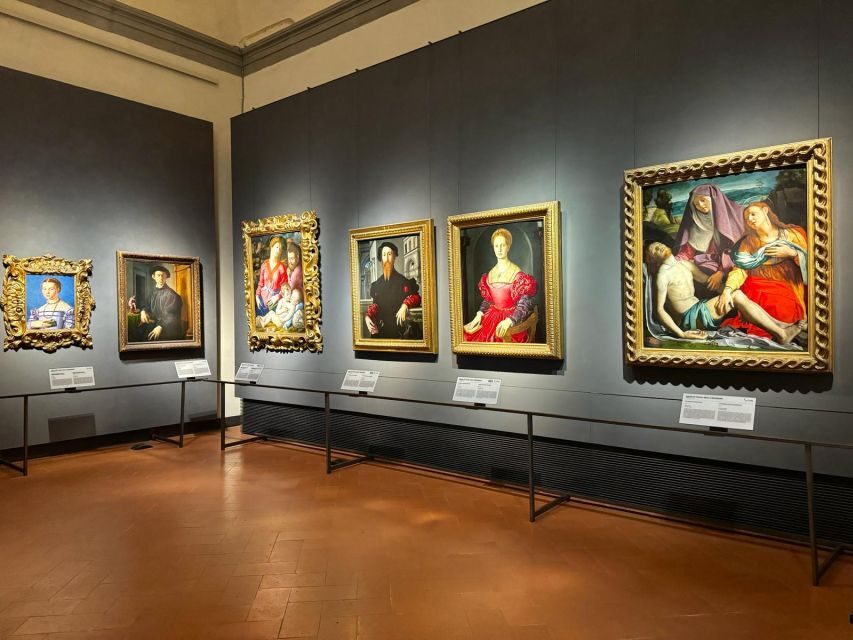
This is not a “see the highlights someday” kind of tour. It’s a “see the key works and understand why they matter” kind of tour.
Here’s the type of flow you can expect during the guided portion:
Birth of Venus by Sandro Botticelli
Botticelli’s Birth of Venus is the headline name for a reason. During the tour, you’ll get context around why this work became such an anchor point for Renaissance art. I’d treat it as more than a photo stop. Your guide should help you notice how the image is constructed and why people keep returning to it as a symbol of the period.
Michelangelo’s wooden masterpiece
Michelangelo is often associated with marble, so seeing his wooden masterpiece is an immediate reminder that the man was doing more than one “type” of work. In a short tour, this kind of contrast is gold. It helps you understand Michelangelo as an artist with range, not just a sculptor with a brand-name reputation.
- Tuscany Day Trip from Florence: Siena, San Gimignano, Pisa and Lunch at a Winery
★ 5.0 · 21,634 reviews - The Best tour in Florence: Renaissance & Medici Tales – guided by a STORYTELLER
★ 5.0 · 12,316 reviews


Leonardo da Vinci’s Adoration of the Magi
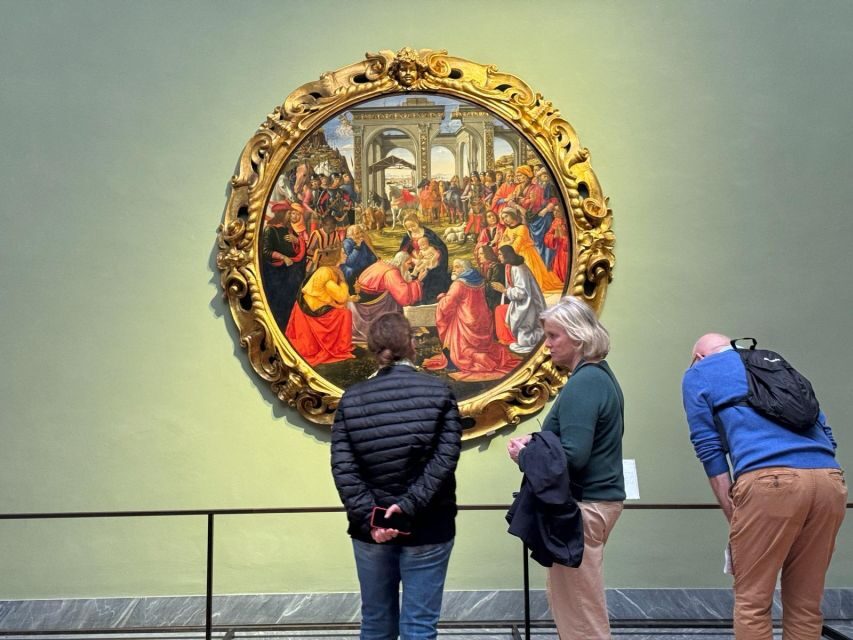
You’ll also encounter Leonardo da Vinci’s Adoration of the Magi. This is a nice inclusion because it keeps the visit from turning into only one-artist worship. With the guide’s commentary, you’ll get a sense of how Leonardo’s approach fits into the broader Renaissance story the Uffizi tells.
Raphael and the Renaissance connection
Raphael’s masterpieces are also part of the experience. The Uffizi can feel like a museum of masterpieces stacked floor to floor, but a good guide helps you connect the dots between artists. You’ll leave with a clearer idea of what makes the Renaissance tick—especially when you see works side by side that reflect shared themes and different styles.
Hidden secrets inside the masterpieces
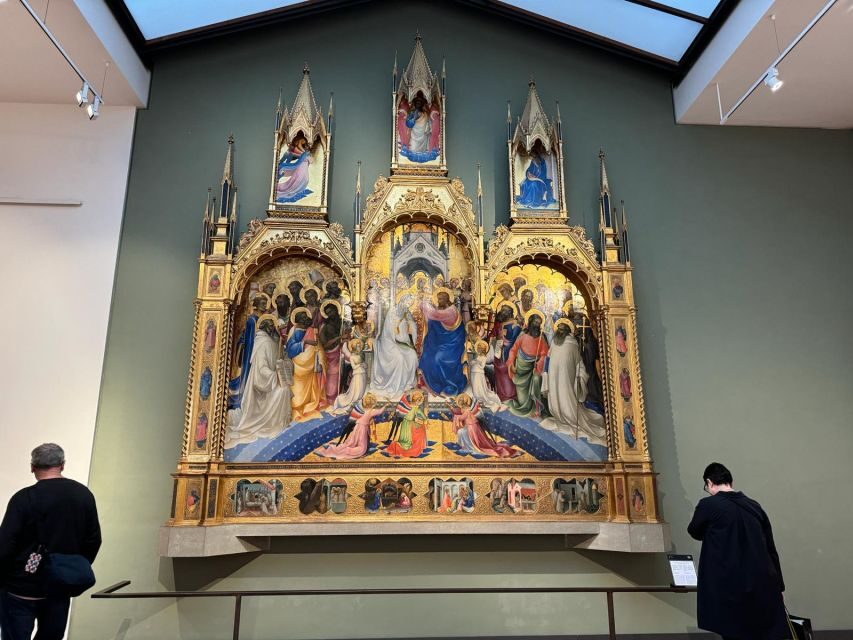
The tour promises hidden secrets tucked into works you’d miss without help. In practice, this usually means your guide points out details that aren’t obvious in a quick glance—things like symbols, composition choices, or background references that change what a painting means when you understand them.
You won’t have time to slow down for everything. But if you get even a handful of these “wait, look at that” moments, the tour feels worth it even if the clock is moving fast.
Cosimo I de Medici’s Uffizi: How the Museum’s Origin Shapes What You See
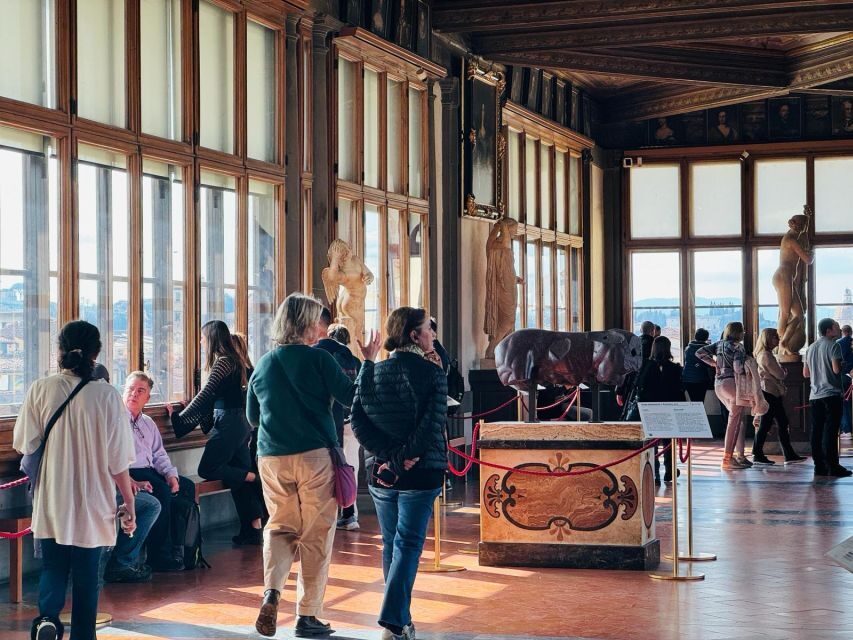
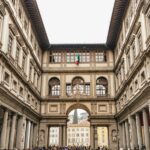
You’ll also get the setting for the collection: the Uffizi began with Cosimo I de Medici, and it’s one of Europe’s oldest art museums. Knowing that doesn’t just add trivia. It changes how you interpret what you’re looking at.
When a family amasses and commissions art over time, the museum becomes more than a building. It becomes a statement—about power, taste, and the kind of legacy the Medici wanted to preserve. A guide can help you understand why certain artists dominate your route and why particular works feel like “anchors” rather than random acquisitions.
For me, this is one of the biggest values of a guided approach. You’re not only identifying what’s on the wall. You’re learning how the museum formed and why your highlights are where they are.
Pace, Headsets, and a Small Group That Actually Works
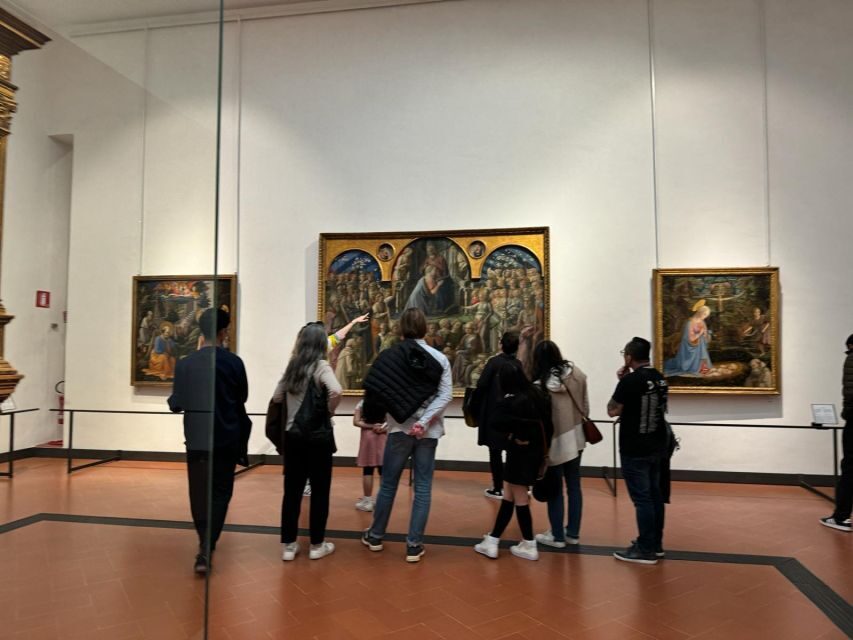
This is a small group tour limited to 9 participants, which is a huge quality factor in the Uffizi. In a big group, you end up doing the museum equivalent of stop-and-go traffic. Here, you’re more likely to hear explanations clearly and have a chance to shift positions without feeling like you’re being swept along.
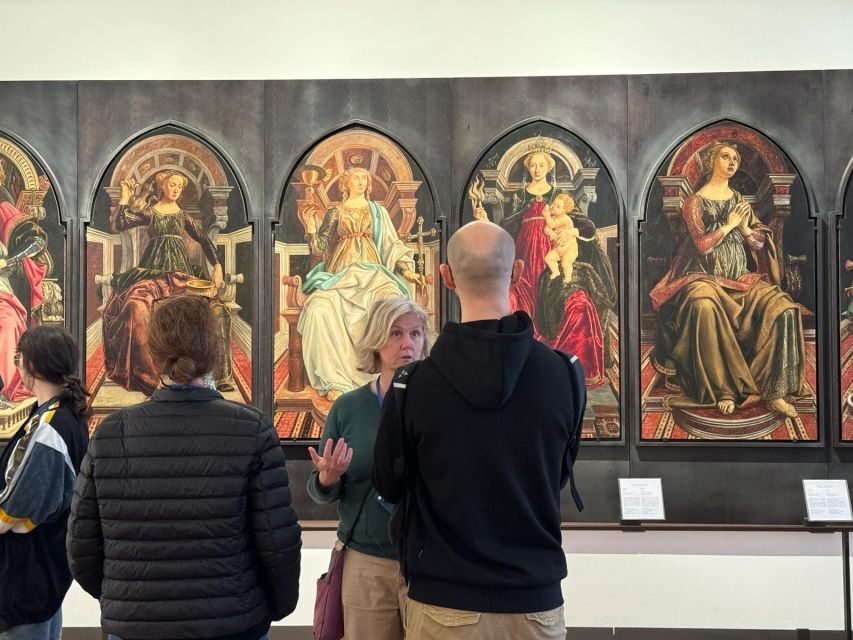
You’ll also get headsets and earpieces. That sounds like a small feature, but it matters in the Uffizi because rooms can be loud, and people crowd around the same artworks. Headsets help you keep your attention on what the guide is explaining without turning your head like you’re trying to catch a radio signal.
Tip for making this work
Arrive with your expectations set for motion. This is 1.5 hours with a defined route. If you go in thinking you’ll wander room-by-room at full museum speed, you might feel rushed. If you go in ready to focus on a curated set of works, you’ll likely leave satisfied.
Language Coverage: Great When It Hits, Annoying When It Doesn’t
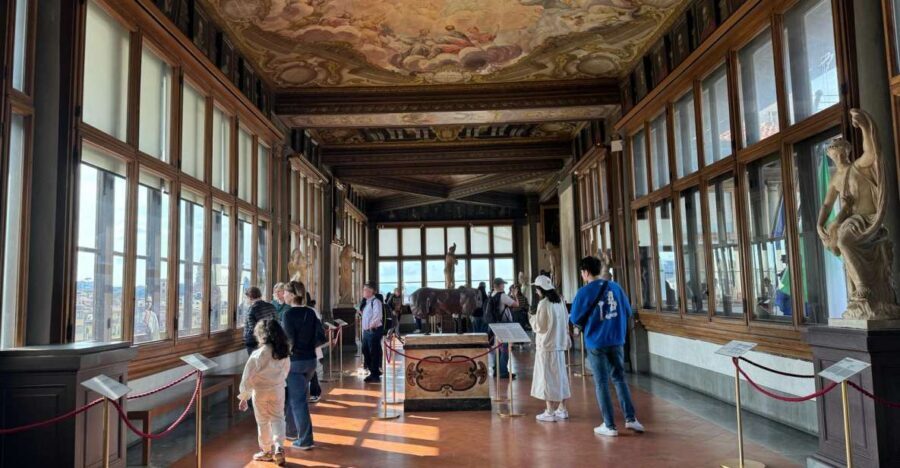
The tour guide is available in Italian, German, English, Spanish, and French. That’s excellent flexibility for a Florence visit, because you shouldn’t have to take a chance on your comfort level with art history.
Here’s the practical consideration: if you specifically need Spanish (or any other language), double-check during booking that your language is confirmed for your time slot. One reported issue involved language not matching expectations, which can be frustrating in a museum where you want to follow every explanation. I’d plan to be flexible, but also protect yourself by confirming the language request ahead of time.
Rules Inside the Museum: What You Can Bring and What You Should Leave
The tour has clear rules that affect your experience more than you’d think:
- No luggage or large bags
- No pets
- No weapons or sharp objects
- Passport or ID is mandatory
- You’ll still go through security checks at the museum
Also, make sure your booking details match your documents. Enter your full correct names when booking, because tickets with incorrect names may not be accepted for entry.
If you’re a “pack light” person, you’re good. If you tend to travel with a big daypack or rolling bag, plan to store it before you show up—otherwise you’ll lose time sorting it out at the security stage.
Wheelchair Notes: There’s Conflicting Info—Check Before You Go
The activity info includes both a statement about wheelchair accessibility and a note that it’s not suitable for wheelchair users. That contradiction is important.
If you need step-free access, don’t guess. Ask the provider directly whether the route and the time allocation work for your specific mobility needs. Don’t just rely on one line of text.
Price and Value: Is $82 for 1.5 Hours Fair?
At $82 per person for about 1.5 hours, the price is in the “quality access” category rather than the “wander the museum cheaper” category.
Here’s what you’re paying for, based on what’s included:
- Fast entrance tickets
- A live guide
- Headsets and earpieces
So you’re not just buying entry. You’re buying time saved, context delivered, and a more efficient route through rooms that can be confusing when you’re going solo.
If you’re the type of traveler who gets tired of reading labels and moving on without meaning, the guide component is often where the value clicks. If you’re comfortable skipping context and just want to get photos, you might feel the cost more sharply.
Who tends to love this value
- First-timers to the Uffizi who want the major works and the “why”
- Travelers who dislike lines and want their time controlled
- People who appreciate small groups and audio assistance
Who might question the price
- Visitors planning to spend the whole day in one museum
- People who prefer fully self-paced exploration without a set route
After the Tour: Stay Longer and Explore at Your Own Speed
One perk I like: after the guided portion, you can linger in the museum until closing time. That’s the best of both worlds.
Use the guided 90 minutes to get oriented, learn what’s worth your attention, and understand the overall story the Uffizi is telling. Then spend the rest of your time slowing down around the works that stuck with you most—whether that’s Botticelli, Michelangelo, Leonardo, Raphael, or a detail your guide pointed out that you want to see again without the clock.
Should You Book This Uffizi Priority Access Tour?
Book it if you want a smart first encounter with the Uffizi and you hate wasting time. The skip-the-line setup, small group size (max 9), and headsets make the experience feel focused rather than chaotic. You’ll also get hit-list masterpieces—Birth of Venus, Michelangelo’s wooden masterpiece, Adoration of the Magi, plus Raphael—without spending the entire day trying to map the museum yourself.
Skip it (or consider another approach) if you’re aiming for a full-day deep dive or you’re the type who wants to wander freely without a set route. Also, if language comfort is critical for you, confirm your guide language in advance. And if you’re relying on wheelchair access, check the real route details with the provider due to the conflicting notes.
If you’re trying to make the most of limited time in Florence, this tour is a strong way to do it: priority entry up front, guidance in the middle, and freedom to finish at your own pace.
FAQ
Where do I meet the guide?
Meet your guide in front of Leonardo Da Vinci’s statue. Look for a guide holding a white flag with Enjoy Rome written on it.
How long is the tour?
The guided portion lasts 1.5 hours.
What’s included in the tour price?
Included are fast entrance tickets, a live guide, and headsets/earpieces.
What languages are the guides available in?
The live tour guide is available in Italian, German, English, Spanish, and French.
Do I need to bring an ID?
Yes. A passport or ID card is mandatory.
What are the museum rules for bags?
Pets are not allowed, luggage or large bags are not allowed, and there are restrictions against weapons or sharp objects.

More Museum Experiences in Florence

More Tours in Florence




More Tour Reviews in Florence
- Tuscany Day Trip from Florence: Siena, San Gimignano, Pisa and Lunch at a Winery
★ 5.0 · 21,634 reviews - The Best tour in Florence: Renaissance & Medici Tales – guided by a STORYTELLER
★ 5.0 · 12,316 reviews