REVIEW · FLORENCE
Florence: Uffizi Gallery Small Group Guided Tour
Book on GetYourGuide →Operated by Inside Out Italy · Bookable on GetYourGuide
The Uffizi is huge. This small-group tour makes it feel manageable, fast, and actually meaningful. You get a maximum group size of 15, plus headsets so you don’t miss the key points as you move through major rooms.
I especially like two things: timed entry that helps you start quickly, and a guided 2nd-floor focus on the best-known Renaissance works. That combo keeps you from wandering in circles while trying to figure out what matters most.
One thing to keep in mind: the tour is only 1.5 hours, so you’ll see standout highlights, not the whole museum. If you want every painting, plan extra time on your own after the guide finishes.
In This Review
- Key things that make this Uffizi tour work
- Enter the Uffizi with a plan, not a guess
- Meeting point and getting in: the smooth start you’ll feel
- The 2nd-floor route: Renaissance masterpieces with context
- Botticelli: looking at myth and meaning, not just color
- Leonardo da Vinci: the moment that makes it work
- Michelangelo’s Doni Tondo: small, rare, and easy to overlook
- Following the art changes: Raphael, Titian, Caravaggio
- Caravaggio’s drama: where it shows up in your visit
- After the guide: you keep exploring at your pace
- Small group pacing, headsets, and what to do with 1.5 hours
- Price and value: what you’re really paying for
- Language, guide style, and the names you might hear
- Before you go: IDs, participant info, and what to bring
- Who this tour suits best (and who should think twice)
- Should you book the Florence Uffizi small group tour?
- FAQ
- How long is the Uffizi Gallery small group guided tour?
- How many people are in the group?
- Is the Uffizi ticket included in the price?
- What do I need to bring for entry?
- Where do I meet the guide?
- Is this tour wheelchair accessible?
Key things that make this Uffizi tour work
- Timed entry + express security: fewer delays, more art.
- Max 15 people: small enough to ask questions without fighting the crowd.
- Headsets: clear audio even in busy rooms.
- A smart 2nd-floor route: you hit the classics without feeling lost.
- Free time after the tour: terrace views and extra galleries at your pace.
Enter the Uffizi with a plan, not a guess
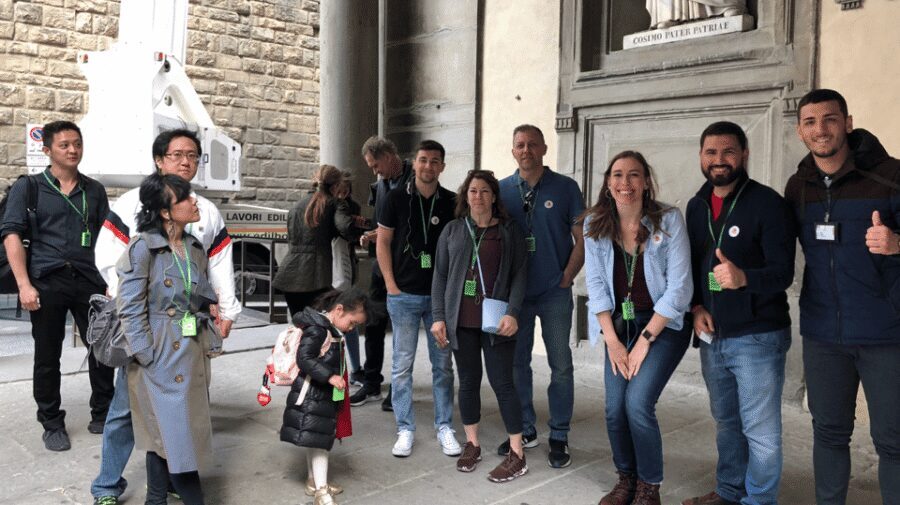
The Uffizi is one of those museums where the building alone can feel like a full-day commitment. The real trick is getting oriented quickly so you don’t spend your energy just figuring out where to go next. That’s where this tour earns its keep.
This is a semi-private small group format, limited to 15 participants max. In practice, that matters because you’re not yelling over dozens of strangers, and your guide can actually pace the group. The tour also includes radio headsets, which is a big deal at the Uffizi. In crowded galleries, hearing clearly changes everything: you can focus on the painting instead of scanning faces for the guide’s next move.
If you’re visiting Florence for a short stay, this kind of structure helps you get the most out of limited museum time. You’ll also get a “how to look at art” layer, not just a list of titles.
You can also read our reviews of more guided tours in Florence

Meeting point and getting in: the smooth start you’ll feel
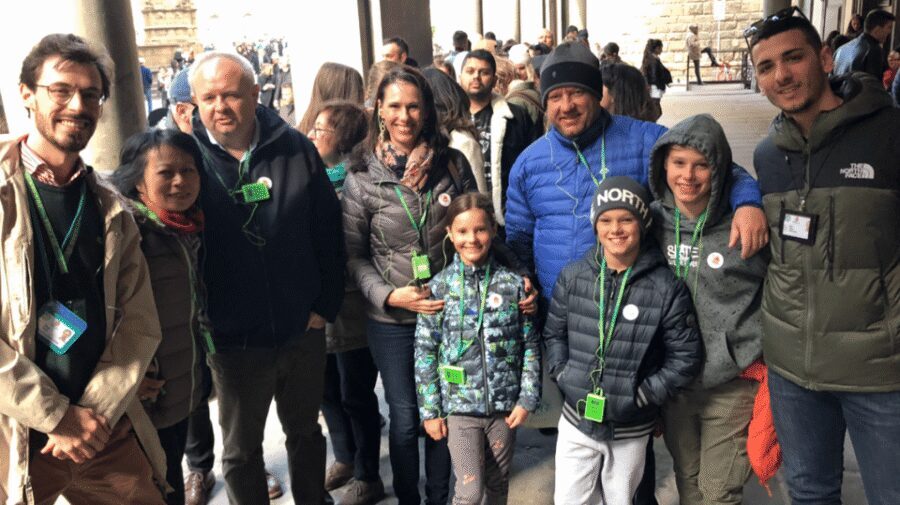
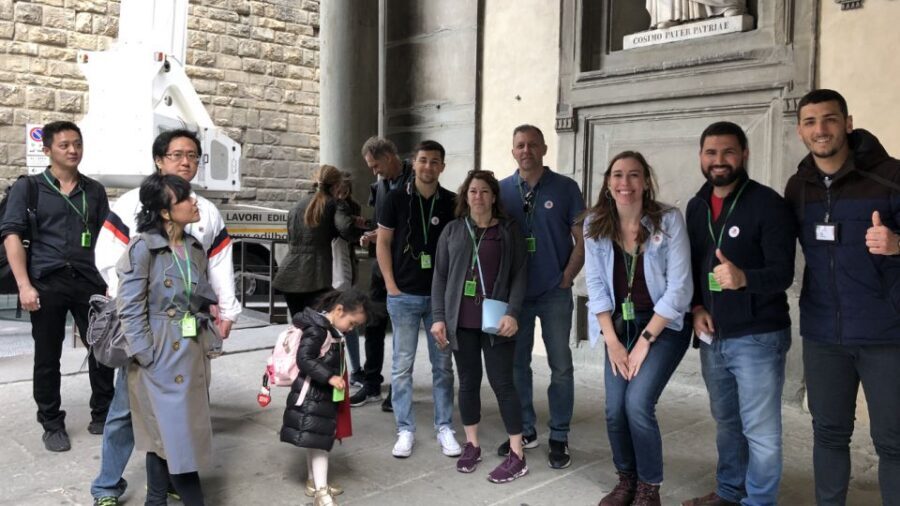
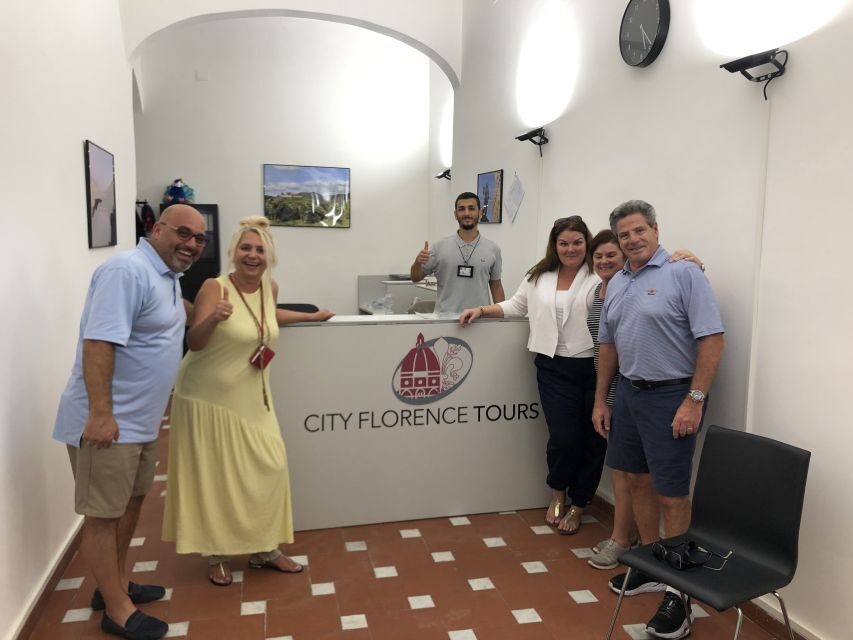
You meet your guide at the City Florence Tours office, located next to Via De’ Castellani 14 at number 18/red, in front of the general exit of the Uffizi Gallery.
From a practical standpoint, that location is useful because it puts you near where you need to be—so you’re not walking around the area with a phone map while everyone else is funneling toward the entrance. The tour also uses timed entry and an express security check, which helps you get inside with less waiting.
Here’s what I’d do: arrive a few minutes early, confirm you’re at the City Florence Tours desk, then relax. Once you’re inside, the rest of the experience runs like a route with stops you actually want to reach.
The 2nd-floor route: Renaissance masterpieces with context
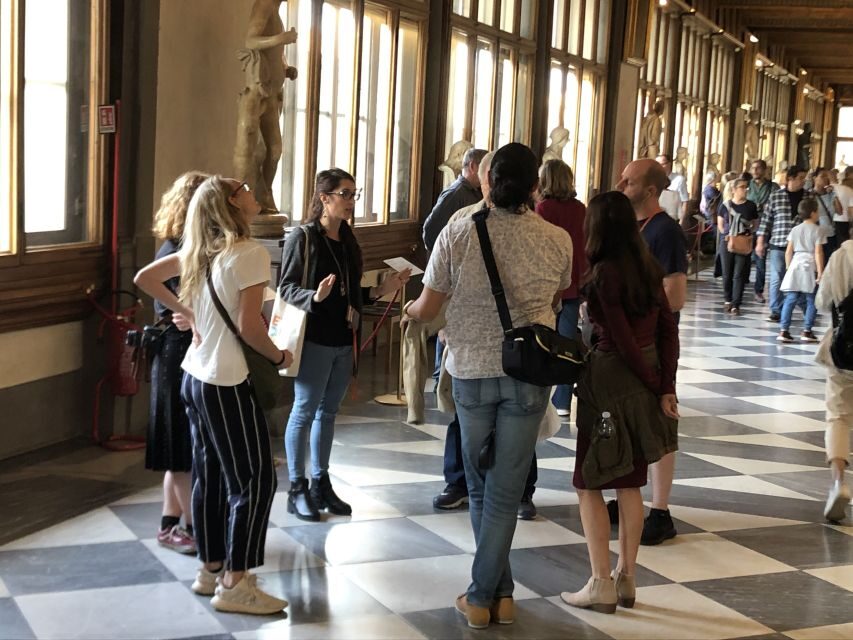
Your guided visit begins on the second floor, where many of the Uffizi’s most famous works live. The format is built around giving you context while you look. That matters because Renaissance paintings can feel “beautiful but distant” if you only see them as decorations. With a guide, you start noticing choices: how light falls, how gestures communicate emotion, and why a painting looks the way it does for its time.
This part of the tour includes major works tied to artists you’ll likely recognize right away, including:
- Botticelli’s The Birth of Venus and Primavera
- Leonardo da Vinci’s Annunciation
- Michelangelo’s Doni Tondo
- Works connected to Raphael, Titian, and Caravaggio
You’ll also hear stories about how the works were made and how the style changes across artists and decades. That’s the value of the guided portion: it connects dots so you don’t just memorize names.
Botticelli: looking at myth and meaning, not just color
Botticelli’s huge popularity can make people forget one thing: the paintings are loaded with symbolism. On this tour, you’re guided through what to notice and why the imagery matters. The guide’s commentary helps you see the difference between simply admiring a famous image and understanding how Renaissance artists used classical stories for contemporary ideas.
If you’re the kind of person who likes when art history clicks—this is a good match. You’ll leave with a clearer sense of what Botticelli was doing and how that style fits into the wider Renaissance story.
Leonardo da Vinci: the moment that makes it work
Leonardo’s Annunciation is the kind of work where you can stand there for a long time, but still miss what makes it special. The guide’s job here is to direct your attention: expressions, composition, and the sense of movement that makes the scene feel alive.
You don’t just get a headline. You get reasons.
You can also read our reviews of more museum experiences in Florence




Michelangelo’s Doni Tondo: small, rare, and easy to overlook
Michelangelo’s Doni Tondo is one of those works that can get swallowed by the museum’s scale. What I like about covering it on a short tour is that it forces balance. You get the headline names, but you also get something more specific and less obvious than the biggest crowd magnets.
The Doni Tondo is described as one of Michelangelo’s rare completed paintings, from an early period, and the tour points out what makes it distinct. That kind of detail is exactly what you want from a guided highlight route.
Following the art changes: Raphael, Titian, Caravaggio
One reason people love guided Uffizi tours is that the museum is basically a timeline in rooms. This one keeps that thread moving. After the big Renaissance names, you continue through works tied to Raphael and Titian, and you also get perspective on Caravaggio’s later dramatic style.
Why that sequence helps: Renaissance painting isn’t “one look.” It shifts—sometimes slowly, sometimes abruptly. When you’re short on time, you need a guide to make those changes feel logical instead of random.
Caravaggio’s drama: where it shows up in your visit
Caravaggio is highlighted again after the guided portion too, including works such as Medusa, Bacchus, and The Sacrifice of Isaac. Even if you’ve seen reproductions before, seeing Caravaggio in person tends to hit different because of how intense the scenes feel.
On this tour, you don’t just hear that Caravaggio is dramatic. You’re pointed toward specific works so the drama has a place to land in your head.
After the guide: you keep exploring at your pace
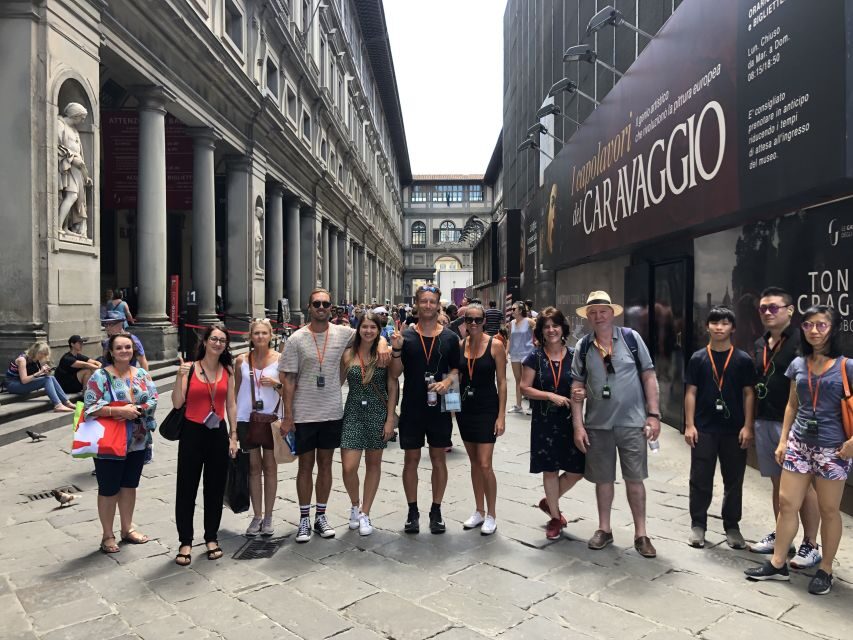
The tour ends, but you’re not done. You can continue exploring the Uffizi on your own.
A couple of practical options open up here:
- The terrace for views over Florence
- The first floor, which the tour notes as focusing on earlier periods and Byzantine art
This is also where those Caravaggio works like Medusa and Bacchus can come back into the picture as you wander. That makes your post-tour time feel like you’re extending a story instead of starting a new museum from scratch.
If you want the best use of your self-guided time, I’d pick one direction and commit. Either stay with the Renaissance vibe you just learned, or go intentionally earlier with the first-floor material. Trying to do everything usually turns into rushing.
Also, the museum is big enough that a short early orientation can save you from getting tired before you reach the works you actually care about.
Small group pacing, headsets, and what to do with 1.5 hours
This is a standing-and-walking tour, so comfy shoes matter. The good news is the time is tight in a helpful way. 1.5 hours is long enough to hit the main highlights and hear real context, but short enough that you shouldn’t burn out before you finish.
Headsets are included, and in practice they do what they promise: they help you hear your guide without constantly turning your head. That matters at the Uffizi, where you’ll often be surrounded by other tour groups and foot traffic.
Group size also plays into pacing. While the max is 15, some time slots can end up smaller. On some departures, groups have been described as tiny—so the tour can feel close to private, which is great if you like asking questions. Even with larger groups, the structure is designed to keep everyone moving through the same key stops.
One extra comfort note: a bathroom is available in the museum, so you’re not stuck hunting right at the moment you start to feel annoyed.
Price and value: what you’re really paying for

The listed price is $73 per person, and it includes the Uffizi Gallery ticket priced at €29.00, plus reservation fees, the guide, and headsets.
So is it worth it?
I think it is when you fall into one of these categories:
- You want to see the Uffizi highlights without building a game plan from scratch
- You care about meaning and context, not only names and dates
- You’re short on time in Florence
- You don’t want to spend your first hour figuring out the museum layout
If you’re the type who enjoys slow wandering and doesn’t mind working out what you’ll see on your own, you might save money doing it independently. But if your goal is to make the Uffizi feel organized and rewarding, paying for the guided structure is usually the better trade.
Also, the Uffizi ticket line can be a time sink. This tour’s timed entry and express security check are not small perks; they protect your museum energy for the rooms themselves.
Language, guide style, and the names you might hear
The guide is provided live, with languages listed as English, Italian, French, Spanish, and German. The tour info also notes that the tour involves English as the base, with other languages available upon request.
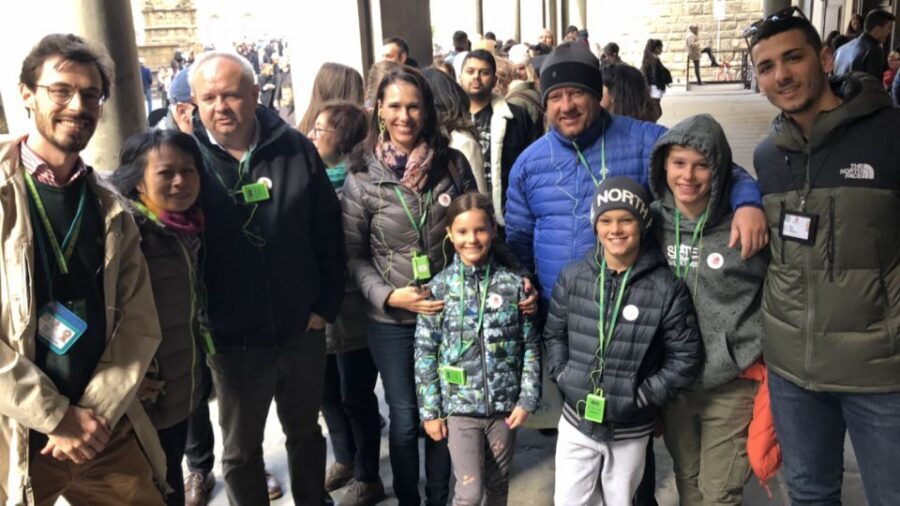
What I’d watch for is guide style. The Uffizi is visual, but the difference between a forgettable tour and a memorable one is how the guide connects the visuals to ideas. The guide roster includes names like Manuela, Guido, Laura, Marco, Mirella, Rubina, and others. Different guides bring different personality, and several have been described as funny or warm, including guides who kept kids engaged with questions and quick explanations.
If you’re traveling with kids or teens, this kind of tour structure can help. You don’t need to turn the museum into a trivia contest, but it helps when someone knows how to keep attention from drifting.
Before you go: IDs, participant info, and what to bring
This tour has clear ID rules.
Before purchasing, you’re required to provide full names (first and last name) and dates of birth for all participants. On arrival, everyone must show a valid ID to access the booked attraction. A copy is accepted, but you still need the right document prepared.
What to bring:
- A passport or ID card for adults
- For children, passport or ID card (the info notes ID handling for children as well)
For safety and speed, I’d bring the ID you’re actually willing to show, not just a photo on your phone. That way you avoid delays right when you’re trying to start the tour.
Who this tour suits best (and who should think twice)
This tour is a great match if you:
- Want Renaissance highlights in a focused, guided way
- Like having someone help you “read” paintings while you stand in front of them
- Prefer a small group setting over a crowd
- Enjoy finishing with free time to explore, especially toward the terrace and first-floor collections
It may be less suitable if you:
- Have mobility challenges. The information includes a note that it is not suitable for people with mobility impairments, even though the activity info also says wheelchair accessible. Because that’s mixed, I’d confirm with the operator before booking if mobility is a concern.
- Want to see everything in depth. The Uffizi is massive, and this tour is designed to be a high-impact highlight pass.
Should you book the Florence Uffizi small group tour?
If your priority is getting oriented fast, seeing the famous works, and understanding what you’re looking at without losing hours, I’d book this. The small group limit, timed entry, and headsets make the experience feel controlled, not chaotic. You also get the best part most people want: a guided 1.5-hour highlight route, then time to keep going at your own pace.
If you hate standing/walking for a while, or you need step-by-step accessibility accommodations, you should pause and confirm the tour’s real-world fit for your situation.
FAQ
How long is the Uffizi Gallery small group guided tour?
The tour lasts 1.5 hours.
How many people are in the group?
The tour is limited to a maximum of 15 participants.
Is the Uffizi ticket included in the price?
Yes. The tour price includes the Uffizi Gallery ticket priced at €29.00, along with reservation fees and the guide/headset costs.
What do I need to bring for entry?
You’ll need a valid ID for everyone in the group. The tour also requires full names (first and last name) and dates of birth for all participants before completing the purchase, and an ID copy is accepted.
Where do I meet the guide?
Meet at the City Florence Tours office next to Via De’ Castellani 14, precisely at number 18/red, in front of the general exit of the Uffizi Gallery.
Is this tour wheelchair accessible?
The activity information lists it as wheelchair accessible, but it also says it is not suitable for people with mobility impairments. If mobility is a concern, check with the operator before booking.



More Guided Tours in Florence


More Tours in Florence




More Tour Reviews in Florence
- Tuscany Day Trip from Florence: Siena, San Gimignano, Pisa and Lunch at a Winery
★ 5.0 · 21,634 reviews - The Best tour in Florence: Renaissance & Medici Tales – guided by a STORYTELLER
★ 5.0 · 12,316 reviews