REVIEW · FLORENCE
Palazzo Vecchio Tales – into Medici’s secrets and mythology simbols
Book on Viator →Operated by Florence Tour-Tale · Bookable on Viator
Medici secrets feel close-up here. This Palazzo Vecchio tour is built around what the Medici wanted you to notice: fresco symbolism, power theater, and myth references hiding in plain sight. Two things I really like are the story-driven guiding (a guide named Daniele is specifically praised for bringing the era to life) and the chance to see how art and politics share the same rooms.
You’ll also benefit from radios and headphones, which matter inside museums when sound bounces and groups stay in motion. One consideration: parts of the museum are unheated in winter, and there may be limited spots to sit during the guide’s talk, so plan for standing and layers.
In This Review
- Key points before you go
- Palazzo Vecchio Tales: what makes this tour different
- Getting started at Piazza della Signoria (and why it matters)
- The Michelozzo courtyard frescoes: 1500s scenes with Austrian clues
- Salone del Cinquecento: a grand hall explained through change
- The Medici family rooms: portraits, history, and myth symbols
- Donatello’s Giuditta and Oloferne: art with a political edge
- Machiavelli’s office and European political thought in the same building
- What the 1 hour 45 minutes really buys you
- Price and value: $150.19 plus the separate museum ticket
- Weather and comfort: plan for standing in winter
- Who this tour is best for (and who should reconsider)
- Should you book this Palazzo Vecchio Medici-and-myth tour?
- FAQ
- Where does the tour start and end?
- How long is the Palazzo Vecchio Tales tour?
- What languages is the tour offered in?
- Is there a skip-the-line option?
- Do I need to buy a museum ticket separately?
- What’s included with the guided visit?
- Is the tour private?
- Is free cancellation available?
- Is the meeting point near transportation?
Key points before you go
- Skip-the-line reservation for a set date and time helps you spend your energy inside, not waiting outside.
- Headphones (radios) make it easier to follow the guide without craning or losing the thread.
- 1500s fresco courtyard with Austrian countryside scenes is the kind of detail that turns decoration into clues.
- Salone del Cinquecento is explained through its many transformations, not just as a big room.
- Donatello’s Giuditta and Oloferne is a focal highlight tied to the Medici visual language.
- Machiavelli’s personal office connects the building to how European political thought was shaped.
Palazzo Vecchio Tales: what makes this tour different
Palazzo Vecchio is one of those places where you can wander for hours and still feel like you missed the point. This tour gives you a lens: Medici secrets plus mythology symbols. That combo changes what you see. Portraits stop being just faces. Frescoes stop being just pretty decoration.
I like that the tour doesn’t treat symbolism like a puzzle for experts only. It’s explained in clear language so you understand what the Medici were signaling through art. You’re also guided through the building in a logical flow, moving from courtyard atmosphere to major halls, then into rooms that feel more like curated messages than static exhibits.
You can also read our reviews of more tours and experiences in Florence.
- Tuscany Day Trip from Florence: Siena, San Gimignano, Pisa and Lunch at a Winery
★ 5.0 · 21,634 reviews

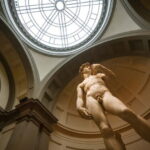
Getting started at Piazza della Signoria (and why it matters)
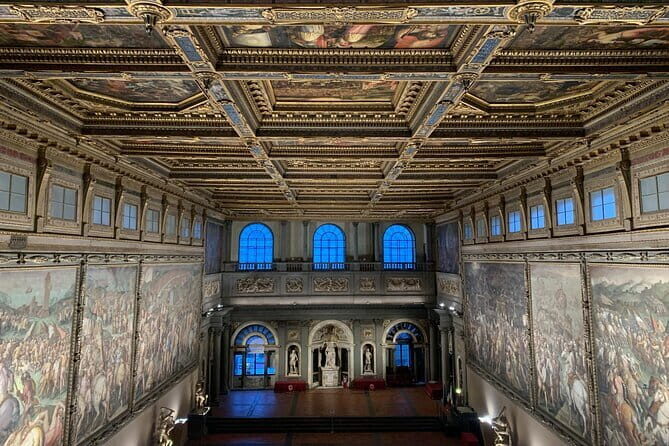
Your tour meets back at Piazza della Signoria (the same spot where it ends). This is smart because it keeps you anchored in the heart of Florence’s political and civic energy. Even before you step inside, you’re surrounded by the kind of public space where rulers wanted to look powerful.
From a practical angle, this is also a place that’s easy to reach. The tour notes it’s near public transportation, so you’re not stuck hunting for remote access points. And since it’s a private tour with only your group, you won’t get the feeling of being blended into a huge crowd.
The Michelozzo courtyard frescoes: 1500s scenes with Austrian clues
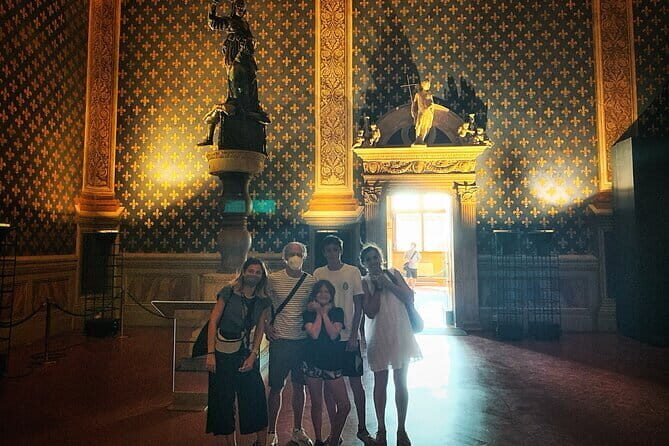
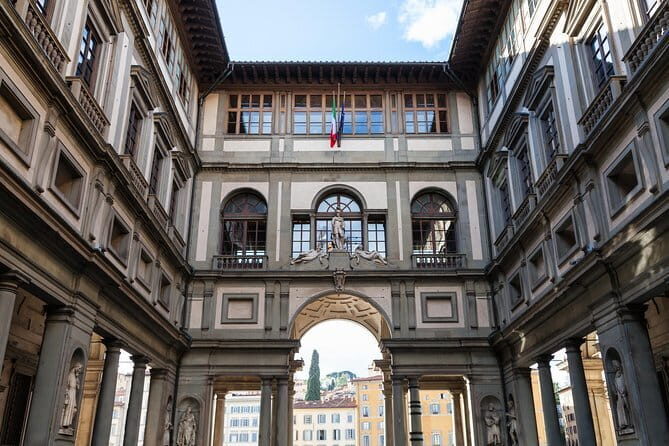
One of the first big visual hits is Michelozzo’s courtyard, decorated with 1500s frescoes. The tour focuses on why the frescoes include scenes tied to Austrian locations. That might sound like an odd choice at first—why would Palazzo Vecchio feature images connected to Austria?
That’s exactly why it’s such a strong start. The point isn’t just geography. It’s how rulers used imagery to build connections, status, and story. When you learn what those Austrian countryside scenes were doing inside Medici-controlled space, the courtyard becomes more than a pretty in-between area. It turns into an early lesson in how power uses art as messaging.
Practical tip: if you’re the type who likes photos, this courtyard is where you’ll want your camera ready. The color and detail are designed to be seen from within the space, not just from one flat viewpoint.
Salone del Cinquecento: a grand hall explained through change
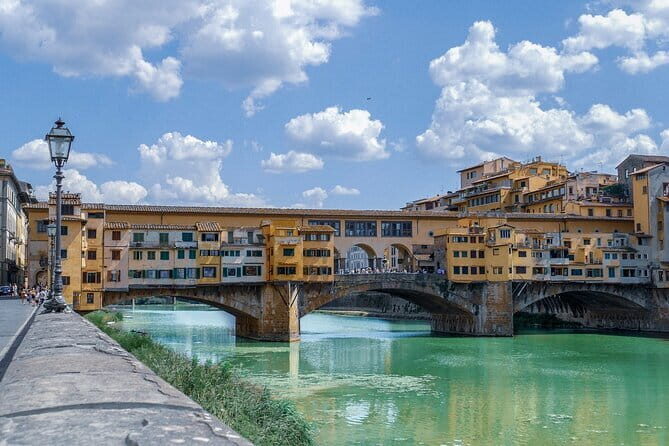
Next comes the Salone del Cinquecento, a spectacular main hall where the scale alone can overwhelm you. Many visitors remember it as impressive. This tour helps you remember it as meaningful.
The guide’s job here is to explain the room’s “several transformations.” That phrasing matters because it tells you the hall isn’t just a static monument. It changed shape and function over time, which mirrors how political priorities shift. As you move through the explanation, you start to notice that the room’s grandeur works like a stage set—ready for whatever story Florence needed at a given moment.
Even if you’re not a museum person, this section tends to click because it turns architecture into narrative. You’re not just looking at walls; you’re learning how the space was used to communicate authority.
The Medici family rooms: portraits, history, and myth symbols
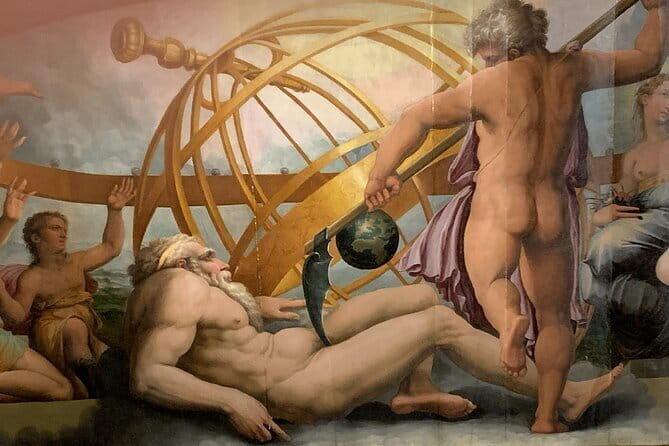
After the big hall energy, the tour shifts into the family rooms, where ornamentation is dense and deliberate. You’ll see portraits, representations of historical events, and allegories of mythological gods. This is the heart of the tour’s theme: mythology symbols weren’t decoration at the Medici level. They were a language.
Here’s why that matters to you as a visitor. Mythology can feel distant if you treat it like textbook stories. But inside Palazzo Vecchio, those gods and allegories are placed next to political identities and family narratives. You start understanding that the Medici weren’t only funding artists. They were building a visual argument about who they were, what they represented, and what kind of world they wanted to project.
I also like that the guide connects rooms to meaning rather than listing artworks like inventory. That keeps you oriented, especially when the building gets complex.
- Tuscany Day Trip from Florence: Siena, San Gimignano, Pisa and Lunch at a Winery
★ 5.0 · 21,634 reviews - The Best tour in Florence: Renaissance & Medici Tales – guided by a STORYTELLER
★ 5.0 · 12,316 reviews
Donatello’s Giuditta and Oloferne: art with a political edge
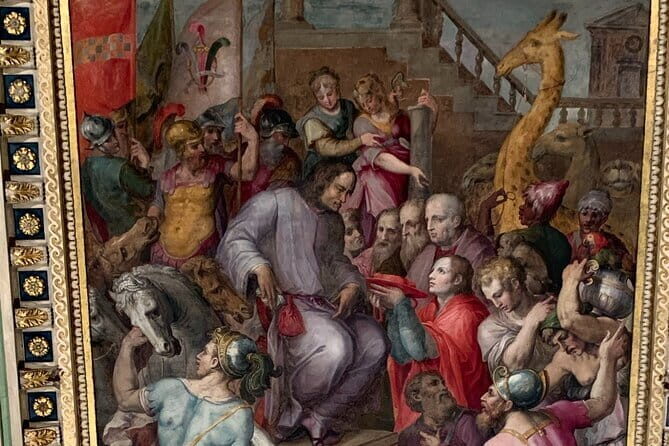
One standout highlight is highly significant artwork: Donatello’s original Giuditta and Oloferne. This piece is famous for a reason, but the real value of seeing it in this tour context is the explanation of why it belongs in these Medici rooms.
The story of Giuditta and Oloferne carries themes people used in political settings: power, danger, protection, and victory. In a palace full of portraits and allegories, that kind of theme becomes more than religious or artistic subject matter. It becomes part of the palace’s broader conversation—how to frame strength and legitimacy.
If you care about art but sometimes find museum labels too quick, this is the section where a good guide can transform your experience. The tour is designed to make those connections practical, not mystical.
Machiavelli’s office and European political thought in the same building
Another major stop is the room tied to European political thought, including Niccolò Machiavelli’s personal office. This is one of the most direct bridges between palace decoration and real ideas that shaped governance.
The value here is simple: you get to connect big names to actual space. When you stand in an area linked with Machiavelli, it stops feeling like history is only written in books. It becomes physical. The palace becomes a backdrop for how political thinking was performed, discussed, and used.
For you, that means the tour isn’t just visual. It’s intellectual. Even if you’re not trying to study politics, you’ll leave with a clearer sense of why Palazzo Vecchio mattered to Florence’s power structure.
What the 1 hour 45 minutes really buys you
The tour runs about 1 hour 45 minutes. That length is a sweet spot for a museum experience like this. You get enough time to see multiple major areas without feeling like you’re trapped in a marathon.
Because you also get licensed local guiding plus radios and headphones, the “time cost” goes down. You spend less time trying to hear, less time getting lost in your own interpretation. When you’re paying $150.19 per person, these included extras matter. They push the value beyond sightseeing into guided understanding.
And there’s a useful time-saver: a skip-the-line reservation at a concrete date and time. That doesn’t just reduce waiting. It protects your schedule. In Florence, where lines and crowd flow can swing hour to hour, having a reserved slot can be the difference between a smooth plan and a frustrating one.
Price and value: $150.19 plus the separate museum ticket
The price is listed at $150.19 per person, and it includes the guided visit, radios/headphones, and the skip-the-line reservation. The museum ticket itself is paid by you directly to the museum on the same date.
This setup can be good value because you’re paying for guidance and for time saved, while still handling the museum entry cost the same day. Just budget for that second payment when you plan. If you’re comparing options, don’t treat the ticket line separately as a penalty—think of it as two parts: one for access, one for expertise and flow.
One more small detail that can help your planning: this is commonly booked around 37 days in advance. That doesn’t mean you can’t go later, but it does suggest popular availability. If your dates are fixed, booking earlier is usually the less stressful move.
Weather and comfort: plan for standing in winter
A specific downside shows up in the feedback: the museum can be unheated in winter, and there are not a lot of opportunities to sit down while the guide talks. That means your comfort plan matters.
If you’re traveling in colder months, wear layers you can adjust. Bring a warm outer layer you don’t mind keeping on even indoors. And keep your pace flexible—some sections are easier to enjoy when you’re not hunting for a place to rest.
Even outside winter, museums like this can require a fair amount of standing and walking between rooms. If you know you fatigue quickly, consider choosing a date when you’re well-rested, and don’t plan other heavy activities immediately before or after.
Who this tour is best for (and who should reconsider)
This tour is best for you if you want more than a checklist of rooms. You’ll likely enjoy it if you like learning how symbols work—especially when mythology and power are mixed into the same walls.
It’s also a strong fit if you travel with questions. The guide format is built for Q&A-style engagement, and the storytelling focus (including the praised guide Daniele) is a big part of why people rate it so highly.
Who might reconsider? If you prefer self-guided browsing with lots of pauses for quiet looking, a guided flow with limited seating may feel less comfortable. Also, if cold weather bothers you, the unheated-in-winter consideration is worth taking seriously.
Should you book this Palazzo Vecchio Medici-and-myth tour?
I’d book it if you want a guided path through Palazzo Vecchio that actually explains why the palace looks the way it does. The mix of fresco symbolism, major halls like the Salone del Cinquecento, and anchors like Donatello’s Giuditta and Oloferne plus Machiavelli’s office gives you both visual pleasure and context that sticks.
It’s also a good choice when you care about logistics that reduce stress: skip-the-line reservation with a fixed time, plus radios/headphones for easier listening. And since it’s a private tour for your group, you get a calmer atmosphere than the typical jam of a big group shuffle.
If your top priority is spending the day drifting slowly and reading every placard at your own pace, you may find a guided structure less relaxing. But if you want meaning, this one is built to deliver it.
FAQ
Where does the tour start and end?
The tour starts at Piazza della Signoria and ends back at the meeting point.
How long is the Palazzo Vecchio Tales tour?
It lasts about 1 hour 45 minutes (approx.).
What languages is the tour offered in?
The tour is offered in English.
Is there a skip-the-line option?
Yes, it includes a skip-the-line reservation for a concrete date and time.
Do I need to buy a museum ticket separately?
Yes. The museum ticket is paid by you directly to the museum on the same date of the tour.
What’s included with the guided visit?
The tour includes a guided visit with a licensed local guide, radios and headphones, and the skip-the-line reservation.
Is the tour private?
Yes. It’s described as a private tour/activity, and only your group participates.
Is free cancellation available?
Yes, free cancellation is available. You can cancel up to 24 hours in advance for a full refund.
Is the meeting point near transportation?
Yes, the tour notes the activity is near public transportation.

More Tour Reviews in Florence
- Tuscany Day Trip from Florence: Siena, San Gimignano, Pisa and Lunch at a Winery
★ 5.0 · 21,634 reviews - The Best tour in Florence: Renaissance & Medici Tales – guided by a STORYTELLER
★ 5.0 · 12,316 reviews