REVIEW · BOLOGNA
Private Bologna City & Europe Oldest University Guided Tour
Book on GetYourGuide →Operated by TUI Musement · Bookable on GetYourGuide
Bologna’s university roots run long. This private, guided walk connects the city’s academic beginnings from the 11th century with the places you can still see today, from Piazza San Domenico to the Archiginnasio Palace and its famed anatomy theater. I especially liked the way the guide brings the medieval university story to life, and I also enjoyed the focused pacing that fits a short visit without feeling rushed. One thing to consider: you won’t get any museum-site entrance included, so a few stops may require tickets if you want to go inside fully.
If you want a small-group experience with expert storytelling, this works well. I found that the guide really keeps the attention on the key details—professors, students, and medical teaching—so the walking moments feel purposeful. My only real caution is practical: comfortable shoes matter, and the tour isn’t suitable for wheelchair users.
In This Review
- Top reasons to choose this Bologna university tour
- Bologna’s university story starts in the 11th century
- Meeting up at Biblioteca Salaborsa and lining up for the walk
- Piazza del Nettuno: the starting point vibe
- Piazza San Domenico and the medieval professors in stone
- Museo Medievale: bas-reliefs that show teaching in action
- Archiginnasio Palace: from school buildings to medical teaching
- The 17th-century anatomy theater and its wooden medical sculptures
- How 2.5 hours really plays out, and how to pair it with your day
- Price and value: a private guide without ticket included
- Who this tour is best for (and who should skip it)
- Quick facts you should know before you go
- Should you book this Bologna private university tour?
- FAQ
- FAQ
- How long is the private Bologna City & Europe Oldest University Guided Tour?
- Is this tour private?
- Where do I meet the guide?
- Where is the tour starting point and ending point?
- Which languages are available for the live guide?
- Does the price include museum or site entrance tickets?
- Is the Museo Medievale open every day?
- What should I bring?
- Is the tour suitable for wheelchair users?
- What happens if it rains?
Top reasons to choose this Bologna university tour

- Europe’s oldest university theme, traced through the medieval spaces you can actually visit
- Piazza San Domenico monuments and Museo Medievale bas-reliefs, with narration focused on how teaching worked
- Archiginnasio Palace, including the jump from 16th to 19th century school life
- The 17th-century anatomy theater, decorated with wooden medical sculpture themes
- Private guide attention, offered in Spanish, English, French, German, and Italian
Bologna’s university story starts in the 11th century
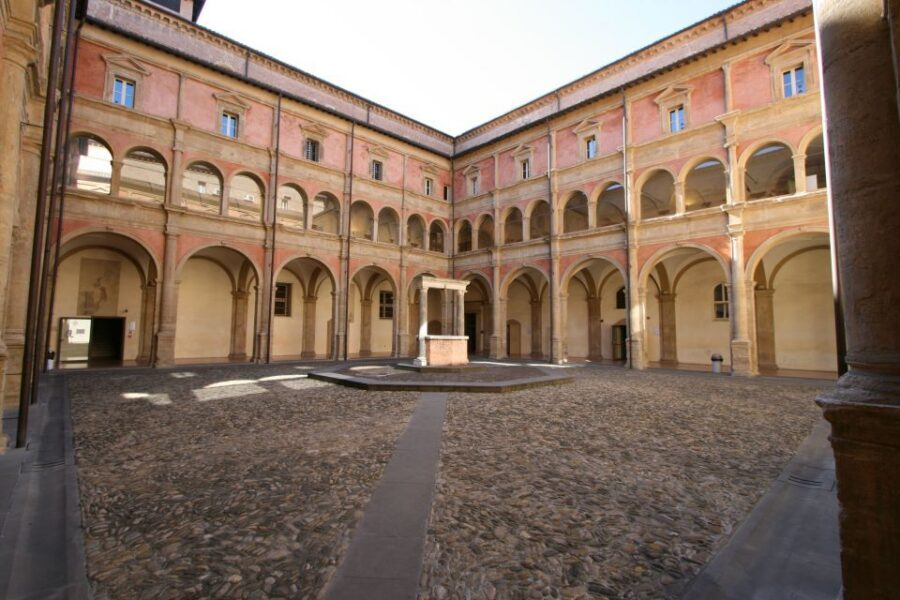
Bologna is one of those cities where the past isn’t behind glass—it’s built into the streets and buildings. This tour takes that idea seriously. You’re not just seeing landmarks; you’re learning how Bologna became a teaching center and why that mattered across Europe. The big thread is the city’s claim to having Europe’s first university roots in the 11th century, and then watching education evolve through the Middle Ages and beyond.
What makes the experience feel practical is the way the guide links people and ideas to specific corners of town. You hear about professors and students in a way that makes the buildings make sense. Instead of memorizing dates, you start recognizing patterns: where instruction happened, what the academic culture looked like, and why medicine earned special attention later on.
I also like that the tour format is built for real sightseeing time. In about 2.5 hours, you cover several major stops without trying to do everything in Bologna on one single outing. That’s especially helpful if you’re visiting as part of a longer trip and you want a strong Bologna hit without burning your whole day.
You can also read our reviews of more guided tours in Bologna


Meeting up at Biblioteca Salaborsa and lining up for the walk
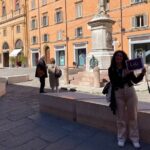
You’ll meet your guide in front of Biblioteca Salaborsa, and the guide holds a TUI sign or flag. From there, the walking route leads you into the historic center, with the tour’s starting point tied to Piazza del Nettuno, 3. If you’re arriving early, give yourself a few minutes to find the sign and confirm you’re with the right guide—this kind of city tour moves at a clean, efficient pace once it starts.
Bring comfortable shoes. That sounds basic, but it matters because you’ll be walking between several stops where the narration is tied to what you’re seeing. This isn’t a sit-down lecture where you can pop on and off. You’ll want good footwear because cobblestones and classic street surfaces add up faster than you expect.
One small but useful detail: the tour doesn’t allow luggage or large bags. If you’ve got a big daypack, keep it manageable. For most people, a day bag is fine, but I’d avoid dragging a roller suitcase into tight medieval streets.
Piazza del Nettuno: the starting point vibe
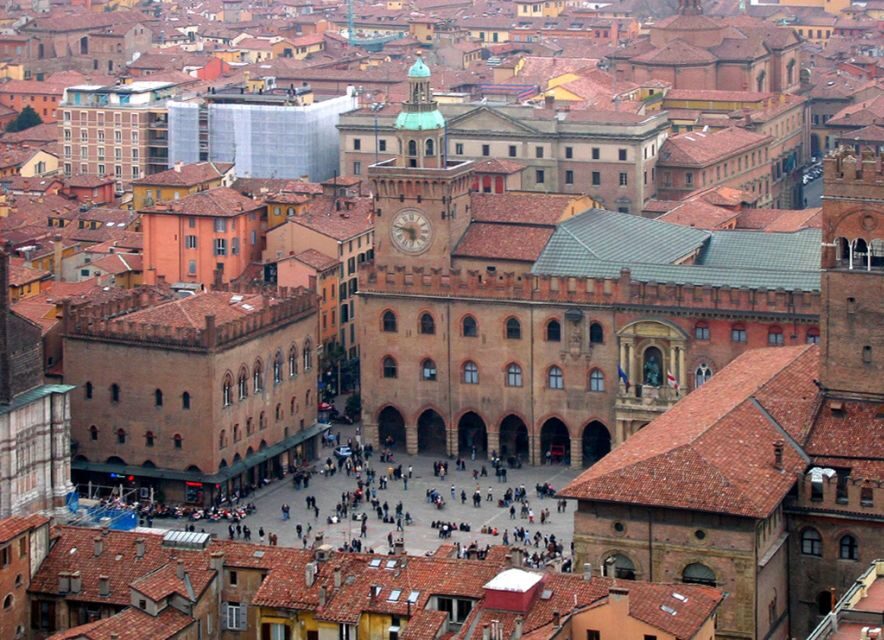
Piazza del Nettuno is a smart “begin here” choice. It gives you a central reference point and helps you get oriented fast—Bologna’s streets can feel like a web if you don’t anchor yourself early. From the start, you’ll feel how the city’s geometry supports pedestrian wandering. You’re not crossing huge distances; you’re moving like locals do, with the guide adjusting the story to match the next view.
This is where the guide typically frames what you’re about to learn. You’ll set expectations for the university theme so later stops land with more meaning. Instead of arriving at Piazza San Domenico wondering what you’re looking at, you’ll already know why it matters and what kind of professor-student world is represented there.
Piazza San Domenico and the medieval professors in stone
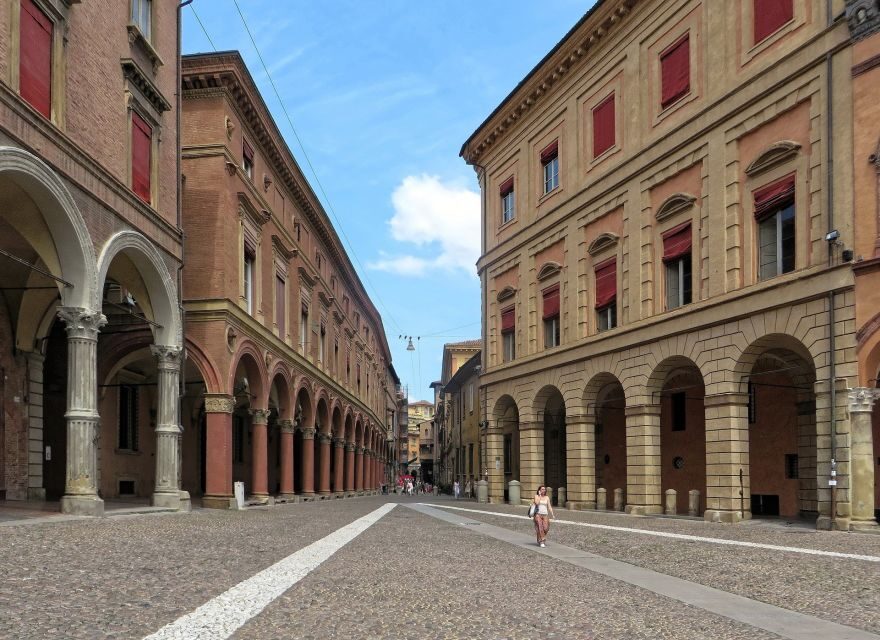
Piazza San Domenico is where the tour turns from general context to something more specific and visual. You’ll visit as part of the guided portion, and the narration focuses on monuments tied to the most illustrious professors of the Middle Ages. That’s a key difference from many tours that only offer broad statements about Bologna’s university role. Here, the emphasis is on the people, and how the public space remembers them.
If you like learning through details—names, symbolism, and how art communicates status—this part will feel satisfying. The square works because it’s not just a pretty stop. It’s a stage for ideas about teaching authority. When your guide points out how these monuments connect to the academic world, you start seeing the plaza as a kind of public classroom.
Possible drawback: if you’re expecting a long interior experience at this stage, you may find it more viewpoint and monument focused. That’s not a problem—it keeps the pace tight—but it’s good to know. This is about understanding the medieval university identity first, then moving into museum material next.
Museo Medievale: bas-reliefs that show teaching in action
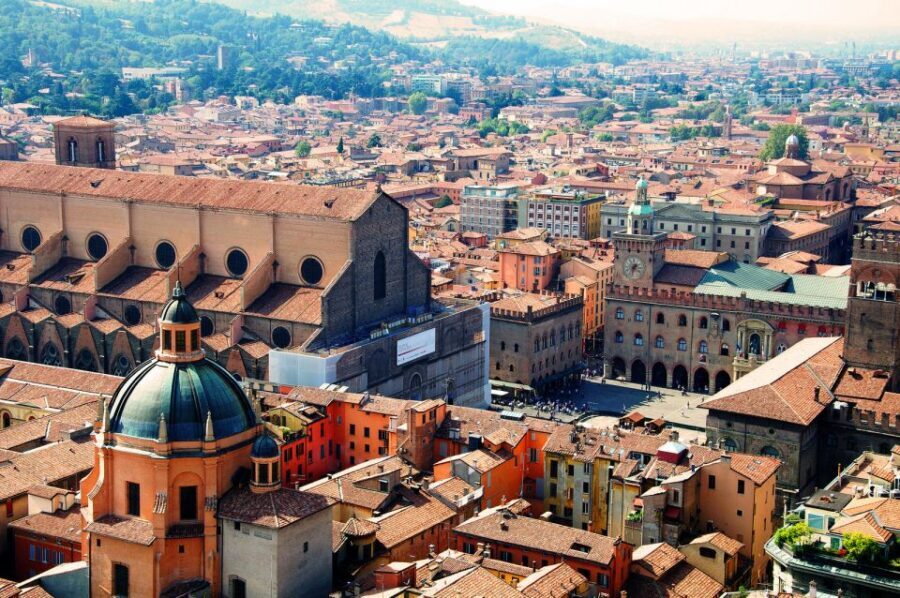
Next comes the Museo Medievale, where you’ll get guided time and learn through vivid bas-reliefs. This is one of the most compelling parts of the tour because it offers a visual explanation of how professors taught. Instead of imagining medieval instruction, you can see it represented—professors addressing an audience of students, translated into stone-like artwork.
For me, the value here is clarity. Bologna’s university story can sound abstract until you see teaching portrayed as an organized event, not just a word. The bas-reliefs make the lesson feel concrete. You understand what the role of a professor looked like and why the student audience mattered.
Two practical notes you’ll want in your planning. First, the Museo Medievale is closed on Mondays, and opening hours can vary—check their website before you lock in your day. Second, the tour does not include tickets for museums or other entrance-fee sites. So even though the guide will take you to the museum and talk you through what matters, you may need to pay entry separately if you want to go in.
If it’s raining, the tour generally goes on. That said, if weather is heavy enough, the tour may be cancelled and you’ll receive a full refund. For planning, I’d still keep an eye on local conditions and have a flexible mindset for an outdoor-to-indoor day.
You can also read our reviews of more city tours in Bologna


Archiginnasio Palace: from school buildings to medical teaching
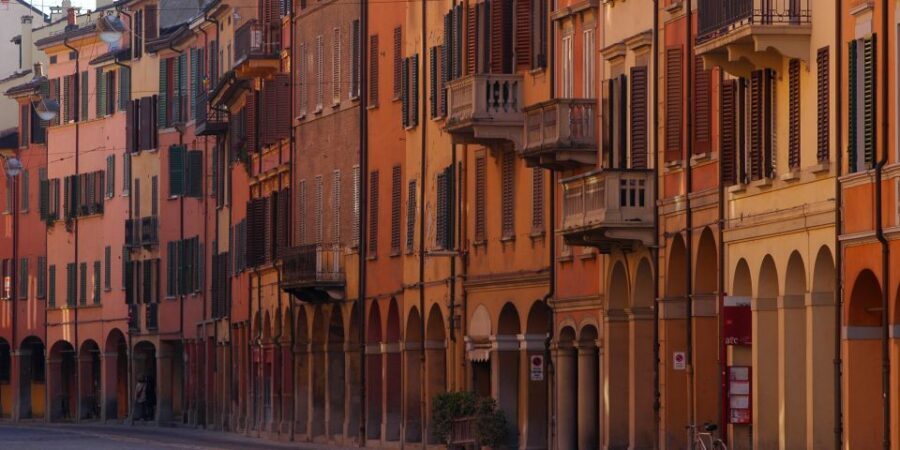
After the museum stop, the tour moves to the Archiginnasio of Bologna. This building matters because it links education across centuries, not just one era. The tour includes time to visit with a guide, explaining how the palace housed the city’s schools from the 16th to the 19th century. That time jump is important. It shows that Bologna’s university role didn’t end with the medieval period—it kept shaping education as it evolved.
This is also where the atmosphere shifts from “university as an idea” to “university as a physical system.” You’ll start connecting administration, teaching spaces, and the tools of education. When a guide explains how a palace becomes a school, the architecture starts to feel like part of the curriculum.
And then comes the highlight many people care about most: the 17th-century anatomy theater.
The 17th-century anatomy theater and its wooden medical sculptures
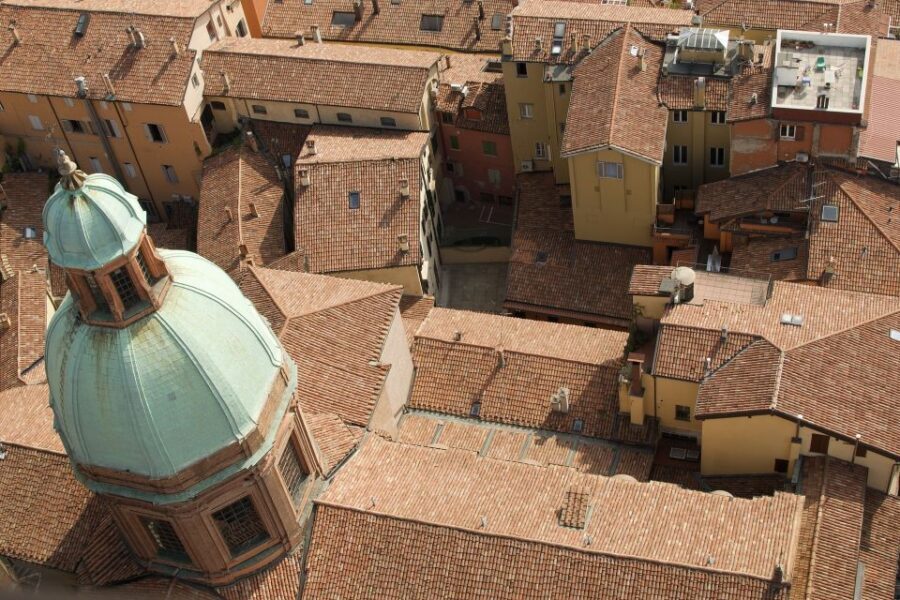
The anatomy theater at the Archiginnasio is famous for a reason, and on this tour you’re not left to wander with guesswork. Your guide points you toward the theater’s significance and what it represents in the broader educational story. You’ll hear how medical teaching was staged in this setting and how the theater’s decoration connects to medicine.
The standout detail provided is that the theater is decorated with wooden sculptures related to Medicine. That’s a strong clue that this stop isn’t just about the room shape or reputation—it’s about the iconography and the way art and teaching overlap.
Practical tip: this stop is more about close attention than big-photo posing. If you’re the kind of person who likes to read visual clues, you’ll probably enjoy it more. If you just want broad silhouettes and quick snaps, you might feel like you’re standing in place longer than you expected, but that’s exactly where the narration helps.
How 2.5 hours really plays out, and how to pair it with your day
The tour is listed at 2.5 hours. In practice, a shorter story-led walk can feel longer if the guide is good at pacing questions and pulling you into the meaning of each stop. One account I noted praised how the guide didn’t run out of knowledge even after nearly three hours on the move, which tells me this experience can stretch smoothly when the group engages.
So what should you do with the rest of your day?
- If you’re early, consider using the time before the tour to get oriented around Bologna’s center so the streets feel easier when you start walking with the guide.
- After the tour, give yourself time to linger near the places you just learned about. That’s when the story clicks into the city itself.
A big benefit of the time limit: you can do this tour even if Bologna isn’t your only stop. It’s a focused way to get the university angle without sacrificing everything else you might want to see.
Price and value: a private guide without ticket included
At $147.27 per person, this is not a budget “free walking tour” style experience. But it’s also not trying to charge like a full-day museum package. The value comes from the structure: it’s a private guided tour with an expert narration focused specifically on Bologna’s oldest university story.
You’re paying for:
- Private attention (so you can ask questions and follow the thread smoothly)
- A guided route that connects multiple sites into one coherent explanation
- Time in key stops tied to medieval teaching and the anatomy theater
The main thing that affects cost after booking is that the tour does not include museum tickets or entrance fees for sites that require them. That means your total spending depends on what you choose to enter on the ground. If you’re okay with paying a separate entry fee at one or two stops, this still feels like a fair trade for a guide-driven experience that’s hard to replicate alone—especially in a city where academic history is spread across several buildings.
Languages are covered too: your live guide can work in Spanish, English, French, German, or Italian. That matters for value because it keeps the storytelling comfortable and accurate.
Who this tour is best for (and who should skip it)
This tour is a strong fit if you care about education, architecture, and the way ideas show up in public spaces. I’d especially recommend it if you like learning through specific scenes: professors, students, and how teaching was staged and represented. The museum bas-reliefs and the anatomy theater make it ideal for anyone who enjoys visual explanations, not just talking-history summaries.
It’s also a great match for travelers who want a guided experience that feels targeted rather than random. The stops have a clear theme, and the pacing works well for a first or mid-trip Bologna visit.
Skip it if you:
- Want a wheelchair-friendly option (it’s not suitable for wheelchair users, based on the tour notes)
- Hate the idea of paying separate entrance fees
- Prefer long, self-guided wandering with minimal structure
Quick facts you should know before you go
- Duration: 2.5 hours (check availability for starting times)
- Meeting: in front of Biblioteca Salaborsa (guide holds a TUI sign/flag)
- Walk focus: Piazza San Domenico, Museo Medievale, and Archiginnasio of Bologna (anatomy theater)
- Weather: tour runs in rain; heavy rain may cancel with a full refund
- Bring: comfortable shoes
- Don’t bring: luggage or large bags
If you’re language-sensitive, it helps that the guide is available in multiple languages, including English.
Should you book this Bologna private university tour?
Yes, if you want Bologna’s university story told where it actually happened, in a compact time window. The pairing of Piazza San Domenico monuments, the Museo Medievale bas-reliefs, and the Archiginnasio anatomy theater is exactly the kind of “theme route” that makes a city feel smarter, not just prettier.
I’d book it if you’re the type who enjoys expert narration and wants the architecture and art to mean something. You’ll get that from a private guide, and the strong rating suggests the storytelling lands well.
I’d think twice if you don’t want to handle any extra museum entry costs, or if you need wheelchair accessibility. For everyone else, it’s one of the more focused ways to understand why Bologna mattered to European education.
FAQ
FAQ
How long is the private Bologna City & Europe Oldest University Guided Tour?
It lasts 2.5 hours.
Is this tour private?
Yes. It’s a private group tour.
Where do I meet the guide?
Meet your guide in front of Biblioteca Salaborsa. The guide will hold a TUI sign or flag.
Where is the tour starting point and ending point?
The tour starts and ends back at Piazza del Nettuno, 3.
Which languages are available for the live guide?
The guide is available in Spanish, English, French, German, and Italian.
Does the price include museum or site entrance tickets?
No. Tickets for museums and other sites that require an entrance fee are not included.
Is the Museo Medievale open every day?
No. The Museo Medievale is closed on Mondays, and opening hours can vary.
What should I bring?
Wear comfortable shoes.
Is the tour suitable for wheelchair users?
No, it’s not suitable for wheelchair users.
What happens if it rains?
The tour takes place even when it’s raining. In heavy rain, the tour may be cancelled and you’ll get a full refund.