REVIEW · FLORENCE
Private Renaissance Discovery Tour of Florence
Book on Viator →Operated by Ciao Florence Tours Srl · Bookable on Viator
Florence makes more sense on foot. This private Renaissance discovery tour is built for people who want the big names, but also the stories that connect them. You choose a morning or afternoon start, meet your guide right at your accommodation (in the historic center), and then walk through Florence’s core like it’s one living museum. Piazza della Signoria to Ponte Vecchio feels like a clear storyline, not a random checklist.
Two things I really like here are the stop choices and the way the guide helps you see patterns. You’ll move through standout squares and landmarks tied to the Medici, the artists, and the city’s power centers—plus you get time to pause for questions and photos. I also like that some guides adjust to real needs: one guide (Manuel) was reported as accommodating for limited mobility within the group. One possible drawback to plan for: it’s still a 3-hour walking tour, and church/landmark entry isn’t included, so you’ll want to budget if you decide you want inside access.
In This Review
- Quick highlights you should care about
- Morning or afternoon: a 3-hour private walk with real pacing control
- Getting started: hotel meeting, mobile ticket, and staying flexible
- Piazza della Signoria and Loggia dei Lanzi: where Florence flexes power
- From Uffizi colonnade to goldsmith shops: art, commerce, and the Arno
- Ponte Vecchio: meat markets, WWII survival, and that signature view
- A Medici secret route: the Vasari Corridor story
- Piazza San Giovanni and the Duomo cluster: architecture you can read in 30 minutes
- Piazza della Repubblica and Porcellino: history, markets, and local legend
- How the tour handles inside access (and why it still works without it)
- Optional add-on: Pitti Square and Oltrarno for a calmer second act
- Piazza-by-piazza flow: what each stop is doing for your understanding
- Price and value: $348.85 per group for up to 10
- Who this tour fits best (and who might want a different style)
- Should you book this private Renaissance Discovery Tour?
- FAQ
- How long is the Private Renaissance Discovery Tour of Florence?
- Where does the guide meet you?
- Is this tour offered in English?
- Are tickets for churches or landmarks included?
- How big is the private group?
- Is there free cancellation?
Quick highlights you should care about
- Hotel pickup in the historic center means less fuss and more time walking where it matters
- Loggia dei Lanzi statuary brings you face-to-face with sculptors like Cellini and Giambologna
- Medici route mystery: the Vasari Corridor story connects Palazzo Vecchio to Pitti across the river
- Ponte Vecchio origins: you’ll hear how it went from meat markets to luxury shops—and why it survived WWII
- Duomo square architecture cluster: Baptistery, Giotto’s bell tower, and Brunelleschi’s dome in one focused walk
- Optional extensions can add Pitti and the calmer Oltrarno side of the Arno
Morning or afternoon: a 3-hour private walk with real pacing control
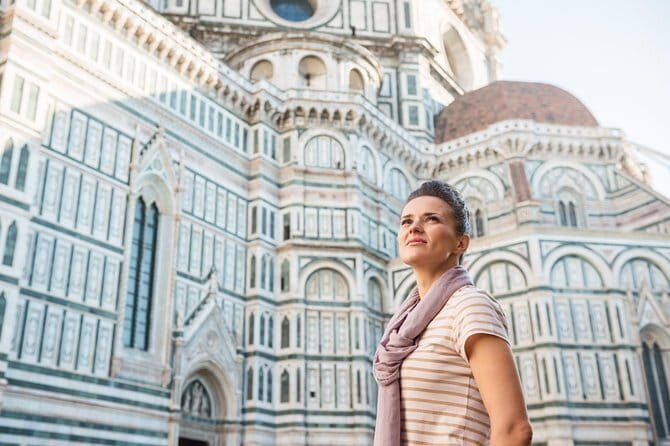
This tour is designed around the idea that Florence reads best when you slow down. You’re not being herded from one photo spot to the next. Your group sets the pace, and your guide uses that flexibility to answer questions as they come up. That matters because Florence is full of overlapping eras—Medici politics, Renaissance art, and the city’s architectural “how did they build that?” moments.
The duration is about 3 hours, so you get enough time to see the major anchors without feeling like you’re spending your whole day in shoes. Because it’s private and capped at up to 10 people per group, you’ll generally get a more responsive experience than a big bus tour. If your group has varied interests—art, history, or just getting your bearings fast—you’ll likely find the guide can keep everyone engaged.
And yes, you get morning and afternoon departures, which helps if you’re juggling museum plans, lunch timing, or jet lag.
You can also read our reviews of more private tours in Florence

Getting started: hotel meeting, mobile ticket, and staying flexible
The tour starts with your guide meeting you directly at your accommodation in Florence if you’re in the historic center. That’s a practical perk. You don’t have to locate a meetup point and then backtrack through streets you already walked. If you’re staying outside the center or in a private home/apartment area, pickup is also offered.
You’ll also receive a mobile ticket, which makes it easier to show the right thing on the right day without printing.
One more small but important thing: churches and landmarks may have entry fees, and those are not included. The stops are set up so you’ll still get plenty of exterior and architectural context, but if your group strongly wants interior access, plan for that cost separately.
Piazza della Signoria and Loggia dei Lanzi: where Florence flexes power

The core of the experience begins at the city’s political and artistic heart. You’ll head to Piazza della Signoria, dominated by the Palazzo Vecchio. Even if you don’t know much about Florence yet, this square helps you understand the vibe: authority, civic pride, and art all in the same frame.
From there, you’ll walk through the Loggia dei Lanzi, which functions like an outdoor sculpture gallery. This is where the tour becomes more than street sightseeing. You’ll admire works by major Florentine sculptors including Benvenuto Cellini and Giambologna. Seeing sculpture in a public loggia changes how it lands. It’s not behind glass; it’s in your line of sight, shaped by the piazza’s light and scale.
What I like about this stop is that it anchors later places. Once you’ve seen how Florence displayed art and status in public space, the rest of your walk makes more sense.
From Uffizi colonnade to goldsmith shops: art, commerce, and the Arno
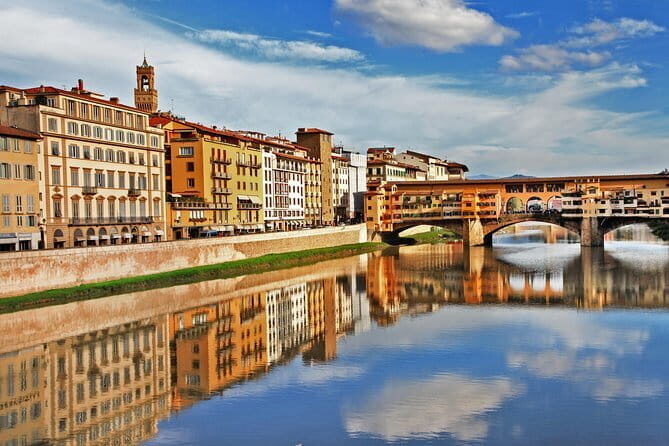
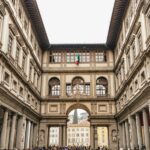
Next comes a smooth transition from the power of Palazzo Vecchio to the world of art patronage and display. You’ll pass by the Uffizi Gallery colonnade. The Uffizi is not just a museum stop here—it’s a reminder that Renaissance art didn’t exist in a vacuum. It was funded, commissioned, and showcased by people with influence.
You’ll also browse through goldsmiths’ shops, and this is a practical moment. In a city where everything can feel like a landmark, shopping windows give you texture. You get a sense of what the street experience is actually like today.
Then you’ll reach Ponte Vecchio, with views across the Arno River. This is one of those places where the guide’s storytelling really helps. Otherwise, it can become a busy bridge with pretty views. With context, it turns into a timeline you can walk across.
Ponte Vecchio: meat markets, WWII survival, and that signature view
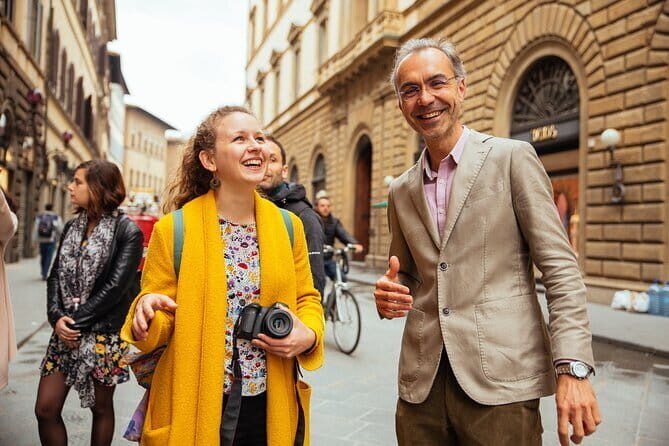
Ponte Vecchio is Florence’s postcard bridge—but the tour adds the backstory you’re likely missing when you just stroll for photos. Your guide explains how the bridge used to host smelly meat markets, long before it became known for luxury jewelry shops.
You’ll also hear why Ponte Vecchio is remembered as unusual in wartime history: it was reportedly the only bridge spared during WWII bombings. That detail puts a lot into perspective. Florence didn’t just preserve art; it also preserved the city’s urban shape.
And you’ll get the camera-ready reward: the view from the bridge is genuinely special. It’s the kind of scene where you’ll understand why people come back to Florence again and again.
- Tuscany Day Trip from Florence: Siena, San Gimignano, Pisa and Lunch at a Winery
★ 5.0 · 21,634 reviews - The Best tour in Florence: Renaissance & Medici Tales – guided by a STORYTELLER
★ 5.0 · 12,316 reviews



A Medici secret route: the Vasari Corridor story
One of the tour’s most interesting narrative threads is the Vasari Corridor. You won’t be “in” it for long here, but you will learn what it was for and why it matters. This passageway connected the Palazzo Vecchio to the Pitti Palace across the river, and the Medici rulers used it for discreet movement.
That’s a smart stop for first-timers. Florence can feel like architecture trivia unless someone connects buildings to human behavior. The corridor story does that. Suddenly, you’re not just looking at famous residences—you’re seeing how power traveled.
If you love court politics and how rulers managed public visibility, this section is a highlight.
Piazza San Giovanni and the Duomo cluster: architecture you can read in 30 minutes
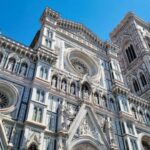
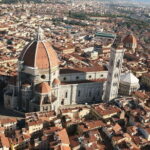
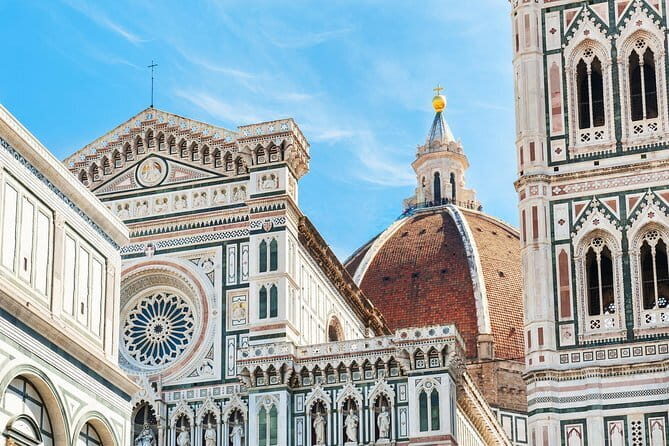
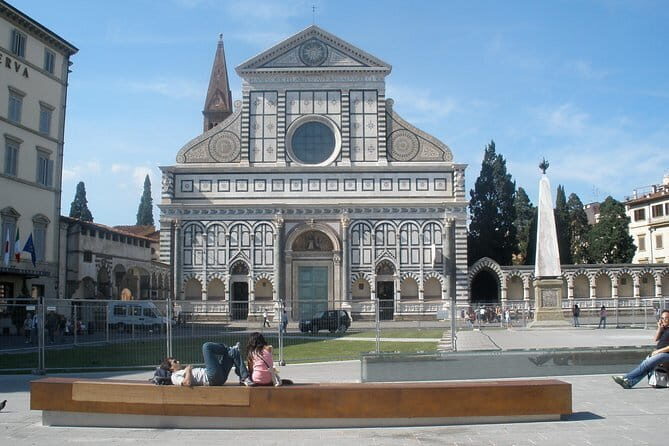
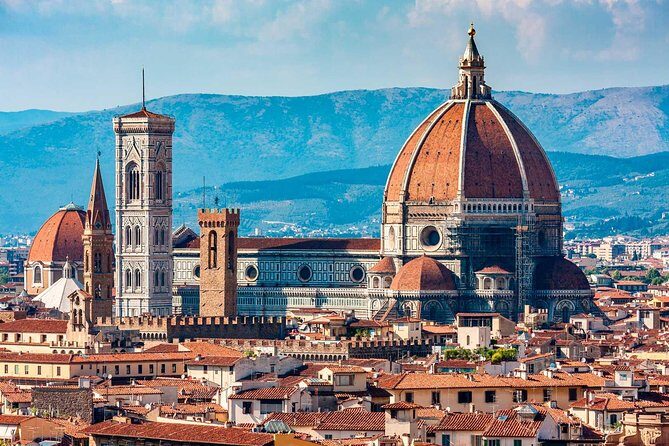
The tour’s next big anchor is the area around Piazza San Giovanni, where you get one of Florence’s most famous visual clusters: Brunelleschi’s Duomo (Santa Maria del Fiore), the San Giovanni Baptistery, and Giotto’s Bell Tower. The key here is that the guide helps you see how these buildings work together as a single statement.
You’ll learn the history behind the Baptistery, get context for Giotto’s Bell Tower, and hear how the dome—designed by Brunelleschi—became part of Florence’s identity. Even if you can’t go inside during your tour, you’ll leave with a clearer mental map of what to notice when you walk past these again later.
Also, your guide will point out the colorful marble details—those white, pink, and green elements that make the square feel like it’s lit from the inside on a good day.
A practical consideration: the area is visually intense. If you’re the type who likes to linger, it helps that you can set your group pace and ask for what you care about.
Piazza della Repubblica and Porcellino: history, markets, and local legend
After the Duomo area, you’ll move to Piazza della Repubblica, near the cathedral. This square used to be Florence’s civic center across different ruling families. Your guide frames it as a place where daily life happened—not just a decorative stop.
Then comes Porcellino at Loggia del Mercato Nuovo. This is the kind of stop that feels playful, but the guide ties it to real history. The market was opened in the 1500s for foreign silk and precious stone vendors, and it’s still tied to the legend of luck.
The main tradition you’ll likely hear and see is the piglet statue Porcellino—and the custom of rubbing the baby pig’s nose for good luck. It’s not “just a photo.” It’s one of those small rituals that makes a Renaissance city feel human and lived-in.
If your group enjoys local stories, this is a good moment to reset after the heavier architecture.
How the tour handles inside access (and why it still works without it)
A key detail: entry tickets to churches or landmarks aren’t included. That means the tour leans on exterior viewing, architectural context, and street-level navigation. In practice, that’s often enough for first-time visitors.
You’ll still see the key buildings and learn what to look for. The Duomo square cluster is a perfect example: you can understand the statement even from outside. Same with the sculpture and civic square stops, where the city itself is the gallery.
That said, if your priority is inside access—specific church interiors or museum rooms—you should treat this tour as the foundation. Then you can decide separately what to add.
Optional add-on: Pitti Square and Oltrarno for a calmer second act
There’s an optional extension if you want more than the big highlight loop. You can ask your guide to extend to Pitti Square and the Oltrarno side of town.
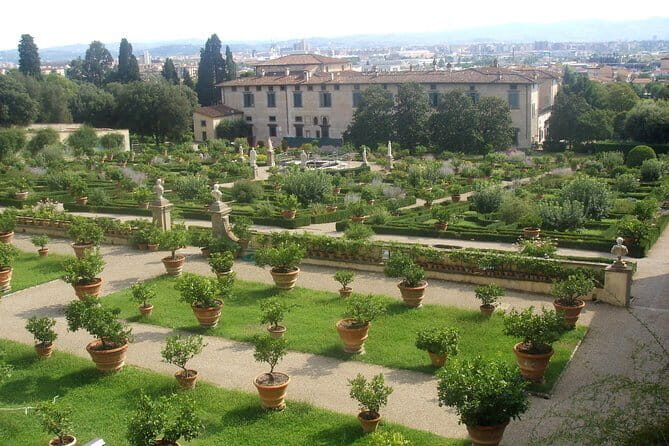
At Pitti Square, you’ll see Palazzo Pitti, named after Luca Pitti and later expanded by the Medici family. The guide can also talk about what’s behind the palace: Boboli Gardens. Even if you don’t enter, it helps you connect Medici power to the landscape of the city.
Then you’ll head into Oltrarno, the “other side of the Arno.” The point isn’t to hunt more monuments. It’s to shift to local life: fewer tourists, more neighborhood shops, and a slower rhythm. Your guide can take you there if you ask, since this part isn’t automatically included.
This optional section works best if you still have energy after seeing the famous highlights. It also makes your day feel more like Florence and less like a museum route.
Piazza-by-piazza flow: what each stop is doing for your understanding
It helps to think of the stops as a story arc:
- Piazza della Signoria + Loggia dei Lanzi: the public face of power, art displayed in open air
- Uffizi colonnade + goldsmith shops: art patronage meets everyday business life
- Ponte Vecchio: a bridge that compresses centuries, from markets to luxury to wartime survival
- Vasari Corridor story: a behind-the-scenes look at how rulers moved
- Piazza San Giovanni + Duomo cluster: Florence’s architectural statement, explained building by building
- Piazza della Repubblica + Porcellino: civic and market life, plus local legend
That structure is what makes the tour feel like learning instead of wandering.
Price and value: $348.85 per group for up to 10
The price is $348.85 per group, up to 10 people, for about 3 hours. That can feel steep if you’re traveling solo. But private walking tours in major cities often price for the guide time, not per-person interest.
Here’s when it tends to feel like good value for your money:
- You’re traveling as a small group (friends, family, or a multi-generational group).
- You want a guide to explain context while you walk, not just point at buildings.
- You value hotel pickup in the historic center, since it saves time and navigation stress.
The part to watch: because entry tickets aren’t included, your total cost could rise if you decide to pay for inside access at certain stops. Still, even without tickets, you get a tight view of the major landmarks and the stories connecting them.
Who this tour fits best (and who might want a different style)
This private Renaissance walk is a great match if you:
- Want a focused Florence highlights route that still has story depth
- Like art and architecture explained at street level
- Prefer a flexible pace over a rigid group schedule
- Are traveling in a group up to 10 and can split the cost
It may be less ideal if you:
- Want a very structured, lesson-like narrative with a heavy emphasis on one single theme throughout
- Expect museum entry included as part of the price
Also remember: it’s a walking tour. If anyone in your group has mobility limits, ask your guide about pace adjustments before you finalize your plans. The program has shown flexibility in at least one case, but it’s still best to communicate early.
Should you book this private Renaissance Discovery Tour?
I’d book it if your goal is to understand Florence fast—then go back later and appreciate what you’ve learned. The stop mix is smart: civic squares, Renaissance art context, the Duomo cluster, and then a shift toward Medici secrets and neighborhood life. It’s also a solid choice for groups where you want something shared, not a “each person does their own thing” day.
Skip or consider alternatives if your top priority is inside museum access packed into the tour time, since entry tickets aren’t included. And if your style is very narrative-driven with a single through-line, you should confirm with the guide how they plan to structure the walk around your interests.
If you want a Florence morning or afternoon that gives you context as you stroll, this one is easy to recommend.
FAQ
How long is the Private Renaissance Discovery Tour of Florence?
It lasts about 3 hours.
Where does the guide meet you?
Your guide meets you directly outside your accommodation in Florence if it’s located in the historic centre. Pickup at private homes and apartments is also offered.
Is this tour offered in English?
Yes, it’s offered in English.
Are tickets for churches or landmarks included?
No. Entry tickets to churches or landmarks are not included.
How big is the private group?
The private tour is for your group, up to 10 people.
Is there free cancellation?
Yes. You can cancel for a full refund by canceling at least 24 hours in advance.
More Private Tours in Florence

More Tours in Florence


More Tour Reviews in Florence
- Tuscany Day Trip from Florence: Siena, San Gimignano, Pisa and Lunch at a Winery
★ 5.0 · 21,634 reviews - The Best tour in Florence: Renaissance & Medici Tales – guided by a STORYTELLER
★ 5.0 · 12,316 reviews