REVIEW · FLORENCE
Private Guided Visit Florence’s Santa Croce Basilica and Ancient Leather School
Book on Viator →Operated by CAF Tour and Travel · Bookable on Viator
Santa Croce is art you can walk through.
This private guided visit pairs Florence’s giant Franciscan church with the nearby Ancient Leather School, where old-school leatherwork still happens. You’ll start at Piazza Santa Croce, meet your guide, admire the façade and interior masterpieces, then continue on to watch artisans at work in a workshop tied to the Arno River.
I especially love two things. First, the tour gives you a clear route through Santa Croce’s biggest works: Giotto and Agnolo Gaddi frescoes, plus major tombs of names like Michelangelo, Galileo, Machiavelli, and Ghiberti. Second, the leather stop isn’t just a photo break—it’s a real look at how Florentines kept a craft alive, with monks linked to leatherworking dating back to the 13th century.
One thing to plan around: the Leather School is closed on Saturday and Sunday. Also, the basilica is the main event, so the leather workshop time is shorter than a full deep dive.
In This Review
- Key Things You’ll Notice
- Why Santa Croce + Leather Craft Works So Well
- Entering Santa Croce: Façade First, Then the Art Inside
- The Tombs Are the Headliners: Michelangelo to Machiavelli
- Giotto, Donatello, and Frescoes You’ll Actually Understand
- Cloisters and Quiet Time: Brunelleschi and the Pazzi Chapel
- The Ancient Leather School: Craft Work Tied to Real Water
- How Long This Takes (and When to Choose Morning vs. Afternoon)
- Price and Value: What You’re Paying For
- Where This Tour Fits Best
- Booking Notes That Affect Your Day
- Should You Book This Santa Croce + Leather School Visit?
- FAQ
- How long is the Santa Croce Basilica and Leather School private tour?
- Is the Santa Croce admission fee included?
- Is the Leather School admission included?
- What days is the Leather School closed?
- Where do we meet the guide?
- Is this a private tour?
- What language is the tour offered in?
- Is there free cancellation?
Key Things You’ll Notice
- Private guide at your side for questions and on-the-spot explanations
- Santa Croce’s major artists and thinkers in one focused circuit
- Brunelleschi Cloister and the serene Pazzi Chapel as built-in breathers
- Leather School by the Arno idea: water made early processing possible
- Short, focused leather visit after the basilica, so set expectations
Why Santa Croce + Leather Craft Works So Well
Santa Croce is one of those Florence stops where it’s easy to admire the building and miss the point. This tour helps you do the opposite. You get a route that makes the art and monuments feel connected, not random. And then, just when you think you’ve used up all your culture for the morning, you switch gears to something practical and tactile: watching leather artisans at the workshop.
The private format matters here. Santa Croce has enough monuments and chapels that a group tour can turn into a quick scan. With your own guide, you can slow down for the details that actually matter—what you’re looking at, why it looks the way it does, and how the church became the resting place for so many famous Florentines.
I also like that the schedule builds in variety. You start with Gothic architecture and painted chapels, then shift to cloisters and Renaissance harmony, and finally end with craft in the Leather School. It’s a smart mix for first-timers and repeat visitors alike.
You can also read our reviews of more guided tours in Florence
Entering Santa Croce: Façade First, Then the Art Inside
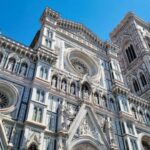
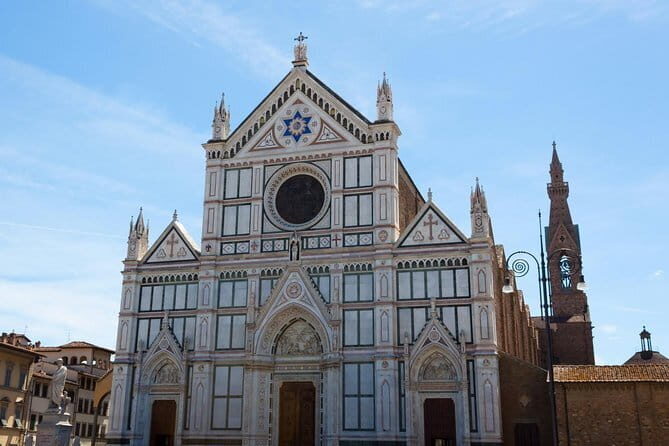
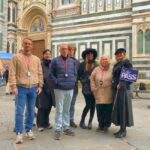
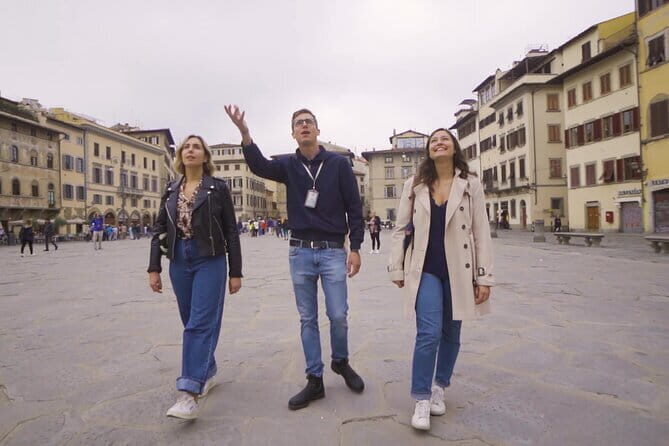
Your tour starts at the Santa Croce Basilica entrance area in Piazza Santa Croce. You’ll meet your guide near the basilica and begin with the exterior details before stepping inside. That’s a good move. The façade is neo-Gothic, clad in polychrome marble, so it sets the tone for what comes next.
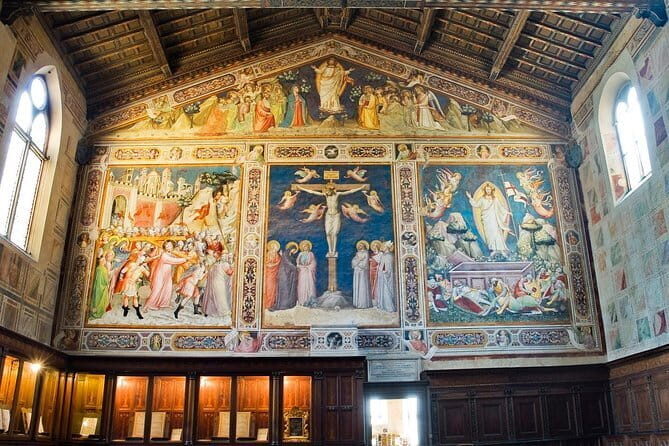
Once you’re inside, Santa Croce doesn’t waste time. You start moving through chapels and frescoed areas tied to Renaissance-era masters like Giotto and Agnolo Gaddi. Your guide helps you connect what you’re seeing to the bigger story of the site—nearly 700 years of history shaped by Franciscan life and Florence’s changing tastes in art and architecture.
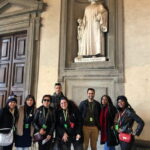
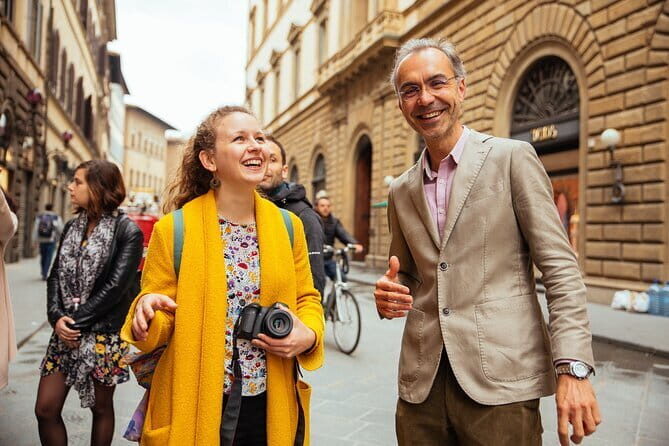
If you’re the type who likes to ask questions (and you should be), this is where the private guide really pays off. In the past, guides like Lisa, Ilaria, Tiziana, and Marta have been praised for answering questions clearly and keeping the tour paced so you don’t just stand there reading signs.
The Tombs Are the Headliners: Michelangelo to Machiavelli
Let’s talk about why Santa Croce feels different from other churches. The basilica is famous for funerary monuments—the kind of memorials that turn the church into a cultural archive.
As you move through the interior spaces, you’ll see tombs and funerary monuments marking the final resting place of major figures including Michelangelo, Galileo, Machiavelli, and Ghiberti. Even if you only know these names from school or museum labels, your guide can translate them into what they meant for Florence and why they ended up here.
This is also a great place to manage your expectations. Santa Croce is not one single “wow” moment. It’s a sequence of smaller wow moments. The tombs and monuments are scattered through the church in a way that benefits from a guided route—otherwise, it’s easy to float from chapel to chapel and forget what you’ve already seen.
A quick practical note: this part can be emotionally intense for some people. You’re standing near major memorials, not just looking at religious art. If you like your sightseeing to be respectful and unhurried, this tour’s slower rhythm helps.
Giotto, Donatello, and Frescoes You’ll Actually Understand
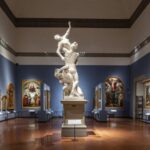
The tour isn’t only about names on tombs. You’ll also get specific references to frescoes and key works, including frescoes associated with Giotto and Agnolo Gaddi. You’ll also see works attributed to Donatello, including the Crucifix and Annunciation.
Here’s the trick: frescoes can look like decoration until someone points out the structure, symbolism, and why certain scenes were chosen for certain spaces. With a good guide, the art stops feeling like wallpaper and starts feeling like communication.
What I like most is the way your guide ties together form and meaning. For example, Gothic architecture and painted chapels can look like separate worlds, but inside Santa Croce they feel part of the same long conversation about faith, patronage, and civic pride.
Cloisters and Quiet Time: Brunelleschi and the Pazzi Chapel
If you’ve ever felt Florence sightseeing is too much, this is where you get a break. After the basilica highlights, the tour includes the Brunelleschi Cloister, with solid stone columns carved for a kind of calm you can feel in your shoulders. Then you move into the Ancient Cloister, ending near the Pazzi Chapel.
Pazzi Chapel is where Renaissance ideas show up in a gentle, controlled way. It’s not the kind of chapel that screams for attention. It offers balance and proportion—exactly the sort of thing your guide can help you spot quickly, so you don’t miss the quiet elegance while you’re busy looking for the next big monument.
This cloister circuit is also a smart reset after the denser tomb sections. You get to breathe, absorb, and then come back stronger.
You can also read our reviews of more private tours in Florence


The Ancient Leather School: Craft Work Tied to Real Water
Then you shift from art to craft at the Scuola del Cuoio (Leather School). The setting is part of the story. Leatherworking depends on water, and this workshop area connects to the idea that the monks and craftsmen worked near the Arno River so the processing had what it needed to get started.
You’ll learn how Franciscan monks began leatherworking as early as the 13th century, and you’ll see artisans continuing the tradition with hand methods. Your visit includes watching skilled workers make items like purses, bags, and belts using time-honored techniques.
Two practical considerations to keep in mind:
- The leather workshop visit is shorter than the basilica time. The basilica is clearly the main focus, so expect the workshop as a concentrated look rather than a long workshop session.
- Plan for the schedule: the Leather School is closed on Saturday and Sunday. If your trip lands on those days, your basilica time still works great, but you’ll need to swap the leather portion for another plan.
If shopping is on your mind, this is where you might have more interaction. In at least one case, I saw how people had extra time with staff to choose and discuss customized leather selections right there in the shop. So if you want to talk materials, sizes, or gift ideas, arrive with curiosity, not just a shopping list.
How Long This Takes (and When to Choose Morning vs. Afternoon)
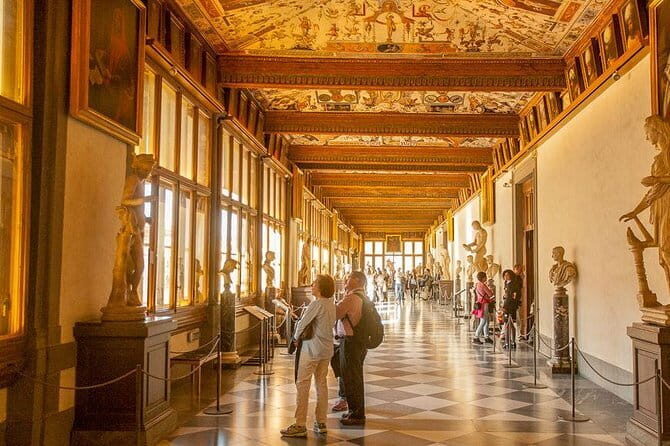
The tour runs about 1 hour 30 minutes (with some schedules stretching closer to two hours depending on pace). That length is actually ideal for Santa Croce. It’s long enough to see the major highlights without feeling rushed, but short enough that you can still do other neighborhoods the same day.
You can choose a morning or afternoon departure. I’d pick based on your energy and the rest of your day:
- Go morning if you want fewer crowds in the church and more time afterward for nearby sights.
- Go afternoon if your mornings are already booked and you prefer a later start.
Also, remember the physical flow. You’ll do basilica + cloisters first, then move to the leather workshop. If you’re sensitive to long indoor walking (stone floors, stairs, crowding), plan a calm schedule before and after.
Price and Value: What You’re Paying For
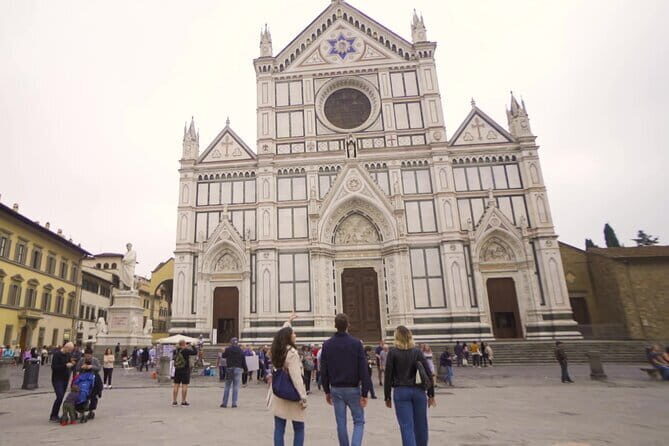
The price is $124.82 per person, and that includes a private local professional guide plus earphones for groups larger than 7. It does not include the Santa Croce admission ticket.
Here’s the math you should know: Santa Croce admission is €8.00 per person, listed as not included. The Leather School admission is free.
So is it good value? For the right traveler, yes—because you’re not only paying for entry. You’re paying for translation. Santa Croce has a lot going on. Without guidance, it’s easy to see beautiful spaces without fully understanding why certain chapels, artists, and tombs matter. With a private guide, you get a focused route and explanations while you’re still standing in front of the details.
In the reviews, the standout praise is consistent: guides like Lisa, Ilaria, Tiziana, and Marta are repeatedly described as friendly, attentive, and strong on explanations in excellent English, with the confidence to handle lots of questions. That’s the kind of value you feel, not just read about.
Where This Tour Fits Best
This tour is a great fit if you:
- Want a private experience in a site that can otherwise feel like a maze of chapels
- Care about art and symbolism, but you don’t want to spend your day decoding on your own
- Prefer a guide who can connect what you see to Florence’s bigger story
- Like mixing big monuments with a real craft stop
It also works well for travelers who are not art history experts. Your guide can make the information approachable and practical, which is a big deal in churches where labels can be dry.
If you’re mainly interested in a long leathermaking demonstration or a full workshop immersion, you might find this is more of a guided sampler. The basilica is the star, and the leather visit is the extra flavor.
Booking Notes That Affect Your Day
Your meeting point is Piazza di Santa Croce, 16. The tour ends back at the meeting point. The site is near public transportation, which helps if you’re combining this with other central Florence plans.
You’ll also get a mobile ticket, and confirmation comes at booking. There’s no hotel pickup or drop-off, so you’ll want to plan your own walk or transit to the plaza.
One last timing note: since this visit includes indoor areas, you’ll want comfortable shoes. Even when the tour is short, cloisters and church floors are not the place for squishy footwear.
Should You Book This Santa Croce + Leather School Visit?
I’d book this if you want Florence value in two categories: major art and a living craft tradition. Santa Croce is a must-see, but the private guide turns it from sightseeing into understanding. The Leather School adds a human, hands-on layer that you won’t get from another church-only tour.
Skip it or adjust expectations if you’re traveling on Saturday or Sunday and you specifically want the leather workshop. Also, if your main dream is an extended leather experience, know that this stops after a shorter workshop look.
Bottom line: for most people, this is a smart, efficient way to do Santa Croce properly—and then get a genuinely different ending at the Leather School.
FAQ
How long is the Santa Croce Basilica and Leather School private tour?
It’s approximately 1 hour 30 minutes.
Is the Santa Croce admission fee included?
No. Santa Croce admission is €8.00 per person and is not included.
Is the Leather School admission included?
Yes. The Leather School visit is listed as free.
What days is the Leather School closed?
The Leather School is closed on Saturday and Sunday.
Where do we meet the guide?
Meet at Piazza di Santa Croce, 16, Florence near the entrance to the basilica.
Is this a private tour?
Yes. It’s a private tour, and only your group participates.
What language is the tour offered in?
The tour is offered in English.
Is there free cancellation?
Yes. You can cancel up to 24 hours in advance for a full refund.

More Private Tours in Florence
More Guided Tours in Florence
More Tour Reviews in Florence
- Tuscany Day Trip from Florence: Siena, San Gimignano, Pisa and Lunch at a Winery
★ 5.0 · 21,634 reviews - The Best tour in Florence: Renaissance & Medici Tales – guided by a STORYTELLER
★ 5.0 · 12,316 reviews