REVIEW · FLORENCE
Private WALKING Tour and ACCADEMIA Gallery in Florence Italy
Book on Viator →Operated by Irina in Florence · Bookable on Viator
Want to see Florence fast, and with context?
This private walking tour strings together the big hits with smart sequencing: you start at the Accademia Gallery for Michelangelo’s David, then you walk through Florence’s power centers and famous squares toward Ponte Vecchio. I like that the museum time is focused and story-led, so you don’t just stand there looking at marble. I also like the practical setup, including headsets that keep your guide’s explanations clear even when you’re weaving through crowds.
The main trade-off is that several of the famous stops are exterior-only. You’ll stand outside places like the Baptistery of San Giovanni, the Duomo, and the Palazzo Medici Riccardi, so this isn’t for you if your top goal is going inside every monument.
In This Review
- Key highlights you’ll feel right away
- The big idea: Accademia first, then Florence’s power map
- Entering Galleria dell’Accademia: David, Prisoners, and the why-meant-what
- A note on pace
- Palazzo Medici Riccardi and San Lorenzo: the Medici setting, from outside
- Why exterior stops can still be worth it
- Baptistery of San Giovanni and the Duomo: learning to read Florence’s skyline
- What to expect if you wanted inside access
- Orsanmichele: the church with a past as a market (and sculpture clues)
- Piazza della Signoria and Palazzo Vecchio: where politics and art shared space
- Ponte Vecchio finish: the postcard moment with actual meaning
- How the guide setup improves your experience (and your patience)
- Price and value: is $266.76 per person worth it?
- Who should book this Florence private walking tour
- Should you book it?
- FAQ
- How long is the Private Walking Tour and Accademia Gallery experience?
- What’s included with the Accademia Gallery visit?
- Are tickets included for the Baptistery, Duomo, or Palazzo Medici Riccardi?
- Where does the tour start and where does it end?
- Is this tour private?
- Is the tour offered in English?
- What happens if weather is bad?
Key highlights you’ll feel right away
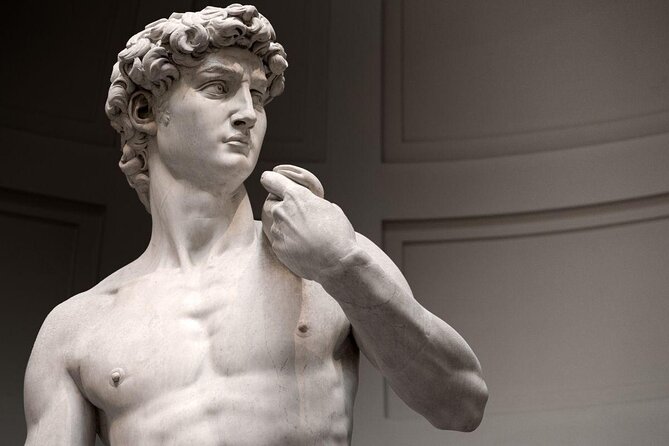
- Priority entrance to the Accademia Gallery so you can get to David sooner instead of waiting around
- Michelangelo’s David plus the Prisoners (and the stories behind why they weren’t finished)
- A guide who tells the why, not only the what, using clear English and visual aids
- Medici Florence on foot, with the Medici Palace, San Lorenzo, and Medici Chapels exteriors
- Photo-worthy walking stops that connect buildings to each other, ending at Ponte Vecchio
The big idea: Accademia first, then Florence’s power map
Florence rewards order. If you do the museum later, you can end up tired, behind schedule, or still stuck in the “what am I looking at?” stage. This tour starts at the Accademia Gallery, where the day’s most important visual anchor is waiting for you: Michelangelo’s David.
Then the walk turns into a kind of street-level timeline. You’ll move from Medici-era influence to major civic spaces and religious landmarks. You won’t just see famous architecture—you’ll understand how Florence’s rulers, churches, and artists pushed each other around.
Also, it’s not a long haul. At about 3 hours total, it works well when you’re on a tight schedule but still want more than a selfie-and-sprint plan.
You can also read our reviews of more tours and experiences in Florence.
- Tuscany Day Trip from Florence: Siena, San Gimignano, Pisa and Lunch at a Winery
★ 5.0 · 21,634 reviews

Entering Galleria dell’Accademia: David, Prisoners, and the why-meant-what
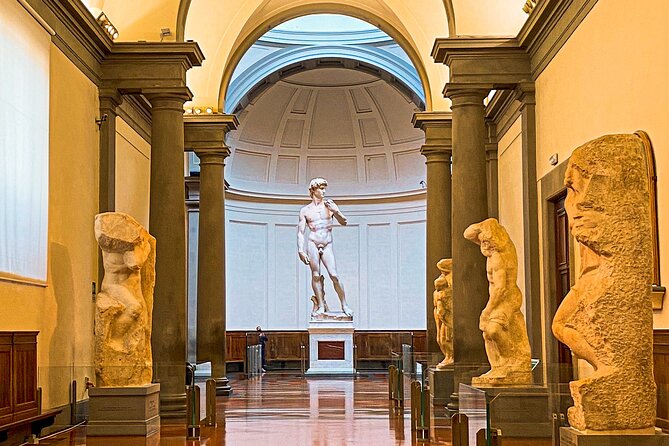
Your museum hour is built around the Accademia’s most recognizable works, starting with Michelangelo’s David. The point here isn’t only to view it up close—it’s to understand what you’re seeing and what makes it such a big deal in art history.
You’ll also get time with the Prisoners, Michelangelo sculptures often described as unfinished, with guidance on why they weren’t completed. That matters because it changes how you look at them. If you only expect a finished masterpiece, the Prisoners can feel like something is missing. With context, they turn into a window into Michelangelo’s process, his ambition, and the rough edges of creation.
A smart bonus: the guide’s storytelling style is practical. In particular, I like that Irina’s approach leans on visual support (she uses an iPad with pictures) and calm explanations rather than info overload. One review mentioned humor in the commentary, and that’s a good sign—because museum time can drag if it turns into a lecture.
A note on pace
An hour in a museum sounds short until you realize the tour isn’t trying to cover everything. It’s aiming for understanding, not checkbox collecting. That’s exactly what I want when I’m paying extra for priority entry and a private guide.
Palazzo Medici Riccardi and San Lorenzo: the Medici setting, from outside
After the Accademia, the walk shifts into Florence’s Medici atmosphere. The Palazzo Medici Riccardi stop is mostly about the exterior—still, it’s not just “look at that building.” You’ll connect it to who lived there and why it mattered for Renaissance art and politics.
You’ll also spend time near San Lorenzo, described as the first Florentine cathedral and a church sponsored by the Medici clan. Even from outside, you’ll get the sense of how the Medici shaped Florence’s public identity. It’s the kind of information that makes later “random” streets feel intentional.
And then there’s the exterior look at the Medici Chapels, the final resting place of members of the dynasty. This is one of those stops that can turn into a quick emotional beat if your guide frames it well—power, legacy, and the way art and faith support each other.
Why exterior stops can still be worth it
If you’re thinking, why spend time outside when I could pay for entry? Fair question. The value here is that the exterior views are being used as story anchors. They help you place what you saw indoors in the broader world that produced it—who had the money, who made the decisions, and why certain themes show up again and again.
- Tuscany Day Trip from Florence: Siena, San Gimignano, Pisa and Lunch at a Winery
★ 5.0 · 21,634 reviews - The Best tour in Florence: Renaissance & Medici Tales – guided by a STORYTELLER
★ 5.0 · 12,316 reviews

Baptistery of San Giovanni and the Duomo: learning to read Florence’s skyline
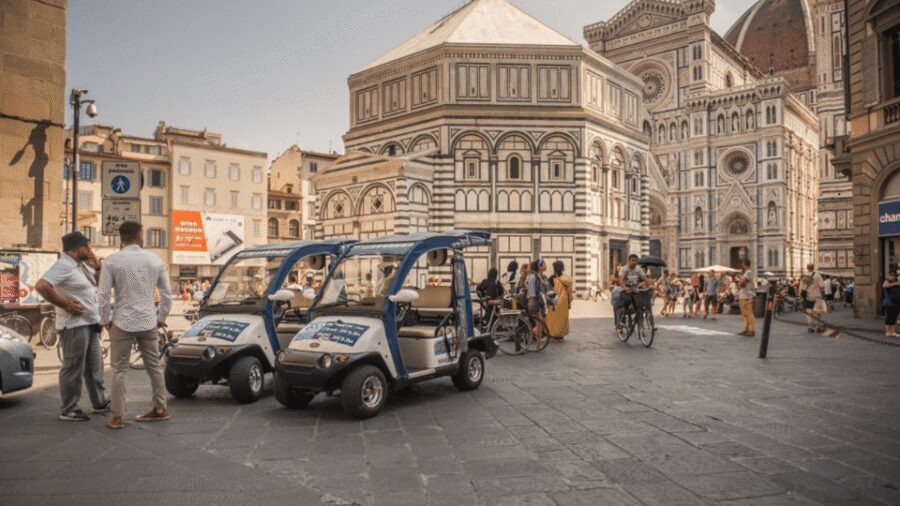
Next you’ll reach the Baptistery of San Giovanni in one of Florence’s famous squares. Even standing outside, the guide focuses on what makes it important—its age and the famous Gates of Paradise. You’ll learn the kind of symbolism Florence loves, where religious art and civic identity get tangled together.
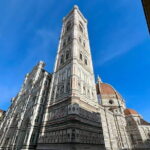
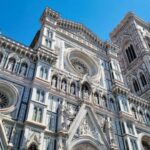
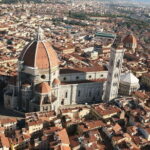
Then comes the Duomo: Santa Maria del Fiore. You’ll admire it from outside, but with real engineering context. You’ll learn about the flower-shaped plan and the dome that was such a world-class feat—built by Filippo Brunelleschi, and later described as extremely hard to equal or surpass.
This is the moment where the tour does something I appreciate: it helps you see the Duomo as more than a pretty facade. You start noticing structure, ambition, and the way Florence’s thinkers treated architecture like a serious intellectual project.
What to expect if you wanted inside access
Because the tour plan is exterior-only for the Duomo and Baptistery, you won’t get the interior views, domed-chamber moments, or ticketed highlights inside those sites during this experience. If you want those, you’ll want a separate add-on day or follow-up visit. For many people, though, the trade-off is worth it because it keeps your time efficient.
Orsanmichele: the church with a past as a market (and sculpture clues)
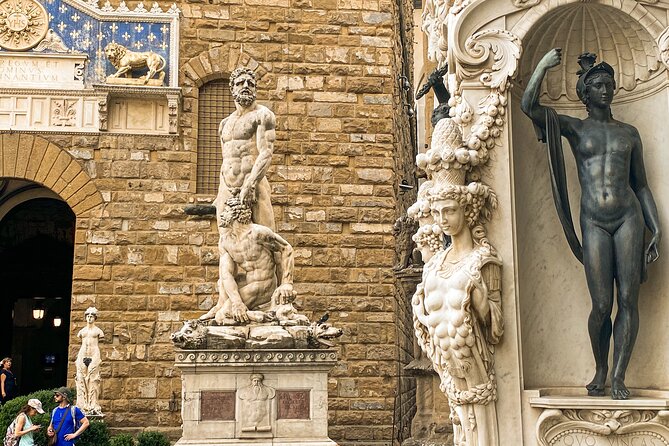
One of my favorite kinds of stops is the one that flips your assumptions. Orsanmichele is described as a granary-turned-church. The story you’ll hear connects everyday commerce to religion—how a miraculous Madonna painting helped turn the place into a pilgrimage site.
From there, the tour shifts to sculpture. You’ll see works and hear how they relate to Michelangelo’s world. Even if you’re not a hardcore art-history person, this is the kind of stop that makes the museum pieces feel more grounded. Michelangelo didn’t create in a vacuum; he responded to the city’s artistic ecosystem.
It’s also a short stop on purpose (just a few minutes), which helps the tour keep its rhythm instead of turning into “standing around, waiting for the next lecture.”
Piazza della Signoria and Palazzo Vecchio: where politics and art shared space
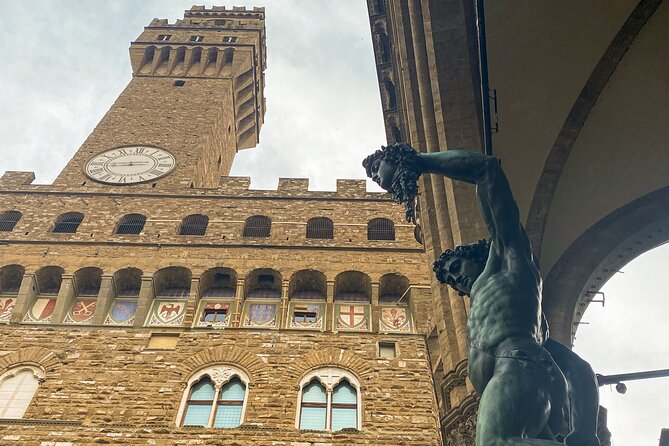
Then you land in Piazza della Signoria, one of Florence’s key public stages. Here the tour leans into what makes the square feel like an open-air gallery and civic center at the same time.
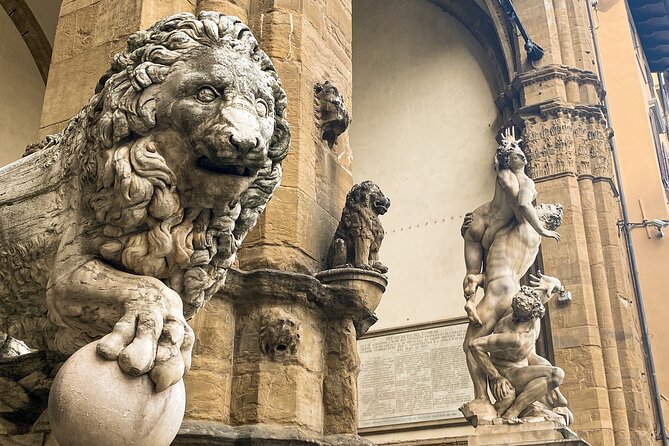
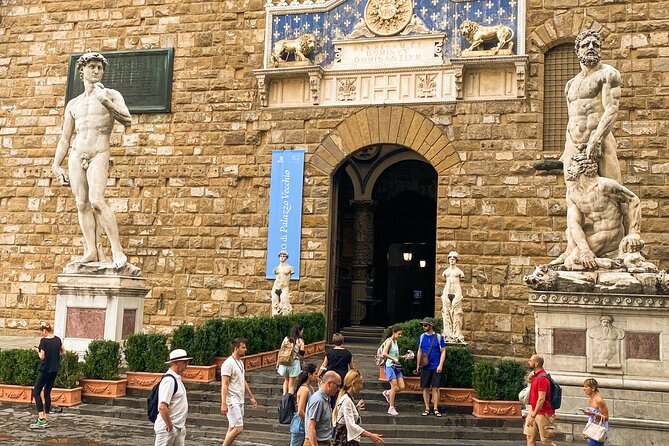
You’ll look at original sculptures by major Renaissance artists that still decorate the piazza. You’ll also get a view of Palazzo Vecchio, described as fortress-like city hall. That fortified vibe matters, because it signals how the city thought about power—something controlled, defended, and displayed.
One extra detail that helps the square click: you’ll learn where the original David stood here for almost four centuries. That’s a clever connection. You start at the Accademia, where David is presented as a singular museum centerpiece, and then you realize David also functioned as a public political symbol. Same figure, different job.
Ponte Vecchio finish: the postcard moment with actual meaning
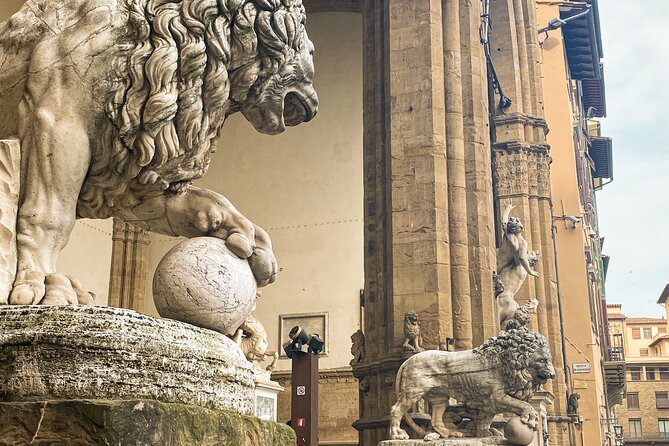
The walk ends at Ponte Vecchio, one of Florence’s most iconic bridges. This is your payoff. You’ll get the classic views everyone comes for, but you also arrive with better context for why Florence puts so much energy into public spaces and art.
It’s a strong finish point because Ponte Vecchio is a natural place to split off afterward—grab a coffee, keep wandering, or head back toward wherever you’re staying.
How the guide setup improves your experience (and your patience)
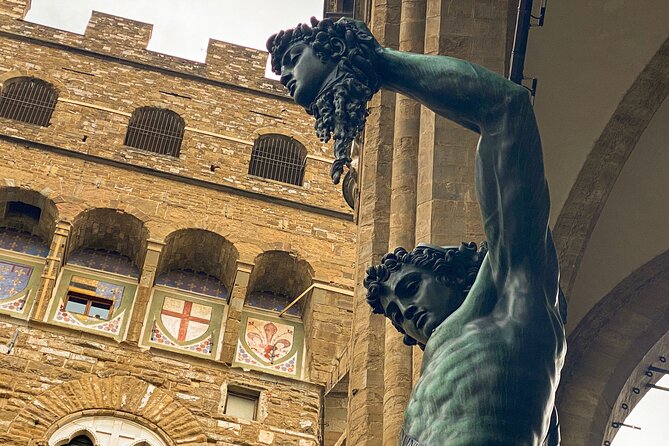
This tour includes a few things that sound small until you’re standing in a crowd.
Headsets help you hear your guide clearly. That matters around busy squares where you’re shoulder-to-shoulder and constant background noise can wipe out the value of even a great explanation. The tour also keeps group logistics simpler because it’s private, meaning it’s only your group—no mixing your pace with strangers.
And in this case, Irina’s style seems built for clarity. The reviews highlighted excellent English and strong storytelling, plus the use of visuals. You don’t want a guide who throws names at you. You want someone who makes you look twice.
Price and value: is $266.76 per person worth it?
At $266.76 per person for about 3 hours, the price isn’t low. But you’re paying for three practical benefits at once:
- Priority entry to the Accademia Gallery (time saved is real time saved)
- A private guide for both the museum hour and the walking section
- Included museum admission plus headsets for better comprehension
What you’re not paying for (during the walk) is entry to several major sites, since you’ll stand outside at the Baptistery, the Duomo, and Palazzo Medici Riccardi. If you wanted a day-long monument marathon with multiple paid entries, this won’t be that.
But if you want the David moment plus a guided Florence “story route” without burning hours on lines and ticket hunting, this can feel like good value.
One more thing: since it’s private, your cost per person can make sense if you’re traveling as a small group. If you’re solo, it may still be worth it, but be honest with yourself about whether you’re buying time, convenience, and interpretation—or just looking for cheaper entry to sights.
Who should book this Florence private walking tour
This fits best if:
- You’re short on time and want Michelangelo’s David up close with context
- You prefer a guided narrative over wandering alone
- You want the Medici story connected to places you can actually see
- You like efficient walking routes that end at an easy landmark (Ponte Vecchio)
It might not be ideal if:
- Your dream day includes going inside the Duomo, Baptistery, and Medici sites during the same outing
- You hate exterior-only sightseeing and want paid entries throughout
- You’re very sensitive to weather, since the experience requires good weather
Should you book it?
Yes—if your main goals are David, meaningful art context, and a fast, well-planned Florence overview. The priority entry plus the guide’s storytelling approach is the sweet spot here. You’ll leave with a clearer mental map of how Medici power, religious sites, and civic spaces shaped what artists created.
I’d skip or adjust your expectations if your priority is visiting every monument interior on this route. This is a smart “great hits with explanations” plan, not a full ticket bundle.
FAQ
How long is the Private Walking Tour and Accademia Gallery experience?
It’s about 3 hours total. The tour includes 1 hour at the Accademia Gallery and about 2 hours of walking in Florence.
What’s included with the Accademia Gallery visit?
You get a priority entrance ticket to the Accademia Gallery and a guided 1-hour tour there. Admission to the Accademia is included.
Are tickets included for the Baptistery, Duomo, or Palazzo Medici Riccardi?
No. You’ll stand outside the Battistero di San Giovanni, the Duomo, and the Palazzo Medici Riccardi. Tickets for those are not included.
Where does the tour start and where does it end?
The tour starts at Galleria dell’Accademia di Firenze on Via Ricasoli, 58/60. It ends at Ponte Vecchio.
Is this tour private?
Yes. It’s a private tour/activity, and only your group participates.
Is the tour offered in English?
Yes, it’s offered in English.
What happens if weather is bad?
The experience requires good weather. If it’s canceled due to poor weather, you’ll be offered a different date or a full refund.
If you want, tell me your travel dates and whether you’re visiting the Duomo/Baptistery separately—I can suggest a simple way to pair those with this tour so you get interiors too.

More Tour Reviews in Florence
- Tuscany Day Trip from Florence: Siena, San Gimignano, Pisa and Lunch at a Winery
★ 5.0 · 21,634 reviews - The Best tour in Florence: Renaissance & Medici Tales – guided by a STORYTELLER
★ 5.0 · 12,316 reviews