REVIEW · FLORENCE
Renaissance Florence & the rivalry of Michelangelo and Leonardo
Book on Viator →Operated by Senza Meta - La Dublino dei Dublinesi Tour in Italiano/inside Dublin walking tour · Bookable on Viator
Michelangelo and Leonardo, in real-life Florence.
This 3-hour walk connects Renaissance art to the people and politics that shaped it, using the rivalry of two giants to explain why the city looked the way it did. I like that it starts in the places where power was decided, not just where paintings hang. And you’ll finish with a stop that feels like a secret handshake: the young Michelangelo work in Basilica di Santo Spirito.
Two things I really like: the guide’s storytelling thread ties personalities and artistic methods to what you’re seeing, and the tour includes a ticket to Il Crocifisso Ligneo, Michelangelo’s early wooden crucifix. One drawback to plan for: parts of the tour rely on exterior views and you’ll need extra tickets for Palazzo Vecchio and the Duomo if you want interiors.
In This Review
- Quick hits before you go
- A Renaissance rivalry tour that starts at Piazza della Signoria
- Palazzo Vecchio exterior: where Florence performed power
- Piazza della Signoria: an outdoor museum built for arguments
- Duomo exterior views: Brunelleschi’s dome and the engineering ego
- San Lorenzo: Medici patronage, Michelangelo stairs, and an active market square
- Santa Trinita and Ponte Vecchio: a short scenic reset
- Basilica di Santo Spirito: Michelangelo’s wooden crucifix at age 17
- Michelangelo vs Leonardo: how the guide connects personalities to technique
- Value check: $31.35 and what you’ll still need to budget
- Pace, comfort, and how to show up ready
- Who this Renaissance Florence tour fits best
- Should you book this tour?
- FAQ
- Where does the tour start and where does it end?
- What time does the tour begin?
- How long is the tour?
- How much does it cost?
- What’s included in the ticket price?
- Do I need separate tickets for Palazzo Vecchio and the Duomo?
- What is the group size?
- Is the tour guaranteed to run every day?
- Do I get a mobile ticket?
Quick hits before you go
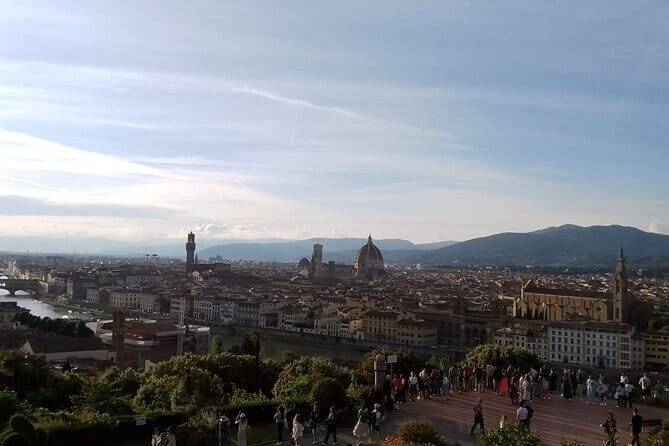
- Michelangelo vs Leonardo as your guide, not just a history lesson
- Il Crocifisso Ligneo at Santo Spirito: Michelangelo at age 17, plus the anatomy reason behind it
- Starts at Piazza della Signoria, where art and politics shared the same stage
- Duomo, bell tower, baptistery views from outside so you still move efficiently
- Small group size (max 16) keeps the pace human
- Antonio’s code: a guide-style reading and recommendations list for food, music, drinks, and museums
A Renaissance rivalry tour that starts at Piazza della Signoria
Florence can feel like a highlight reel: you see the big monuments, you take the photos, you move on. This tour tries to change the angle. Instead of treating Renaissance art like museum objects, you’ll treat it like something made by competitive people living in a competitive city.
The emotional engine here is the rivalry between Michelangelo and Leonardo—how they pushed each other, and how their different personalities and methods helped shape what Renaissance Florence became. The guide, Antonio, keeps the tone light when it can be, but never shortchanges the context. You’ll also get real practical guidance along the way: Antonio’s recommended books about Florence and suggestions for where to eat, what to drink, and what to catch later in your trip.
You’ll walk a manageable distance for about 3 hours, with a route that mixes civic landmarks with church stops. That mix matters because it shows how Renaissance creativity wasn’t only about artists and patrons—it was also about courts, civic pride, and political messaging.
You can also read our reviews of more tours and experiences in Florence.
- Tuscany Day Trip from Florence: Siena, San Gimignano, Pisa and Lunch at a Winery
★ 5.0 · 21,634 reviews

Palazzo Vecchio exterior: where Florence performed power
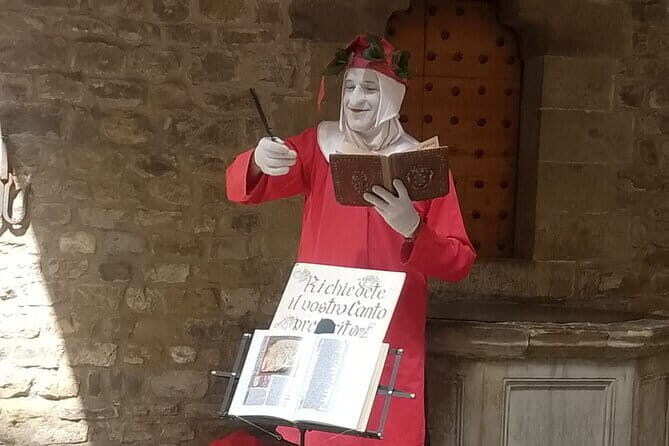
Your tour begins near the center of civic life, then moves to the monumental presence of Palazzo Vecchio. Even from outside, the building tells you something important: Florence didn’t just commission art privately. It used architecture and public space to project authority.
Palazzo Vecchio is the kind of place where you quickly understand why art mattered. Think of it as the city’s stage set. You’re not going inside on this tour, so if you want rooms, galleries, and interior details, you’ll need to plan on separate admission. But the payoff is the timing: you get oriented early, so later stops feel connected instead of random.
Also, this first stretch is a smart warm-up. You get your bearings fast, and the guide can set the Renaissance framework before you start spotting symbols in plazas and churches.
Piazza della Signoria: an outdoor museum built for arguments
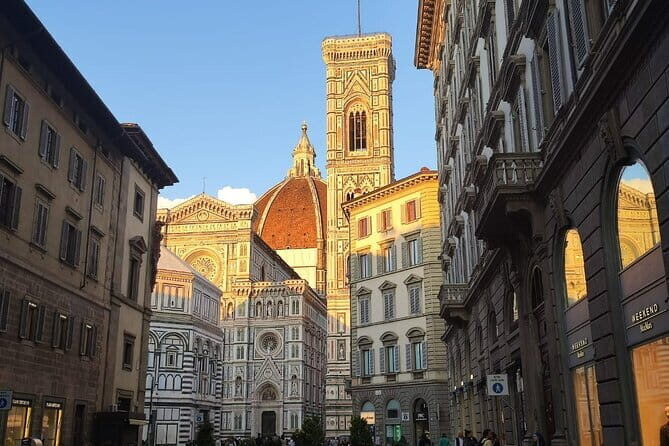
Next comes Piazza della Signoria, Florence’s central square since the Middle Ages. It’s more than a pretty stop. It’s basically an open-air political forum, where statuary and civic mythology did the job of speeches.
Here’s what you’ll see and why it matters:
- The square acts like an open-air museum, with sculpture that communicates identity and power.
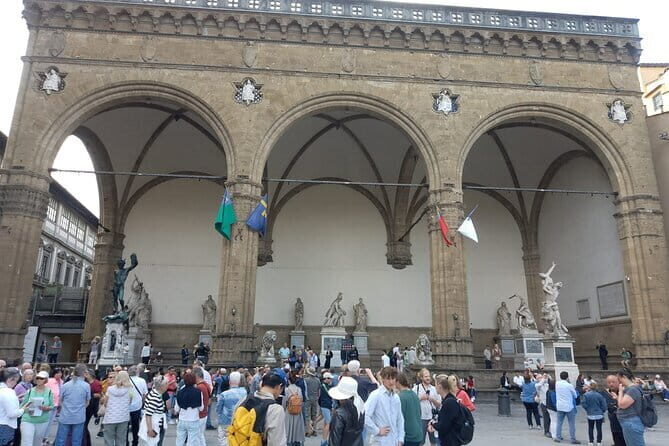
- The adjacent Loggia dei Lanzi is where you’ll look at major works and discuss how Florentine patronage turned artists into public voices.
- You’ll also spot a replica of Michelangelo’s David. It’s not the original, but it’s a useful reminder of how hugely symbolic David became for the city.
- And you’ll get a look at the Fountain of Neptune, another example of civic imagery turned into stone and water.
This is also where the Michelangelo and Leonardo contrast becomes more than just names. The guide uses what’s around you to talk about methods and ambitions—why some artists pushed toward monumental drama and others leaned toward observation and invention.
If you’re the type who hates when tours rush through plazas like they’re just backdrops, this part is a win. You get time to stand and look.
Duomo exterior views: Brunelleschi’s dome and the engineering ego
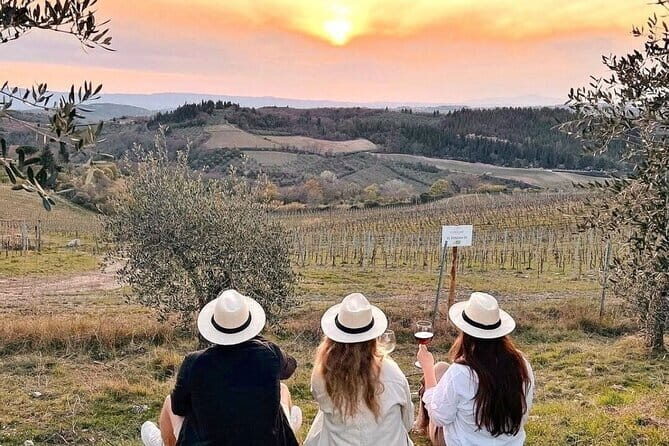
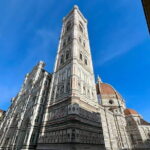
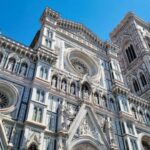
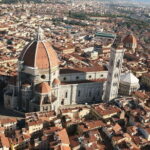
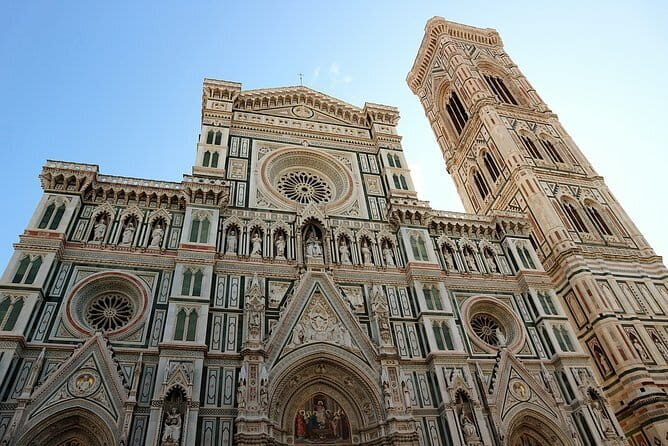
After the square, the route reaches Santa Maria del Fiore (the Duomo) area. On this tour, you’ll visit the exterior views of the Duomo, Giotto’s Bell Tower, and the Baptistery of St. John.
This matters because you can still appreciate the biggest architectural story without ticket lines. Florence’s Renaissance wasn’t only about painting and sculpture. It was also about daring engineering decisions—especially around the dome.
Here’s what the guide highlights:
- Brunelleschi’s dome is known for being the largest brick dome ever constructed, using a double-shell design and the herringbone brick pattern for stability.
- The bell tower links to Giotto, with parts completed after his death by Andrea Pisano and Francesco Talenti.
If your priority is interiors (Duomo museum areas or climbing views), plan to add those separately. But as a visual and historical anchor, this exterior time is efficient and gives you context for why Florence felt like a laboratory of big ideas.
San Lorenzo: Medici patronage, Michelangelo stairs, and an active market square
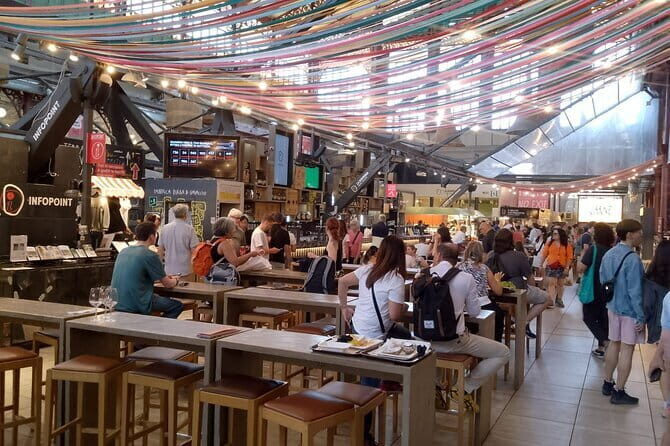
Then you move into San Lorenzo, a section of Florence tied tightly to the Medici. You’ll spend time around the San Lorenzo square area, focusing on key church and art settings.
You’ll cover:
- Basilica di San Lorenzo, a major and older church that served as the Medici family’s parish church.
- The Medici Chapels, the family mausoleum area.
- Michelangelo’s New Sacristy, which the tour frames as a standout work of Renaissance art and sculpture.
- The Laurentian Library, including Michelangelo’s designed building and its distinctive staircase.
- And you’ll pass the San Lorenzo Market area, which keeps the neighborhood feeling alive instead of frozen in museum time.
This stop is valuable because it explains why Renaissance art was funded and directed. The Medici weren’t only rich patrons—they were brand managers for Florence’s elite identity. Seeing Michelangelo-linked sites here helps you connect the rivalry theme back to real careers: artists competed not just for greatness, but for commissions and influence.
One practical note: the area can be busy. If you come on a warm day, pacing inside/outside the church spaces may feel tight, so wear comfortable shoes and keep an eye on where Antonio wants you grouped.
- Tuscany Day Trip from Florence: Siena, San Gimignano, Pisa and Lunch at a Winery
★ 5.0 · 21,634 reviews - The Best tour in Florence: Renaissance & Medici Tales – guided by a STORYTELLER
★ 5.0 · 12,316 reviews

Santa Trinita and Ponte Vecchio: a short scenic reset
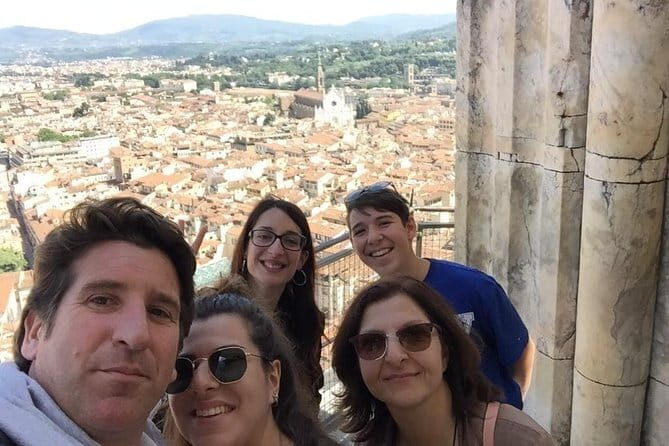
After the denser art-and-architecture focus, you get a breather through Piazza Santa Trinita and across to Ponte Vecchio.
This part is shorter—about 10 minutes on each highlight—but it helps your brain. You’ve been talking about Renaissance politics and artistic ambition. Now you’re walking through living Florence: a small square on Via de’ Tornabuoni, known for elegant buildings and luxury shops, and then the iconic Ponte Vecchio crossing the Arno.
Why include this? Because Renaissance art didn’t grow in a vacuum. It grew in streets like these—where merchants, patrons, and artists all moved through the same city blocks. Even if your photos are quick, the guide uses these in-between moments to keep the story human.
Basilica di Santo Spirito: Michelangelo’s wooden crucifix at age 17

The emotional payoff comes at Basilica di Santo Spirito in the Oltrarno district. This is where the tour shifts from famous names to something more personal and surprising.
You’ll visit with the included ticket for Michelangelo’s wooden crucifix, known as Il Crocifisso Ligneo. The guide frames it as an early masterpiece made when Michelangelo was just 17 years old. The story behind it is also key: it was created as thanks to the prior for allowing him to study anatomy, a permission that helped pave the way for his advanced understanding of the human form.
That anatomy link is the whole point of using the rivalry theme. You see how technique isn’t only about style. It’s about the artist’s access to knowledge and the willingness to learn from real bodies, not just from ideal models.
Also, Santo Spirito tends to feel calmer than the most famous central stops. You’ll notice the difference in pace and sound. The tour gives you about 30 minutes here, which is enough time to slow down and actually look at the crucifix rather than just pass by it.
This is the stop that makes the tour feel different from the usual Florence checklist.
Michelangelo vs Leonardo: how the guide connects personalities to technique
Renaissance rivalry can sound like a movie plot. Antonio makes it practical. The tour explains that their competitive spirit helped drive some of the era’s most renowned masterpieces, then ties that rivalry back to what you’re seeing in Florence.
You’ll hear about:
- Their contrasting personalities and how that changed their working methods
- The broader political and cultural backdrop of Renaissance Florence
- Why innovation and artistic fervor weren’t optional in that era—they were expected
You don’t have to be an art scholar. You just need curiosity. The guide’s job is to translate big ideas into street-level observations: why certain works look a certain way, why institutions mattered, and why Florence became the place where major artistic careers collided.
Antonio also adds some local voice. You’ll get recommendations of guide-favorite nearby spots for food, music, drinks, and museums, plus Antonio’s reading-style suggestions via his code. It’s the kind of extra material that helps you keep going after the tour ends.
Value check: $31.35 and what you’ll still need to budget
At $31.35 per person, this tour is priced to feel accessible, especially because it includes:
- A professional English tour guide and a local guide approach
- Antonio’s code (books plus best venues for food, music, drinks, and museum visits)
- The included ticket for Michelangelo’s wooden crucifix at Santo Spirito
What’s not included:
- Admission for Palazzo Vecchio
- Admission for the Duomo (Santa Maria del Fiore)
So you’re getting a strong guided route plus one meaningful paid interior ticket. The rest is mostly exterior viewing and church-area time. If you’re hoping to do every major interior monument on one walk, this won’t be that day—but if you want depth without overspending on tickets, it’s a good bargain.
One more value point: the small group size (max 16) helps you get answers instead of hearing only a shouted overview.
Pace, comfort, and how to show up ready
This is a walking tour built around Florence’s core sights, with a total duration of about 3 hours. The schedule includes multiple short segments—so you’re not stuck in one long slow line the whole time.
Plan for:
- Good walking shoes (streets add up quickly in Florence)
- Sun or light rain planning—this experience requires good weather
- A clear start time: 10:00 am
You’ll be moving through plazas and church areas. That means a bit of stop-and-go, plus time for photos. If you’re sensitive to crowds, try to keep the pace steady and follow Antonio’s instruction on where to stand so you don’t get squeezed.
The tour uses a mobile ticket, so have your phone charged. Service animals are allowed, and the route is described as suitable for most travelers.
Who this Renaissance Florence tour fits best
I’d put this tour on your shortlist if:
- You’ve already seen the standard major highlights and want a stronger story thread
- You care about how Renaissance art connects to politics, patrons, and the city’s power centers
- You want a less crowded-feeling experience, especially with the Santo Spirito focus
- You like a guide with personality. Antonio’s sense of humor and the way he keeps the pace friendly is a big part of what people remember
It also works well for first-timers who want context. You don’t need deep background; you’ll get enough historical framing to make Michelangelo feel like a person, not just a signature style.
Should you book this tour?
Yes, if you want a guided Renaissance story that goes beyond the biggest museum faces. The inclusion of Michelangelo’s Il Crocifisso Ligneo ticket, plus the way Antonio uses the rivalry theme to explain technique and ambition, makes this feel like more than a generic walking route.
I’d skip it only if your main goal is entering every famous interior monument in Florence during one session. The Duomo and Palazzo Vecchio admissions aren’t included, and some parts are exterior-focused by design.
If you can do exterior views plus one big included art ticket, this is a smart use of half a day—and it gives you a fresh angle on Michelangelo and Leonardo without drowning you in dates.
FAQ
Where does the tour start and where does it end?
It starts at Piazza della Signoria (P.za della Signoria, 50122 Firenze FI, Italy) and ends in front of Santa Croce church in Florence.
What time does the tour begin?
The start time is 10:00 am.
How long is the tour?
The tour runs for about 3 hours.
How much does it cost?
The price is $31.35 per person.
What’s included in the ticket price?
Included are a professional enthusiastic local English tour guide, Antonio’s code (books and recommendations for food, music, drinks, and museums), and the ticket for Michelangelo’s wooden crucifix at Santo Spirito.
Do I need separate tickets for Palazzo Vecchio and the Duomo?
Yes. Palazzo Vecchio and Duomo – Cattedrale di Santa Maria del Fiore admission tickets are not included.
What is the group size?
The tour has a maximum of 16 travelers.
Is the tour guaranteed to run every day?
It requires good weather. If it’s canceled due to poor weather, you’ll be offered a different date or a full refund.
Do I get a mobile ticket?
Yes, the tour includes a mobile ticket.

More Tour Reviews in Florence
- Tuscany Day Trip from Florence: Siena, San Gimignano, Pisa and Lunch at a Winery
★ 5.0 · 21,634 reviews - The Best tour in Florence: Renaissance & Medici Tales – guided by a STORYTELLER
★ 5.0 · 12,316 reviews