REVIEW · FLORENCE
Exclusive Chianti Classico Day Trip from Florence
Book on Viator →Operated by Enotropea Tours · Bookable on Viator
Most days in Florence end too fast.
This full-day Chianti Classico trip turns your time into a winemaking lesson plus real countryside moments, without you renting a car or trying to plan tastings yourself. You get 100% private transportation and a certified sommelier/guide with you all day, and the route takes you through San Casciano in Val di Pesa, Greve in Chianti, and Panzano in Chianti.
I love how the stops feel different from each other, not copy-paste winery visits. You’ll visit three boutique estates that each tell a distinct story, and you’ll taste Chianti in a way that connects the grapes, the soil, and the glass. I also like that lunch is built into the day as a real 3-course Tuscan meal, not a quick snack.
One thing to think about: this is a long day (about 10 hours), and it’s weather-dependent. If your vacation is tight on rest time, you may want to balance this with a lighter plan the following day.
In This Review
- Key things that make this Chianti Classico day work
- Why this private Chianti Classico day is better than DIY
- The day’s pacing from 9:30am pickup to a late return
- Florence to the first winery: an easy start that sets the tone
- Luiano in San Casciano in Val di Pesa: centuries of wine plus Renaissance cellars
- Savignola in Greve in Chianti: Paolina’s Riserva and the 1500s barrel cellar
- Panzano in Chianti: a family estate shaped by older roots and newer production
- What the guide and sommelier do for your tasting (not just sample time)
- 3-course Tuscan lunch plus pairing tips you can use immediately
- Buying wine the easy way (and keeping it hassle-free)
- Price and value: what $509.57 per person really buys
- Who this Chianti Classico tour fits best
- Should you book this private Chianti Classico day trip?
- FAQ
- Is pickup from Florence included?
- How many wineries do you visit?
- What’s the duration of the tour?
- Is the tour private?
- Do you offer wine tasting, and is there an age limit?
- What if I have dietary needs?
Key things that make this Chianti Classico day work
- Door-to-door pickup: driver normally arrives about 9:15am for a 9:30am start
- Three estates with contrasting styles: from Renaissance cellars to 15th-century villa settings
- Tastings with context: not just tasting notes, but pairing and winemaking explanations
- Lunch included: a 3-course Tuscan lunch during the winery schedule
- Private, not shared: your group has the day to yourselves
- English-guided experience: with a certified sommelier/guide all day
Why this private Chianti Classico day is better than DIY
If you’ve ever tried to string together Tuscany winery visits from Florence, you already know the problem: buses don’t match winery hours, driving is slow and stressful, and tasting rooms can feel random if you don’t know what to ask.
This tour solves the big friction points. Instead of you figuring out routes and which wineries to pick, you get a prepared circuit with private transportation and a guide who can translate what you’re seeing. You’re also not stuck negotiating group logistics. It’s set up as your day, so you can move at a human pace and spend time where it matters.
And the best part is that Chianti Classico isn’t treated like a souvenir stop. Each winery leans on its own logic—family decisions, soil, cellar choices—and that makes the whole day click.
You can also read our reviews of more tours and experiences in Florence
- Tuscany Day Trip from Florence: Siena, San Gimignano, Pisa and Lunch at a Winery
★ 5.0 · 21,634 reviews

The day’s pacing from 9:30am pickup to a late return
The tour runs for about 10 hours. Pickup is included, and your driver is normally at your address around 9:15am, with a 9:30am departure. Then it’s roughly 50 minutes to the first winery, and the schedule builds in time for tours, tastings, and lunch.
What this means for you in practical terms:
- You’ll want to eat a solid breakfast. You’re out all day, and wine tastings are part of the plan.
- Wear comfortable shoes for estate paths and cellar walking, especially if it’s cool or damp.
- Plan on being present. This isn’t a quick “in and out” circuit; it’s meant to teach you how to taste.
The day also has a weather requirement. If conditions are poor, the experience may be rescheduled or refunded, depending on what’s offered. Since Tuscany weather can change quickly, I’d pack a light layer.
Florence to the first winery: an easy start that sets the tone
Your day begins right at your accommodation, which matters more than it sounds. No train station confusion. No taxi juggling. Just you and your guide, rolling out of Florence in the morning light.
The first drive is about 50 minutes. That’s long enough to shake off “city mode” but not so long that you feel lost. It’s also where the guide can get you oriented. In the best cases, you’ll get a guide who talks easily and connects what you’ll see with what’s in your glass. People like Daria, Paola, Angel, and Fabian are examples of the kind of warm, chatty guide energy you can get on this tour—where you ask questions and actually get answers.
Luiano in San Casciano in Val di Pesa: centuries of wine plus Renaissance cellars
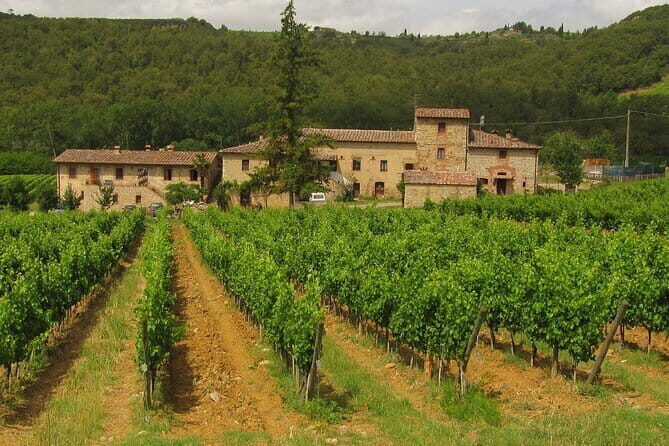
Stop two is where the day gains depth fast. You head to San Casciano in Val di Pesa to visit Luiano, an estate known for producing wine and olive oil since the 9th century. That timeframe alone is a hint that this isn’t a modern “brand” operation—it’s rooted in agriculture and family work.
Luiano also has a strong Florence connection. The property previously belonged to famous Florentine families including the Strozzi. Then, in 1959, the Palombo family took ownership and shifted away from a mixed agricultural system to focus solely on vine cultivation. The result, as the story goes, was higher-quality wine through more focused vineyard work.
Here’s what to expect during your visit (about 2 hours):
- A tour of the property, vineyards, and the wine cellars where vinification takes place
- A look at ancient cellars built during the Renaissance
- A Chianti-based wine tasting with a view
Grape-wise, Sangiovese makes up the largest portion of the varieties planted on their territory. So when you taste, you’ll have an immediate reason for what you’re noticing—this is the grape the land keeps returning to.
Potential drawback: if you hate “history talk” and prefer only hands-on wine action, you might want to steer your questions toward viticulture, farming decisions, and practical tasting comparisons. The best guides will do that with you.
Savignola in Greve in Chianti: Paolina’s Riserva and the 1500s barrel cellar
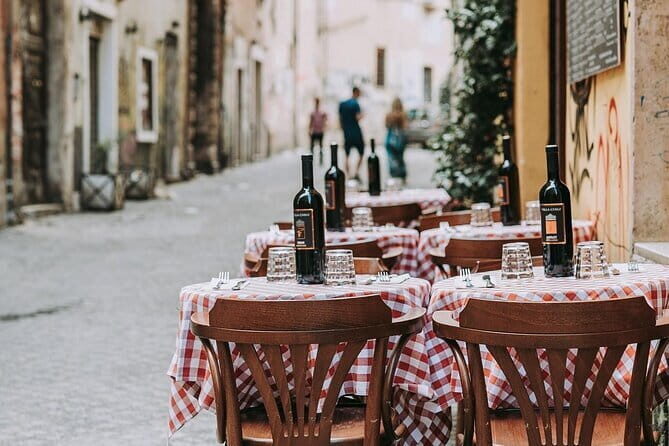
Next you move to Greve in Chianti for Savignola, a boutique winery in the Chianti Classico area dating back to 1780. They farm a relatively small footprint—about 5 hectares—and produce around 22,000 bottles annually, which helps explain why tastings here can feel personal and detailed.
Savignola’s story includes Etruscan origins and a chapter connected to a Christian settlement built around the first half of the 17th century. What really grabs your attention is the “all-female history” tied to the figure of Paolina, described as the first woman to bottle her Riserva in a Bordeaux-style bottle. It’s a nice reminder that tradition doesn’t always mean doing the same thing forever. Innovation can be part of a family legacy.
During your roughly 3-hour stop, you’ll spend time in:
- A vineyard and estate context that leads into how the wine is made
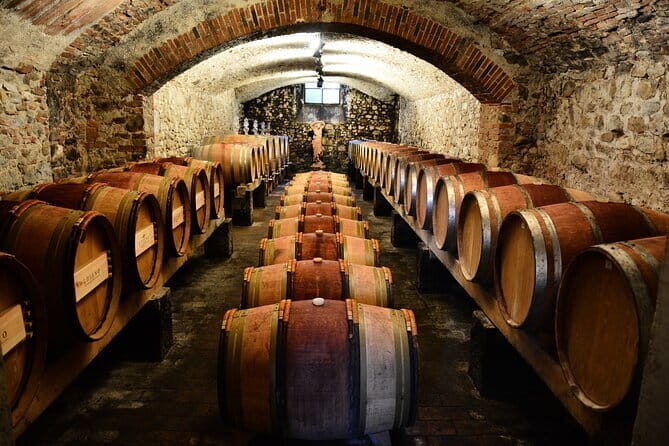
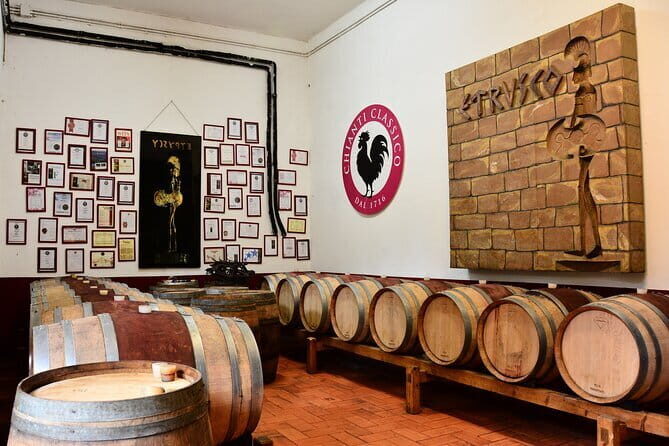
- The estate’s ancient barrel cellar dating back to the 1500s
- A tasting that ties the terroir to what you taste
Savignola’s soil is described as deep clay and chalky. The takeaway you should look for is consistency: how this combination can support wines with intensity and the kind of structure that tends to age well.
One consideration: with this kind of cellar-and-terroir storytelling, it’s easy to overdo your tasting notes on the spot. I recommend tasting, pausing, and then asking your guide a single “why” question—why this wine leans this way, not just what it tastes like.
- Tuscany Day Trip from Florence: Siena, San Gimignano, Pisa and Lunch at a Winery
★ 5.0 · 21,634 reviews - The Best tour in Florence: Renaissance & Medici Tales – guided by a STORYTELLER
★ 5.0 · 12,316 reviews

Panzano in Chianti: a family estate shaped by older roots and newer production
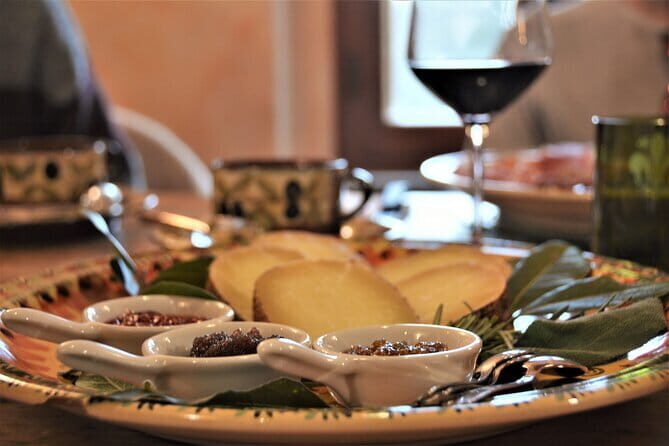
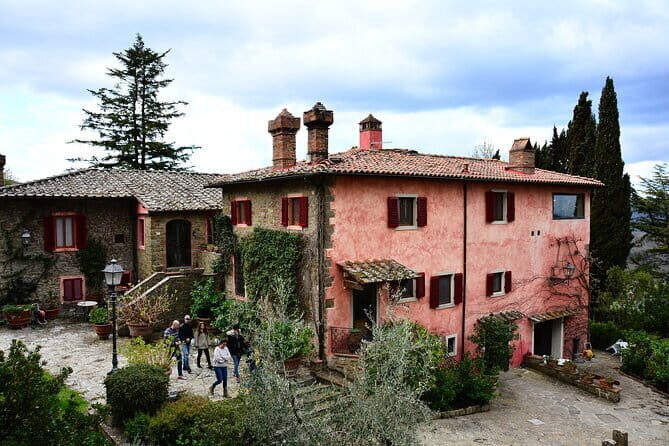
Your final winery is in Panzano in Chianti. This stop is where the day gets interesting in a different way: you’ll hear about a family-run operation that started wine production in 2012, while the deeper estate story goes back to the end of the 1800s.
The founder, Gualtiero, bought the first vineyards in Mercatale Val di Pesa. Later, after his death, one of his sons brought a new vision: planting new vineyards, buying land, and incorporating a 15th-century villa as the centerpiece of the property.
Even if production started recently, the estate’s materials are old:
- The cellars used in the 1400s were renovated for modern winemaking
- An 18th-century barn was restructured to serve as a wine cellar
- The estate includes vineyards, olive groves, and forests—so you see how a working farm supports wine production
You’ll learn about grape choices that are typical for the region—Sangiovese, Colorino, and Canaiolo—plus international varieties like Merlot and Cabernet Sauvignon. That mix is a clue that you’ll likely taste more range than you’d expect from a strict “only one style” Chianti day.
This last stop lasts about 1.5 hours, and it’s a smart ending. By now you understand the “why” behind tasting. So even if your palate is a bit tired, you can still pick up meaningful differences.
What the guide and sommelier do for your tasting (not just sample time)
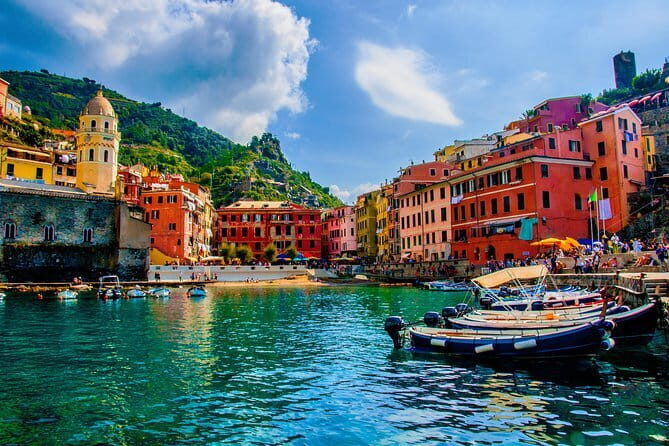
The tour includes a certified sommelier/guide with you the entire day. That’s a big deal, because it changes how you taste.
Instead of thinking of wine tasting as a list of flavors, you’re taught to think like a winemaker and a diner at the same time:
- Why the grape matters (like Sangiovese as the backbone at Luiano)
- How soil choices show up in texture and structure (clay and chalk notes at Savignola)
- Why estate decisions shift style over time (Luiano’s 1959 focus; Panzano’s newer production with older infrastructure)
I also like that the guide isn’t just reciting facts. The best guides on this circuit are described as friendly and easy to talk to, so you can ask questions during drives and between tastings. If you get a guide like Angel, for example, the vibe can turn the day into a real conversation, not a lecture.
And yes, you still taste wine. A lot of it. But you’ll leave with a better sense of how to describe what you’re tasting, and how to match it with food.
3-course Tuscan lunch plus pairing tips you can use immediately
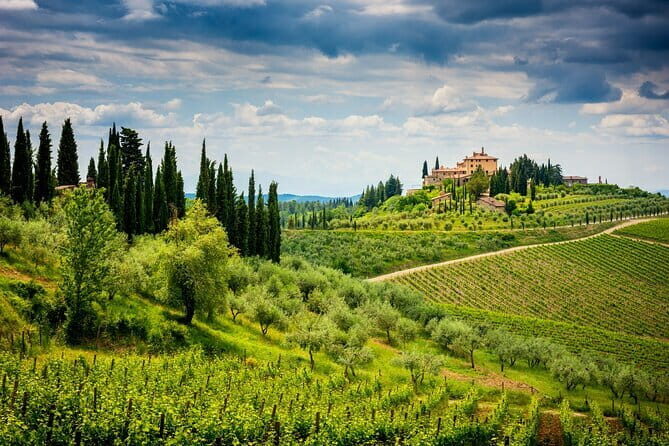
Lunch is included as a 3-course Tuscan meal. Timing is built into the winery flow, and in practice it’s served during the day rather than turning into a separate schedule you have to manage.
The value here isn’t just calories. Lunch is where your guide’s pairing advice becomes real. You get a chance to taste wine and then feel how it plays with the meal on the table—how acidity cuts through food, how tannins change as you eat, and how the same wine can feel different once there’s sauce and bread involved.
You might even pick up practical ideas like:
- What kind of Chianti-based wine tends to work well with typical Tuscan dishes
- How to taste with the meal in mind instead of only judging the wine on its own
One practical tip: pace your drinking. You want to remember the differences between estates on the drive home, not just the final glass.
Buying wine the easy way (and keeping it hassle-free)
Wine purchases are common on this kind of private winery day, and you’ll have the chance to buy directly at the wineries if you like what you taste. Some estates also offer additional local products alongside wine, which can be fun if you want more than bottles.
What I suggest is simple:
- Taste first, then decide. Don’t buy because you’re excited right away; let the comparison between wineries sink in.
- Ask your guide how to think about your choices. A good guide will help you match your tastes to what you’ve already tasted.
Also, remember that wine buying adds weight. If you’re flying back, keep an eye on how many bottles you plan to check in.
Price and value: what $509.57 per person really buys
This tour costs $509.57 per person, and it’s not trying to be cheap. The justification is that you’re paying for a complete private day:
- Private transportation
- A certified sommelier/guide for the full day
- Visits to three boutique wineries
- Wine tastings plus a 3-course Tuscan lunch
- Pickup from your accommodation (within the pickup radius)
So the value math depends on who you are traveling with. If you’re one person on a budget, you’re paying more per bottle and per stop than a shared tour would. If you’re a couple or a small group who wants comfort and time-efficient routing, this price starts looking more reasonable because you’re buying convenience and quality guidance, not just transportation.
The private format matters on a day like this. When you’re not sharing with strangers, you can ask more questions, keep the pace you want, and avoid the “waiting around” feeling that can come with group schedules.
Who this Chianti Classico tour fits best
This is a great match if you:
- Want Tuscany wine country without planning wineries and routes
- Prefer a guided tasting that connects the dots between grapes, soil, and style
- Enjoy boutique estates over crowded big-name stops
- Like the idea of a private day from Florence with pickup and drop-off
It might be less ideal if you:
- Want only the scenic drive and not the structured winery portion
- Have very limited time and can’t spare about 10 hours
- Hate weather-dependent plans (the experience requires good weather)
Also, the tasting includes wine, and the minimum drinking age is 18. Children must be accompanied by an adult.
Should you book this private Chianti Classico day trip?
If you’re choosing between a DIY day and a guided winery circuit, I’d lean toward booking this. The big win is that you trade stress for structure: your pickup is handled, the driving is taken care of, and the guide turns tastings into something you can actually carry home with you.
If you do book it, go in with one mindset: treat it like a guided lesson with great food and wine, not like a checklist. Ask your guide why the wineries feel different. Pay attention to Sangiovese, soil, and cellar choices as they come up. And pace your lunch and tastings so you can still appreciate the last stop at full strength.
FAQ
Is pickup from Florence included?
Yes. Pickup is included from your accommodation (with a pickup radius of about 3 KM) and the driver normally arrives around 9:15am for a 9:30am start.
How many wineries do you visit?
You visit three boutique wineries in the Chianti Classico area, each with a guided tour and wine tastings.
What’s the duration of the tour?
The tour runs for approximately 10 hours, including travel time and visits to all three wineries plus lunch.
Is the tour private?
Yes. It’s a private tour/activity, with only your group participating.
Do you offer wine tasting, and is there an age limit?
Wine tastings are included, and the minimum drinking age is 18.
What if I have dietary needs?
If you have special dietary requirements, you should inform the provider in advance so they can accommodate you.
More 1-Day Tours in Florence
- Tuscany Day Trip from Florence: Siena, San Gimignano, Pisa and Lunch at a Winery
★ 5.0 · 21,634 reviews - San Gimignano, Siena, Monteriggioni, Chianti Day Trip with Lunch & Wine Tasting
★ 4.5 · 4,432 reviews
More Tour Reviews in Florence
- Tuscany Day Trip from Florence: Siena, San Gimignano, Pisa and Lunch at a Winery
★ 5.0 · 21,634 reviews - The Best tour in Florence: Renaissance & Medici Tales – guided by a STORYTELLER
★ 5.0 · 12,316 reviews