REVIEW · FLORENCE
Skip the Line: Florence’s Uffizi Gallery Guided Tour
Book on Viator →Operated by Ciao Florence Tours Srl · Bookable on Viator
Art in Florence, minus the ticket line.
This Uffizi guided tour is a smart way to see the museum without losing time to crowds, starting with skip-the-line entry and a well-paced 1 hour 45 minutes inside. I also love that you’re given audio headsets, so the guide’s commentary stays clear even in busy rooms. One thing to consider: the Uffizi is huge, so in this time frame you’ll focus on major highlights rather than everything.
After the guided portion, you can keep going at your own pace. That’s the key benefit for me, because it turns a focused introduction into a flexible museum session—especially if you want to linger where you feel yourself getting pulled in.
In This Review
- Key tour highlights (what matters on the ground)
- Skip-the-line entry: how you actually benefit at the Uffizi
- Meeting point and the short walk to the gallery doors
- The 13th-to-18th century route: what the guide style gives you
- Stop-by-stop: what you’ll see and why each part feels different
- 1) Starting with the Uffizi building and early Renaissance foundations
- 2) International Gothic and story-telling: scenes that act like narratives
- 3) Space experiments: Uccello’s Battle of San Romano
- 4) Idealized features: Lippi and Piero della Francesca
- The museum’s biggest stars: Botticelli, Leonardo, and Michelangelo time
- Botticelli’s rooms: Birth of Venus and Primavera
- Leonardo: Baptism of Christ and The Annunciation
- Michelangelo: Tondo Doni
- Later halls: Raphael, Titian, and Caravaggio in the big-room setting
- Headsets, group size, and guide communication: getting the most out of the time
- Price and value: is $58.52 a fair trade for 1.5 hours?
- After the guided tour: how to spend your extra museum time well
- Who this tour suits best (and who might want a different plan)
- Should you book this Uffizi skip-the-line tour?
- FAQ
- How long is the Uffizi guided tour?
- What is the price per person?
- Is the ticket delivered on a phone?
- Does this tour include skip-the-line entry?
- What’s included with the tour?
- How large is the group?
- Where do I meet the guide?
- What languages are available?
- Are there any entry rules related to COVID-19?
- What is the cancellation policy?
Key tour highlights (what matters on the ground)
- Skip-the-line entry helps you get into the Uffizi faster and start seeing art sooner
- Maximum 9 people keeps the experience personal, and headsets help the guide’s voice carry
- Chronological walking route moves from the 1200s through later Renaissance art
- Big-name masterpieces like Botticelli’s Birth of Venus and Michelangelo’s Tondo Doni are built into the route
- City-center views from the Uffizi building give you a Florence break between rooms
- Stay after the tour so you can repeat your favorite works without feeling rushed
Skip-the-line entry: how you actually benefit at the Uffizi
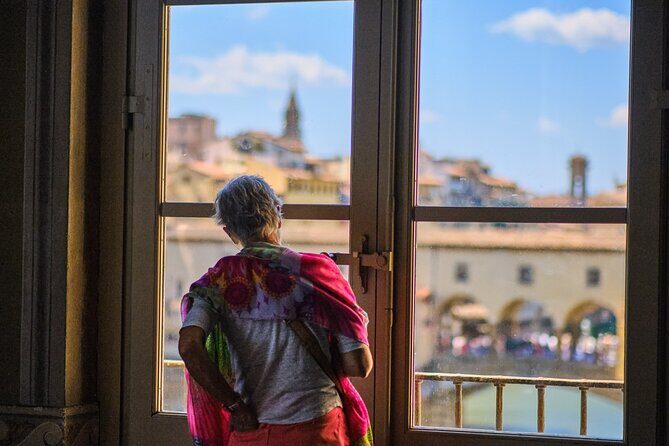
The Uffizi is one of those places where the biggest time sink is often not the museum itself—it’s the waiting. With this tour, you bypass the line to buy tickets and go straight in, which means you spend your energy looking at paintings and sculptures instead of staring at other people’s elbows.
The tour also gives you a realistic buffer for the moment you arrive. On the busiest days, you might still see some short delays entering the museum, even with skip-the-line access. The difference is that the tour is set up to get you positioned to move through faster than the general queue.
In practical terms: if you’re the kind of person who wants to see a museum early and keep the rest of your day for wandering Florence, this format fits your rhythm.
You can also read our reviews of more guided tours in Florence

Meeting point and the short walk to the gallery doors
You start at Via Camillo Cavour 18, 50122 Firenze (near the meeting area). Your guide will be waiting, then you follow them to the Uffizi, walking about 15 minutes.
That walk matters more than you might think. It gives you a chance to get oriented in central Florence before you step into museum mode. It’s also helpful if you arrive a bit early: you’re not just standing around; you’re moving with your group toward the entry.
Comfort helps here. Wear shoes you’ll still feel good in after 1.5 hours inside, plus the sidewalk time getting there.
The 13th-to-18th century route: what the guide style gives you
Your guided time runs about 1 hour 45 minutes, and the tour is organized to follow the museum’s story through the centuries. That “chronological” approach is one of the best ways to make sense of what can feel like an overwhelming wall-to-wall art overload.
Instead of bouncing randomly, you move forward in time, with the guide pointing out artistic shifts—how religious scenes get more narrative, how artists start experimenting with space and depth, and how portrait-like idealization develops over generations.
You’ll also get visual rhythm changes between painting rooms and more sculpture moments. The Uffizi isn’t only paintings: you pass by ancient Greek and Roman sculptures, plus frescoed ceilings and bright rooms with windows.
If you like art best when it has context—who painted it, what changed in style, and why those choices mattered—this structure works well.
Stop-by-stop: what you’ll see and why each part feels different
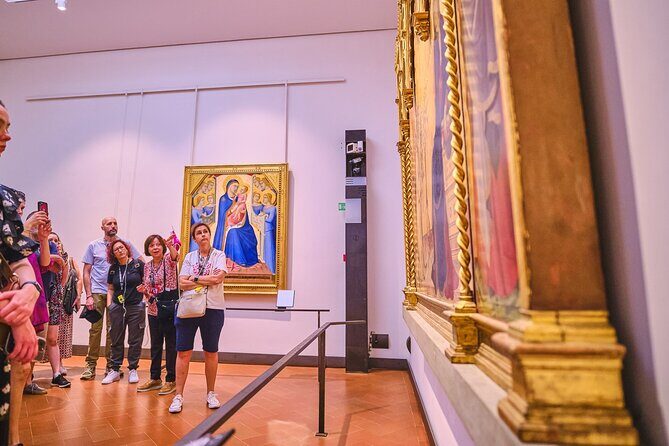
Here’s how the museum time typically breaks down.
1) Starting with the Uffizi building and early Renaissance foundations
You begin by skipping into the Uffizi and settling into rooms where the museum’s early Renaissance direction starts to take shape. The tour begins around the 1200s and pushes you toward the moment Renaissance style starts to look more human and more three-dimensional.
You’ll encounter art that leans symbolic and devotional at first—images with gold-heavy detail and Madonna-and-child themes. Then the guide points to transitions in how artists represent volume and form.
It’s a good warm-up. Early on, you’re training your eye to notice things like how figures sit in space and how painters build depth without modern tools.
You can also read our reviews of more museum experiences in Florence



2) International Gothic and story-telling: scenes that act like narratives
Next comes a stretch focused on International Gothic works, including Gentile da Fabriano’s Adoration of the Magi. This is the kind of piece that can shift your mindset: the art isn’t just showing figures—it’s setting up a story you can follow.
The guide’s job here is practical. They’re not only naming artists. They’re connecting the historical “why” to what you’re seeing so the religious scene stops feeling abstract.
If you’ve ever wondered why older art can seem distant at first glance, this is often where it clicks.
3) Space experiments: Uccello’s Battle of San Romano
The tour then moves toward the 1400s, when artists start experimenting with three-dimensional space in a more obvious way. Paolo Uccello’s Battle of San Romano is highlighted as a standout example of that progression.
Even if you’re not the kind of person who reads technique terms, you can still feel what’s changing: the scene gets more structured, and the illusion of depth becomes part of the drama.
This stop is where the Uffizi starts to feel less like a “museum of objects” and more like a museum of ideas.
4) Idealized features: Lippi and Piero della Francesca
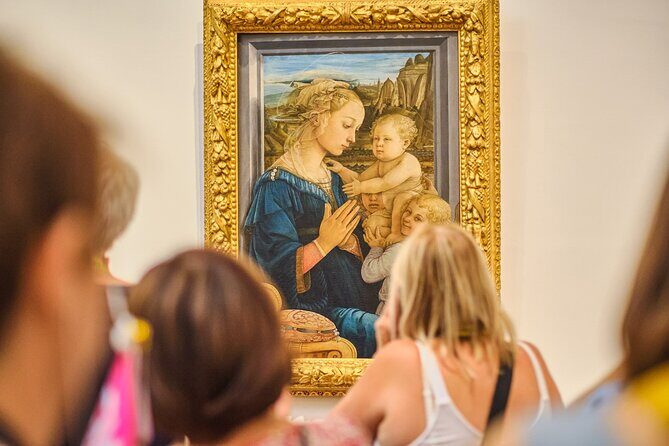
You’ll also see key works tied to the development of idealized human features and more refined portrait-like qualities. The tour calls out Filippo Lippi’s Madonna with Child and Two Angels and Piero della Francesca’s Dukes of Urbino.
This part is valuable if you’re trying to connect Renaissance art to what later artists learned. It’s also where you start noticing that “beauty” in Renaissance painting isn’t only about faces—it’s about geometry, calm expression, and stable composition.
The museum’s biggest stars: Botticelli, Leonardo, and Michelangelo time
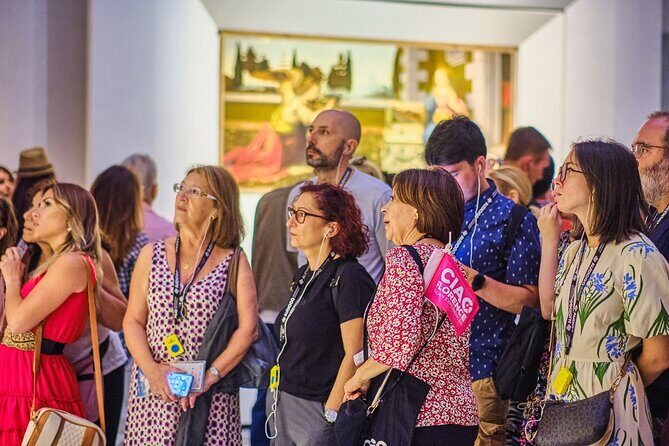
This is the heart of why most first-timers book a guided Uffizi tour.
Botticelli’s rooms: Birth of Venus and Primavera
You spend time with Botticelli, including The Birth of Venus and Primavera. These are not just famous images; they’re famous because they helped define what people later think of as Renaissance style—emotion, symbolism, and a distinctive figure look.
The guide ties Botticelli to the Medici family, which helps explain why the art exists in that specific Florentine world. Without that connection, you can still enjoy the paintings. With it, you understand why they mattered.
If you’re worried the Uffizi will feel like “big paintings, big names,” this is where it becomes personal and specific.
Leonardo: Baptism of Christ and The Annunciation
You also see Leonardo da Vinci works including Baptism of Christ and The Annunciation. Even when you know the general reputation of Leonardo, standing close to these compositions lets you notice the clarity of the scene design and the way expressions and gestures move the eye.
The guide’s explanations keep it from turning into a quick photo-and-move routine. You’re meant to look, absorb, and understand what you’re looking at.
Michelangelo: Tondo Doni
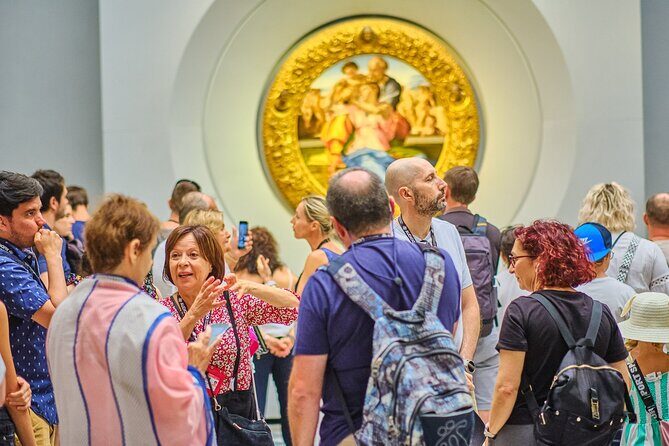
Michelangelo’s Tondo Doni is another major stop. The tour’s goal here is closeness to the work, not rushing past it. In a museum this size, that kind of time is the difference between remembering names and remembering images.
If you want the Uffizi to feel like a guided experience, not a scavenger hunt, these stops are the payoff.
Later halls: Raphael, Titian, and Caravaggio in the big-room setting
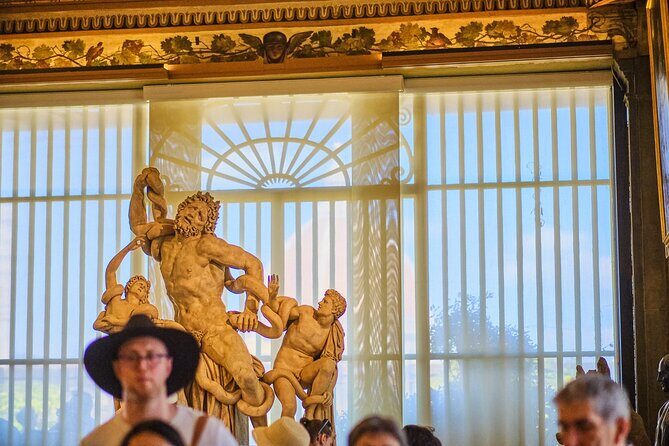
The back half of the tour leads to three giant halls loaded with major artists, including Raphael, Titian, and Caravaggio. This is where the museum’s scale shows up fast.
You’ll see lots of works in a relatively short time, so the guide’s role becomes essential: they help you decide what to watch for, and they connect the artists’ styles to the choices they made.
There’s also room to ask questions. Because this portion is still guided, you can use the time to clarify what you’re seeing—especially if a painting’s symbolism feels hard to decode on your own.
One practical note from how the tour is structured: 1 hour 45 minutes can’t include every single must-see masterpiece. If Rembrandt is on your personal wish list, plan for extra self-guided time after the tour, because this guided route focuses on the Uffizi’s defining Renaissance story.
Headsets, group size, and guide communication: getting the most out of the time
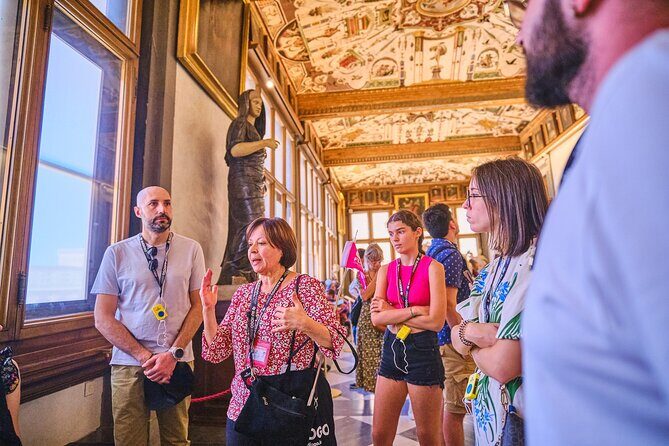
This tour caps at 9 travelers, and earphones are provided (especially helpful for larger groups). In crowded museum rooms, that headset support is a real comfort. You spend less time guessing what the guide said and more time actually looking.
Guide quality is the other major variable, and you should pay attention to language and delivery. I’ve seen how much difference it can make: one guide named Chiara was praised for being engaging and for bringing both facts and backstory into the art. On the other hand, if you end up with a guide whose accent is heavy, you might struggle despite the headset. So if you’re sensitive to audio clarity, go in ready to use the headset fully and reposition if you need better sound.
Also, if you’re going early in the day, you’ll likely have an easier time hearing and seeing. One practical tip that keeps coming up: choose an earlier time slot when possible, because crowd pressure builds fast.
Price and value: is $58.52 a fair trade for 1.5 hours?
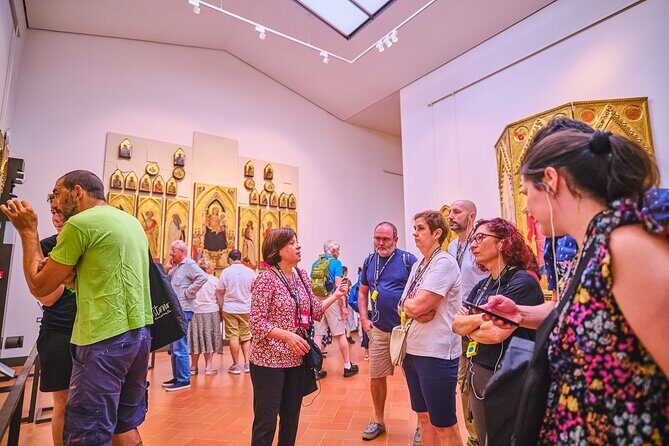
At $58.52 per person, you’re paying for speed, guidance, and inclusion of entry fees (plus headset use). For the Uffizi, that can be good value—mainly because the Uffizi punishes wasted time.
Here’s why it makes sense financially and practically:
- Skip-the-line reduces the biggest friction cost (waiting)
- A fully-licensed guide helps you turn famous art into meaningful art instead of random viewing
- Small group size makes the experience feel less like a cattle line
- You keep exploring after the tour ends, so the guided time acts like your “starter route”
If your goal is simply to wander and you don’t care about context, you might choose a self-guided ticket. But if you want the Uffizi’s story to click while you’re standing in front of the paintings, this price usually feels reasonable.
Booking average timing also suggests you’ll want to plan ahead. This tour is commonly booked about 41 days in advance, so earlier slots can disappear.
After the guided tour: how to spend your extra museum time well
When the guided portion ends, you’re free to explore inside the Uffizi at your own pace. This is where you tailor the visit to your taste.
Use your first pass like a map:
- Go back to the Botticelli works if you felt pulled in
- Spend extra time on whatever painting or sculpture made you stop for a full minute
- If you’re looking for those “I could live here” views, take a moment near the windows for Florence center glimpses from the Uffizi building
This is also when you can slow down around the halls you might have felt rushed in during the guided route.
Who this tour suits best (and who might want a different plan)
This fits you best if:
- You want major highlights paired with a guided explanation
- You prefer small groups and audio support
- You’re visiting the Uffizi for the first time and want a route that makes sense
It may not fit you as well if:
- You’re hunting for very specific artists and want a long, encyclopedic walk through the museum
- You hate any chance of audio issues and need perfect clarity at all times
The good news: because you can stay afterward, you can correct for what you felt you didn’t get enough of.
Should you book this Uffizi skip-the-line tour?
If you’re short on time in Florence—or you don’t want to spend your energy battling the crowds—this tour is a smart way to start. The skip-the-line entry, small group size, and headset support make the experience feel efficient without being cold or rushed.
Book it if your priority is a guided introduction to the Uffizi’s Renaissance core, with time left over to re-visit your favorites. Consider booking a later self-guided add-on time if your personal list includes artists you hope to see beyond the tour’s main focus.
FAQ
How long is the Uffizi guided tour?
It lasts about 1 hour 45 minutes.
What is the price per person?
The price is $58.52 per person.
Is the ticket delivered on a phone?
Yes, it includes a mobile ticket.
Does this tour include skip-the-line entry?
Yes. You bypass the crowd waiting to buy tickets and enter the gallery directly with your skip-the-line access.
What’s included with the tour?
Included are a professional guide, the Uffizi skip-the-line ticket, earphones for bigger groups, and a small group tour. Entrance fees and audio headsets are also included.
How large is the group?
The tour has a maximum of 9 travelers.
Where do I meet the guide?
You meet at the start point on Via Camillo Cavour 18, 50122 Firenze, and then you walk about 15 minutes to the Uffizi area with your guide. The tour ends inside the Uffizi Gallery.
What languages are available?
From November to March, it is always confirmed in English and Spanish. For Italian, French, and German, a minimum of 4 people is required. From April to October, the tour is held in a monolingual small group.
Are there any entry rules related to COVID-19?
Yes. Participants over 12 must show one of the following: proof of full vaccination, proof of first vaccination given at least 15 days ago, proof of a COVID-19 infection within the past 6 months, or a negative test taken no more than 48 hours before the activity starts.
What is the cancellation policy?
Free cancellation is available. You can cancel up to 24 hours in advance for a full refund.
—
If you want, tell me your travel dates and what time of day you’re aiming to visit the Uffizi, and I’ll suggest a practical game plan for the rest of your Florence day around this tour.



More Guided Tours in Florence


More Tours in Florence




More Tour Reviews in Florence
- Tuscany Day Trip from Florence: Siena, San Gimignano, Pisa and Lunch at a Winery
★ 5.0 · 21,634 reviews - The Best tour in Florence: Renaissance & Medici Tales – guided by a STORYTELLER
★ 5.0 · 12,316 reviews