REVIEW · LUCCA
1-Hour Carriage Tour – Historic Center and Renaissance Walls
Book on Viator →Operated by Lucca Horse Carriage · Bookable on Viator
Horse power meets Lucca’s ancient walls. This one-hour carriage loop is a smooth way to see the best sights inside the historic center, with plenty of time for photos and wall views as the route glides past squares, churches, and key defensive spots. I love that it keeps your energy up while still feeling very Lucca, not like a bus tour.
Two things really land here: the ride itself on a calm, capable horse, and the way the guides connect landmarks into a clear story as you pass them. You’ll hear names like Marika and Mario, plus other guide styles you might meet such as Luigi (Gigi) or Stefano, all focused on helping you make sense of what you’re seeing.
One possible drawback: the experience needs good weather, and it’s mostly outdoors while you’re riding. If it’s hot, aim for a shaded time slot when you can, and know that the stop-and-go pace won’t turn into a long deep dive.
In This Review
- Key highlights you’ll feel right away
- Starting at Piazza Napoleone: why this location works so well
- One hour, big coverage: how Lucca stays readable in a short ride
- From Ducal Palace overlooks to the main square: seeing Lucca’s public heart
- San Michele and Lucca’s main church: a route built around standout facades
- Defensive towers and the tree-lined tower: Lucca’s brain is on the walls
- Roman square and the shopping street: a practical break in the middle
- Byzantine mosaics, wall gardens, and medieval doors: details that feel close
- Meet your carriage team: Marika, Mario, Luigi (Gigi), and Stefano
- Price and value: is $192.44 per group worth it?
- Practical tips before you go
- Who should book this carriage tour?
- Should you book this horse carriage tour of Lucca’s Renaissance walls?
- FAQ
- FAQ
- Where is the meeting point for the tour?
- How long is the carriage tour?
- Is this tour private?
- What languages are available?
- Do I need a printed ticket?
- What days and times does the tour run?
- Is the tour affected by weather?
- Are service animals allowed?
- How far in advance should I book?
Key highlights you’ll feel right away
- Renaissance walls views without the workout: you get wall-side scenery while still staying comfortable
- Churches in the middle of the route: San Michele, Lucca’s main church, and a Byzantine-mosaic facade
- Towers and defensive corners: including the tree-lined tower and other watchpoints
- A human-scale ride: private format for up to 5 people, not a crowded group
- A driver who knows the streets: narrow lanes handled with calm skill, often in shade
Starting at Piazza Napoleone: why this location works so well
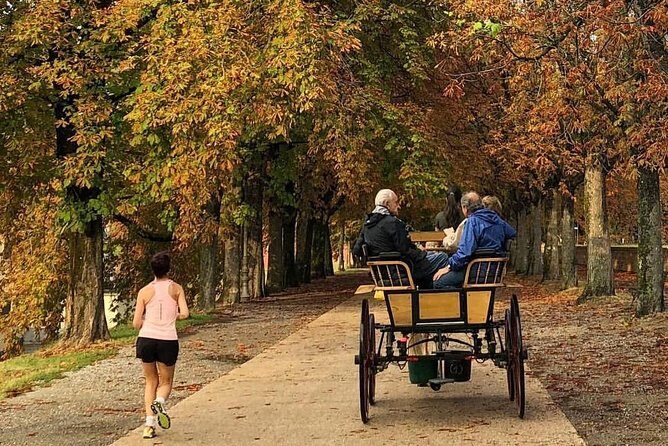
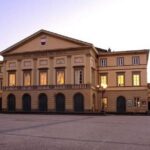
Your tour begins at Piazza Napoleone, which is a smart starting point because it’s central and easy to orient yourself. From here, you’re set up for a loop that doesn’t waste time. In about an hour, you’ll cover enough ground that Lucca starts to make sense—streets, squares, and the defensive wall system all connect in your head instead of staying as separate dots on a map.
The carriage ride is also practical. Lucca’s old streets can be tight and winding. Walking is great, but it can turn tiring fast, especially if you’re balancing museum time, gelato breaks, and climbing steps. This is the “save your legs” option that still lets you soak in the sights at a street-level pace.
You can also read our reviews of more historical tours in Lucca

One hour, big coverage: how Lucca stays readable in a short ride
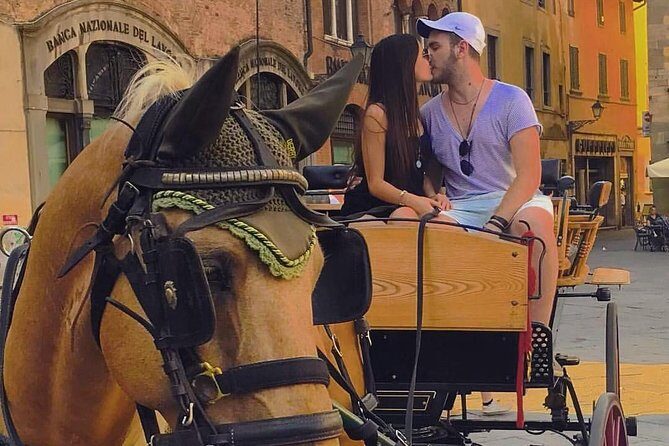
This is an approx. 1-hour experience, and it’s paced like you’re meant to use it as a foundation. The route moves from major gathering spots into religious landmarks, then toward towers and wall viewpoints. By the time you return, you’ll likely feel you know where the important parts of Lucca sit relative to each other.
The format matters, too. It’s private and capped at up to 5 people per group, so your guide can slow down for your questions without the constant shuffle you get in large shared tours. If you’re traveling with family or friends who want a relaxed pace, this is a good match.
I also like that you’re on a ride that often stays in shade. That’s not a small detail in Lucca—heat can turn sightseeing into a chore. When you’re riding instead of walking, you can keep your day moving even on warmer afternoons.
From Ducal Palace overlooks to the main square: seeing Lucca’s public heart
Early on, you pass the main square area where the Ducal Palace overlooks the space. Even without getting lost in museum halls, this stop gives you a feel for how civic power worked here: public life clustered around spaces designed for gathering and display.
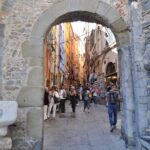
You also get a change of scenery as you move from open squares into tighter passages. That helps you understand Lucca’s layout. You’re not only looking at monuments—you’re experiencing how the city moves from broad “meeting points” into intimate lanes.
The main square areas are also ideal for orientation. If you plan to come back later for a self-guided walk, you’ll know where to aim yourself first.
San Michele and Lucca’s main church: a route built around standout facades
A huge reason this carriage loop works is that it doesn’t treat churches as quick “photo stops.” You actually ride past several, and each one teaches you something about Lucca’s religious and artistic identity.
You’ll see Piazza with the church of San Michele. It’s the kind of landmark that signals how old European cities organized their most important structures around central public rooms—squares that double as social stages.
Then you pass the most important church in Lucca. The value here isn’t just seeing a large building. It’s the way the guide’s explanation helps you grasp why it matters, especially when you’re also hearing about defensive towers and wall passages later. Suddenly, you can connect two themes: protection and faith, both built into the city’s structure.
Finally, one of the most memorable visual moments is the beautiful church with a Byzantine mosaic on its facade. Even if you don’t know the technical art history, you’ll understand the point: Lucca wasn’t sealed off. It absorbed outside influences, and that shows up right on the street where you’re passing.
Defensive towers and the tree-lined tower: Lucca’s brain is on the walls
Lucca is famous for its walls, and this tour uses them in a smart way. You’ll visit the defensive tower of the city and ride near the tree-lined tower, described as one of the most particular in Italy.
This section is where the city clicks. Instead of imagining the fortifications from afar, you see them from street level and wall-adjacent viewpoints. You also get a sense of the defensive logic: towers placed to watch approaches, walls that create a boundary, and passages that connect the city’s inner life to its protective ring.
One small bonus: the “tree-lined tower” isn’t something most people can fully appreciate on a quick walk past it. Seeing it from the right angle, as you move through the route, makes the feature feel more intentional and less random.
You can also read our reviews of more tours and experiences in Lucca

Roman square and the shopping street: a practical break in the middle
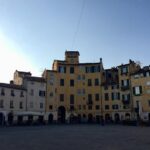
Your ride includes a Roman square, described as among the most characteristic of the city. That matters because it gives you a change in tone: you’re no longer only in “church-and-wall mode.” You see another layer of city identity that helps break up the seriousness of the religious and defensive stops.
Then comes the main street dedicated to shopping. This part is useful because it shows what a city looks like when it’s alive day-to-day, not just when it’s staged for history. Even if you don’t plan to buy much, it helps you picture where locals spend their time.
It’s also a good cue: you might want to keep this shopping street in mind for your next walk. If you later need a café, a souvenir stop, or a simple route back to your hotel, you’ll know the street you should aim for.
Byzantine mosaics, wall gardens, and medieval doors: details that feel close
One of the tour’s best qualities is its love for the “in-between” moments—passages and edges where you normally hurry past them.
After the mosaic facade church, you ride through a passage next to a building, where you can admire a garden from the walls. This is exactly the kind of spot you’d miss if you only followed the big highlights. It’s also a satisfying payoff: you’re seeing how the wall line isn’t just a barrier—it’s a viewpoint with atmosphere.
You’ll also pass a door where you can admire another old door from the medieval period. That’s a very Lucca kind of thrill: old city layers stacked close together. It’s not about finding one masterpiece; it’s about spotting the survival of details that have lasted for centuries.
These kinds of stops are why a carriage tour can feel more “personal” than a straight walking checklist. You don’t just hit points. You glide past them in a way that gives you time to look.
Meet your carriage team: Marika, Mario, Luigi (Gigi), and Stefano
The guide talent is a big reason this tour scores so well. Names you might hear include Marika, and drivers such as Mario (with stories about him making the ride feel effortless) and Luigi (Gigi). Another guide you could encounter is Stefano.
What stands out is not only that the guides explain landmarks, but that they connect them to real city life. You’re not just hearing dates. You’re hearing how people in Lucca moved, lived, and organized their space around what mattered.
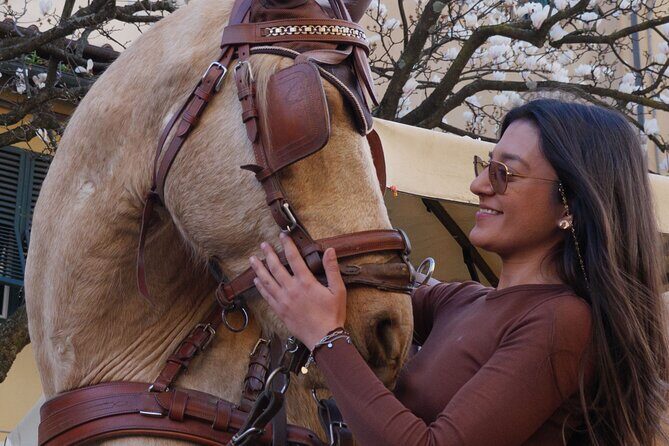
The horse is part of that too. The carriage ride is handled with skill through narrow streets, and the horse often remains calm even when you might catch noises on the wall—like reenactors during certain events. If you’re a little uneasy about animals or street movement, you’ll likely feel reassured by how the driver manages the streets.
And yes, there’s a charming touch: the horse may pause near local businesses for a treat. In practical terms, this adds a few minutes of “local rhythm” to the ride—no big detour, but a glimpse of Lucca’s everyday familiarity.
Price and value: is $192.44 per group worth it?
The price is $192.44 per group (up to 5) for about one hour, offered with English. For a private experience, it’s not just “a seat on a tour.” You’re paying for: private pacing, a guide who can focus on your questions, and a carriage ride that gets you close to the sights without turning the day into a long hike.
If you’re traveling solo, it can feel pricey compared with a shared walking tour. But if you’re splitting the cost among even two or three people, the math starts to look better. The biggest value is time: you compress a lot of Lucca into one ride so your later walks feel easier to navigate.
Also, the ride can save you from heat and tired legs. That’s a real vacation cost, even if it doesn’t show up on the receipt.
Practical tips before you go
Here are the details that help you get the most out of the hour:
- Choose a time slot that fits your energy. The tour runs daily from 9:30 AM to 4:30 PM, and on hot days you’ll feel it when the ride stays in shade.
- Bring your patience for narrow streets. The route is built for Lucca’s medieval layout. The driver handles it, but you’ll still feel how tight some lanes are.
- Come ready to look at facades. The most striking visuals (like the Byzantine mosaic) are tied to what you spot on the ride, not only what’s inside museum walls.
- If you want photos, position your camera for quick passes. You’ll cover several squares and churches in sequence, so be ready when the guide calls your attention to a facade or wall view.
- If weather looks iffy, plan for the reality of outdoor tours. This experience requires good weather, and if it’s canceled for poor conditions, you’ll be offered a different date or a full refund.
Who should book this carriage tour?
This tour is a smart pick if you:
- Want a quick way to learn your way around Lucca fast
- Prefer a private experience over crowded group tours
- Have limited time and want the walls and major landmarks in one stretch
- Travel with someone who doesn’t love long walking days
It’s also a good “first day in Lucca” option. The ride gives you a map in your head, so the rest of your sightseeing feels more intentional.
Should you book this horse carriage tour of Lucca’s Renaissance walls?
I’d book it if you want an efficient, scenic orientation that feels genuinely local. The private group size helps, the route mixes squares, churches, towers, and wall-side viewpoints, and the guide team—think Marika and the others—makes the stops easier to understand as you move past them.
I’d skip it if you’re the type who wants long, slow exploration or you only enjoy deep museum-style time. This is an hour of seeing and connecting, not an all-day historical lecture.
FAQ
FAQ
Where is the meeting point for the tour?
You meet at Piazza Napoleone, 55100 Lucca, Italy. The activity ends back at the same meeting point.
How long is the carriage tour?
It lasts about 1 hour.
Is this tour private?
Yes. It’s a private tour/activity, and only your group participates. The group size is up to 5.
What languages are available?
English is offered, and the tour includes guides in English and Spanish.
Do I need a printed ticket?
No. You receive a mobile ticket.
What days and times does the tour run?
The tour operates Monday through Sunday from 9:30 AM to 4:30 PM.
Is the tour affected by weather?
Yes. The experience requires good weather. If it’s canceled due to poor weather, you’ll be offered a different date or a full refund.
Are service animals allowed?
Yes, service animals are allowed.
How far in advance should I book?
On average, it’s booked 43 days in advance, so earlier booking can help lock in the time you want.