Lucca’s walls turn a stroll into a story. This walking tour connects Roman defenses to Renaissance engineering through gates, churches, and viewpoints, with lots of street-level context you can actually see. The guide, Anna Romani, keeps it practical and human, pointing out details most people walk right past.
I really like the way you get two different eras of fortifications in a single route. You’ll go above the walls for big sightlines, then drop down into underground spaces and basement structures tied to Lucca’s bulwarks.
One thing to keep in mind: this is walls-first, not a broad “see-everything-in-Lucca” sampler. You’ll mostly be focused on fortifications and related architectural landmarks, and one stop (the San Frediano platform) has an admission ticket not included.
In This Review
- Key highlights
- The Big Idea: Lucca’s Walls Are the Sight
- Porta San Pietro to the Wall Line: Getting Oriented Fast
- Duomo di San Martino: Viewpoints Plus Underground Rooms
- Santa Maria of the Rose: Roman Remains in a Church Setting
- Santa Maria Foris portam: Finding the Roman Gate’s Location
- Porta San Gervasio and Medieval Gates: The Wall Becomes a Neighborhood
- Basilica di San Frediano and the San Frediano Platform Ticket
- Piazza Anfiteatro: How Romans Reused Space Through 1800
- What You Get for $12.05: Value Comes from Focus, Not Volume
- Pace, Questions, and English: A Few Real-World Considerations
- Best Fit: Who Should Book This Lucca Walls Walk
- Should You Book This Lucca Walls Tour?
- FAQ
- How long is the Lucca walking tour of the walls?
- Where does the tour start and end?
- Is it offered in English?
- How much does it cost?
- Are tickets included for all stops?
- Is coffee or tea included?
- What group size should I expect?
- Can I get a full refund if I cancel?
Key highlights
- Roman and Renaissance wall layers in the same walk
- Porta San Pietro as the oldest Renaissance gate point on the route
- San Martino + San Colombano bulwark basement for an above-and-below contrast
- Medieval gates and wall details like Porta San Gervasio and Porta dei Borghi
- San Frediano platform viewpoints to compare medieval vs Renaissance walls
- Piazza Anfiteatro explained from Roman times through 1800
The Big Idea: Lucca’s Walls Are the Sight
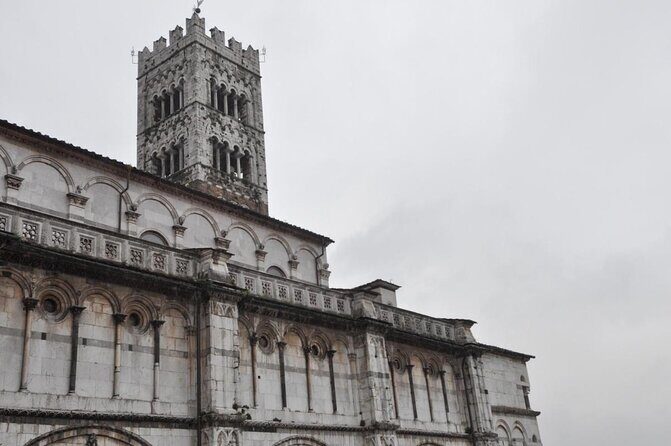
Lucca is famous for a city wall ring that feels almost personal. Not a museum wall behind rope. These are walls you walk near, climb on, look into, and spot from church steps and narrow streets. That’s why this tour works: it turns a “nice old town” into a clear, layered story.
The route is guided, in English, and built around places that touch the wall system. You start at Porta San Pietro, and you finish at Piazza Santa Maria. The whole experience runs about 2 hours, and the group cap is 15 people, which helps keep it moving without feeling like a school bus.
The price is $12.05 per person, which is the real value hook here. You’re paying for interpretation—getting the why behind the stone—while most stops themselves are free.
You can also read our reviews of more walking tours in Lucca
Porta San Pietro to the Wall Line: Getting Oriented Fast
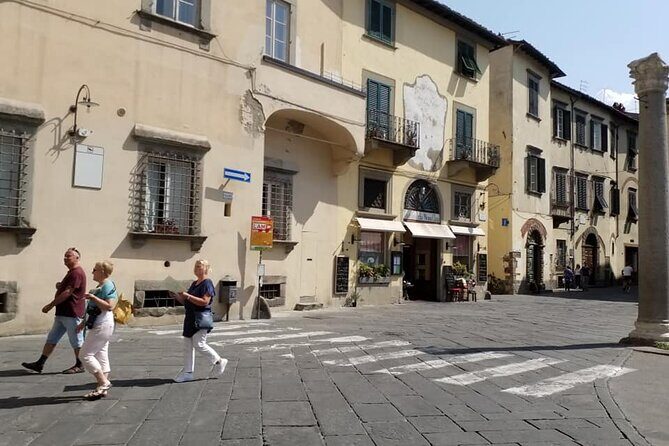
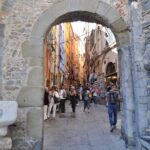
Your walk begins at Porta San Pietro, described as the oldest gate of Lucca’s Renaissance walls. Standing there, you get your first mental map: this isn’t just one wall. It’s a system of gates and transitions, rebuilt and repurposed over time.
This is a good place to start because gates are natural “landmarks.” Once you see Porta San Pietro, it’s easier to understand what comes next: you’ll keep spotting other gates and wall markers, and the city starts to line up in your head.
If you’re the type who likes to understand a place before taking photos, you’ll appreciate how the guide uses each stop to build a connection to the wall ring.
Duomo di San Martino: Viewpoints Plus Underground Rooms
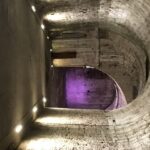
One of the most memorable shifts in the itinerary is Duomo di San Martino. You’ll go up above the Renaissance walls, then you’ll go down into the basement area tied to the San Colombano bulwark.
That up-and-down contrast matters. From above, you can read the city as space and geometry—what the wall ring encloses and how the streets sit inside. Below, you get the practical side: fortifications weren’t only for views. They were engineered structures, with internal rooms and controlled spaces.
This stop is also free in terms of admission for the guided visit. So you get a lot of wall education for a small time investment.
Santa Maria of the Rose: Roman Remains in a Church Setting
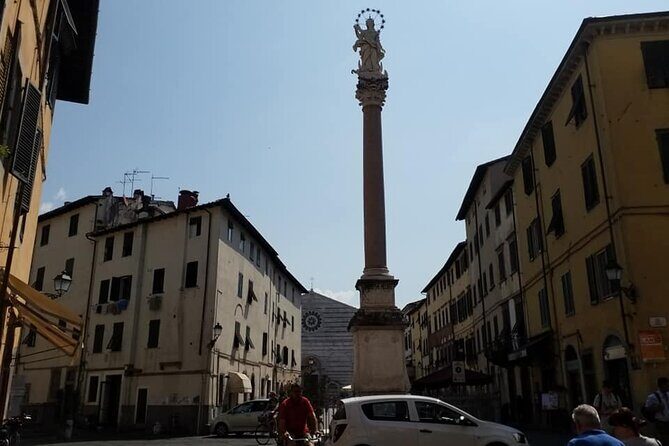
At Church of St. Mary of the Rose, you’re looking at remains of ancient Roman walls. The appeal here is that you’re not seeing archaeology behind glass. You’re seeing traces in a real religious/architectural setting where daily life still fits around history.
Even if you only catch the outlines, this is the moment where the tour clicks for many people: Lucca’s identity isn’t one era. It’s layers. The Roman line shows the earlier defensive logic, and then later rebuilding reshapes it.
This is also where I’d tell you to slow down for a minute. Don’t just look for the “big wall.” Look for transitions: where one wall story seems to meet another.
Santa Maria Foris portam: Finding the Roman Gate’s Location
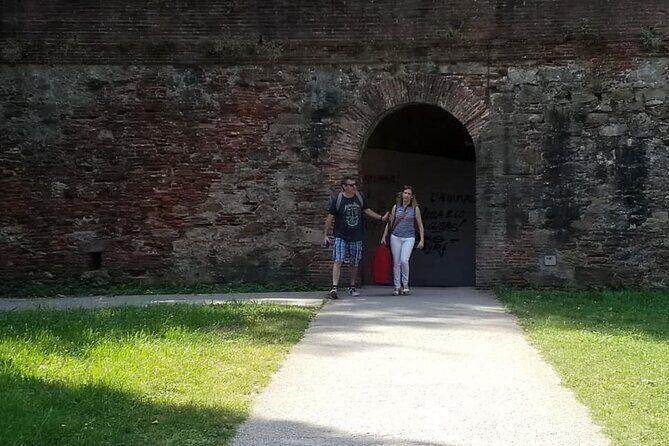
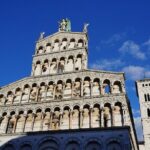
Next comes Santa Maria Foris portam, where the guide points out details like the Colonna Mozza, facade details, and the point where the ancient Roman gate was located.
This stop is a favorite kind of sightseeing: you’re using a church and its architectural features as a clue map. If you’ve ever wondered how a city can still hold ancient street alignment, this is a great answer. You’re literally standing where a Roman gateway sat, then moving into how that area evolved.
One practical tip: take a couple of photos of stone details, not just the whole building. Bas-reliefs, columns, and facade carvings often make the story stick later when you walk away.



Porta San Gervasio and Medieval Gates: The Wall Becomes a Neighborhood
You’ll then reach Porta San Gervasio, a medieval gate of Lucca. Gates like this are more than entrances; they help you see the wall ring as part of daily urban life, not just a boundary.
From here, you also get a run of wall details that keep the walk lively. Colonna della Madonna dello Stellario is short—about 5 minutes—but it’s the kind of stop that rewards curiosity. You’ll look at a bas-relief with a view of the medieval city.
Then comes Via Fillungo, where you observe another gate feature: Porta dei Borghi. This is where the route feels like a real neighborhood walk. You’re not wandering in an empty landscape; you’re moving through the living edges of historic Lucca.
Basilica di San Frediano and the San Frediano Platform Ticket
At Basilica di San Frediano, you’ll ascend to the San Frediano Platform. This is the big “compare-and-contrast” stop, because you’re meant to observe the difference between the Medieval and Renaissance walls, then descend back toward the church.
Here’s the one cost note that matters: the platform admission is not included in the tour price. The rest of the stops are listed as free, but this one may require an extra ticket.
If you hate surprise fees, you might want to budget for that in advance. Still, the reason it’s worth it is simple: viewpoints make architecture understandable. You can’t fully grasp what changed from medieval to Renaissance construction just by reading plaques. From a platform, the shape and placement become obvious.
Piazza Anfiteatro: How Romans Reused Space Through 1800
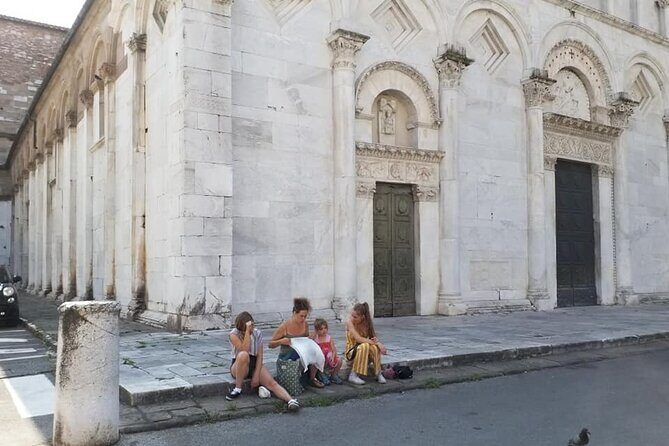
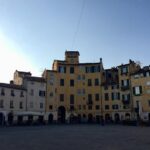
The walk finishes at Piazza Anfiteatro, where the guide explains how this space functioned from Roman times until 1800.
This stop gives you closure. After spending time tracking defensive lines and gates, you shift to a civic/urban reuse story. Lucca didn’t freeze in time; it kept adapting. An amphitheater space becomes part of later city life, and the tour helps you see the continuity.
It’s also a nice ending point because the area feels open enough to breathe, grab a snack on your own, and continue exploring without feeling rushed.
What You Get for $12.05: Value Comes from Focus, Not Volume
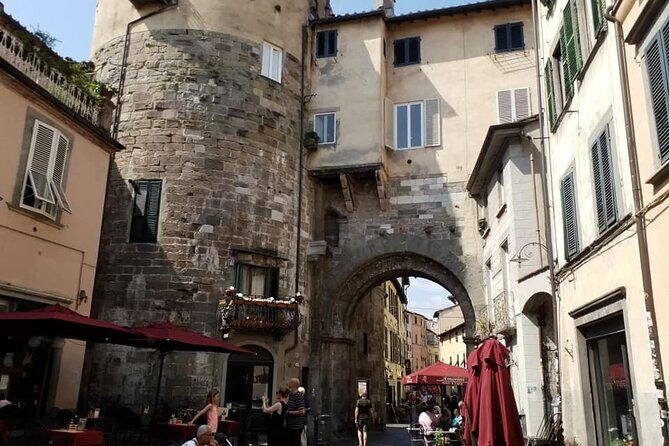
Let’s talk value. $12.05 for about 2 hours is a fair deal when the tour is built around interpretation of multiple major wall-linked sites. Most of the stops are ticket-free, and you still get underground exploration elements and platform comparison.
Also, the group size cap at 15 is important. You’re paying for a guide to connect the dots between:
- gates (Porta San Pietro, Porta San Gervasio, Porta dei Borghi)
- church-linked wall traces (Roman remains and Roman gate location)
- viewpoint platforms where wall construction differences become obvious
- an urban reuse story at Piazza Anfiteatro
If you want a quick “highlights loop,” you might be tempted to take a general city tour. But if you care about how Lucca worked—how it defended itself and how it evolved—this is a sharper use of time.
Pace, Questions, and English: A Few Real-World Considerations
The tour is set for about 10 minutes per stop in the itinerary style, which generally keeps things moving at a steady pace. In a small group, that usually feels efficient.
That said, I’d plan mentally for two realities:
- If you’re hoping for lots of back-and-forth Q&A, don’t count on long pauses at every stop. The route is structured, and the guide may keep the group moving.
- Even though the tour is offered in English, there’s one note in the real-world experience data that language mixing can happen if your group is not purely English-speaking.
If you’re traveling with kids or you want interactive moments, the good news is that the guide has included personal storytelling and local legends in the past (like San Martino and il Povero, Volto Santo, and Santa Zita, plus small wall details people often miss). Just know the format is still fundamentally a guided walk with explanation at each stop.
Best Fit: Who Should Book This Lucca Walls Walk
This is a strong match for you if:
- you like architecture and fortifications, and want to see the story made visible
- you enjoy city “systems” (how a wall ring shapes streets and neighborhoods)
- you want an efficient 2-hour plan that uses Lucca’s own landmarks as your guideposts
It may be less ideal if you’re looking for a broad sampler with lots of time for shopping, long wandering, or a wide range of unrelated sights. The focus stays on walls and what they connect to.
Should You Book This Lucca Walls Tour?
Yes—if your priority is understanding Lucca through its defenses, gates, and wall-linked landmarks. The price is low enough that you’re not taking a big risk, and you get variety: above-the-wall views, church-linked Roman traces, an underground basement visit, and a platform comparison.
Before you go, do two simple things:
- budget for the San Frediano Platform admission since it’s not included
- set your expectations to walls-first sightseeing, not a full-city highlights circuit
If that fits your style, this walk is one of the best ways to make Lucca feel like more than postcard streets.
FAQ
How long is the Lucca walking tour of the walls?
The tour runs for about 2 hours (approx.).
Where does the tour start and end?
It starts at Porta San Pietro and ends at Piazza Santa Maria.
Is it offered in English?
Yes, it’s offered in English.
How much does it cost?
The price is $12.05 per person.
Are tickets included for all stops?
Admission is free for most stops, but the San Frediano Platform has admission ticket not included.
Is coffee or tea included?
No, coffee and/or tea is not included.
What group size should I expect?
The tour has a maximum of 15 travelers.
Can I get a full refund if I cancel?
Yes. You can cancel for a full refund up to 24 hours before the experience starts.