REVIEW · LUCCA
Discover Lucca’s Secrets on a Guided Walking Tour
Book on Viator →Operated by Turislucca · Bookable on Viator
Lucca reveals its secrets fast on foot. This guided walk strings together Roman remains, Puccini sightings, and big-church art into a route that helps you get your bearings quickly—especially if you only have an afternoon. I love how the stops are well spaced for photos and orientation, and I also like the way the tour points out Lucca’s personality beyond the obvious walls.
One caution: the experience can involve a bigger group feel, and some departures don’t provide audio support. If you’re sensitive to hearing the guide, stand where you have a clear view and don’t assume you’ll hear every word from the back.
In This Review
- Key things I’d plan around
- Why this Lucca walk works so well for first-time visitors
- Getting your bearings at Porta San Donato and Piazzale Verdi
- Walking Via San Paolino toward the Roman forum at Piazza San Michele in Foro
- Puccini sightings: the fun side of a city history walk
- From Via Fillungo to Lucca’s tower lineup: Torre delle Ore and Torre Guinigi
- San Frediano Basilica: the Byzantine-style mosaic facade stop
- Piazza Anfiteatro: the Roman oval you can walk around and picture
- Cathedral of San Martino: Pisa-Lucca Romanesque facade and optional inside art
- Pace, group size, and what it feels like in real life
- Value check: is the $18.14 price fair?
- Who should book this tour, and who might skip
- After the tour: a smart add-on if you want more Lucca
- Should you book Discover Lucca’s Secrets on a Guided Walking Tour?
- FAQ
- How long is the Lucca guided walking tour?
- What time does it start?
- Where does the tour meet?
- What language is the tour offered in?
- Is there an entry fee for the Duomo?
- Does the tour use a mobile ticket?
- What is the group size limit?
- FAQ
- Is it possible for children to join without paying?
- Are service animals allowed?
- Do I need to buy tickets for the Porta San Donato or Piazza Anfiteatro stops?
- Are any other admissions included besides the guide?
- Is the route mostly walking?
- What should I do if I’m worried about finding the meeting point?
- Do I need to cancel far in advance to get a refund?
Key things I’d plan around
- Roman street cues: Via San Paolino lines up with the ancient Decumanus Maximus.
- Puccini on the route: you’ll spot the exterior linked to Giacomo Puccini.
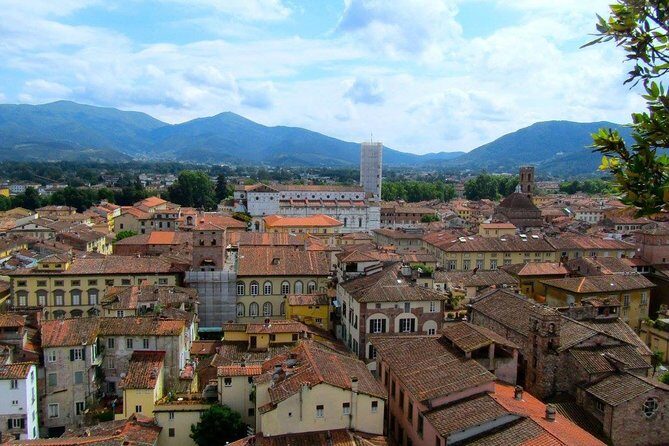
- Towers with character: Torre delle Ore and Torre Guinigi with seven holm oaks.
- San Frediano mosaic facade: Byzantine-style details on the church exterior.
- Piazza Anfiteatro: the oval shape made by building over an ancient amphitheatre.
- San Martino optional inside: the Volto Santo and famous artworks come with a small entry fee.
Why this Lucca walk works so well for first-time visitors
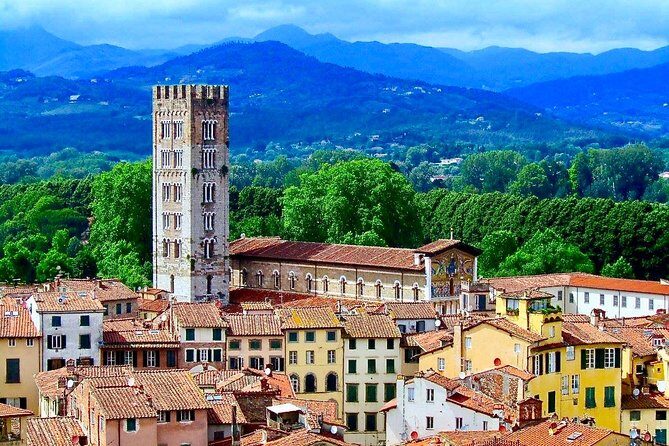
Lucca is one of those places that’s easier to understand after you’ve seen the “logic” behind it. This tour gives you that logic fast. You start by the old gates and walls, then move through the layers: Roman street geometry, medieval churches, and the kind of Renaissance-era civic life that still shows up in Lucca’s public squares and shop-lined lanes.
It’s also a smart value for the price. For about two hours, you’re not just seeing buildings—you’re learning where to stand and what to notice. The route is compact enough to do on arrival day, yet varied enough that you come away with a mental map you can use later.
You can also read our reviews of more walking tours in Lucca
Getting your bearings at Porta San Donato and Piazzale Verdi
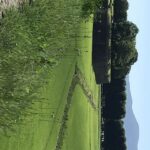
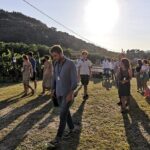
You begin at Piazzale Giuseppe Verdi, right by the old Porta San Donato area and next to the tourist information center. This is a good starting point because it anchors you to Lucca’s biggest “frame”: the Renaissance walls and the idea of entering and exiting the old city.
Practical tip: aim for the tourist office itself, not just the general area pin in your map app. A few people have found the meeting spot stressful if they ended up near the wrong corner—especially when rain makes you rethink everything.
Also, don’t rush this first segment. The tour starts easy, and you’ll get the lay of the land before the streets start tightening and turning into photo-perfect corridors.
Walking Via San Paolino toward the Roman forum at Piazza San Michele in Foro
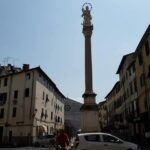
From Piazzale Verdi you follow Via San Paolino, which tracks the ancient Roman street known as the Decumanus Maximus. That single detail changes the whole walk. It turns a normal street stroll into a “time travel” line you can trace with your feet.
At the end, you arrive at Piazza San Michele in Foro, where the Roman forum once sat. Even if you don’t know much about Roman planning, you’ll quickly understand why this mattered: forums were the civic center, so everything radiated from here.
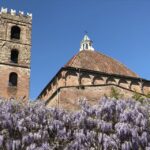
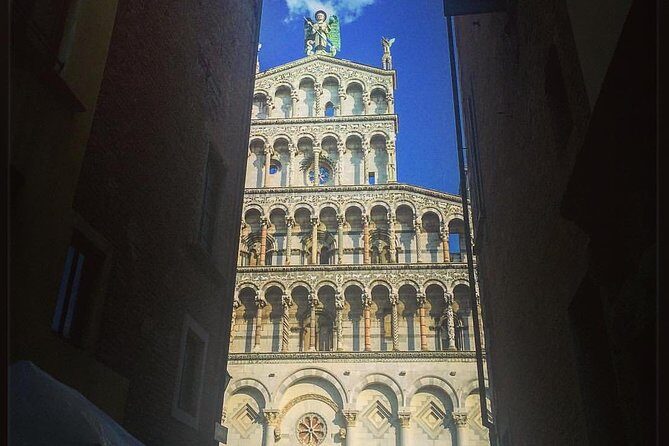
This stop also gives you the chance to photograph the 12th-century facade of the church at the square. You’re not stuck staring at it either—you’ll get the explanation for what you’re seeing, then you can step back and enjoy the view like a local would.
Puccini sightings: the fun side of a city history walk
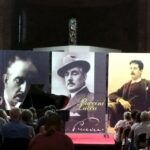
One of the smartest choices on the route is how it brings in pop-culture Lucca without turning it into a theme park. You’ll pass the point where you can spot Lucca’s most famous celebrity, Giacomo Puccini, and see the exterior connected to his birth.
If opera isn’t your thing, don’t worry. The point here is that Lucca didn’t just survive; it produced. Puccini is a shortcut to understanding how a small city can have global reach while still moving at its own tempo.
I like that this moment breaks up the heavier Roman-and-medieval focus. It keeps the tour lively, and it gives you something easy to remember later when you’re wandering alone.
From Via Fillungo to Lucca’s tower lineup: Torre delle Ore and Torre Guinigi
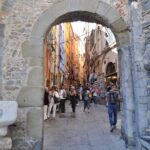
As you move onward, you enter Via Fillungo, Lucca’s main shopping street. This matters because it shows how the city works today, not just how it looked centuries ago. You get traditional shops and medieval-style tower houses all in the same walk, which makes Lucca feel lived-in.
Then comes the tower moment. The tour covers:
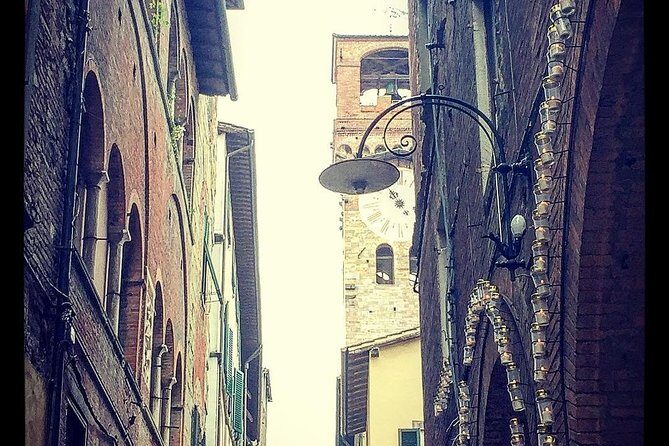
- Torre delle Ore, the clock tower
- Torre Guinigi, topped with seven holm oak trees
These towers are not just landmarks; they’re Lucca’s signature “vertical punctuation.” When you see them in sequence, you understand why locals talk about their city in terms of viewpoints and silhouettes. Even from the street, Torre Guinigi’s tree crown gives you an unmistakable visual anchor—perfect for orientation later.
If you’re traveling with kids or you just want variety, this portion usually lands well because it mixes architecture with visual wow. You don’t need special knowledge to appreciate it.
You can also read our reviews of more guided tours in Lucca


San Frediano Basilica: the Byzantine-style mosaic facade stop
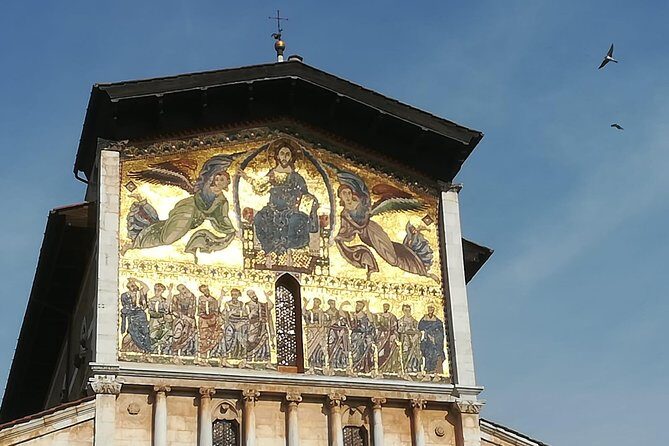
Next up is the Basilica di San Frediano area. The big reason to care here is the mosaic facade—described as Byzantine-style—and it’s the kind of detail that’s hard to notice on your own unless someone points it out.
The tour also uses this moment to connect church art to Lucca’s identity. Lucca’s churches aren’t all about size; they’re about specific features, specific artworks, and specific symbols. The mosaic facade is one of those defining “tells.”
A small drawback to flag: this segment can feel more exterior-focused than interior-focused. The tour is built as an overview, so if you’re craving deep interior time everywhere, you may want to save some extra hours for self-guided church visits after.
Piazza Anfiteatro: the Roman oval you can walk around and picture
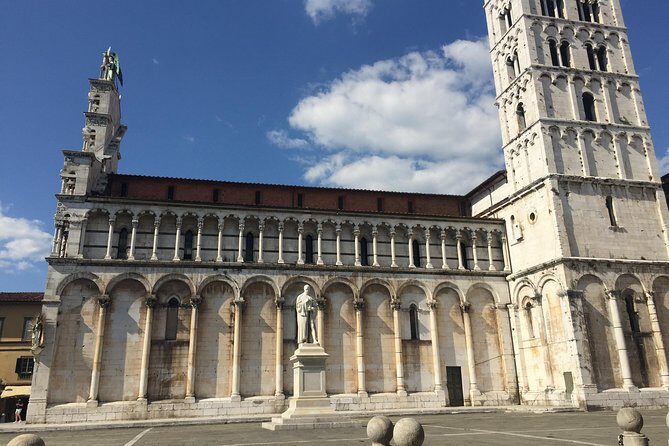
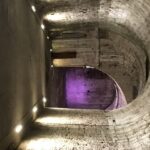
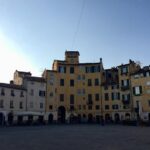
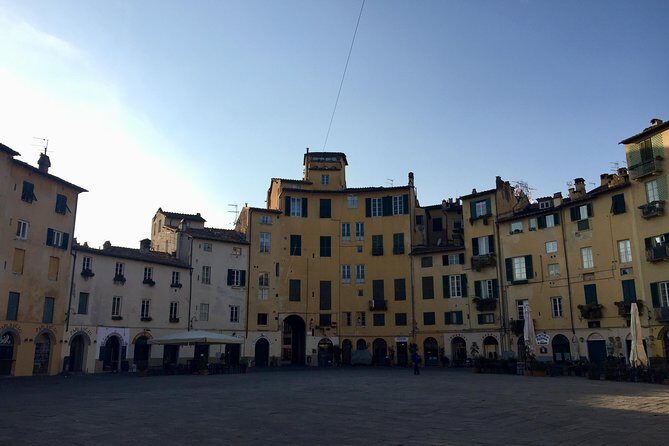
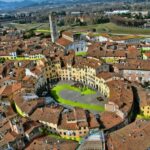
Piazza Anfiteatro is one of Lucca’s most photogenic places, and it’s more than a pretty square. The oval shape is tied directly to the foundations of the ancient Roman amphitheatre. Buildings went up over the older structure, but the geometry survived.
This is one of those Lucca moments where your brain goes, Oh, that’s why it looks like that. The tour helps you interpret the shape instead of treating it like a random design quirk.
You also get the sense of how public space worked in different eras. Roman amphitheatres were about gathering and spectacle, and the surviving piazza shape shows how the city repurposed space while keeping the footprint.
Cathedral of San Martino: Pisa-Lucca Romanesque facade and optional inside art
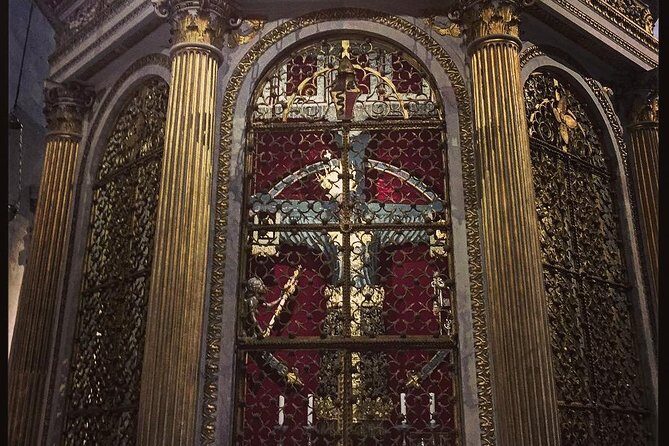
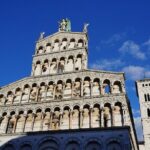
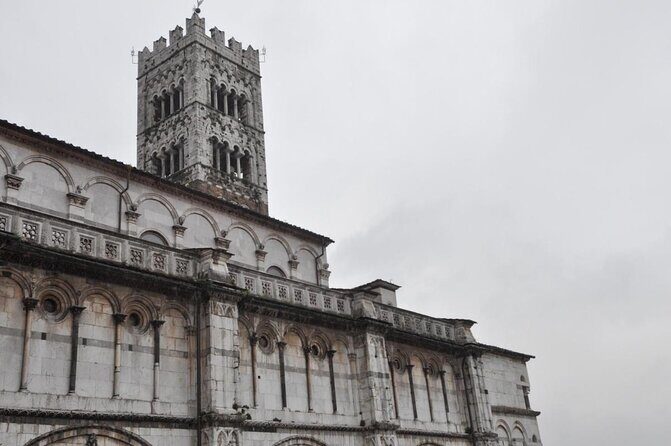
You finish at the Cathedral of San Martino, famous for its unusual Pisa-Lucca Romanesque facade. The exterior is worth your attention, even if you stop there and move on. The facade is a strong visual ending because it’s both distinctive and “built to be seen” from the surrounding medieval streets.
If you still have energy, the guide can continue inside the cathedral for a small entry fee (given as €3.00). Inside, you can see highlights such as:
- the Volto Santo, a wooden crucifix venerated for centuries and tied to Lucca’s identity
- a Last Supper by Tintoretto
- the marble sarcophagus of Ilaria del Carretto in the sacristy, a 15th-century masterpiece by Jacopo della Quercia of Siena
I like ending with an optional interior choice because it lets you match the tour to your travel rhythm. Want maximum art time? Go in. Want an easy landing after a long walk? Stay outside and head out to explore on your own.
Pace, group size, and what it feels like in real life
This is a short tour (about 2 hours), and it’s designed for an overview. That pacing is great if you’re jet-lagged or if you’ve only got one afternoon before dinner plans.
Group size is capped at 50, which helps keep it from ballooning completely out of control. Still, a few people have noted hearing can be difficult when groups run large and audio gear isn’t provided. If you want the best experience, pick a spot where you’re close enough to hear clearly and keep an eye on the guide’s position while moving between stops.
On the plus side, many guides mentioned in the experience feedback show up as energetic and funny, and they make time to answer questions. Names that have popped up include Nadia, Marta, Vittoria, Roberta, Sylvia, and Gabrielle—and that mix suggests the company prioritizes storytelling, not just reciting facts.
Value check: is the $18.14 price fair?
For $18.14, you’re paying for a guided overview that covers major sights without turning it into a museum marathon. You get a professional guide, a route through multiple key areas, and free-admission stops including Porta San Donato and Piazza Anfiteatro.
You also have a built-in optional expense: entry into the Duomo interior is not included, and it’s listed as €3.00 if you choose to go in. Even if you do the interior, that’s still a very modest add-on compared to the cost of many single-attraction tickets in Europe.
Best of all, the tour does the “where should I look?” work for you. That’s where the value really is. If you’ve ever walked around an old town and felt like you were guessing, this kind of orientation removes that guesswork.
Who should book this tour, and who might skip
I think this is a strong fit for:
- first-time Lucca visitors who want structure
- people who want a compact Roman-to-medieval overview
- anyone interested in Puccini and Lucca’s cultural footprint
- travelers who like walking and taking photos of facades, piazzas, and towers
You might consider skipping or pairing with something else if:
- you need lots of interior time at multiple churches
- you’re very hard of hearing and want guaranteed audio equipment
- you prefer totally self-guided pace with no group rhythm
After the tour: a smart add-on if you want more Lucca
Once you’ve got your bearings, you can keep the momentum. A tip that shows up in the local travel rhythm: rent a bike and ride the city walls. One review I saw mentioned about €5 for a bike and doing a full loop along the elevated walkway. If the weather is kind, it’s a fun way to see Lucca’s scale from above after you’ve learned where the old city’s “spine” runs.
Should you book Discover Lucca’s Secrets on a Guided Walking Tour?
Yes—with a couple of practical caveats.
Book it if you want an efficient, walkable introduction that connects Roman streets, standout squares, Puccini references, and the key church moments leading to Duomo di San Martino. It’s also a good way to avoid wasting time wandering without a plan.
Skip it or be more selective if you strongly rely on clear audio and hate group logistics. In that case, stand near the front and plan to ask questions, or consider pairing this with a smaller guided experience later.
FAQ
How long is the Lucca guided walking tour?
It runs for about 2 hours.
What time does it start?
The start time listed is 2:00 pm.
Where does the tour meet?
The meeting point is Piazzale Giuseppe Verdi, 55100 Lucca, Italy. The end point is Duomo di San Martino, Piazza Antelminelli, 55100 Lucca, Italy.
What language is the tour offered in?
The tour is offered in English.
Is there an entry fee for the Duomo?
The Duomo interior is not included. If the guide continues inside, there is a €3.00 entrance fee.
Does the tour use a mobile ticket?
Yes, it includes a mobile ticket.
What is the group size limit?
The tour has a maximum of 50 travelers.
FAQ
Is it possible for children to join without paying?
Children ages 0-14 are free with a paid adult.
Are service animals allowed?
Service animals are allowed.
Do I need to buy tickets for the Porta San Donato or Piazza Anfiteatro stops?
Those stops are marked as free.
Are any other admissions included besides the guide?
Only the guided experience is included. Any optional admissions (like entering the cathedral) are not included.
Is the route mostly walking?
Yes, it is a guided walking tour across central Lucca.
What should I do if I’m worried about finding the meeting point?
Use Google Maps to locate Piazzale Giuseppe Verdi and get there early so you’re not rushed when the streets and corners look similar.
Do I need to cancel far in advance to get a refund?
You can cancel up to 24 hours before the experience start time for a full refund.