REVIEW · LUCCA
Lucca Walking Tour with Audio and Written Guide by a Local
Book on Viator →Operated by Walking Cap · Bookable on Viator
Lucca rewards slow wandering. This digital walk, made with a local in mind, helps you hit the city’s big landmarks without feeling rushed, and you can linger when the street scene steals your attention. I like the audio + written guide that keeps the story straight, and I also like that the route is paced for real life—stop for photos, restart when you’re ready, and snack guilt-free. The main drawback to plan around: you’ll need a smartphone with internet to run the guide, and a couple stops cost extra tickets.
What makes this feel practical is how the route mixes “wow outside” moments with deeper art stops you can choose to enter. You’re looking at about 4 to 5 hours, with a set sequence from Porta San Pietro to Basilica di San Frediano, plus many free sights along the way.
In This Review
- Key highlights worth knowing before you go
- How the self-guided format keeps Lucca from feeling like a checklist
- Starting at Porta San Pietro: the Renaissance wall entrance with a purpose
- Piazza Napoleone: political power now hosting concerts and festival nights
- Duomo di San Martino: what to notice outside, plus optional inside masterpieces
- Torre delle Ore: the tower skyline that used to prove who mattered
- Chiesa di San Michele in Foro: the 4-meter archangel and a glow legend
- Torre Guinigi: the climb is the point, and the view answers the story
- Piazza Anfiteatro: Roman foundations under a modern elliptical square
- Basilica di San Frediano: ending your route with early medieval roots
- Price and value: why $6.36 can be a bargain in Lucca
- How long it really takes (and how to plan your breaks)
- Practical tips that keep the experience smooth
- Who this walk suits best
- Should you book the Lucca Walking Tour with Audio and Written Guide?
- FAQ
- How long is the Lucca walking tour?
- Where does the tour start and end?
- Do I need tickets for all the stops?
- What do I need to use the digital guide?
- Is the guide audio, written, or both?
- Can I use headphones?
- How big is the group?
- Is service for cancellation offered?
- Is the tour suitable for most people?
Key highlights worth knowing before you go
- A route designed for your pace: audio guides you step-by-step, and you control when you stop.
- Smartphone-based navigation: you can add the route to your map and follow along without hunting.
- Most stops are free: you only pay extra for a few optional interiors and viewpoints.
- Lucca’s skyline explained: the guide connects towers with noble status, not just random climbing.
- Torre Guinigi is built into the walk: you’ll understand why that top garden matters before you reach the steps.
- Small-tour feel: capped at 104 people, so it doesn’t feel like a megabunch moving as one.
How the self-guided format keeps Lucca from feeling like a checklist
Lucca is a city that begs for wandering. The best part of this experience is that it doesn’t trap you in a rigid group tempo. You move at your own pace, with an audio track that tells you what you’re looking at and what to notice—facade oddities, symbolic statues, why certain towers were built, and what the Roman ruins are really hiding.
I like that the guide isn’t just names and dates. It adds the kind of “wait, that’s why” details that make you slow down naturally. You’ll get context as you walk: why Porta San Pietro matters on the Renaissance walls, why Piazza Napoleone became the city’s political stage, and why Lucca’s towers weren’t just architecture—they were social signals.
One more practical point: this is built to work with your phone (internet required), so it’s best if you arrive with a charged battery and you’re comfortable following on-screen directions.
You can also read our reviews of more walking tours in Lucca
Starting at Porta San Pietro: the Renaissance wall entrance with a purpose
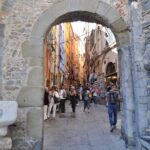
Your walk begins at Porta San Pietro, the south entrance gate of Lucca’s wall. The guide points out that this gate was built on the road leading to Pisa in 1566—a detail that instantly makes the wall feel like infrastructure, not just a pretty boundary.
If you arrive early in the day, this is a good “orientation moment.” You can take a breath, read the surrounding cues, and get a feel for how Lucca channels visitors through its ring of defenses. It’s also free and quick, so it won’t steal time from the parts of Lucca you’ll want to linger over.
Piazza Napoleone: political power now hosting concerts and festival nights
Next up is Piazza Napoleone, also known to locals as Piazza Grande. This square used to sit at the heart of Lucca’s political power, and the guide helps you understand why that matters: squares like this weren’t only for events—they were where decisions happened and crowds gathered.
Today it’s a lively stop with cultural events and concerts, including the Lucca Summer Festival. Even if you’re not there during festival season, you’ll feel the square’s role as a meeting point. It’s free, easy, and a nice reset between the wall gate and the religious/art stops that come next.
Duomo di San Martino: what to notice outside, plus optional inside masterpieces
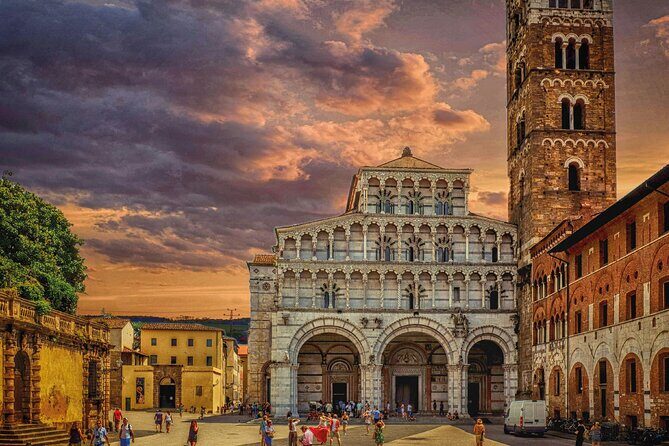
At Duomo di San Martino, the big story is architectural oddness: the facade is asymmetrical. The guide explains why—one of the arches from the 12th century is smaller because a pre-existing bell tower got in the way. That’s the kind of detail that makes you stop, tilt your head, and look again.
From the walk’s core plan, you’ll see the church from the outside. Entrance is optional. If you choose to go in, the guide highlights major works you can actively look for, not just vaguely “assume are inside”:
- the funerary monument of Ilaria del Carretto
- Ghirlandaio’s Sacred Conversation
- the Last Supper by Tintoretto
- an altarpiece by Fra’ Bartolomeo
The practical consideration here is time. Inside visits take longer, and ticket details for the Duomo are not included in the basic walk (so plan for that if you want to go beyond the exterior). If you’re short on time, you can still get a lot from the facade explanation alone.
Torre delle Ore: the tower skyline that used to prove who mattered

Lucca is famous as the city of 100 churches, but the guide shifts your attention to a different skyline power play: in the Middle Ages, noble families built towers, and the higher the tower, the more important the family.
This is Torre delle Ore, and the stop is a good place to absorb the city’s vertical history. You’ll understand why towers weren’t just “things to climb,” but status symbols built into the fabric of neighborhoods.
Entrance for this stop is not included, so you’ll be making your choice: if you want an interior visit or viewpoint access, budget time and ticket cost separately. If you just want the meaning behind the skyline, you can appreciate the idea on the street without paying for more.
You can also read our reviews of more guided tours in Lucca


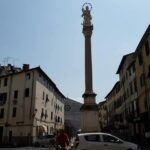
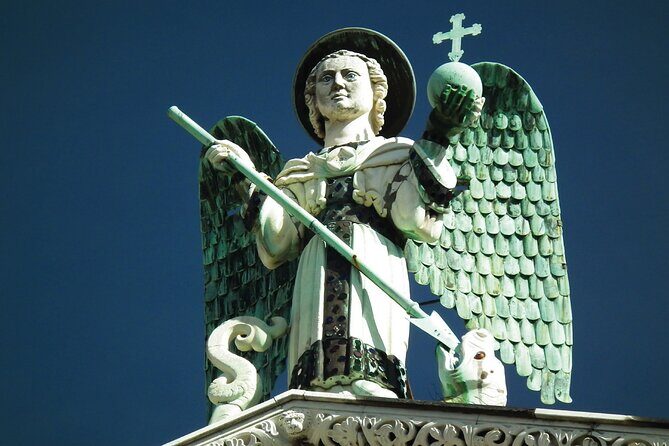
Chiesa di San Michele in Foro: the 4-meter archangel and a glow legend
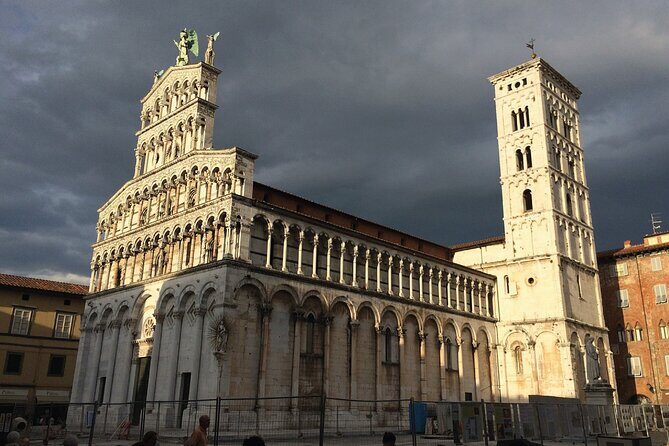
Now you’re in Piazza San Michele in Foro, the ancient Roman square. The guide frames the setting by pointing out the church dates back to the 8th century and is dedicated to the archangel Michael.
Here’s the standout: on top of the church is a large marble statue of Archangel Michael, about 4 meters high. The guide mentions metal-foil style wings and the dragon theme—Michael portrayed defeating the dragon. There’s also a legend tied to bright days: people say you might see a glow from the statue, supposedly linked to an emerald set in ancient times, an emerald that was never found.
This stop is free and a perfect “take your time” pause because the setting is atmospheric and the story gives you something specific to watch for—rather than only appreciating the view.
Torre Guinigi: the climb is the point, and the view answers the story
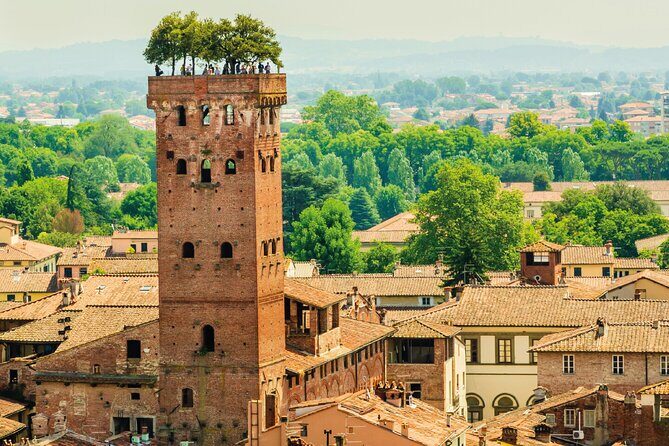
Then comes the most physically demanding part: Torre Guinigi. The guide makes the tower easy to recognize because of the trees growing on top—once you spot it, you’ll start mentally planning how long the climb will take.
You’re climbing 230 steps to reach a tower about 45 meters high. Yes, it’s a workout. But the guide’s framing helps you understand why the climb is worth it: this tower isn’t just a viewpoint; it’s another example of how Lucca’s elite marked their identity in stone and height.
Entrance costs 8€ (not included in the walk). If you’ve budgeted for one paid viewpoint, this is the one that feels most “Lucca-specific.” If your legs are tired, you can always choose to skip the climb—just keep the audio running so you still get the context.
Piazza Anfiteatro: Roman foundations under a modern elliptical square
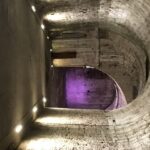
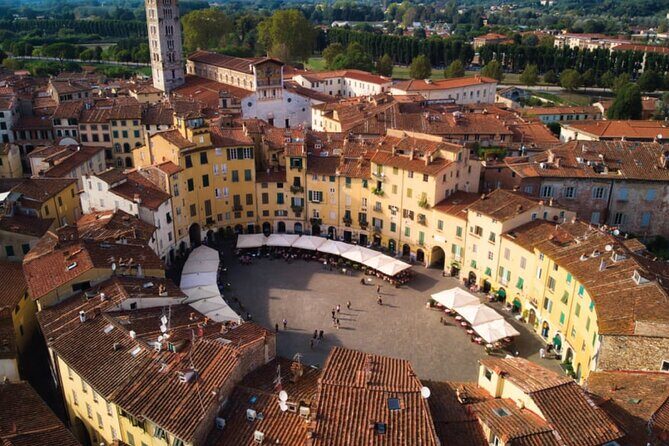
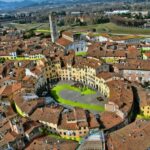
Piazza Anfiteatro is shaped like an ellipse, and the guide explains how you access it through four vaulted doors. Even though you won’t necessarily see the remains above ground, the big win here is what’s underneath.
Beneath the square sit foundations of an ancient Roman amphitheater from the 2nd century AD, once used for gladiator fights. The guide turns the square into a time machine: you stop looking at a nice public space and start picturing the crowding and spectacle that used to sit right under your feet.
This is free and quick, but it’s also one of those places where a short pause with the audio on makes your whole walk feel more connected.
Basilica di San Frediano: ending your route with early medieval roots
Your walk finishes at Basilica di San Frediano in Piazza San Frediano. This end point works well because the basilica gives you a quiet, reflective closing after towers and city power stories.
The guide shares a strong origin legend: the basilica is traditionally said to have been founded by San Frediano, described as an Irish prince who became a hermit on Mount Pisano and later served as one of Lucca’s bishops between 560 and 588. The first written mention of the basilica dates to 685, when it’s cited as basilica Longobardorum.
Entrance costs 3€ (not included). Even if you don’t go in, the location makes sense as a finale. You’ve seen defensive walls, political space, art-focused religion, noble status towers, Roman layers, and then you land in a long-lived place of worship tied to the city’s early story.
Price and value: why $6.36 can be a bargain in Lucca
At $6.36 per person, this walk is priced for maximum flexibility. You’re not paying for a human-led lecture every step of the way; you’re paying for a well-structured route plus an audio/written guide that helps you interpret what you’re seeing.
Here’s why that feels like good value:
- Many stops are free, so you’re not forced into a heavy admissions day.
- A couple sights that cost extra are optional (the Duomo interior, Torre delle Ore access if you want it, Torre Guinigi, and Basilica di San Frediano).
- The format lets you slow down without breaking the plan—useful in Lucca, where side streets, gelato, and small churches can easily steal time.
If you prefer guided tours that keep you moving no matter what, you might find this style less hands-on. But if you like autonomy with guidance, this is a smart way to spend a half-day.
How long it really takes (and how to plan your breaks)
The duration is listed as about 4 to 5 hours. In practice, your timing will depend on two choices:
1) whether you climb Torre Guinigi and whether you add any other paid entries
2) how long you linger at storytelling stops like San Michele in Foro and Piazza Anfiteatro
If you want to keep things smooth, I’d plan one longer pause for the view climb and shorter pauses for photos and facade details. The guide’s pace is designed to help you stop and restart, which is perfect if you like to wander into a café and then jump back on track.
Practical tips that keep the experience smooth
- Bring headphones if you can. The audio works through speakers too, but headphones make your walk easier in busy spots.
- Charge your phone. The guide depends on a smartphone with internet connection.
- Expect that a few monuments have separate ticket costs, so keep a little cash/card handy for Torre Guinigi and Basilica di San Frediano, and any optional entries.
- Keep an eye on the phone screen at transition points. The route is easy to follow, but you’ll move faster if you glance at directions when you change streets.
Also, the tour notes this is near public transportation and is set to run across a wide daily window in the booking period, so you can usually fit it into a day even if your schedule is imperfect.
Who this walk suits best
This experience is ideal if you:
- want a structured route without losing your freedom
- like learning what you’re seeing as you walk
- prefer audio guidance you can pause mid-snack
- don’t mind paying small extra ticket amounts for one or two top sights
It’s also a good match for families, since the path is set up for easy pacing, and there’s help available if something goes wrong with the guide.
Should you book the Lucca Walking Tour with Audio and Written Guide?
Yes, if you want a low-cost way to see Lucca’s main landmarks and understand them. This walk is especially worth it for the way it explains towers, statues, and architectural quirks while you move—so the city feels like a story instead of a stack of photos.
I wouldn’t book it if you hate smartphone-based navigation, or if you want a live guide talking continuously the whole time. But for most people who like to wander and learn at their own speed, this is a strong use of time in Lucca.
FAQ
How long is the Lucca walking tour?
It takes about 4 to 5 hours.
Where does the tour start and end?
It starts at Porta San Pietro and ends at Basilica di San Frediano (Piazza S. Frediano).
Do I need tickets for all the stops?
No. Many stops are free. Some optional sites have separate ticket costs, including Torre Guinigi (8€) and Basilica di San Frediano (3€), and other entries may not be included.
What do I need to use the digital guide?
You need a smartphone with an internet connection. Details to activate the digital guide are provided in your voucher.
Is the guide audio, written, or both?
It includes audio plus written guidance.
Can I use headphones?
Yes. You can hear the audio through speakers or through headphones if you have them.
How big is the group?
The tour has a maximum of 104 travelers.
Is service for cancellation offered?
Free cancellation is available. You can cancel up to 24 hours in advance for a full refund; within 24 hours, the amount paid is not refunded.
Is the tour suitable for most people?
The tour says most travelers can participate. Service animals are allowed as well.