REVIEW · LUCCA
From Lucca to Pisa: Self-Guided Bike Tour
Book on GetYourGuide →Operated by Tourist Center Lucca · Bookable on GetYourGuide
Cycling to Pisa feels like a shortcut.
This one-day ride turns Tuscany into something you can do at a human pace: you follow Serchio River scenery on quiet roads, then end right in front of the Leaning Tower. I like the simple, self-guided setup, especially the phone-holder GPS directions on the handlebars. I also love the way the route mixes dirt, asphalt, and village streets without feeling like a techy challenge. One real drawback to plan for: your phone can drain fast, and a few stretches include busier roads or mixed surfaces.
What makes it especially fun is that it is family-friendly in the practical sense. You can choose a trekking bike or an e-bike, take a break at San Giuliano Terme, and still have time to enjoy Pisa instead of just passing through. The outing works as a calm counterweight to long museum days in Tuscany.
Also keep in mind the bikes are big and you’ll handle them yourself. If you return by train, bikes fit in train storage wagons, but you may need to carry the bike down at Lucca because station elevators can be a problem.
In This Review
- Key points before you pedal
- Getting started: Lucca station meeting point and setup time
- A practical tip
- The ride out: Serchio River scenery and Monti Pisani roads
- Where the route needs extra awareness
- App-guided navigation: great when it works, annoying when it drains
- My advice for avoiding app stress
- The San Giuliano Terme stop: a well-timed reset
- A caution
- Arriving in Pisa: Piazza dei Miracoli and the Leaning Tower photo
- Photo strategy that saves time
- Return plans: biking back or taking the 25-minute train with your bike
- Option A: Ride back to Lucca
- Option B: Take the train back with your bike
- Trekking bike vs e-bike: choosing based on your day, not your ego
- When the e-bike is worth it
- When a trekking bike can work
- Bike reality check
- Service quality: where the tour really feels easy
- Small things that add up
- Price and value: what you’re actually paying for
- Who gets the best value
- Who this tour suits best (and who should skip it)
- Who might find it less ideal
- Should you book this Lucca to Pisa bike ride?
- FAQ
- Where is the meeting point?
- How far is the ride from Lucca to Pisa?
- How long does it take to ride to Pisa?
- Is there a stop on the route?
- Are e-bikes available for teens?
- What’s included with the rental?
- Is food or drink included?
- Can you attach a trailer or tag-along to the bike?
Key points before you pedal
- Serchio River route: Scenic, mostly easy-going riding that follows the water for long stretches
- App with turn-by-turn help: Phone holder included, so you can ride while the directions do the thinking
- E-bike makes it forgiving: A strong value add if you want less effort in heat or with less riding experience
- San Giuliano Terme pause: Drink break around the central square area near the Spa
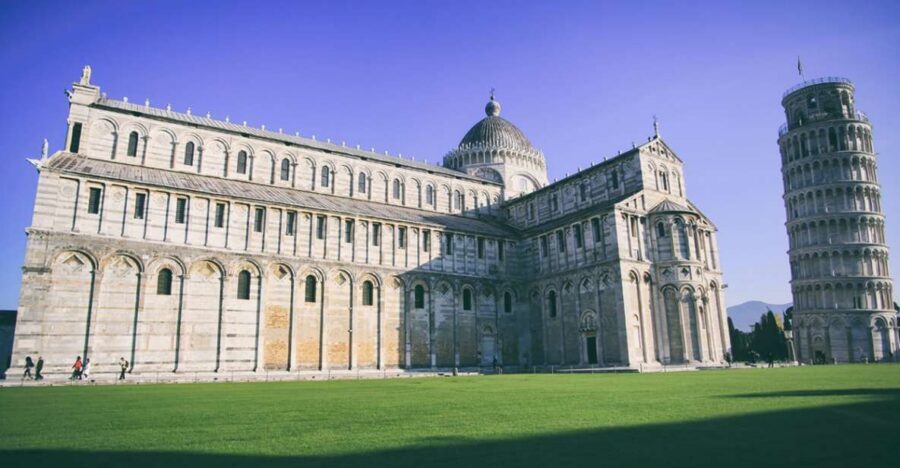
- Pisa payoff is instant: You arrive at Piazza dei Miracoli for the classic Leaning Tower photo
- Return options: Ride back or take the 25-minute train, with bike storage on board
Getting started: Lucca station meeting point and setup time
You meet just outside the Lucca train station, on the left side of the square. This is handy because you can plan around public transit, and it also means you’re not hunting for a random address in the city center.
When you arrive, the shop experience is part of the value. Setup is not just handing you a bike and waving goodbye. You get your bike fitted and you’ll get help getting going with the system. Many first-timers appreciate the hands-on help because the e-bike controls and the app can be confusing until someone shows you what matters.
From there, your job is simple: follow the itinerary in the smartphone app. You’ll have a phone holder on the handlebars, plus a cell phone holder so you can see the route while riding. Add in a bike lock and a repair kit, and you’re not doing this with zero backup.
You can also read our reviews of more cycling tours in Lucca


A practical tip
Before you roll out, do a quick check: phone brightness up, volume on, and route downloaded or ready to run. If your battery is already low in Lucca, this ride can punish you.
The ride out: Serchio River scenery and Monti Pisani roads
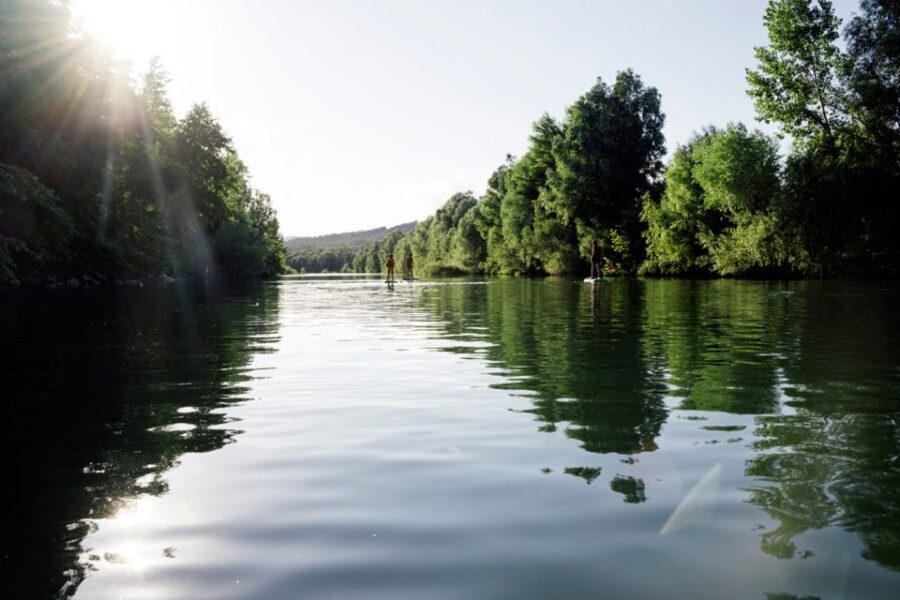
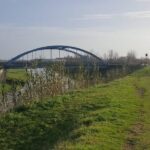
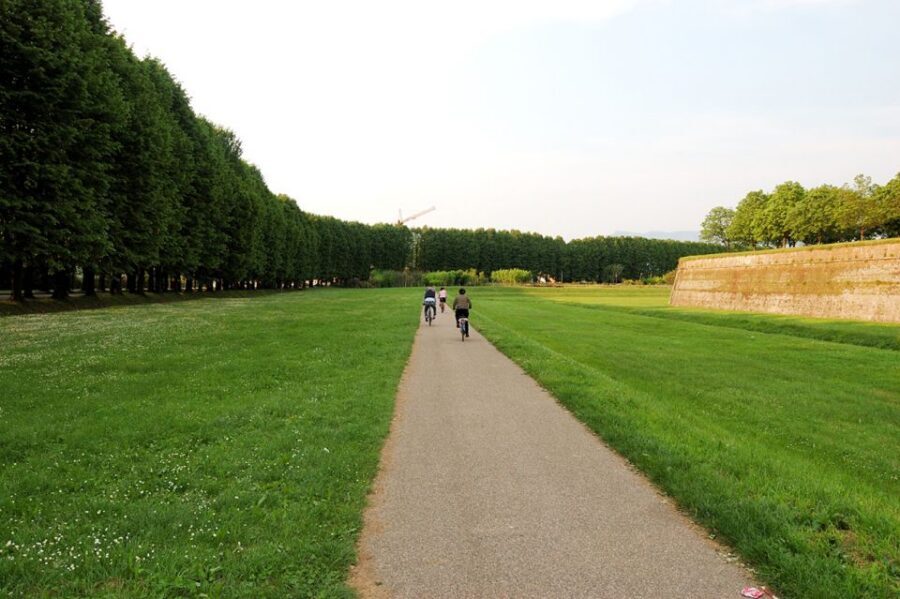
The outward ride is built around an easy/intermediate idea: start in Lucca, follow secondary country roads around Monti Pisani, and ride along the Serchio River for long stretches. The distance is about 33 kilometers one way, and most people take 2 to 4 hours depending on pace, heat, and how often you stop.
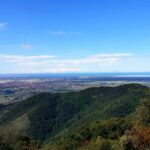
The scenery is the point. This is the kind of Tuscany that feels like you’re seeing real life: fields, low hills, and small patches of countryside roads that don’t scream tourist strip. You’ll also ride through a mix of surfaces: dirt, asphalt, and cycle tracks.
That mixed surface mix is where “easy” ends and “pay attention” begins. One part might feel like a smooth path, and another might be harder packed or slightly rough. You don’t need mountain-bike skills, but you should ride like you mean it. Keep both hands on the bars, slow down on gravel bits, and don’t assume every stretch is equally clean.
Where the route needs extra awareness
Expect a few moments where you’ll be near busier roads or roundabouts. Reviews note that these segments are short, and cars generally treat cyclists with respect. Still, if you’re nervous around traffic, plan to go slow and focus on the app for the exact timing of turns.
App-guided navigation: great when it works, annoying when it drains
The app is central to the whole experience. The ride is self-guided, and the itinerary is delivered through your smartphone, which means the route is only as good as your phone setup.
Most people find the directions workable, and the included phone holder makes a big difference. You’re not stopping constantly to check your map, and the GPS guidance keeps you from guessing.
Still, there are two common friction points:
1) Battery drain. Several riders warn that the app can drain power surprisingly fast.
2) Performance and accuracy. A few people note the app or map behavior can feel slow depending on the phone, and one mention says more cell-data can help route accuracy.
You can also read our reviews of more guided tours in Lucca



My advice for avoiding app stress
Bring a power bank or charging cable if you have one. Start with a fully charged phone, and consider downloading offline maps when the shop offers help. If you end up needing to scan a QR code for the return route, do it once at the right moment and save the screen so you do not waste time later.
Also, if you’re the kind of rider who hates technology surprises, test your app before you leave the shop door. One quick test can save a lot of stress on the road.
The San Giuliano Terme stop: a well-timed reset
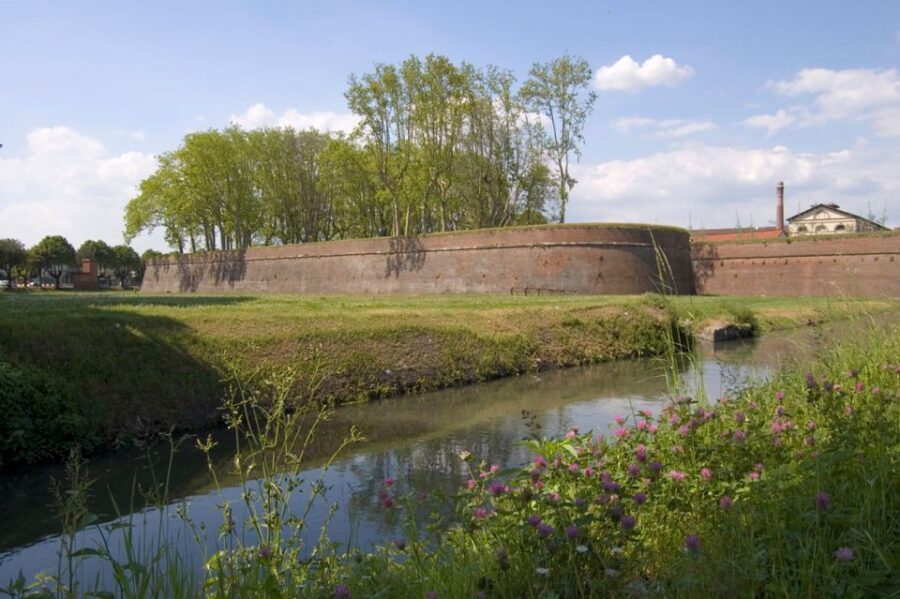
After about 20 kilometers, you stop at San Giuliano Terme for a drink in the charming central square area in front of the Spa. This is a smart checkpoint. You’re far enough along that you’ll feel like you earned the pause, but not so far that you’re starting to overheat or get mentally tired.
This break is also helpful because it gives you time to regroup on navigation. You’ll see where you are, confirm you have battery and signal, and refill water before the final push to Pisa.
What’s good here is that it is not framed as a museum visit. It’s a simple life stop: sit down, drink something cold, and let your legs recover.
A caution
If it’s very hot, treat the stop like a hydration checkpoint, not just a snack break. Tuscany can cook you even when the ride looks “easy” on paper.
Arriving in Pisa: Piazza dei Miracoli and the Leaning Tower photo
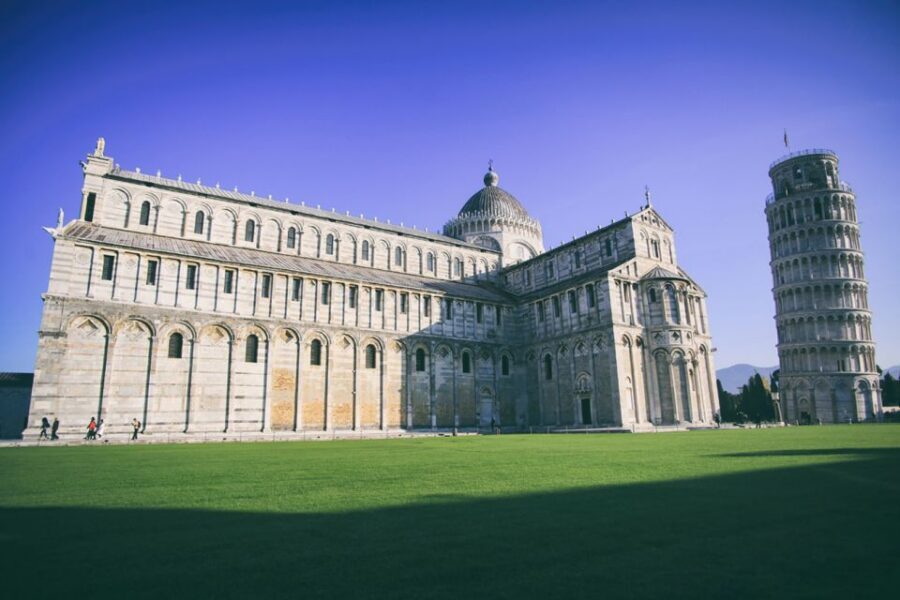
Your ride ends in Piazza dei Miracoli, in front of the Leaning Tower of Pisa. That is the payoff. You go from countryside roads to one of the most recognizable spots in Italy without the usual logistics hassle.
The key thing to plan: the Leaning Tower area is not right next to Pisa train station on foot. One review calls out that it is not a short 10-minute walk from the station and suggests taking a cab because the walk can easily be 30 minutes or more.
If you plan to climb the tower, build in extra time. One practical note: leave 2.5 to 3 hours between picking up your e-bike and your ticket time. That gives you room for slow walking, photos, and any queue timing.
Photo strategy that saves time
If you want a classic leaning tower shot, aim for early in your arrival window. The area can get busy, and you do not want to rush at the end of a day you worked for.
Return plans: biking back or taking the 25-minute train with your bike
You have two return options, and both can make sense.
Option A: Ride back to Lucca
You can cycle back via a direct route or follow the app. Reviews mention the return is often more straightforward than the outbound in some parts, and it can be a nice way to keep the day active.
But here’s the tradeoff: you need daylight and energy. If you want a relaxed pace and you’re also planning time in Lucca or Pisa, start early. Some riders say you definitely want to start early if you want to bike back.
Option B: Take the train back with your bike
The train ride is about 25 minutes. Bikes fit into the train’s storage wagons, and tickets can be bought in advance from the local partner.
This option protects your time and your legs. You get to explore Pisa without worrying about turning it into a second long ride.
One more practical detail: bikes can be too big for station elevators. Plan on carrying your bike down in Lucca. The good news is there’s a ramp to exit the station area, which can help, but it still means you’re not avoiding the physical handling part.
Trekking bike vs e-bike: choosing based on your day, not your ego
You can rent either a trekking bike or an e-bike.
- E-bike eligibility: for people over 155 cm and over 14 years old
- Trekking eligibility: for people over 150 cm
- Bike weight guidance: frames are guaranteed up to 130 kg
- No add-ons: no seat, trailer, or tag-along can connect to these bikes
So what should you choose?
When the e-bike is worth it
If you want to arrive in Pisa feeling like you still want to explore, the e-bike is the obvious win. Multiple riders recommend the upgrade, especially in heat. It makes the ride feel more like transportation with scenery, not a training session.
When a trekking bike can work
If you’re comfortable riding, the route is often described as easy/intermediate. One review says most people would be fine on a standard bike in terms of flatness, but also points out the route includes gravel trails and dirt stretches. So trekking bikes can work, but I’d only choose that if you’re okay with mixed surfaces and more pedal effort.
Bike reality check
The bikes are described as large in some reviews. That matters mainly if you’re thinking about elevators, tight spaces, or quick bike handling at stations.
Service quality: where the tour really feels easy
The most praised part is the human help at the bike shop. Setup, instructions, and practical problem-solving come through again and again.
One review specifically thanks Gianluca (owner) for walking people through what to do and for being genuinely helpful. Another rider mentions the shop helped download the app offline and also helped purchase train tickets. That kind of support matters because this is a self-guided tour: if navigation goes sideways, you want a place where someone can fix it fast.
There’s also mention that the shop has a friend location at the train station in Pisa. That supports smooth logistics if you do a one-way style setup and want to keep the return simpler.
Small things that add up
- You get a lock, so you can stop and wander
- You get a repair kit, which adds confidence if you hit a puncture
- The shop can help you get the route app running the right way
Price and value: what you’re actually paying for
The price is listed as $34 per person for a 1-day experience. On paper that sounds simple. In real life, you’re paying for a package that covers the hard parts:
- The bike rental (trekking bike or e-bike)
- The phone tools (holders)
- The navigation support through the app
- Safety basics (bike lock, repair kit)
Food and beverages are not included, and return train tickets are not included. But you still get a very structured day without paying for a full guided tour.
Who gets the best value
You get the best value if you:
- want countryside scenery without driving
- prefer a DIY route with just enough structure
- want to reach Pisa efficiently and then walk the big sights
- like the idea of having backup logistics through the train option
If you already plan to spend much of your day in Pisa, this can be a high-value way to add countryside time without burning hours on transfers.
Who this tour suits best (and who should skip it)
This works best for people who like cycling but do not want it to eat the whole trip. It’s great for families and mixed-experience groups because you can pick e-bike support if energy or confidence is a concern.
It’s also ideal if you are okay following an app and handling your own route choices. You’ll be riding the Serchio River line, taking an organized break, then arriving at Pisa at the exact right spot for the Leaning Tower photo.
Who might find it less ideal
If you hate app navigation or you don’t want to manage phone battery life, you may find this stressful. Also, if you’re very anxious about any road mixing or you cannot handle carrying a bike at the station, the train return may feel more work than you expect.
Should you book this Lucca to Pisa bike ride?
I’d book it if you want a Tuscany day that feels local, scenic, and efficient. The route payoff is excellent: you ride countryside roads, stop for a real break at San Giuliano Terme, then finish in Piazza dei Miracoli for the Leaning Tower moment.
Book it especially if you’re choosing an e-bike, want less effort in warm weather, or just want your day in Pisa to feel like an exploration, not a chore.
If you have limited phone battery comfort, plan for it with a power bank and a quick app test at the shop. And if you’re sensitive to carrying bikes at stations, decide early whether you’ll bike back or use the train, based on your own comfort handling the bike.
If you do those few planning checks, this is an easy-to-love way to connect Lucca and Pisa on two wheels.
FAQ
Where is the meeting point?
You meet just outside the Lucca train station, on the left side of the square.
How far is the ride from Lucca to Pisa?
The route covers about 33 kilometers one way, with an easy/intermediate pace.
How long does it take to ride to Pisa?
The ride to Pisa takes about 2 to 4 hours.
Is there a stop on the route?
Yes. After around 20 kilometers, you stop in San Giuliano Terme for a refreshing drink in the central square in front of the Spa.
Are e-bikes available for teens?
E-bikes are available for people over 155 cm and over 14 years old.
What’s included with the rental?
Included items are the trekking bike or e-bike, a bike lock, an app with the itinerary, a cell phone holder for the handlebar, and a repair kit.
Is food or drink included?
No. Food and beverages are not included.
Can you attach a trailer or tag-along to the bike?
No. No seat, trailer, or tag-along can be connected to the e-bikes and trekking bikes.