REVIEW · LUCCA
Enjoyable music tour of the historical city of Lucca
Book on Viator →Operated by Turislucca · Bookable on Viator
Lucca becomes a listening game in the best way. This guided walk links famous composers to the exact streets and buildings where music happened, with short music excerpts along the route. I love that you get two paid-in stops (Teatro del Giglio and the Puccini Museum) without extra ticket-hunting. I also love how the guide’s stories connect names you recognize to real places you can stand in. One possible drawback: you’ll want to plan for a bit more than the listed time, since it can run long.
The pace is relaxed and made for walking—think 2 to 2.5 hours of turning corners, looking up at facades, and learning why certain spots matter. The group size stays small (up to 25), so questions are easy to ask and the guide can keep it interactive. This is an especially good fit if you’d like culture that sounds human, not just dates and plaques.
In This Review
- Key highlights you’ll remember
- Why Lucca sounds like a music city
- Teatro del Giglio inside: where the tour starts in sound
- Piazza Napoleone: rock, pop, jazz, and soul in a modern square
- San Giovanni and San Martino: churches tied to organists and performers
- Piazza dell’Anfiteatro: from gladiators to jazz nights
- Conservatory to Pfanner: Boccherini, Pacini, Paganini, and Elisa Bonaparte
- Puccini museum finale: Casa Natale and the music in the walls
- Price and value: $35.95 for two big admissions plus a guided story
- Logistics that actually matter on a walking tour
- Who should book this Lucca music walk
- Should you book it?
- FAQ
- How long is the Lucca music tour?
- Is the tour offered in English?
- What’s included in the ticket price?
- Where do I meet the guide?
- Is there an admission fee for Piazza dell’Anfiteatro?
- What is the maximum group size?
- Is a mobile ticket accepted?
- Can I cancel for free?
Key highlights you’ll remember
- Teatro del Giglio interior visit with music excerpts tied to the theater’s past
- Puccini Museum entrance included (Casa Natale, plus what’s in the museum space)
- Stop-by-stop composer connections from Puccini to Paganini and more
- Piazza Napoleone concert history with major rock and pop headliners named
- Roman-to-modern music layers at Piazza dell’Anfiteatro (today’s performances, too)
- Baroque garden scenery at Palazzo Controni-Pfanner, where the setting feels like a stage
Why Lucca sounds like a music city
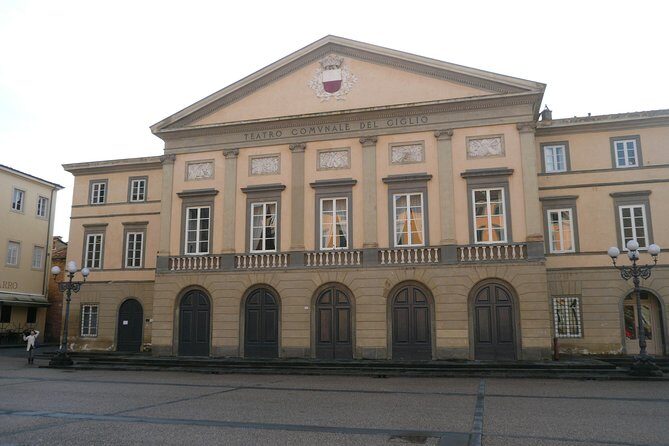
If you think of Lucca as walls, towers, and picture-perfect streets, this tour nudges you to hear it differently. You’ll learn how music wasn’t just entertainment here—it shaped careers, religious life, and even public gatherings. The tour also gives you a simple way to remember the city: each stop has a musical reason to exist.
Two things make this experience work well. First, you’re not stuck with one giant lecture—you move through the city and let each place “explain itself.” Second, you’ll get music excerpts connected to what you’re seeing, so the stories land faster than they would from a paper guide.
You can also read our reviews of more city tours in Lucca

Teatro del Giglio inside: where the tour starts in sound
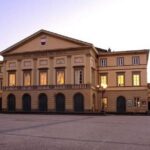
Your meeting point is at the ticket office of Teatro del Giglio (Piazza del Giglio, 13/15), and the tour begins at 11:00. Plan to arrive around 10:45 so you’re not rushed at the start. Then you head inside for about 30 minutes, with admission included.
The theater dates to 1675, and the guide uses that starting point to connect the building to music performed there in the past. This is one of the most satisfying parts of the whole tour because you’re seeing the stage area, the interior atmosphere, and the scale—then hearing related excerpts. It’s a good reminder that architecture can shape performance, not just decorate a city.
Practical tip: inside theaters can feel cooler than the street, even in warm months. If you run cold easily, bring a light layer.
Piazza Napoleone: rock, pop, jazz, and soul in a modern square
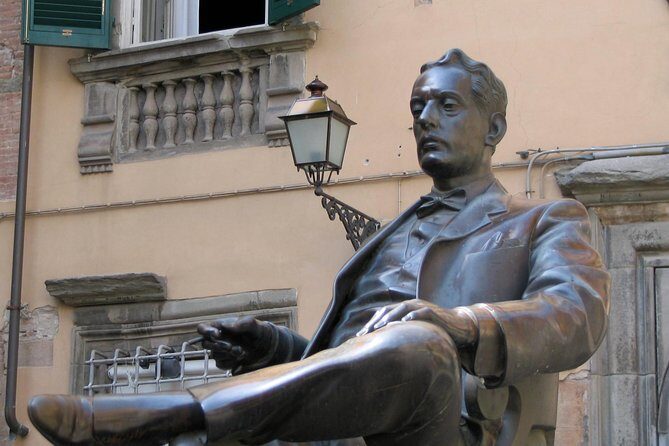
After the theater, you step back out into Piazza Napoleone. This is a shorter stop—around 15 minutes—and there’s no admission ticket needed for the square.
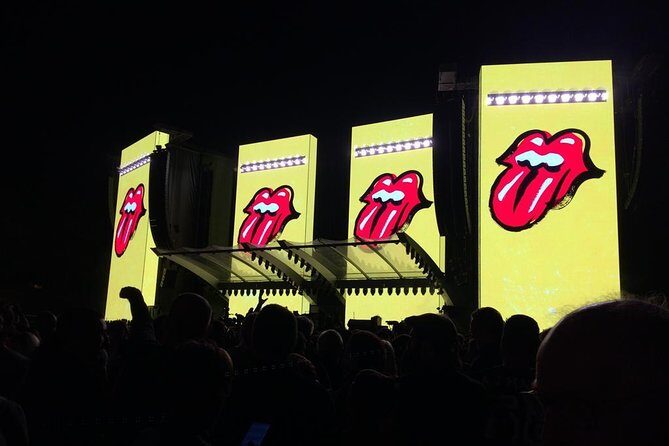
What makes this stop fun is how the guide frames its modern concert identity. Piazza Napoleone has hosted rock, pop, jazz, and soul concerts for about 20 years, and the guide names headliners that include David Bowie, Bob Dylan, Elton John, and even the Rolling Stones. The point isn’t that you’ll see a concert today—it’s that you’ll understand how Lucca keeps reusing central space for major music over time.
If you like your history anchored in real-world details, this stop delivers. It also breaks up the more classical themes with something many people recognize.
San Giovanni and San Martino: churches tied to organists and performers
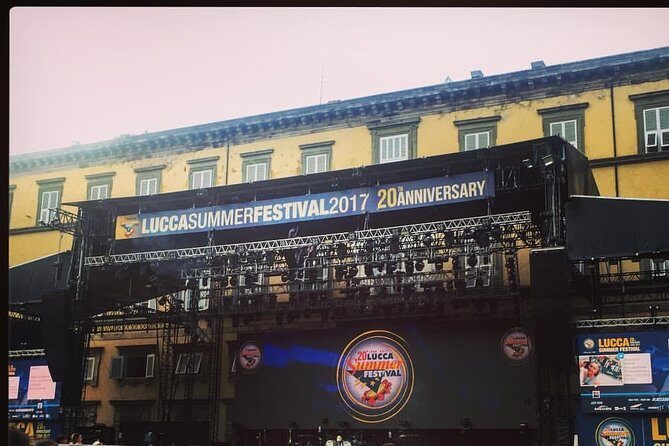
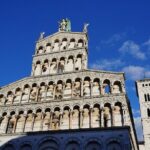
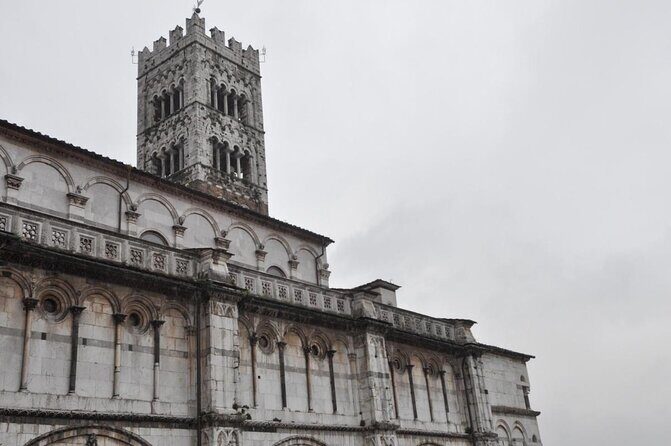
Next you move toward the Church of San Giovanni and the Cathedral San Martino. You spend about 15 minutes here, and admission isn’t included for these stops.
This section is where the tour makes a strong case that sacred spaces have musical careers built into them. You’ll hear how religious celebrations through the centuries produced musicians and high-quality music. A standout detail: the Puccini family served as organists of the Cathedral for 124 consecutive years.
That’s the kind of fact that changes how you look at cathedrals. Instead of seeing a building that’s only about ceremonies, you start imagining repeated practice, performances, and evolving musical roles inside the same walls. If you’re the type who likes structure and tradition, you’ll enjoy this.
Note: the actual atmosphere can vary depending on what’s happening in the churches on your day, so your experience may feel more or less “alive” in the moment.
Piazza dell’Anfiteatro: from gladiators to jazz nights
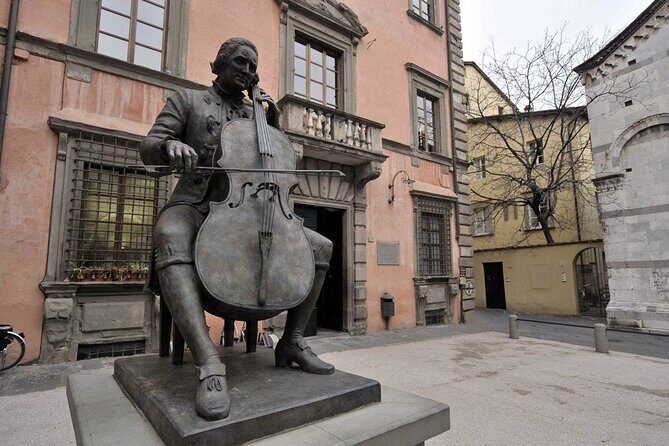
From the nearby streets, the tour continues toward the Conservatory named after Luigi Boccherini, a native of Lucca. You spend about 15 minutes in this area, and the emphasis is on how music training connects to famous local families.
You’ll learn that the conservatory was founded by Giovanni Pacini in 1842, and that Puccini’s father was its director for the two years leading up to his untimely death. Even if you don’t know the institution’s full background, this is a satisfying “where did the music education happen?” moment.
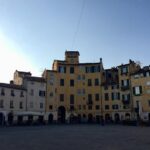
Then you reach Piazza dell’Anfiteatro, the oval-shaped square. The guide explains that gladiators battled here in Roman times, and that the oval form is part of why the space feels like a stage even today. Today, it’s used for markets and performances, including jazz concerts.
There’s no admission cost here, and the walk through the narrow medieval streets adds to the feeling that the city keeps layers of past and present next to each other. If you like places with a built-in sense of performance, this is a highlight.
You can also read our reviews of more historical tours in Lucca
Conservatory to Pfanner: Boccherini, Pacini, Paganini, and Elisa Bonaparte
This portion is where Lucca’s composer “network” starts to feel real, not just name-dropping.
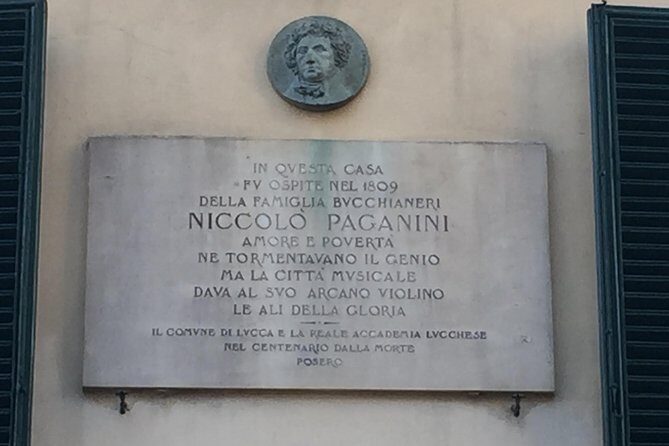
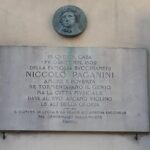
You’ll pass by the residence where Niccolò Paganini lived in the early 1800s, during the first decade of that century when Elisa Bonaparte (Napoleon’s sister) reigned over Lucca. The guide ties that political backdrop to the time when Paganini’s career began to flourish. You’ll also hear languid notes from one of his famous guitar and violin serenades, composed in Lucca.
Right near there, you’ll spot the Baroque garden of Palazzo Controni-Pfanner. The guide describes it as a late-17th-century example of Baroque garden design—something you can think of as three-dimensional outdoor stage sets. It’s one of those stops where your “tour brain” slows down because the space invites looking.
Then the tour adds one more composer thread with a plaque in Via degli Asili dedicated to Alfredo Catalani. You’ll get the memory of his opera La Wally alongside the detail that Catalani died at 39.
Puccini museum finale: Casa Natale and the music in the walls
The last stretch brings you toward the Puccini Museum, the birthplace of Giacomo Puccini. You end at the museum at Corte S. Lorenzo, 9.
Before you reach it, you’ll stop again near plaques and composer references, including a tribute to Francesco Geminiani at the garden of Palazzo Diodati-Orsetti. Geminiani migrated from Lucca to England in the early 18th century and spent his last years in Ireland, where he died. Even if these names aren’t always on your “must-know” list, the guide uses them to show Lucca’s reach beyond the city limits.
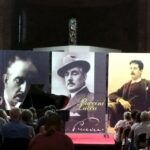
Then you walk to Piazza San Michele, considered the center of Lucca, before finishing with a visit to the Puccini Museum. Admission is included, and it’s about 30 minutes. This ending is a strong payoff because it anchors everything you heard earlier into Puccini’s actual birthplace.
If you love Puccini, this part tends to be the emotional hook. People describe highlights like the opera costumes in the museum space, and it makes sense: you’re not only learning about the man, you’re seeing how his world looked.
Price and value: $35.95 for two big admissions plus a guided story
At $35.95 per person, this tour is priced to feel fair for what you get. The biggest value is that the ticket includes admission to Teatro del Giglio and the Puccini Museum. Without those inclusions, you’d likely pay extra just to get into the most important interiors.
You also get a guided walking route through multiple key sites, so you’re not just buying entry fees—you’re buying interpretation. The guide ties each place to a composer, a performance tradition, or a specific musical role, which makes your time in Lucca more efficient.
The duration is listed as 2 hours to 2 hours 30 minutes, and you’ll likely feel like you’ve covered a lot of ground without doing “all-day sightseeing.” Still, allow some flexibility. A short comment you should keep in mind: the tour can run longer than expected, so avoid stacking it too tightly with your next reservation.
Logistics that actually matter on a walking tour
This is a mobile-ticket tour, and it’s offered in English. You’ll also see that it’s bilingual in Italian and English, so the core info should be delivered clearly.
The group maximum is 25, which helps keep the walk from turning into a crowded shuffle. On some days it may be much smaller, which usually makes the Q&A feel easier and the route feel calmer.
The meeting point is precise: Teatro del Giglio ticket office at 10:45 for a 11:00 start. If you arrive late, you may slow down the group or miss the lead-in. Plan a little buffer so your only stress is picking where to stand for photos.
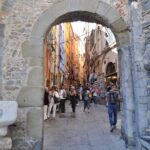
And yes, you’ll be walking. The route includes narrow medieval streets and several stops spread across the old center. Wear shoes you trust.
Who should book this Lucca music walk
You’ll enjoy this tour most if you want culture with a soundtrack. It’s ideal for music fans who like learning through place—where a composer lived, where concerts happened, and how buildings shaped performance.
It also works for history lovers who get tired of pure dates. Instead of “then this happened,” you’ll hear how music roles formed over time: organists across generations, conservatory leadership, and performers tied to local power.
If you’re traveling with someone who only half-cares about classical music, this still has enough variety: you get modern concert history at Piazza Napoleone plus the Roman-to-jazz connection at Piazza dell’Anfiteatro.
The only time I’d hesitate is if you want a purely architectural tour. This one uses buildings to explain music, not the other way around.
Should you book it?
Yes—if Lucca is on your list, I’d book this. The price feels anchored to real admissions (Teatro del Giglio and the Puccini Museum), and the route gives you a meaningful way to remember the city. The tour’s strongest skill is connecting names to places, then using music excerpts to make those connections stick.
If you have tight timing, just give it a little extra slack since the walk may run a touch longer than the minimum estimate. And if you’re choosing between several Lucca activities, pick this one when you want your visit to come with sound, not just sight.
FAQ
How long is the Lucca music tour?
It lasts about 2 hours to 2 hours 30 minutes.
Is the tour offered in English?
Yes. It’s offered in English, and it’s described as bilingual in Italian and English.
What’s included in the ticket price?
Admission is included for the Teatro del Giglio stop and for the Puccini Museum visit. Other stops are described as not included or free depending on the location.
Where do I meet the guide?
Meet at the Teatro del Giglio ticket office at Piazza del Giglio, 13/15. The meeting time is 10:45 am, with the tour starting at 11:00 am.
Is there an admission fee for Piazza dell’Anfiteatro?
No. The visit to Piazza dell’Anfiteatro is listed as free.
What is the maximum group size?
The tour has a maximum of 25 travelers.
Is a mobile ticket accepted?
Yes, the tour uses a mobile ticket.
Can I cancel for free?
Free cancellation is available. You can cancel up to 24 hours in advance for a full refund.