REVIEW · FLORENCE
Accademia Gallery private tour with skip the line ticket
Book on Viator →Operated by Ciao Florence Tours Srl · Bookable on Viator
Michelangelo’s David hits you fast. This private Accademia Gallery tour focuses on the big works, with skip-the-line priority entry and a guide who brings the art story-first. I really liked the way guides such as Fabian and Déborah turn marble details into something you can actually picture, especially in the Hall of the Prisoners.
I also like that it’s truly private for your group, so you can ask questions and move at a comfortable pace instead of being herded. One consideration: headsets aren’t included, so if you’re sensitive to hearing in a crowded room, plan on sitting close to your guide when you can.
In This Review
- Key Points to Know Before You Go
- Skip the Queue: What the Via Ricasoli Meet-Up Really Means
- Inside the Hall of the Prisoners: Non-Finito That Actually Makes Sense
- David: The Moment the Numbers Become Real
- Giambologna and the Contrast Stop: When Style Changes Everything
- Back to Renaissance Masters: Botticelli and Other Names to Watch For
- The 2-Hour Private Format: Perfect for Focus, Not for Wandering
- Price and Value: When $149.81 Makes Sense
- Practical Tips That Make This Tour Smoother
- Should You Book This Accademia Gallery Private Tour?
- FAQ
- How long is the Accademia Gallery private tour?
- What’s included in the price?
- Is this tour private for my group only?
- Where do we meet for the tour?
- Do I get a mobile ticket?
- Are headsets included?
Key Points to Know Before You Go
- Skip-the-line entry starts at Via Ricasoli, so you spend less time standing around
- Hall of the Prisoners is explained through non-finito unfinished marble details
- David’s real scale is the shock: over 12,000 pounds and about 17 feet tall
- Giambologna’s Rape of the Sabines adds variety, showing a different sculpting approach
- A full 2 hours with your pace, then you can keep wandering after the guided portion
- Mobile ticket plus a guide holding a sign with your name outside the museum
Skip the Queue: What the Via Ricasoli Meet-Up Really Means
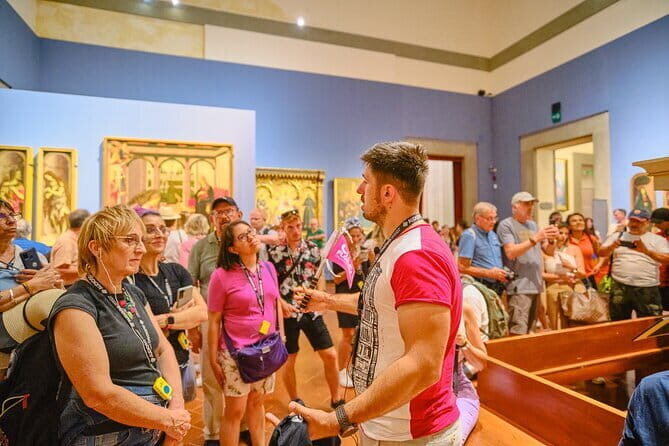
Meet up is right at the entrance area of Galleria dell’Accademia (Via Ricasoli 58/60). Your guide meets you outside holding a sign with your name, which is a small thing that saves real stress. Florence can be confusing when you’re juggling maps, lines, and timing. This setup helps you get your bearings fast and start with momentum.
The main practical win is the skip-the-line ticket. Accademia can get packed, and shade can be scarce when you’re waiting outside. Priority entry helps you spend your energy on art instead of standing in the sun (or the wind, depending on the day). For a museum like this, time matters because you’ll get more out of the visit if your mind isn’t already exhausted.
Also note the tour is private. Only your group participates, so your guide isn’t stopping and starting for strangers’ questions every few minutes. That can change the whole feel of the experience, especially around David, where people tend to stare and then abruptly realize they want context right now.
You can also read our reviews of more tours and experiences in Florence
Inside the Hall of the Prisoners: Non-Finito That Actually Makes Sense
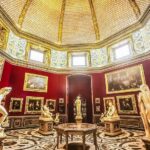
Once you’re in, your guide starts you off at the core Michelangelo section: the Hall of the Prisoners (I Prigioni). This is where the tour gets interesting fast, because you’re not just seeing famous sculptures. You’re seeing the process.
The big concept here is non-finito, or unfinished work. Your guide explains how the marble figures show emotions and movement that look like they’re trapped inside the block. It’s not only about what Michelangelo made. It’s about how he worked, leaving enough visible tool marks that you can sense the struggle—literally—in the stone.
You also get the kind of detail you’d miss on your own: the guide points out dents and smaller chisel-and-hammer marks. That’s the difference between looking at a sculpture and understanding it. It turns the room into a kind of workshop in slow motion.
This stop lasts about an hour, and that’s a sweet spot. Long enough to get your eyes trained, short enough that you’re ready for David without feeling museum-fatigued.
A quick tip: if you like to ask questions, the Hall of the Prisoners is where you should do it. Your guide can translate meaning and technique while you’re still staring at the exact surfaces being discussed.
David: The Moment the Numbers Become Real
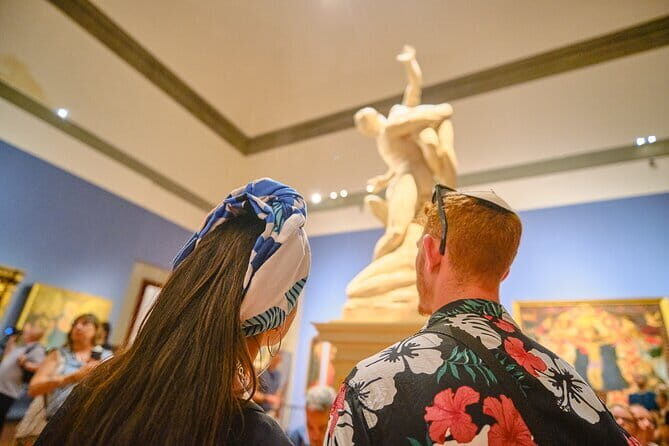
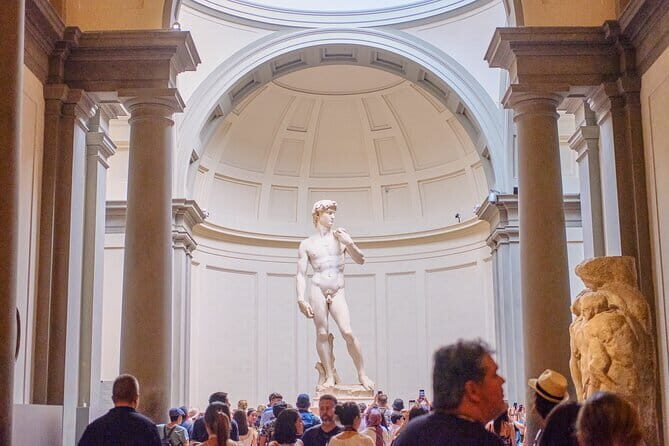
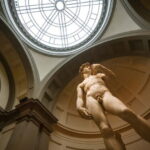
Then comes the highlight most people came for: the original David. The scale is staggering—over 12,000 pounds and roughly 17 feet tall. Even if you’ve seen photos, the real-life proportions can make your brain do a double-take. You’ll stand there longer than you planned, even if you swear you’re a quick museum person.
Your guide spends plenty of time on David and covers both the masterpiece and Michelangelo’s life. One detail I’d keep in mind while you’re looking: the tour notes that Michelangelo was only 26 when he finished David. That kind of fact changes how you look at the work. It’s not just a statue from an era. It’s a young artist making a decision that still controls the way people feel today.
Also, pay attention to what you feel in your body. David isn’t behind glass in the way some modern exhibits are. You can walk close enough to see how the pose and surface choices guide your eye. With a guide, you get words for what you notice: balance, tension, and the way the carving handles human forms.
Your best move here is simple: pick one angle and study it for a minute, then ask your guide what to watch next. You’ll leave with more than a memory. You’ll have a mental map of what you saw.
Giambologna and the Contrast Stop: When Style Changes Everything
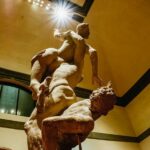
After David, the tour shifts to another big name: Giambologna’s Rape of the Sabines. This is a smart pivot, because it changes the feel of what you’ve just experienced.
Michelangelo’s power often feels concentrated—an intense focus on form and expression. Giambologna’s approach can feel more about movement and sculptural design across angles. The tour points out that the process differs from Michelangelo’s simplicity, which is a good way to frame it as you’re looking.
You’ll spend around 30 minutes here. That’s enough time to notice the differences without turning it into a marathon. If you’re the type who likes variety, this contrast stop keeps the visit from turning into one long stare.
If you’re not a hardcore sculptor-history person, don’t worry. Your guide’s job is to connect the dots between technique and what you see in front of you.
Back to Renaissance Masters: Botticelli and Other Names to Watch For
After the major showstoppers, you’ll keep following your private guide through additional Renaissance works. The tour specifically calls out artists such as Sandro Botticelli, Jacopo di Cione, and Pacino di Buonaguida.
This portion is shorter (about 30 minutes in the plan), but it matters. It’s where you start building a sense of the gallery as a broader picture of the Renaissance, not just a single celebrity statue. You’ll learn stories and context from your guide, which helps when labels blur together in a museum.
When you finish the guided portion, you’re encouraged to explore independently and revisit works at your own pace. That part is underrated. The first pass is about learning the why. The second pass is about learning what you personally respond to.
If you want to get the most out of that independent time, do this: save your favorite sculpture for your second visit. Let the guide’s explanations do their job first, then come back and see it without prompts.
You can also read our reviews of more private tours in Florence


The 2-Hour Private Format: Perfect for Focus, Not for Wandering
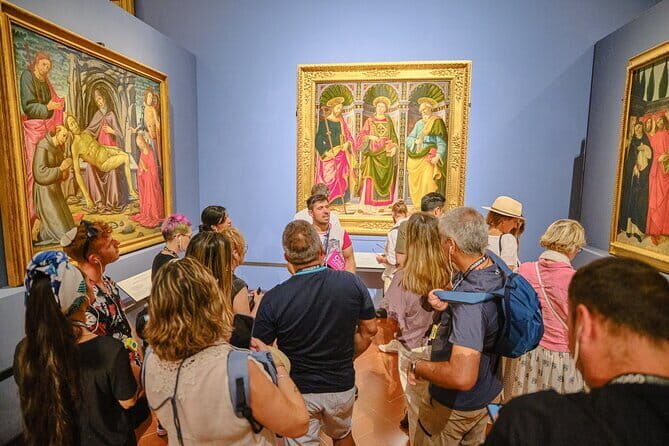
This is an efficient tour: about 2 hours with a private guide. That fits well if you want the important points covered without sacrificing an entire day to one museum.
The pacing is also flexible. The plan says your guide can cater the tour to your interests and keep it comfortable. In practice, this means you can steer slightly—more time at David, more questions about non-finito, or a quicker pass through the rest.
Still, there’s one heads-up to keep in mind. Some people prefer short, high-level interpretation; others love detail. If you’re in the second group, great. If you’re in the first group, you should ask early: Can we keep this focused, please? That kind of request works well with a private guide.
Also, you won’t get headsets. So your ability to hear your guide clearly will matter more than you might expect. If your group is bigger or you naturally stand farther away from the guide, choose a spot closer to your guide when discussions start.
Price and Value: When $149.81 Makes Sense
At $149.81 per person, this isn’t a budget add-on. So you should treat it like a value decision, not a casual purchase.
Here’s where the money goes:
- Skip-the-line admission saves time (and likely comfort) at a busy museum
- a private guide for about 2 hours means you get tailored explanations and Q&A
- time is structured around the highest-impact works, especially Michelangelo
If your goal is only to see David and move on, you might feel the cost. If your goal is to understand what you’re looking at—and not just stare—this tour can feel worth it quickly. The Hall of the Prisoners and the David scale explanation are exactly the kind of things that become more valuable when someone points out what to notice.
Booking ahead also helps. The average booking window is about 24 days in advance, which tells you this tour slot can get taken. If your dates are fixed, don’t wait until the last week.
Practical Tips That Make This Tour Smoother
A few things I’d do to make your visit easier:
- Arrive a few minutes early so the guide can match you by name sign without rushing.
- Bring a light layer. Even in warm months, museum areas can feel cool once you’re indoors.
- Since headsets aren’t included, try to stay close during key explanations (non-finito details and David facts).
- When you get your independent time after the guide, don’t rush. Pick one or two works to revisit slowly so your brain absorbs more than just the first look.
- If you’re visiting with family, a good guide’s flexibility makes a difference. One account highlighted a guide who adapted well even with a young baby, which is a reminder that pacing can matter.
One more timing note: the departure time can depend on museum availability. They’ll do their best to confirm your selected time, and if it can’t be confirmed, you should expect contact by email or phone to agree on an alternative. Keep an eye on your messages the day before.
Should You Book This Accademia Gallery Private Tour?
Book it if:
- you want Michelangelo context and you care about what non-finito means in real visual terms
- you value skip-the-line time at a crowded museum
- you like the comfort of a private pace with real Q&A
- you plan to spend time after the tour revisiting your favorites
Skip it (or consider a different approach) if:
- you only want a quick photo stop and you’re fine reading labels on your own
- you’re worried about hearing without headsets and your group prefers to spread out
My take: if you’re coming to Florence for Renaissance art, this is a focused, time-saving way to see the big Michelangelo works with explanations that stick. You won’t leave just impressed. You’ll leave with a clearer mental picture of how those sculptures were made and why they still hit people today.
FAQ
How long is the Accademia Gallery private tour?
The tour runs for about 2 hours.
What’s included in the price?
You get an Accademia Gallery skip-the-line ticket and a private guide for the 2-hour tour.
Is this tour private for my group only?
Yes. It’s a private tour/activity, and only your group participates.
Where do we meet for the tour?
You meet at Galleria dell’Accademia di Firenze, Via Ricasoli 58/60, 50129 Firenze FI, Italy.
Do I get a mobile ticket?
Yes, the tour includes a mobile ticket.
Are headsets included?
No. Headsets are not included.


More Tickets in Florence

More Tours in Florence



More Tour Reviews in Florence
- Tuscany Day Trip from Florence: Siena, San Gimignano, Pisa and Lunch at a Winery
★ 5.0 · 21,634 reviews - The Best tour in Florence: Renaissance & Medici Tales – guided by a STORYTELLER
★ 5.0 · 12,316 reviews